
SONGBUN | Social Class in a Socialist Paradise

The history of all hitherto existing society is the history of class struggles.
Freeman and slave, patrician and plebeian, lord and serf, guild-master and journeyman, in a word, oppressor and oppressed, stood in constant opposition to one another, carried on an uninterrupted, now hidden, now open fight, a fight that each time ended, either in a revolutionary reconstitution of society at large, or in the common ruin of the contending classes...
The modern bourgeois society that has sprouted from the ruins of feudal society has not done away with class antagonisms. It has but established new classes, new conditions of oppression, new forms of struggle in place of the old ones.
So begins Chapter 1 of The Communist Manifesto, written by Marx and Engels and published in 1848. If we take the last paragraph, and change a couple of labels, it perfectly describes North Korea today:
The North Korean society that has sprouted from the ruins of the division of Korea and the Korean War has not done away with class antagonisms. It has but established new classes, new conditions of oppression, new forms of struggle in place of the old ones.
In fact, the North Korean regime has established 3 new classes divided into 51 categories, and has created what is widely recognized as the most oppressive society in the world. Maybe Marx rests easier now that his portrait no longer adorns Kim Il-sung Square in Pyongyang; it was taken down before Kim Il-sung’s centenary celebrations in April. The North Korean regime has been extremely intentional at creating and enforcing social classes based on political loyalty and this system, known as songbun (성분), is key to understanding North Korean society as a whole and specifically and the system of oppression which the ruling elite uses to maintain political control. So a new report on Songbun by our colleagues at HRNK, Marked for Life, is a great addition to the literature on NK.
The report describes songbun as a state-directed system of discrimination based on hereditary classes determined by perceived loyalty to the regime. It decides your prospects in almost every area of life, including education, occupation, military service, Party membership, treatment by the criminal justice system, housing, medical treatment, marriage, and even food supply. The individual has no control over this system, their songbun being decided by their family line, making it analogous to discrimination along racial lines. The whole system can be described as a political apartheid, reminiscent of the racial apartheid in South Africa that attracted such international criticism until it ended with the election of Nelson Mandela.
CREATION OF SONGBUN
The songbun system was devised in the early years after the formation of North Korea out of a motivation to protect the Kim regime by isolating and controlling perceived internal political threats. It did this by categorizing every single North Korean resident according to how politically safe or risky they might be. The key factors considered were your ancestors’ socioeconomic background at the time of liberation (1945), their activities during the Korean War (1950-1953), and whether you had relatives in South Korea or China (being connected to the outside world is bad for your songbun).
North Koreans were split into three broad classes:
- Core (핵심), 28% of the population. Includes professional revolutionaries, descendants of ‘war heroes’ who died working or fighting for the North, peasants or those from peasant families.
- Wavering (동요), 45%. Includes people who had previously lived in South Korea or China, those with relatives who went to the South, families of small-scale merchants, intellectuals, practitioners of superstition, etc.
- Hostile (적대), 27%. Includes descendants of landlords, capitalists, religious people, political prisoners, those who had assisted South Korean forces during the Korean War, or were otherwise judged anti-Party or associated with external powers.
The regime keeps a file on every single person above the age of 17 (before that age your details were registered on your parent’s file), and an incredible amount of work goes into creating and regularly updating these records. The data is now managed using the software system “Faithful Servant 2.0.” This digitization makes it easier for authorities to access any citizen’s songbun file from any Ministry of Public Security computer terminal from provincial to county levels.
EFFECTS OF SONGBUN
Songbun is deeply entrenched in North Korean society and affects nearly all aspects of a North Korean’s life, including (see HRNK’s full report for further details):
Occupation:
In NK, you do not choose your job. The regime chooses it for you, and it is heavily influenced by your songbun. Simply put, if you have low songbun, you will be put into gruelling manual work, whereas if you have high songbun, you might expect a relatively cushy Party cadre position. There is no element of meritocracy here and ability does not factor in much, meaning that it is quite possible that more able workers are placed in less important roles while less able workers are given positions of responsibility. This failure to efficiently utilize their national talent-pool is yet another reason why North Korea’s state-controlled economy struggles so much.
Education:
Again, this is not meritocratic. If your parents have good songbun, then you are allowed to progress. Otherwise, no matter how hard you study, you will not advance academically. As you can imagine, this can cause resentment (although that resentment is sometimes aimed at the parents, not the regime). This system also ensures that “elites play together.” Those with good songbun go through the same schools and the same colleges, and they network within this pool for their future mutual benefit. Those with bad songbun are of course denied such opportunities. The importance of personal connections in North Korean society compounds the importance of songbun.
Family:
Knowing the importance of keeping a clean record in NK society, parents impress on their children the importance of not doing anything to step outside the Party line, as it would affect the whole family. The importance of songbun also means it is one of the most important factors to consider when finding a spouse. If you marry someone of lower songbun you and your children will lose out, so people tend to marry within their songbun level, as indicated by the occupation and status of their partner’s family. (Note that these phenomena are not unique to North Korea, as people tend to marry within their own social class in other countries too. What is unique in North Korea is how this is being played out within a class system which has been systematically created according to the interests of the ruling elite.)
Internal Exile:
For decades, the regime has systematically exiled tens to hundreds of thousands of low-songbun political undesirables to isolated and unfavourable mountainous areas in the northeast of North Korea. Here they have been forced into hard labour, subject to tighter controls, excluded from population centres, and effectively removed as a potential political threat. It could be argued that the regime has not only tried to cut off the outside world but is now increasingly cutting off Pyongyang from its outer provinces, leaving those who are judged as potential political threats isolated and with no way to demonstrate their frustration without risk of complete elimination.
Food:
Songbun has a huge effect on a North Korean citizen’s food supply. Particularly at times of scarcity, the distribution of food and resources has been concentrated to the higher songbun levels - Pyongyang and central regime institutions (Party, government and military). This was particularly noticeable during the famine of the 1990s and the chronic food shortages that have blighted the people ever since. When the state-economy collapsed and there were not enough provisions to go round, the regime stopped providing food to the politically undesirable northeast regions, so the famine hit those regions the hardest. It has been reported that as many as 30% of the population died in the worst affected regions, particularly North Hamgyeong Province. It should come as no surprise then that around 60% of North Korean refugees who have made it to South Korea are also from that province. An issue for another post is how this demonstrates the inextricable linkage between human rights and humanitarian / economic issues in North Korea. Understanding songbun should call us to question the wisdom of distinguishing between “economic migrants” and “political refugees” when it comes to this population.
Medical Care:
The public health system all but collapsed in the 1990s, but special treatment is still available for elites in Pyongyang. People of lower songbun cannot access these facilities, even if they have independent wealth, and the best they can hope for is to buy medicine on the black market.
In short, songbun institutionalizes the dominance of the ruling elite and their descendants over all other groups in society, and as this system has been implemented over several decades, the privileges of the core class have grown while the others suffered.The operation of this system is not at all transparent but people are generally aware of it, although they may not know details, including of their own songbun. Quite a few of the North Korean refugees that I have interviewed about their songbun have not been very sure about their own level. People of higher songbun are better aware of the system, and one gentleman that I interviewed jokingly half-boasted to me that his family was “totally red, the core of the core.” To him it was clear that he had good songbun because so many of his relatives held positions of responsibility within regime institutions, and some members of his family had also been granted considerable educational opportunities.
It is worth noting that while it is extremely difficult to improve your songbun, you can easily drop levels if you get in trouble through committing criminal or political offenses, or fail to cooperate with regime officials, or if a family member gets into such trouble. The implementation of songbun therefore creates considerable fear and forces people to obey the regime, and in reality it is an effective tool used by the regime to maintain control and power.
As we might expect, the changes inside North Korea over the last 15 years have affected the implementation of this system, albeit without being able to overturn it. The interaction between marketization and songbun (both mitigating and exacerbating effects), songbun’s effect on anti-regime sentiment, and the extent to which the songbun system can constrain change in North Korea will be covered in the next blog post…

SOKEEL J. PARK | Research & Policy Analyst
Women’s History Month: Honoring the Bravery of North Korean Women
By: Jennifer Kim
Jennifer* is Liberty in North Korea’s Field Manager. Over the years, she’s carefully stewarded our secret rescue routes and helped countless North Korean refugees reach safety and freedom.
Approximately 70% of North Korean defectors are women. Throughout their journey, they face unimaginable challenges, including human trafficking, confinement, and sexual violence.
For Women’s History Month this year, we asked Jennifer to share her experiences supporting North Korean women who have made the brave decision to escape, and bring light to the stories of real people behind the numbers and statistics.
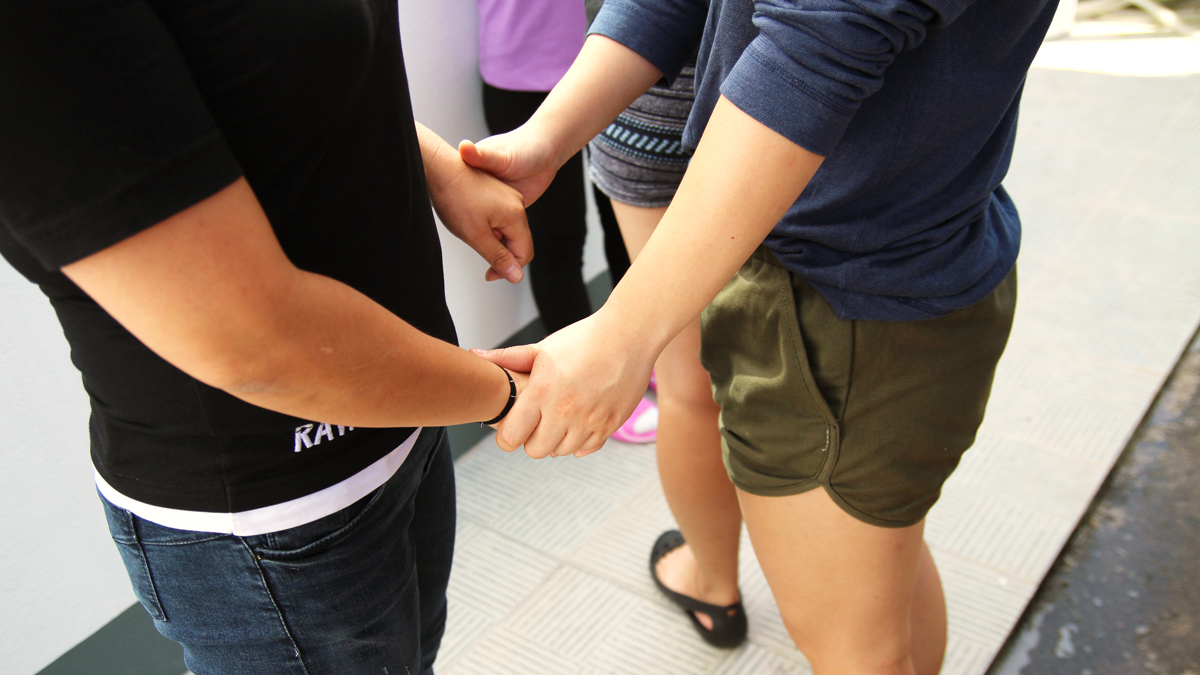
A Transformative First Mission
When I first began this line of work, I was filled with both excitement and anxiety. “Will I be able to connect well with these people?” “Will the field be too dangerous?” Even in my position as a staff member, there were times when the situations we encountered felt riskier because I was a woman.
On my first mission, the group we brought to safety were all women. From their small requests, like asking for sanitary pads, to moments where they cautiously shared their harrowing experiences of human trafficking in China, I found that we could connect on a deeper level because I was also a woman. I realized my role wasn’t just to be a staff member, but to stand by these people as they needed me, as a fellow woman. From then on, the fear I had initially felt about this work transformed into conviction.
North Korean Women At the Forefront of Resistance and Survival
After meeting many North Korean women defectors, I’ve come to learn that there are unique challenges and experiences that only they face. Women in North Korea are not as restricted to job assignments as men, so they’re the ones actively engaged in informal economic activities. They’re running their own black-market businesses and trading smuggled goods, shifting economic power from the regime into the hands of the ordinary people.
Women also make up the majority of North Korean defectors at over 70%. In freedom, they’re leading advocacy efforts and raising awareness for this issue.
I've come to think that perhaps women in North Korean society were the first and most desperate to stand up in resistance.
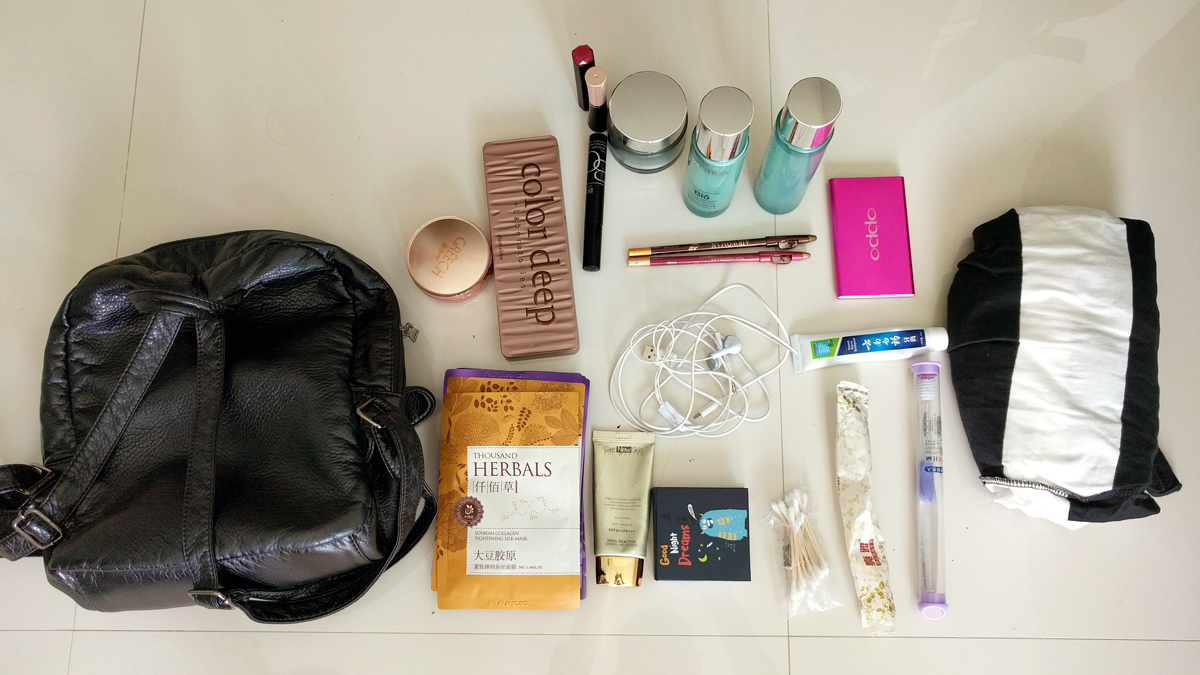
At the same time, the reality is that women are more vulnerable to gender violence and crime. The moment they cross the North Korean border and set foot on Chinese soil, their precarious legal status and the fact that they are women become risk factors that can lead to human trafficking, sexual exploitation, and forced prostitution. If these dangerous situations lead to pregnancy and childbirth, women often remain in China for years, even decades, weighed down by the conflicting emotions of their longing for freedom and their maternal instincts.
All of the women I met during my first rescue mission were survivors of being trafficked into forced marriages. While there are some cases where these women meet kind families and live in a relatively less dangerous environment, most have to endure difficult lives. One woman who we rescued in 2024 said that in the early stages of her life in China, she was confined and tied up in a single room by the man who bought her. Others had to do forced labor in one of China’s many factories.
Not a News Story, But a Person’s Story
About ten years ago, I watched a video of a woman my age testifying about the hardships and sexual violence she experienced during her defection from North Korea. As a South Korean, I couldn't believe that such things were happening just across the border. Shocked and ashamed of my indifference, I cried for a long time, then resolved to do something.
North Korea used to be something I only saw and heard about through a TV screen. Now those distant news stories have become the personal experiences of the North Korean mothers and friends I’ve met in the field.
At first, I simply wanted to help as best I could. But as time went on and I met more North Koreans, my perspective gradually changed. Now, I feel like I'm not so much ‘helping’ as I am meeting incredible superwomen who have overcome tremendous adversity.
My role is to constantly remind them of their resilience and potential, so they don't forget it themselves.
“This is My First Time Being Treated Like a Queen”
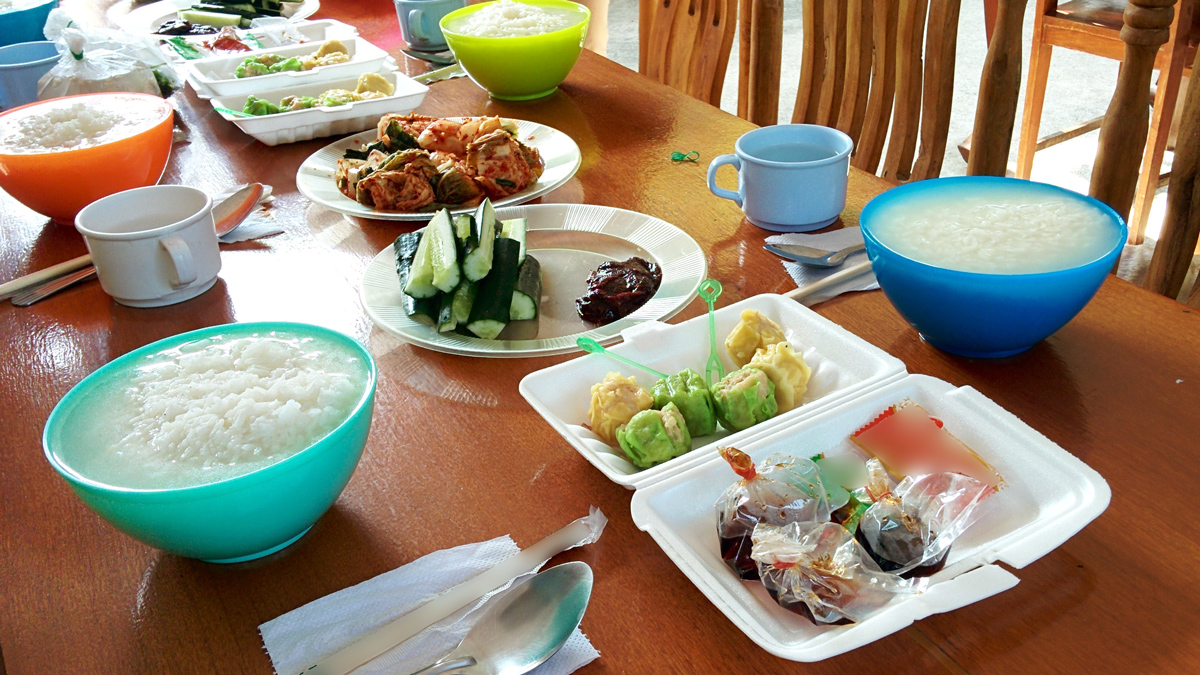
After a successful mission, our team ensures our newly arrived North Korean friends have a proper meal, get some rest, and receive basic necessities. On one occasion, one woman told me, “This is the first time in my life that I have been treated like a queen.”
She had just reached freedom after ten years in a forced marriage to a Chinese man. Her words resonated with me deeply. I realized once again that our work isn't simply about helping people achieve physical freedom; it's about restoring a person's forgotten dignity.
That woman has since resettled in South Korea and runs a small shop. She’s continued to stay in contact with LiNK, sharing updates about her life. One day, she shyly announced her marriage. She’s starting a new chapter with a person she chose and wanted.
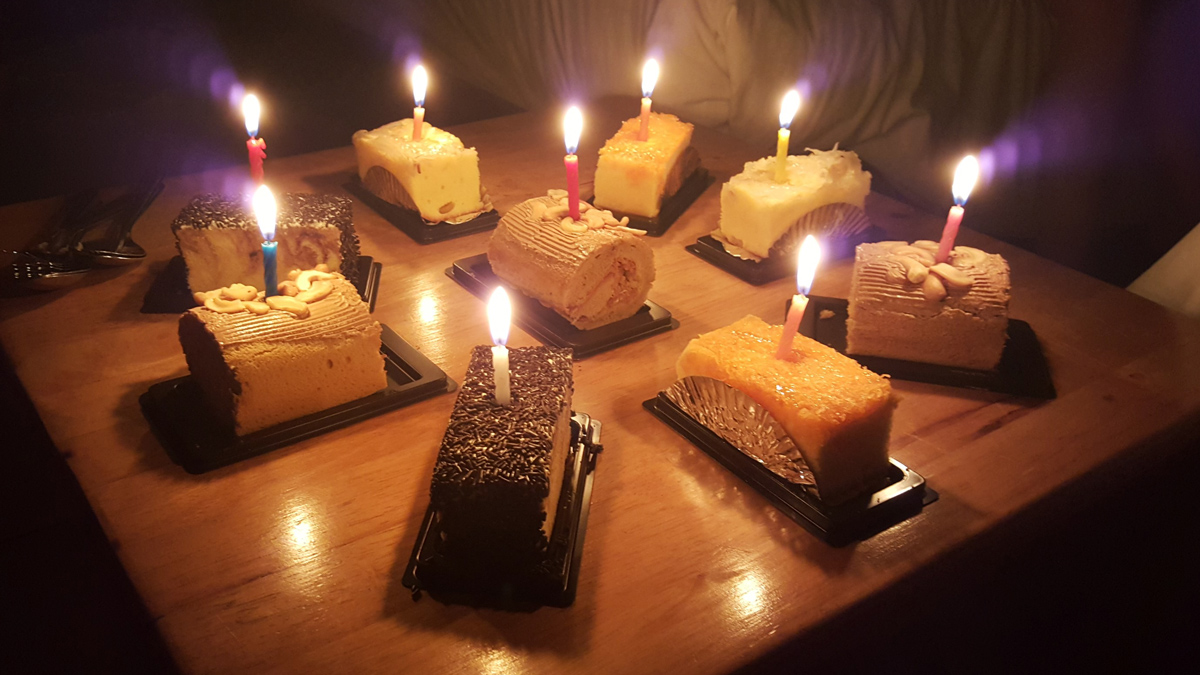
Walking Together In Solidarity
Through the friendships I’ve made and stories I’ve witnessed in the field, my connection to this issue has deepened over time. These women aren’t just “nameless” North Koreans, but people like us, living their daily lives; someone’s daughter, sister, or mother. I didn’t set out to do this work for over a decade. But day by day, hearing each story, meeting each person, and holding their hands has naturally led me down this path.
Listen to their stories, and I believe that you too will encounter a heart for the North Korean people.
– Jennifer Kim, LiNK Field Manager
*Jennifer is a pseudonym used to protect our field manager’s identity and avoid compromising this work.
Help North Koreans Win Their Freedom
From inside the country to on the global stage, North Korean women are driving change on this issue. Driven by necessity, desire to care for their loved ones, and aspirations to forge their own path in this world, their pursuit of freedom is both intentional and instinctive.
Liberty in North Korea doesn't just extend a helping hand to North Korean refugees—we’re cultivating the next generation of North Korean leaders, entrepreneurs, and advocates, and doing this work alongside them.
Become a monthly donor today at $20 per month to help more North Koreans reach safety and gain full authorship of their lives in freedom.


