
A North Korean Defector’s Nine Year Journey to Freedom | Eunju’s Story
I didn’t know I was hungry until I was eight years old. Growing up, I had no concept of whether my hometown was wealthy or poor. Then when the great famine struck in the mid-90s, more people died in our city than anywhere else in the country.
That’s when I realized “Oh, this is the most difficult place to live in North Korea.”
I was born in the city of Eundok, North Hamgyong Province. Before that it was called Aoji, a destitute place infamous for its coal mines, where South Korean prisoners of war were sent to work.
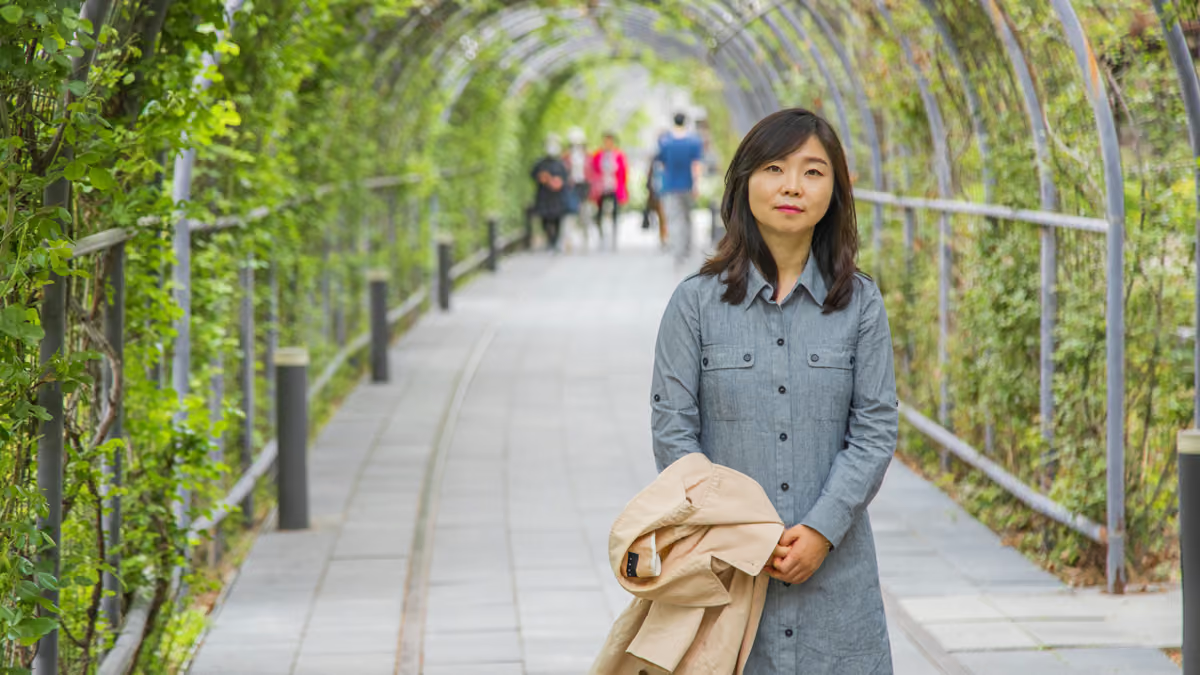
In the middle of a long famine, people lose all sense of humanity. You couldn’t survive without dirtying your hands. My father was a kindhearted person, the type that was unable to hurt anyone. But towards the end, hunger drove him to steal from our own house.
On my first day of middle school, I couldn’t find my new backpack anywhere. It turns out that my dad had taken it to the Jangmadang, traded it for food, and eaten it by himself. In the end, he still died from starvation, and my mom, my sister, and I were left to fend for ourselves.
We heard that if we went to China, we could eat all the candy we wanted. With that one piece of information, my mom said she’d rather get shot crossing the Tumen river than starve in North Korea.
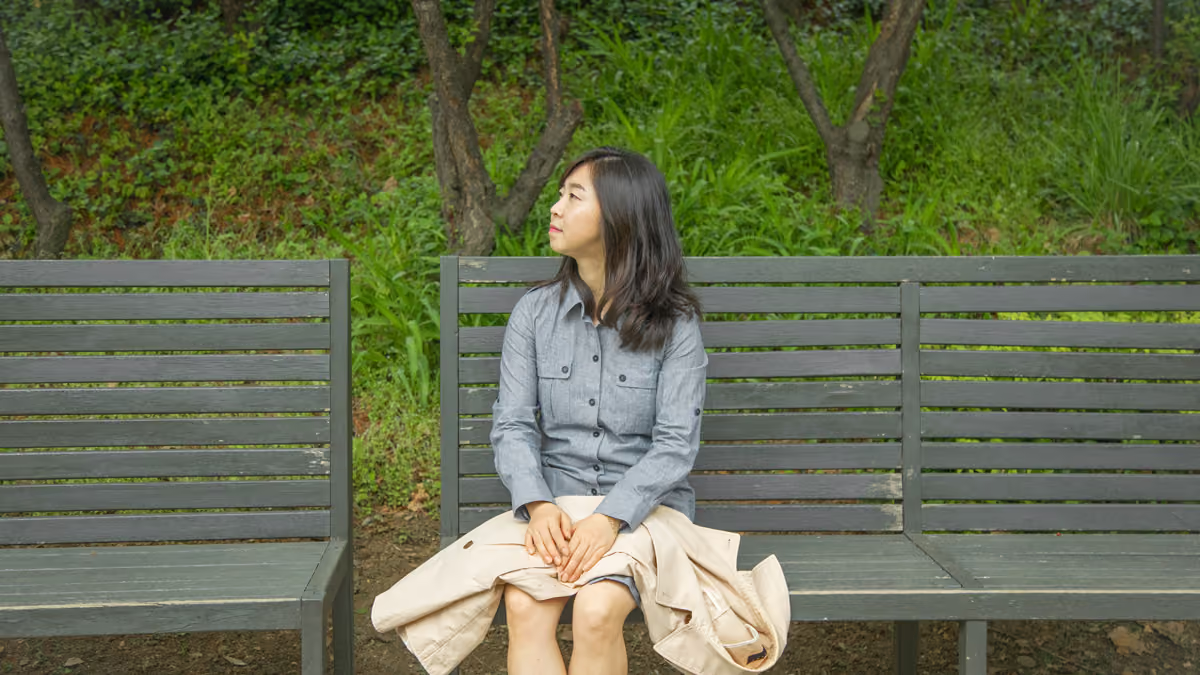
It was mid-February in 1999, during the bitter cold winter. The water was frozen solid and stretched over 100 meters across. My mom went first, followed by my sister, and I was in the very back. Maybe it was because I was anxious, but my shoes felt so slippery and I kept falling over as they went farther and farther ahead. We heard that soldiers would shoot anyone who tried to cross the river. But this was our only chance at survival.
My mind was racing, “What if I’m left behind and get caught?” My mom and sister probably feared the same thing.
We encountered a tributary that wasn’t frozen all the way, so my mom waited and had me go first because I was the lightest. A few steps in, the ice broke and I fell into the piercing cold water. None of us knew how to swim. At that moment, I really thought it was the end. But then my feet hit the ground. We had made it to the other side.
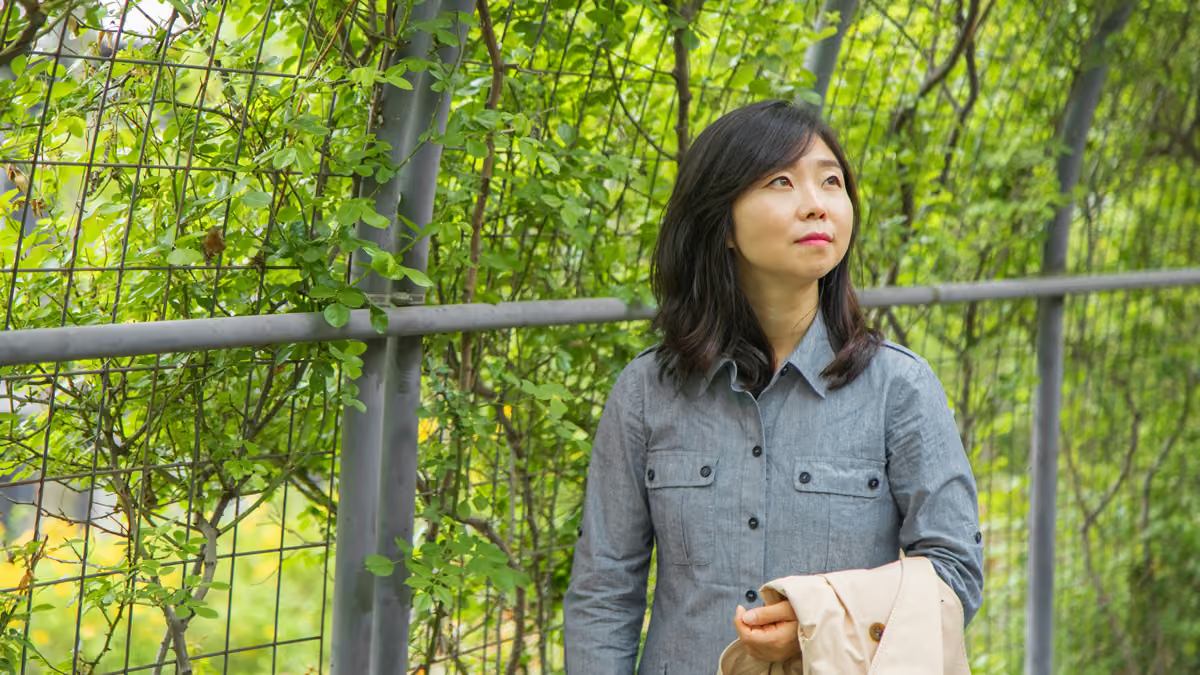
Not long after we had crossed into China, a Korean-speaking woman came up to us. She invited us to her house and gave us over a dozen boiled eggs, more food than we had seen in years. In North Korea, when my sister and I had a field trip for school, my mom would cut one boiled egg and give each of us half in our lunch box. To have this much at once was a true luxury. For the first time in a long while, we dared to have some hope.
But then my mom was sold off to a Chinese man. The fortunate thing was that even though my sister and I were 16 and 14 years old, we were so short that people asked if we were 7 or 8. They couldn’t sell us separately, so we were sent together with our mom.
We had been sold for 2000 yuan. When we wanted to leave, the man told us to pay him back. We worked in his house and on his farm but of course we never saw a penny. For three years, we lived in confinement, and my little brother was born.
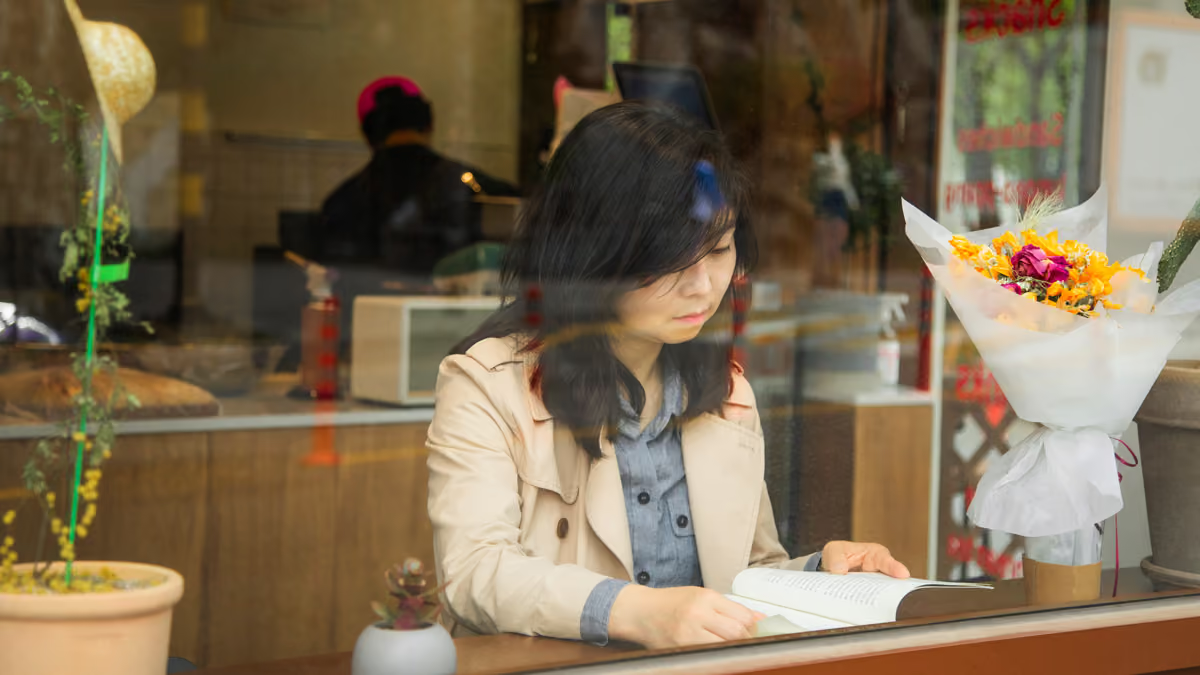
On a quiet night before my brother was even a year old, Chinese police came to the house in the dark, knocked on the door, and arrested us.
When North Koreans get caught, sometimes they’ll roll up their money and eat it or hide it, but we didn’t have anything. We were taken back across the border with just our clothes. It’s well known that there’s a physical exam to look for hidden money. In a way, you shouldn’t even feel a basic sense of shame as a woman and as a human being. If you cry or plead for mercy, you’ll get beaten up. You cannot question them at all.
With so many people in North Korea dying of starvation, names were removed from the family register after three years without any news. We had already been declared dead. There were two minors and an adult, but our identities couldn’t be confirmed. At the time they couldn’t keep minors in prison without a ruling from the court, so we were entrusted to another person from our hometown. No one wanted extra mouths to feed, so he just let us go.
We went straight to the Tumen river and in 2002, we escaped again.
I had enough food when I was in China. Even dogs and pigs ate rice and corn. But we lived looking over our shoulders, in constant fear of the police.
When we heard about life in South Korea, where our safety and identities would be guaranteed, we decided to defect once more. We were introduced to a broker, gave them some cash upfront, and traveled through Mongolia and the Gobi Desert.
On September 1st, 2006, I arrived at Incheon airport with my mom. My sister joined us in South Korea in 2008. Nine years after first crossing the Tumen River, we were finally together in freedom.
When I was in China, my only wish was that my mom, sister, and I could sleep together, eat together, and come home from work together. I dreamed that someday we could go to the supermarket and get a whole cart full of things to share. After coming to South Korea, we achieved not only that, but everything we’ve ever wanted.
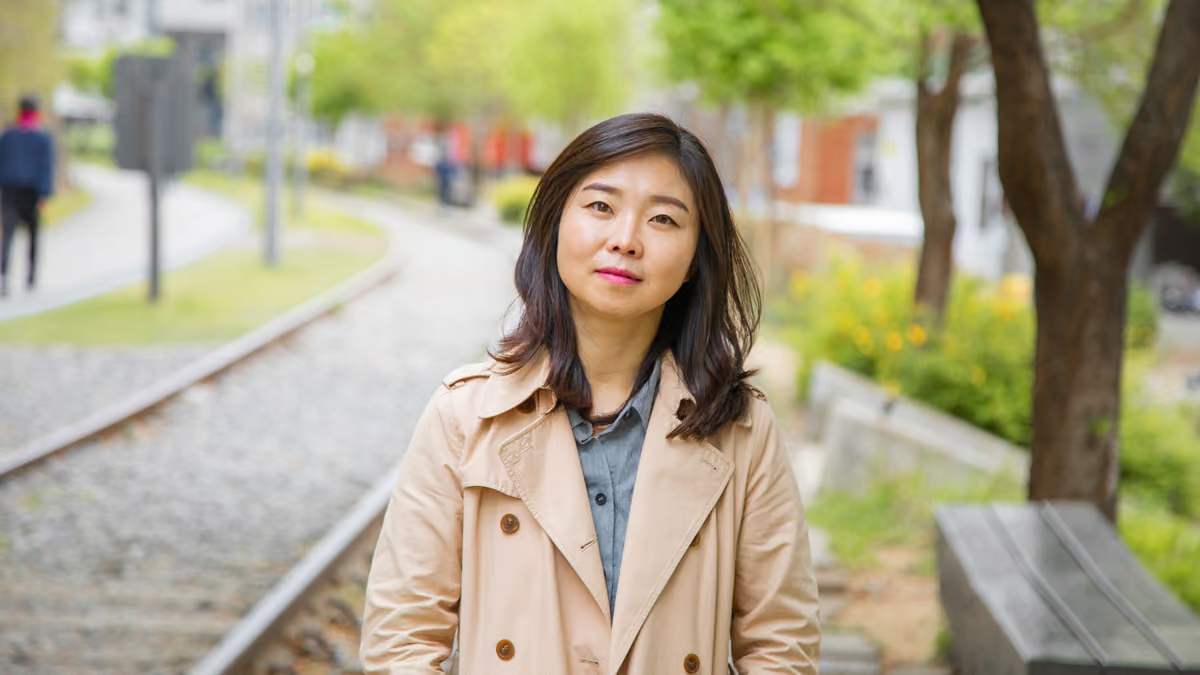
I co-authored a book about my journey, A Thousand Miles to Freedom, with a foreign journalist named Sebastien Falletti. He interviewed several North Koreans, and I agreed to share my story with him out of a sense of duty. I never thought he’d choose me.
Compared to North Korean defectors who live special lives, I don’t actually dream of being a human rights activist. There are times when I don’t want to share anymore and I feel like I have to repeat myself.
But then I think about my best friend in North Korea. Her name is Sunhwa and I don’t think she’s here yet. I imagine that she would want to live like me — to attend college, pave her own way, and explore the vast world we live in. But she is still stuck in the darkness. Until Sunhwa can live a life of freedom, I feel a sense of responsibility to continue to share.
When I think of North Korea, the dark image of my hometown floods my memories. But I would still like to go back just once and visit my dad’s grave. As I’ve gotten older, I’ve realized that he was also a victim of the North Korean regime. I have hope that in this lifetime, North Korea will open up. I’ll return with my mom and my sister, and together we’ll visit my dad’s resting place and prepare a huge meal for him.
For North Koreans to share their stories with audiences around the world, retelling and reliving some of the most harrowing experiences, is an act of exceptional courage. They’re working towards the day when others no longer have to go through the same painful experiences.
You can help rescue more North Korean refugees and support them as they begin their new lives in freedom.
Give today
Freedom Walk & Run 2026, Seoul
What Does Freedom Mean to You?
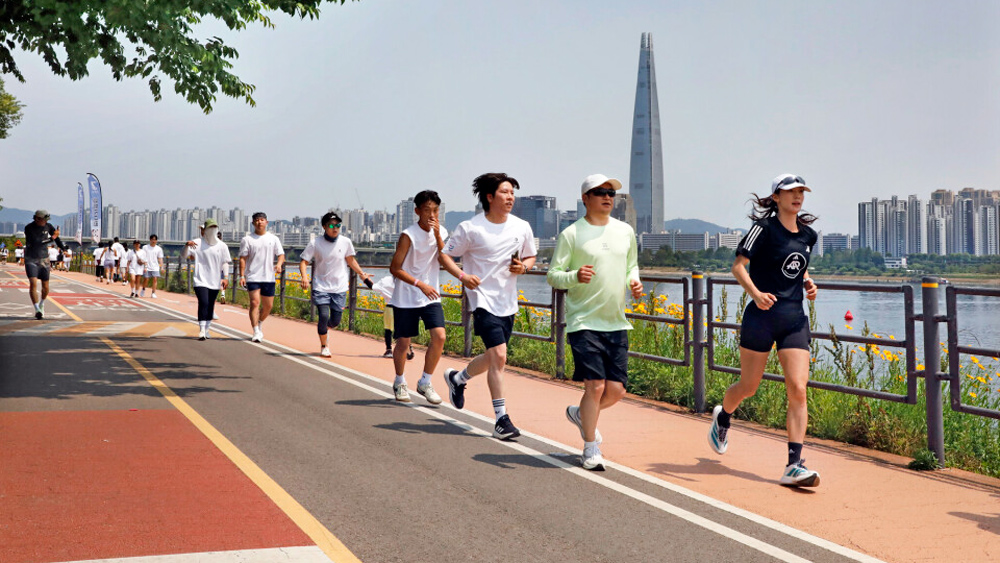
This fall, 200 people will gather along the Han River in Seoul to honor the 26 million people living in North Korea by answering one question: What does freedom mean to you?
Before setting out, every participant in Liberty in North Korea’s Freedom Walk & Run will write their own answers on the race bib they’ll wear for the 6 kilometer race.
The course is divided into three sections, each representing a different freedom: the freedom to leave, the freedom to lead, and the freedom to learn.
Each represents a different part of LiNK’s work and a different way North Korean people are pursuing greater freedom and choice in their own lives.
0-2km: Freedom to Leave
The first two kilometers represent the freedom to leave.
For North Koreans who decide to leave their country, reaching safety can mean a long and dangerous journey through multiple countries.
LiNK helps North Korean refugees navigate a secret route to safety. To date, over 1,400 North Korean refugees have reached freedom through LiNK’s networks. Every person who makes that journey has their own reason for leaving, their own hopes for what comes next, and their own idea of what freedom means to them.
Reaching safety opens the door to the next part of their journey.
2km-4km: Freedom to Lead
The next two kilometers represent the freedom to lead.
Starting over in a new country comes with countless possibilities, but just as many challenges. North Korean people resettling in South Korea or the US are learning a new system, while pursuing education, beginning careers, building relationships, or deciding what they want their future to look like.
LiNK’s programs support resettled North Koreans as they pursue education, language learning, and career development, providing mentorship, scholarships, and so much more.
And then comes the final stretch.
4-6km: Freedom to Learn
The last two kilometers represent the freedom to learn.
For people living inside North Korea, access to information from outside of the country is heavily restricted. Official media is centrally controlled, while foreign films, television, music, news, and other outside information are accessed illegally and often at significant personal risk.
Despite the government’s efforts to control information, curiosity about what freedom looks like proves impossible to suppress.
“No matter how much you try to control it, you can’t get rid of curiosity.”
Information gives someone a new point of reference. It introduces possibilities they had never encountered before. It gives them the chance to imagine a future beyond the North Korean regime.
North Korean people are finding ways to access outside media, through USB drives and microSD cards. LiNK’s Information Access Programs build on these existing channels by working with North Korean defectors and engineers to develop tailor-made technology and content that help people inside the country access more information more safely.
This is a growing part of our work, and one we believe has enormous potential to contribute to long-term change.
Get Involved: Support information access in North Korea
This fall, we’re giving supporters a closer look at this work through an upcoming documentary about information access in North Korea.
Make a gift of $30 or more to LiNK’s Information Access Programs by October 24 and you’ll receive an exclusive preview of the documentary this fall.
Your support helps LiNK enable more North Koreans to access more outside information more safely. This builds people’s resilience against regime disinformation, increases their aspirations for social and economic progress, and builds pressure for change and opening.
Donate today & get the documentary preview
Join us in Seoul
If you’re in Seoul, join us along the Han River on Saturday, October 24, for the Freedom Walk & Run. Participation is limited to 200 people, so reserve your spot today.










