
Beyond Utopia: Documenting the Escape From North Korea
“...When life hands you an opportunity to watch footage like this, you don’t turn it down.” – IndieWire
Sharing visuals from the field has always been a dilemma for our organization. On one hand, the highly sensitive nature of the work makes protecting our routes and the identities of those involved the top priority. On the other, there is undeniable power and potential for impact in showing the reality of rescues—the high-stakes peril, raw emotion, and incredible moments of bravery from our North Korean friends. If only people could see what we did; it would become undeniably clear how important this issue is.
When Liberty in North Korea was first introduced to the Beyond Utopia team and their goal of documenting an actual rescue, we were incredibly hopeful, but with a healthy dose of skepticism. We knew all too well the countless risks, conflicting interests, and stakeholders involved in making such a project. Yet when we saw the footage, even in the most initial stages of editing, we knew this was something special.
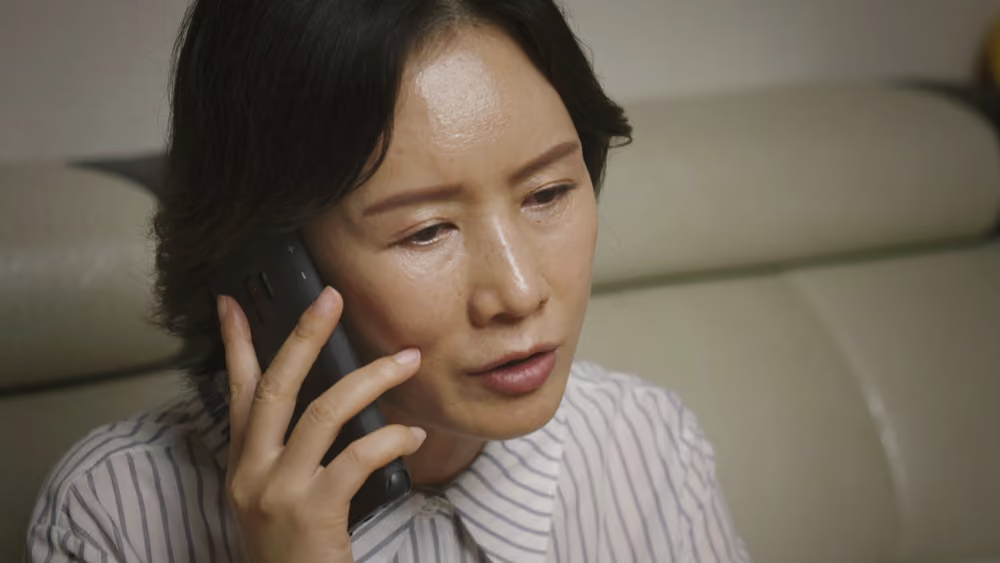
Gripping, visceral, and urgent, Beyond Utopia embeds the viewer into the lives of several people as they navigate the path to freedom — a mother desperate to reunite with her son, a family of five as they attempt their perilous escape, and a South Korean pastor who’s devoted his life to helping North Korean refugees.
The film is both a simple record of events as they unfold and a suspenseful piece of cinema, weaved together with commentary from leading experts on the Korean Peninsula (including LiNK’s South Korea Country Director, Sokeel Park). It pulls back the curtain on the escape journey in a way that honors the truth and the film participants, while preserving the integrity of the work being documented. Although Beyond Utopia utilized Pastor Kim’s networks rather than our own, LiNK worked closely with the film’s team throughout post-production to review footage for security and accuracy.
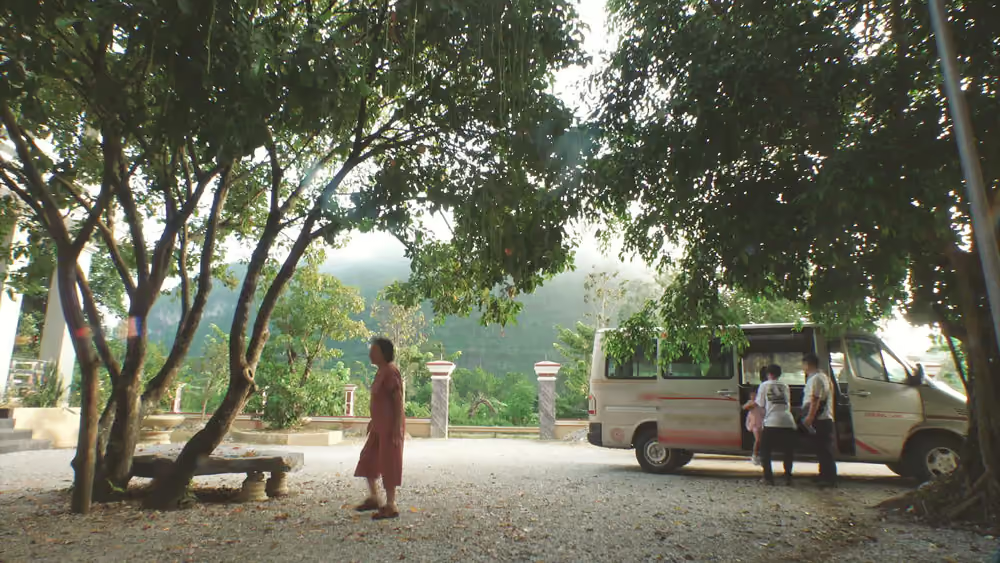
The film made its debut in January 2023 at the Sundance Film Festival, long recognized as a hotspot for the upcoming year’s most impactful stories. To premiere at this influential celebration of cinema is a lifelong dream for many filmmakers, making Beyond Utopia’s inclusion alone a significant achievement.
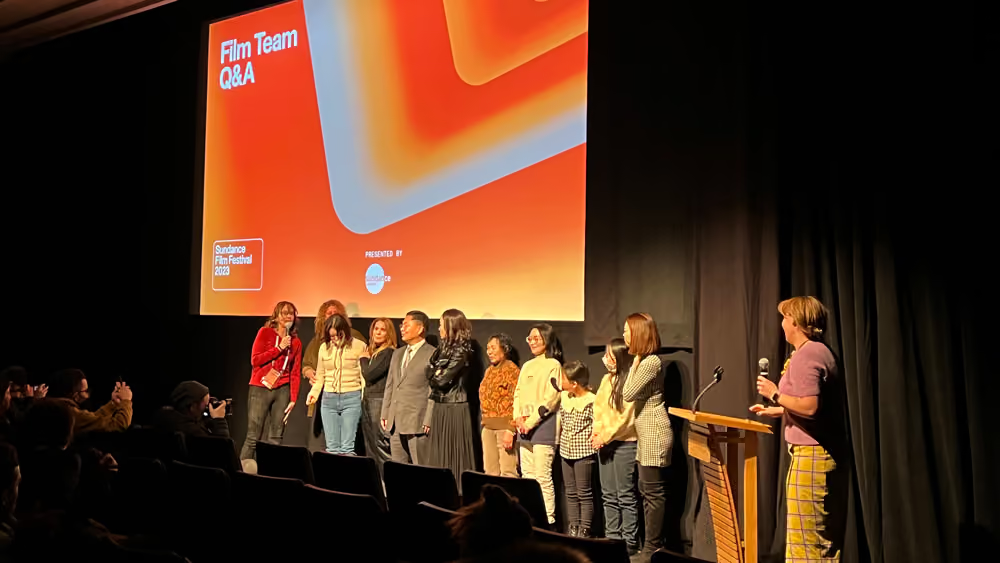
LiNK’s CEO, Hannah Song, was able to attend Sundance alongside the crew and some of the film participants. She sat with the Roh family as they re-lived their escape on screen and saw how harrowing it truly was. For them to finally look back on their journey was a surreal and deeply emotional experience. Audience members were also tearing up and sniffling throughout the film and at the end, there was a long standing ovation — so deserved by these families for everything they have been through to reach freedom.
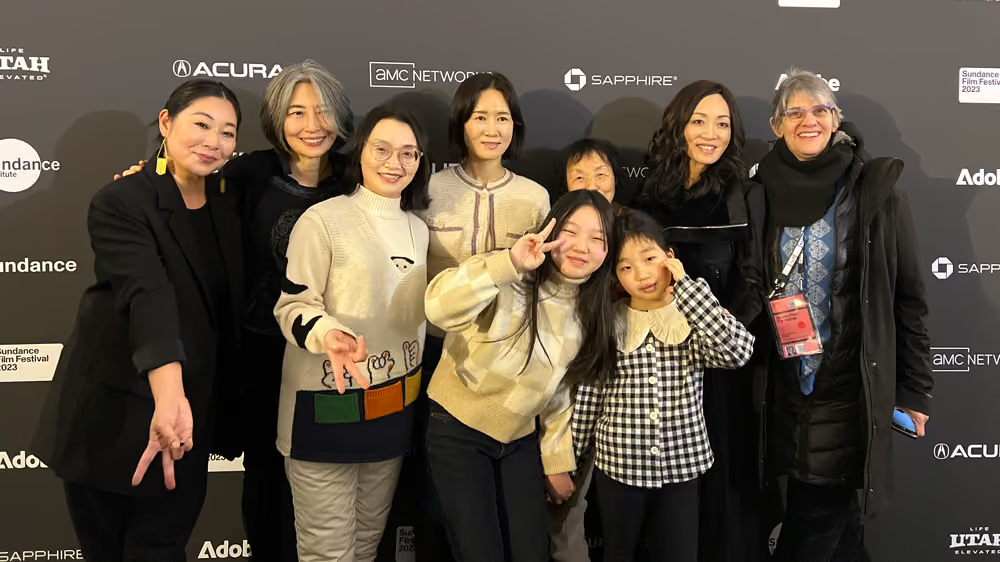
Sundance had one more surprise in store for us. A testament to the film’s heart, it won the coveted Audience Award for U.S. Documentary, selected by festival attendees themselves. The heartfelt recognition launched Beyond Utopia into another level of visibility, setting the tone for its success in the film festival circuit with some calling it an “Oscar hopeful.”
LiNK is proud to be an impact partner and fiscal sponsor for the film. As Beyond Utopia heads to theaters on October 23rd and 24th for an exclusive two-day event, LiNK will be joining the film on-screen to turn audience interest into tangible action. This documentary follows the lives of a handful of people, but the story is much larger than that. The goal was always to raise awareness and invite new audiences to learn more about all aspects of this issue, get involved as Allies, and help more North Korean refugees reach freedom.
As we’ve been able to slowly regain momentum with rescues since the pandemic, the level of visibility that Beyond Utopia offers is a timely opportunity. The journey has only become more challenging in recent years with border lockdowns, increased surveillance, and heightened restrictions. Costs have skyrocketed and become incredibly volatile, but our commitment to this work is stronger than ever.
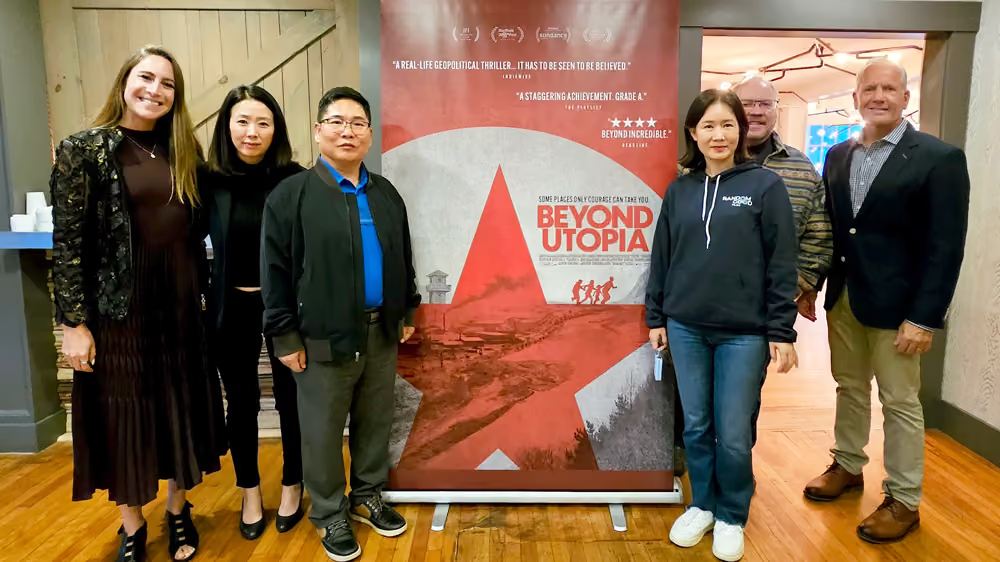
Above all, Beyond Utopia is a story about the strength and resilience of ordinary North Koreans, despite the staggering circumstances stacked against them. Changing the narrative on North Korea to focus on the people, not a dictator or missiles, has long been a key pillar of our work. Beyond Utopia aligns with this perfectly, and we hope it brings greater urgency and support for this issue.
It cannot be overstated how rare this glimpse into this modern-day underground railroad is, and what a herculean feat it was for this film to be made.
Don’t miss the opportunity to see Beyond Utopia for yourself — now available on Hulu, Apple TV+, Amazon Prime video, and more.
Freedom Walk & Run 2026, Seoul
What Does Freedom Mean to You?
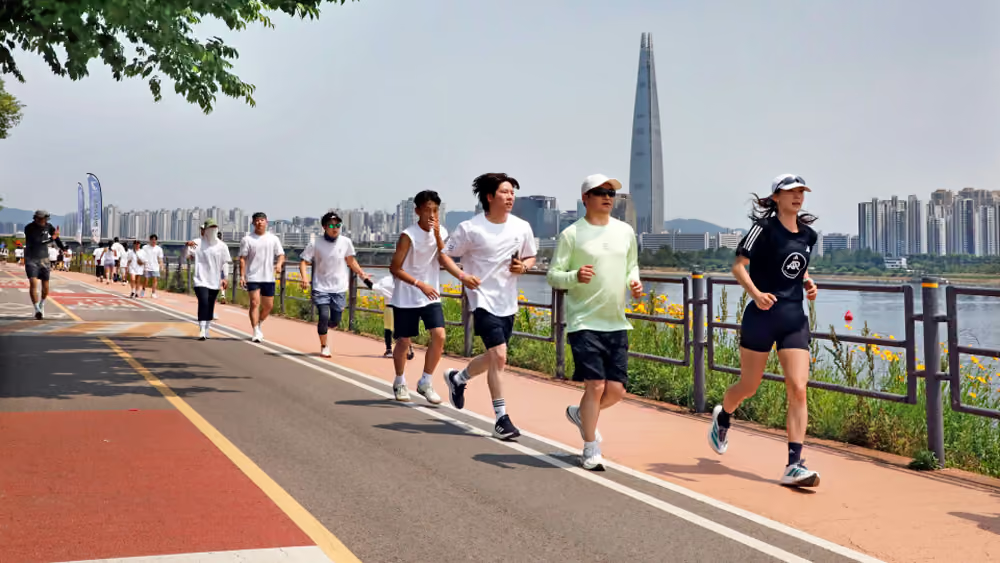
This fall, 200 people will gather along the Han River in Seoul to honor the 26 million people living in North Korea by answering one question: What does freedom mean to you?
Before setting out, every participant in Liberty in North Korea’s Freedom Walk & Run will write their own answers on the race bib they’ll wear for the 6 kilometer race.
The course is divided into three sections, each representing a different freedom: the freedom to leave, the freedom to lead, and the freedom to learn.
Each represents a different part of LiNK’s work and a different way North Korean people are pursuing greater freedom and choice in their own lives.
0-2km: Freedom to Leave
The first two kilometers represent the freedom to leave.
For North Koreans who decide to leave their country, reaching safety can mean a long and dangerous journey through multiple countries.
LiNK helps North Korean refugees navigate a secret route to safety. To date, over 1,400 North Korean refugees have reached freedom through LiNK’s networks. Every person who makes that journey has their own reason for leaving, their own hopes for what comes next, and their own idea of what freedom means to them.
Reaching safety opens the door to the next part of their journey.
2km-4km: Freedom to Lead
The next two kilometers represent the freedom to lead.
Starting over in a new country comes with countless possibilities, but just as many challenges. North Korean people resettling in South Korea or the US are learning a new system, while pursuing education, beginning careers, building relationships, or deciding what they want their future to look like.
LiNK’s programs support resettled North Koreans as they pursue education, language learning, and career development, providing mentorship, scholarships, and so much more.
And then comes the final stretch.
4-6km: Freedom to Learn
The last two kilometers represent the freedom to learn.
For people living inside North Korea, access to information from outside of the country is heavily restricted. Official media is centrally controlled, while foreign films, television, music, news, and other outside information are accessed illegally and often at significant personal risk.
Despite the government’s efforts to control information, curiosity about what freedom looks like proves impossible to suppress.
“No matter how much you try to control it, you can’t get rid of curiosity.”
Information gives someone a new point of reference. It introduces possibilities they had never encountered before. It gives them the chance to imagine a future beyond the North Korean regime.
North Korean people are finding ways to access outside media, through USB drives and microSD cards. LiNK’s Information Access Programs build on these existing channels by working with North Korean defectors and engineers to develop tailor-made technology and content that help people inside the country access more information more safely.
This is a growing part of our work, and one we believe has enormous potential to contribute to long-term change.
Get Involved: Support information access in North Korea
This fall, we’re giving supporters a closer look at this work through an upcoming documentary about information access in North Korea.
Make a gift of $30 or more to LiNK’s Information Access Programs by October 24 and you’ll receive an exclusive preview of the documentary this fall.
Your support helps LiNK enable more North Koreans to access more outside information more safely. This builds people’s resilience against regime disinformation, increases their aspirations for social and economic progress, and builds pressure for change and opening.
Donate today & get the documentary preview
Join us in Seoul
If you’re in Seoul, join us along the Han River on Saturday, October 24, for the Freedom Walk & Run. Participation is limited to 200 people, so reserve your spot today.










