
I am Joy: I Escaped North Korea and Survived Human Trafficking
I was born and raised in a small North Korean village near the border with China. My family was very poor, and it made life extremely difficult for us. As a child I could not attend school and didn’t have any dreams for my future, because we were just trying to survive.
When I was seven, my mother quietly left us to go to China in order to make money. It took me months to realize that she was never coming back. As a teenager, my stepmother kept trying to marry me off so they would have one less mouth to feed. I didn’t want to be married off, so I finally decided to go to China to find a better life.
I felt so sorry to my father for not being a good daughter. I left a letter for him to explain why I was leaving, and how much I loved him. I told him that I hoped to see him again someday. Next to the letter I also left behind my nicest clothes, hoping he could sell them to buy food. I sewed a secret pocket into my jacket and hid a photo of my family there, and under my shirt collar I hid enough opium to kill myself in case I was caught. The morning I left I didn’t want to raise any suspicion, so I casually said goodbye to my father and walked out like it was any normal day. I couldn’t stop crying as I walked away. I knew that I may never see my family again, especially my father, who had sacrificed so much to raise me.
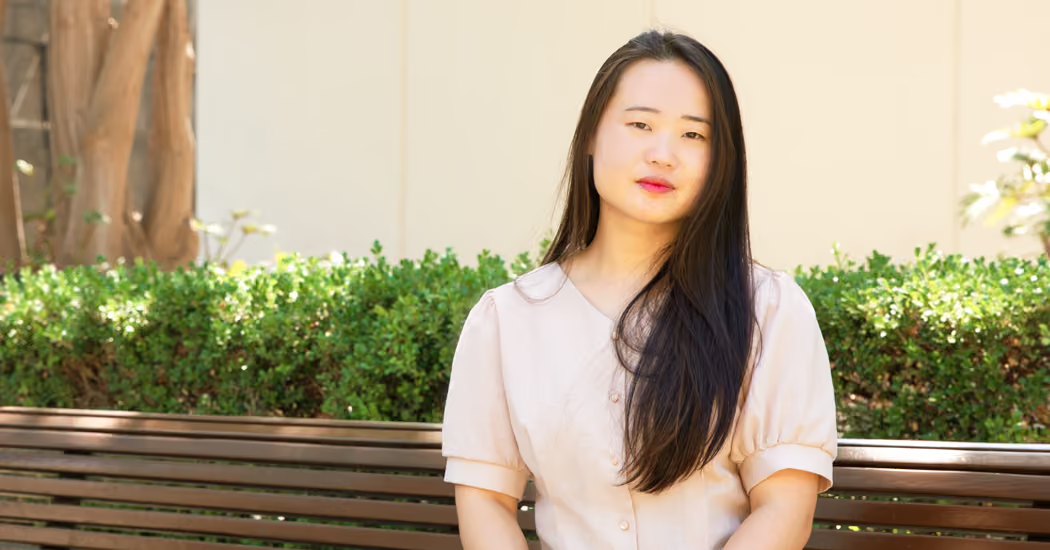
I will never forget how cold it was at the river. I could feel the snow through my torn shoes and the wind blew through my thin jacket. I was shivering as I stood in the knee-deep snow, waiting for the chance to make my escape. I slid down the riverbank onto the ice. I could hear the ice cracking as I crawled on my stomach across the frozen river. I expected that at any minute, North Korean guards would see me escaping and shoot me. After I finally made it to the Chinese side, it took me hours to find the broker I was supposed to meet.
By the time I found her, my toes were frozen white. The broker took me to her home to rest and recover . But I soon realized I was trapped. She told me I had to repay her and the other brokers a lot of money for helping me escape. And, because I had no money, the only option was to be sold as a bride. I was scared that if I refused, the brokers would sell me to a brothel or I would be forced to work in online sex chatrooms. I also knew that if I ran away, I’d be caught by the Chinese police and sent back to North Korea to face imprisonment and torture.
I had no choice but to be sold as a bride. For three days, a broker paraded me around villages in northern China and crowds of men would gather to bid on me.
In the final village, I sat cowering in the corner of a house. My cheeks were still red from the night I had crossed the river. There were many older Chinese men walking around me, and staring at me. I stared at the floor to avoid looking into their eyes. I did not understand what they were saying, but I could tell they were talking about me. I felt so humiliated. I was treated like an animal in a zoo. The North Korean broker finally found a man who was willing to pay enough for me. I was sold for three thousand dollars. In that moment, I was overcome with hopelessness, sorrow, and loss. I felt like I was losing everything, including my own body, to someone I had just met.
I was only 18.
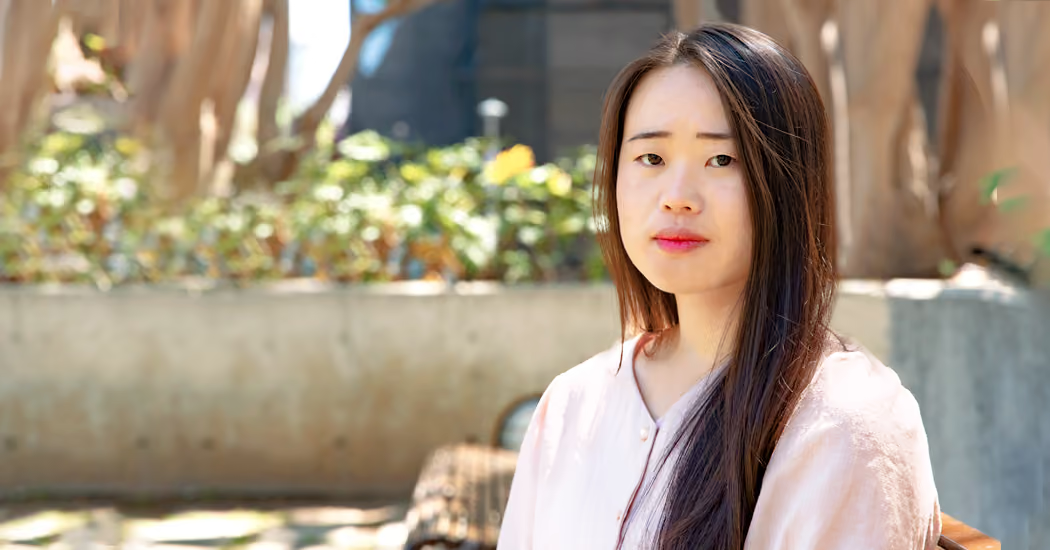
The man who bought me lived with his parents. They were afraid I would run away so they were always watching me. I was not even allowed to go to the bathroom without their permission. One morning, I started feeling sick so they took me to a local hospital.After some medical tests, the family brought me back to the house and everyone was smiling and talking. I was so confused. Someone called a North Korean woman who lived in my village and asked her to interpret the news for me. I was pregnant. As everyone celebrated, I felt even more hopeless.
This pregnancy would make my escape impossible. In North Korea, I had heard that if you jump off a high place or carry heavy things while you’re pregnant, you’ll have a miscarriage. So I tried to jump off the highest tree in the backyard, and carried around heavy buckets of water. But nine months later, I gave birth to a healthy baby daughter.
For the first few days after her birth, I didn’t even want to look at her. I was sorry and ashamed for feeling that way, but I couldn’t help resenting her. But as the days passed, my daughter began to recognize my face, and she would greet me with a big smile and open arms whenever I walked into the room. Her smile and joyful laughter began to melt away my troubles and hardships.
For the next two years, my daughter became my only reason to live.
Then one day, a North Korean woman who had also been sold into the same village introduced me to a South Korean man. He told me about South Korea, and the possibility of a free life, and said he offered to help me get there. But he warned me that the journey through China and Southeast Asia would be too dangerous for a young child. I was so torn. This was my chance to finally be free from this man and from the constant fear of being caught and sent back to North Korea. But how could I leave my child, the only joy in my life?
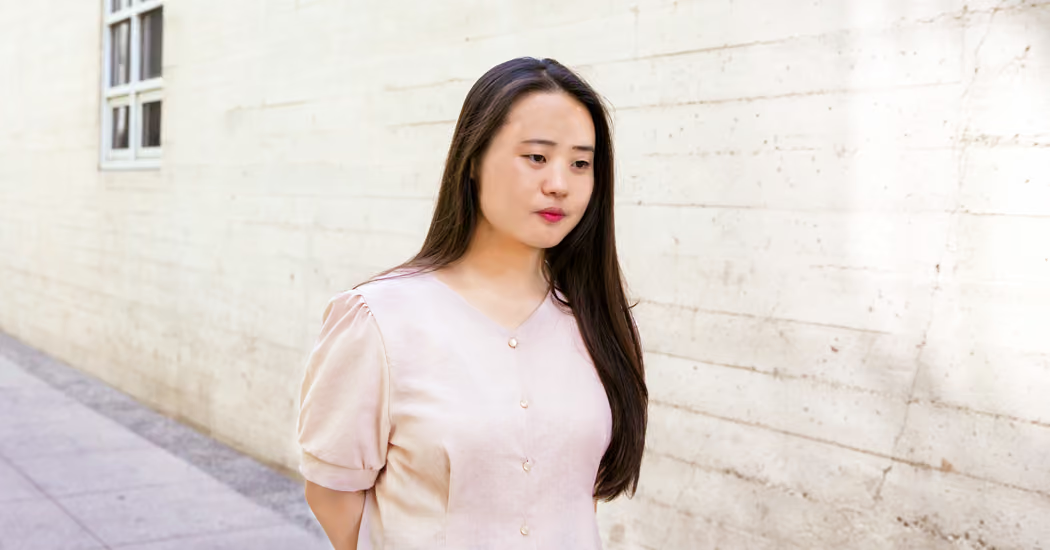
I was afraid I would never get an opportunity like this again , so I made the extremely difficult decision to go to South Korea, and I vowed to come back to China as soon as I could to get my daughter. In the early morning of my departure, I held my daughter in my arms as she slept and cried. I thought about the moment she would wake up and cry because I was not there. It reminded me of the day that my own mother had left me. I had felt so lonely and wondered for so long why she had abandoned me. I resented her for giving birth to me if she wasn’t interested in raising a child. And now I had to do the same thing to my own daughter.
I clenched my fists as hard as I could to hold back the tears, and I told the family I was making a trip to the market. I grabbed the bag of clothes I’d hid in the bush the day before, and headed to the bus station. I cried every day for the next three months thinking about my daughter. During my journey out of China, there were many nights when I woke up thinking I’d heard my daughter’s voice calling out “mommy.” One night, I didn’t want to wake everyone up so I went behind the curtain to cry, and I found another woman who was already there crying. She had also left her child behind to escape with my group. We sat behind that curtain in the safe house, weeping and hugging each other.
I finally made it to South Korea in 2013 with the help of Liberty in North Korea. I am currently in my last year of studying social work, and I want to devote my life to helping North Korean women who have endured the same trauma that I have. Although adjusting to a new society is difficult at times, I am determined to work hard so that one day I can bring my daughter to South Korea to be with me.
I should not be here today - I am one of the lucky ones.
At this very moment, women are being treated like a commodity and are being sold to older Chinese men. A recent report estimated that 60% of the North Korean female refugees in China are trafficked into the sex trade. 50% of those trafficked are forced into prostitution, 30% are in a forced marriage, and 15% are working in the cyber sex industry.
I am here as a survivor to share the darkest moments from my past so that I can help bring an end to the exploitation of other North Korean women refugees.
For North Korean women, escaping from North Korea is not the end of their journey but the beginning of their fight for freedom.
Please extend your love and give your support so that more North Korean people will find true freedom and safety. Thank you. I am grateful and hopeful. I am Joy.
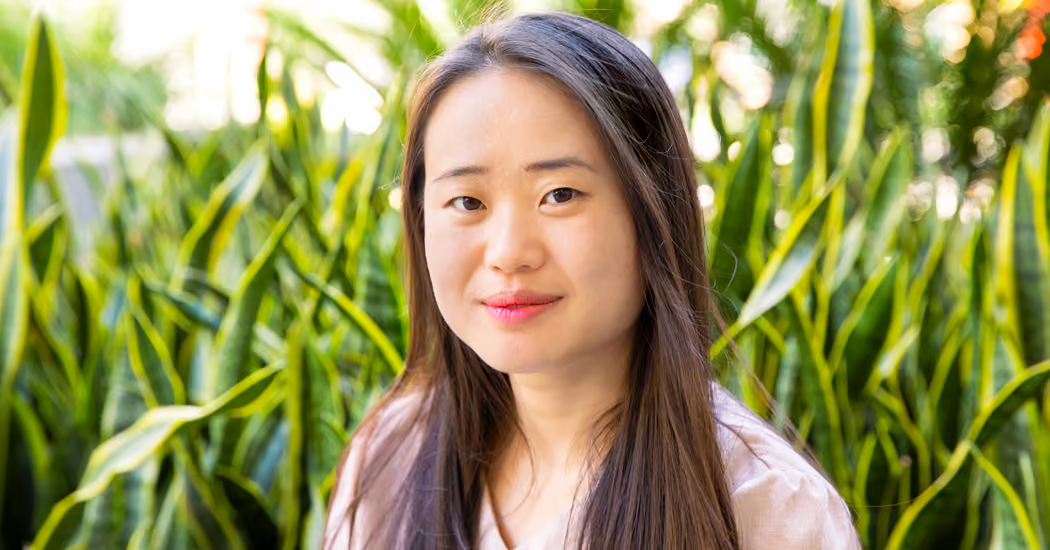
See what life is like for North Korean women who are sold in China in the short film "Sleep Well, My Baby". Based on true stories from women rescued through LiNK.
Read Joy’s full journey from escaping North Korea to being sold in China, and finally reaching freedom through LiNK’s rescue routes in our 3-part series here!
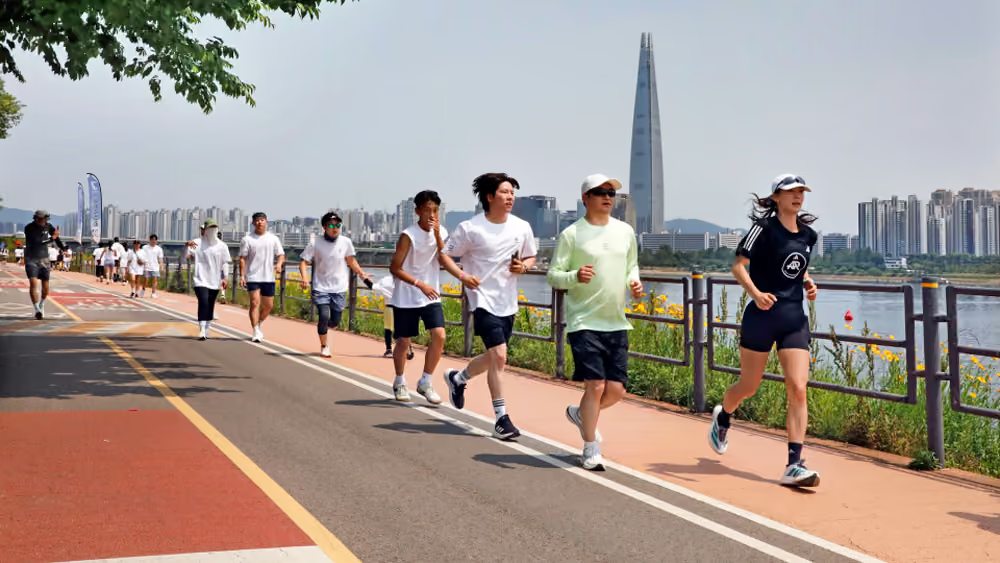
Freedom Walk & Run 2026, Seoul
What Does Freedom Mean to You?
This fall, 200 people will gather along the Han River in Seoul to honor the 26 million people living in North Korea by answering one question: What does freedom mean to you?
Before setting out, every participant in Liberty in North Korea’s Freedom Walk & Run will write their own answers on the race bib they’ll wear for the 6 kilometer race.
The course is divided into three sections, each representing a different freedom: the freedom to leave, the freedom to lead, and the freedom to learn.
Each represents a different part of LiNK’s work and a different way North Korean people are pursuing greater freedom and choice in their own lives.
0-2km: Freedom to Leave
The first two kilometers represent the freedom to leave.
For North Koreans who decide to leave their country, reaching safety can mean a long and dangerous journey through multiple countries.
LiNK helps North Korean refugees navigate a secret route to safety. To date, over 1,400 North Korean refugees have reached freedom through LiNK’s networks. Every person who makes that journey has their own reason for leaving, their own hopes for what comes next, and their own idea of what freedom means to them.
Reaching safety opens the door to the next part of their journey.
2km-4km: Freedom to Lead
The next two kilometers represent the freedom to lead.
Starting over in a new country comes with countless possibilities, but just as many challenges. North Korean people resettling in South Korea or the US are learning a new system, while pursuing education, beginning careers, building relationships, or deciding what they want their future to look like.
LiNK’s programs support resettled North Koreans as they pursue education, language learning, and career development, providing mentorship, scholarships, and so much more.
And then comes the final stretch.
4-6km: Freedom to Learn
The last two kilometers represent the freedom to learn.
For people living inside North Korea, access to information from outside of the country is heavily restricted. Official media is centrally controlled, while foreign films, television, music, news, and other outside information are accessed illegally and often at significant personal risk.
Despite the government’s efforts to control information, curiosity about what freedom looks like proves impossible to suppress.
“No matter how much you try to control it, you can’t get rid of curiosity.”
Information gives someone a new point of reference. It introduces possibilities they had never encountered before. It gives them the chance to imagine a future beyond the North Korean regime.
North Korean people are finding ways to access outside media, through USB drives and microSD cards. LiNK’s Information Access Programs build on these existing channels by working with North Korean defectors and engineers to develop tailor-made technology and content that help people inside the country access more information more safely.
This is a growing part of our work, and one we believe has enormous potential to contribute to long-term change.
Get Involved: Support information access in North Korea
This fall, we’re giving supporters a closer look at this work through an upcoming documentary about information access in North Korea.
Make a gift of $30 or more to LiNK’s Information Access Programs by October 24 and you’ll receive an exclusive preview of the documentary this fall.
Your support helps LiNK enable more North Koreans to access more outside information more safely. This builds people’s resilience against regime disinformation, increases their aspirations for social and economic progress, and builds pressure for change and opening.
Donate today & get the documentary preview
Join us in Seoul
If you’re in Seoul, join us along the Han River on Saturday, October 24, for the Freedom Walk & Run. Participation is limited to 200 people, so reserve your spot today.










