
Life in Freedom: A Conversation with Brian

For many years, Brian lived a charmed life in North Korea. He had a loving family, a university education, and a full stomach, but everything changed when the government stopped providing rations and wages for work. To make extra money, Brian's father began working as a broker, helping desperate North Koreans escape to China.
When his father was outed in a newspaper for helping a high profile defector escape, the entire family was put in danger. Brian's parents immediately fled to China. He followed soon thereafter, but was captured upon arrival by Chinese police. He spent the next two weeks in a detention center in China, where he was routinely beaten. Thankfully, LiNK was able to pay for his release so he could avoid repatriation.
Since resettling in South Korea, Brian's been very busy. He began attending university shortly after he arrived, hoping to become a journalist in the future so he can write about North Korea for an international audience. This year, he got married to another North Korean defector and they're now expecting their first child.
Our resettlement coordinator Jihyun was able to catch up with Brian recently to talk about what his life has been like since resettling.
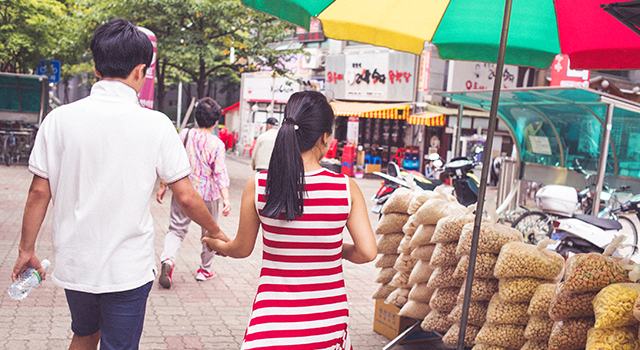
Jihyun: What is the best thing that happened to you this week?
Brian: My pregnant wife and I found out that we are having a daughter! Yeah, we are so happy!I felt so bad watching my wife going through morning sickness. She couldn’t eat properly until recently.
Jihyun: So did you not eat when she couldn’t eat because you felt so bad for her?
Brian: Oh, no. I still ate well, because...you know, I was hungry. Haha.
Jihyun: Oh yeah, I understand. Of course you had to eat well so you could protect and take good care of her when she couldn’t eat. (Brian, his wife, and the photographer laugh.)

Jihyun: What was the most difficult thing when you got out of Hanawon (resettlement center for North Korean defectors)?
Brian: When I first graduated from Hanawon, I still had a thick North Korean accent so people looked at me whenever I started talking, which made me so uncomfortable.
Jihyun: What was your biggest challenge in North Korea? What's your biggest challenge in South Korea?
Brian: In North Korea I didn’t have a lot of difficulty because I was lucky to have a well-off family there. In fact, after I came to South Korea I started having a lot of difficulties because I had to adjust to the new society.
I think getting a job is one of the most difficult challenges for many resettled North Korean refugees. Especially since I am about to graduate from college and have a wife and a baby coming, I feel a little pressure. I just want more South Korean companies to hire more resettled North Koreans without discrimination/stereotype. I have heard from many of my North Korean friends that they have a hard time getting jobs because many companies have negative stereotypes about North Korean people, so they don’t want to hire North Korean candidates.
I am not saying that they have to hire us because we are from North Korea, but I want more companies to willingly hire us if we are qualified regardless of our background.
Also, I believe North Korean defectors in South Korea are still underprivileged in society and have a lot of obstacles. I hope there will be more effective job training and employment programs until more resettled North Koreans settle down in their specific work fields.

Jihyun: What is it like living in freedom in South Korea?
Brian: I really appreciate the freedom that I have here. In some of my college classes, I got to study the South Korean constitution that guarantees our freedom. There are so many types of freedom that I can enjoy. I can’t even count them because there are so many. One thing is the freedom of traveling anywhere I want. Back in North Korea, even traveling to another area was so difficult. Here, as long as I don’t cause trouble or break the law, no one can take away my freedom of movement.

Jihyun: Have you helped any other defectors resettle in South Korea? How?
Brian: Well, I wish I could do more, but right now what I can do is to help other resettled North Korean refugees who want to go to college by sharing my experience and giving them useful tips and advice about college life.
Jihyun: Have your perceptions of Americans and South Koreans changed?
Brian: In North Korea I didn’t really think South Koreans were very different than us because I thought we were all Koreans—the same blood. However, my perception of Americans changed a lot especially after I met LiNK staff and learned about LiNK's supporters.
I used to think Americans were so weird and selfish, because that was how I was taught about Americans in North Korea.
When I was caught by the Chinese police in China, LiNK helped me so much to be released and come to South Korea. I was so moved by that.

Jihyun: What advice would you give to a friend who just arrived in South Korea?
Brian: I want to share everything I have learned with him. I would say to him that he has to do what he wants. There are many options that you can choose for what you are going to do in this new society. If you don’t want to regret your decision in the future, you have to do what you like.

Jihyun: How often do you think about North Korea? What do you think about?
Brian: Not quite often, but I start thinking about North Korea when I am stressed out about my studies or finding a job, because I didn’t really worry about those kinds of things back in North Korea. When I am thinking of North Korea, I usually picture hanging out with my friends there. We played a lot of games, including card games. Also I liked drinking with my good friends too, haha.
Lastly I want to take this chance to say thanks to LiNK staff, volunteers, and supporters. I always appreciate them and thinking about them gives a lot of hope and motivation to do my best for my life.
5 TED Talks About North Korea You DEFINITELY Don’t Want To Miss
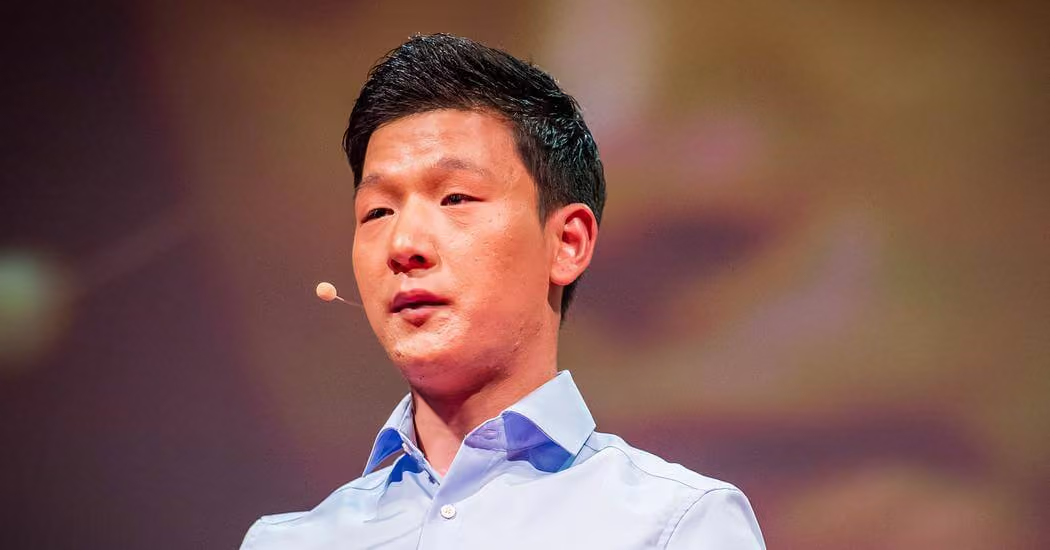
Five stories that illustrate the strength and humanity of the North Korean people
From a Street Kid in North Korea to a College Student in New York
North Korean defector Joseph Kim shares his story of growing up in North Korea during the famine. In this TED Talk he shares how an “act of love and caring” can change someone’s life.
It Was The “Best Country on the Planet” — Until She Realized People Were Dying
Hyeonseo Lee recounts her harrowing experience getting herself and her family out of North Korea and shares how getting to freedom was only half the battle.
Teaching North Korea’s Elite
Suki Kim went undercover as a teacher in North Korea to learn more about the closed-off country. The more time she spent with her students, the more she learned about the brutality of the regime but also the potential of the people.
Bonding in Captivity
Documentary journalist Euna Lee shares how being held captive in North Korea showed her the humanity of the North Korean people.
Change in North Korea is Not Just Possible — It’s Inevitable
LiNK’s Director of Research and Strategy Sokeel Park explains how the outside information pouring into North Korea is empowering the people and creating change within the country.










