
Meet Noel, Our Newest North Korean LiNK Staff Member!

History has been made!! We have hired our first full-time North Korean resettlement staffer! Noel Kim might look familiar and that’s because she was LiNK Advocacy Fellow and intern at our Seoul office! As our newest Program Coordinator in Seoul, she works side-by-side with newly resettled North Koreans as they overcome the challenges of starting over in a new society.
We recently sat down with Noel to learn more about her new job and her own experience coming to South Korea.
How is it been working at LiNK so far?
Work is fun! Every moment I feel like my job is meaningful so it doesn’t feel like work at all. I became a staffer after being an intern so the work is similar but with more responsibilities and opportunities.
Why did you want to work at LiNK?
I joined LiNK last year as an Advocacy Fellow. I witnessed what LiNK does for the North Korean people and it was inspirational. I am from North Korea and it’s my responsibility to help but when I came to South Korea, I didn’t do anything to support my fellow North Koreans. I was embarrassed about that so when I heard about LiNK I saw it as an opportunity to make a meaningful impact!
How do your own experiences as a resettled refugee help you when you’re with our North Korean friends?
I lived through the same experiences so I think they trust me from the get go. I try to comfort them and give them advice on educational opportunities, resettlement programs, and even fun things they can do now that they are free. I also tell them to travel around South Korea.
There’s a North Korean saying, "A walking fool is better than a sitting intellectual."
You have to go see and experience how society works for yourself. You have to go see what clothes people wear, how they talk, and where they go to hang out. I believe being curious helps people adjust to South Korean society much faster.

What are some of the challenges resettled refugees you work with are facing in South Korea?
Usually, the people I meet struggle a lot with their North Korean accents. When I came to South Korea, I was ashamed of my accent too. The moment you open your mouth people know you're from North Korea. It makes you feel different. But I always tell the North Koreans I meet that with time their accents will naturally fade and not to stress too much about it.Also, older people who want to learn a skill usually have doubts that they can achieve their dreams at their age. I don’t think age matters, so I encourage them not to think like that but I completely understand and empathize with their concerns and feelings.
You’re working with North Koreans who have just resettled in South Korea, what was one of the hardest challenges you faced when you resettled?
One of them was making choices. When I lived in North Korea, I was never free. But then I came to South Korea and had freedoms I had never had before. It sounds strange, but it was not easy having so much freedom. For example, choosing your college major or your dream for your life was a new challenge. There were too many choices. I didn’t know what I should do or what I should choose. I recently read the book Escape from Freedom and as I read it, it hit me – I was running away from freedom.
It was so good to have freedom, but because I never had it before, I didn’t know what to do with it. Now that I have the freedom to do what I want, I'm working on doing something great with it.
What has been your favorite moment while working at LiNK?
It was a few months ago. The South Korea office had a karaoke gathering with LiNK’s board members and a lot of our North Korean friends. We just hung out and sang a lot of songs. That was one of my favorite memories because I was the emcee! I got to dance and I sang “Chingu” ( or “Friend”), a very old song I sang when I was younger.
It was my first time meeting so many North Koreans in one place in South Korea. I thought,“This is amazing that we are all together. It’s so much easier to be happy when we are together.”
What are your future plans or goals?
I am going to continue writing. I want to finish writing a book by the time I’m 30. I don’t care if it’ll ever be published. I just want to do it. And even if it seems far in the future, when North Korea opens, I want to return. I want to do whatever I can for the North Korean people. My work now at LiNK is preparing me for the day North Korea finally opens.
Want to to learn more about our resettlement work? Check it out here!
A North Korean’s Promise to his Father | Joseph’s Story: Part 1
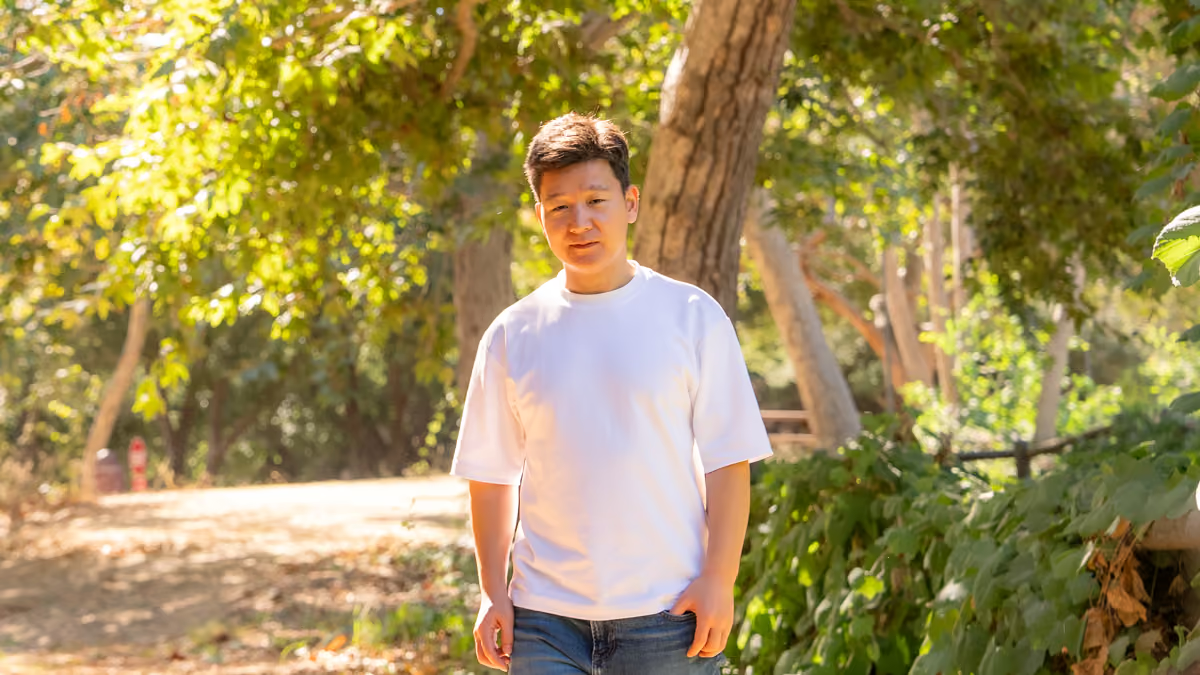
Most of you may know me as Joseph, but my Korean name is Kim Kwang Jin. It means, “walking forward with brightness.” My father gave me this name, full of the hopes and expectations many fathers have for their sons.
But hope is a hard thing to have, especially in a country like North Korea, and as a child, I certainly didn’t make it any easier for my father to believe in my brightness. Even in elementary school, I was a poor student.
The first time I remember making my father proud was through my cooking, not from studying. That day, he and my older sister had gone to the mountains to collect firewood. It was getting close to midnight, but they still hadn’t come home, so I decided to make dinner for them—rice and kimchi soup. At the end of dinner, my father said, Son, this is the best rice I’ve ever had. I had never made rice before, and I knew it was undercooked. That night I realized how much my father loves me. I promised myself that next time I would make him better rice.
But next time never came. When I was 12, my father died of starvation.
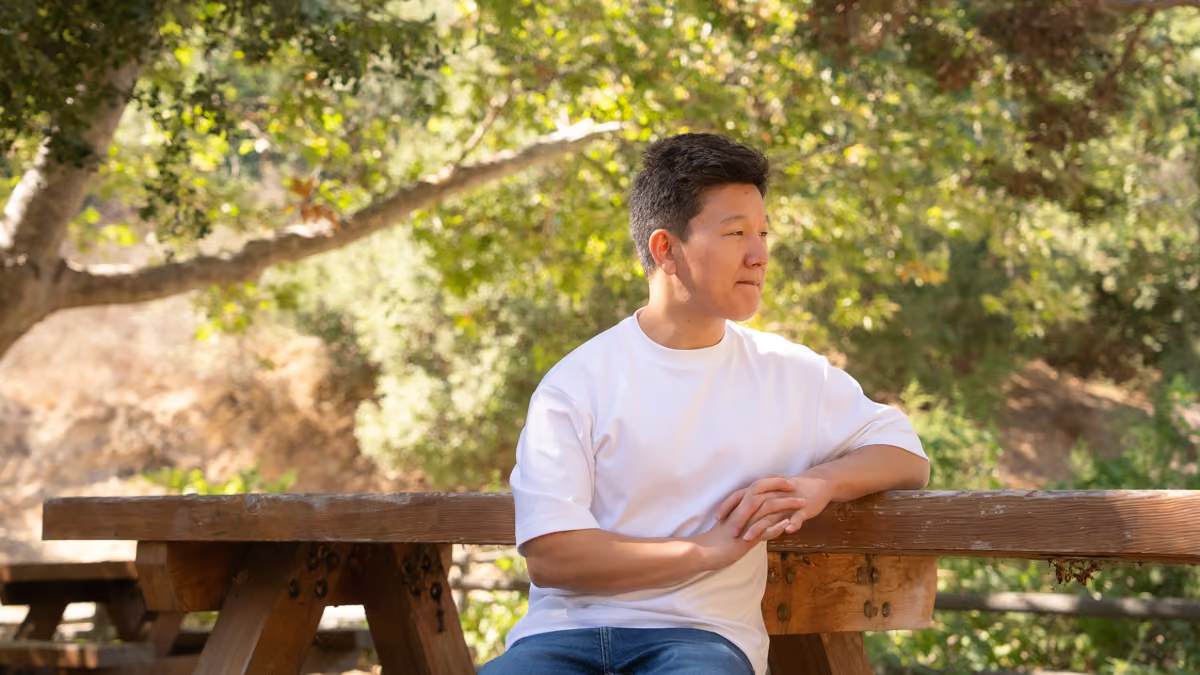
To save us from the same fate, my mother and sister left for China in search of work and food. My mom ended up in a North Korean prison. But my sister never returned. Within one year, I had lost my entire family. I was alone—helpless, homeless, and orphaned on the streets.
After three years of barely surviving, I decided to escape. The journey would be risky, but staying in North Korea would be a risk too. I knew I could die of starvation. So I took a chance. Unlike most people, I decided to escape during the daytime, thinking that the border guards would become complacent because why would anyone be crazy enough to cross the border in the middle of the day with nowhere to hide?
Fortunately, I made it to China without being caught.
In China, I slept in the mountains and went to towns begging for food to survive. One day, while crossing a bridge in Yanji, I remember it started to snow. Everyone around me started walking fast.
I remember being so envious because walking fast must have meant they had a home they were rushing toward. I, too, wanted to walk fast, but I had no home and no one waiting for me.
Later on, I was lucky enough to be taken in by a halmoni, an older grandmother. She fed me and let me live with her for six months but I still lived in hiding, fearful that at any moment I could be arrested and sent back to North Korea. The halmoni eventually connected me with Liberty in North Korea and I had an opportunity to escape China and be the first North Korean refugee minor to come to the United States.
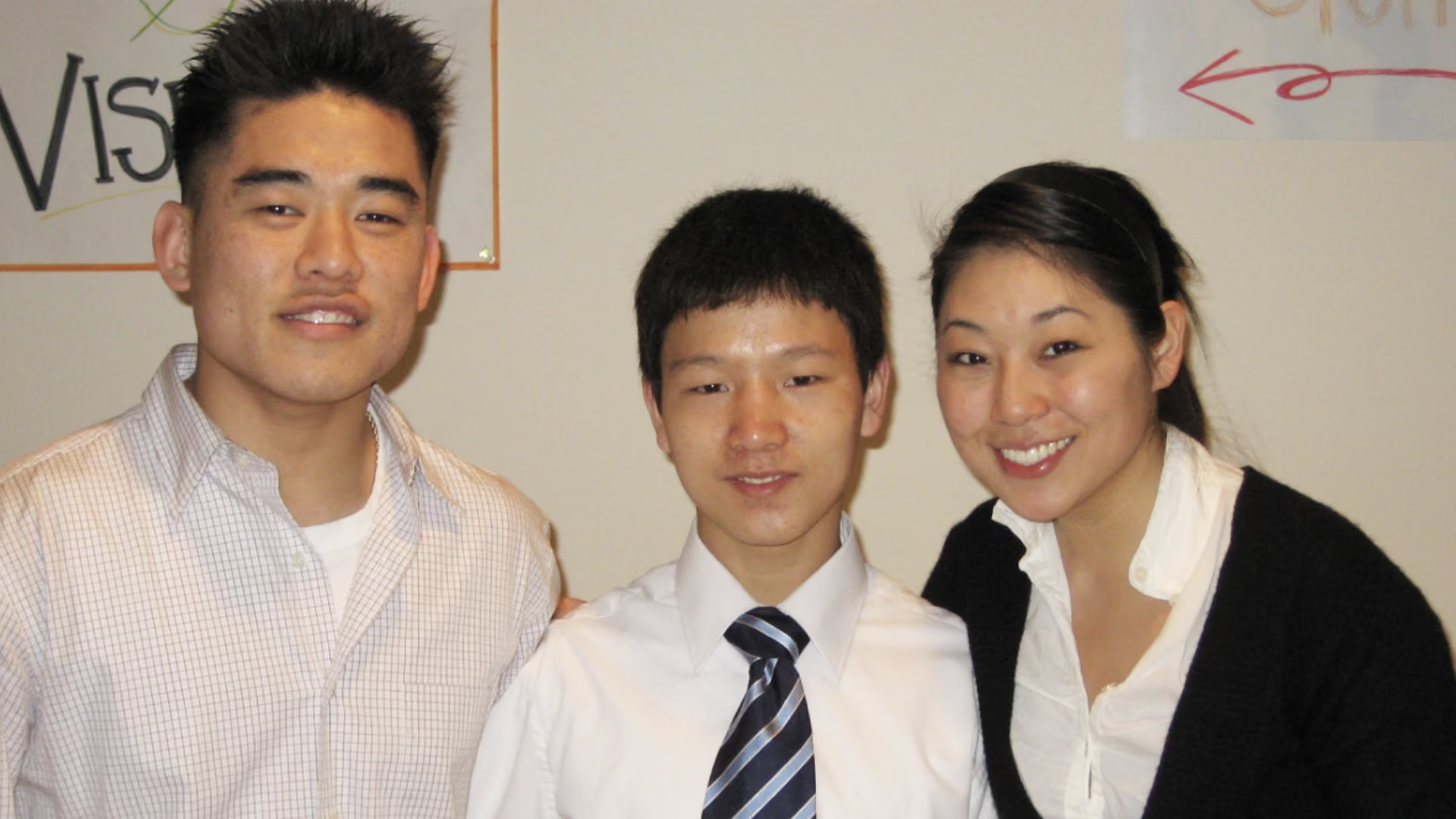
I was placed with a foster family and began attending an American high school, which felt a bit ridiculous at first. Even in North Korea, I was an F student. I barely finished elementary school so jumping straight into high school in a foreign country felt overwhelming.
One evening, my foster mom made chicken wings. They were so good that I wanted more, but I realized there wasn’t enough for everyone to have seconds. So I held back, thinking no one would notice. As I stared at my plate, my foster dad placed his last wing in front of me. I looked up, and he smiled, urging me to eat without saying a word. In that silence, I felt the depth of his love and care.
At that moment, I thought of my biological father. Even during our hardest times, he used to share what little food he had with me. I wished more than anything that I could cook for him one last time and share one more meal together.
That night, I promised myself that I would study hard and go to college. I believed that was the best way to honor my father’s sacrifice and make him proud.
Continue reading part 2 of Joseph’s story
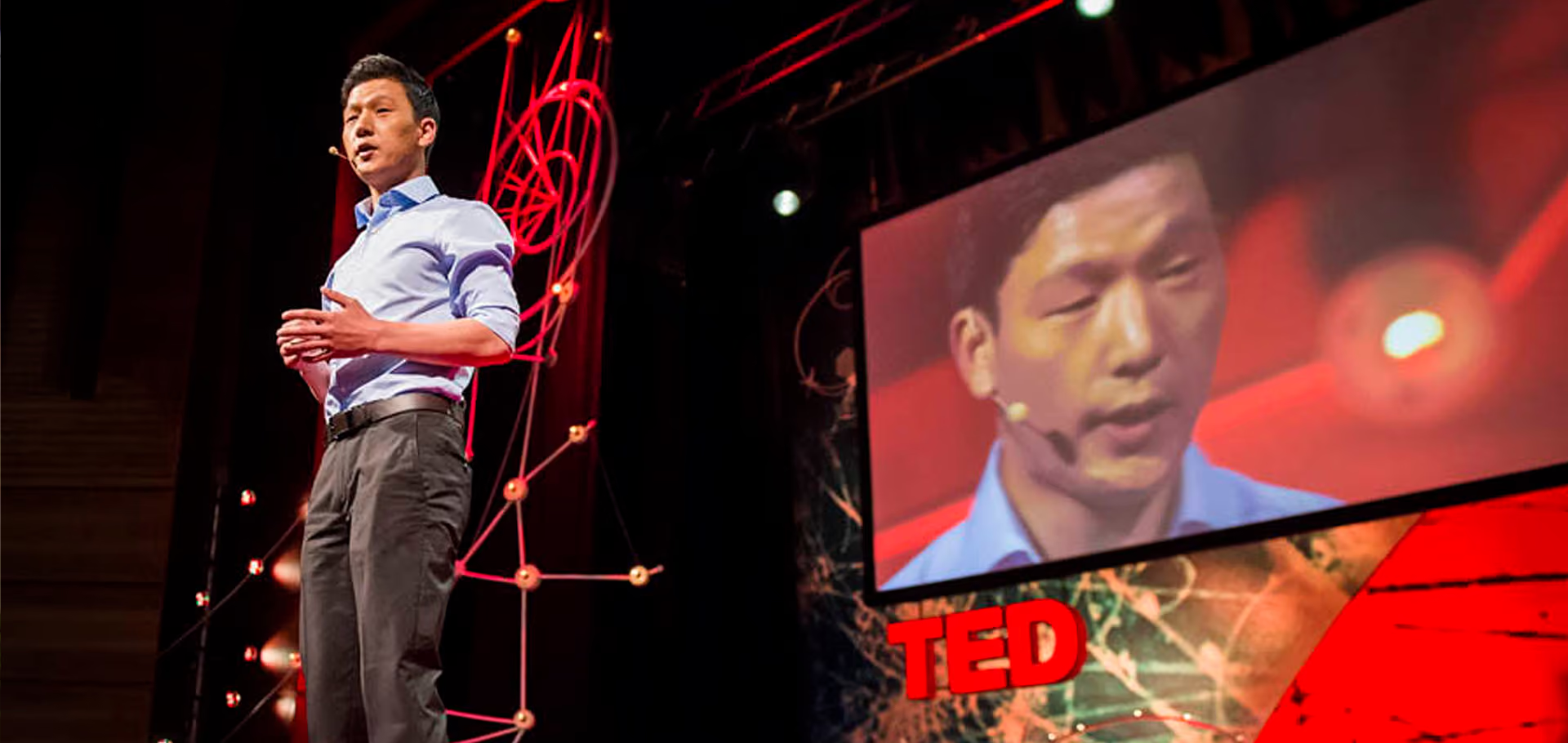
Years before Joseph would reach freedom, talk on the TED stage, write a memoir, and pursue his master’s at Harvard Kennedy School, Joseph’s father saw the brightness in his son. While he may not have been able to witness Joseph reach these milestones, none of it would have been possible without the depth of his love that became the foundation for Joseph’s life.
His family’s support, both in North Korea and in the US, has given Joseph the confidence to believe in and fulfill his brightness.
When recalling his past, warm childhood memories and gripping hardship are shared in the same breath. Joseph often says that North Korea is not a land of darkness, merely a land with darkness. Both can exist. But what matters is what we choose to focus on—the shadow cast by the regime or the brightness of the North Korean people.
Help more North Korean refugees reach freedom and share their brightness with the world.










