blog

Webcomic: Escape From North Korea

March 3, 2026

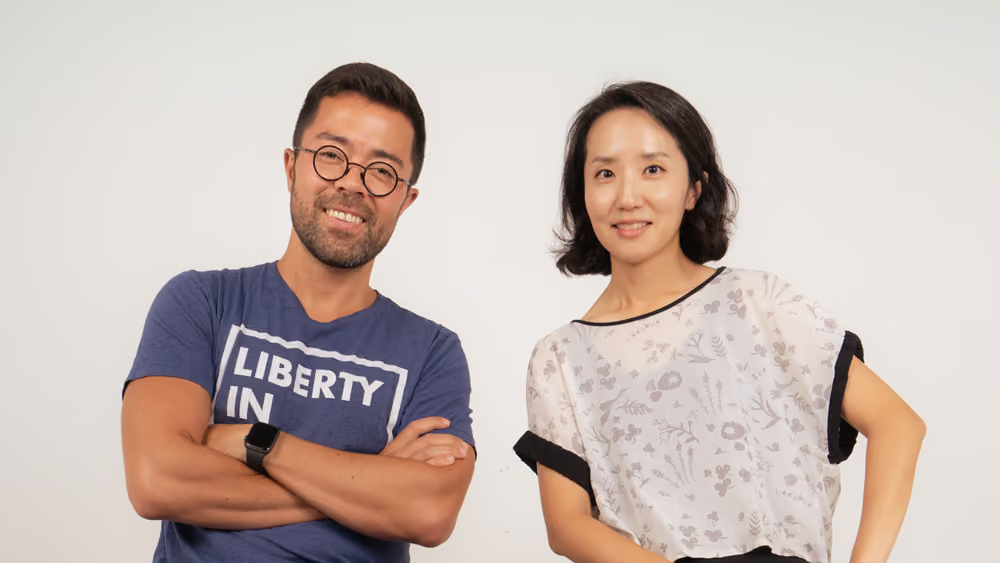
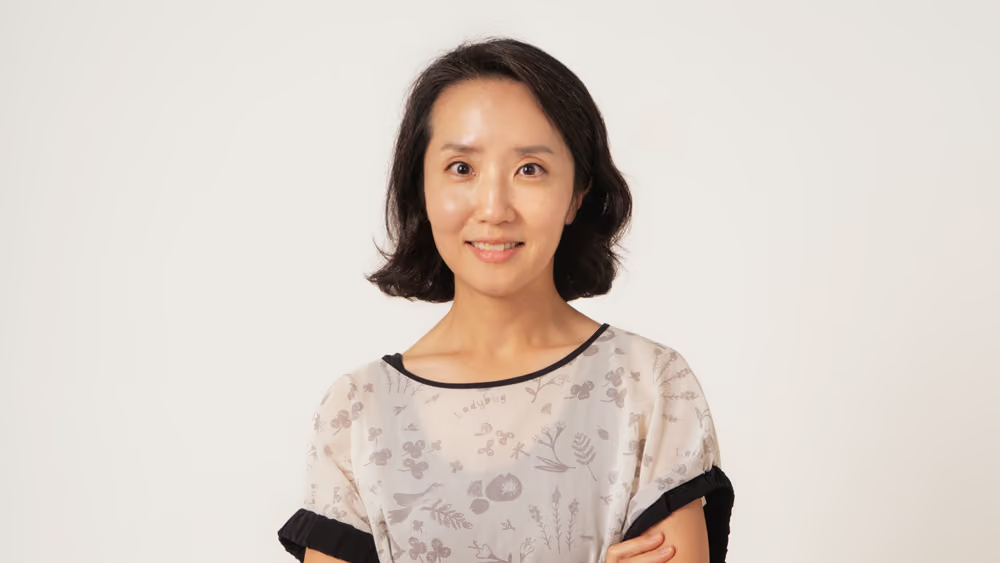
By: Ju Ok Jeon

This webtoon, created by North Korean escapee Ju Ok Jeon, reflects the real risks many North Koreans face when fleeing their home in search of safety, dignity, and the chance to live freely.

In the dead of night, a car pulls to a stop in the middle of one of Southeast Asia’s mountainous jungles. Two men exit the car and look around. They instruct the remaining passengers to also exit and continue on foot.

A group of North Korean refugees exit the car. Among them are a brother and sister, both in their twenties, and an older grandmother. The youthful siblings are in good spirits while the rest of the group appears nervous. Walking through the jungle is the last stretch of their escape journey to freedom.

A broker leading the group of North Korean defectors explains that they must cross the mountains and reach the escape boat by the end of the night, or the police will catch them at daybreak. The sister sets time on her watch.

The North Korean refugees start walking in a single file line. They quickly start to grow weary from the humidity and difficult terrain. The brother checks on his sister.

The sister reassures her brother that she is doing okay. The brother extends a helping hand to the North Korean grandmother, who is struggling on the difficult journey. The trio fall behind the main group of defectors.

The elderly grandmother loses strength and falls. She implores that the siblings leave her behind, but they refuse. Grandma continues to struggle and falls several more times.

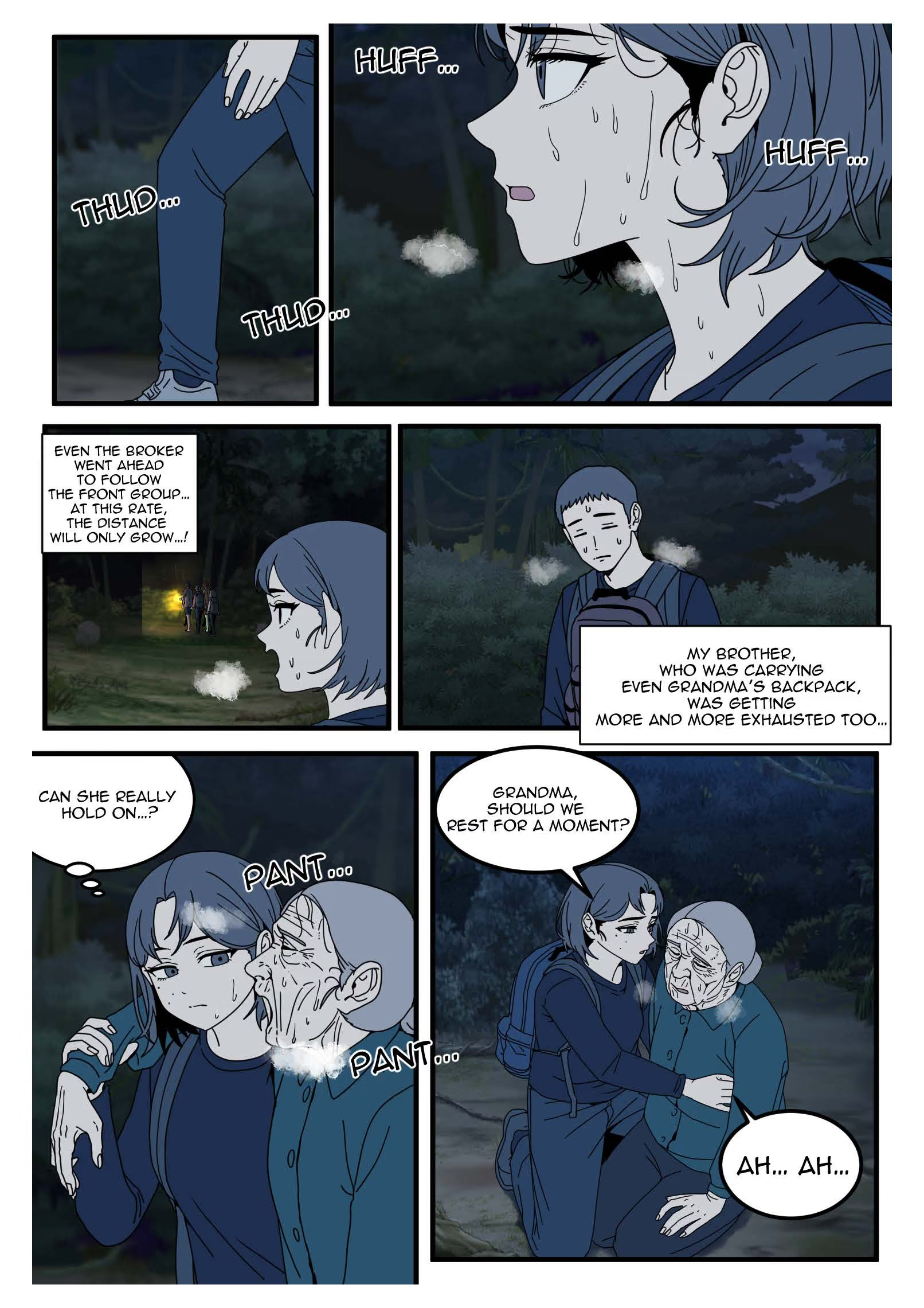
The sister can just barely make out the light of the larger group of North Korean defectors ahead of them. The brother is carrying the grandma’s backpack; they are all exhausted. The sister says they should stop to rest.

The grandmother, shaking from wearines, once again says to leave her behind. The sister and brother exchange resolute glances, and refuse to give up.

The trio have lost sight of the rest of the North Korean escapees. Grandma collapses to the ground, unable to get up again. The sister checks her watch.

The grandmother’s hand brushes across a bone laying on the floor of the jungle. Startled and exhausted, her vision blurs.

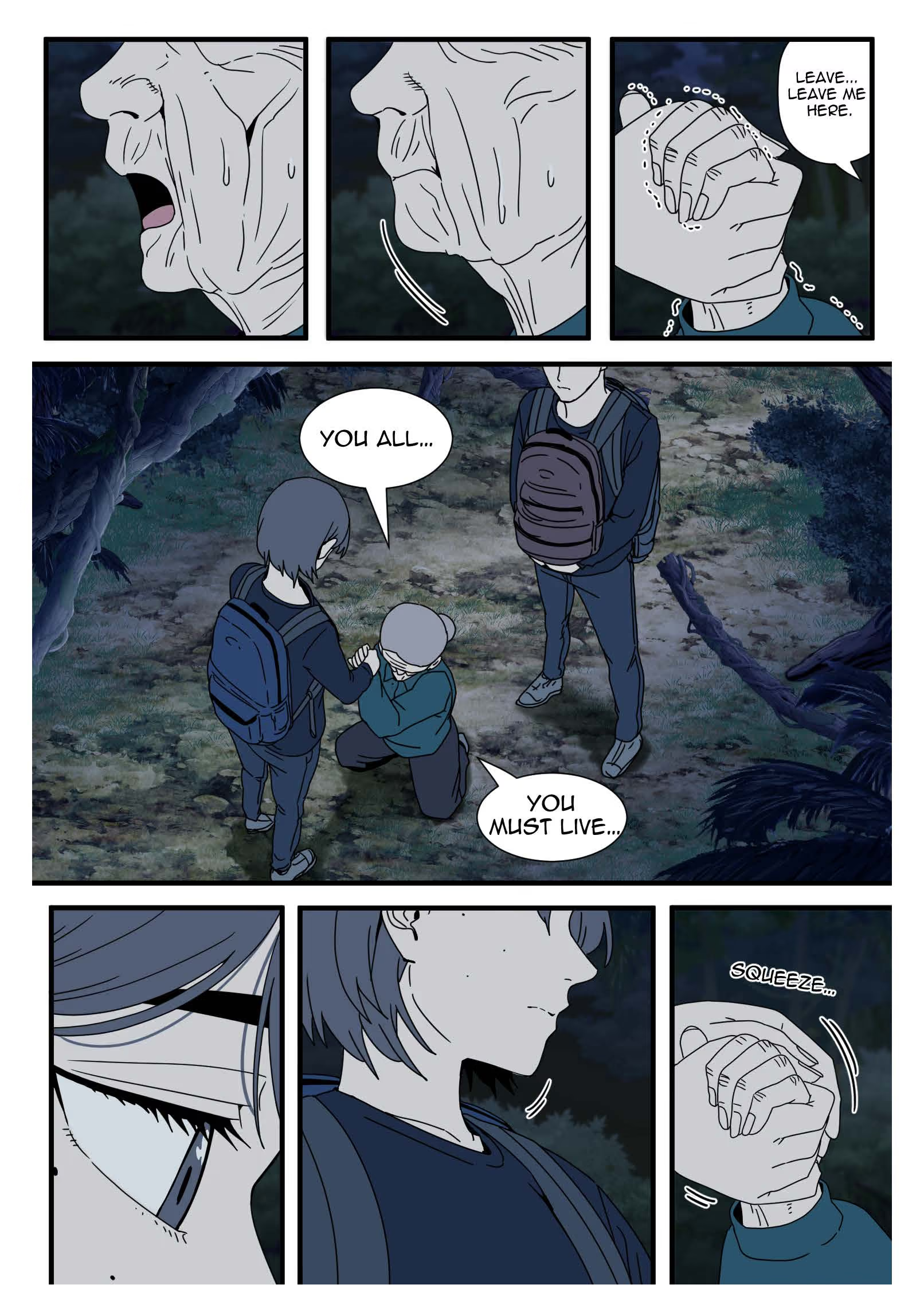
The grandmother once again tells the siblings to leave her behind. Grasping the sister’s hand, she says they must live.

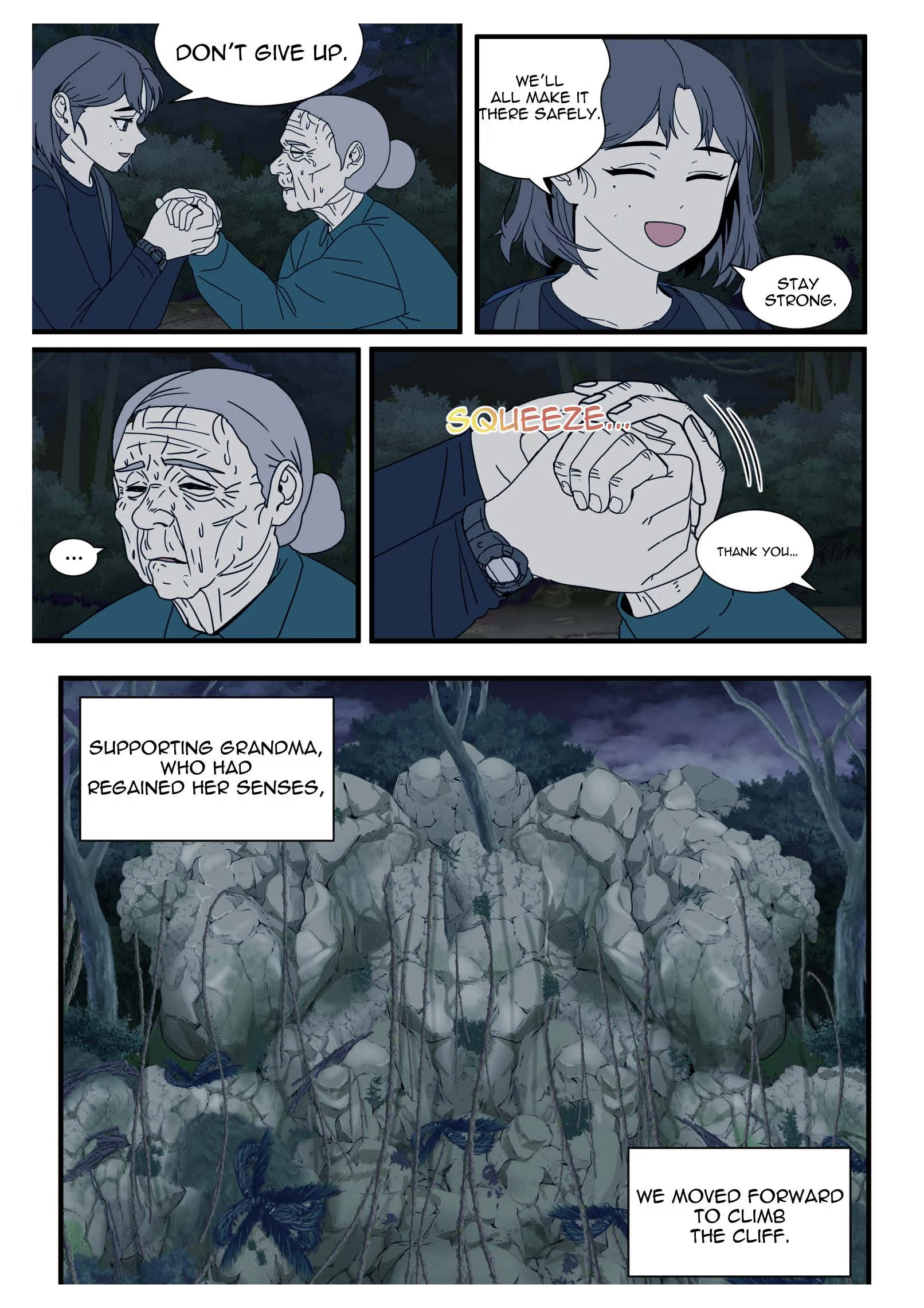
The sister clasps grandma’s hands and says not to give up. The three North Korean defectors regain their composure and continue forward until they reach a sheer cliff in the middle of the mountainous jungle.

The three North Korean defectors begin to scale the cliff, the brother carrying the elderly grandmother on his back. The sister makes it to the top; she urgently extends a hand to pull up her brother, who is losing his grip.

The brother and grandmother slide partway down the cliff. The grandmother holds on to the brother with her arms around his neck; her grasp starts to choke him.

The brother starts to panic. Color drains from his face.

The sister yells out to her brother to hold on; she manages to grab his arm and pull them up the cliff. The three North Korean defectors collapse on the ground and catch their breath. The brother says he almost died.

Daylight begins to creep over the side of the mountains. The three North Korean defectors wearily continue their escape journey, the two siblings propping up the grandmother by her arms over their shoulders. The grandmother expresses despair and wonders if choosing this journey was worth it; the sister says that they should live like human beings, even if just for a day.

The three North Korean defectors discuss their choice to risk their lives for freedom. Sunlight begins to illuminate their faces. In the distance, a rooster crows for dawn. They say a desperate prayer.

The sun is up. The grandmother says that she’s now free from North Korea and tells the siblings to continue without her.

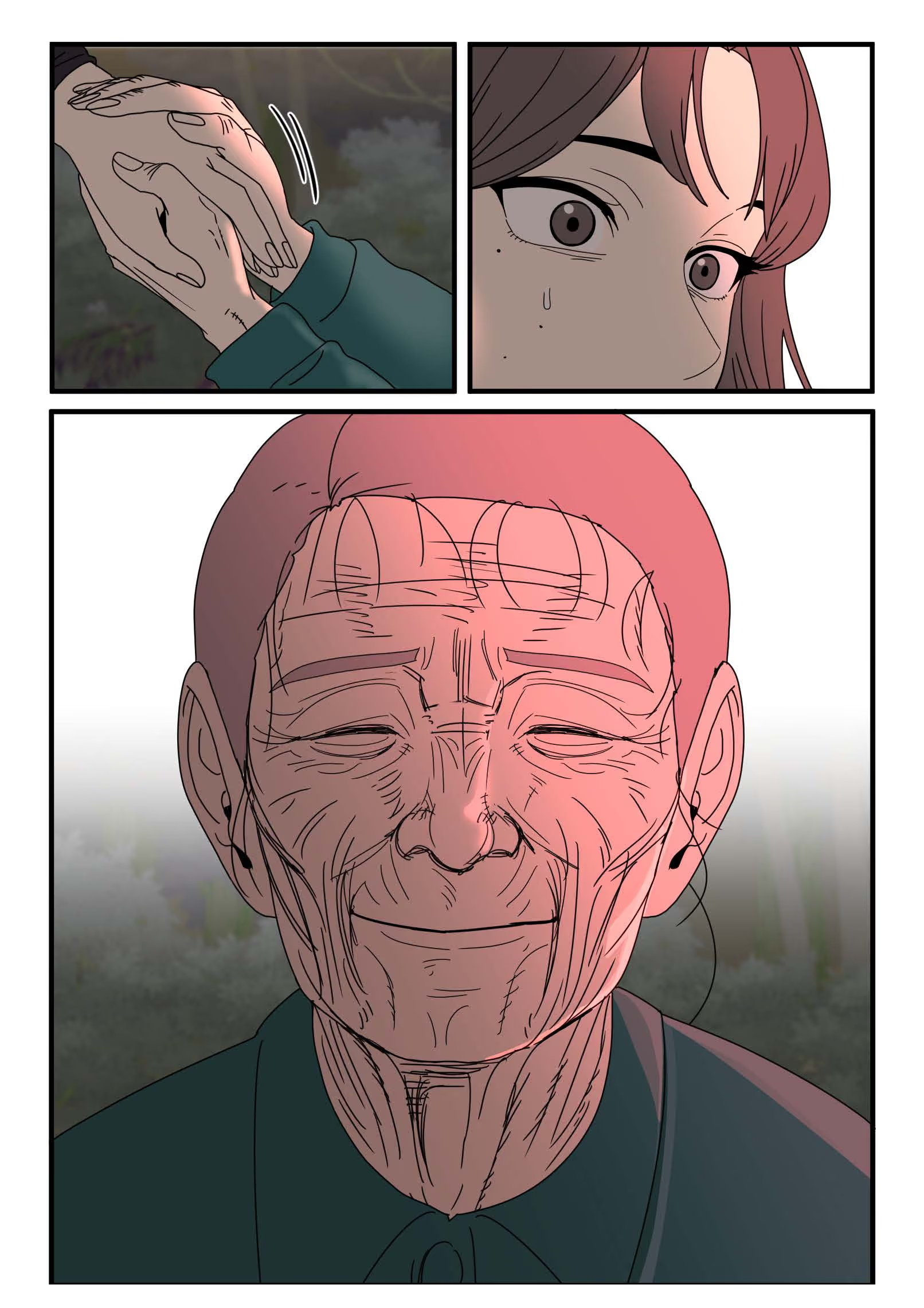
The North Korean grandmother holds the sister’s hands and smiles warmly.

The sister’s resolve wavers, and she considers leaving the grandma to increase their chance of survival. She exchanges glances with her brother. They both know they can’t leave the grandmother after coming this far.

The time is 7am. Under a blue sky, on the banks of a river in front of a boat, the rest of the group of North Korean refugees have gathered. They look around to see if everyone is accounted for and are about to depart.

The group of defectors hear distant shouting from the edge of the jungle. The brother, sister, and grandma are running towards the river and yell for the boat to wait; they’ve just barely made it.

The three North Koreans burst into tears of relief. The broker leading the group is happy to see that everyone survived the dangerous trek through the jungle. The boat departs.

Amidst the beautiful scenery of Southeast Asia, the boat of North Korean refugees makes its way down the tree-lined river. In the sky, clouds have parted to reveal a double rainbow. The North Korean refugees have made it to safety and freedom.

About the Artist

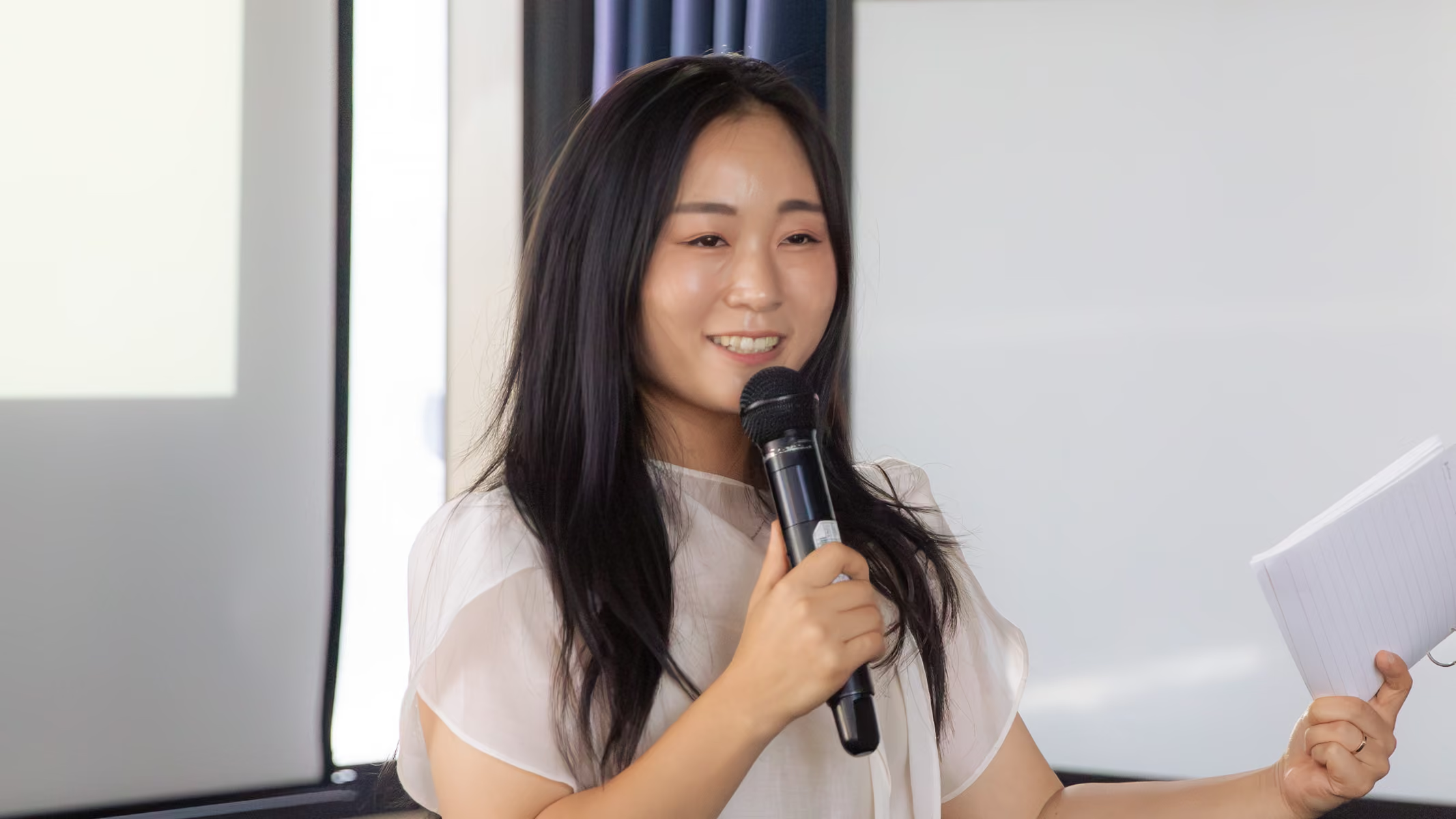
Ju Ok Jeon is a North Korean defector who escaped in 2013. Having lived under the Kim Jong Un regime in an oppressed land, she conveys—through webtoons and comics—how precious the values of freedom and dignity truly are, with both sincerity and storytelling power.

Support Ju Ok’s work: @unistudio_juok
From Artist to Activist

As a kid in North Korea, Ju Ok was famous at school for one thing—drawing portraits of people passing gas. Her classmates flocked to her, asking to be drawn in exchange for snacks and even small amounts of money. Nothing made Ju Ok happier than to see people’s faces light up with a big smile, and to laugh together over her creations.

But things came to a halt when a teacher pulled her aside for “disrupting the school environment” with her “unrevolutionary” drawings. Ju Ok’s art supplies were confiscated, and she was warned that her parents could be punished for failing to educate their children.

“I vowed to never draw again because my simple drawings could bring harm to my family. But no matter how hard I studied or worked, opportunities were limited because my family belonged to the labor class. After a relative defected, my social classification [songbun] fell, leaving me destined for a life of forced labor. Realizing there was no hope or future, I decided to escape.

In freedom, Ju Ok found that there was a lack of public understanding and empathy about North Korean human rights. A few years ago, her husband, who is also an artist, encouraged her to try drawing again.

“After being severely scolded as a child, I hated anything related to drawing. But when my husband told me I have talent, I got chills—thinking, ‘Did I actually used to like this?’

Through illustration, I want to share the reality of North Korea I experienced, my journey toward freedom, and my resettlement in a free society—so the world can hear the voices of those who still long for freedom inside North Korea.”

Ju Ok hopes her art will reach more people and increase support for this issue. In 2025, she participated in the LiNK English Speech Program to hone her storytelling and English speaking abilities.

“The North Korean issue is not only a domestic matter on the Korean Peninsula but also a complex international issue. That is why it is vital to raise awareness globally—and for North Korean defectors to share their stories directly in English. LiNK’s program has played an important role in helping me move toward my life goals.”

Reimagining North Korea’s Future

Liberty in North Korea helps North Koreans reach freedom and reach their full potential through programs that build their capacity to succeed and lead change. With the right support and tools, they’re sharing their stories, utilizing their talents, and building their careers with unwavering purpose—to create a future where every North Korean person can live free and full lives.

Invest in the next generation of North Korean advocates, storytellers, changemakers, and entrepreneurs, like Ju Ok.

Give Today

A North Korean Father Risks Everything for Family | Doohyun’s Story

August 14, 2025

I lived in North Korea for over 20 years, and for much of that time, I believed my life was normal. I grew up in a big city by the river. When the wind blew, I could smell the water on the breeze, and on holidays, I played along the banks with my friends.

The river ran along the border between North Korea and China. I could see across the water into a different world–one where cars lined the streets, and buildings stretched high into the sky.

But I didn’t realize that life should be different, until the day they took my father away.

My father was a great businessman. He provided for our family despite being forcibly discharged from the military when his Minister of Defense was executed by Kim Il Sung. Labeled as a “traitor,” he was banned from decent jobs and opportunities.

Still, my father was a clever man and found success within the private market system that many North Koreans rely on to survive. Until one day, the police came to investigate him.

Without reason or warning, my father was arrested and imprisoned. They tortured him for a year. When he was released, my father weighed only 66 pounds.

Even after surviving the unimaginable, he was defiant. He wrote 20 pages of complaints to the Central Party about the human rights abuses he endured. My family was terrified of the consequences, but we couldn’t stop him. He fought for his voice to be heard.

On a warm Spring day, a Mercedes-Benz, license plate number 216, arrived at our home. February 16th was Kim Jong Il’s birthday, and cars with this number were only given to his closest aides. My father spoke with the man for hours about his letter. The man apologized and promised something like this wouldn’t happen again. This gave us a bit of hope for the future – for the possibility of change.

But the man left for Pyongyang. And then the police returned. I never saw my father again.

For two years, my family and I lived in unknowing agony, receiving no news on my father. Eventually, we heard from my father’s friend, who was a police officer, that he had passed away in prison.

At the very least, we wanted to send him off properly, so we asked that same friend how we could get my father’s body. Three days later, he returned. He told us they would not return my father’s body. My father had been sentenced to eight years in prison. He’d passed away after two. He still had six more years to serve – as a dead body. As a corpse.

For the first time I wondered whether this was the way normal people lived.

In 2009 I decided to escape from North Korea. Life had become near impossible for me after my father’s death, and I continued to face discrimination due to our family’s status in society.

By then, I had been married to my wife, Jiyeon, for two years. Most of our relationship before marriage was through the phone, because we lived far apart, and traveling in North Korea is difficult. So we called each other every night and talked for hours.

Now, I didn’t know if I was going somewhere she would never be able to reach. I told her it was a business trip. Two weeks. I’ll just be gone for two weeks.

She still cried at the train station, thinking about those two weeks. I couldn’t cry with her because then she would know the truth. So I boarded the train without a word, and watched it take me away from her.

From the moment I escaped North Korea, it felt like I was being chased by a grim reaper. There were multiple close-calls where I felt death breathing down my neck.

I was once hiding in a corn field near the Chinese border. Lying on my stomach, I watched soldiers patrol the area when suddenly, one of them walked towards me. It was too late to run or hide.

I had brought poison with me in case something like this happened - I knew it would be better to kill myself rather than be captured. But as I prepared to take the poison, I thought of my wife. I thought about how she would never know what happened to me.

In that moment of sheer terror, I heard the sound of water. The soldier stood right beside me but he hadn’t seen me. He had only walked over to relieve himself. For the next few minutes, I couldn’t move. The soldier had left, but my body held onto the terror of that moment. I remained hunched and hurried for the rest of the journey.

Eventually, I made it safely to South Korea. I started working as soon as possible – 12 hour days to pay back the broker fee, and save up money for my wife’s escape. My schedule was just working and sleeping, working and sleeping. It was hard, but for the first time in a long time, I had hope.

I was able to find a broker who put me in contact with my wife. It had been ten months since I’d defected at that point – ten months of her not knowing whether I was dead or alive. The call couldn’t be made in the city because the signal could be intercepted, so my wife and the broker hiked to the top of a mountain.

When we heard each other’s voices again, all we could do was cry. But we didn’t have much time, and so I asked her, you’re coming, right?

She said she was.

On December 27th, 2011, Jiyeon crossed the river to escape North Korea on the same route that I took.

As soon as my wife arrived in South Korea, I went to meet her. I was so excited. I couldn’t stop crying. When my wife came into the room, she was crying too – but do you know what’s the first thing she did when she saw me?

She punched me – crying, calling me a liar. And I deserved it.

We live in Utah now with our two beautiful sons. We go fishing, camping, and enjoy the outdoors together. Every time I see them, I realize I’m living in a different world, one where we can finally dream and decide our own future.

This is the life I’ve made for my children. This is the life my father envisioned for me and for all North Koreans when he made his act of defiance. My father died fighting for his voice to be heard – and now, finally, he’ll be heard by the world.

Doohyun risked everything to create a future where his family could live together in freedom. Their story isn’t unique - there are many more North Koreans waiting and hoping for the day when they can reunite with loved ones. Help make freedom part of every North Korean’s story.

Give today

Since resettling in the United States, Doohyun has completed his undergraduate studies and now works for a North Korean human rights organization. He considers helping the North Korean people to be his life’s mission, continuing his father’s legacy.

Your generous donation will rescue and support North Korean refugees
Donate Now
Learn more about the North Korean people
Awesome! You're subscribed!
Oh no! Looks like something went wrong.
Check these out!
Stand with the north korean people

Join Liberty and give monthly in support of the North Korean people

The logo for Refinery29A logo for CNNThe logo for Fox NewsThe logo for Time MagazineThe Logo for the Washington PostThe logo for National Public Radio