blog

Webcomic: Escape From North Korea

March 3, 2026

By: Ju Ok Jeon

This webtoon, created by North Korean escapee Ju Ok Jeon, reflects the real risks many North Koreans face when fleeing their home in search of safety, dignity, and the chance to live freely.

In the dead of night, a car pulls to a stop in the middle of one of Southeast Asia’s mountainous jungles. Two men exit the car and look around. They instruct the remaining passengers to also exit and continue on foot.

A group of North Korean refugees exit the car. Among them are a brother and sister, both in their twenties, and an older grandmother. The youthful siblings are in good spirits while the rest of the group appears nervous. Walking through the jungle is the last stretch of their escape journey to freedom.

A broker leading the group of North Korean defectors explains that they must cross the mountains and reach the escape boat by the end of the night, or the police will catch them at daybreak. The sister sets time on her watch.

The North Korean refugees start walking in a single file line. They quickly start to grow weary from the humidity and difficult terrain. The brother checks on his sister.

The sister reassures her brother that she is doing okay. The brother extends a helping hand to the North Korean grandmother, who is struggling on the difficult journey. The trio fall behind the main group of defectors.

The elderly grandmother loses strength and falls. She implores that the siblings leave her behind, but they refuse. Grandma continues to struggle and falls several more times.

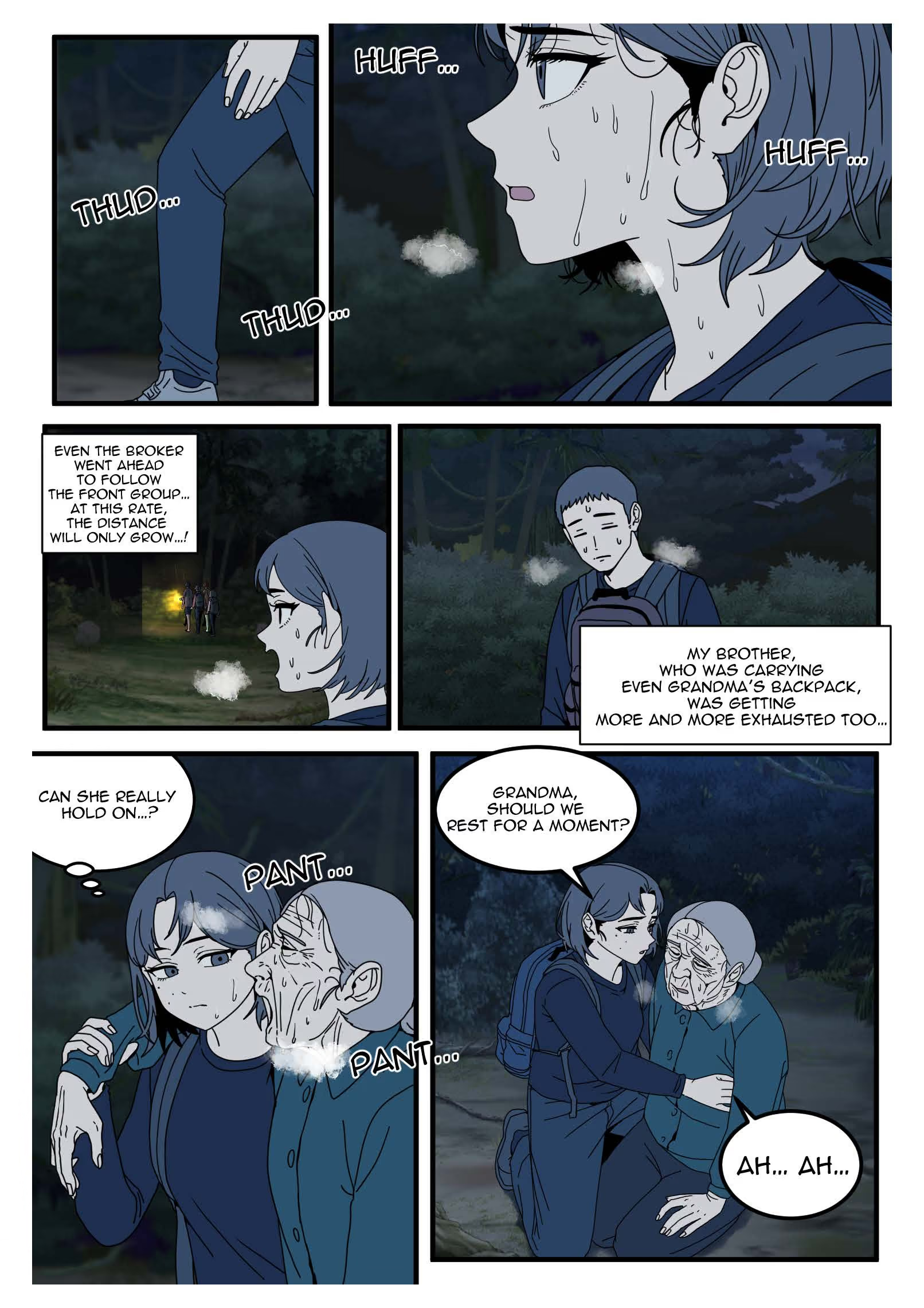
The sister can just barely make out the light of the larger group of North Korean defectors ahead of them. The brother is carrying the grandma’s backpack; they are all exhausted. The sister says they should stop to rest.

The grandmother, shaking from wearines, once again says to leave her behind. The sister and brother exchange resolute glances, and refuse to give up.

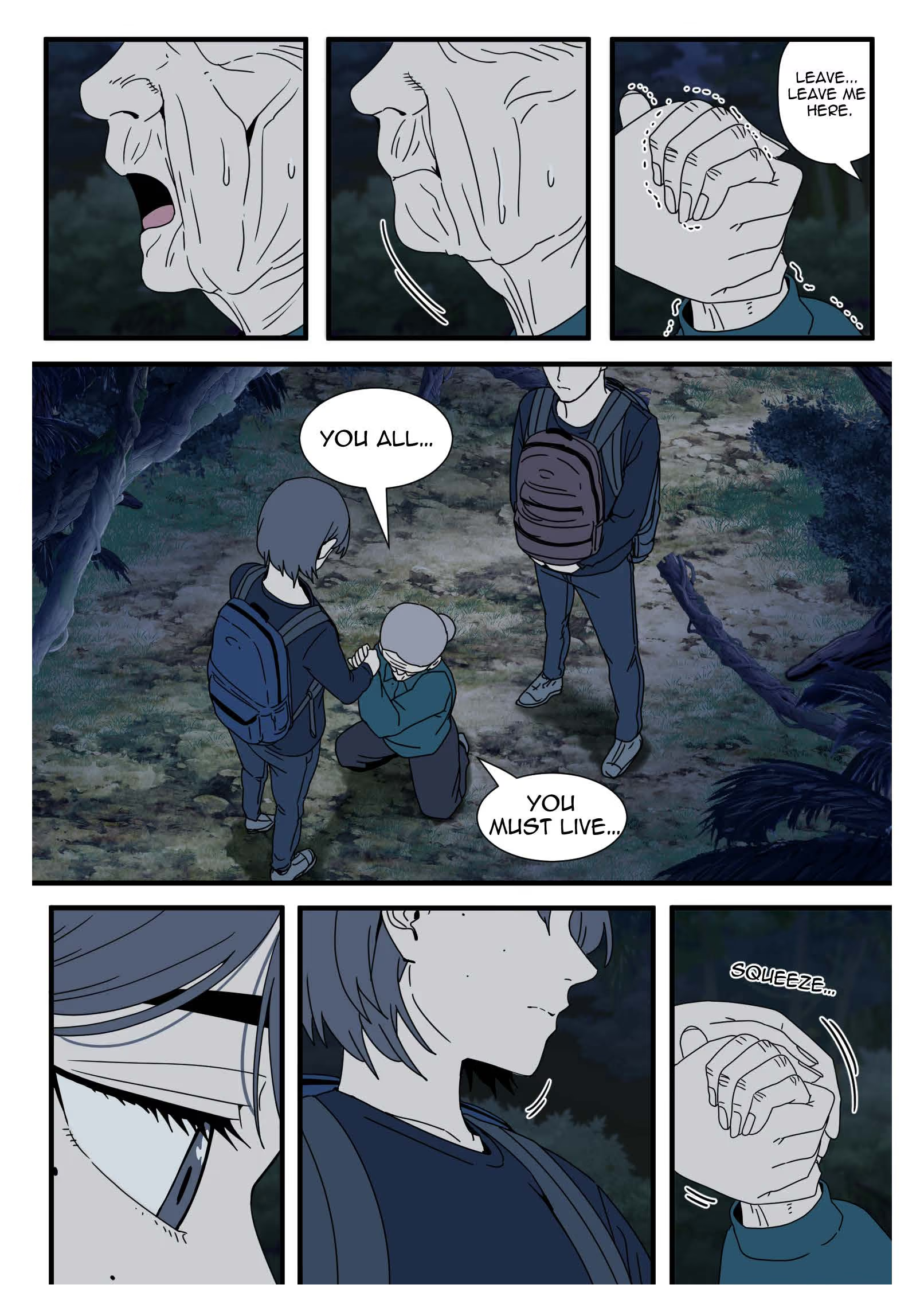
The trio have lost sight of the rest of the North Korean escapees. Grandma collapses to the ground, unable to get up again. The sister checks her watch.

The grandmother’s hand brushes across a bone laying on the floor of the jungle. Startled and exhausted, her vision blurs.

The grandmother once again tells the siblings to leave her behind. Grasping the sister’s hand, she says they must live.

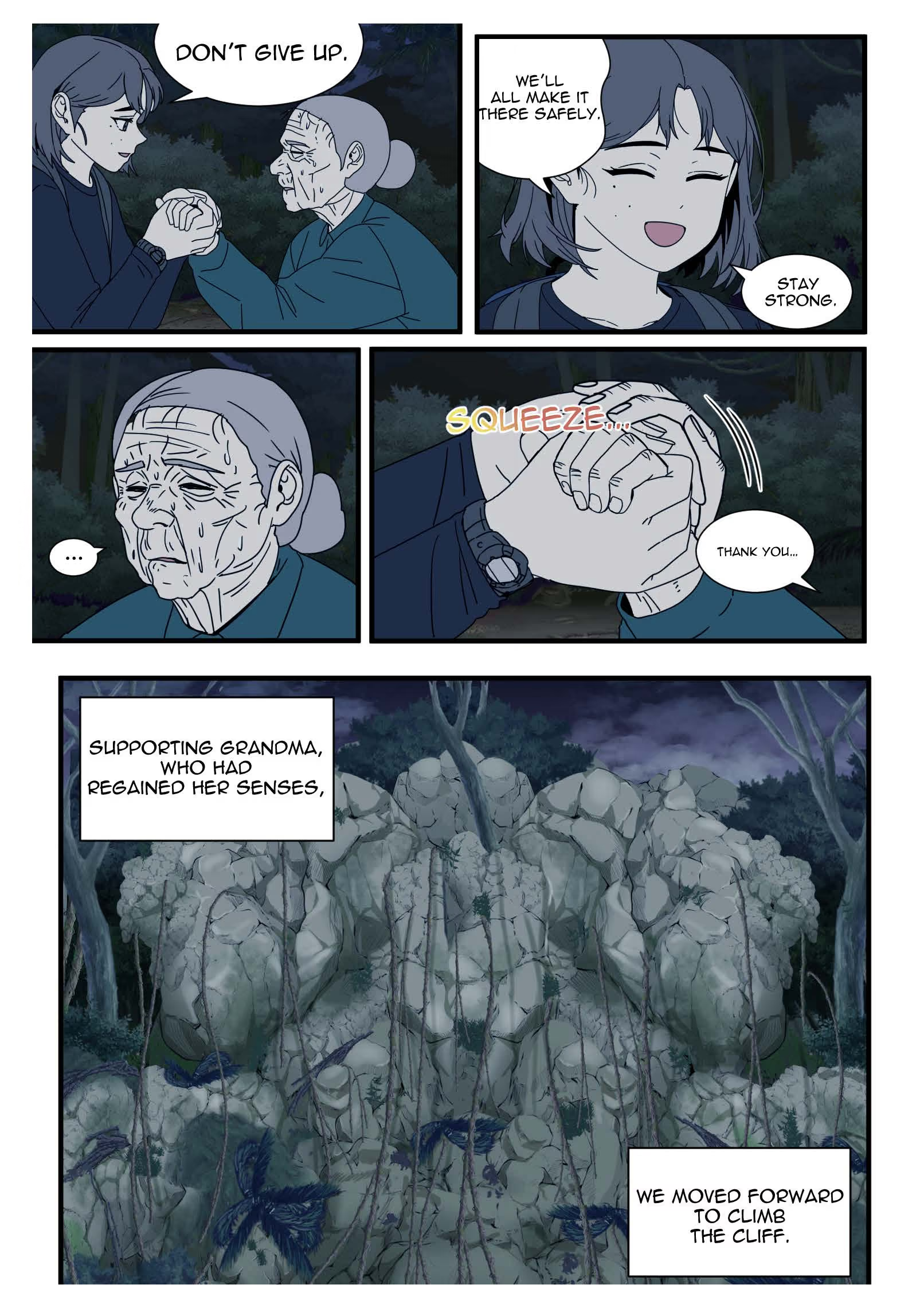
The sister clasps grandma’s hands and says not to give up. The three North Korean defectors regain their composure and continue forward until they reach a sheer cliff in the middle of the mountainous jungle.

The three North Korean defectors begin to scale the cliff, the brother carrying the elderly grandmother on his back. The sister makes it to the top; she urgently extends a hand to pull up her brother, who is losing his grip.

The brother and grandmother slide partway down the cliff. The grandmother holds on to the brother with her arms around his neck; her grasp starts to choke him.

The brother starts to panic. Color drains from his face.

The sister yells out to her brother to hold on; she manages to grab his arm and pull them up the cliff. The three North Korean defectors collapse on the ground and catch their breath. The brother says he almost died.

Daylight begins to creep over the side of the mountains. The three North Korean defectors wearily continue their escape journey, the two siblings propping up the grandmother by her arms over their shoulders. The grandmother expresses despair and wonders if choosing this journey was worth it; the sister says that they should live like human beings, even if just for a day.

The three North Korean defectors discuss their choice to risk their lives for freedom. Sunlight begins to illuminate their faces. In the distance, a rooster crows for dawn. They say a desperate prayer.

The sun is up. The grandmother says that she’s now free from North Korea and tells the siblings to continue without her.

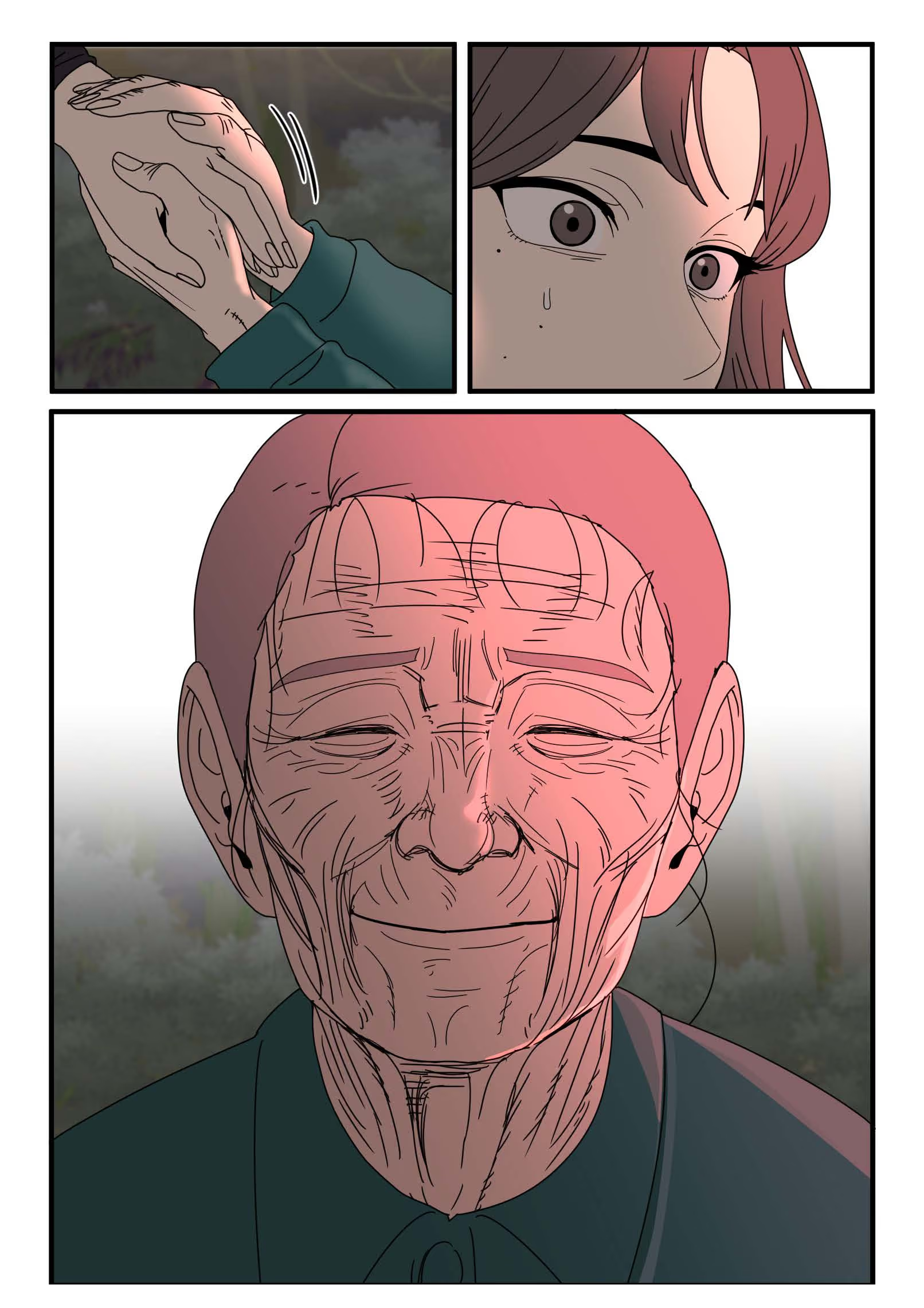
The North Korean grandmother holds the sister’s hands and smiles warmly.

The sister’s resolve wavers, and she considers leaving the grandma to increase their chance of survival. She exchanges glances with her brother. They both know they can’t leave the grandmother after coming this far.

The time is 7am. Under a blue sky, on the banks of a river in front of a boat, the rest of the group of North Korean refugees have gathered. They look around to see if everyone is accounted for and are about to depart.

The group of defectors hear distant shouting from the edge of the jungle. The brother, sister, and grandma are running towards the river and yell for the boat to wait; they’ve just barely made it.

The three North Koreans burst into tears of relief. The broker leading the group is happy to see that everyone survived the dangerous trek through the jungle. The boat departs.

Amidst the beautiful scenery of Southeast Asia, the boat of North Korean refugees makes its way down the tree-lined river. In the sky, clouds have parted to reveal a double rainbow. The North Korean refugees have made it to safety and freedom.

About the Artist

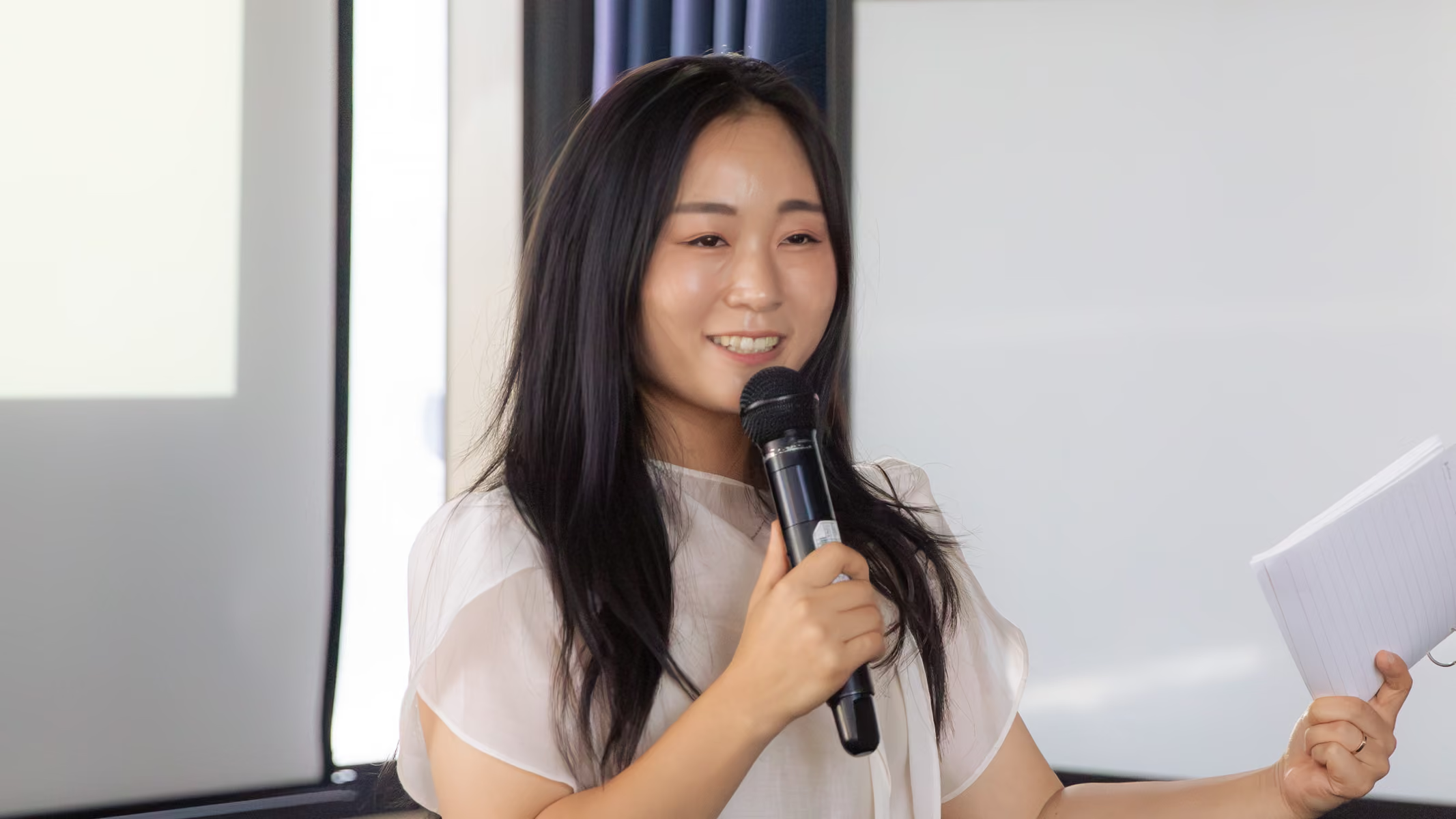
Ju Ok Jeon is a North Korean defector who escaped in 2013. Having lived under the Kim Jong Un regime in an oppressed land, she conveys—through webtoons and comics—how precious the values of freedom and dignity truly are, with both sincerity and storytelling power.

Support Ju Ok’s work: @unistudio_juok
From Artist to Activist

As a kid in North Korea, Ju Ok was famous at school for one thing—drawing portraits of people passing gas. Her classmates flocked to her, asking to be drawn in exchange for snacks and even small amounts of money. Nothing made Ju Ok happier than to see people’s faces light up with a big smile, and to laugh together over her creations.

But things came to a halt when a teacher pulled her aside for “disrupting the school environment” with her “unrevolutionary” drawings. Ju Ok’s art supplies were confiscated, and she was warned that her parents could be punished for failing to educate their children.

“I vowed to never draw again because my simple drawings could bring harm to my family. But no matter how hard I studied or worked, opportunities were limited because my family belonged to the labor class. After a relative defected, my social classification [songbun] fell, leaving me destined for a life of forced labor. Realizing there was no hope or future, I decided to escape.

In freedom, Ju Ok found that there was a lack of public understanding and empathy about North Korean human rights. A few years ago, her husband, who is also an artist, encouraged her to try drawing again.

“After being severely scolded as a child, I hated anything related to drawing. But when my husband told me I have talent, I got chills—thinking, ‘Did I actually used to like this?’

Through illustration, I want to share the reality of North Korea I experienced, my journey toward freedom, and my resettlement in a free society—so the world can hear the voices of those who still long for freedom inside North Korea.”

Ju Ok hopes her art will reach more people and increase support for this issue. In 2025, she participated in the LiNK English Speech Program to hone her storytelling and English speaking abilities.

“The North Korean issue is not only a domestic matter on the Korean Peninsula but also a complex international issue. That is why it is vital to raise awareness globally—and for North Korean defectors to share their stories directly in English. LiNK’s program has played an important role in helping me move toward my life goals.”

Reimagining North Korea’s Future

Liberty in North Korea helps North Koreans reach freedom and reach their full potential through programs that build their capacity to succeed and lead change. With the right support and tools, they’re sharing their stories, utilizing their talents, and building their careers with unwavering purpose—to create a future where every North Korean person can live free and full lives.

Invest in the next generation of North Korean advocates, storytellers, changemakers, and entrepreneurs, like Ju Ok.

Give Today

A North Korean Defector’s Nine Year Journey to Freedom | Eunju’s Story

July 23, 2025

I didn’t know I was hungry until I was eight years old. Growing up, I had no concept of whether my hometown was wealthy or poor. Then when the great famine struck in the mid-90s, more people died in our city than anywhere else in the country. 

That’s when I realized “Oh, this is the most difficult place to live in North Korea.”

I was born in the city of Eundok, North Hamgyong Province. Before that it was called Aoji, a destitute place infamous for its coal mines, where South Korean prisoners of war were sent to work.

In the middle of a long famine, people lose all sense of humanity. You couldn’t survive without dirtying your hands. My father was a kindhearted person, the type that was unable to hurt anyone. But towards the end, hunger drove him to steal from our own house.

On my first day of middle school, I couldn’t find my new backpack anywhere. It turns out that my dad had taken it to the Jangmadang, traded it for food, and eaten it by himself. In the end, he still died from starvation, and my mom, my sister, and I were left to fend for ourselves.

We heard that if we went to China, we could eat all the candy we wanted. With that one piece of information, my mom said she’d rather get shot crossing the Tumen river than starve in North Korea. 

It was mid-February in 1999, during the bitter cold winter. The water was frozen solid and stretched over 100 meters across. My mom went first, followed by my sister, and I was in the very back. Maybe it was because I was anxious, but my shoes felt so slippery and I kept falling over as they went farther and farther ahead. We heard that soldiers would shoot anyone who tried to cross the river. But this was our only chance at survival.

My mind was racing, “What if I’m left behind and get caught?” My mom and sister probably feared the same thing. 

We encountered a tributary that wasn’t frozen all the way, so my mom waited and had me go first because I was the lightest. A few steps in, the ice broke and I fell into the piercing cold water. None of us knew how to swim. At that moment, I really thought it was the end. But then my feet hit the ground. We had made it to the other side.

Not long after we had crossed into China, a Korean-speaking woman came up to us. She invited us to her house and gave us over a dozen boiled eggs, more food than we had seen in years. In North Korea, when my sister and I had a field trip for school, my mom would cut one boiled egg and give each of us half in our lunch box. To have this much at once was a true luxury. For the first time in a long while, we dared to have some hope.

But then my mom was sold off to a Chinese man. The fortunate thing was that even though my sister and I were 16 and 14 years old, we were so short that people asked if we were 7 or 8. They couldn’t sell us separately, so we were sent together with our mom.

We had been sold for 2000 yuan. When we wanted to leave, the man told us to pay him back. We worked in his house and on his farm but of course we never saw a penny. For three years, we lived in confinement, and my little brother was born.

On a quiet night before my brother was even a year old, Chinese police came to the house in the dark, knocked on the door, and arrested us.

When North Koreans get caught, sometimes they’ll roll up their money and eat it or hide it, but we didn’t have anything. We were taken back across the border with just our clothes. It’s well known that there’s a physical exam to look for hidden money. In a way, you shouldn’t even feel a basic sense of shame as a woman and as a human being. If you cry or plead for mercy, you’ll get beaten up. You cannot question them at all.

With so many people in North Korea dying of starvation, names were removed from the family register after three years without any news. We had already been declared dead. There were two minors and an adult, but our identities couldn’t be confirmed. At the time they couldn’t keep minors in prison without a ruling from the court, so we were entrusted to another person from our hometown. No one wanted extra mouths to feed, so he just let us go.

We went straight to the Tumen river and in 2002, we escaped again.

I had enough food when I was in China. Even dogs and pigs ate rice and corn. But we lived looking over our shoulders, in constant fear of the police. 

When we heard about life in South Korea, where our safety and identities would be guaranteed, we decided to defect once more. We were introduced to a broker, gave them some cash upfront, and traveled through Mongolia and the Gobi Desert.

On September 1st, 2006, I arrived at Incheon airport with my mom. My sister joined us in South Korea in 2008. Nine years after first crossing the Tumen River, we were finally together in freedom.

When I was in China, my only wish was that my mom, sister, and I could sleep together, eat together, and come home from work together. I dreamed that someday we could go to the supermarket and get a whole cart full of things to share. After coming to South Korea, we achieved not only that, but everything we’ve ever wanted.

I co-authored a book about my journey, A Thousand Miles to Freedom, with a foreign journalist named Sebastien Falletti. He interviewed several North Koreans, and I agreed to share my story with him out of a sense of duty. I never thought he’d choose me.

Compared to North Korean defectors who live special lives, I don’t actually dream of being a human rights activist. There are times when I don’t want to share anymore and I feel like I have to repeat myself.

But then I think about my best friend in North Korea. Her name is Sunhwa and I don’t think she’s here yet. I imagine that she would want to live like me — to attend college, pave her own way, and explore the vast world we live in. But she is still stuck in the darkness. Until Sunhwa can live a life of freedom, I feel a sense of responsibility to continue to share.

When I think of North Korea, the dark image of my hometown floods my memories. But I would still like to go back just once and visit my dad’s grave. As I’ve gotten older, I’ve realized that he was also a victim of the North Korean regime. I have hope that in this lifetime, North Korea will open up. I’ll return with my mom and my sister, and together we’ll visit my dad’s resting place and prepare a huge meal for him.

For North Koreans to share their stories with audiences around the world, retelling and reliving some of the most harrowing experiences, is an act of exceptional courage. They’re working towards the day when others no longer have to go through the same painful experiences.

You can help rescue more North Korean refugees and support them as they begin their new lives in freedom.

Give today

Your generous donation will rescue and support North Korean refugees
Donate Now
Learn more about the North Korean people
Awesome! You're subscribed!
Oh no! Looks like something went wrong.
Check these out!
Stand with the north korean people

Join Liberty and give monthly in support of the North Korean people

The logo for Refinery29A logo for CNNThe logo for Fox NewsThe logo for Time MagazineThe Logo for the Washington PostThe logo for National Public Radio