
Women’s History Month: Honoring the Bravery of North Korean Women
By: Jennifer Kim
Jennifer* is Liberty in North Korea’s Field Manager. Over the years, she’s carefully stewarded our secret rescue routes and helped countless North Korean refugees reach safety and freedom.
Approximately 70% of North Korean defectors are women. Throughout their journey, they face unimaginable challenges, including human trafficking, confinement, and sexual violence.
For Women’s History Month this year, we asked Jennifer to share her experiences supporting North Korean women who have made the brave decision to escape, and bring light to the stories of real people behind the numbers and statistics.
A Transformative First Mission
When I first began this line of work, I was filled with both excitement and anxiety. “Will I be able to connect well with these people?” “Will the field be too dangerous?” Even in my position as a staff member, there were times when the situations we encountered felt riskier because I was a woman.
On my first mission, the group we brought to safety were all women. From their small requests, like asking for sanitary pads, to moments where they cautiously shared their harrowing experiences of human trafficking in China, I found that we could connect on a deeper level because I was also a woman. I realized my role wasn’t just to be a staff member, but to stand by these people as they needed me, as a fellow woman. From then on, the fear I had initially felt about this work transformed into conviction.
North Korean Women At the Forefront of Resistance and Survival
After meeting many North Korean women defectors, I’ve come to learn that there are unique challenges and experiences that only they face. Women in North Korea are not as restricted to job assignments as men, so they’re the ones actively engaged in informal economic activities. They’re running their own black-market businesses and trading smuggled goods, shifting economic power from the regime into the hands of the ordinary people.
Women also make up the majority of North Korean defectors at over 70%. In freedom, they’re leading advocacy efforts and raising awareness for this issue.
I've come to think that perhaps women in North Korean society were the first and most desperate to stand up in resistance.
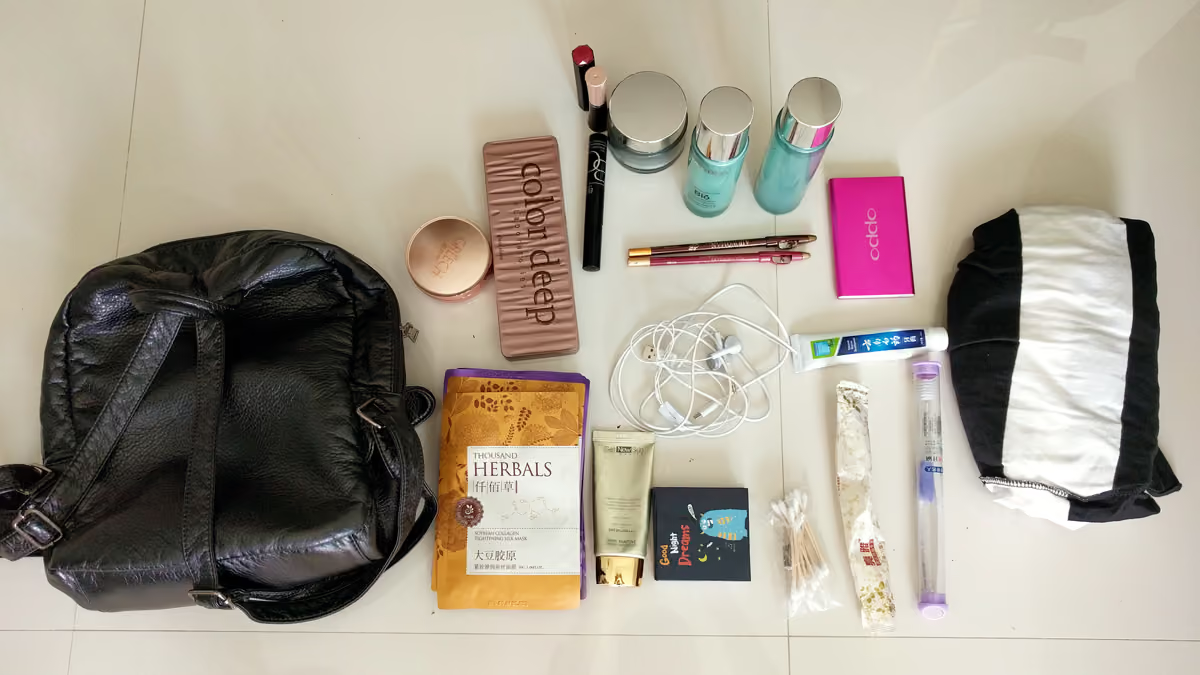
At the same time, the reality is that women are more vulnerable to gender violence and crime. The moment they cross the North Korean border and set foot on Chinese soil, their precarious legal status and the fact that they are women become risk factors that can lead to human trafficking, sexual exploitation, and forced prostitution. If these dangerous situations lead to pregnancy and childbirth, women often remain in China for years, even decades, weighed down by the conflicting emotions of their longing for freedom and their maternal instincts.
All of the women I met during my first rescue mission were survivors of being trafficked into forced marriages. While there are some cases where these women meet kind families and live in a relatively less dangerous environment, most have to endure difficult lives. One woman who we rescued in 2024 said that in the early stages of her life in China, she was confined and tied up in a single room by the man who bought her. Others had to do forced labor in one of China’s many factories.
Not a News Story, But a Person’s Story
About ten years ago, I watched a video of a woman my age testifying about the hardships and sexual violence she experienced during her defection from North Korea. As a South Korean, I couldn't believe that such things were happening just across the border. Shocked and ashamed of my indifference, I cried for a long time, then resolved to do something.
North Korea used to be something I only saw and heard about through a TV screen. Now those distant news stories have become the personal experiences of the North Korean mothers and friends I’ve met in the field.
At first, I simply wanted to help as best I could. But as time went on and I met more North Koreans, my perspective gradually changed. Now, I feel like I'm not so much ‘helping’ as I am meeting incredible superwomen who have overcome tremendous adversity.
My role is to constantly remind them of their resilience and potential, so they don't forget it themselves.
“This is My First Time Being Treated Like a Queen”
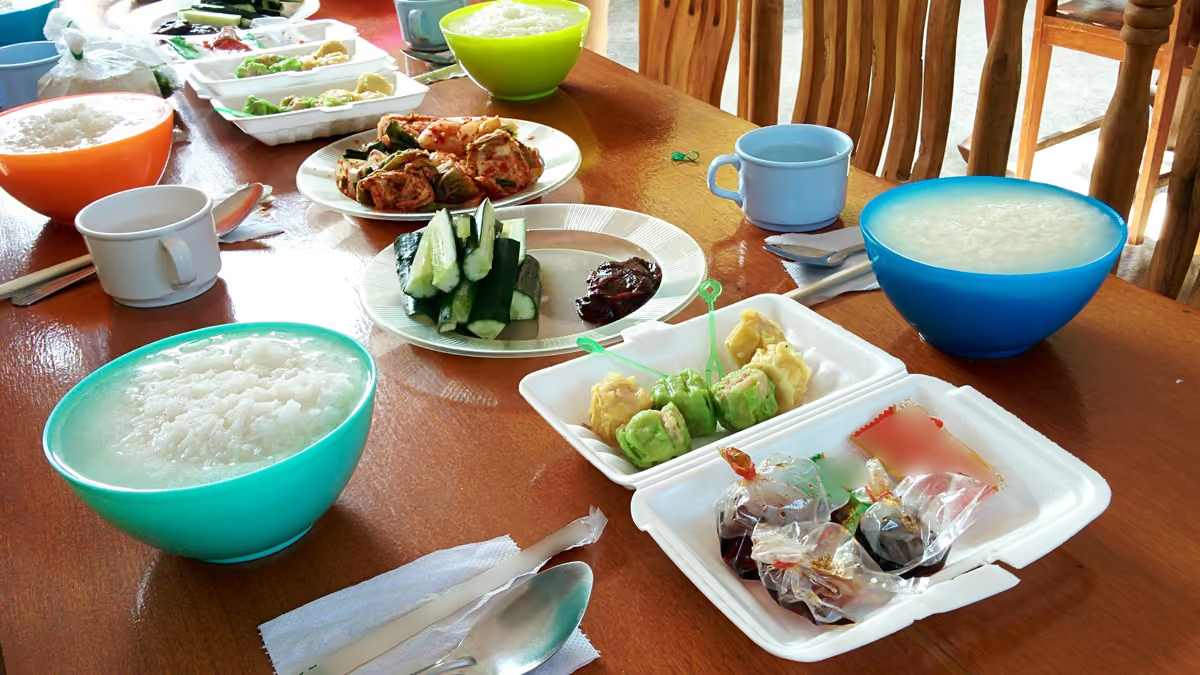
After a successful mission, our team ensures our newly arrived North Korean friends have a proper meal, get some rest, and receive basic necessities. On one occasion, one woman told me, “This is the first time in my life that I have been treated like a queen.”
She had just reached freedom after ten years in a forced marriage to a Chinese man. Her words resonated with me deeply. I realized once again that our work isn't simply about helping people achieve physical freedom; it's about restoring a person's forgotten dignity.
That woman has since resettled in South Korea and runs a small shop. She’s continued to stay in contact with LiNK, sharing updates about her life. One day, she shyly announced her marriage. She’s starting a new chapter with a person she chose and wanted.
Walking Together In Solidarity
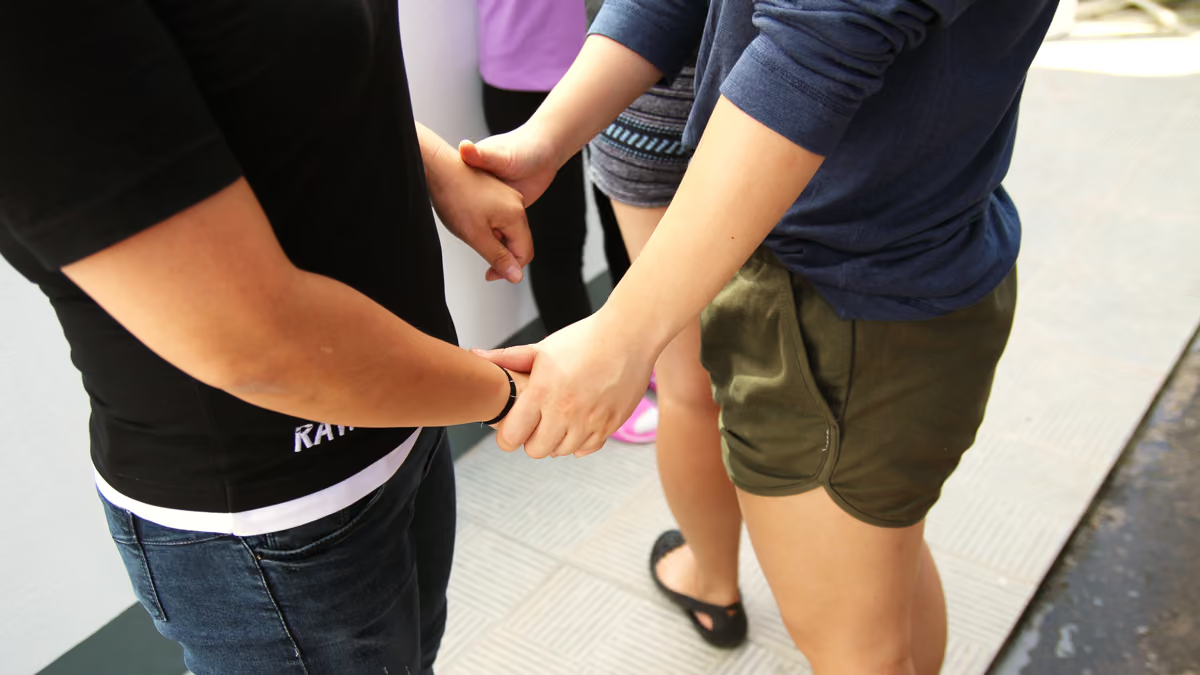
Through the friendships I’ve made and stories I’ve witnessed in the field, my connection to this issue has deepened over time. These women aren’t just “nameless” North Koreans, but people like us, living their daily lives; someone’s daughter, sister, or mother. I didn’t set out to do this work for over a decade. But day by day, hearing each story, meeting each person, and holding their hands has naturally led me down this path.
Listen to their stories, and I believe that you too will encounter a heart for the North Korean people.
– Jennifer Kim, LiNK Field Manager
*Jennifer is a pseudonym used to protect our field manager’s identity and avoid compromising this work.
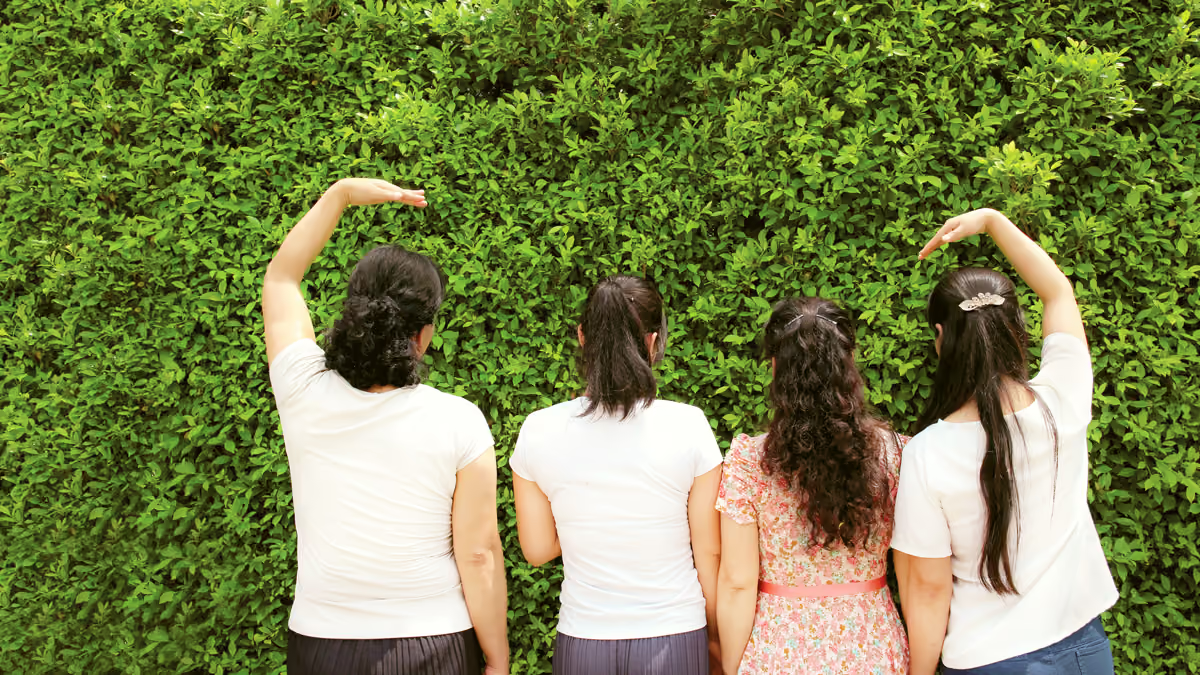
Help North Koreans Win Their Freedom
From inside the country to on the global stage, North Korean women are driving change on this issue. Driven by necessity, desire to care for their loved ones, and aspirations to forge their own path in this world, their pursuit of freedom is both intentional and instinctive.
Liberty in North Korea doesn't just extend a helping hand to North Korean refugees—we’re cultivating the next generation of North Korean leaders, entrepreneurs, and advocates, and doing this work alongside them.
Become a monthly donor today at $20 per month to help more North Koreans reach safety and gain full authorship of their lives in freedom.
Give Monthly
Chuseok for North Koreans | No Way Home for the Holidays
Autumn is a significant season for many people and cultures around the world. It’s a period of transition and reflection, gratitude for the days gone by, and celebration of the harvest.
In both North and South Korea, this time of year is celebrated with Chuseok, or the mid-autumn festival. Also known as “Korean Thanksgiving,” it’s a major holiday that predates the division of the peninsula. Chuseok is observed on the 15th day of the 8th month of the lunar calendar, when the harvest moon shines brightest. Traditionally, people return to their ancestral hometowns to gather with family, share a variety of delicious foods, and pay respects to their ancestors.
But for North Korean refugees, there is no going back. Holidays like Chuseok can be a bittersweet time, one of both gratitude for a life in freedom and grief over being unable to celebrate with family still inside North Korea.
“The first Chuseok in the US felt very empty and lonely. It was just me and my two-year-old daughter, Mia, back then. It didn’t feel like a holiday. I had multiple emotions at the same time. Loneliness, emptiness… there were so many feelings that I couldn’t even put into words.“
– Holly, escaped North Korea in 2013
Chuseok celebrations have evolved to look a little different in North versus South Korea, and even in countries like the US where the Korean diaspora have resettled.
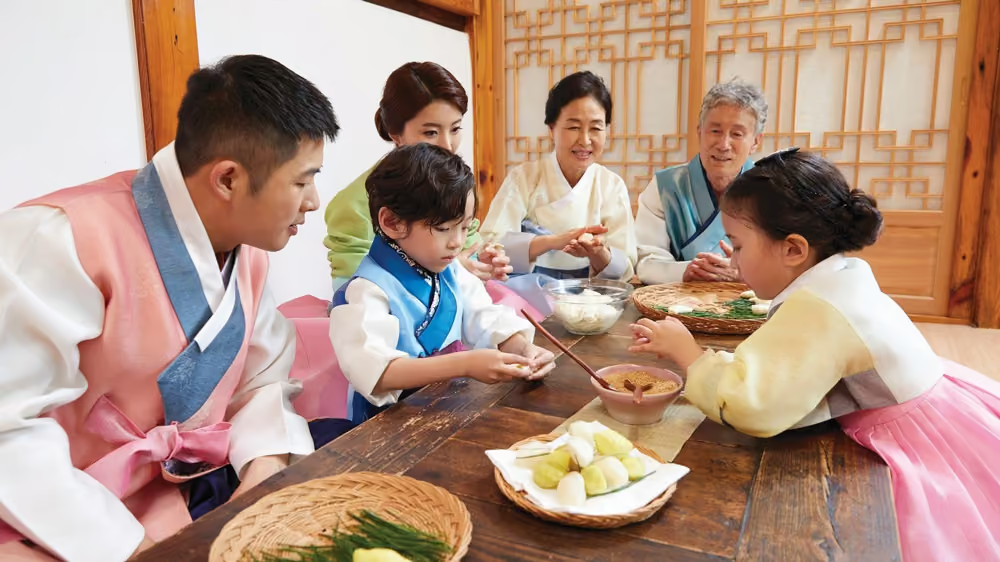
Chuseok Traditions in South Korea
In South Korea, Chuseok is considered the largest and most important holiday of the year. It’s celebrated over three days, during which a “national migration” takes place as people all over the country travel to their hometowns or to go sightseeing. Tickets for planes, trains, and buses are sold out months in advance, and freeways are packed with bumper-to-bumper traffic during the holiday period.
On the morning of Chuseok, families hold a memorial service for their ancestors at home, known as charye (차례). A table of food is prepared as an offering, typically featuring rice cakes, fresh fruits and vegetables, meat dishes, and the favorite meals of deceased loved ones. Families will also visit ancestral gravesites, a custom known as seongmyo (성묘), to pay their respects and tend to the graves.

From the ancestral table to large family meals, food is a central part of Chuseok celebrations. The defining dish of this holiday is seongpyeon (송편), a chewy, sweet, and nutty half-moon shaped rice cake steamed in fresh pine needles. It’s traditionally made with rice from the year’s harvest, finely milled into flour. Preparing seongpyon becomes a family activity as each piece is shaped by hand and filled with red bean paste, toasted sesame seeds, or chestnuts.
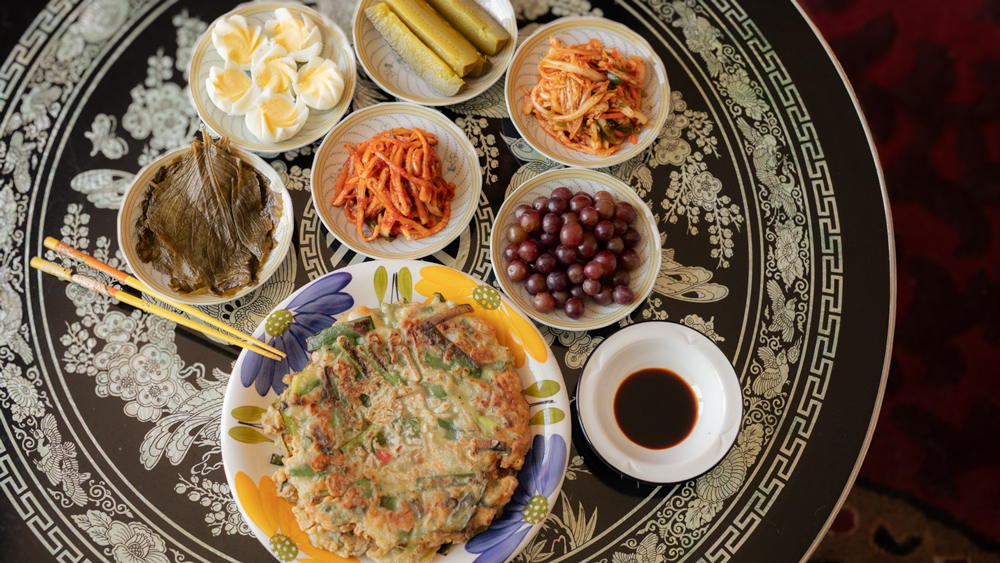
Other holiday foods include pajeon(파전), a crispy, savory pancake made with green onions; galbijjim (갈비찜), sweet and savory braised short ribs; and japchae(잡채), glass noodles stir-fried with meat and vegetables.
How Chuseok is Celebrated in North Korea
In North Korea, Chuseok is just a one-day celebration. While it is considered a key traditional holiday, its importance has been minimized relative to national holidays like the birthdays of Kim Il-sung and Kim Jong-il, and the anniversary of the founding of the Worker’s Party.
On both traditional and national holidays, North Koreans are urged to visit the statues of Kim family leaders or the Kumsan Palace of the Sun in Pyongyang, where the bodies of Kim Il-sung and Kim Jong-il lie.
It is much less common for widespread travel to take place during Chuseok due to severe travel restrictions and poor transportation infrastructure. However, these constraints have also made it so that generations of North Koreans remain in close proximity to their hometowns and relatives. For Chuseok, people gather with their nearby family members. Just like in South Korea, they’ll prepare special foods as offerings for charye, and then visit ancestral grave sites to pay respects.
After ancestral rites, festivities become a community affair with traditional food and folk games shared amongst family, friends, and neighbors. Songpyeon is also a holiday staple, but the North Korean version is made with a minced meat and vegetable filling, and are twice as big as South Korean ones. Common folk games are yutnori (윷놀이), a board game, and ssireum (씨름), or Korean wrestling.
Holly & Mia: A Legacy of Freedom
It’s been over a decade since Holly left her hometown in North Korea. But whenever she makes pajeon (파전), it takes her right back to her childhood—sitting by the frying pan and watching her mom cook, eagerly awaiting a taste. “Pa”(파) means green onion and “jeon”(전) refers to foods that have been pan-fried or battered. There are many varieties of “jeon,” made with everything from potatoes to zucchini, seafood, kimchi, and more.
Holly saw her mom cook this dish countless times in North Korea. It was an inexpensive, everyday staple, but also an essential part of the holidays. Every year for Chuseok, the mouthwatering aroma of oil and batter would draw everyone to the kitchen, where a colorful assortment of jeon was being prepared.
Holly now lives halfway across the world from North Korea, but every year during Chuseok, she sets out an offering table for charye. For hours, she prepares foods like pajeon with great care, remembering and honoring her parents and loved ones, who she can’t be with for the holidays.

In 2016, Holly reached freedom through LiNK’s rescue networks with one-year-old Mia in her arms.
Mia is now at an age where she’s able to understand some of the things her mother went through. Holly has begun to open up more about her life in North Korea, and does her best to keep their small family connected to their Korean heritage. She takes Mia to Korean language school on Sundays, and makes an effort to celebrate cultural holidays, like Chuseok. What can’t be put into words, Holly communicates through food—their dinner table is always full of delicious Korean cooking.
In 2024, Holly received her US citizenship, nine years after her resettlement!
"When I obtained my US citizenship, it felt like my escape journey was finally complete. I cried and felt so grateful to the US for giving me a new life. My greatest happiness is seeing Mia have a childhood free of the painful hardships that defined mine.”
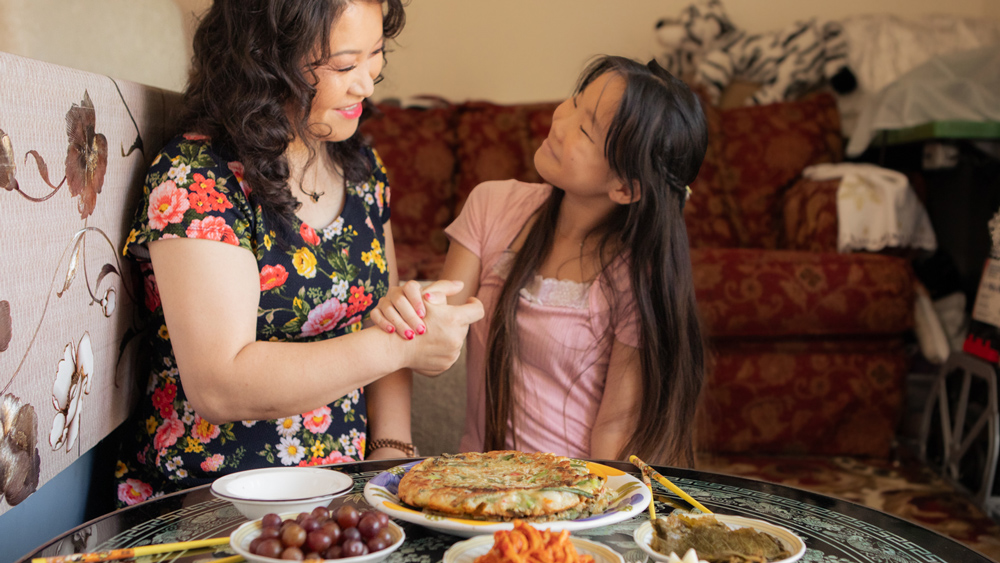
These days, Chuseok has become a lively gathering with the many friends and neighbors they’ve met over the years! Holly gathers with other Koreans in the community, and they go all-out preparing delicious seongpyeon and pajeon. She takes great pride in wearing traditional hanboks with Mia, and explaining each dish when guests arrive. The festivities always continue long after dinner, with Korean games like jegichagi, a version of hacky sack, and yutnori, a board game.
Living in the US, Holly and Mia have been introduced to new traditions too. Just a month after Chuseok, their community gathers again to celebrate Thanksgiving with turkey and pumpkin pie, in true American fashion.
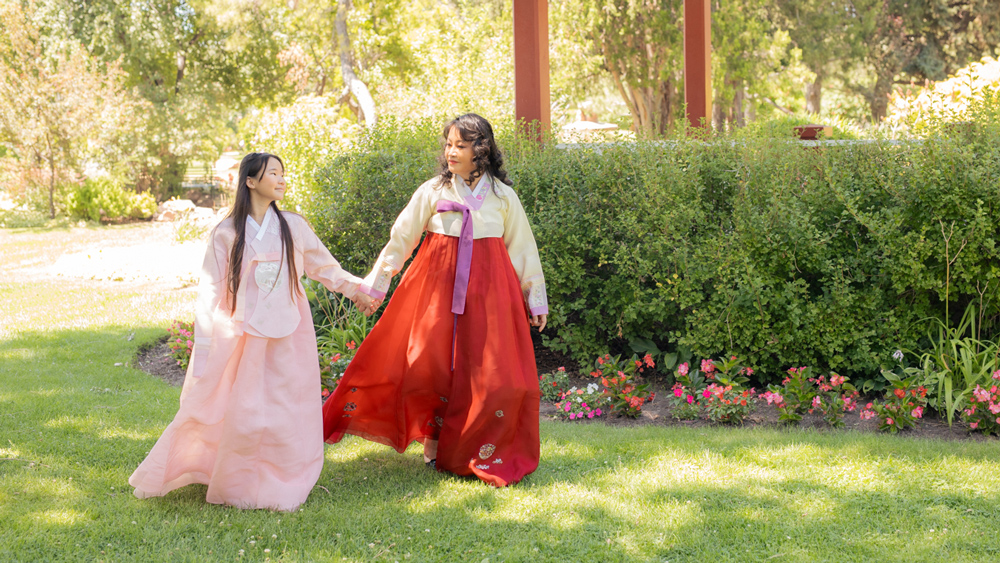
Holly still has hope that in her lifetime, she’ll be able to celebrate Chuseok with all her family and bring Mia to visit her hometown in North Korea.
We’re working towards the day when families don’t have to be separated. To date, LiNK has rescued almost 1400 North Korean refugees and their children, reuniting over 500 people with their families in freedom. As we’re helping North Koreans, like Holly, build new lives, we’re also leading initiatives to increase change inside North Korea, through advocacy, information access, and more.
Become a monthly donor and create a long-lasting legacy of freedom. Your support will rescue North Korean refugees waiting for their chance to escape right now, and fuel work that is increasing change and opening inside North Korea.










