
5 Reasons Why Being a Field Coordinator Is Awesome
Being a field coordinator is a difficult, but incredibly rewarding job and we always come to treasure the unique and life-changing experiences we have during our time in the field. To give you some insight into what this job is like, here are the five best things about it.

Getting to know the refugees
This is by far the most amazing part of what we do. When refugees come under our care, we form strong bonds with them. Despite the vastly different stories and personalities, through our conversations, we see the common thread of remarkable perseverance and will to survive in each of the North Koreans we rescue. All of them have hopes for the future and many of the things we learn about our friends can be emotional, further strengthening our bond. We focus so much of our energy on providing food, clothes, shelter, time to rest for these refugees who have been through so much. When it comes time for them to leave, they do so with so much gratitude and strength. We believe getting to know them creates a strong relationship between the refugees and LiNK so that they feel comfortable reaching out for additional services after resettlement.

Seeing how refugees have changed post-resettlement
In Southeast Asia, the North Korean refugees we assist are still en route to their resettlement destination and are still not completely at peace. They are often nervous, anxious, and trying to process being in a world completely unfamiliar to them.
When we have the opportunity to travel to South Korea to meet with them once they have resettled, it’s always gives us a rush of anticipation because we get to see how they have changed. One particular memory we have from one of these trips is of visiting a noraebang (a Korean karaoke room) with resettled refugees. To watch them having fun was very moving. Sometimes, the simple fact that they look happy and safe is more than enough to make this job worth it.
Introducing refugees to the supporters who funded their rescues
The concept of a complete stranger donating several thousand dollars to a person in need they have never met is a completely foreign concept to many North Koreans. They are often astounded and moved that a person thousands of miles away would do something so selfless. With each refugee that comes through, we always make sure to introduce them to the person or group that helped fund their rescue, explaining who they are, where they’re from, how they found out about North Korea, and why they donated. It’s a moment when two worlds meet and the refugees often write thank you cards to donors to express their gratitude.

Observing how refugees interact with technology
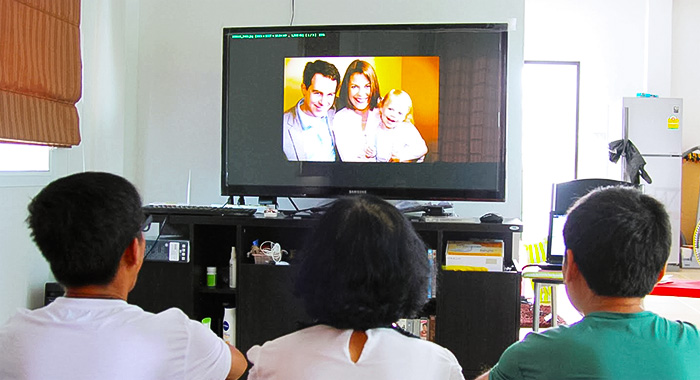
It’s interesting to observe how sudden exposure to a world of technology affects a person who hasn’t grown up with it. One middle-aged refugee was hesitant about taking a photo with his head turned to the side because he thought the North Korean government had the technology to turn heads in photos and thus find out his identity. In contrast, we have also seen a North Korean child begging his mom as soon as the group arrived to turn on the TV so he could watch cartoons. The family had been well-off enough to be able to expose their son to foreign media at a young age even inside North Korea.
It’s a fascinating experience to show refugees Google Maps views of their hometowns. It’s just a simple bird's eye view, but the way their eyes light up and their fingers trace the roads to their homes, circle their schools, train stations, and marketplaces, is so visceral for them. It’s a contemplative moment for us—these people have left their country because of reasons that made life in North Korea miserable or unlivable. Despite that, North Korea is HOME and still filled with memories, both good and bad, of their childhood, family, and the simple pleasures of life—chatting with neighbors, holiday memories of gifts and special foods, and weddings.

Breaking the ice with delicious food
The first meal with every group is always quiet because we’re all meeting each other for the first time. So we always make it a point to ask about special foods the refugees had in North Korea or on the journey down as an icebreaker. Afterall, who doesn’t love talking about food? It’s true for North Koreans as well - everyone loves giving input on regional differences in preparing holiday meals, comparing market prices on fruit and produce, or complaining about the food not matching their tastes on their journey down.
We want to make sure the North Korean refugees are able to eat as much as they can to be strong enough for the remainder of their journey so we’ve made it a point to find out what foods fit best with their palates. For many of them, this journey is the first time they’ll have experience some tastes or seasonings (like cilantro) and it can come as a shock to them. It’s fun to think about what foods they would like—Yogurt? Chinese-style buns? Noodle soup? Fried rice with a fried egg on top is an all-around crowd pleaser.
Soon after the first meal, the refugees will have lively discussions about the delicious foods they ate in North Korea and when they were available. One mission, we brought out persimmons as dessert—it initiated a 20-minute discussion on the merits and differences of persimmons eaten in North Korea versus the ones bought in Southeast Asia.
Being a field coordinator is filled with many unique moments and this list summarizes just a few of them. And yes, though it is challenging at times, it’s the refugees who we are most excited to serve. We love sharing our experiences with them. No one group or mission is the same and that keeps our job exciting, varied, and dynamic.
Want to be our team in the field? Apply to be our next field coordinator!
Apply Now!
From North Korea to South Korea: Under the Big Dipper
By: Hyeyoung Woon
Hyeyoung Woon is a financial accounting professional who escaped North Korea in 2009. Through essays based on personal experience, Hyeyoung shares reflections on life in North Korea, the journey of defection, and adaptation to a new society.

There was a time when the night sky felt like the only place I could hold on to.
I grew up in a small city in the northern part of North Korea. As a child, my happiest moments were simple. Every night, my mother would tell me stories while I searched for the seven stars of the Big Dipper above us. Those stars felt constant and comforting, quietly watching over me as I fell asleep.
When I was seven years old, everything changed. As the economy in the North worsened, my parents had to leave, and I was sent to live with my grandparents. I did not know when they would return. They promised it would be soon, and that they would bring candy if I waited patiently. At first, I believed them. But days became months, and months became years. Waiting quietly became part of my life.
Years later, I was briefly reunited with my mother. But she was no longer the same person I remembered. Prison and hardship had changed her in a way I could not fully understand. We promised never to separate again, yet one morning she disappeared once more.
All she left behind was a letter, promising that one day she would take me to South Korea. That promise became my direction.
A few years later, a broker secretly contacted me in the middle of the night. Hidden in the mountains, through an illegal phone call, I heard my mother’s voice for the first time in years. From that moment, I decided to leave everything behind, I decided to follow her path out of North Korea.
The journey out of North Korea was filled with fear. When I reached Beijing airport, I was terrified as I boarded the plane to South Korea. But, for the first time in my life, I felt like I was finally moving toward something, instead of simply waiting.
And then, after years of waiting, I found her.
For a while, life felt almost normal. My mother taught me how to survive in a completely new world: how to study, how to adapt, and how to build a future in South Korea. Everything around me felt unfamiliar, but I was no longer alone.
Then life changed again.
While I was in university, my mother was diagnosed with liver cancer and given only one year to live. It felt unbearably cruel. And yet, that final year together became one of the most meaningful years of my life.
Before she passed away, my mother had one wish: to tell her own mother, “I love you.”
But in North Korean culture, those words are rarely spoken, and by then, it was already too late. All I could do was share my memories of my grandmother with her. As I spoke, I watched her eyes brighten with memories she could no longer return to.
Exactly one year later, she passed away.
Once again, I was left alone.
For a long time, I did not know how to continue living after my mother passed away. I had risked everything just to follow her, and suddenly the person who had been my destination was gone. I was alone again.
But slowly, I began to move forward.
Years later, when I traveled abroad, I often wished she could see those places too. In every new city, I quietly imagined her beside me.
Even now, when I look up at the night sky, I still search for the Big Dipper. Thinking about that time, my mother and I used to look at those seven stars together.
So much in my life has changed since then.
Countries have changed.
People have disappeared.
And time has carried us into completely different worlds.
But the Big Dipper remains. Quietly shining above us.
Sometimes, when I look at those stars, I still feel connected to her.
As if, even now, we are somehow looking at the same night sky from different worlds.
And, maybe, that is why the Big Dipper still comforts me.
It reminds me that some people never completely leave us.
–
Hyeyoung is a participant of the LiNK English Language Program (LELP), which serves to not only help North Korean defectors build confidence and skills in English, but develop their capacity as advocates for this issue. To that end, we partnered with select LELP “columnists” to write and polish personal essays through multiple rounds of external feedback and revision. Our goal is to have more North Koreans share their stories directly and lead efforts to change the narrative.
We believe the North Korean people can achieve their liberty in our lifetime.
Opportunities like LELP invest in the people building that future now. Help more North Koreans find their voice, reach their goals, and lead change on this issue.










