
5 Reasons Why Being a Field Coordinator Is Awesome
Being a field coordinator is a difficult, but incredibly rewarding job and we always come to treasure the unique and life-changing experiences we have during our time in the field. To give you some insight into what this job is like, here are the five best things about it.

Getting to know the refugees
This is by far the most amazing part of what we do. When refugees come under our care, we form strong bonds with them. Despite the vastly different stories and personalities, through our conversations, we see the common thread of remarkable perseverance and will to survive in each of the North Koreans we rescue. All of them have hopes for the future and many of the things we learn about our friends can be emotional, further strengthening our bond. We focus so much of our energy on providing food, clothes, shelter, time to rest for these refugees who have been through so much. When it comes time for them to leave, they do so with so much gratitude and strength. We believe getting to know them creates a strong relationship between the refugees and LiNK so that they feel comfortable reaching out for additional services after resettlement.

Seeing how refugees have changed post-resettlement
In Southeast Asia, the North Korean refugees we assist are still en route to their resettlement destination and are still not completely at peace. They are often nervous, anxious, and trying to process being in a world completely unfamiliar to them.
When we have the opportunity to travel to South Korea to meet with them once they have resettled, it’s always gives us a rush of anticipation because we get to see how they have changed. One particular memory we have from one of these trips is of visiting a noraebang (a Korean karaoke room) with resettled refugees. To watch them having fun was very moving. Sometimes, the simple fact that they look happy and safe is more than enough to make this job worth it.
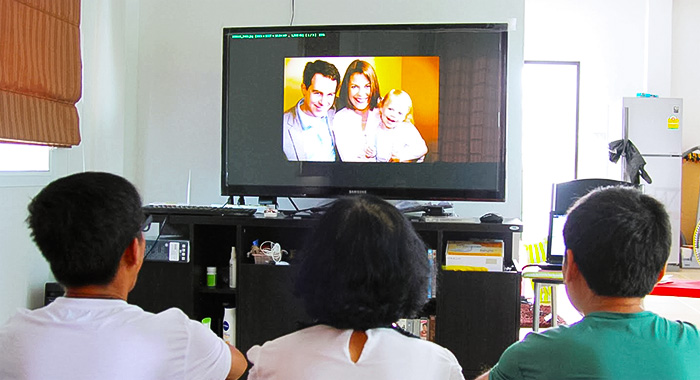
Introducing refugees to the supporters who funded their rescues
The concept of a complete stranger donating several thousand dollars to a person in need they have never met is a completely foreign concept to many North Koreans. They are often astounded and moved that a person thousands of miles away would do something so selfless. With each refugee that comes through, we always make sure to introduce them to the person or group that helped fund their rescue, explaining who they are, where they’re from, how they found out about North Korea, and why they donated. It’s a moment when two worlds meet and the refugees often write thank you cards to donors to express their gratitude.

Observing how refugees interact with technology
It’s interesting to observe how sudden exposure to a world of technology affects a person who hasn’t grown up with it. One middle-aged refugee was hesitant about taking a photo with his head turned to the side because he thought the North Korean government had the technology to turn heads in photos and thus find out his identity. In contrast, we have also seen a North Korean child begging his mom as soon as the group arrived to turn on the TV so he could watch cartoons. The family had been well-off enough to be able to expose their son to foreign media at a young age even inside North Korea.
It’s a fascinating experience to show refugees Google Maps views of their hometowns. It’s just a simple bird's eye view, but the way their eyes light up and their fingers trace the roads to their homes, circle their schools, train stations, and marketplaces, is so visceral for them. It’s a contemplative moment for us—these people have left their country because of reasons that made life in North Korea miserable or unlivable. Despite that, North Korea is HOME and still filled with memories, both good and bad, of their childhood, family, and the simple pleasures of life—chatting with neighbors, holiday memories of gifts and special foods, and weddings.

Breaking the ice with delicious food
The first meal with every group is always quiet because we’re all meeting each other for the first time. So we always make it a point to ask about special foods the refugees had in North Korea or on the journey down as an icebreaker. Afterall, who doesn’t love talking about food? It’s true for North Koreans as well - everyone loves giving input on regional differences in preparing holiday meals, comparing market prices on fruit and produce, or complaining about the food not matching their tastes on their journey down.
We want to make sure the North Korean refugees are able to eat as much as they can to be strong enough for the remainder of their journey so we’ve made it a point to find out what foods fit best with their palates. For many of them, this journey is the first time they’ll have experience some tastes or seasonings (like cilantro) and it can come as a shock to them. It’s fun to think about what foods they would like—Yogurt? Chinese-style buns? Noodle soup? Fried rice with a fried egg on top is an all-around crowd pleaser.
Soon after the first meal, the refugees will have lively discussions about the delicious foods they ate in North Korea and when they were available. One mission, we brought out persimmons as dessert—it initiated a 20-minute discussion on the merits and differences of persimmons eaten in North Korea versus the ones bought in Southeast Asia.
Being a field coordinator is filled with many unique moments and this list summarizes just a few of them. And yes, though it is challenging at times, it’s the refugees who we are most excited to serve. We love sharing our experiences with them. No one group or mission is the same and that keeps our job exciting, varied, and dynamic.
Want to be our team in the field? Apply to be our next field coordinator!
Apply Now!
Disrupting the North Korean Regime’s Control: Increasing Information Access
North Korea is the most closed and isolated information environment in the world. The regime’s control hinges upon suppressing outside sources of information that could contradict or undermine their ideology. This makes their system of repression extremely effective; it also highlights a critical weakness, one that creates an opportunity for us to effect change inside the country.
Information is power. It enables people to scrutinize the world around them, hold governments accountable, and aspire towards a better life.
At Liberty in North Korea, we’re empowering people inside North Korea with tailor-made tools and technologies that increase their information access, and make that access safer and easier. But what does this actually look like? We asked our Chief Strategy Officer, Sokeel Park, to answer some frequently asked questions about our Information Access Programs (IAP).

1. Without the internet, is it really possible to increase information access inside North Korea?
Yes, absolutely. North Korean people are already accessing uncensored information and media without the internet, notably through USB drives and MicroSD cards that are smuggled into the country and spread through sharing networks. These contain K-dramas, movies, music, and information that the North Korean regime tries so hard to keep out of the country.
The devices and hardware are already in use, the demand is there, and the sharing networks and behaviour exists. The need and opportunity is to leverage and build on this, providing new technologies that will help North Korean people access more uncensored information more safely.
2. Isn’t enabling North Koreans to access illegal foreign media putting them in danger?
Accessing uncensored information is risky in North Korea, especially with increased crackdowns and punishments in recent years. Our technologies and digital security tools equip North Koreans to access information more safely.
North Korean people will continue to take risks for information and media that most people in the world would take for granted.
User security is our highest priority in our development process, and this is guided by North Korean defectors who left the country recently, understand the environment, and can advise us on the best ways to protect and empower North Korean people who are trying to access uncensored information.
3. What is LiNK doing to increase North Korean people’s access to information?
LiNK’s IAP work can be broken down into four areas of focus.
We develop lightweight, secure programs help more North Koreans access more uncensored information; protect North Korean users with digital security and anti-surveillance measures; create and curate strategic content that meet North Korean people’s needs and build resilience to the regime’s propaganda; and work with distribution partners to deliver these technologies and content packages to North Koreans as reliably, effectively, and safely as we can.

4. Why did LiNK decide to do Information Access work?
In a 2024 HanVoice Woorion survey of 500 North Korean refugees, 86.2% agreed that “it is important to increase the flow of information to North Korean people.” This is the most effective way that we can support change inside North Korea.
As an organization, LiNK is uniquely positioned to do this work. With our long history of rescuing and supporting North Korean refugees, we have the networks and ability to work closely with a variety of North Koreans, including recent defectors and people who studied and worked in IT in North Korea, who inform and help test our products and strategies from start to finish.
Crucially, because of the support of people like you, we are able to make strategic investments in projects that governments or other funders may not support, which enables us to pursue the most effective long-term strategy possible to support North Korean people to achieve their freedom.
5. What kind of information can North Koreans access, both legally and illegally?
Legally, North Korean people have access to official media which is extremely centrally controlled and produced. There are no newspapers, TV stations or media channels with an alternative viewpoint from the government, and all official media serves to reinforce the regime’s ideologies and narratives about the outside world, their own country and the leadership. This official media includes, for instance, newspapers, North Korean films and dramas, carefully selected foreign (eg. Russian) films, partially censored sports broadcasts, radio, speeches by the ruling Kim family, government-approved books, and government-approved mobile apps.
Illegally accessed information or media could theoretically include anything, but most commonly would be movies and TV dramas from South Korea, China and elsewhere, music, some e-books, and foreign radio broadcasts including news and documentary programs. Close to the border with China, some North Korean people have a smuggled Chinese smartphone that can be used to connect to the Chinese network and communicate with or get information from the outside world.
→ Want to learn more about life inside North Korea? Sign up for North Korea 101, LiNK’s free online course!
6. How do we know increasing North Korean people’s access to information will help change North Korea?
Hundreds of interviews with North Korean refugees conducted by LiNK, and thousands more by other organizations, consistently show how access to outside information reshaped their understanding of the world, undermined regime propaganda, and often was key in their decision to risk their lives and seek freedom. We also see the North Korean regime’s crackdowns on this access to outside information, especially in recent years, as evidence that the regime understands the power of information to undermine their control and change their country as well.
Throughout history, we’ve seen similar dynamics in other authoritarian countries, where greater access to uncensored information has consistently increased aspirations for freedom, expanded people’s sense of what was possible, and played a key role in people overcoming dictatorships and achieving freedom across the world.
It is inherently difficult to capture and measure the long-term effects of information, particularly in a country like North Korea. But when history, logic, the testimony of countless North Koreans, and careful product and strategy validation processes all point in the same direction, investing in increasing North Korean people’s access to information is not a leap of faith. It is the strongest, most evidence-based opportunity to help North Koreans shape their future and ultimately achieve their liberty.
–
In the first half of 2026, our IAP team successfully deployed new information-access technologies across one of the world’s most tightly controlled borders, and reached people inside North Korea.
We believe North Koreans deserve the freedom to access information and make their own choices, and we’re committed to helping them break through the regime’s surveillance and censorship. Increasing information access is one of the most effective ways that we can have a direct impact on North Korean people’s lives right now.
Help drive change from inside North Korea by investing in LiNK’s Information Access Programs.










