
Disrupting the North Korean Regime’s Control: Increasing Information Access
North Korea is the most closed and isolated information environment in the world. The regime’s control hinges upon suppressing outside sources of information that could contradict or undermine their ideology. This makes their system of repression extremely effective; it also highlights a critical weakness, one that creates an opportunity for us to effect change inside the country.
Information is power. It enables people to scrutinize the world around them, hold governments accountable, and aspire towards a better life.
At Liberty in North Korea, we’re empowering people inside North Korea with tailor-made tools and technologies that increase their information access, and make that access safer and easier. But what does this actually look like? We asked our Chief Strategy Officer, Sokeel Park, to answer some frequently asked questions about our Information Access Programs (IAP).
1. Without the internet, is it really possible to increase information access inside North Korea?
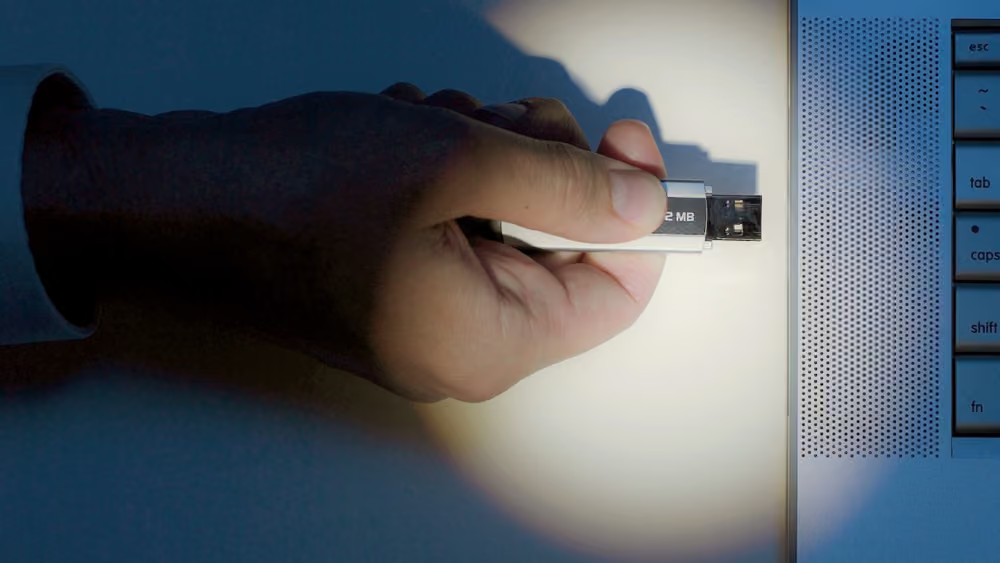
Yes, absolutely. North Korean people are already accessing uncensored information and media without the internet, notably through USB drives and MicroSD cards that are smuggled into the country and spread through sharing networks. These contain K-dramas, movies, music, and information that the North Korean regime tries so hard to keep out of the country.
The devices and hardware are already in use, the demand is there, and the sharing networks and behaviour exists. The need and opportunity is to leverage and build on this, providing new technologies that will help North Korean people access more uncensored information more safely.
2. Isn’t enabling North Koreans to access illegal foreign media putting them in danger?
Accessing uncensored information is risky in North Korea, especially with increased crackdowns and punishments in recent years. Our technologies and digital security tools equip North Koreans to access information more safely.
North Korean people will continue to take risks for information and media that most people in the world would take for granted.
User security is our highest priority in our development process, and this is guided by North Korean defectors who left the country recently, understand the environment, and can advise us on the best ways to protect and empower North Korean people who are trying to access uncensored information.
3. What is LiNK doing to increase North Korean people’s access to information?
LiNK’s IAP work can be broken down into four areas of focus.
We develop lightweight, secure programs help more North Koreans access more uncensored information; protect North Korean users with digital security and anti-surveillance measures; create and curate strategic content that meet North Korean people’s needs and build resilience to the regime’s propaganda; and work with distribution partners to deliver these technologies and content packages to North Koreans as reliably, effectively, and safely as we can.
4. Why did LiNK decide to do Information Access work?
In a 2024 HanVoice Woorion survey of 500 North Korean refugees, 86.2% agreed that “it is important to increase the flow of information to North Korean people.” This is the most effective way that we can support change inside North Korea.
As an organization, LiNK is uniquely positioned to do this work. With our long history of rescuing and supporting North Korean refugees, we have the networks and ability to work closely with a variety of North Koreans, including recent defectors and people who studied and worked in IT in North Korea, who inform and help test our products and strategies from start to finish.
Crucially, because of the support of people like you, we are able to make strategic investments in projects that governments or other funders may not support, which enables us to pursue the most effective long-term strategy possible to support North Korean people to achieve their freedom.
5. What kind of information can North Koreans access, both legally and illegally?
Legally, North Korean people have access to official media which is extremely centrally controlled and produced. There are no newspapers, TV stations or media channels with an alternative viewpoint from the government, and all official media serves to reinforce the regime’s ideologies and narratives about the outside world, their own country and the leadership. This official media includes, for instance, newspapers, North Korean films and dramas, carefully selected foreign (eg. Russian) films, partially censored sports broadcasts, radio, speeches by the ruling Kim family, government-approved books, and government-approved mobile apps.
Illegally accessed information or media could theoretically include anything, but most commonly would be movies and TV dramas from South Korea, China and elsewhere, music, some e-books, and foreign radio broadcasts including news and documentary programs. Close to the border with China, some North Korean people have a smuggled Chinese smartphone that can be used to connect to the Chinese network and communicate with or get information from the outside world.
→ Want to learn more about life inside North Korea? Sign up for North Korea 101, LiNK’s free online course!
6. How do we know increasing North Korean people’s access to information will help change North Korea?
Hundreds of interviews with North Korean refugees conducted by LiNK, and thousands more by other organizations, consistently show how access to outside information reshaped their understanding of the world, undermined regime propaganda, and often was key in their decision to risk their lives and seek freedom. We also see the North Korean regime’s crackdowns on this access to outside information, especially in recent years, as evidence that the regime understands the power of information to undermine their control and change their country as well.
Throughout history, we’ve seen similar dynamics in other authoritarian countries, where greater access to uncensored information has consistently increased aspirations for freedom, expanded people’s sense of what was possible, and played a key role in people overcoming dictatorships and achieving freedom across the world.
It is inherently difficult to capture and measure the long-term effects of information, particularly in a country like North Korea. But when history, logic, the testimony of countless North Koreans, and careful product and strategy validation processes all point in the same direction, investing in increasing North Korean people’s access to information is not a leap of faith. It is the strongest, most evidence-based opportunity to help North Koreans shape their future and ultimately achieve their liberty.
–
In the first half of 2026, our IAP team successfully deployed new information-access technologies across one of the world’s most tightly controlled borders, and reached people inside North Korea.
We believe North Koreans deserve the freedom to access information and make their own choices, and we’re committed to helping them break through the regime’s surveillance and censorship. Increasing information access is one of the most effective ways that we can have a direct impact on North Korean people’s lives right now.
Help drive change from inside North Korea by investing in LiNK’s Information Access Programs.
Give Today
Lunar New Year in North Korea | What is Seollal (설날)?
North Korea has several major holidays, the most prominent being centered around the birthdays of Kim Il-Sung and Kim Jong-il. But there are some holidays that predate the regime, and continue to be celebrated in both North Korea and South Korea.
Seollal (설날) is one of these traditionally significant days. Known more broadly as Lunar New Year, it marks the first day of the lunar calendar and is observed in many Asian cultures. While January 1st marks New Year’s Day on the Gregorian calendar used by many western countries, the exact date of Lunar New Year differs every year. It typically falls at the end of January or beginning of February, and is celebrated over a period of three days.
Seollal in South Korea
In South Korea, Seollal is a time for families to gather and honor their ancestors. With people across the nation traveling back home, roads are packed and train, bus, and plane tickets are all booked months in advance.
Long hours are spent preparing traditional foods like tteokguk (떡국), or rice cake soup, and jeon (전), a savory pancake-like dish usually made with green onions. The act of eating tteokguk symbolizes turning one year older in Korean, and is believed to bring good luck and health for the year ahead.
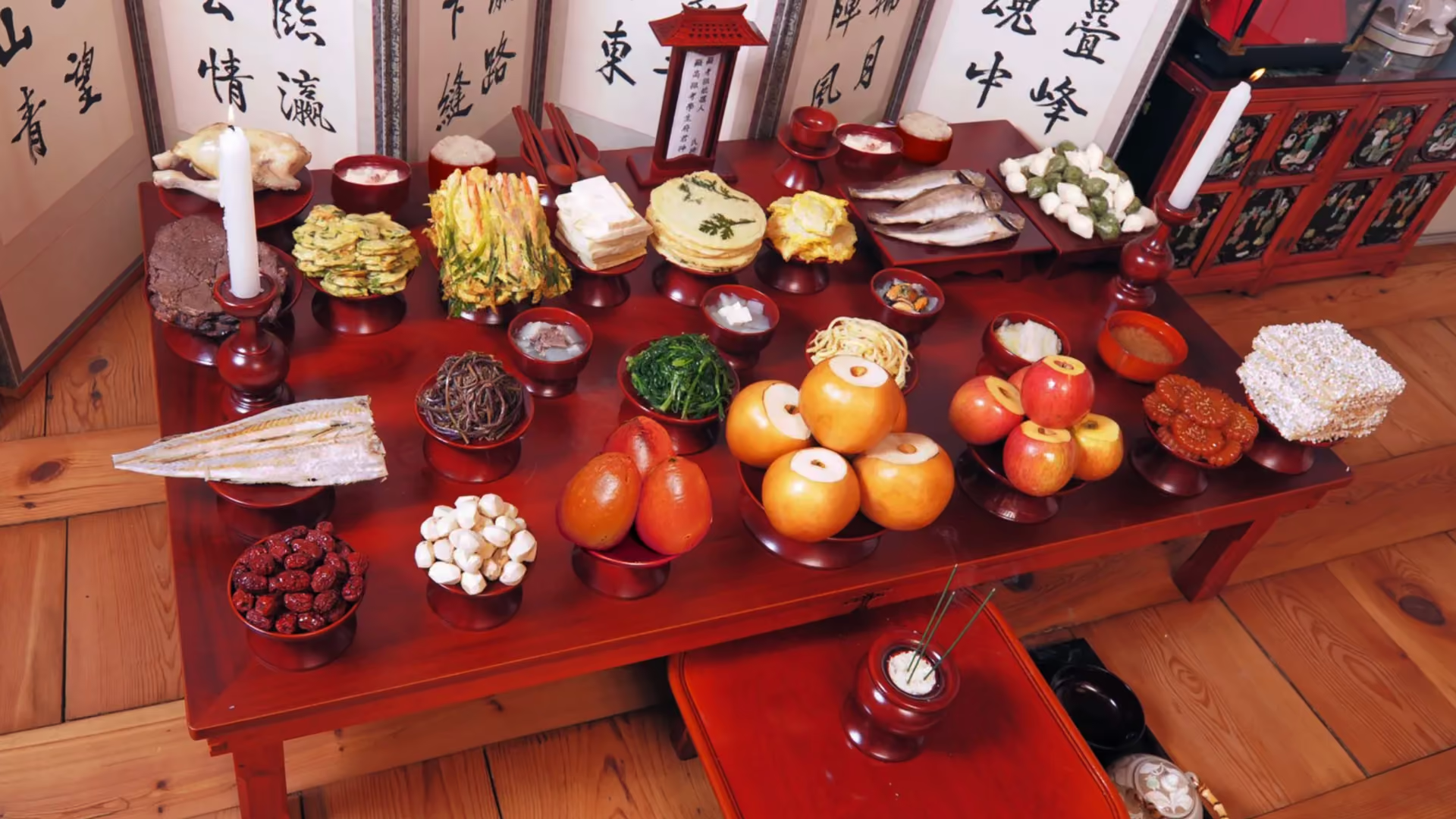
Food is also an important component of Charye (차례), a memorial service to honor one’s ancestors. Led by the family’s eldest son, an assortment of dishes are set out on a table as an expression of gratitude, and rites are performed for the last four generations of one’s ancestors.
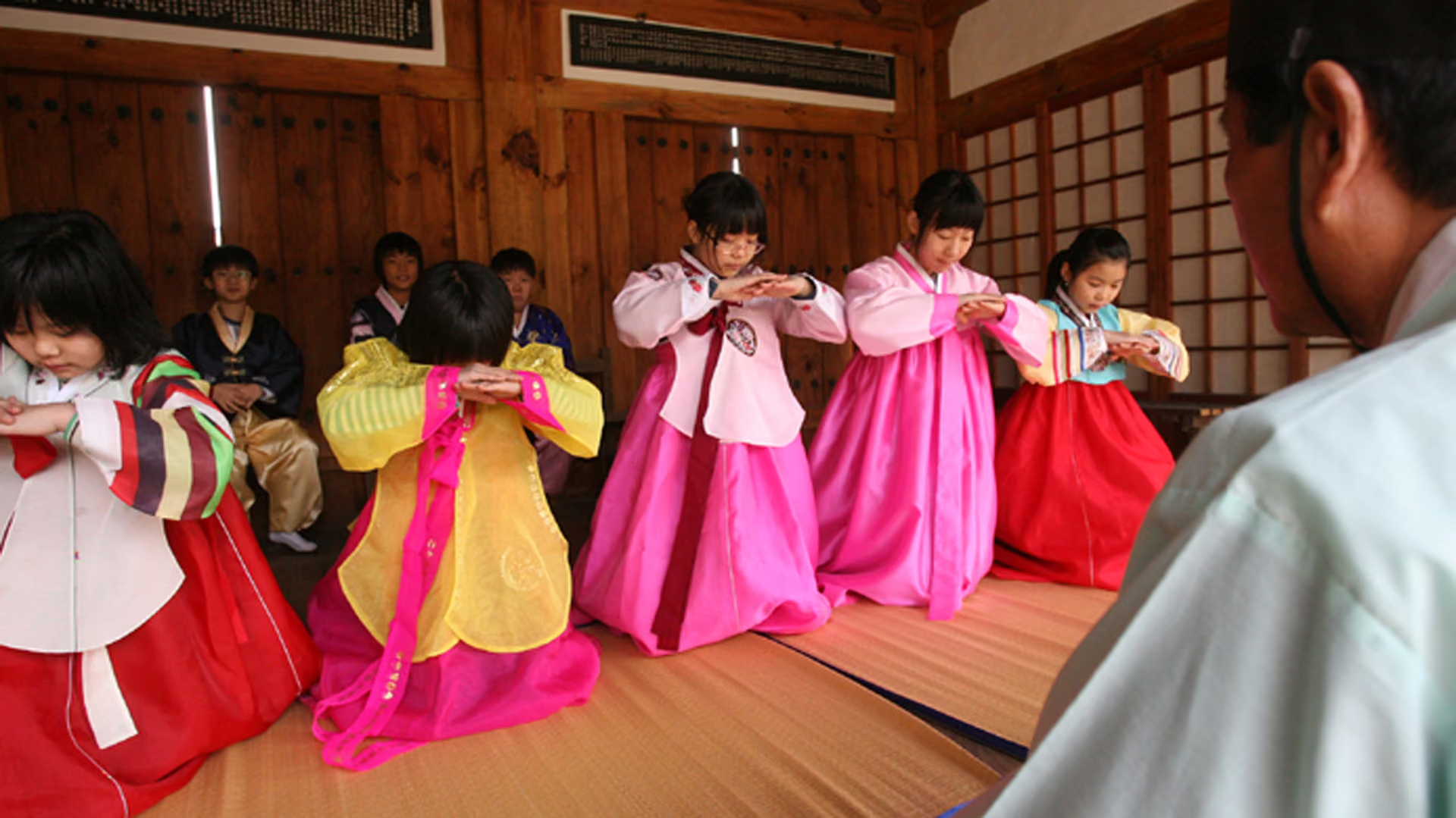
Another well known Seollal tradition is Sebae (세배). Younger members of the family, often while wearing traditional hanboks (한복), do a deep bow to their elders with the greeting “새해 복 많이 받으세요,” which translates to “May you receive good fortune and blessings in the new year.” In return, elders share words of wisdom and sebaetdon (세뱃돈), new year’s money in a colorful envelope.
The rest of the holiday is usually spent exchanging stories, reflecting on the past year, and playing Korean traditional games like Yutnori (윷놀이), which involves four wooden sticks that are tossed like dice to move tokens around a board.
Seollal in North Korea
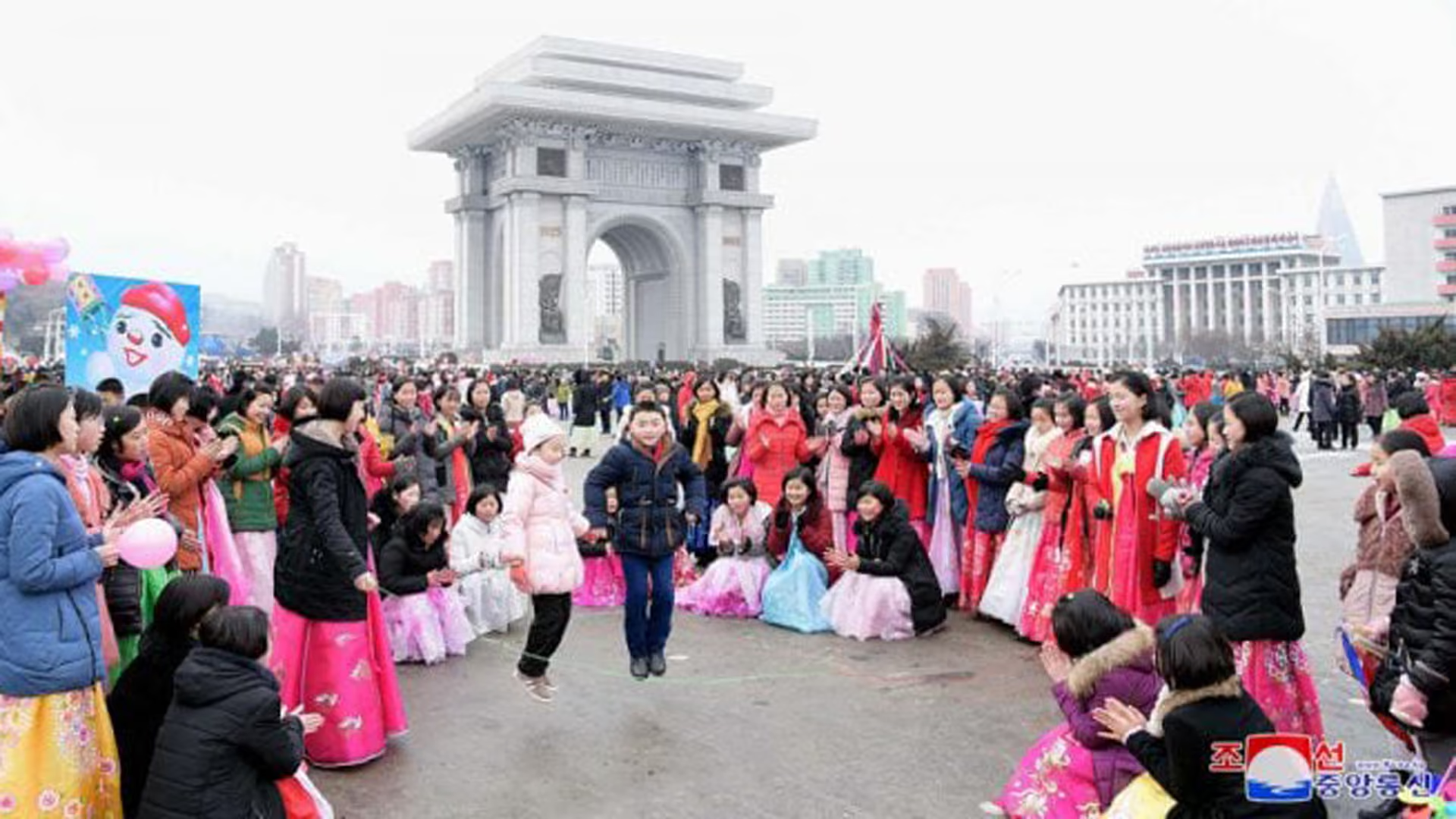
In North Korea, the celebration of Seollal is encouraged by the state to emphasize Korean folk traditions. Historical programs are broadcast on TV, and local authorities organize mandatory activities such as kite flying and spinning tops. North Koreans gather with loved ones over the highly anticipated three day rest from work.
But unlike in South Korea, January 1st is actually considered the more important holiday to celebrate the New Year. This is when North Koreans do Sebae. Instead of the South Korean greeting, it’s customary to say “새해를 축하합니다,” or “Congratulations on the new year.”
On New Year’s morning, it is compulsory for all North Koreans to visit statues or portraits of Kim Il-sung and Kim Jong-il. After that, respects must be paid to town leaders, particularly the person in charge of one’s unit, such as the company president or homeroom teacher. Finally, greetings are exchanged between in-laws and neighbors, and families gather for ancestral rites, sharing food, and other traditional festivities.
Another key difference between New Year’s celebrations in North and South Korea is that there is no widespread travel. The lack of freedom of movement inside the country means it is extremely difficult for North Koreans to go from one city to another for any reason. Any requested travel requires a specific stated purpose, proper identification, and documentation that must go through several levels of approval, including from the head of the neighborhood watch (inminban), local People’s Committee, local district office, and a relevant police officer. Permits for restricted areas, such as Pyongyang and the border regions, require more complex issuing processes.
Yet both New Year’s Day and Seollal in North Korea are still celebrations of life and community. Many North Korean refugees fondly remember the holiday, recalling not the state enforced displays of propaganda, but precious time spent with loved ones.
“I grew up with a lot of aunts and uncles and they all lived in the same area, so on Seollal…everyone would get together to make rice cakes, noodles, and dumplings. After making a lot of food, we’d play Yutnori and everyone would start squabbling. Then we’d find out everyone’s fortune. I miss it now.”
- Hannah, escaped from North Korea in 2015
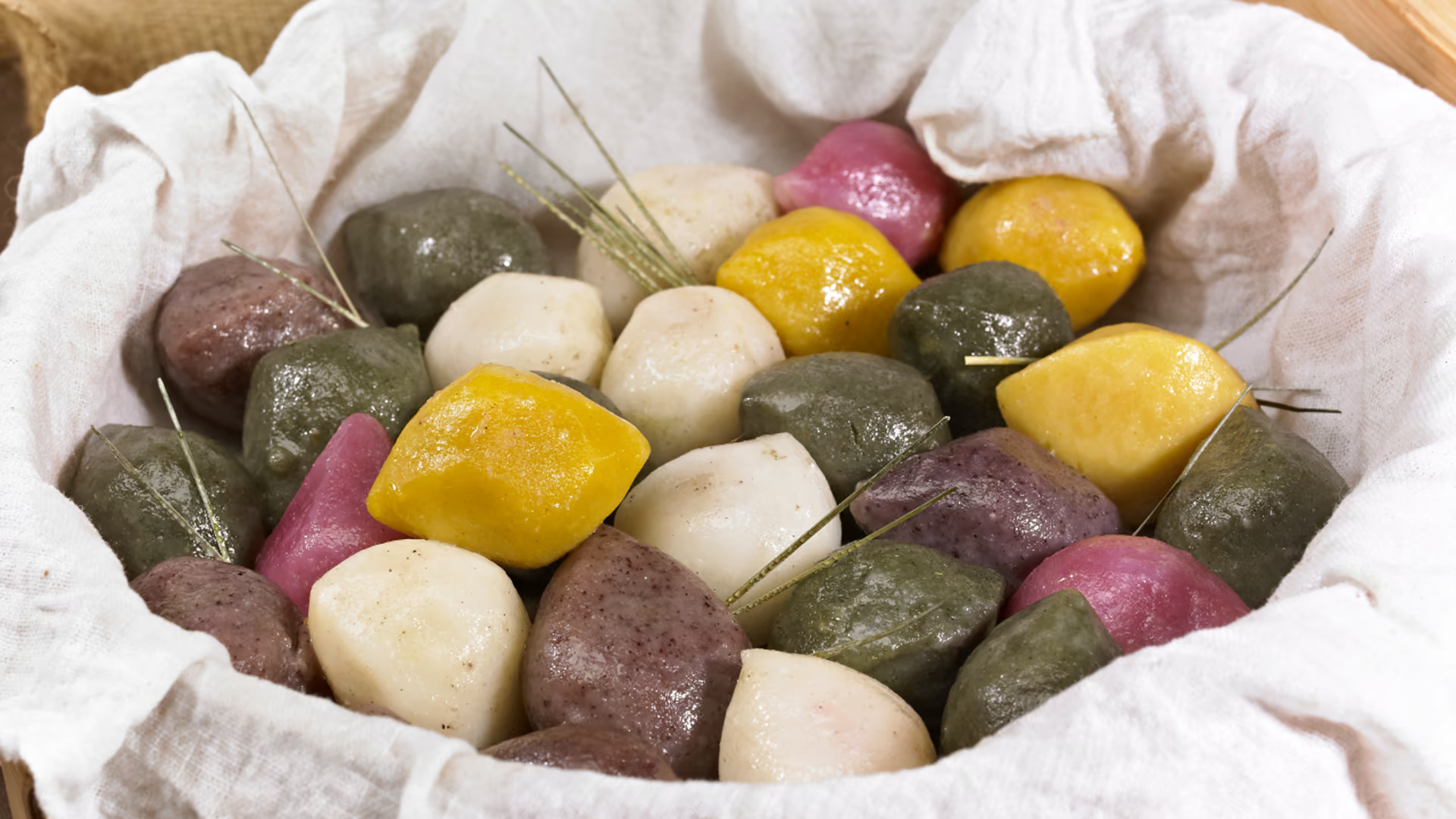
On Seollal, North Koreans don’t do a separate bow because they have already greeted the New Year. Depending on the region, North Koreans enjoy a variety of dishes like tteokguk (떡국), manduguk (만두국), dwejigukbap (돼지국밥), songpyeon (송편), nokdujijim (녹두지짐), and noodles.
“North Korea is a very communal society, so everyone gets together on Lunar New Year. The adults would play card games and Yutnori, we’d eat delicious food, and spend time together until the sun went down. I would wake up especially early to visit the homes of the neighborhood elders and they’d share the food they made with me… Later in the afternoon, I’d go to my homeroom teacher’s house with all my friends, and we’d play there until late in the evening.”
- Yulseong, escaped from North Korea in 2017
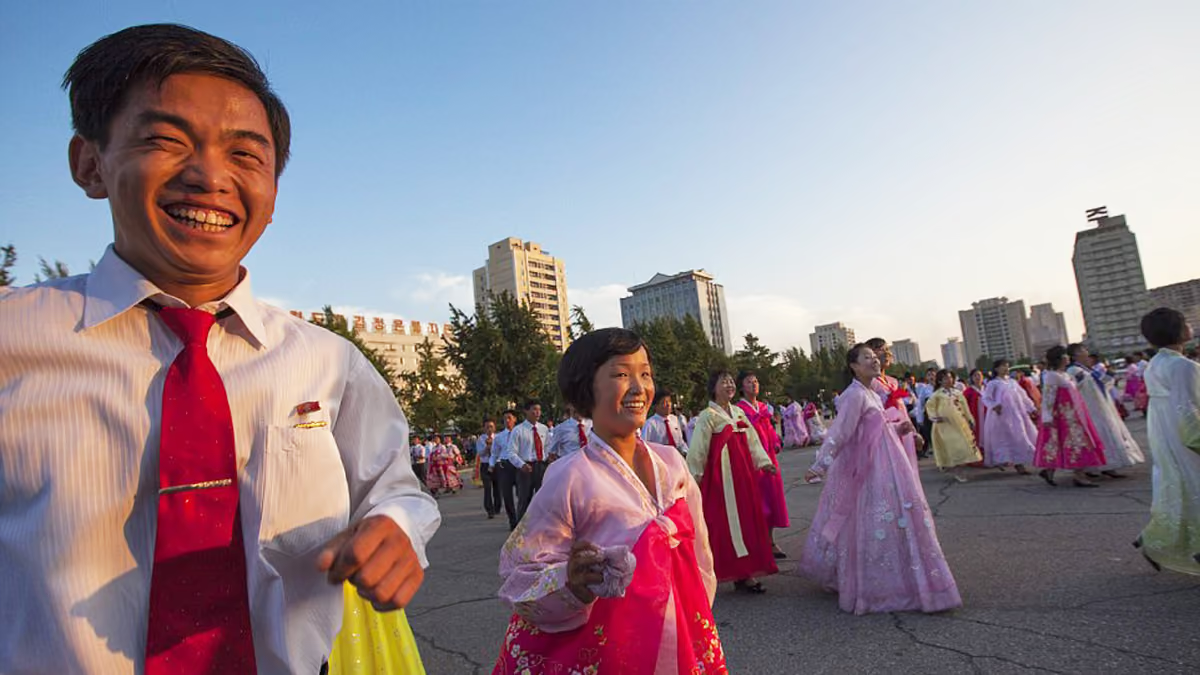
All around the world, the New Year is a highly anticipated time of reflection, gratitude, and turning the page. It’s a universal experience, one that is shared with the North Korean people as well!










