
Disrupting the North Korean Regime’s Control: Increasing Information Access
North Korea is the most closed and isolated information environment in the world. The regime’s control hinges upon suppressing outside sources of information that could contradict or undermine their ideology. This makes their system of repression extremely effective; it also highlights a critical weakness, one that creates an opportunity for us to effect change inside the country.
Information is power. It enables people to scrutinize the world around them, hold governments accountable, and aspire towards a better life.
At Liberty in North Korea, we’re empowering people inside North Korea with tailor-made tools and technologies that increase their information access, and make that access safer and easier. But what does this actually look like? We asked our Chief Strategy Officer, Sokeel Park, to answer some frequently asked questions about our Information Access Programs (IAP).
1. Without the internet, is it really possible to increase information access inside North Korea?
Yes, absolutely. North Korean people are already accessing uncensored information and media without the internet, notably through USB drives and MicroSD cards that are smuggled into the country and spread through sharing networks. These contain K-dramas, movies, music, and information that the North Korean regime tries so hard to keep out of the country.
The devices and hardware are already in use, the demand is there, and the sharing networks and behaviour exists. The need and opportunity is to leverage and build on this, providing new technologies that will help North Korean people access more uncensored information more safely.
2. Isn’t enabling North Koreans to access illegal foreign media putting them in danger?
Accessing uncensored information is risky in North Korea, especially with increased crackdowns and punishments in recent years. Our technologies and digital security tools equip North Koreans to access information more safely.
North Korean people will continue to take risks for information and media that most people in the world would take for granted.
User security is our highest priority in our development process, and this is guided by North Korean defectors who left the country recently, understand the environment, and can advise us on the best ways to protect and empower North Korean people who are trying to access uncensored information.
3. What is LiNK doing to increase North Korean people’s access to information?
LiNK’s IAP work can be broken down into four areas of focus.
We develop lightweight, secure programs help more North Koreans access more uncensored information; protect North Korean users with digital security and anti-surveillance measures; create and curate strategic content that meet North Korean people’s needs and build resilience to the regime’s propaganda; and work with distribution partners to deliver these technologies and content packages to North Koreans as reliably, effectively, and safely as we can.

4. Why did LiNK decide to do Information Access work?
In a 2024 HanVoice Woorion survey of 500 North Korean refugees, 86.2% agreed that “it is important to increase the flow of information to North Korean people.” This is the most effective way that we can support change inside North Korea.
As an organization, LiNK is uniquely positioned to do this work. With our long history of rescuing and supporting North Korean refugees, we have the networks and ability to work closely with a variety of North Koreans, including recent defectors and people who studied and worked in IT in North Korea, who inform and help test our products and strategies from start to finish.
Crucially, because of the support of people like you, we are able to make strategic investments in projects that governments or other funders may not support, which enables us to pursue the most effective long-term strategy possible to support North Korean people to achieve their freedom.
5. What kind of information can North Koreans access, both legally and illegally?
Legally, North Korean people have access to official media which is extremely centrally controlled and produced. There are no newspapers, TV stations or media channels with an alternative viewpoint from the government, and all official media serves to reinforce the regime’s ideologies and narratives about the outside world, their own country and the leadership. This official media includes, for instance, newspapers, North Korean films and dramas, carefully selected foreign (eg. Russian) films, partially censored sports broadcasts, radio, speeches by the ruling Kim family, government-approved books, and government-approved mobile apps.
Illegally accessed information or media could theoretically include anything, but most commonly would be movies and TV dramas from South Korea, China and elsewhere, music, some e-books, and foreign radio broadcasts including news and documentary programs. Close to the border with China, some North Korean people have a smuggled Chinese smartphone that can be used to connect to the Chinese network and communicate with or get information from the outside world.
→ Want to learn more about life inside North Korea? Sign up for North Korea 101, LiNK’s free online course!
6. How do we know increasing North Korean people’s access to information will help change North Korea?
Hundreds of interviews with North Korean refugees conducted by LiNK, and thousands more by other organizations, consistently show how access to outside information reshaped their understanding of the world, undermined regime propaganda, and often was key in their decision to risk their lives and seek freedom. We also see the North Korean regime’s crackdowns on this access to outside information, especially in recent years, as evidence that the regime understands the power of information to undermine their control and change their country as well.
Throughout history, we’ve seen similar dynamics in other authoritarian countries, where greater access to uncensored information has consistently increased aspirations for freedom, expanded people’s sense of what was possible, and played a key role in people overcoming dictatorships and achieving freedom across the world.
It is inherently difficult to capture and measure the long-term effects of information, particularly in a country like North Korea. But when history, logic, the testimony of countless North Koreans, and careful product and strategy validation processes all point in the same direction, investing in increasing North Korean people’s access to information is not a leap of faith. It is the strongest, most evidence-based opportunity to help North Koreans shape their future and ultimately achieve their liberty.
–
In the first half of 2026, our IAP team successfully deployed new information-access technologies across one of the world’s most tightly controlled borders, and reached people inside North Korea.
We believe North Koreans deserve the freedom to access information and make their own choices, and we’re committed to helping them break through the regime’s surveillance and censorship. Increasing information access is one of the most effective ways that we can have a direct impact on North Korean people’s lives right now.
Help drive change from inside North Korea by investing in LiNK’s Information Access Programs.
Give Today
North Koreans Learning English | Interview with LELP Student & Volunteer
As North Korean refugees resettle in South Korea’s competitive society, conversational English ability has been identified as a top need for personal and professional growth.
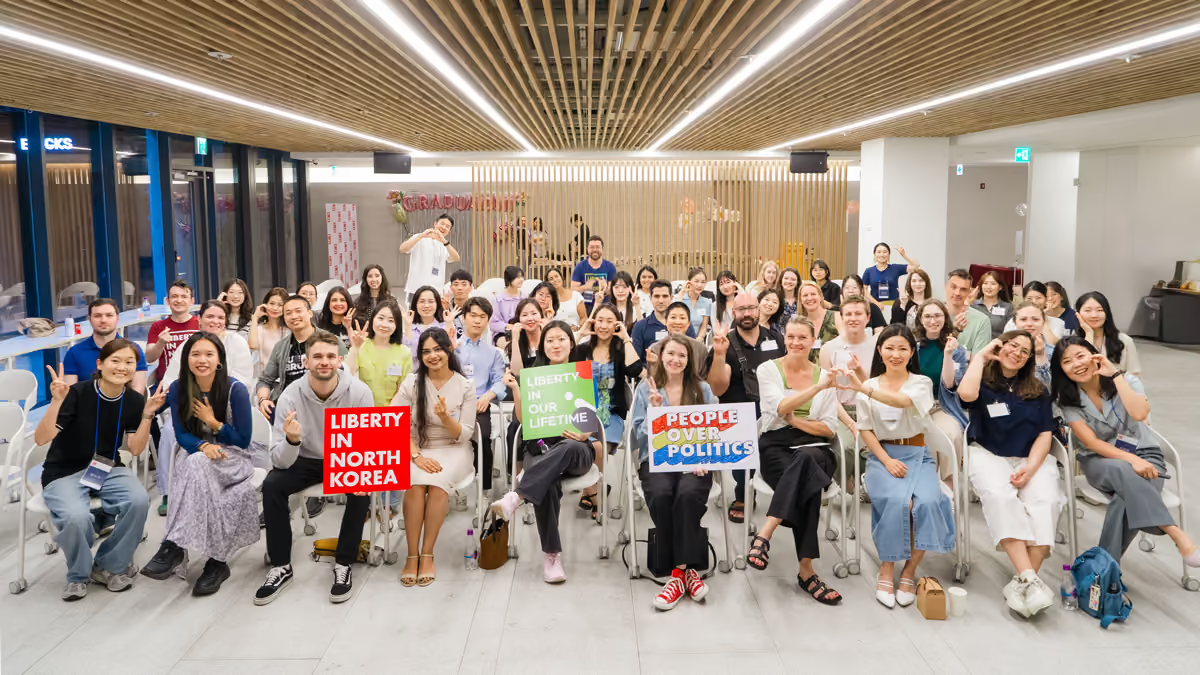
The LiNK English Language program (LELP) has become a mainstay in our efforts to help build the capacity of North Koreans as agents of change. Students are matched 1:1 with volunteer tutors from all around the world, leading to customized practice, conversations that break down barriers, and connections that will last a lifetime. In addition to weekly virtual study sessions, the program includes in-person bonding activities and a semesterly speech contest.
Spring 2024 has been the program’s biggest semester yet with 156 participants, including 78 North Korean students and 78 volunteers! Meet Stella, a North Korean student pursuing her PhD in Economics, and Cydney, a long-time LELP volunteer from the United States.
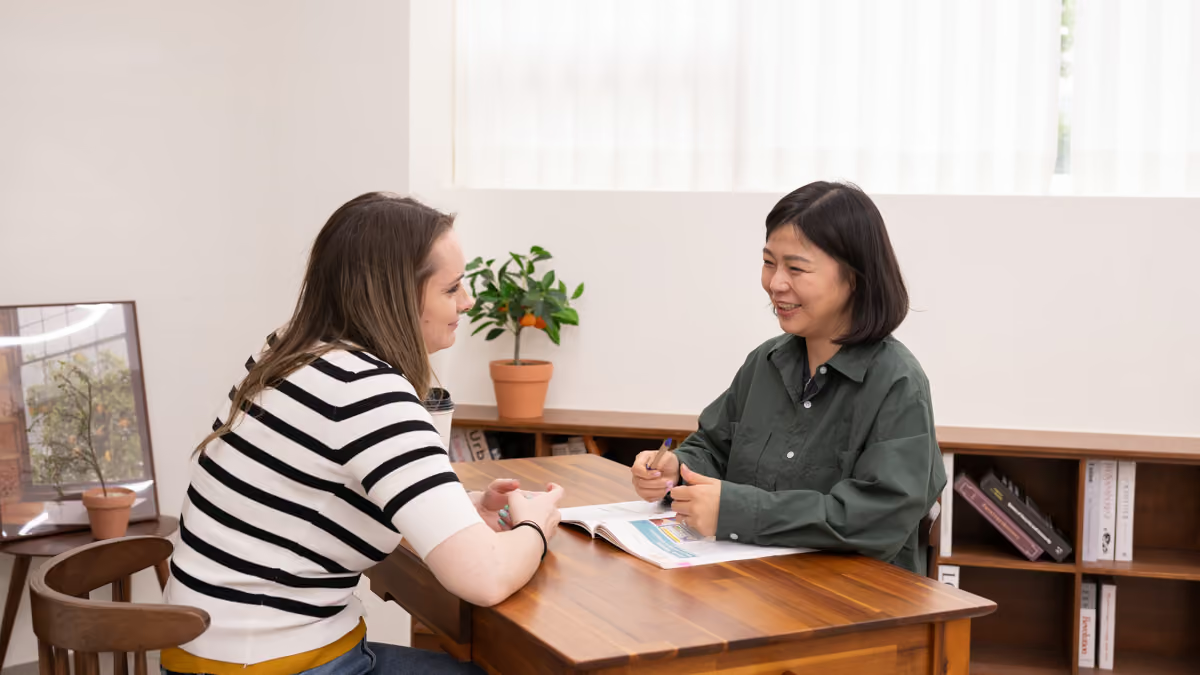
Please briefly introduce yourselves and share how you first met!
Stella - Hi, I’m Stella from North Korea. I’m currently living in South Korea and working towards getting my PhD in Economics.
Cydney - I’m Cydney, I’m from the US. I’ve been in South Korea for four years, teaching English at a hagwon. I’ve been a volunteer with LELP for two years now.
Stella - I don’t exactly remember when we met, it’s been so long!
Cydney - I think it was at the LELP hiking event! That was our first time meeting in-person.
Stella - Right, I was a little nervous then.
Cydney - Now we meet up all the time, going out for drinks and finding new places to check out in Seoul.
What has been your favorite activity during the program?
Stella - I really enjoy the speech contest. I can share my story and everyone is so attentive - the other North Korean students, volunteers, and LiNK staff. At other places, they’ll give you fixed questions that you have to answer. But LiNK gives you complete control over what you want to talk about.
People say North Koreans come from a prison, and sadness is the primary emotion. But in my experience, there is happiness even in the small things. I love to talk about those stories, my childhood memories.
First I’ll write my speech in Korean, and then I’ll write it again in English with Cydney’s help. I say what I want to express and she’ll help me.
Cydney - Sometimes I’ll write five different sentences and explain the nuances to Stella, and then she’ll go ‘okay that one, that’s how I want to say it.’
Stella - The days leading up to the speech content, I have so many feelings and emotions while I’m busy preparing. But afterwards, I feel a sense of relief. I love it because by sharing my story, I’m realizing new things about myself.
Cydney - I’m usually crying when she finishes delivering her speech. I’m just so happy and proud of all her hard work, and she’s so good at it. Hearing the speeches of the other students is also always so inspiring.
Is there a moment or everyday interaction where you felt LELP helped you?
Stella - Yes, there is. This semester I’m taking a microeconomics seminar and the class goes into English all the time. The professor asks us questions, and we have to answer in English. If I wasn’t part of LELP, then I would have never thought about raising my hand and talking with confidence. Even if my grammar isn’t perfect, I can still comfortably share my thoughts.
What are your dreams or goals?
Stella - I have a big dream. I want to be a professor someday, at the undergraduate or graduate level. More than just teaching a certain topic or subject, I hope to instill in my students a love of learning. That’s what my teacher back in my hometown did for me. I’ve been able to come this far because of her, and she continues to inspire me to this day.
In North Korea, education opportunities are limited. But my teacher always tried to help me. She told us that if we had big dreams, then we can grab the chance to make it happen. She taught me a lot of things, about life and to see more than our current circumstances. I think about her all the time, even now, and I want to be like her - a good teacher and a good person.
I consider this my third chance at life. First I just survived in North Korea, and second in China. Now in South Korea, I can finally live freely.
Cydney - I love this story. Since I know Stella wants to be a professor, I also asked why, and she shared her memories from growing up in North Korea. Knowing that she’s wanted to do this for so long, it just makes sense.
As for my future goals, I don’t have anything concrete like teaching, but I want to help people. I want to use all the things I learn and that I’m interested in to help people find themselves. LELP has given me a great opportunity to meet new friends from different backgrounds and be a part of this meaningful cause as a volunteer.
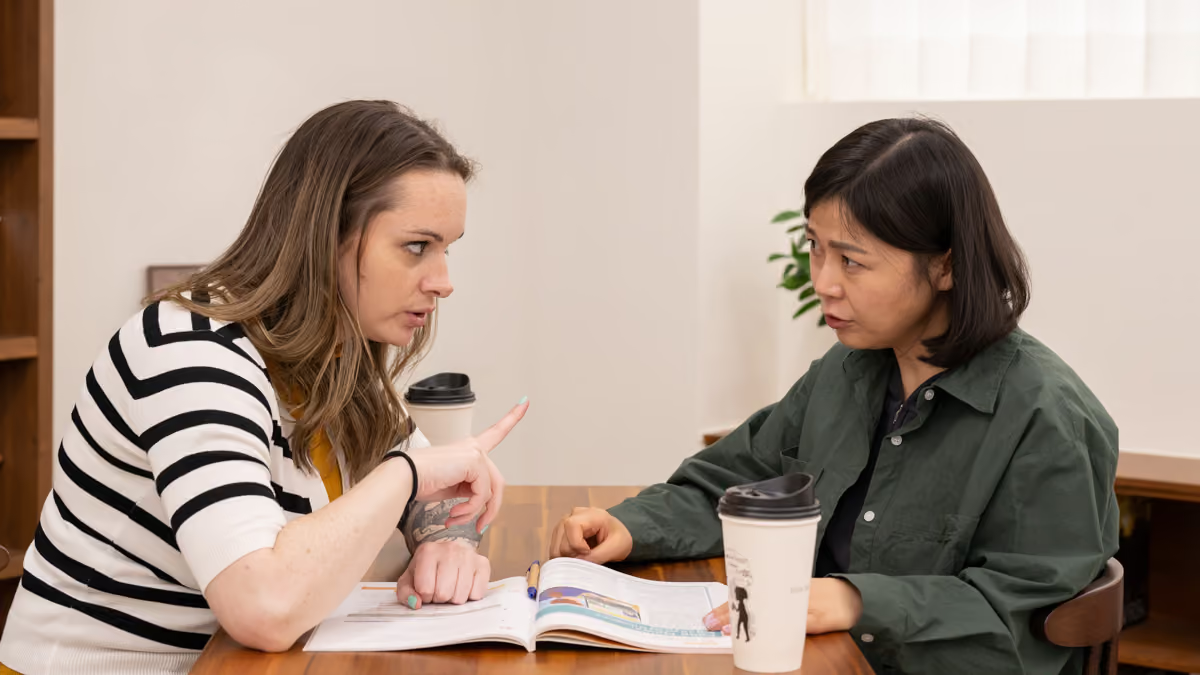
Has being part of this program changed your perspective on North Korea?
Cydney - Yes, definitely. Before LiNK, I had read a lot of books and biographies from North Koreans. With that kind of exposure, you hear a lot of the hard stuff. Very inspirational stories about incredible people, but tough to read. I wanted to get a bigger picture of the issue, and that naturally led me to LiNK. After volunteering with LELP for two years, my perspective has not just changed, but really expanded.
I’ve had a lot of conversations with Stella where the contexts of what we’re talking about could not be more different, but our experiences are very much the same. It’s brought this universal view of people doing their best to live their lives, and connecting over it.
Stella - A lot of times, people want to hear hard stories from North Koreans. If you talk about your happiness, they ask ‘Why are you here then? You can go back there.’ It always surprises me - how can they say something like that? People living anywhere, have both happy times and difficult situations. But they don’t want to hear positive things from North Korea, they just want to hear that you were living in hell.
But LiNK is different. I feel like I can just talk comfortably. It has made me want to continue this program. Other places have a political focus but LiNK doesn’t, just real human stories.
Cydney - It’s one of my favorite things about how LiNK shares stories of North Koreans. They don’t shy away from the hardship, but they’re showing happy, thriving people and smiling faces. It’s not, ‘come to our page to learn about our sadness,’ but ‘learn about these real people whose experiences we want to share.’
Did LiNK’s program further your interest in sharing North Korean stories and experiences?
Stella - Actually we planned it, we talked about her drawing pictures and me writing the stories.
Cydney - It’s still very much in the talking phase, but it’s been my dream to make a webtoon! We’ve thought about creating one together about a little North Korean girl and sharing Stella’s experiences through this format.
My undergraduate degree was in history, so I spent a long time studying situations similar to what happens in North Korea. It’s hard for me to know that I live in a time where people go through such things, especially people close to me, like Stella. I think what LiNK does is so important because it’s trying to change the narrative and what the history of North Korea will be. If I can have any part of it, I want to do what I can.
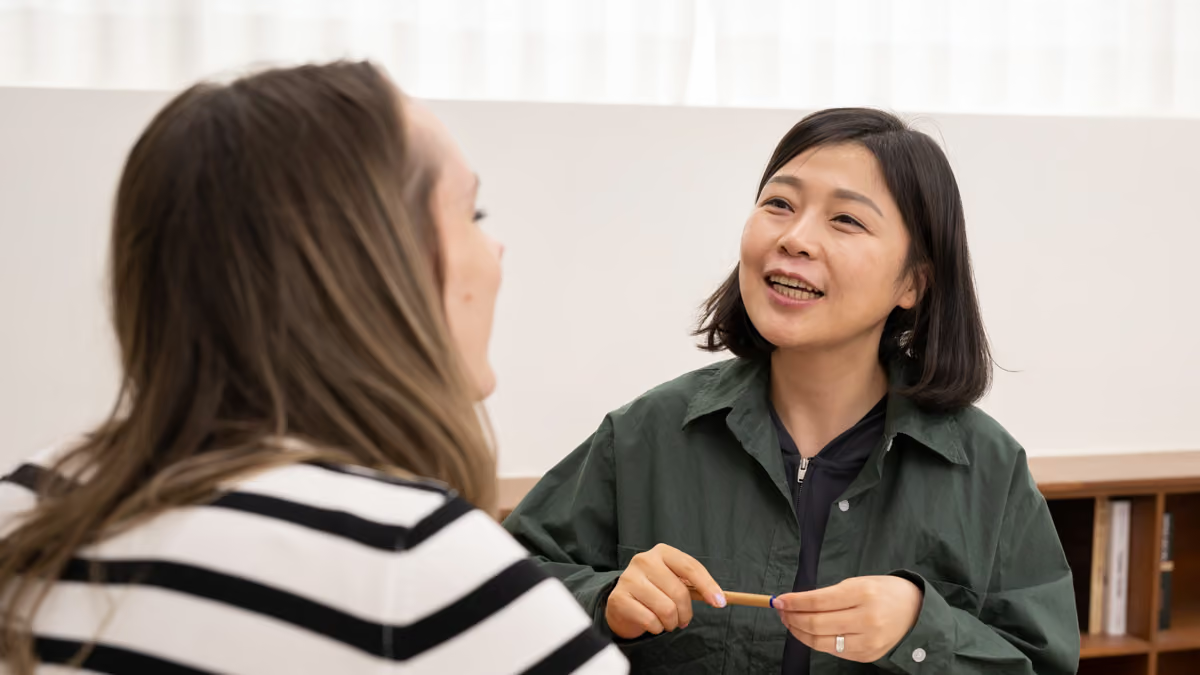
What is something that each of you learned from each other?
Stella - Cyndey is just such a strong person. Before I met her, I thought I was strong, but we shared our stories and I’m so amazed by her determination. She’s alone here in South Korea, with a different language and culture, but she never complains. She always tries to make the best of life and find happiness.
Cydney - I lived in the States, then I lived in China, and then in Korea. So there have been a lot of cultural challenges. The longer I’m here, I realize, ‘Oh, the things that I’m culturally used to are so different here that it’s starting to weigh on me.’ In those times, it’s been so great to talk to Stella.
That’s something we relate closely on, actually, both having to learn to live in South Korea.
She’s become one of my closest friends and we spend 90% of our time together just laughing. She’s so ambitious. I watch her do everything she can to reach her goals, and I think to myself, ‘I can do that too.’
Stella - I’m still reflecting on my experiences, so sometimes I try to find therapy but it hasn’t really helped me. But talking with Cydney has. She listens without judgment, and feels with me. So it’s become not just studying English together, but I feel healed with her.
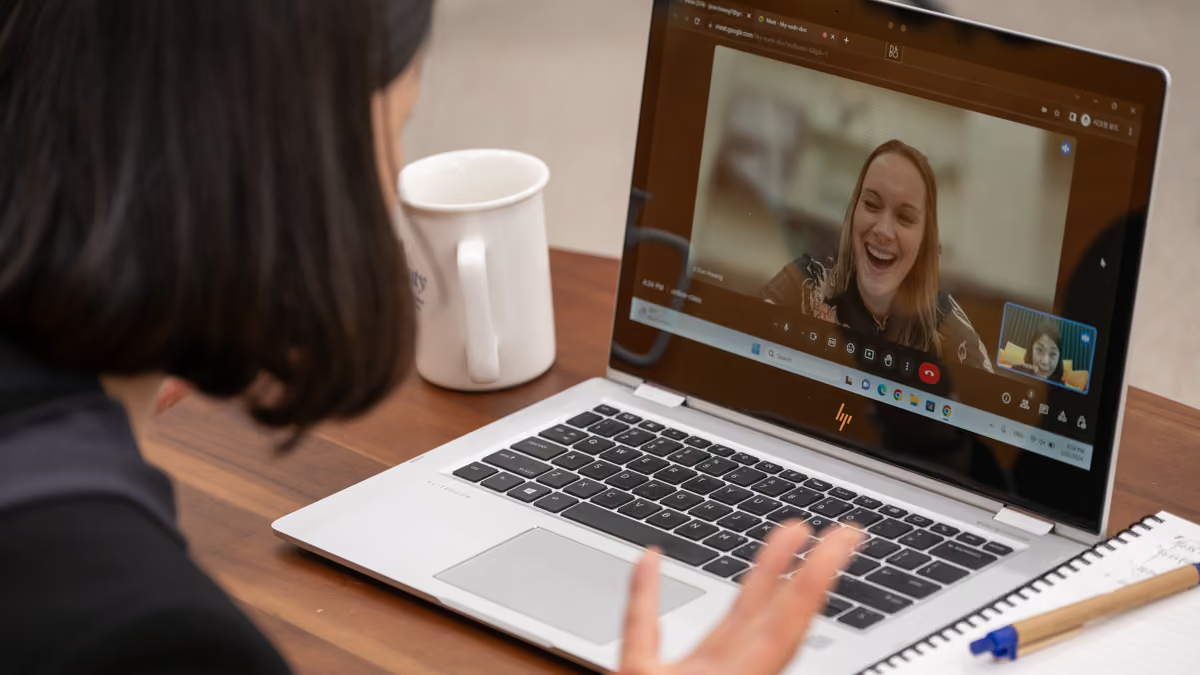
Thank you for making programs like the LiNK English Language program possible. Every day, we see the impact that opportunities like this have in the lives of our North Korean friends, and members of this global movement.
Help us ensure that the LELP can continue, improve, and expand in the years to come.










