
Freedom Walk & Run 2026, Seoul
What Does Freedom Mean to You?
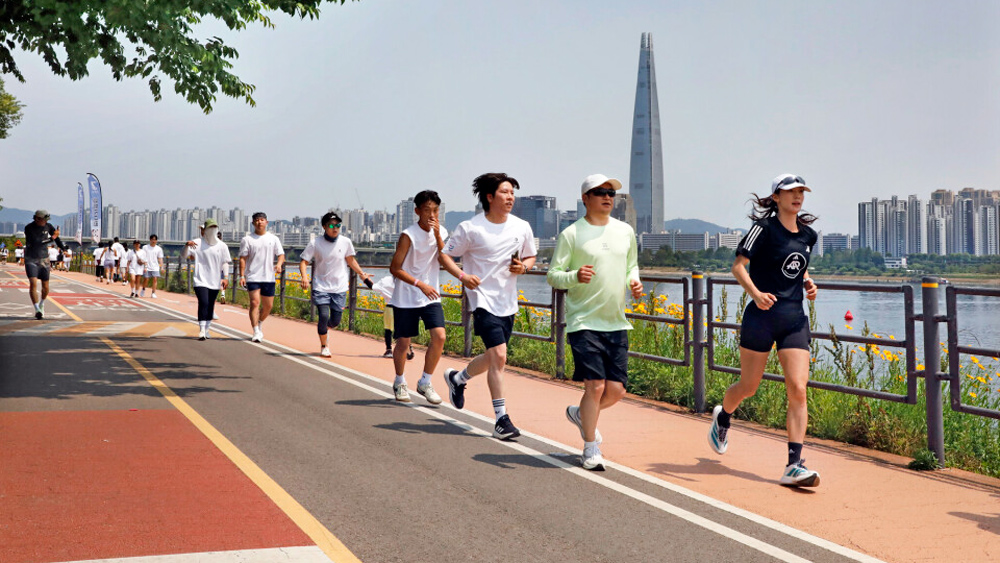
This fall, 200 people will gather along the Han River in Seoul to honor the 26 million people living in North Korea by answering one question: What does freedom mean to you?
Before setting out, every participant in Liberty in North Korea’s Freedom Walk & Run will write their own answers on the race bib they’ll wear for the 6 kilometer race.
The course is divided into three sections, each representing a different freedom: the freedom to leave, the freedom to lead, and the freedom to learn.
Each represents a different part of LiNK’s work and a different way North Korean people are pursuing greater freedom and choice in their own lives.
0-2km: Freedom to Leave
The first two kilometers represent the freedom to leave.
For North Koreans who decide to leave their country, reaching safety can mean a long and dangerous journey through multiple countries.
LiNK helps North Korean refugees navigate a secret route to safety. To date, over 1,400 North Korean refugees have reached freedom through LiNK’s networks. Every person who makes that journey has their own reason for leaving, their own hopes for what comes next, and their own idea of what freedom means to them.
Reaching safety opens the door to the next part of their journey.
2km-4km: Freedom to Lead
The next two kilometers represent the freedom to lead.
Starting over in a new country comes with countless possibilities, but just as many challenges. North Korean people resettling in South Korea or the US are learning a new system, while pursuing education, beginning careers, building relationships, or deciding what they want their future to look like.
LiNK’s programs support resettled North Koreans as they pursue education, language learning, and career development, providing mentorship, scholarships, and so much more.
And then comes the final stretch.
4-6km: Freedom to Learn
The last two kilometers represent the freedom to learn.
For people living inside North Korea, access to information from outside of the country is heavily restricted. Official media is centrally controlled, while foreign films, television, music, news, and other outside information are accessed illegally and often at significant personal risk.
Despite the government’s efforts to control information, curiosity about what freedom looks like proves impossible to suppress.
“No matter how much you try to control it, you can’t get rid of curiosity.”
Information gives someone a new point of reference. It introduces possibilities they had never encountered before. It gives them the chance to imagine a future beyond the North Korean regime.
North Korean people are finding ways to access outside media, through USB drives and microSD cards. LiNK’s Information Access Programs build on these existing channels by working with North Korean defectors and engineers to develop tailor-made technology and content that help people inside the country access more information more safely.
This is a growing part of our work, and one we believe has enormous potential to contribute to long-term change.
Get Involved: Support information access in North Korea
This fall, we’re giving supporters a closer look at this work through an upcoming documentary about information access in North Korea.
Make a gift of $30 or more to LiNK’s Information Access Programs by October 24 and you’ll receive an exclusive preview of the documentary this fall.
Your support helps LiNK enable more North Koreans to access more outside information more safely. This builds people’s resilience against regime disinformation, increases their aspirations for social and economic progress, and builds pressure for change and opening.
Donate today & get the documentary preview
Join us in Seoul
If you’re in Seoul, join us along the Han River on Saturday, October 24, for the Freedom Walk & Run. Participation is limited to 200 people, so reserve your spot today.
RSVP for LiNK’s Freedom Walk & Run
North Korean Soldiers in Russia-Ukraine War
Insights from LiNK’s Chief Strategy Officer, Sokeel Park
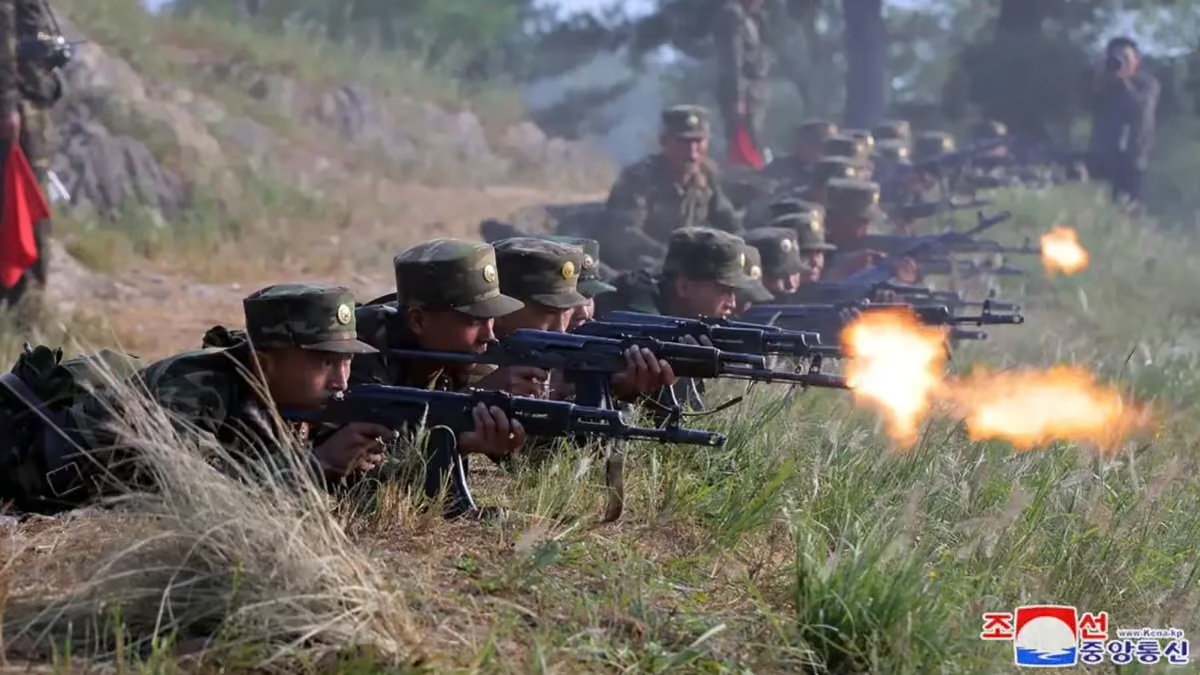
Since the end of last year, there have been multiple credible reports of a significant number of North Korean troops being killed and wounded while fighting against Ukrainian forces in Kursk. More recently, there have been media interviews with two North Korean POWs' being held in Ukraine and reports of additional reinforcements being sent to Russia. Kursk is a Russian region bordering Ukraine where Ukrainian forces have held territory since last summer, aiming to change the dynamics of the war and hold a bargaining chip for peace negotiations.
These North Korean soldiers were sent to Russia by Kim Jong Un last autumn as part of his support for Putin’s war. In return, Russia is thought to be providing North Korea with oil, military technology, food and cash.
Kim Jong Un’s Goals and How The World Can Respond
Since the first reports of this unprecedented deployment of over 10,000 North Korean troops to a foreign war we have been in discussions with the Ukrainian Embassy in Seoul, the US government, and Ukrainian civil society representatives regarding policy recommendations and potential responses.
Whilst it is clear that Kim Jong Un does not care about the tragic loss of life of young North Korean men in the trenches of Kursk, he does care about maintaining control over North Korean people’s information environment.
At every opportunity we will continue to encourage relevant governments to increase information access initiatives with strategic messaging targeting North Korean troops in Russia, overseas North Koreans, and audiences inside North Korea. The objectives are to decrease North Korean soldiers’ willingness to fight for Putin, encourage surrender and defection, prevent avoidable loss of life, and increase political costs for Kim Jong Un to continue his military support for Putin.
Treatment of North Korean POWs
We also call on the media to protect the rights, dignity and identity security of any captured North Korean POWs who may be made available for interviews. The North Korean military does not educate its soldiers on its rights as POWs, and information released through such interviews may endanger the soldiers themselves and family members back in North Korea. The Geneva Convention also protects POWs against being subject to public curiosity, meaning interviews must be truly voluntary with fully informed consent, and not exploit the POWs status or conditions. We have discussed these issues directly with relevant journalists, but it is regrettable that in the race to be first some media’s ethical standards have dropped.
The Future of North Korea
The North Korean government’s threats to international security are real, and they dominate the news headlines regarding the country. But we should remember that the North Korean soldiers dying on the battlefield come from the same communities as North Koreans that have come to freedom with us, are now enthusiastically learning English in Seoul, advocating for North Korean human rights at the UN, and working with us to challenge the North Korean government’s control over information.
It will only be when North Korea opens up and all North Korean people gain their basic freedoms that North Korea can have leadership that values North Korean lives. When that happens all of these issues, including the North Korean government’s threats to international security, can be resolved. Thank you for your ongoing support for this vision.
You can learn about human rights violations in the North Korean military in this report by our colleagues at NKDB. Download the full report at the bottom of the page.










