
Freedom Walk & Run 2026, Seoul
What Does Freedom Mean to You?
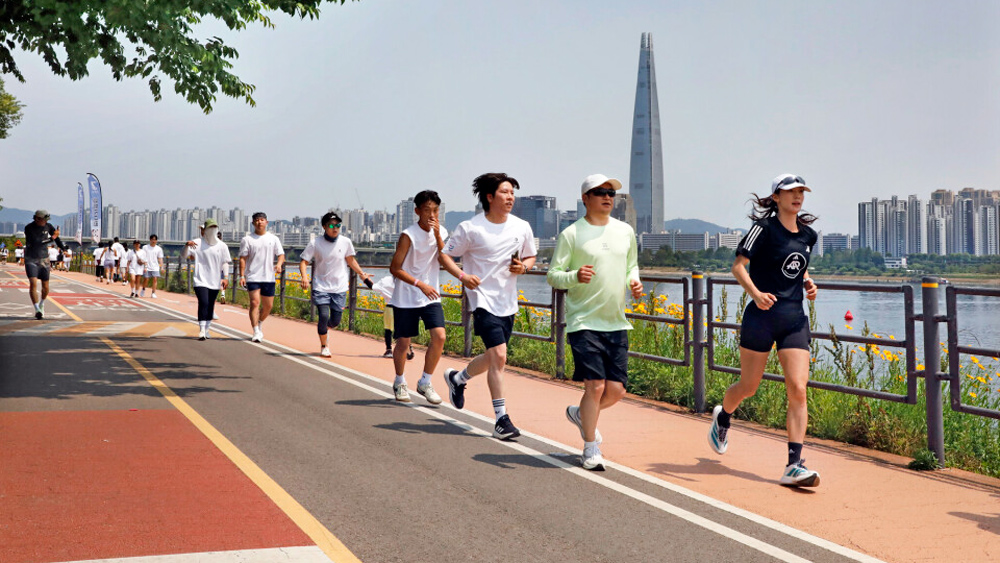
This fall, 200 people will gather along the Han River in Seoul to honor the 26 million people living in North Korea by answering one question: What does freedom mean to you?
Before setting out, every participant in Liberty in North Korea’s Freedom Walk & Run will write their own answers on the race bib they’ll wear for the 6 kilometer race.
The course is divided into three sections, each representing a different freedom: the freedom to leave, the freedom to lead, and the freedom to learn.
Each represents a different part of LiNK’s work and a different way North Korean people are pursuing greater freedom and choice in their own lives.
0-2km: Freedom to Leave
The first two kilometers represent the freedom to leave.
For North Koreans who decide to leave their country, reaching safety can mean a long and dangerous journey through multiple countries.
LiNK helps North Korean refugees navigate a secret route to safety. To date, over 1,400 North Korean refugees have reached freedom through LiNK’s networks. Every person who makes that journey has their own reason for leaving, their own hopes for what comes next, and their own idea of what freedom means to them.
Reaching safety opens the door to the next part of their journey.
2km-4km: Freedom to Lead
The next two kilometers represent the freedom to lead.
Starting over in a new country comes with countless possibilities, but just as many challenges. North Korean people resettling in South Korea or the US are learning a new system, while pursuing education, beginning careers, building relationships, or deciding what they want their future to look like.
LiNK’s programs support resettled North Koreans as they pursue education, language learning, and career development, providing mentorship, scholarships, and so much more.
And then comes the final stretch.
4-6km: Freedom to Learn
The last two kilometers represent the freedom to learn.
For people living inside North Korea, access to information from outside of the country is heavily restricted. Official media is centrally controlled, while foreign films, television, music, news, and other outside information are accessed illegally and often at significant personal risk.
Despite the government’s efforts to control information, curiosity about what freedom looks like proves impossible to suppress.
“No matter how much you try to control it, you can’t get rid of curiosity.”
Information gives someone a new point of reference. It introduces possibilities they had never encountered before. It gives them the chance to imagine a future beyond the North Korean regime.
North Korean people are finding ways to access outside media, through USB drives and microSD cards. LiNK’s Information Access Programs build on these existing channels by working with North Korean defectors and engineers to develop tailor-made technology and content that help people inside the country access more information more safely.
This is a growing part of our work, and one we believe has enormous potential to contribute to long-term change.
Get Involved: Support information access in North Korea
This fall, we’re giving supporters a closer look at this work through an upcoming documentary about information access in North Korea.
Make a gift of $30 or more to LiNK’s Information Access Programs by October 24 and you’ll receive an exclusive preview of the documentary this fall.
Your support helps LiNK enable more North Koreans to access more outside information more safely. This builds people’s resilience against regime disinformation, increases their aspirations for social and economic progress, and builds pressure for change and opening.
Donate today & get the documentary preview
Join us in Seoul
If you’re in Seoul, join us along the Han River on Saturday, October 24, for the Freedom Walk & Run. Participation is limited to 200 people, so reserve your spot today.
RSVP for LiNK’s Freedom Walk & Run
Most North Korean Refugees Are Women. Here’s Why.

Over 33,000 North Korean refugees have made it safely to South Korea. 70% of them are female.
Why?
Firstly, North Korea is both politically and culturally very patriarchal, so women traditionally have a lower status than men, and are actually less tightly controlled by the North Korean system. Starting from the famine of the 1990s, North Korean women had to exploit their official status as “housewives” to engage in private market activities and become the breadwinners to ensure their family’s survival.
This combination of a new found economic role, relatively more mobility, and increased independence led more North Korean women to seek further economic opportunities in China (sometimes with an intention to stay temporarily and return, and sometimes as a more permanent move).
There was also a perception among North Koreans that women would have a better chance of being able to stay under the radar and work informally in China, for instance in restaurants or textile factories. This has in fact been borne out in reality, and there is another more tragic factor pulling North Korean women into China—a demand for North Korean brides among unmarried Chinese men, and a broader demand for North Korean women in the Chinese sex industry (including brothels and online sex chat rooms). This demand is driven by a lack of marriage-aged women particularly in rural Northeast China, a result of China’s ‘one child policy’ and the migration of young Chinese women to the cities.
Regardless of the reason behind their initial escape into China, a higher proportion of women getting out of the country translates to a female majority making it all the way to South Korea.
Another reason that might be thought to hold North Korean men back is that they are tied up in military service for much of their 20s, which is a prime age for defection. Not only do men have less freedom when they are in the military, but they are also often relocated to the interior of the country away from the border with China, decreasing their chances of escape. However this does not exactly play out in the demographic data for arrivals of North Korean refugees in South Korea, which shows no spike in the female to male ratio of refugees in their 20s, so it is hard to say how big of a factor this is.
Finally, anecdotally, it seems that some North Korean women may be more likely to be motivated to make the journey to South Korea after watching dramas and films that are smuggled into North Korea on USBs and Micro-SD cards. North Korean women have told us that visions of life in South Korea where women have much greater freedom in self expression and fashion, and are granted higher status and respect—especially by the romantic heartthrobs of your typical K-drama—fueled their fantasies of life beyond North Korea’s borders and were a significant factor in their decision to escape.

Among the more than twenty thousand female North Koreans who have made it all the way to safe resettlement in South Korea have emerged some of the most effective advocates for the North Korean people. Several North Korea-born women have written books, and are increasingly giving the issue a human face on South Korean television and to audiences around the world.

These advocates, and hundreds of other North Korean women who have quietly strived to successfully resettle and bring their children and other family members to South Korea, are among the people that we’ve been able to support and work with because of your commitment to stand alongside the North Korean people.
So on International Women’s Day, we salute the North Korean women who have been able to emerge as a force of progress despite being born in the most repressive country in the world, and we salute our sisters and brothers around the world who continue to believe in and support them.
- Sokeel Park, Director of Research & Strategy










