
Freedom Walk & Run 2026, Seoul
What Does Freedom Mean to You?
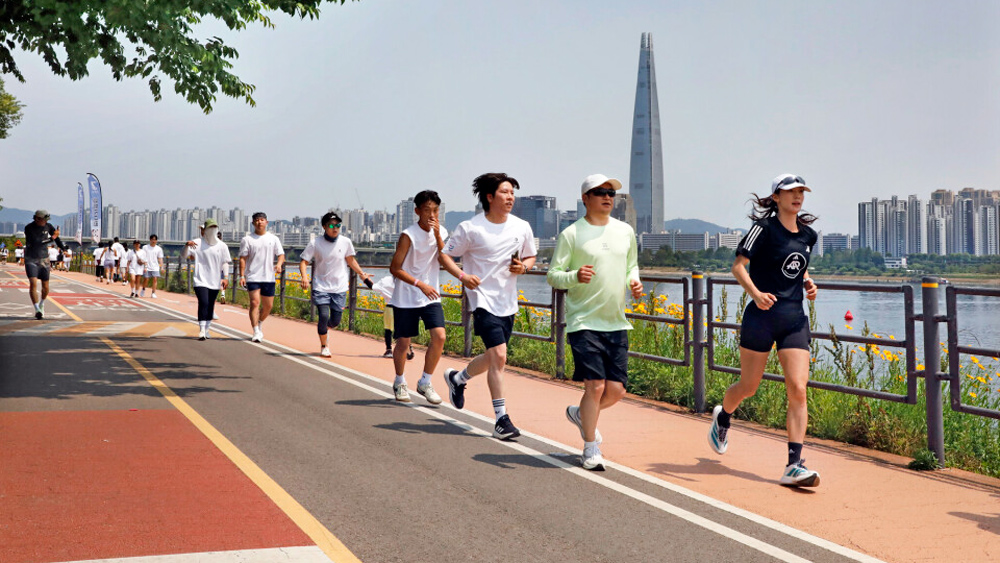
This fall, 200 people will gather along the Han River in Seoul to honor the 26 million people living in North Korea by answering one question: What does freedom mean to you?
Before setting out, every participant in Liberty in North Korea’s Freedom Walk & Run will write their own answers on the race bib they’ll wear for the 6 kilometer race.
The course is divided into three sections, each representing a different freedom: the freedom to leave, the freedom to lead, and the freedom to learn.
Each represents a different part of LiNK’s work and a different way North Korean people are pursuing greater freedom and choice in their own lives.
0-2km: Freedom to Leave
The first two kilometers represent the freedom to leave.
For North Koreans who decide to leave their country, reaching safety can mean a long and dangerous journey through multiple countries.
LiNK helps North Korean refugees navigate a secret route to safety. To date, over 1,400 North Korean refugees have reached freedom through LiNK’s networks. Every person who makes that journey has their own reason for leaving, their own hopes for what comes next, and their own idea of what freedom means to them.
Reaching safety opens the door to the next part of their journey.
2km-4km: Freedom to Lead
The next two kilometers represent the freedom to lead.
Starting over in a new country comes with countless possibilities, but just as many challenges. North Korean people resettling in South Korea or the US are learning a new system, while pursuing education, beginning careers, building relationships, or deciding what they want their future to look like.
LiNK’s programs support resettled North Koreans as they pursue education, language learning, and career development, providing mentorship, scholarships, and so much more.
And then comes the final stretch.
4-6km: Freedom to Learn
The last two kilometers represent the freedom to learn.
For people living inside North Korea, access to information from outside of the country is heavily restricted. Official media is centrally controlled, while foreign films, television, music, news, and other outside information are accessed illegally and often at significant personal risk.
Despite the government’s efforts to control information, curiosity about what freedom looks like proves impossible to suppress.
“No matter how much you try to control it, you can’t get rid of curiosity.”
Information gives someone a new point of reference. It introduces possibilities they had never encountered before. It gives them the chance to imagine a future beyond the North Korean regime.
North Korean people are finding ways to access outside media, through USB drives and microSD cards. LiNK’s Information Access Programs build on these existing channels by working with North Korean defectors and engineers to develop tailor-made technology and content that help people inside the country access more information more safely.
This is a growing part of our work, and one we believe has enormous potential to contribute to long-term change.
Get Involved: Support information access in North Korea
This fall, we’re giving supporters a closer look at this work through an upcoming documentary about information access in North Korea.
Make a gift of $30 or more to LiNK’s Information Access Programs by October 24 and you’ll receive an exclusive preview of the documentary this fall.
Your support helps LiNK enable more North Koreans to access more outside information more safely. This builds people’s resilience against regime disinformation, increases their aspirations for social and economic progress, and builds pressure for change and opening.
Donate today & get the documentary preview
Join us in Seoul
If you’re in Seoul, join us along the Han River on Saturday, October 24, for the Freedom Walk & Run. Participation is limited to 200 people, so reserve your spot today.
RSVP for LiNK’s Freedom Walk & Run
Creating home: An Interview with our U.S. Resettlement Assistance Manager
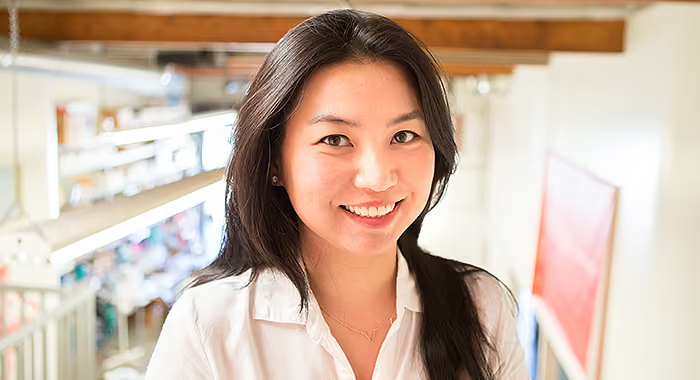
While the majority of the North Koreans who come through our rescue network wish to resettle in South Korea, a small group choose to come to the United States. Drawn by family, friends, and new opportunities, they resettle all across the country. Because resettlement to the U.S. comes with its own set of unique challenges—mainly the language barrier—we have programs specially designed to help North Koreans find their footing in their first few years. Our U.S. resettlement manager Kris explains the details of the resettlement process and her work with LiNK in more detail.

Describe a normal day at your job.
What’s cool about my job is that no work day is the same. From helping a North Korean register for school to purchasing bikes for a family (both are things I have done very recently), every day is different. I travel quite often to visit refugees and to meet with partner organizations. I also spend a lot of time researching government and community benefits, changes in immigration laws, and educational resources. I will say that the two services I provide almost every day are translation and interpretation.

What do you enjoy most about your job?
The North Korean friends we work with are pretty awesome. It really is my privilege to be able to work with such an amazing group of people. I get to help them but I also learn so much. My job never gets boring. They challenge me to do more and be better. My colleagues at LiNK are pretty cool, too. =)
What is the most difficult part about your job? What was most surprising about the work you do?
The number of North Korean refugees who have resettled in the US is pretty small so people tend to put them in one group and form generalized opinions about them. But what I learned over the years and what some people might find surprising is that each person is so unique in their backgrounds, family dynamics, worldviews, reasons for defection, life goals and dreams. It’s challenging to be able to assess and meet their differing needs and help them reach not only self-sufficiency but also the eventual self-actualization and fulfillment. But I’m proud of the individualized and flexible case management that we have been able to offer to the people we serve. As we expand our work, I hope we will continue to have capacity to offer individualized care.
What are some of the challenges that our North Korean friends face as they resettle here in the US?
There are so many. Most common ones would be language and cultural barriers. Access to transportation is a huge challenge because although many states offer driver’s license exams in Korean, there are some that don’t, so the refugees have to learn English first in order to take the driver’s license exam. Some of the more recent and regionally-specific challenges are lack of affordable housing and immediate employment opportunities.
What are some of the challenges in running a North Korean refugee post-resettlement program here in the United States?
The fact that the people we work with are scattered all over the country makes it difficult to do anything in-person. Geography has always been the biggest challenge for me because I’d love for us to be more accessible to the refugees and do more in-person programs with them. Most refugee agencies serve local communities because it’s difficult to be a direct service provider from afar. We have to be creative to stay connected to the people we serve. One good thing that the pandemic did was normalizing virtual communication, and we were able to successfully execute an entrepreneurship program and a mentorship program virtually during the pandemic.
What was one of your most memorable events in this role?
Not long after one of our clients died in a car accident, I flew out to see her minor children. I knew that no words would bring comfort to them at that point. I took them out to see a movie and we went to get our nails done. Of course, we got some boba afterwards. Then per their request, we went out to a hot pot restaurant for dinner, and there we ran into some people from their church. The people assured me that the children will be taken care of and the community will be there for them. I went out there to bring some comfort for the children, but instead, I was the one that was comforted more than anyone. It’s just one of those days that I’ll always remember.
What is something you wish the world knew about North Korea or the North Korean people?
Maybe I can just say something about the North Korean refugees, rather than the entire country of North Korea or the North Korean people inside the country. North Korean refugees, in their defection and resettlement process, have gone through so many unimaginable obstacles and have overcome them with such incredible resilience and determination. I believe that they have this amazing potential to overcome any barriers and to succeed in their new life. I hope the whole world understands this and welcomes the refugees with open arms.










