How Has the Kim Family Held on to Power So Long?
The following content is adapted from North Korea 101, LiNK’s FREE online course that explains what's happening in North Korea beyond the headlines. Start learning today.
Sign up for NK 101
“This question is fundamental. To understand where we are and where we might be heading, we have to understand where we’ve come from.” – Sokeel Park, LiNK CSO
The North Korean regime is the world’s worst dictatorship, an extreme remnant of 20th century authoritarianism that has stretched across eight decades and three generations of the ruling Kim family. The regime’s all-encompassing system of control constrains the North Korean people’s agency and potential, resulting in an enforced poverty which includes physiological, material, social, informational, and cultural deprivations.
It is not easy for dictators to maintain power for long. During the Kim family’s rule, the world has seen the rise and fall of dozens of other dictatorships. Through many periods of global change and internal instability, they’ve managed to maintain power not by sheer force or luck, but through an array of adaptive strategies. But when the media portrays Kim Jong Un as crazy or irrational, it undermines our understanding and approaches to try to undermine that dictatorship.
There is a formula to their approach, and if we can understand it, then we can counteract it.
The Four Ways Dictators Lose Power
Historically, the fall of dictators can be attributed to four factors. By looking at each of them, we can see how the ruling Kim family has strategically avoided these fates.
1. Military Defeat/International Intervention
An external country or force intervening and overthrowing a dictator through military defeat.
2. Elite Challenges
An internal challenge emerging from within the country’s top political or military circles, forcibly removing the current dictator by assasination or a coup d'état,
3. Popular Uprising
An internal challenge from below, where a mass movement forces a change in leadership. In some cases, parts of the elite may join the side of the masses.
4. Death in Office
The death of the current leader, opening up an opportunity for someone else to assume control and end the dictatorship or make significant changes.
Threat #1: Preventing Military Overthrow
To prevent an external power from overthrowing their dictatorship, the Kim family first needs a strong deterrent against military force. The vast majority of mainstream news coverage of North Korea focuses on one thing: nuclear weapons. Having nuclear weapons and being seen as potentially willing and able to use them is arguably the most effective way to deter a military intervention from the outside.
Second, the Kim family has strategically managed their relations with countries like the Soviet Union / Russia, China, the United States, and South Korea. They go back and forth between periods of warmer and colder relations, effectively balancing opportunities and risks to gain support while preventing too much external influence. It’s unlikely that the Kim family has ever really trusted any of these external powers, even those that are sometimes labelled as “allies”.
Threat #2: Preventing Elite Challenges
Historically, the position of dictator can be very tempting to others within the leadership’s orbit, from competing family members to senior politicians or military leaders. To prevent anyone from building too much power and becoming a threat, the ruling Kim family carefully manages elite politics, alternating between demoting, promoting, and purging top officials.
On top of that, cross-layered surveillance between different institutions also keeps potential challengers under surveillance and in check, and prevents any one person or group of people from launching a challenge for power.
Threat #3: Preventing Popular Uprisings
The next scenario that the regime must prevent is a popular uprising.
A common conception of North Korea is that if the people wanted to rise up and revolt, they would have, and so they must be brainwashed or bought into the regime’s ideologies. While the latter may be true to some degree, it's difficult to fully grasp the extent to which the government’s system of control deprives people of their agency and potential and prevents them from challenging dictatorial rule.
North Korea is the most closed country in the world. The regime has forcibly cut off North Koreans from the rest of humanity, which serves as the baseline for their control. This centers everything—social structure, daily life, resources, information—around the regime, and eliminates sources that could undermine or threaten their authoritarian rule.
Laying the Foundation: Kim Il Sung’s Half-Century in Power
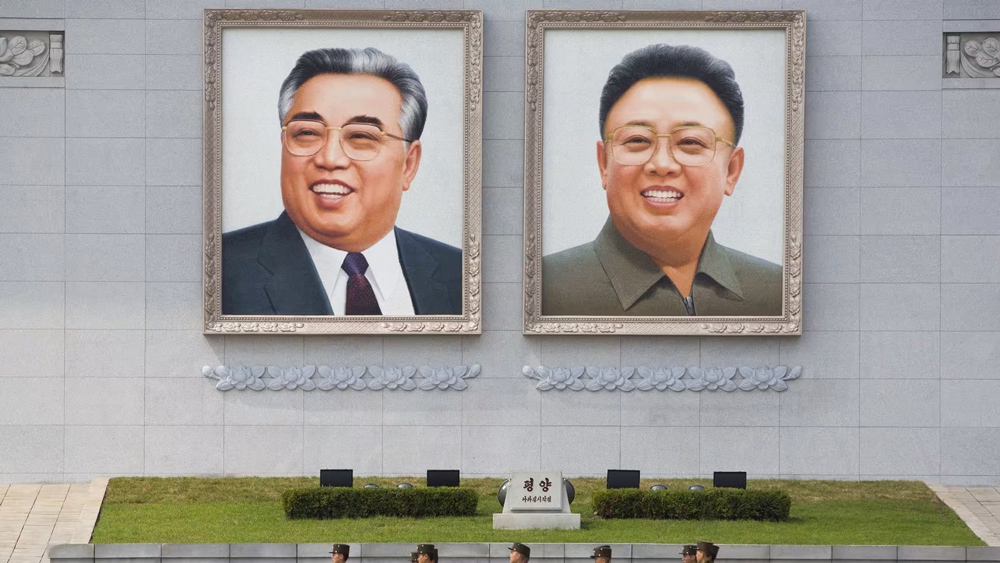
Kim Il Sung was 33 years old when he was installed into power by the Soviet Union—very young in global politics at the time, when most leaders were in their 50s and 60s. This historical happenstance has ended up being a key factor in the longevity of the Kim family’s control.
From his rise to power in 1945 to his death in 1994 at the age of 82, Kim Il Sung had 49 years to mold North Korea’s politics and systems in his image. During this time, he laid the foundation for hereditary succession by:
- Centralizing power around this dictatorship.
- Building a cult of personality around himself and his direct lineage: propaganda and myth-making that legitimized the Kim family as the only North Koreans worthy to lead the country.
- Purging anyone who could have been an alternative leader.
When it came time for Kim Jong Il to assume power, and the Kim Jong Un after that, decades of preparation smoothened the transition.
Now, after three generations of the Kim family, it would be very difficult for anyone else, even among the upper elite, to try and take power. Even if someone did manage to depose the current dictator, they would have to contend with not just managing the power vacuum, but the ideological void left by decades of propaganda and mythmaking that surrounded the Kim family.
Without the legitimacy that had been set up by the Kims, a new leader would likely find it difficult to maintain power for long. This is something that North Korean elites understand, which further discourages any rival officials from challenging the current regime.
Keep Learning with NK 101: Understanding the Country Through Its People
Through in-depth interviews with North Koreans who have escaped and insight from issue experts, this course will expand your understanding of the current state of North Korea. We’ll dive deeper into what’s happening in North Korea beyond the headlines, hone your ability to discern these key trends, and help you impress your friends with your expertise on the issue.
Access hours of exclusive, free content. Sign up for NK 101.
One Day with the North Korean People | LiNK Summit 2023
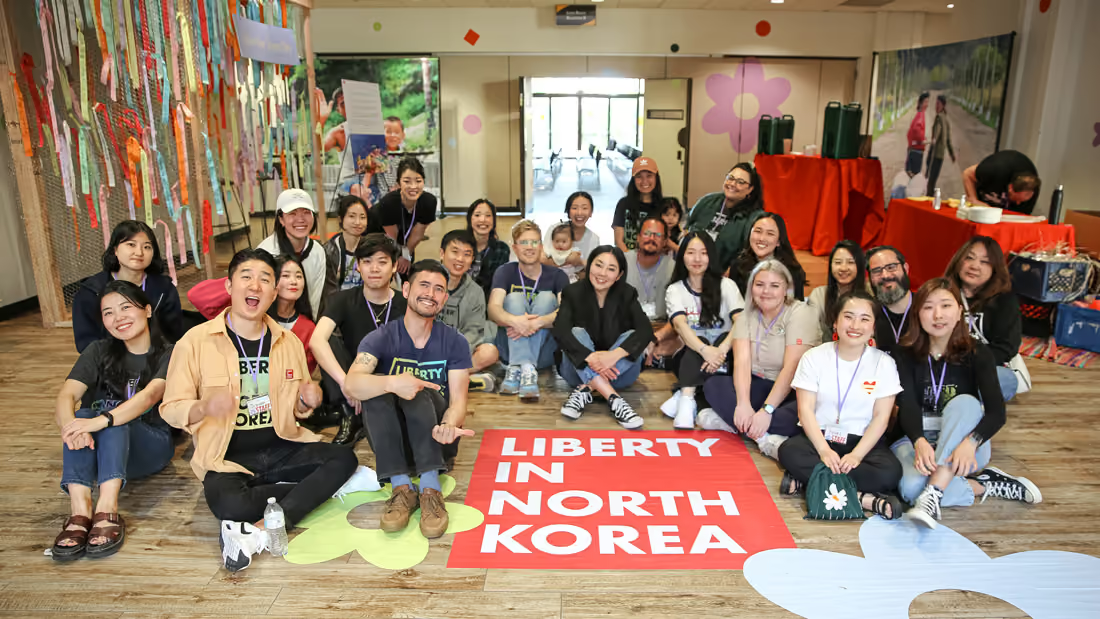
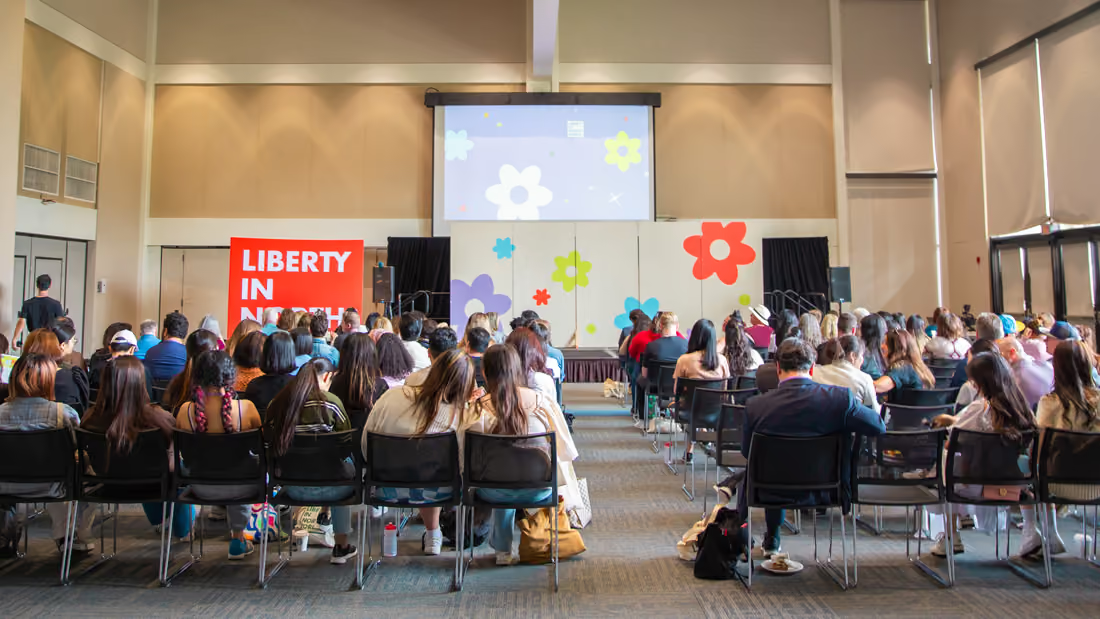
After five years, LiNK Summit made its return on June 3rd, 2023! Over 200 Allies, North Korean advocates, fellow activists, and global LiNK staff gathered to spend One Day with the North Korean People in Long Beach, CA. We had supporters who drove hundreds of miles and flew in from across the US, bringing friends and family to join the movement.
Working on this issue can often feel isolating. Summit was a much-needed, powerful reminder that so many incredible people are committed to seeing a free North Korea in our lifetime. Through the course of a day, attendees had the opportunity to hear directly from and collaborate with North Koreans through different breakout sessions and experiences.
The Jangmadang Experience
Perhaps the highlight of this year’s Summit was The Jangmadang Experience – a collection of interactive booths and installations inspired by North Korea’s grassroots markets. Attendees could see smuggled goods, try North Korean food, pick up swag, and find ways to take action.
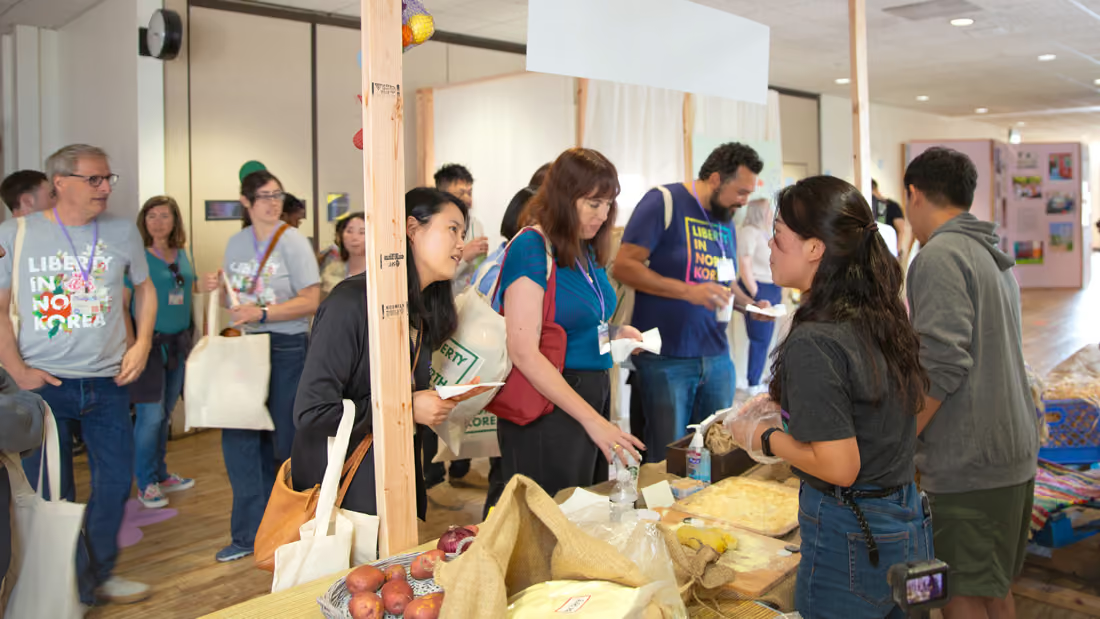
The “Taste of North Korea” food booth was a favorite among guests. Our North Korea-born staff were able to source authentic North Korean cookies and candy, as well as corn flour, which they used to prepare sweet corn rice cakes at the event.
People returned for seconds, then thirds. Our North Korean friends were shocked by the familiar tastes, and reminisced about the last time they had these snacks in North Korea. It was so heartwarming to see how food connected past and present, and created a new experience for everyone.

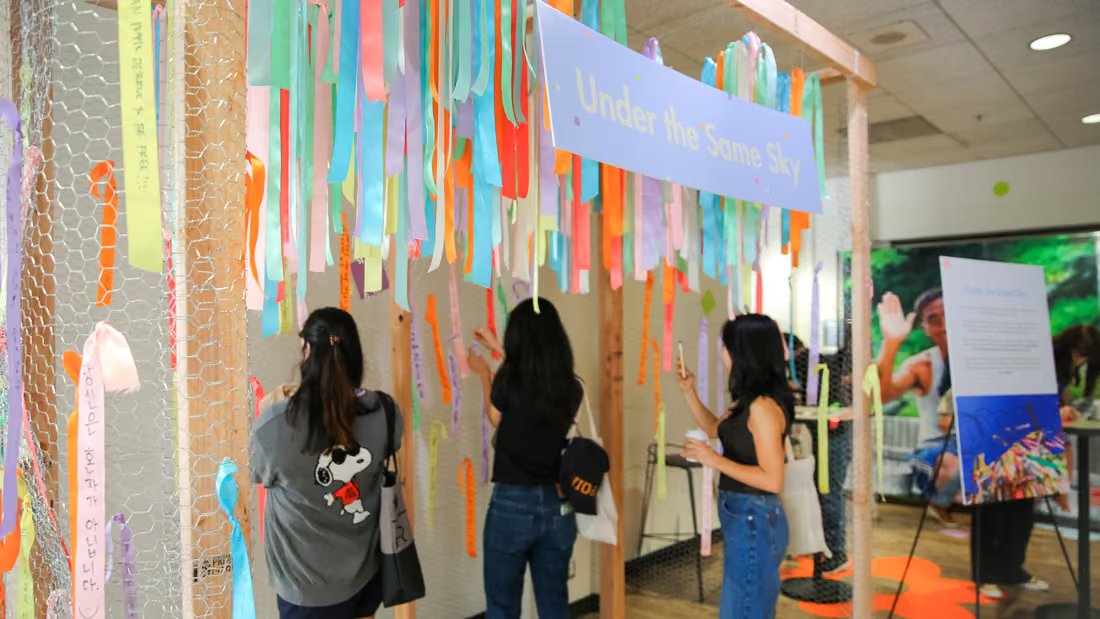
“Under the Same Sky” was a collaborative installation inspired by Joseph Kim’s memoir and the colorful prayer ribbons at Imjingak Park near the border of North & South Korea. When Joseph Kim thinks about his sister, whom he hasn’t seen since his escape, he says:
“Right now, we only share the stars. But I can look up at night and see that you are under the same sky. That will have to be enough until I find you.”
Attendees were asked to share their own messages of hope and tie them to the wall. As the day passed, it was so encouraging to see the number of ribbons grow- a reminder that we’re all under the same sky, and one day every North Korean will be free.
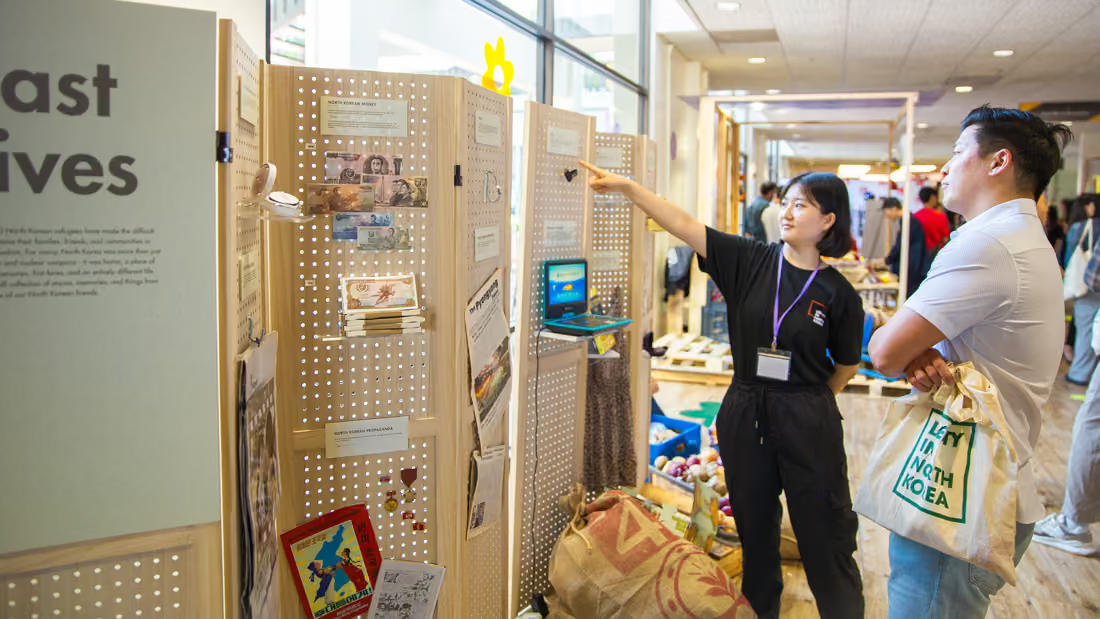
Another popular destination was “Past Lives,” a collection of smuggled goods and mementos from North Korea. Each of the objects- North Korean money, propaganda posters and pins, a razor blade, a floral dress, and more- held powerful stories and memories from the past lives of our North Korean friends.
As guests perused the rest of the booths, they could write postcards inviting people to become Allies, record a message of encouragement to our North Korean friends, marvel at photos from inside North Korea, and more. It was a vibrant and exciting part of the day, emulating the dynamism of the Jangmadangs in North Korea!
The Red Box Live
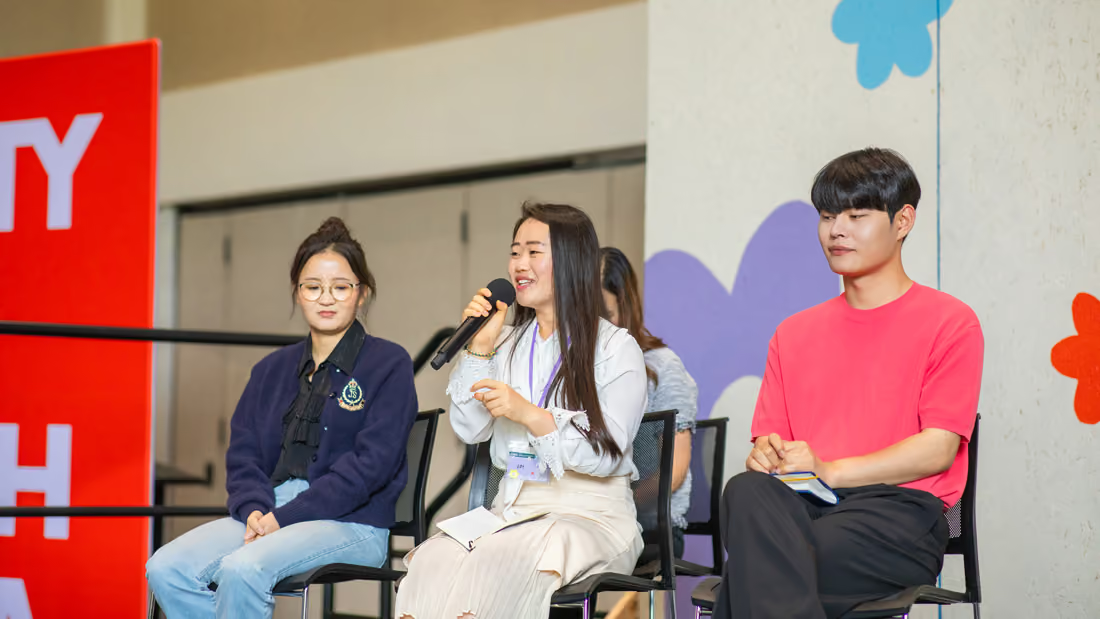
Inspired by our popular YouTube series, The Red Box, we created an offline opportunity to ask our North Korean friends anything about life in the most closed country in the world. Harry, Joy, and Sunghee shared their personal stories while candidly responding to audience questions about everything from dating in North Korea to experiences with discrimination in South Korea.
“I learned that every North Korean refugee has their own unique story, and the freedom they enjoy now is something that all 25 million North Koreans deserve.”
– Summit attendee
Imagining the Future of North Korea
We can’t know what path North Korea will take, but we do know that irreversible change is already happening and it's being driven by the people. In this panel we had North Korean activist, Seohyun Lee; expert on North Korea’s technology and media environment, Nat Kretchun; and LiNK’s South Korea Country Director, Sokeel Park, lead a discussion around imagining the future of North Korea and how we can support change.
Increasing the North Korean people’s access to outside information is one of our biggest opportunities to accelerate change on the ground. This session provided insight into the world’s most closed off country and LiNK’s current work in the area of information dissemination.
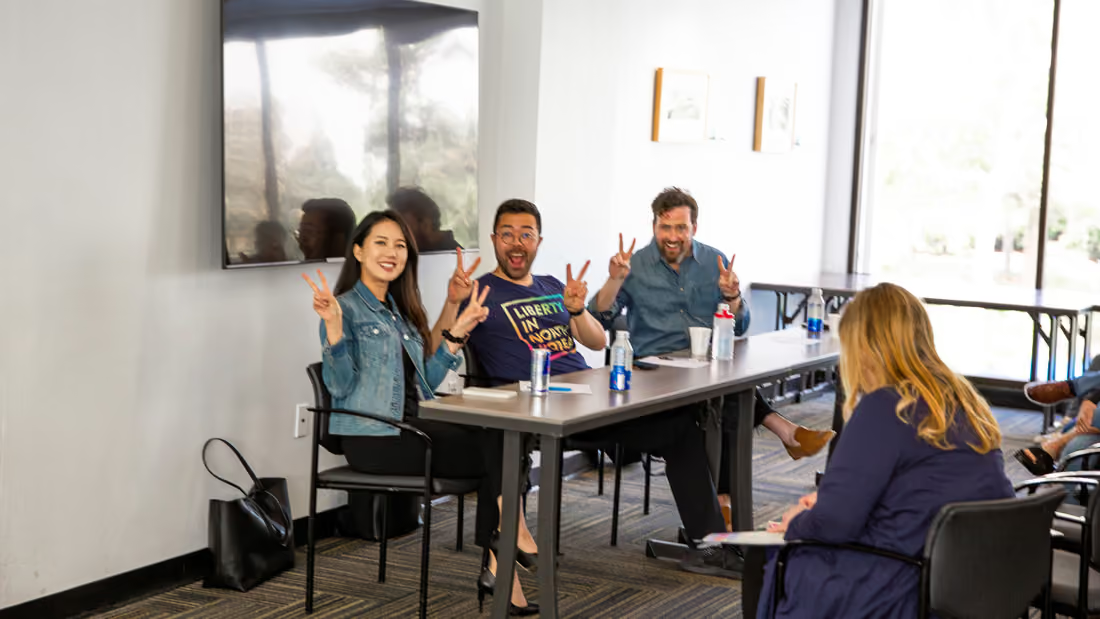
Allies Hackathon
The Allies Hackathon was a nod to the grassroots origins of LiNK, and how supporter-led LiNK Teams continue to be at the forefront of this movement. At this interactive session, participants teamed up to brainstorm how we can bring more attention to this issue, drawing from other parts of the day. The goal was to equip and empower attendees to take the momentum from Summit back to their communities!
“Jihyun and Esther brought the energy for the Allies Hackathon! I thought the prompts and how we broke into different groups was great, and it was fun to hear everyone’s ideas. I plan to stay in touch with my little group and hopefully we can encourage each other to stay active in our support for this issue.”
– Summit attendee
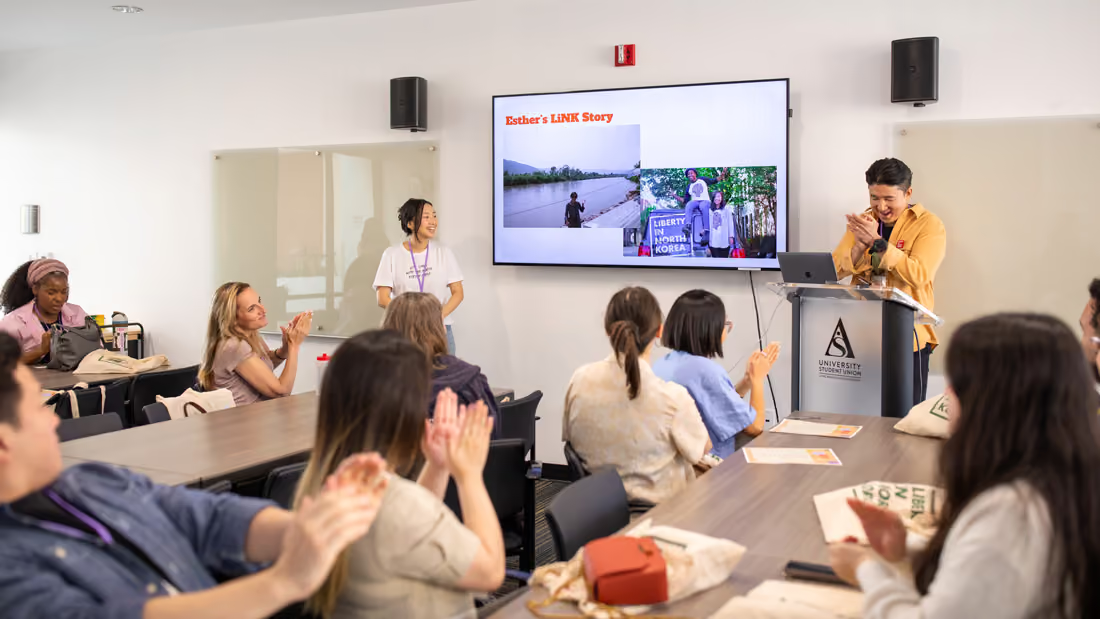
North Korean Agents of Change
North Korean defectors have incredible potential to impact this issue, from both inside the country and as they resettle in freedom. In this session, LiNK’s CEO, Hannah Song, led a conversation with North Korean advocate, Daehyeon Park, and a visionary North Korean entrepreneur who are supporting their communities, empowering others, and leading this movement as agents of change.
“Daehyeon was asked ‘What would it take for CHANGE - the big change in North Korea, that we all want to see.’ He was very quick to respond that LiNK currently has about 30 employees. What would it take for them to have 300 employees, 1000 employees? I was SO STRUCK at his faith in LiNK, that THIS ORGANIZATION could make this happen! He, who has been through it all, believes that this group of workers and volunteers are enough. They are passionate enough, smart and inventive and creative enough, to open up and free his nation. I was on a high all the way home!”
– Summit attendee
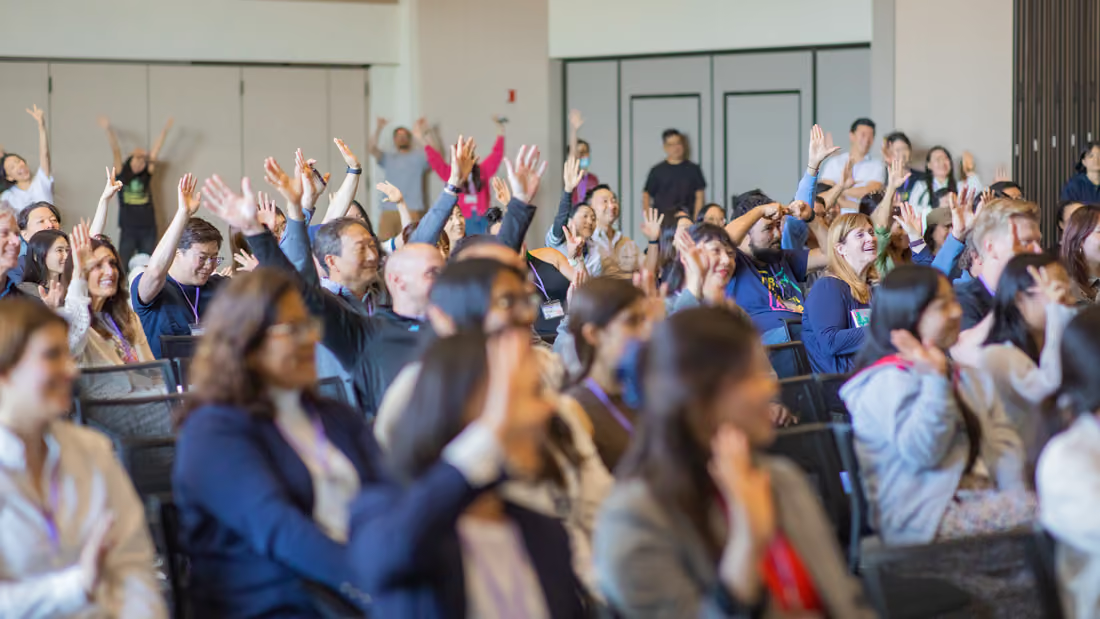
Keynote Speaker: Joseph Kim
After a day of nonstop inspiration and life-changing conversations, everyone gathered to hear from Joseph Kim, a North Korean defector, advocate, and the Associate & Expert-in-Residence, Freedom and Democracy at the Bush Center.
In 2013, Joseph delivered a TED Talk on the importance of hope and published a memoir, “Under the Same Sky.” At Summit, he revisited the power of choosing to have hope for this issue.
“It’s important to remember that North Korea is a land with darkness, not a land of darkness. There is hope for the future, and I have chosen to live my life believing in that hope.”
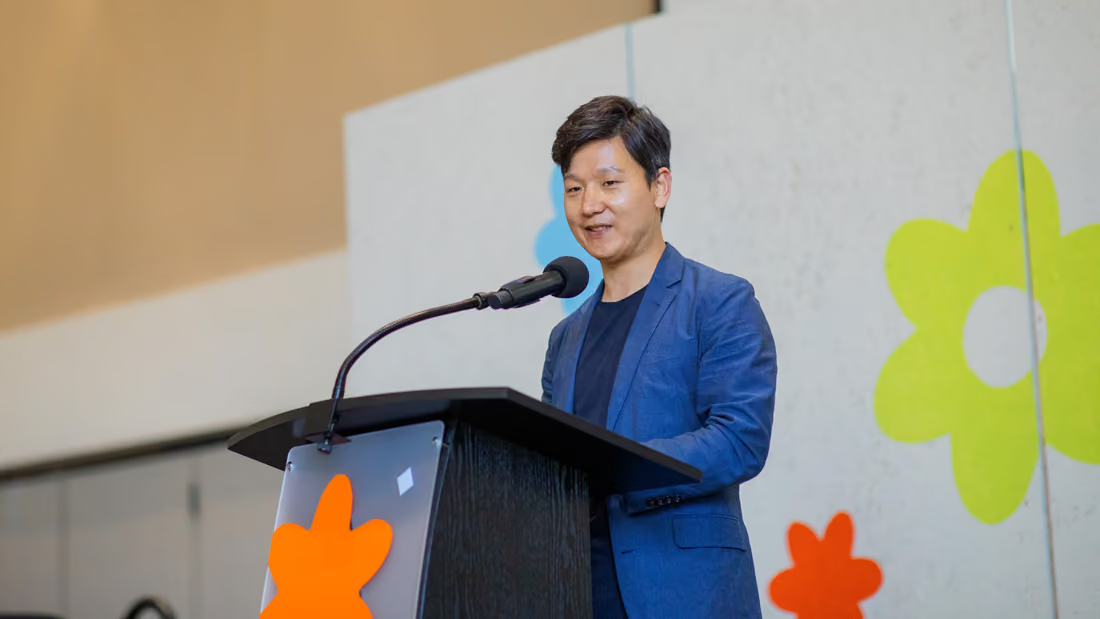
Finally, LiNK’s CEO, Hannah Song, wrapped up the day with a few parting words on what lies ahead.
“I know that North Korea can seem like this unchanging issue, one that definitely feels hopeless at times. In those brief moments of despair, I think about how hard some of our North Korean friends fought for their freedom…. I’m reminded that it is a privilege for us to do this work, because that means there is still something that we can do.”
At the end of the day, our excitement and confidence in the future was renewed. Each and every one of us has the ability to be a force for change. As the North Korean people strive towards their freedom, their hope for the future should galvanize us all.
We’re already looking forward to the next LiNK Summit! From all of us on the LiNK team - thank you to everyone who made this day one to remember.