How Has the Kim Family Held on to Power So Long?
The following content is adapted from North Korea 101, LiNK’s FREE online course that explains what's happening in North Korea beyond the headlines. Start learning today.
Sign up for NK 101
“This question is fundamental. To understand where we are and where we might be heading, we have to understand where we’ve come from.” – Sokeel Park, LiNK CSO
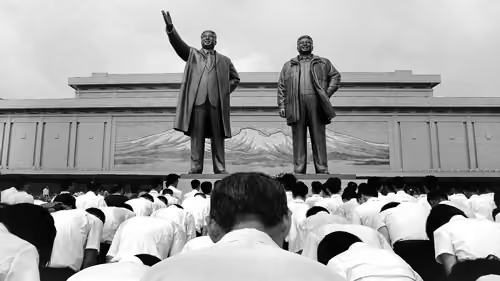
The North Korean regime is the world’s worst dictatorship, an extreme remnant of 20th century authoritarianism that has stretched across eight decades and three generations of the ruling Kim family. The regime’s all-encompassing system of control constrains the North Korean people’s agency and potential, resulting in an enforced poverty which includes physiological, material, social, informational, and cultural deprivations.
It is not easy for dictators to maintain power for long. During the Kim family’s rule, the world has seen the rise and fall of dozens of other dictatorships. Through many periods of global change and internal instability, they’ve managed to maintain power not by sheer force or luck, but through an array of adaptive strategies. But when the media portrays Kim Jong Un as crazy or irrational, it undermines our understanding and approaches to try to undermine that dictatorship.
There is a formula to their approach, and if we can understand it, then we can counteract it.
The Four Ways Dictators Lose Power
Historically, the fall of dictators can be attributed to four factors. By looking at each of them, we can see how the ruling Kim family has strategically avoided these fates.
1. Military Defeat/International Intervention
An external country or force intervening and overthrowing a dictator through military defeat.
2. Elite Challenges
An internal challenge emerging from within the country’s top political or military circles, forcibly removing the current dictator by assasination or a coup d'état,
3. Popular Uprising
An internal challenge from below, where a mass movement forces a change in leadership. In some cases, parts of the elite may join the side of the masses.
4. Death in Office
The death of the current leader, opening up an opportunity for someone else to assume control and end the dictatorship or make significant changes.
Threat #1: Preventing Military Overthrow
To prevent an external power from overthrowing their dictatorship, the Kim family first needs a strong deterrent against military force. The vast majority of mainstream news coverage of North Korea focuses on one thing: nuclear weapons. Having nuclear weapons and being seen as potentially willing and able to use them is arguably the most effective way to deter a military intervention from the outside.
Second, the Kim family has strategically managed their relations with countries like the Soviet Union / Russia, China, the United States, and South Korea. They go back and forth between periods of warmer and colder relations, effectively balancing opportunities and risks to gain support while preventing too much external influence. It’s unlikely that the Kim family has ever really trusted any of these external powers, even those that are sometimes labelled as “allies”.
Threat #2: Preventing Elite Challenges
Historically, the position of dictator can be very tempting to others within the leadership’s orbit, from competing family members to senior politicians or military leaders. To prevent anyone from building too much power and becoming a threat, the ruling Kim family carefully manages elite politics, alternating between demoting, promoting, and purging top officials.
On top of that, cross-layered surveillance between different institutions also keeps potential challengers under surveillance and in check, and prevents any one person or group of people from launching a challenge for power.
Threat #3: Preventing Popular Uprisings
The next scenario that the regime must prevent is a popular uprising.
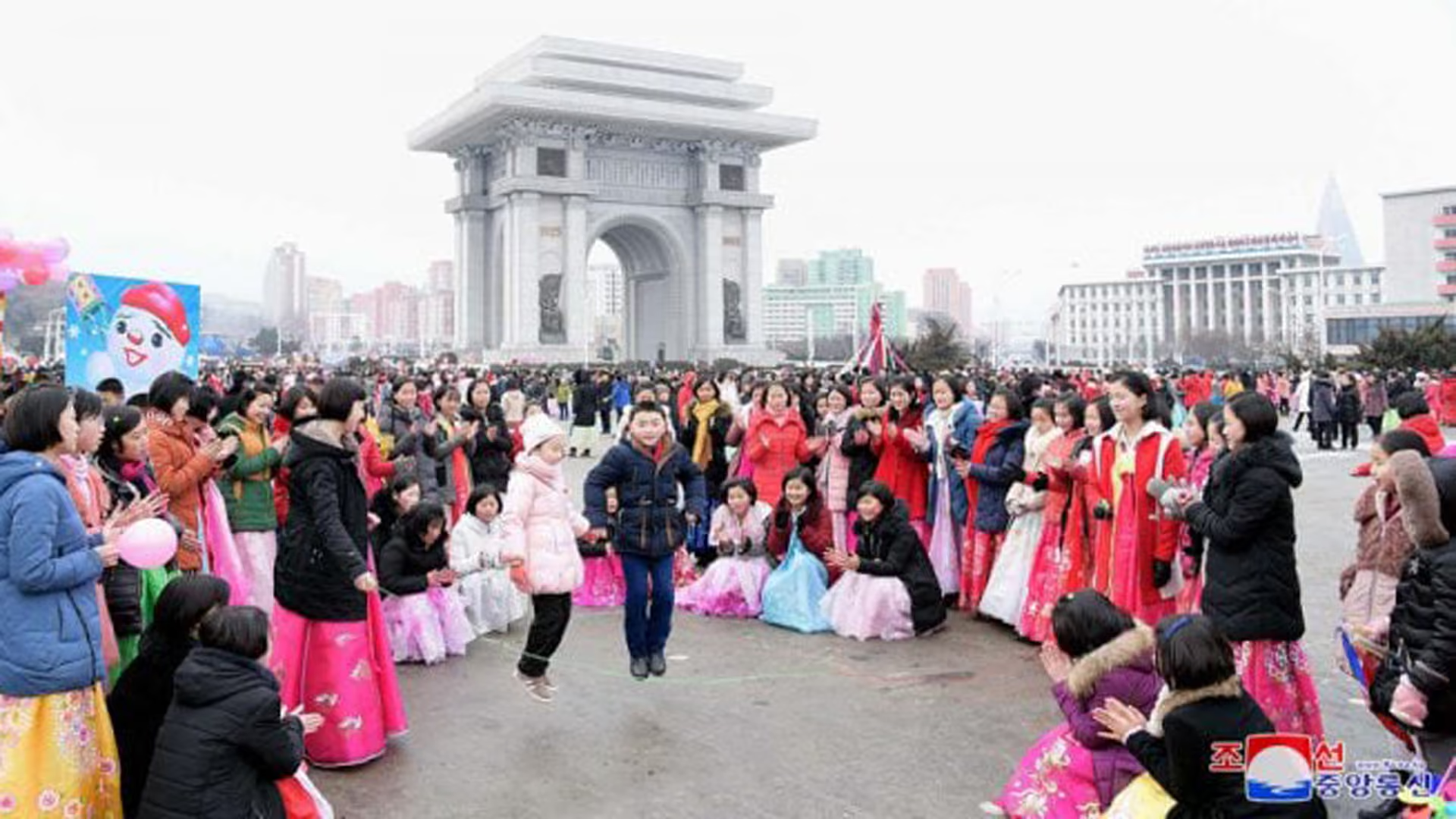
A common conception of North Korea is that if the people wanted to rise up and revolt, they would have, and so they must be brainwashed or bought into the regime’s ideologies. While the latter may be true to some degree, it's difficult to fully grasp the extent to which the government’s system of control deprives people of their agency and potential and prevents them from challenging dictatorial rule.
North Korea is the most closed country in the world. The regime has forcibly cut off North Koreans from the rest of humanity, which serves as the baseline for their control. This centers everything—social structure, daily life, resources, information—around the regime, and eliminates sources that could undermine or threaten their authoritarian rule.
Laying the Foundation: Kim Il Sung’s Half-Century in Power
Kim Il Sung was 33 years old when he was installed into power by the Soviet Union—very young in global politics at the time, when most leaders were in their 50s and 60s. This historical happenstance has ended up being a key factor in the longevity of the Kim family’s control.
From his rise to power in 1945 to his death in 1994 at the age of 82, Kim Il Sung had 49 years to mold North Korea’s politics and systems in his image. During this time, he laid the foundation for hereditary succession by:
- Centralizing power around this dictatorship.
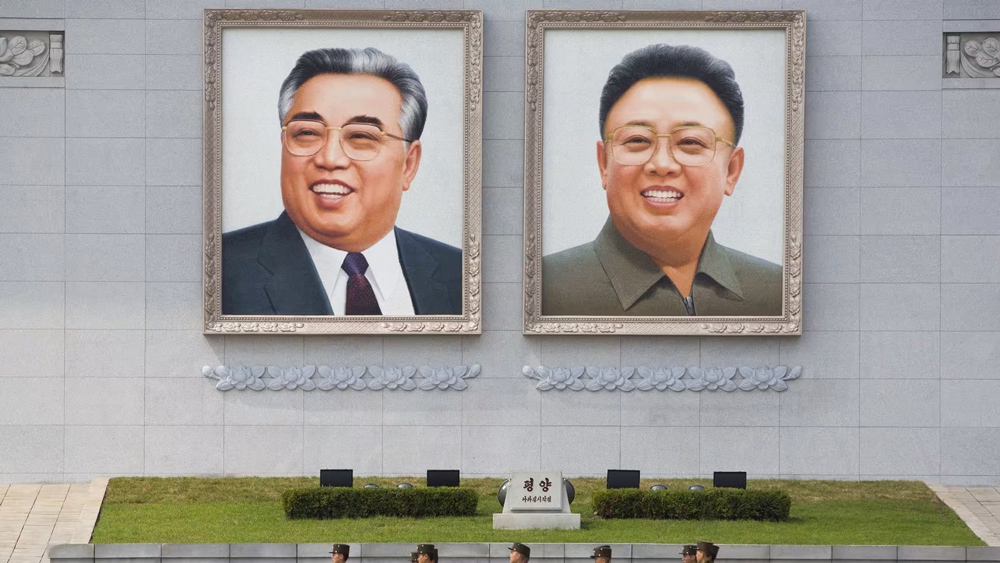
- Building a cult of personality around himself and his direct lineage: propaganda and myth-making that legitimized the Kim family as the only North Koreans worthy to lead the country.
- Purging anyone who could have been an alternative leader.
When it came time for Kim Jong Il to assume power, and the Kim Jong Un after that, decades of preparation smoothened the transition.
Now, after three generations of the Kim family, it would be very difficult for anyone else, even among the upper elite, to try and take power. Even if someone did manage to depose the current dictator, they would have to contend with not just managing the power vacuum, but the ideological void left by decades of propaganda and mythmaking that surrounded the Kim family.
Without the legitimacy that had been set up by the Kims, a new leader would likely find it difficult to maintain power for long. This is something that North Korean elites understand, which further discourages any rival officials from challenging the current regime.
Keep Learning with NK 101: Understanding the Country Through Its People
Through in-depth interviews with North Koreans who have escaped and insight from issue experts, this course will expand your understanding of the current state of North Korea. We’ll dive deeper into what’s happening in North Korea beyond the headlines, hone your ability to discern these key trends, and help you impress your friends with your expertise on the issue.
Access hours of exclusive, free content. Sign up for NK 101.
Women’s History Month | Korean Freedom Fighter Yu Gwan-sun
March 1st marks the beginning of Women’s History Month, an opportunity to celebrate the contributions women have made to culture and society through the ages.
For Koreans, it’s also the anniversary of the March 1st Movement, or Sam-il (3-1) Undong. On this day in 1919, Koreans across the peninsula took a stand against Japanese colonial occupation. As peaceful protesters called for independence, an unlikely leader and activist emerged in 16 year old Yu Gwan-sun. As we honor her bravery as a symbol of Korea’s collective fight for freedom, we’re reminded of the North Korean women who are still fighting for free and full lives today.

The Korean Independence Movement
The Sam-il movement began with a declaration of independence issued by thirty-three Korean cultural and religious leaders - many of whom were young adults. In the face of great risk, they laid out a Korean vision of equality, internationalism, human happiness and world peace that is still relevant today. These daring words galvanized the nation, and peaceful protests erupted across the country over the coming weeks, with peasants, tradespeople, housewives, and scholars marching alongside one another. An estimated 2 million Koreans participated in these first public displays of resistance, fostering a sense of national unity; an awareness that each individual was not alone in their desire for freedom.
Ordinary Korean women played a crucial role in the grassroots movement. While traditional Confucian culture and Japanese education policy relegated women to the domestic sphere, they emerged as leaders in the demonstrations following March 1st. Along with freedom for their country, they sought social awakening and an improvement in the status of women.

Canadian journalist Frederick Arthur Mckenzie, who was working as a correspondent in Korea at the time, witnessed the historic culture shift. In his book, Korea’s Fight for Freedom, he recalls how “Female students were most active in Seoul. For instance, most of the people arrested in the morning of the 5th of March were girl students.”
Freedom Fighter Yu Gwan-sun
Yu Gwan-sun was one such student, a brilliant 16-year-old girl who attended Ewha Hakdang. There, she witnessed the beginnings of the Sam-il Movement and took part in the initial protests in Seoul. Yu and her classmates were detained by Japanese authorities, but missionaries from their school were able to negotiate their release.

Following March 1st, schools were shut down in an attempt to stop students and activists from coordinating further protests. Yu returned to her hometown of Cheonan, but her conviction for a free Korea did not waver. She smuggled a copy of the declaration of independence and went from village to village, spreading word about the Sam-il Movement. On March 31st, Yu climbed to the top of Mount Maebong and lit a beacon fire, signaling to protestors that the time had come to make their stand.
The next day, 3,000 people gathered at Aunae marketplace in Cheonan shouting “Mansei!” and “Long live Korean independence!” Yu distributed homemade taegukgi, or Korean national flags, while rallying the villagers. When Japanese military police arrived to shut down the protest, they fired into the crowd and killed 19 people, including Yu’s parents.

The Sam-il Movement was eventually suppressed by Japanese authorities in mid-April. According to The Bloody History of the Korean Independence Movement by Park Eun-sik, there were an estimated 7,500 deaths, 16,000 injuries, and 46,000 arrests.
Yu Gwan-sun was arrested and convicted of sedition. She was sent to Seodaemun Prison but even then, she did not give up the fight for freedom. While incarcerated, she famously wrote:
“Even if my fingernails are torn out, my nose and ears are ripped apart, and my legs and arms are crushed, this physical pain does not compare to the pain of losing my nation. My only remorse is not being able to do more than dedicating my life to my country.”
On the one year anniversary of the Sam-il Movement, Yu organized a large-scale protest with her fellow inmates. They were brutally beaten and tortured for their defiance, and she was
transferred to an isolated underground cell. On September 28th, 1920, at the age of 17, Yu died from the injuries she suffered.

Yu never experienced a free Korea, yet she audaciously fought to see a different future in her lifetime. Twenty-five years after her passing, in August of 1945, Korea finally gained its independence from colonialism, but at the same time was split into North and South Korea. Today, Yu is remembered as Korea’s “Joan of Arc,” and the Sam-il Movement is celebrated annually as a national holiday in South Korea.
North Korea’s Fight For Freedom
As we honor the bravery of Yu Gwan-sun and other women in history, we’re also reminded of the millions of North Koreans still fighting for free and full lives. They’re engaging in everyday acts of resistance and transforming their country from the ground-up.
In North Korea, women are also the ones driving crucial engines of change. Grassroots market activity at the Jangmadang is primarily driven by women, shifting economic power away from the regime and into the hands of the people. Women are smuggling goods across the border, testing the limits of self-expression through fashion and beauty, and becoming breadwinners for their families. From outside of the country, resettled North Korean women are accelerating change as activists and entrepreneurs, sending money and information back home.
While North Korean women still face many obstacles and human rights abuses, they’re challenging the status quo and striving towards freedom.

Liberty in North Korea
LiNK is helping North Korean refugees to reach freedom, begin new lives, and become agents of change on this issue. We’re so excited and grateful to announce that 8 North Korean women have recently reached freedom through LiNK’s rescue routes!
During the three years of heightened surveillance and lockdowns in China, our field team has worked tirelessly to establish new routes and expand our network. We’re excited to finally gain momentum in this area of our rescue work!

Like Yu Gwan-sun, these North Korean women never gave up in their pursuit of freedom. Many of them had crossed the North Korean border into China years ago, but were unable to complete the journey during the pandemic. Now they’ll be able to take full authorship of their lives.
“I tried multiple times to escape China but ended up getting caught and spending time in a Chinese prison. When I left home this time, I knew it would be my last attempt to reach freedom. If I failed, I had planned to drink pesticide and kill myself - if I were caught it would do so much harm to my family in China and even in North Korea. This time with the help of LiNK, I successfully made it to safety. I threw away the pesticide after the journey. I risked my life to come here, and I will live in freedom to the fullest.”
- Yi Hyun, reached freedom through LiNK’s networks in 2023
Thank you for making this possible with your steadfast support, especially through a tumultuous past few years. North Koreans have not given up, and they will not until they achieve their freedom. We can stand with them as they change history.
Fundraise or donate to help rescue more North Korean refugees today!