
I Escaped at 6 Years Old. Am I Really North Korean?
By Sean
Sean is a participant of LiNK’s Intensive English Program (LIEP), designed to build the capacity of North Korean English speakers at the intermediate level. In partnership with the British Council, LIEP aims to cultivate participants’ communication and critical thinking skills in English. LIEP is complementary to our broader LiNK English Language Program (LELP), which supports speakers of all proficiency levels.

From Fear to My Spear
Growing up, I was a very timid boy who avoided anything that made me uncomfortable. I never raised my hand in class because I was too embarrassed to speak in front of people. Just the thought of everyone looking at me made me freeze.
One time in elementary school, every student had to sing in front of the class for a music assignment. I was extremely nervous, not only because I hated standing on stage, but also because I was afraid people would laugh at my terrible singing. It felt like a kind of phobia. I ended up crying and quietly went back to my seat.
But as I grew older, things started to change.
In early 2021, I began playing the electric guitar. At first, I practiced by myself, but after a while I wanted to play with others and do something more meaningful with music. I heard that my church band was looking for a guitarist, so I asked the band leader if I could join—very unusual for someone like me, who had never wanted to be on stage before. To be honest, I wasn’t even good enough to play during a live service. But the band leader still let me join.
I made plenty of mistakes every week. Every Sunday, I was always nervous before going on stage. But this time, I didn’t run away from fear. I knew I wouldn’t grow if I kept avoiding challenges. I realized that achieving goals often comes with pain and discomfort.
Over time, I got better at guitar and became more comfortable performing in front of people. Now, I feel totally fine being in front of a crowd. That experience really changed me. Since then, I’ve tried to face challenges instead of avoiding them.
In the summer of 2023,I had the opportunity to go to England and help raise awareness about North Korea. A Christian organization invited me and some North Korean friends to speak to people in the UK about life in North Korea. My role was to translate their stories into English for the audience.
At one of the events, I was shocked by how many people were there. There were hundreds, maybe even thousands of chairs. I had never spoken in front of such a large crowd before and I had to speak in English, not my first language. I was terrified. But I reminded myself that this was another opportunity to grow. I didn’t back down. I did my job and didn’t give up. I continued translating for two weeks as we traveled across England, helping North Korean refugees share their stories.
There was another reason I had to translate. I didn’t have much of my own story to share. I was born in North Korea, but I left when I was six years old, so I don’t remember much. But during this trip, I learned a lot more about North Korea. I also saw that many people around the world truly care about what’s happening there and I realized that I care, too.
This was the first time I used my language skills for something meaningful. It was the first time I spoke, not just for myself, but for North Korea.
Growing up, I never really realized that I was from North Korea. My mother didn’t want me to interact with other North Korean kids, and I didn’t have any of the typical traits of a North Korean refugee. The way I spoke and behaved was completely South Korean. I spoke fluent South Korean, and I just lived like everyone else around me.
It wasn’t until late 2020 that I met North Korean students for the first time at an alternative school in Seoul. It was quite interesting to meet people who were born in the same place as me, but I felt different from them. Most of them had arrived in South Korea during their late teenage years. They spoke with a North Korean accent and shared detailed memories of their lives in the North. But I had nothing to share. I didn’t remember anything from North Korea. I felt like a South Korean kid surrounded by North Koreans. I couldn’t relate to their stories at all.
That’s when I started to question my identity. Am I South Korean or North Korean?
But after my experience in the UK, I can now say with confidence that I am both. I am North and South Korean.
One meaningful moment was when I shared my mother’s story---how she escaped North Korea and survived in China. She had told me this story many times, but saying it out loud myself was very different. I could feel it more deeply. It wasn’t just something I had heard anymore, it became something I carried. I realized more clearly that I am from North Korea and that my mother went through many hardships. Telling the story helped me feel more connected to my background. North Korea started to feel closer, more real, and more personal.
Now, more than anything, I want to study and learn more about North Korea. The world needs to be aware of what is happening in the North. With increasing attention and focus from the outside, we will be able to take the first step toward unification. Even if unification doesn’t happen, it could lead to the opening of borders.
Since I speak both French and English, I have come to realize that I am able to use my language skills to let the world know about North Korea. I’ve already overcome my fear of speaking on stage. That fear used to hold me back, but not anymore. Now, I feel that I need to get ready to speak up for North Korea and help the world understand its people and stories.
I’ve lived as a South Korean and connected deeply with North Koreans. I understand both sides in a way that not many people can. That’s why I believe I can become a bridge between the two Koreas.
As I continue to grow, I will keep improving my language skills and keep learning so that one day, I can stand on the global stage and speak for the people of North Korea. I want to be someone who helps the world see them not as strangers, but as part of one family.
-
Opportunities like LiNK’s Intensive English Program (LIEP) are helping North Koreans find their voice, reach their goals, and lead change on this issue. Your support can help us continue to make an impact in the lives of North Korean refugees, like Sean.
Give Today
My Name Is Loh Kiwan | Fictional Story, Real Lives
From a crumpled piece of paper, he copies his name onto the Application for Recognition of Refugee status. The letters flow together in neat, sloping script to spell–Loh Kiwan.
This seemingly mundane declaration of identity serves as the focal point of Netflix’s recently released movie, My Name is Loh Kiwan. Showcasing the titular character’s past and present struggles as a North Korean defector seeking asylum in Belgium, the film follows Kiwan’s journey through both hope and heartbreak while he fights for a new life in freedom. He shows unimaginable resilience in the face of tragedy, betrayal, and bureaucratic apathy, carving out a place where he can live as himself, for himself.
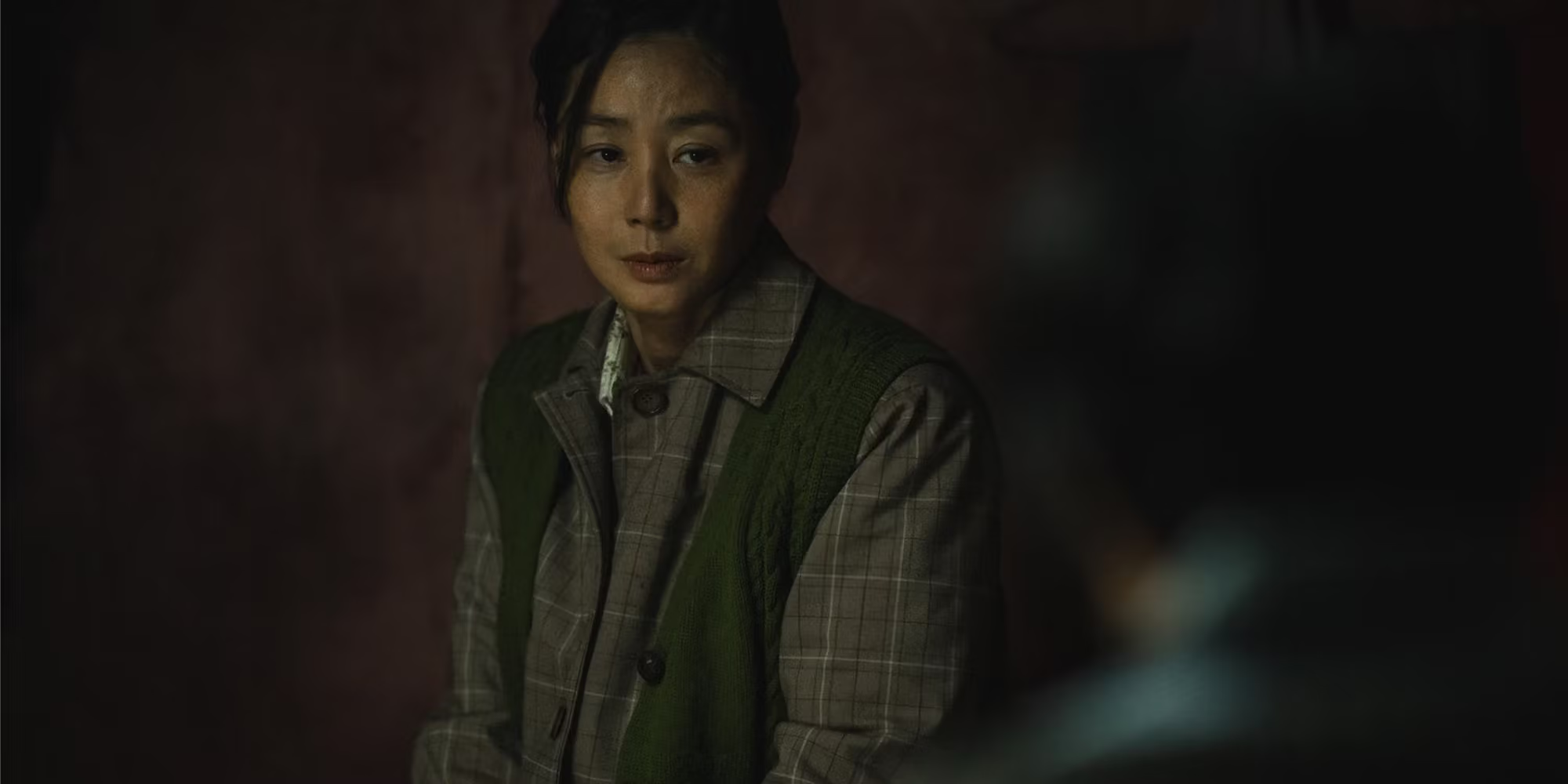
Though based on a fictional novel, Loh Kiwan’s story captures the real life experiences of many North Korean refugees. Whether it be the harrowing circumstances of his escape, the subsequent challenges Kiwan faces while applying for asylum, or even the emotional turmoil of contending with his trauma, My Name is Loh Kiwan derives its drama from reality when depicting the struggles of North Korean defectors.
Uprooted by an act of defiance that saves his friend’s life, Kiwan and his mother escape across the border to China and live there under constant threat of arrest and forced repatriation. With no legal status as refugees and no legal options for leaving the country without government approval, North Korean defectors in China are exceptionally vulnerable to trafficking and exploitation. They live in the shadows, concealing their identities as best they can, despite cultural and language barriers. If captured and returned to their home country, they are subject to brutal torture, imprisonment, and execution. Rather than face such inhumanity, many see suicide as a final escape and carry poison or razor blades with them, much like Kiwan and his mother.
It is ultimately his mother’s sacrifice that saves Kiwan from such a fate. Her death forces him into a position nearly every North Korean refugee recognizes–having to leave behind friends, family, and loved ones with aborted goodbyes for the sake of everyone’s safety and survival. Kiwan’s only material connection to his mother is a photo and a wallet full of blood. In reality, most leave with even less than that.
Not wanting to incriminate the people close to them if they are caught trying to escape, most North Korean refugees forgo any identifying documents or proof of their existence. They take only the bare essentials for survival, not knowing that their arrival in a new country is only the beginning of their journey, or even if they'll make it.
But this is not the narrative Liberty in North Korea believes in. No North Korean person should have to endure the struggles or celebrate the successes of resettlement alone. Much like the assistance Kiwan later receives from an advocacy group that offers legal support and a community of other North Koreans, LiNK walks with our North Korean friends on their journey to freedom. And when they begin new lives, we support their success, amplify their voices, cultivate more leaders and changemakers working on this issue together.
In this, Kiwan’s story reflects yet another reality of the North Korean people. Not only do they encounter extraordinary hardships, but also, they face them with extraordinary strength. Throughout the film, Kiwan persists in his pursuit of an earnest, honest life. Despite setbacks and situations where he’s forced into hurt or hiding, he stays true to his mother’s wish for him to live well, and in doing so, inspires the people around him to do the same.
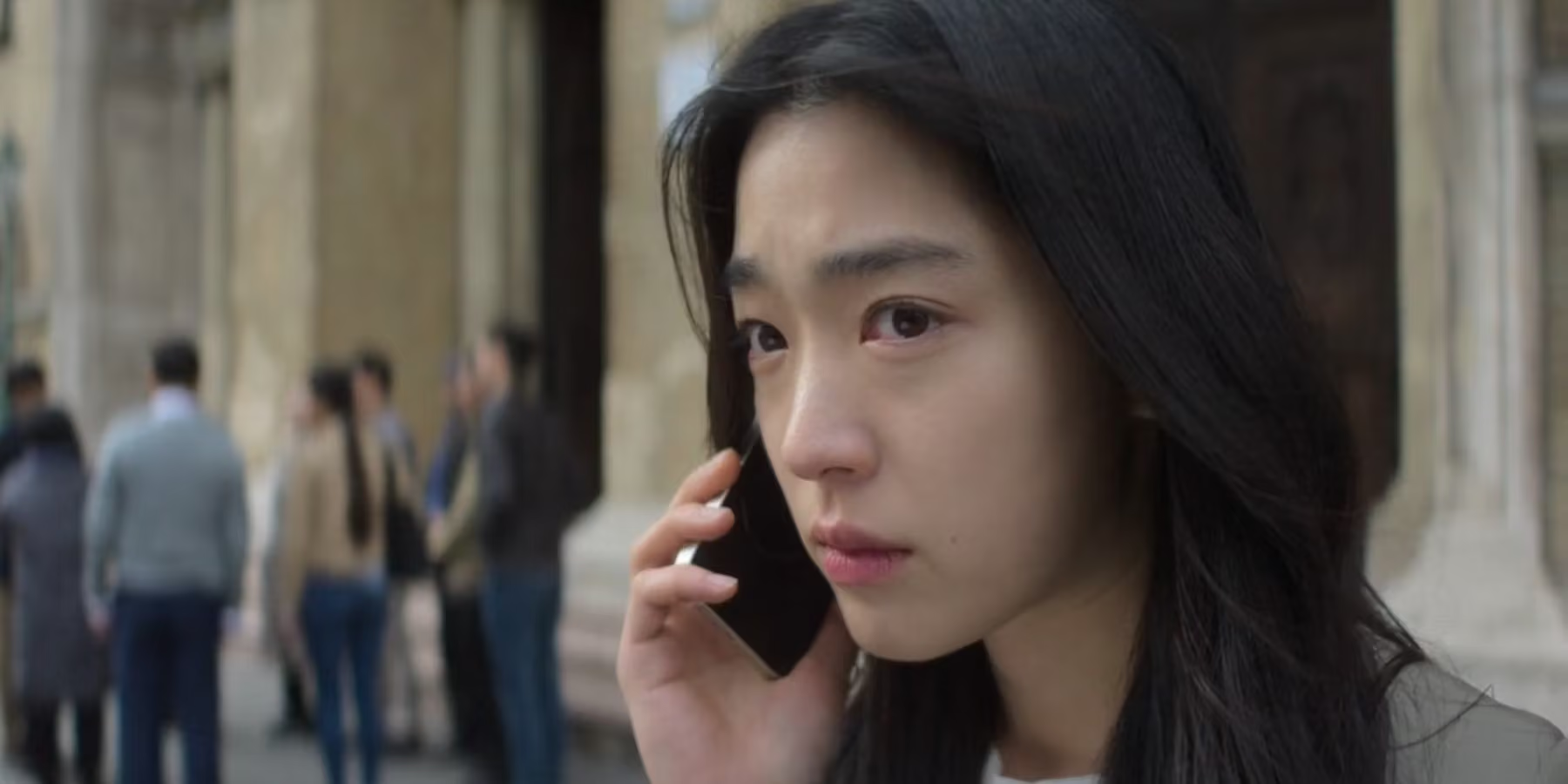
He finds hope, love, and freedom in others, but most importantly, in himself. When placed on trial to prove his identity before the court, Loh Kiwan proclaims the name his mother gave him.
Owning one’s identity as a North Korean person is not always easy. From the start of their escape, they are forced to hide. Once they reach freedom, the stigma and prejudice people hold towards their homeland pressures many to erase their accent or change their name–sometimes as a form of self-protection, other times as a way to fit in.
What Kiwan’s story shows, however, is that there is hope at the end of hiding. There is beauty in the simple, everyday life he longs for–a life where he can work for himself and share meals with friends, have a home, have a future, and have the choice to stay or go.
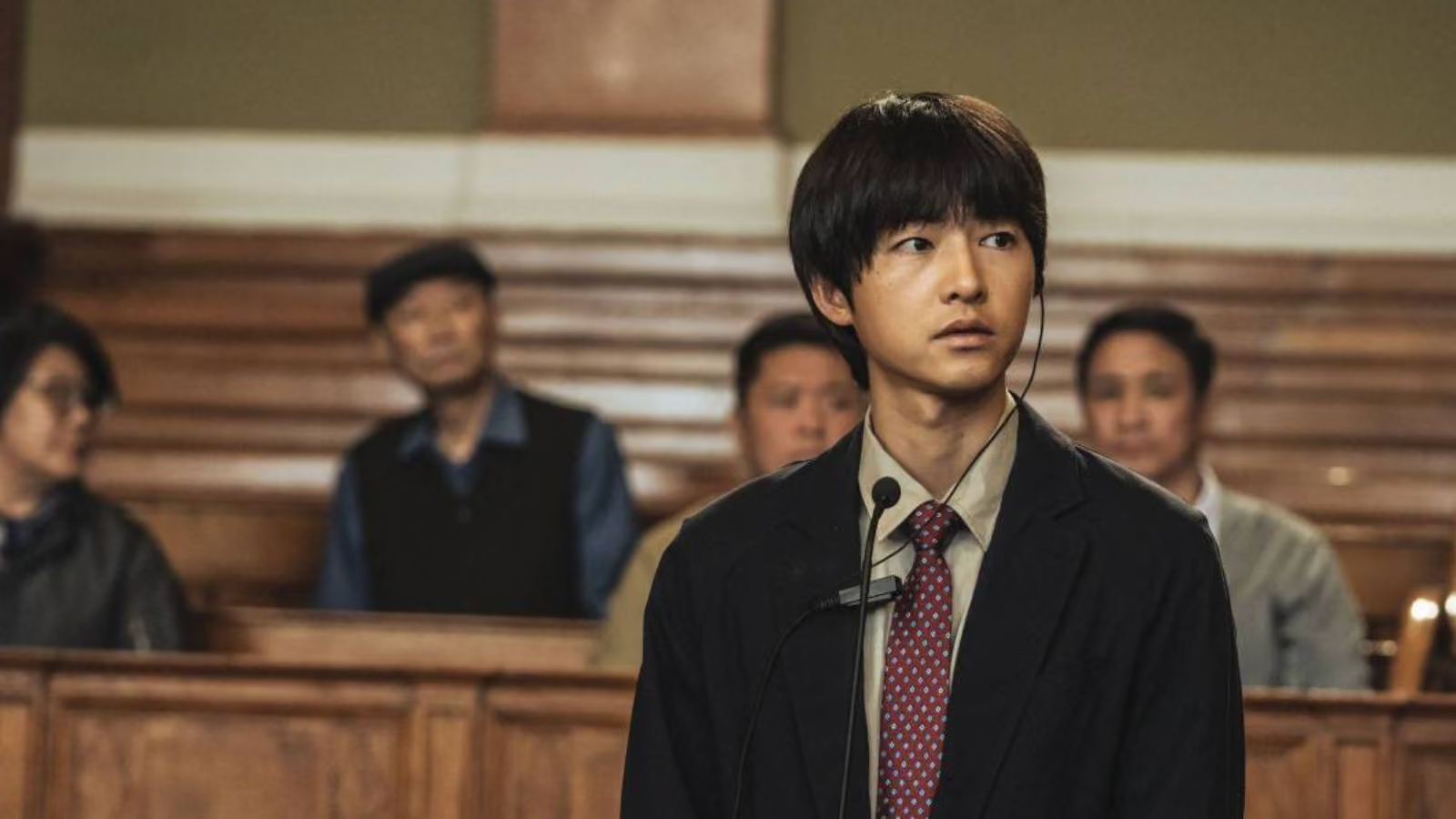
This is the life the North Korean people deserve, and every day, both within the country and without, they fight towards a better future. Their courage and indomitable spirit are not just figments of fiction. With your help, their freedom will become a reality.
Sign up below to learn how YOU can help support North Korean refugees today.










