I Left North Korea As a Child. My Life’s Work is to Return Home to a Free Country | Rose’s Story
As a child in North Korea, I loved quiet, warm mornings. At dawn, I’d wake to the sound of breakfast being made in the kitchen. When my feet grew cold, I’d burrow deeper into my grandfather's blanket. A day that began with the smell of a home-cooked meal was nothing special then—just an ordinary morning.
Growing up, I lived with my grandparents. We worked the fields together, swam in the Yalu River side by side, and grew tomatoes, eggplants, and cucumbers in a small garden. In the summers, my cousins and I played in the mountains and gathered wild strawberries. Every fall, I always looked forward to the corn harvest.
This was the world I knew, and I was quite happy with it.
My mother's work as a broker—helping families separated by the border reunite or at least connect via phone—and her other job selling smuggled CDs containing Korean dramas eventually led to her arrest. She was released quickly but was placed under close surveillance. With no other way to support our family, she made the difficult decision to defect. It was a choice made easier, she later told me, by the countless South Korean dramas she had watched over the years that offered a glimpse into a life outside North Korea.
One winter vacation, my mother said, "Let’s go on a trip." I could barely contain my excitement. I had rarely ventured far from my hometown and thought I was finally traveling somewhere new. My grandmother gave me a warm boiled egg and told me to be safe. I didn’t know that would be the last time I would ever see her.
The journey never stopped. We left in winter and ended up in Southeast Asia, where summer never ends. Only then did I realize this trip was an escape. And it was only one-way.
When we finally arrived in South Korea, I couldn’t accept my new reality. I was only a child, but in my heart, I knew I’d never see my grandparents again. It felt like a cruel trick.
But life carried on, and I found myself adapting to South Korean society pretty quickly. I changed my accent and learned things by asking friends. Even at a young age, I instinctively felt the need to fit in. I was proud of myself for not looking or sounding like a North Korean.
Then one day in our elementary school classroom, the topic of North Korea came up. At that moment, I felt everyone’s eyes on me.
Although no words were spoken, the silence between me and my classmates felt like a wall.
As much as I tried to push it away, that feeling continued to follow me. In middle school, while watching a soccer game with friends and cheering for South Korea, someone said, “Shouldn’t you be rooting for North Korea?” I felt the color drain from my face. Once again, I felt the gap between me and them. And I wondered if I could ever close the distance.
Years later, in university, a professor mistakenly thought my South Korean friend was North Korean. She strongly denied it and took great offense, demanding a formal apology from the professor. Seeing her reaction, I wondered what it said about me. This incident left a deep scar on my heart.
As time went on, I realized that I wasn’t as well-adapted as I thought. I had been living my life avoiding who I was. Whenever the topic of North Korea came up in conversation, I cringed and tried to change the subject. When my family in North Korea would secretly call us, I would hang up the phone after a brief greeting, afraid I’d burst into tears. I couldn’t face how much I missed them, because I didn’t want to accept that I may never see them again.
Amidst these complex emotions, I began my work on North Korean human rights. I wanted to change how North Koreans were portrayed as “pitiful,” or “dangerous.”
But doing this work scared me at first. If I shared my story, would people look at me again with those silent, disapproving eyes? Then I began to understand something important—those fears came from my own hidden prejudice. If I believed that North Koreans would only be seen in a certain way, didn’t that also mean it was how I saw them?
Confronting the deepest parts of myself allowed me to finally embrace who I was. I stopped hiding, and began to explore the thoughts and feelings I had suppressed for so long.
In 2022, I took part in Liberty in North Korea’s Co-Creators program. It’s a unique opportunity for North and South Korean students to work together on advocacy projects. Our team’s project was called “North Korea Travel.” We highlighted different regions of the country and shared facts about life there, leading naturally into conversations about human rights.
As I worked on this project, it occurred to me how much I actually didn’t know about my own country. Due to the regime’s strict restrictions on movement, I never traveled beyond my hometown until the day I left North Korea for good. When I explained this to participants, they listened attentively and said it was their first time learning about it.
Their sincerity caught me off guard. I realized that prejudice often does not come from malice, but simply from a lack of knowledge and understanding.
After that experience, I knew I wanted to continue creating moments of connection and understanding about North Korea. I figured the perfect way to reach people would be through the medium I know best: architecture.
For my graduation project, I designed a North Korean Human Rights Memorial Hall. I chose Imjingak, near the DMZ, as the symbolic location. The space I conceptualized commemorates the sorrow of separation, and allows visitors to experience the "surveillance," "chaos," and "oppression" North Koreans face in their daily lives.
The Pantheon in Rome directs our gaze toward the sky. I turned that idea upside down. In my design, the ceiling collapses into the ground, trapping people beneath, like the crushing weight of the regime’s oppression.
On the opposite wall, the names of loved ones are carved into stone, representing those we miss dearly. Before politics, before ideology, these are mothers and fathers, grandparents and children. This is a space where people can freely miss and yearn for the people they left behind. And it is a reminder that North Korea is home to our families, friends and neighbors.
Last year, when I visited the Holocaust Memorial in Washington DC, I felt that it was more than just a commemorative site. It was a space that showcased how to confront humanity's darkest history to ensure that such things are never repeated again.
Standing there, I hoped that one day, the human rights abuses faced by North Koreans would also just be a memory for us to reflect on.
I no longer hide my identity. My story began in North Korea, in a beautiful city by the Yalu River. Even now, on quiet mornings, my thoughts drift back to my grandparents’ house. I want the world to see North Korea like I do—through the warmth of ordinary days and the humanity of its people.
I dream of returning home one day, when all North Koreans can live free and full lives. Until then, I will continue to speak through the language of space and the power of stories.
The Universal Declaration of Human Rights begins with this: "all human beings are born free and equal in dignity and rights." These aren’t just words on paper, but a reality that we can create together.
Please join me today to advance freedom and human rights for all North Koreans.
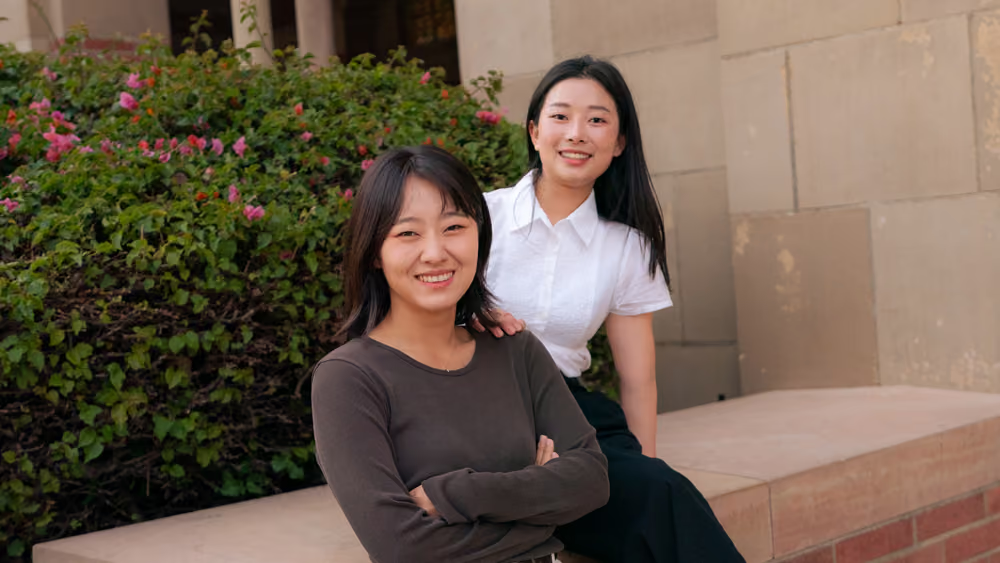
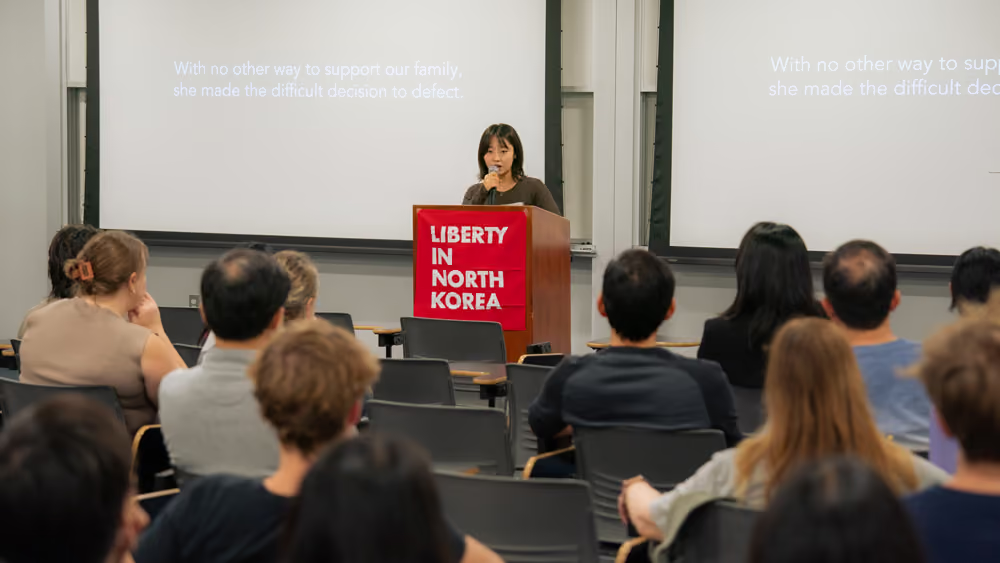
In 2025, Rose traveled across the US, sharing her story and advocating for the North Korean people as a LiNK Advocacy Fellow. Our capacity-building programs are cultivating the next generation of North Korean activists and leaders who are bringing change to their homeland.
Help empower more North Korean refugees with opportunities to grow, like Rose.
Give Today
One Day with the North Korean People | LiNK Summit 2023
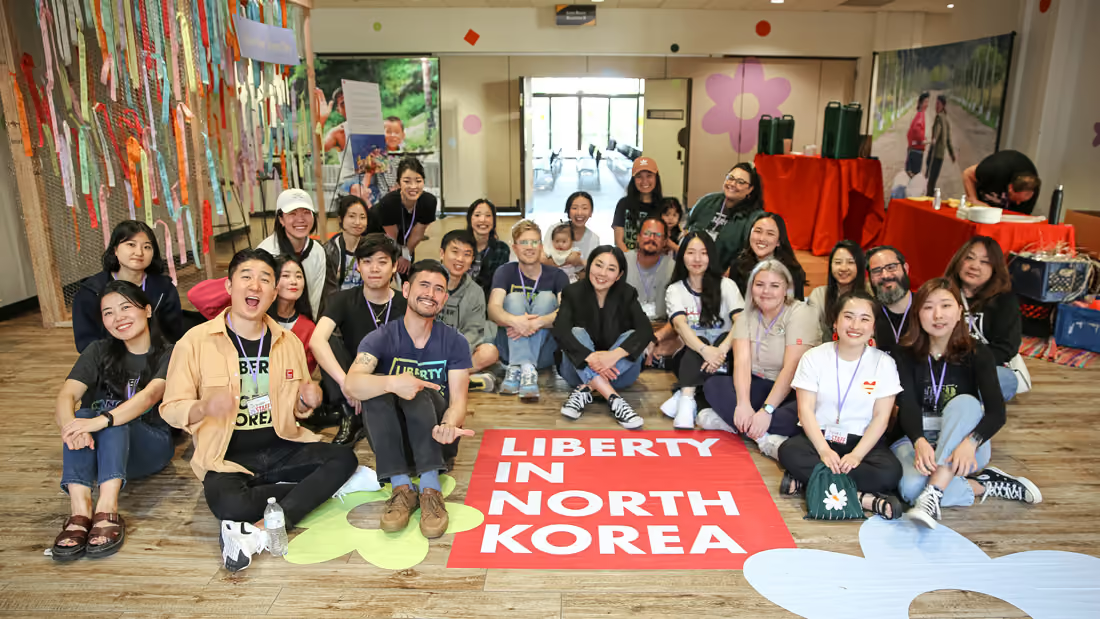
After five years, LiNK Summit made its return on June 3rd, 2023! Over 200 Allies, North Korean advocates, fellow activists, and global LiNK staff gathered to spend One Day with the North Korean People in Long Beach, CA. We had supporters who drove hundreds of miles and flew in from across the US, bringing friends and family to join the movement.
Working on this issue can often feel isolating. Summit was a much-needed, powerful reminder that so many incredible people are committed to seeing a free North Korea in our lifetime. Through the course of a day, attendees had the opportunity to hear directly from and collaborate with North Koreans through different breakout sessions and experiences.
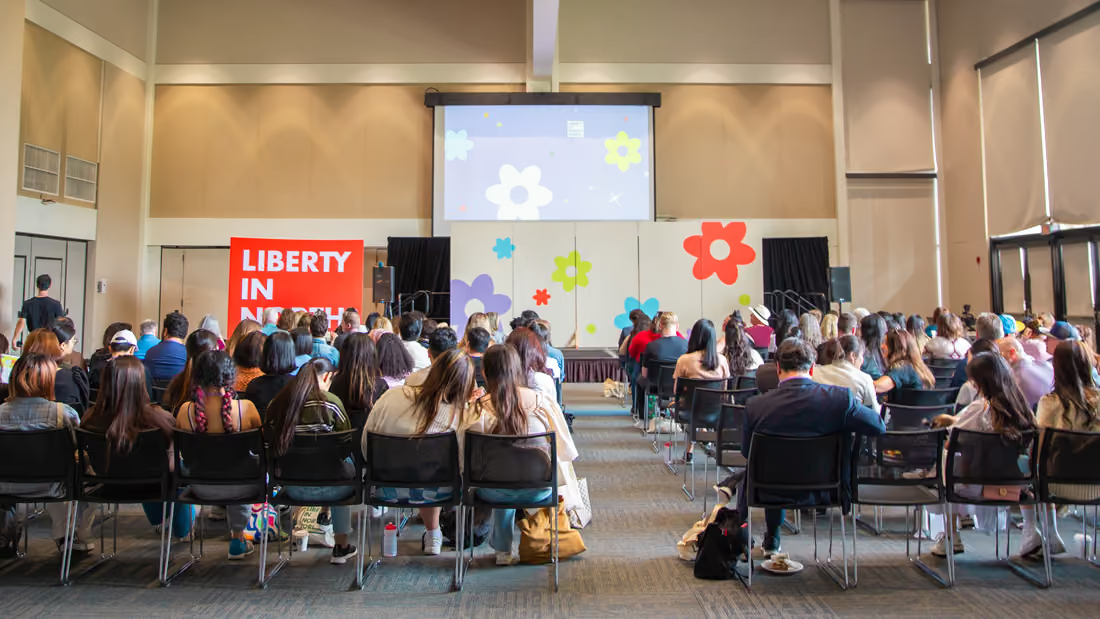
The Jangmadang Experience
Perhaps the highlight of this year’s Summit was The Jangmadang Experience – a collection of interactive booths and installations inspired by North Korea’s grassroots markets. Attendees could see smuggled goods, try North Korean food, pick up swag, and find ways to take action.
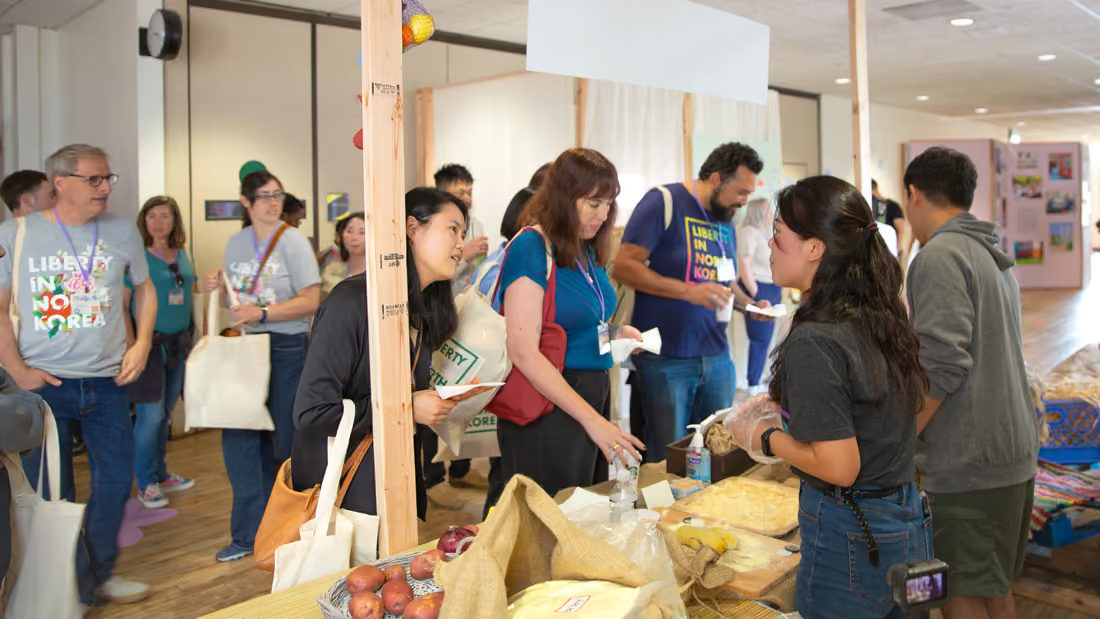
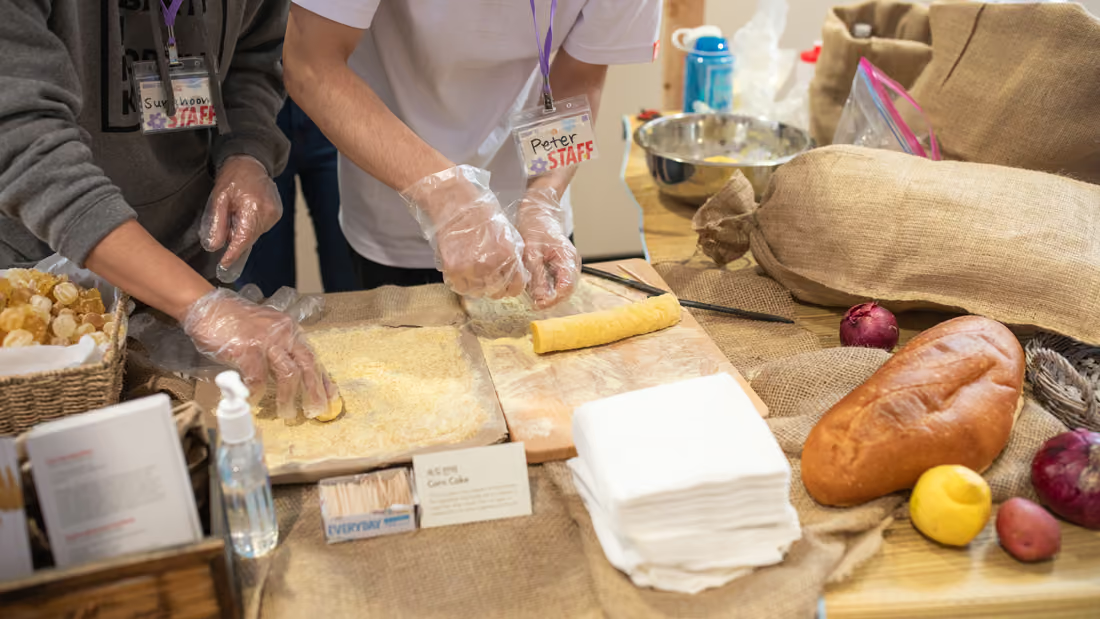
The “Taste of North Korea” food booth was a favorite among guests. Our North Korea-born staff were able to source authentic North Korean cookies and candy, as well as corn flour, which they used to prepare sweet corn rice cakes at the event.
People returned for seconds, then thirds. Our North Korean friends were shocked by the familiar tastes, and reminisced about the last time they had these snacks in North Korea. It was so heartwarming to see how food connected past and present, and created a new experience for everyone.
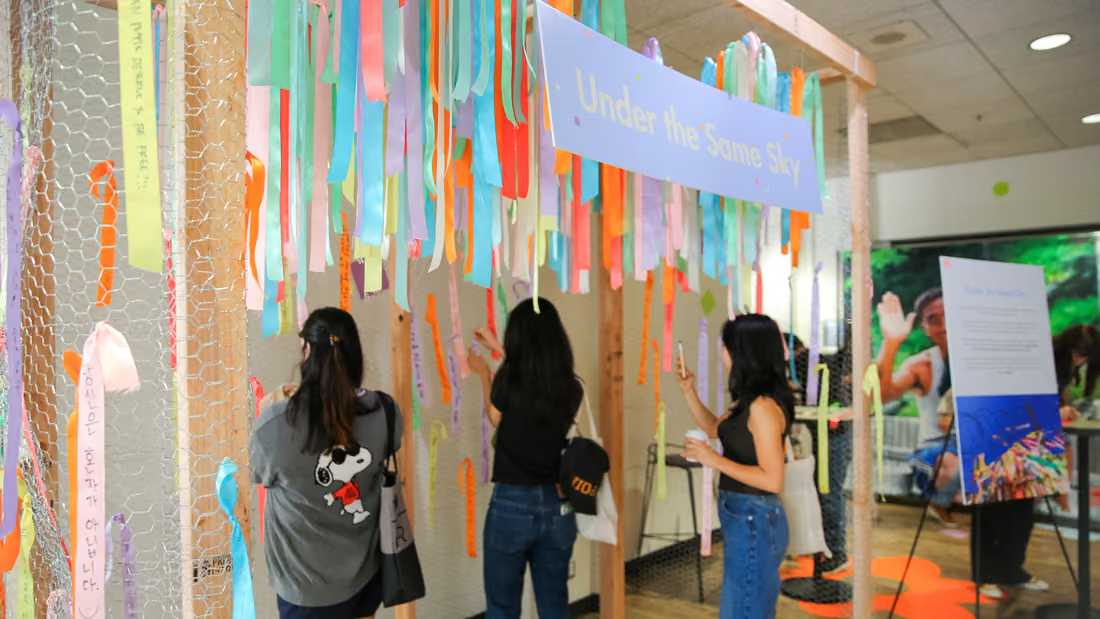
“Under the Same Sky” was a collaborative installation inspired by Joseph Kim’s memoir and the colorful prayer ribbons at Imjingak Park near the border of North & South Korea. When Joseph Kim thinks about his sister, whom he hasn’t seen since his escape, he says:
“Right now, we only share the stars. But I can look up at night and see that you are under the same sky. That will have to be enough until I find you.”
Attendees were asked to share their own messages of hope and tie them to the wall. As the day passed, it was so encouraging to see the number of ribbons grow- a reminder that we’re all under the same sky, and one day every North Korean will be free.
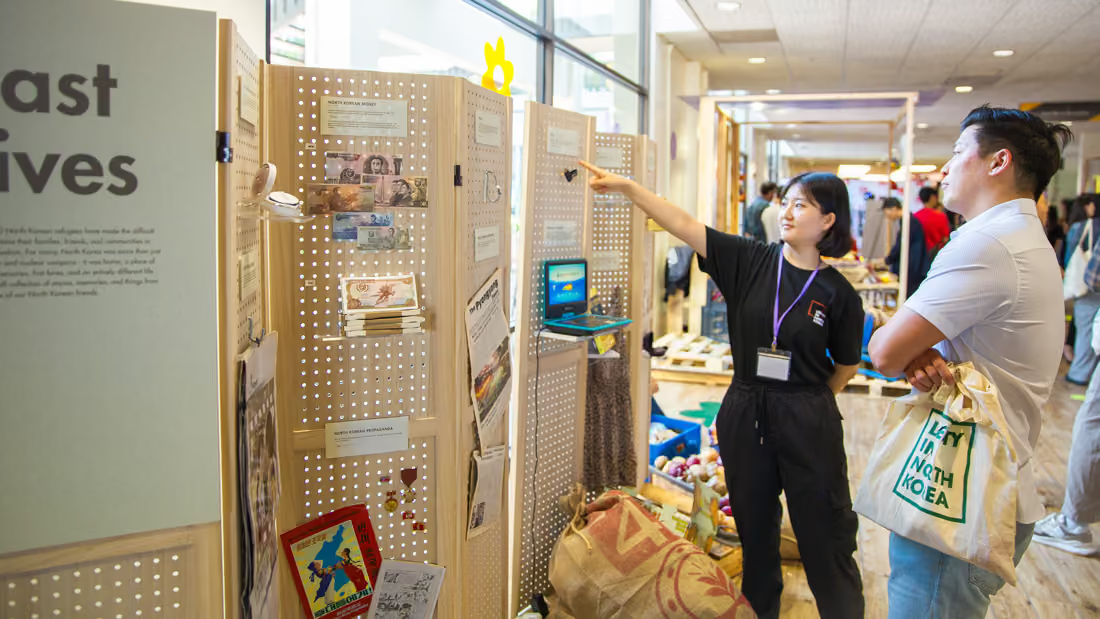
Another popular destination was “Past Lives,” a collection of smuggled goods and mementos from North Korea. Each of the objects- North Korean money, propaganda posters and pins, a razor blade, a floral dress, and more- held powerful stories and memories from the past lives of our North Korean friends.
As guests perused the rest of the booths, they could write postcards inviting people to become Allies, record a message of encouragement to our North Korean friends, marvel at photos from inside North Korea, and more. It was a vibrant and exciting part of the day, emulating the dynamism of the Jangmadangs in North Korea!
The Red Box Live
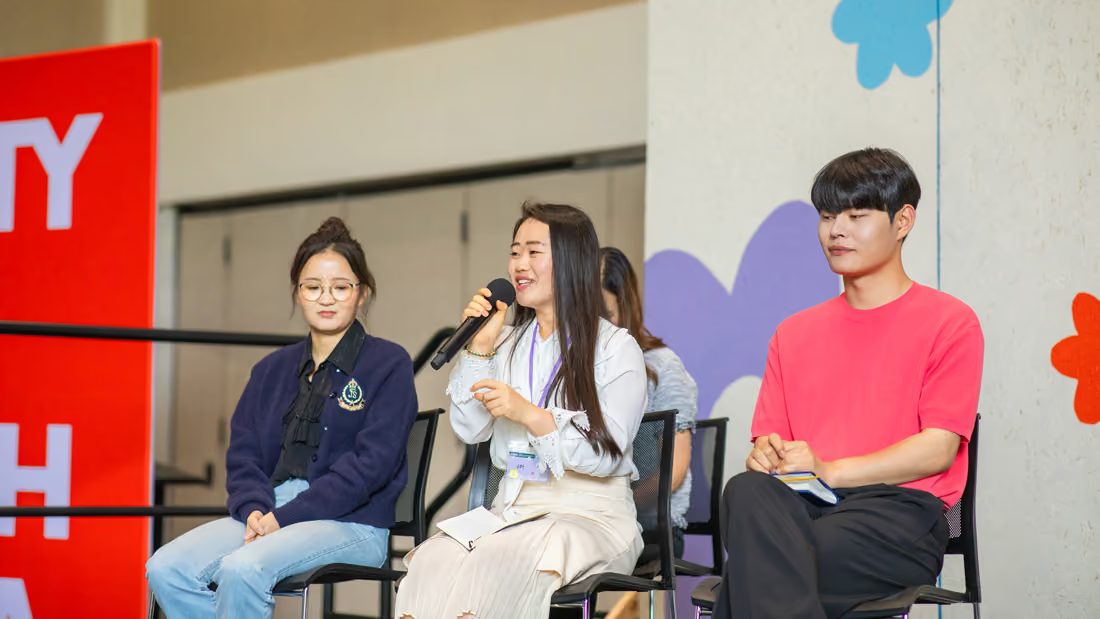
Inspired by our popular YouTube series, The Red Box, we created an offline opportunity to ask our North Korean friends anything about life in the most closed country in the world. Harry, Joy, and Sunghee shared their personal stories while candidly responding to audience questions about everything from dating in North Korea to experiences with discrimination in South Korea.
“I learned that every North Korean refugee has their own unique story, and the freedom they enjoy now is something that all 25 million North Koreans deserve.”
– Summit attendee
Imagining the Future of North Korea
We can’t know what path North Korea will take, but we do know that irreversible change is already happening and it's being driven by the people. In this panel we had North Korean activist, Seohyun Lee; expert on North Korea’s technology and media environment, Nat Kretchun; and LiNK’s South Korea Country Director, Sokeel Park, lead a discussion around imagining the future of North Korea and how we can support change.
Increasing the North Korean people’s access to outside information is one of our biggest opportunities to accelerate change on the ground. This session provided insight into the world’s most closed off country and LiNK’s current work in the area of information dissemination.
Allies Hackathon
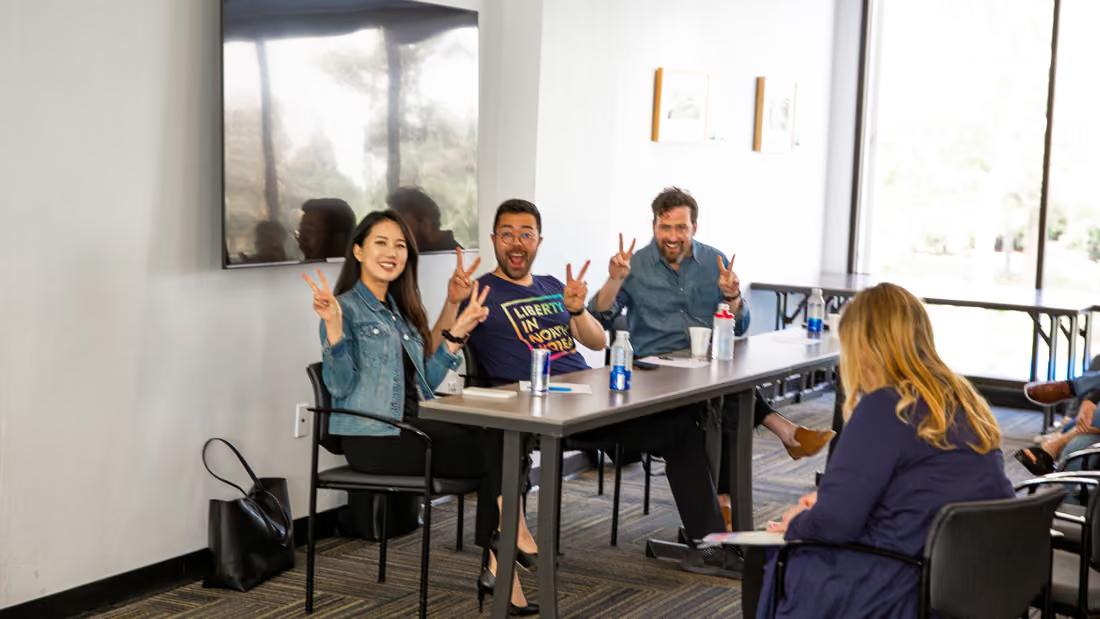
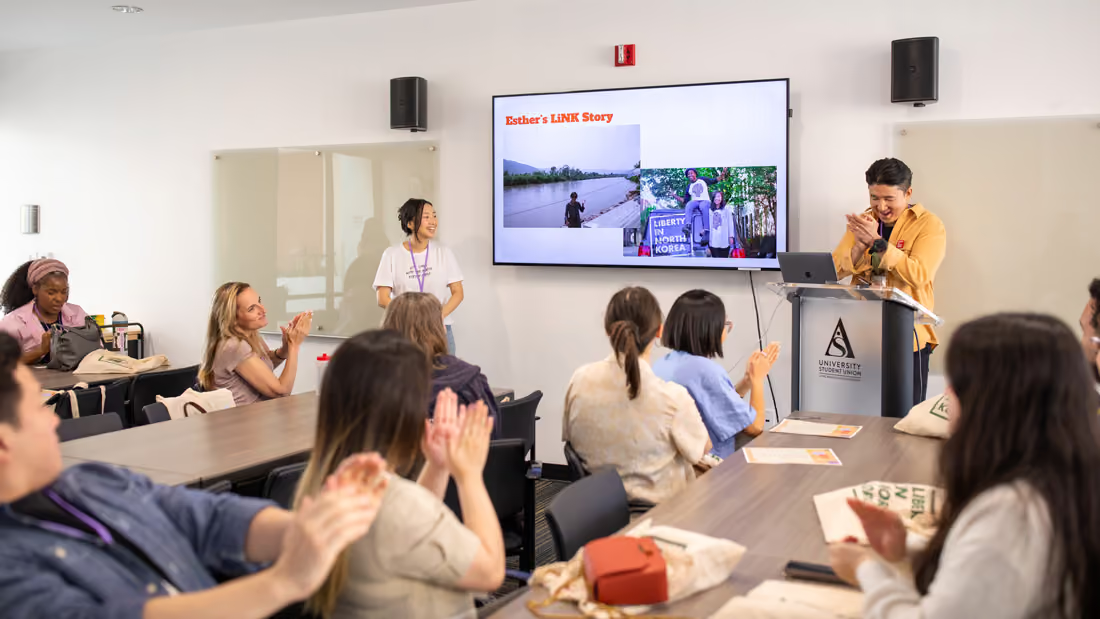
The Allies Hackathon was a nod to the grassroots origins of LiNK, and how supporter-led LiNK Teams continue to be at the forefront of this movement. At this interactive session, participants teamed up to brainstorm how we can bring more attention to this issue, drawing from other parts of the day. The goal was to equip and empower attendees to take the momentum from Summit back to their communities!
“Jihyun and Esther brought the energy for the Allies Hackathon! I thought the prompts and how we broke into different groups was great, and it was fun to hear everyone’s ideas. I plan to stay in touch with my little group and hopefully we can encourage each other to stay active in our support for this issue.”
– Summit attendee
North Korean Agents of Change
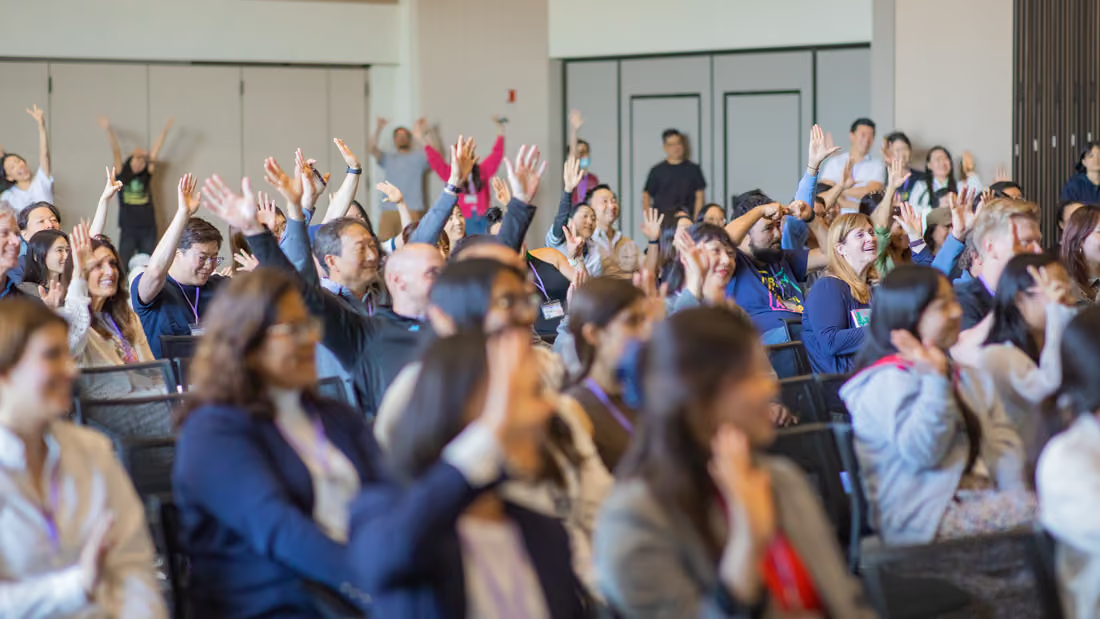
North Korean defectors have incredible potential to impact this issue, from both inside the country and as they resettle in freedom. In this session, LiNK’s CEO, Hannah Song, led a conversation with North Korean advocate, Daehyeon Park, and a visionary North Korean entrepreneur who are supporting their communities, empowering others, and leading this movement as agents of change.
“Daehyeon was asked ‘What would it take for CHANGE - the big change in North Korea, that we all want to see.’ He was very quick to respond that LiNK currently has about 30 employees. What would it take for them to have 300 employees, 1000 employees? I was SO STRUCK at his faith in LiNK, that THIS ORGANIZATION could make this happen! He, who has been through it all, believes that this group of workers and volunteers are enough. They are passionate enough, smart and inventive and creative enough, to open up and free his nation. I was on a high all the way home!”
– Summit attendee
Keynote Speaker: Joseph Kim
After a day of nonstop inspiration and life-changing conversations, everyone gathered to hear from Joseph Kim, a North Korean defector, advocate, and the Associate & Expert-in-Residence, Freedom and Democracy at the Bush Center.
In 2013, Joseph delivered a TED Talk on the importance of hope and published a memoir, “Under the Same Sky.” At Summit, he revisited the power of choosing to have hope for this issue.
“It’s important to remember that North Korea is a land with darkness, not a land of darkness. There is hope for the future, and I have chosen to live my life believing in that hope.”
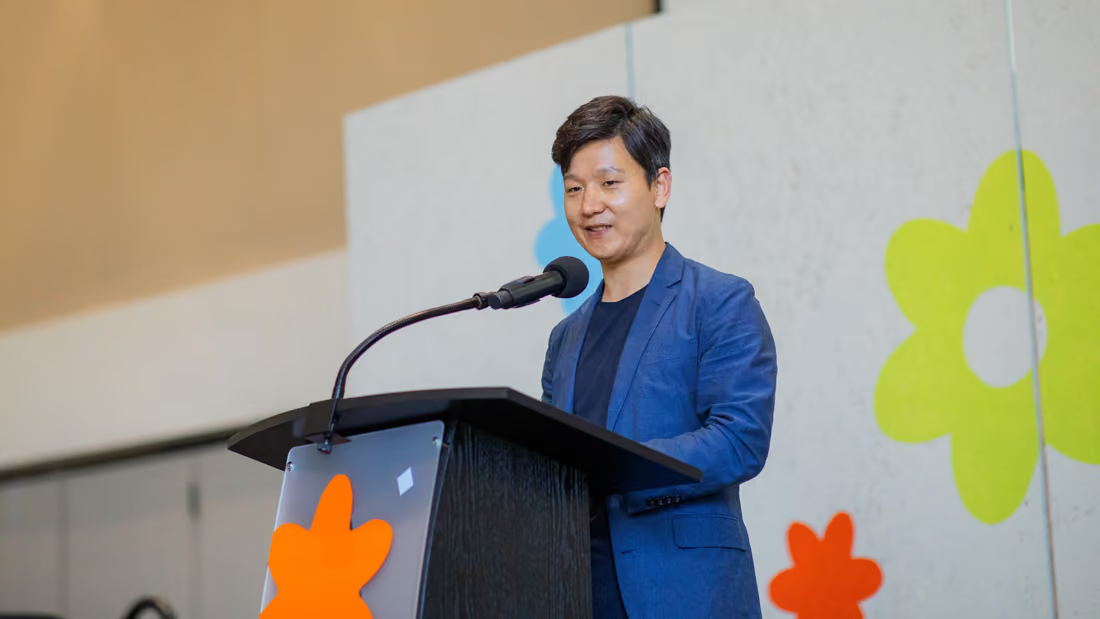
Finally, LiNK’s CEO, Hannah Song, wrapped up the day with a few parting words on what lies ahead.
“I know that North Korea can seem like this unchanging issue, one that definitely feels hopeless at times. In those brief moments of despair, I think about how hard some of our North Korean friends fought for their freedom…. I’m reminded that it is a privilege for us to do this work, because that means there is still something that we can do.”
At the end of the day, our excitement and confidence in the future was renewed. Each and every one of us has the ability to be a force for change. As the North Korean people strive towards their freedom, their hope for the future should galvanize us all.
We’re already looking forward to the next LiNK Summit! From all of us on the LiNK team - thank you to everyone who made this day one to remember.