
I Left North Korea As a Child. My Life’s Work is to Return Home to a Free Country | Rose’s Story
As a child in North Korea, I loved quiet, warm mornings. At dawn, I’d wake to the sound of breakfast being made in the kitchen. When my feet grew cold, I’d burrow deeper into my grandfather's blanket. A day that began with the smell of a home-cooked meal was nothing special then—just an ordinary morning.
Growing up, I lived with my grandparents. We worked the fields together, swam in the Yalu River side by side, and grew tomatoes, eggplants, and cucumbers in a small garden. In the summers, my cousins and I played in the mountains and gathered wild strawberries. Every fall, I always looked forward to the corn harvest.
This was the world I knew, and I was quite happy with it.
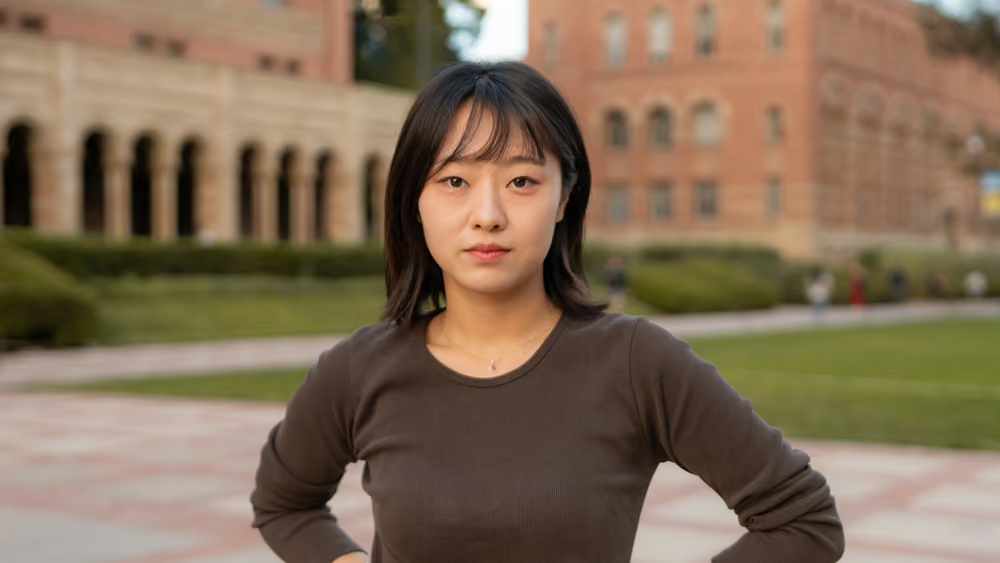
My mother's work as a broker—helping families separated by the border reunite or at least connect via phone—and her other job selling smuggled CDs containing Korean dramas eventually led to her arrest. She was released quickly but was placed under close surveillance. With no other way to support our family, she made the difficult decision to defect. It was a choice made easier, she later told me, by the countless South Korean dramas she had watched over the years that offered a glimpse into a life outside North Korea.
One winter vacation, my mother said, "Let’s go on a trip." I could barely contain my excitement. I had rarely ventured far from my hometown and thought I was finally traveling somewhere new. My grandmother gave me a warm boiled egg and told me to be safe. I didn’t know that would be the last time I would ever see her.
The journey never stopped. We left in winter and ended up in Southeast Asia, where summer never ends. Only then did I realize this trip was an escape. And it was only one-way.
When we finally arrived in South Korea, I couldn’t accept my new reality. I was only a child, but in my heart, I knew I’d never see my grandparents again. It felt like a cruel trick.
But life carried on, and I found myself adapting to South Korean society pretty quickly. I changed my accent and learned things by asking friends. Even at a young age, I instinctively felt the need to fit in. I was proud of myself for not looking or sounding like a North Korean.
Then one day in our elementary school classroom, the topic of North Korea came up. At that moment, I felt everyone’s eyes on me.
Although no words were spoken, the silence between me and my classmates felt like a wall.
As much as I tried to push it away, that feeling continued to follow me. In middle school, while watching a soccer game with friends and cheering for South Korea, someone said, “Shouldn’t you be rooting for North Korea?” I felt the color drain from my face. Once again, I felt the gap between me and them. And I wondered if I could ever close the distance.
Years later, in university, a professor mistakenly thought my South Korean friend was North Korean. She strongly denied it and took great offense, demanding a formal apology from the professor. Seeing her reaction, I wondered what it said about me. This incident left a deep scar on my heart.
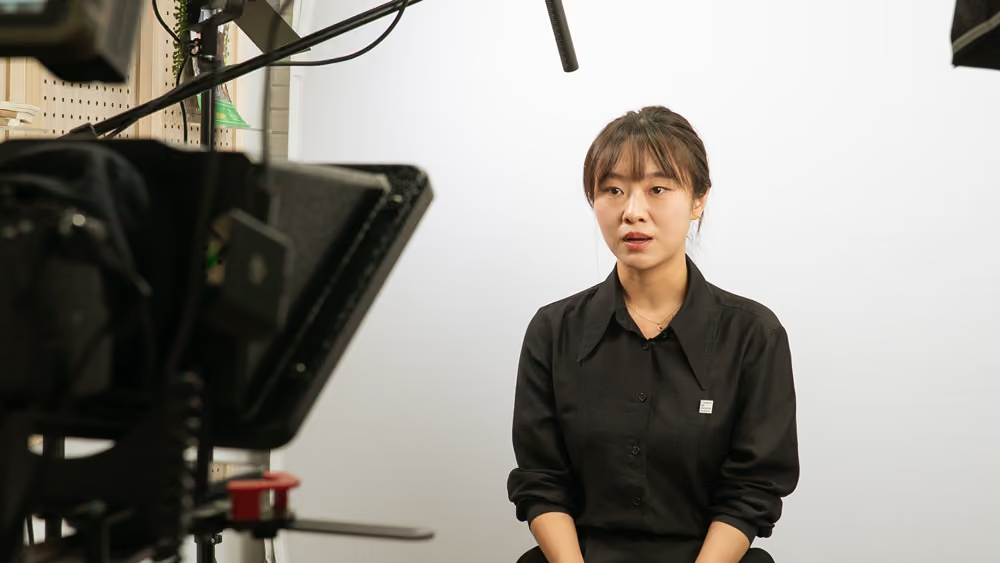
As time went on, I realized that I wasn’t as well-adapted as I thought. I had been living my life avoiding who I was. Whenever the topic of North Korea came up in conversation, I cringed and tried to change the subject. When my family in North Korea would secretly call us, I would hang up the phone after a brief greeting, afraid I’d burst into tears. I couldn’t face how much I missed them, because I didn’t want to accept that I may never see them again.
Amidst these complex emotions, I began my work on North Korean human rights. I wanted to change how North Koreans were portrayed as “pitiful,” or “dangerous.”
But doing this work scared me at first. If I shared my story, would people look at me again with those silent, disapproving eyes? Then I began to understand something important—those fears came from my own hidden prejudice. If I believed that North Koreans would only be seen in a certain way, didn’t that also mean it was how I saw them?
Confronting the deepest parts of myself allowed me to finally embrace who I was. I stopped hiding, and began to explore the thoughts and feelings I had suppressed for so long.
In 2022, I took part in Liberty in North Korea’s Co-Creators program. It’s a unique opportunity for North and South Korean students to work together on advocacy projects. Our team’s project was called “North Korea Travel.” We highlighted different regions of the country and shared facts about life there, leading naturally into conversations about human rights.
As I worked on this project, it occurred to me how much I actually didn’t know about my own country. Due to the regime’s strict restrictions on movement, I never traveled beyond my hometown until the day I left North Korea for good. When I explained this to participants, they listened attentively and said it was their first time learning about it.
Their sincerity caught me off guard. I realized that prejudice often does not come from malice, but simply from a lack of knowledge and understanding.
After that experience, I knew I wanted to continue creating moments of connection and understanding about North Korea. I figured the perfect way to reach people would be through the medium I know best: architecture.
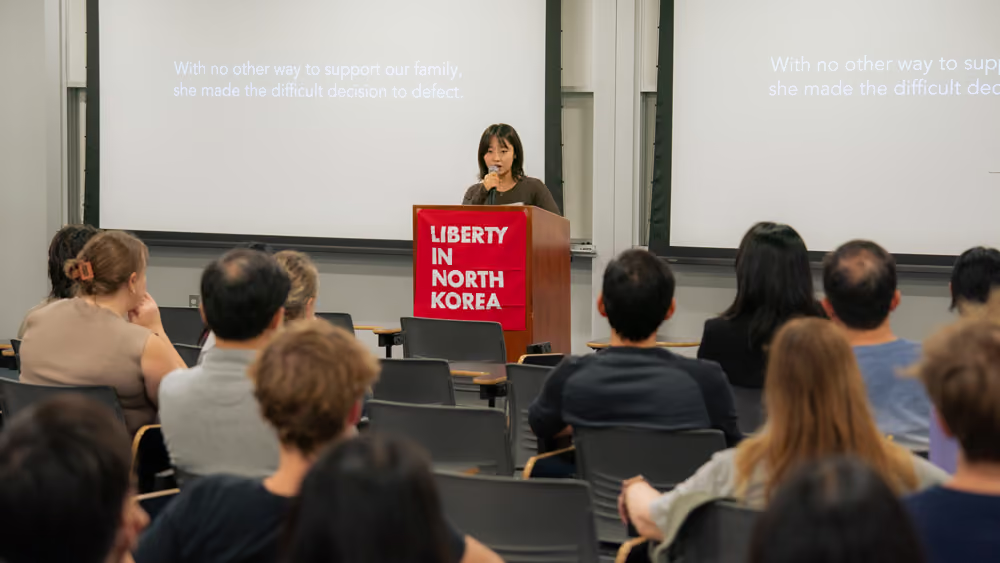
For my graduation project, I designed a North Korean Human Rights Memorial Hall. I chose Imjingak, near the DMZ, as the symbolic location. The space I conceptualized commemorates the sorrow of separation, and allows visitors to experience the "surveillance," "chaos," and "oppression" North Koreans face in their daily lives.
The Pantheon in Rome directs our gaze toward the sky. I turned that idea upside down. In my design, the ceiling collapses into the ground, trapping people beneath, like the crushing weight of the regime’s oppression.
On the opposite wall, the names of loved ones are carved into stone, representing those we miss dearly. Before politics, before ideology, these are mothers and fathers, grandparents and children. This is a space where people can freely miss and yearn for the people they left behind. And it is a reminder that North Korea is home to our families, friends and neighbors.
Last year, when I visited the Holocaust Memorial in Washington DC, I felt that it was more than just a commemorative site. It was a space that showcased how to confront humanity's darkest history to ensure that such things are never repeated again.
Standing there, I hoped that one day, the human rights abuses faced by North Koreans would also just be a memory for us to reflect on.
I no longer hide my identity. My story began in North Korea, in a beautiful city by the Yalu River. Even now, on quiet mornings, my thoughts drift back to my grandparents’ house. I want the world to see North Korea like I do—through the warmth of ordinary days and the humanity of its people.
I dream of returning home one day, when all North Koreans can live free and full lives. Until then, I will continue to speak through the language of space and the power of stories.
The Universal Declaration of Human Rights begins with this: "all human beings are born free and equal in dignity and rights." These aren’t just words on paper, but a reality that we can create together.
Please join me today to advance freedom and human rights for all North Koreans.
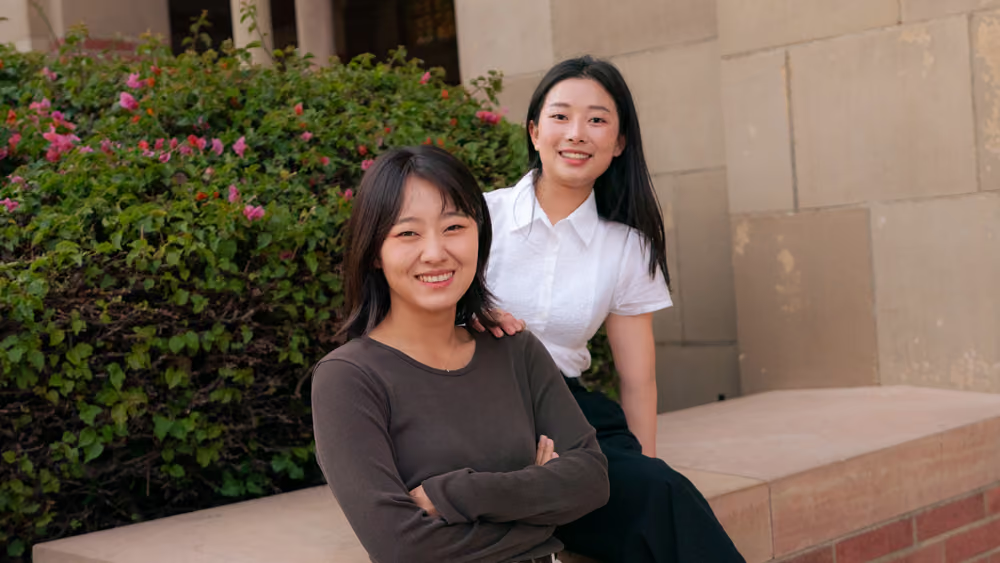
In 2025, Rose traveled across the US, sharing her story and advocating for the North Korean people as a LiNK Advocacy Fellow. Our capacity-building programs are cultivating the next generation of North Korean activists and leaders who are bringing change to their homeland.
Help empower more North Korean refugees with opportunities to grow, like Rose.
Give Today
Women in North Korea: At the Forefront of Social and Political Change
By Lindsey Miller
Lindsey Miller is a musical director, award-winning composer, author, and photographer originally from Glasgow, Scotland. From 2017-2019, she lived in Pyongyang, North Korea, while accompanying her husband on a diplomatic posting. For Women’s History Month, she shares a rare glimpse into the experiences of North Korean women, who are finding ways to live life on their own terms despite the circumstances.
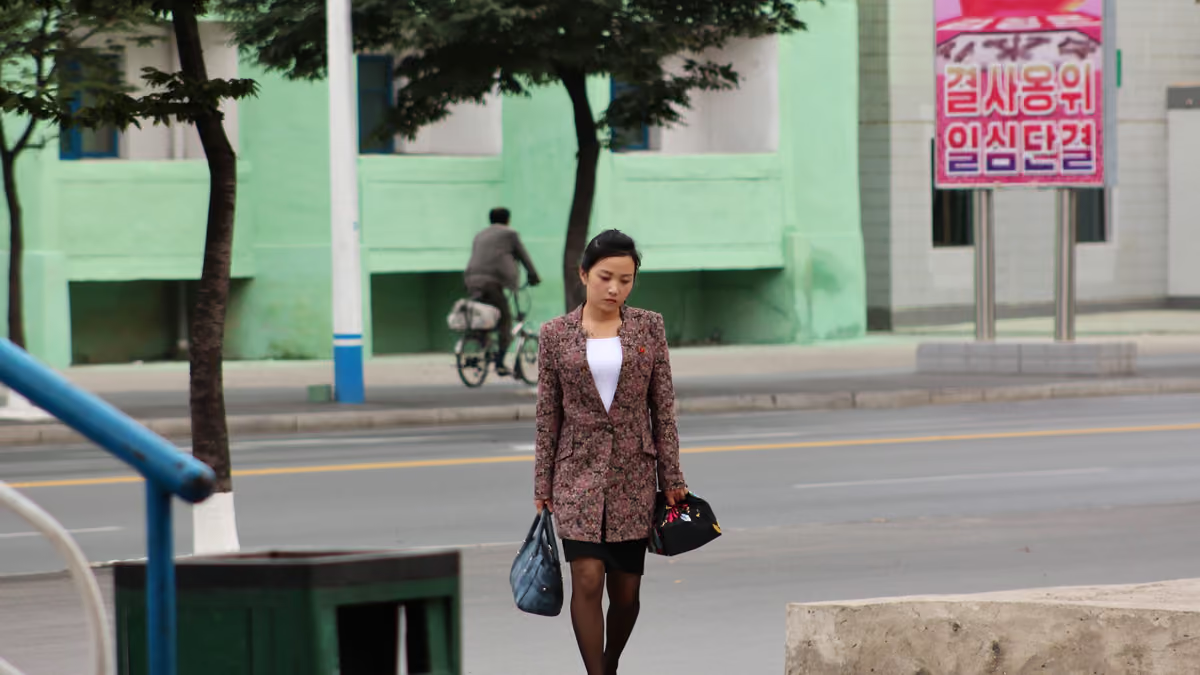
Her name is Min Jeong*.
She’s bright, funny and has a dry and cutting sense of humour that rivals that of any professional stand-up comedian. The kind that makes you worry for the heckler in the front row.
‘Why do you keep singing? You’re terrible at singing!’ she says with a straight face to the regular punters at The Beer House, a bar in Pyongyang, before taking their glass and kindly refilling it. ‘And don’t wear those shoes, they’re ugly.’ The other punters burst out laughing while Min Jeong allows a slight silly smile to make its way across the corner of her mouth. That’s the thing about Min Jeong, she has a magnetic and honest energy about her. It was refreshing in a place where simple honesty and truthfulness felt so packed down.
Min Jeong and I spent a fair bit of time together over the two years I lived in Pyongyang. I would go to the bar mainly to just talk to her and spend time with her. She was interesting. She loved hair accessories and jewellery – an increasingly common way for North Korean women to explore self-expression. I’d show her photographs of me and tell her about my different outfits while she’d rate them. I didn’t fare very well in her opinion. I often gave her my wedding or engagement ring to try on and she’d pose with them, comparing them to other things she’d seen foreigners wear. She’d tell me about the cosmetics that she liked to wear and make herself.
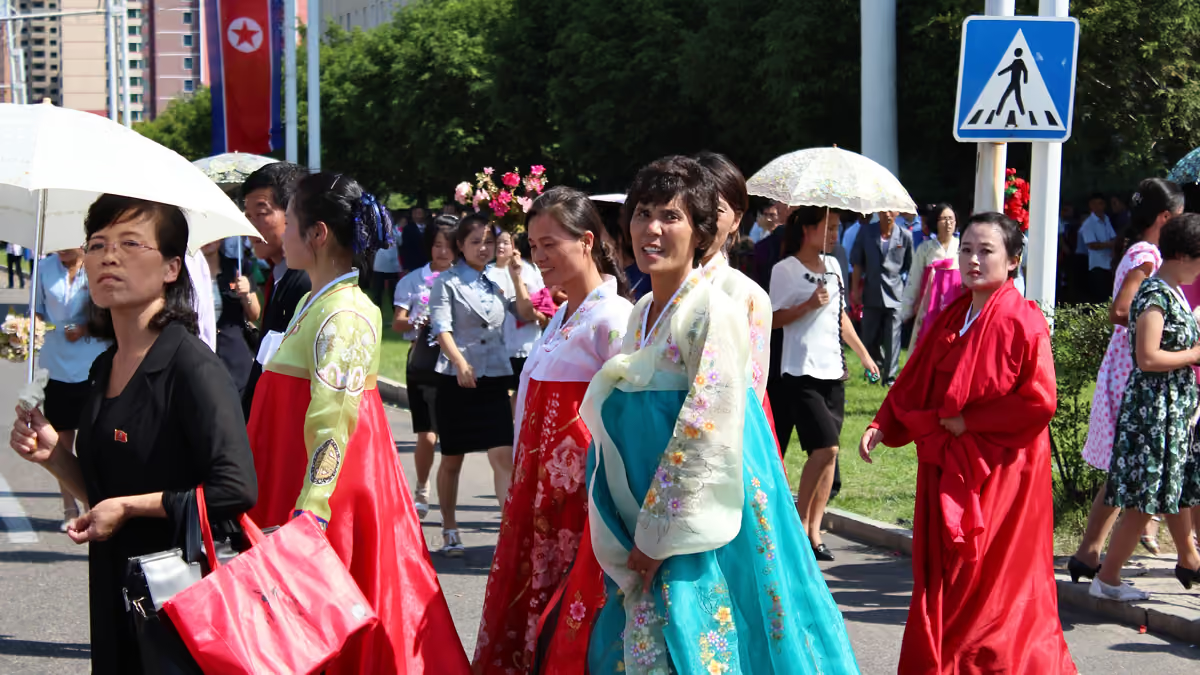
One of her favourite things was a face mask which I remember involving eggs. I never tried it but she swore by it, telling me how important it was to look after my skin and reminding me that there was nothing more important than my health. Min Jeong was very bright and regularly bounced between speaking in Korean, fluent English and often Mandarin. She loved animals and we spent a lot of time looking at photographs of dogs on our phones.
Min Jeong was in her early thirties and unmarried. She’d twirl her half-tied-back beautiful shiny black hair in her fingers while telling me about how much her parents were desperate for her to ‘find a boy’. She wasn’t interested and she didn’t have much time given that she only had one day ‘off’ a week which would have been taken up in part by state-enforced self-criticism sessions among other things. Having gone on many dates, the outcomes of which she summarised with a simple wrinkled nose, she seemed to be quite content being single. It was an attitude which I was surprised to learn was shared by a couple of Pyongyang female urban elite whom I met; women who spoke openly about their lack of desire to have children, who wanted to pursue a career. This directly contradicted my understanding of North Korean women’s experiences.
But I forgot that the experience of women is diverse and North Korea is no exception.
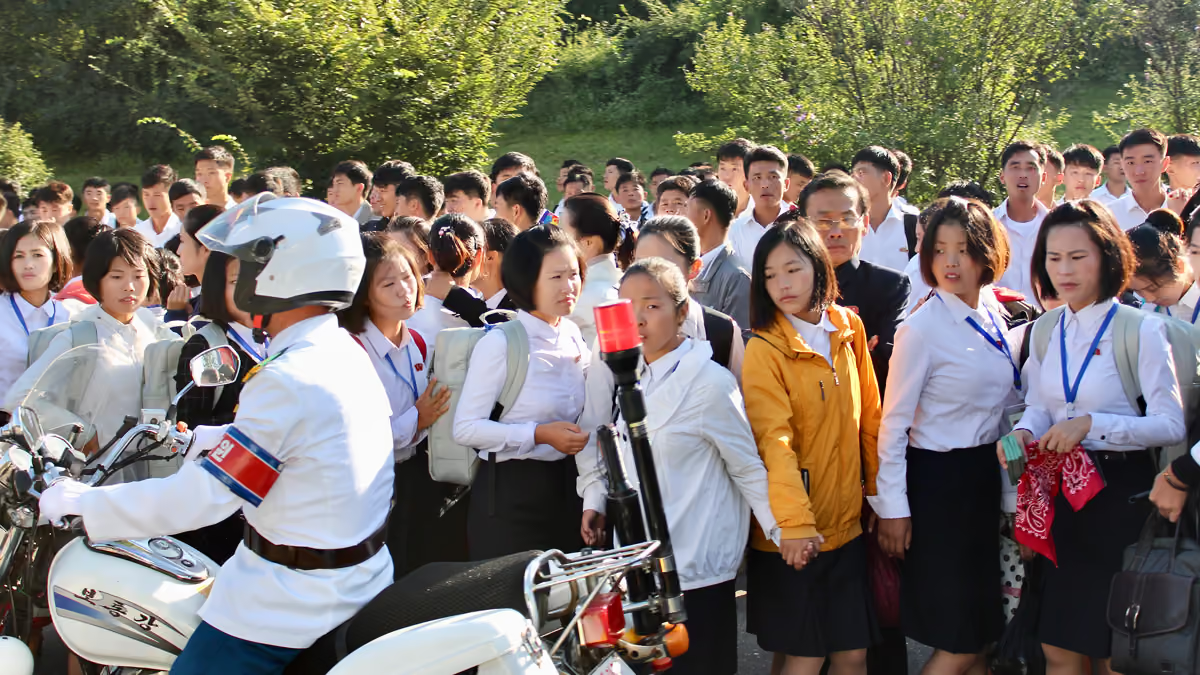
It’s very easy to think that North Korea isn’t changing but that is not the case. To say that there have been no social changes in the country would be insulting to the creativity, tenacity and drive of the North Korean people, particularly women who continue to be a major driving force of change. Driven by necessity following the devastating famine in the 90s, ordinary women had to become more economically independent in order to survive. While North Korean men were chained to jobs in faceless party offices, women had the time to create their own economic opportunities which could feed their families and keep them alive. Even now, in spite of living in a country gripped by widespread and pervasive human rights abuses including the most extreme forms of sexual and gender-based violence, women are often the breadwinners, women are the ones driving the private markets, women are the ones winning back more agency over their own lives and futures.
I only had to go to Tongil Market to see it for myself. Every vendor standing behind every one of the stalls laid out in long rows across the indoor market hall was a woman. Every staff member taking payments from the vendors for selling in the venue was a woman. The people counting the money in the cash exchange office were women. The people unloading sacks of vegetables and meat were women. Most of the customers were women.
Through having no choice but to fight to survive, North Korean women have driven changes that few could have predicted would last.
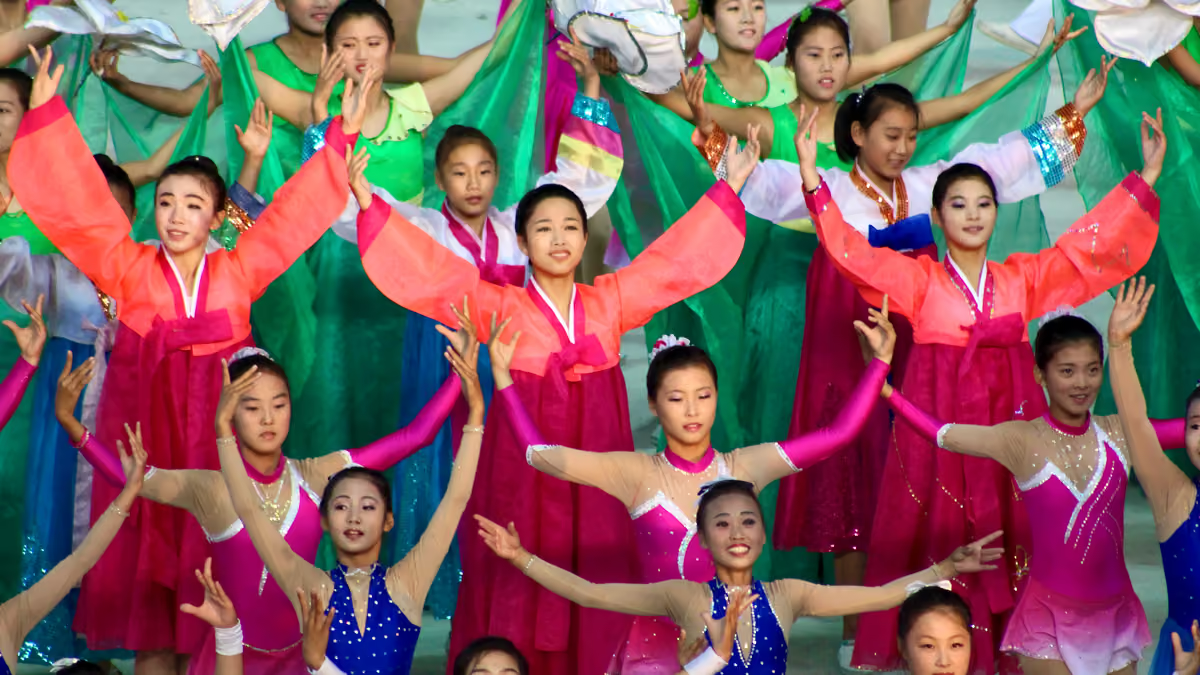
I sit at the bar and Min Jeong passes me a cup of black tea. She starts to scroll through her phone and goes back into her own world. I think about what is going through her mind and all the things she is experiencing but cannot talk about. I think about the millions of other North Korean women with names, voices and stories to tell; who we, on the outside of North Korea, will never get to meet. I think about the world who will never get to meet this generous, kind, extraordinary woman in front of me - my friend.
Min Jeong lifts her head and looks at me,
‘You really shouldn’t wear those shoes, Lindsey. They’re awful.’ She waits a moment and that same slight silly smile starts to creep across the corner of her mouth. ‘I’m kidding. They’re only a little better than yesterday’s.’
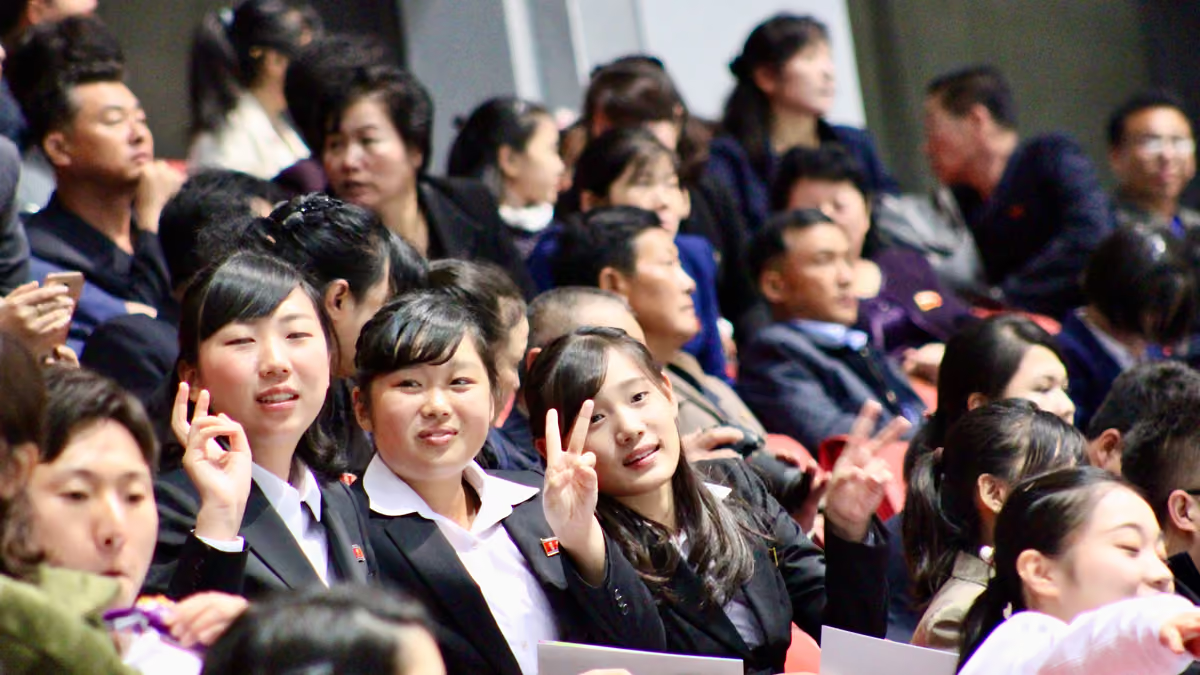
Lindsey Miller shares more extraordinary photos and stories from North Korea in her debut book, “North Korea: Like Nowhere Else," a testament to the hidden humanity and dynamism of the people. She also joined LiNK for a virtual Q&A in 2021 and continues to be a friend and advocate for this issue!
You can stand with the North Korean people as they strive towards freedom and transform their country.
Sign the Allies pledge today!
*Name has been changed to protect the privacy and safety of the individual










