I Left North Korea As a Child. My Life’s Work is to Return Home to a Free Country | Rose’s Story
As a child in North Korea, I loved quiet, warm mornings. At dawn, I’d wake to the sound of breakfast being made in the kitchen. When my feet grew cold, I’d burrow deeper into my grandfather's blanket. A day that began with the smell of a home-cooked meal was nothing special then—just an ordinary morning.
Growing up, I lived with my grandparents. We worked the fields together, swam in the Yalu River side by side, and grew tomatoes, eggplants, and cucumbers in a small garden. In the summers, my cousins and I played in the mountains and gathered wild strawberries. Every fall, I always looked forward to the corn harvest.
This was the world I knew, and I was quite happy with it.
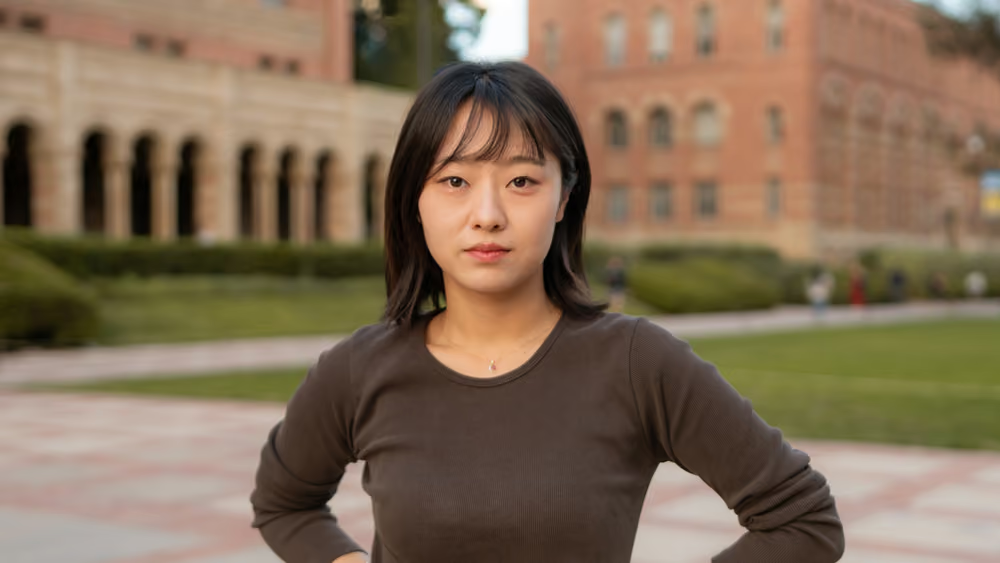
My mother's work as a broker—helping families separated by the border reunite or at least connect via phone—and her other job selling smuggled CDs containing Korean dramas eventually led to her arrest. She was released quickly but was placed under close surveillance. With no other way to support our family, she made the difficult decision to defect. It was a choice made easier, she later told me, by the countless South Korean dramas she had watched over the years that offered a glimpse into a life outside North Korea.
One winter vacation, my mother said, "Let’s go on a trip." I could barely contain my excitement. I had rarely ventured far from my hometown and thought I was finally traveling somewhere new. My grandmother gave me a warm boiled egg and told me to be safe. I didn’t know that would be the last time I would ever see her.
The journey never stopped. We left in winter and ended up in Southeast Asia, where summer never ends. Only then did I realize this trip was an escape. And it was only one-way.
When we finally arrived in South Korea, I couldn’t accept my new reality. I was only a child, but in my heart, I knew I’d never see my grandparents again. It felt like a cruel trick.
But life carried on, and I found myself adapting to South Korean society pretty quickly. I changed my accent and learned things by asking friends. Even at a young age, I instinctively felt the need to fit in. I was proud of myself for not looking or sounding like a North Korean.
Then one day in our elementary school classroom, the topic of North Korea came up. At that moment, I felt everyone’s eyes on me.
Although no words were spoken, the silence between me and my classmates felt like a wall.
As much as I tried to push it away, that feeling continued to follow me. In middle school, while watching a soccer game with friends and cheering for South Korea, someone said, “Shouldn’t you be rooting for North Korea?” I felt the color drain from my face. Once again, I felt the gap between me and them. And I wondered if I could ever close the distance.
Years later, in university, a professor mistakenly thought my South Korean friend was North Korean. She strongly denied it and took great offense, demanding a formal apology from the professor. Seeing her reaction, I wondered what it said about me. This incident left a deep scar on my heart.
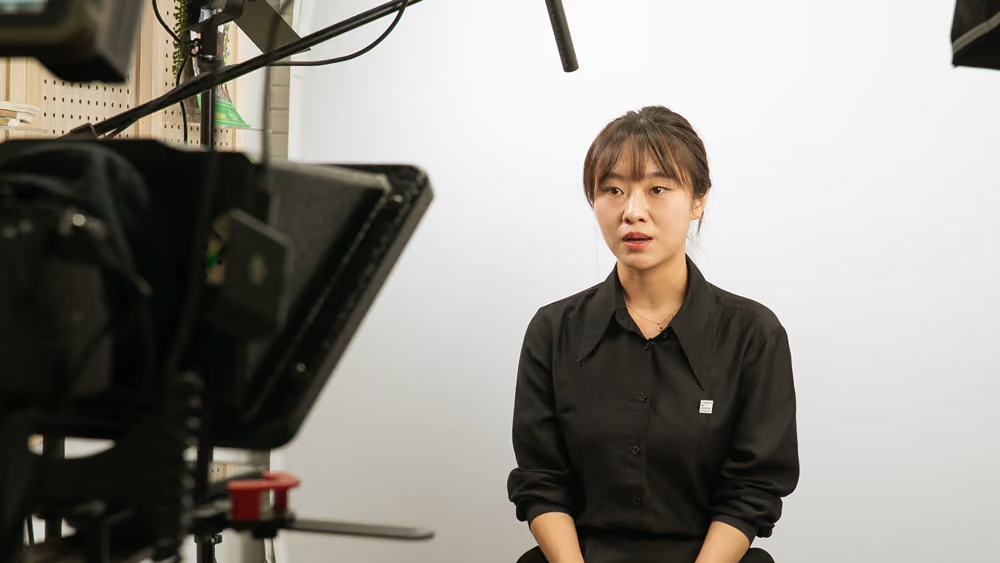
As time went on, I realized that I wasn’t as well-adapted as I thought. I had been living my life avoiding who I was. Whenever the topic of North Korea came up in conversation, I cringed and tried to change the subject. When my family in North Korea would secretly call us, I would hang up the phone after a brief greeting, afraid I’d burst into tears. I couldn’t face how much I missed them, because I didn’t want to accept that I may never see them again.
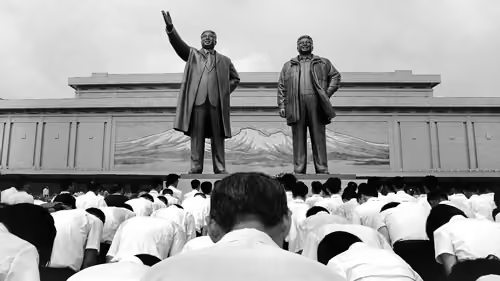
Amidst these complex emotions, I began my work on North Korean human rights. I wanted to change how North Koreans were portrayed as “pitiful,” or “dangerous.”
But doing this work scared me at first. If I shared my story, would people look at me again with those silent, disapproving eyes? Then I began to understand something important—those fears came from my own hidden prejudice. If I believed that North Koreans would only be seen in a certain way, didn’t that also mean it was how I saw them?
Confronting the deepest parts of myself allowed me to finally embrace who I was. I stopped hiding, and began to explore the thoughts and feelings I had suppressed for so long.
In 2022, I took part in Liberty in North Korea’s Co-Creators program. It’s a unique opportunity for North and South Korean students to work together on advocacy projects. Our team’s project was called “North Korea Travel.” We highlighted different regions of the country and shared facts about life there, leading naturally into conversations about human rights.
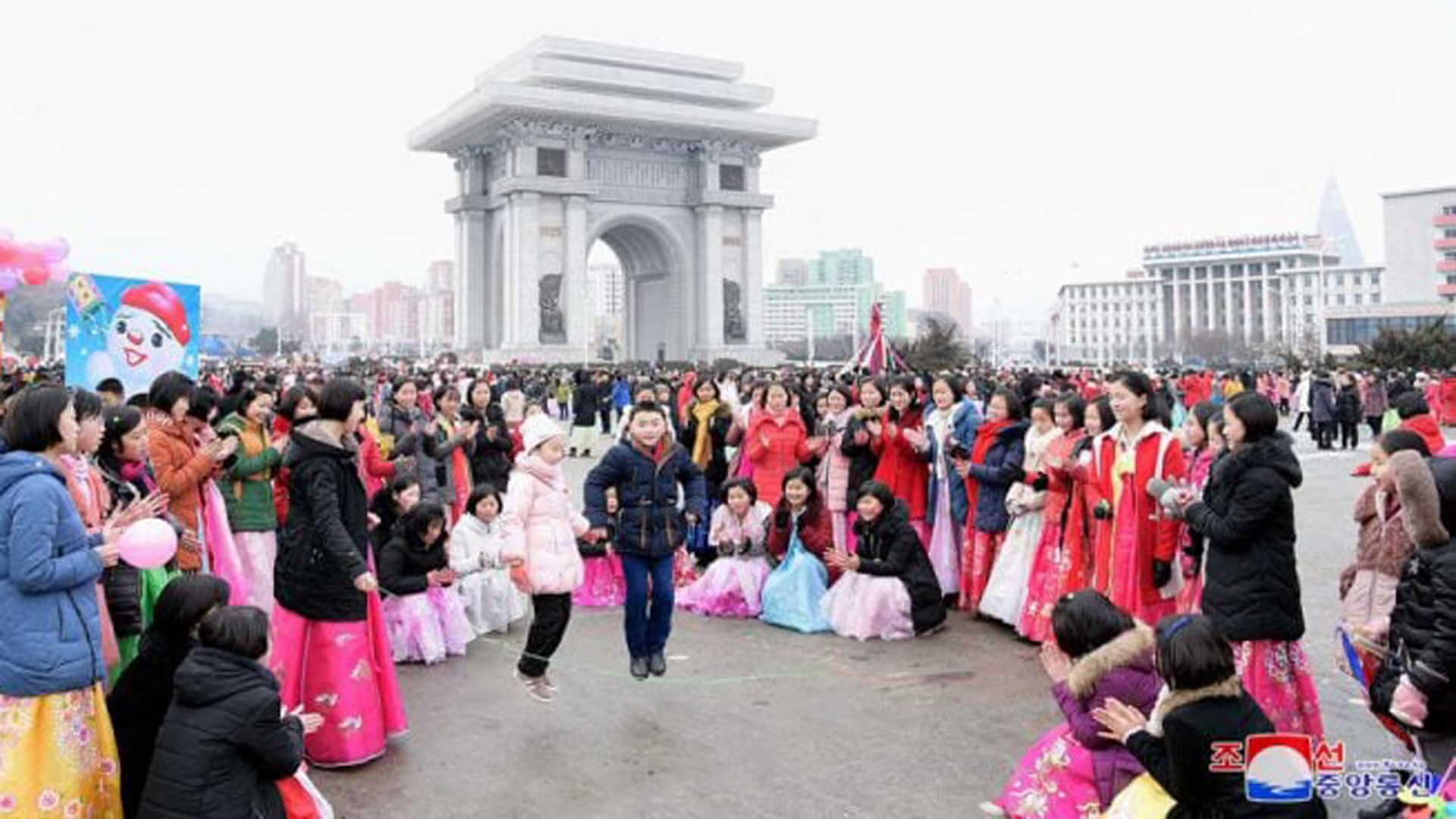
As I worked on this project, it occurred to me how much I actually didn’t know about my own country. Due to the regime’s strict restrictions on movement, I never traveled beyond my hometown until the day I left North Korea for good. When I explained this to participants, they listened attentively and said it was their first time learning about it.
Their sincerity caught me off guard. I realized that prejudice often does not come from malice, but simply from a lack of knowledge and understanding.
After that experience, I knew I wanted to continue creating moments of connection and understanding about North Korea. I figured the perfect way to reach people would be through the medium I know best: architecture.
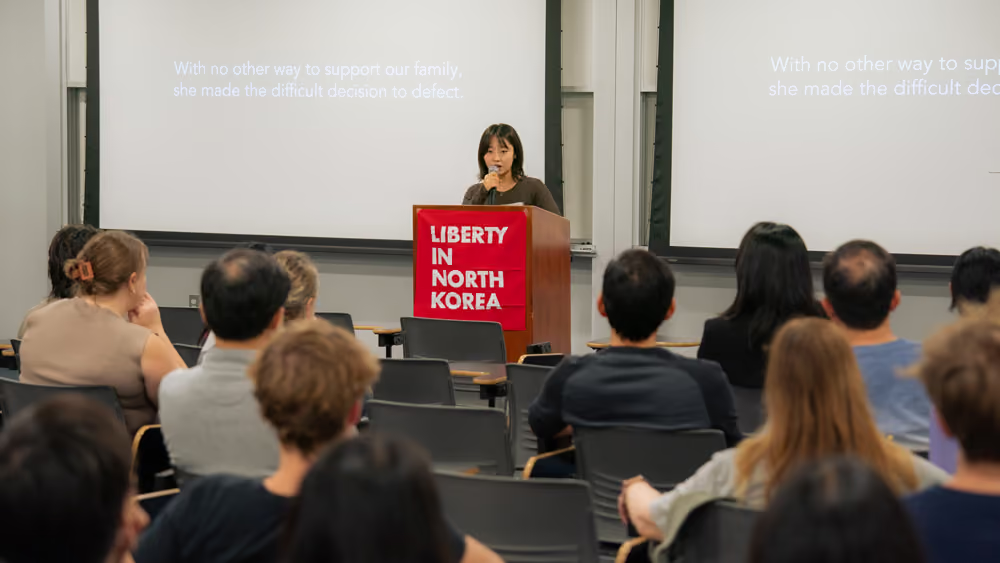
For my graduation project, I designed a North Korean Human Rights Memorial Hall. I chose Imjingak, near the DMZ, as the symbolic location. The space I conceptualized commemorates the sorrow of separation, and allows visitors to experience the "surveillance," "chaos," and "oppression" North Koreans face in their daily lives.
The Pantheon in Rome directs our gaze toward the sky. I turned that idea upside down. In my design, the ceiling collapses into the ground, trapping people beneath, like the crushing weight of the regime’s oppression.
On the opposite wall, the names of loved ones are carved into stone, representing those we miss dearly. Before politics, before ideology, these are mothers and fathers, grandparents and children. This is a space where people can freely miss and yearn for the people they left behind. And it is a reminder that North Korea is home to our families, friends and neighbors.
Last year, when I visited the Holocaust Memorial in Washington DC, I felt that it was more than just a commemorative site. It was a space that showcased how to confront humanity's darkest history to ensure that such things are never repeated again.
Standing there, I hoped that one day, the human rights abuses faced by North Koreans would also just be a memory for us to reflect on.
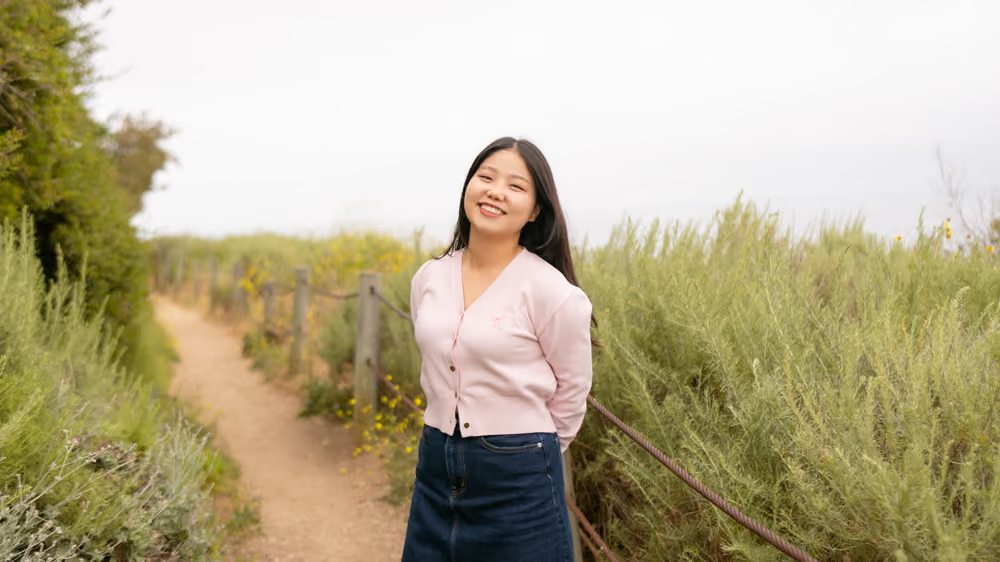
I no longer hide my identity. My story began in North Korea, in a beautiful city by the Yalu River. Even now, on quiet mornings, my thoughts drift back to my grandparents’ house. I want the world to see North Korea like I do—through the warmth of ordinary days and the humanity of its people.
I dream of returning home one day, when all North Koreans can live free and full lives. Until then, I will continue to speak through the language of space and the power of stories.
The Universal Declaration of Human Rights begins with this: "all human beings are born free and equal in dignity and rights." These aren’t just words on paper, but a reality that we can create together.
Please join me today to advance freedom and human rights for all North Koreans.
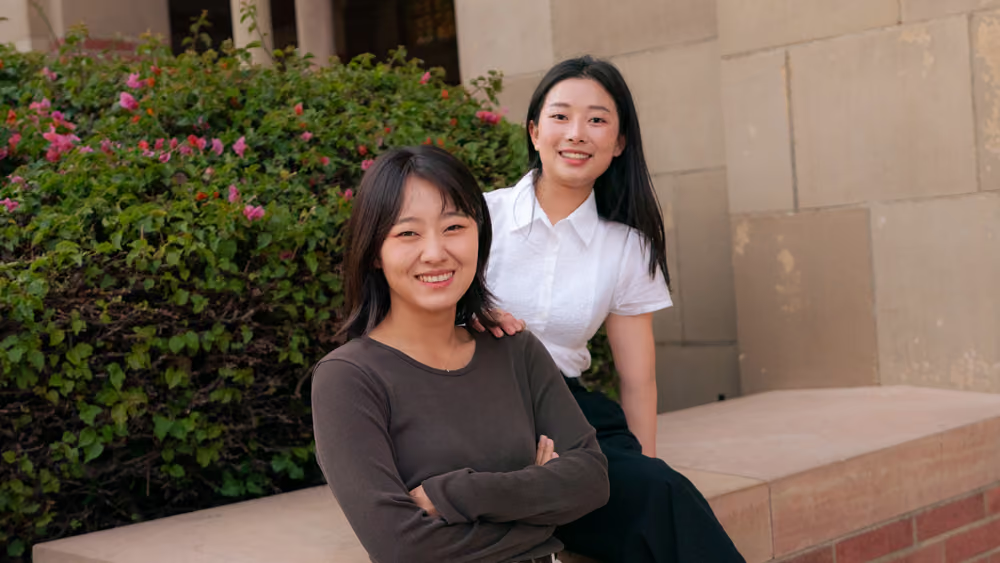
In 2025, Rose traveled across the US, sharing her story and advocating for the North Korean people as a LiNK Advocacy Fellow. Our capacity-building programs are cultivating the next generation of North Korean activists and leaders who are bringing change to their homeland.
Help empower more North Korean refugees with opportunities to grow, like Rose.
Give Today
A Reason to Live: An Interview with Hae Sun

Hae Sun was rescued while hiding in China in 2013. Now safely resettled in South Korea, she attends a two-year college as a business/Chinese major and she just finished her first semester. Choosing to go to college was not an easy decision for her. She was adjusting to the many differences in South Korean society and dealing with loneliness, low self-esteem, and anxiety issues. But, ultimately her drive to pursue her dreams was stronger than the challenges she faced. Now, she’s excited to achieve the goals she has set out for herself.
“When I got my acceptance letter to a two-year college in South Korea, I thought of my mom who is still in North Korea. I wished she could’ve heard the good news and congratulated me. I haven’t heard from her since I left North Korea a few years ago. I don’t even know whether she is still alive. I know she would be very proud of me for attending college.” - Hae Sun
Our resettlement coordinator Jihyun recently met up with Hae Sun to see how she has been doing since starting college. Read their conversation below:

Jihyun: “How was your first semester?”
Hae Sun: It was not easy at all. In the beginning, I struggled so much. There were so many things my South Korean classmates easily understood that I didn’t because of the different education systems between North Korea and South Korea. I also didn’t study for more than 10 years because I didn’t get a proper middle school/high school education in North Korea and spent a long time hiding in China.
I didn’t do well for my midterms, but did better for my finals. Throughout the semester there were many moments when I really wanted to give up and drop out of school because studying was so hard and things were difficult for me, but I didn’t give up.

Jihyun: “Other than studying what else was difficult during your first semester?”
Hae Sun: Well, making friends in college was not easy. You know, I am at least 10 years older than most other freshmen. I am still afraid that they might not feel comfortable being around me because I am a lot older and culturally different from them. Some students have been so nice to me and I shouldn’t think that way, but I still get self-conscious about my age and background, which I know hinders me from getting close to them. Next semester I will try to be around other students more without worrying about my age and background.

Jihyun: What was the best part of your first semester?
Hae Sun: I was able to clearly understand a lot of Chinese grammatical stuff, which I had struggled with for a while. I was hiding in China for a long time so I learned conversational Chinese through talking with Chinese people, but I never learned it in school, so there were still a lot of grammatical rules I didn’t understand. Since I started studying Chinese as my major, I have learned a lot of those rules. I am so so happy about it and thankful for my education.

Jihyun: “What was one of new things you started doing after coming to South Korea?”
Hae Sun: Volunteer work to help people in need. In North Korea, I never thought of helping other people because I had so many difficulties then. I have been part of a group of volunteers for the past year that gives food to homeless people in train stations in Seoul. The group consists of young resettled North Korean refugees like me and South Korean college students.
Even after I resettled to South Korea, I didn’t think of helping others because I didn’t have a lot and thought I had to resettle successfully first. But while volunteering through the group, I have realized that I don’t need to have a lot of money or time to help other people.
Sharing what I have with others and helping them makes me happy now. In North Korea and China when I was always in need, I thought only receiving could make me happy, but now I know giving also makes me happy. That is why I do the outreach volunteer work for the homeless.

Jihyun: What were some of the difficulties you had when you first came to South Korea?
Hae Sun: Before I came to South Korea, I thought I would be fine communicating with people here because we speak the same language, but I was not aware of a lot of the differences between the South Korean language and the North Korean language because the two countries have been separated for almost 70 years.
At first I struggled a lot. There were many times when I either didn’t understand South Koreans or they didn’t understand me due to our different accents and words. Although there are still words and expressions I don’t completely understand, I am a lot more used to it than when I first came here. I have learned a lot of new words and expressions while working different jobs with South Koreans and through attending college here.
Actually at the beginning of this semester, I didn’t understand a lot of words that other students would use because I am even more unfamiliar with words young people use here. Still, I get confused about some South Korean expressions and words and sometimes I still don’t understand what my professors say. I used to get stressed out about it so much, but now I try to give myself more grace about my language issues. I mean I will keep learning new things and trying to get used to them for the rest of my life here. I will just face them instead of avoiding or getting stressed about them. That is why I am in college so that I can learn, right?
Another difficulty was loneliness…I still feel lonely from time to time. I really miss my family. I actually had depression when I first came to South Korea because of loneliness. Now I don’t have depression anymore because of new friends I have made since I came to South Korea. My church community has especially made me feel loved and encouraged and has been helping me overcome loneliness and depression.

Jihyun: What is freedom to you?
Hae Sun: Freedom enables me to do what I want and visit the places and countries where I want to go as long as I have the willpower and make the effort. None of this was possible back in North Korea.

Jihyun: What do you want to say to people around the world who support you and other North Koreans?
Hae Sun: I really thank them from the bottom of my heart. They have never met me and they don’t know me, but they have supported me so much. Thanks to their support I am now enjoying my freedom and pursuing my college education. What is more moving to me is they have given me all the support without asking anything in return. I am so touched by their unconditional support. I cannot thank the supporters enough.

Jihyun: How do you want people in the world to see North Korea and the North Korean people?
Hae Sun: I want the world to distinguish between its people and its leaders. I know that the regime is bad and has done a lot of evil things, but the ordinary people are innocent.

Jihyun: What is the most important value in life?
Hae Sun: Having goals to achieve. I didn’t have a lot of goals until I came to South Korea. After escaping in my early 20s, I didn’t have any goals other than just surviving and not getting repatriated back to North Korea...I didn’t even want to live a long life. I just wanted to live until I turned 30. But now, I want to live for a long time because I have a lot of goals to achieve.
I would feel so sad if I only lived until I turned 30 now. That is not enough time to do all the things I want to do.

Jihyun: What are your future goals?
Hae Sun: I always wanted to go to college in North Korea and China, but it was not possible due to my social status and other obstacles in those countries. I am living that dream by attending college with a major I really enjoy studying. Now my goal for the future is to successfully finish college and get a job I am passionate about. I don’t know what kind of job I want yet, but I know I will find one if I keep doing my best in college.
You can help other North Korean refugees escape China and resettle successfully by donating to our work. Donate now.