
I Watched K-Dramas Inside North Korea. They Gave Me the Courage to Escape | Hannah’s Story
How many times have you checked your phone today? Fifty? A hundred? Every time we look at the screen we are connected to the world around us and an endless stream of information—news, research, entertainment.
Now imagine waking up tomorrow in a place without the internet. A place where people are executed for sharing foreign media, and where families risk their lives just to stay in touch across borders.
For 26 million people in North Korea, this is their reality. And 7 years ago, I was one of them.
I was born in Hoeryong, a city in the northernmost part of North Korea near the Tumen River. Winters were brutal and there were frequent shortages of fuel and electricity.
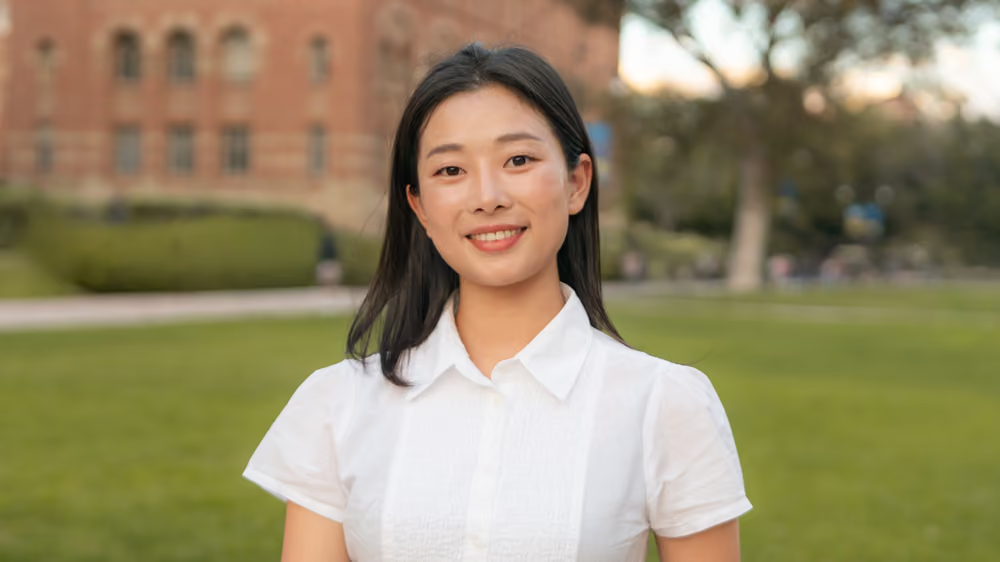
My father was a high school physics teacher. He was quiet, loyal and diligent. His days started at 7am in the classroom and went late into the night, even on weekends. But despite his dedication, the monthly rations he received were not enough for our family.
So in order to survive, my mother began selling goods at the market. She wanted a better life for us, and that led her to do the unthinkable—escape North Korea. Three times she tried. Three times she was caught. Each time she was imprisoned and sent to a labor camp.
The prison camp was a living hell. My mother saw women waste away from hunger and die from simple illnesses. She was one of the lucky ones; her family brought her food and medicine, an act that made her a witness to the suffering of others.
I was just 13 when I first visited her, carrying a bowl of rice. In North Korea, it falls to families to provide for their imprisoned relatives.
Seeing my mother stand there like a criminal, her head bowed before the guard, I knew this wasn't right. I should have been in school, but instead, I was sneaking food to her, hiding from the stares of strangers.
We were being punished, but I didn't understand why. I felt wronged, and in my anger, I blamed her.
My mother had made a choice to save her family, but North Korean society saw her as a criminal. My father, who had led a quiet life as a teacher, was denied opportunities at work. Our family was labeled as traitors.
In 2013, on her fourth attempt, my mother finally escaped and made it to South Korea. She worked tirelessly to send money back to North Korea to help our family. She also slowly opened a window into another world.
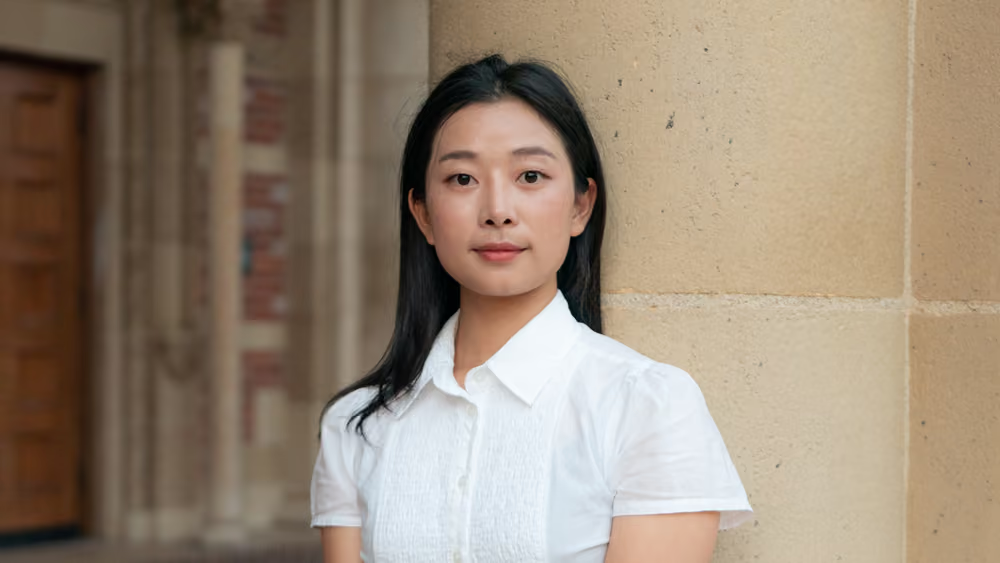
Using a smuggled Chinese cell phone I was able to speak to my mother from time to time. And on our secret calls she shared with me new South Korean expressions and words she was learning. As she settled into a new society, despite numerous differences, she also recognized similarities between North and South Korea and its people, and reminded me that despite decades of division, we are still one people.
I secretly began watching South Korean sitcoms. I’ll never forget one called “High Kick 3.” In one episode, there was a story about a man who fell into debt and was being chased by collectors. But what shocked me was that his family wasn’t punished for it. In North Korea, if one person “sins” the entire family is condemned. But this showed me that in South Korea, life could be different. That even within a family, you were free to make your own choices.
This realization changed me and offered a glimpse of the vast world beyond North Korea. Information, even in the form of a sitcom, was hope. And it was worth risking everything for.
Meanwhile, I continued to face obstacles in my day to day life. I had learned how to code and use software like photoshop, and I dreamed of going to university after graduation. But because my mother had defected, I was rejected. So I used my computer skills to find work as a photographer and photo editor.
Hoping to advance my career, I volunteered for the "shock brigade," a group sent to do manual labor at dangerous construction sites. While others prayed they wouldn't get picked for this kind of work, I went willingly, thinking it could be my way to a promotion.
I was sent to the Samjiyon district, a place known for its harsh winters. For over a month, I demolished buildings in minus 40-degree weather without protective gear. Dust filled my lungs, and sweat froze my clothes solid. My only relief was being able to sleep in a crumbling basement.
When I returned, expecting the promotion I had been promised, my supervisor simply said, "Let's wait a little longer."
That was the moment I understood my mother. She had risked her life to escape because she was after something more fundamental than a better life. She wanted to live like a human being.
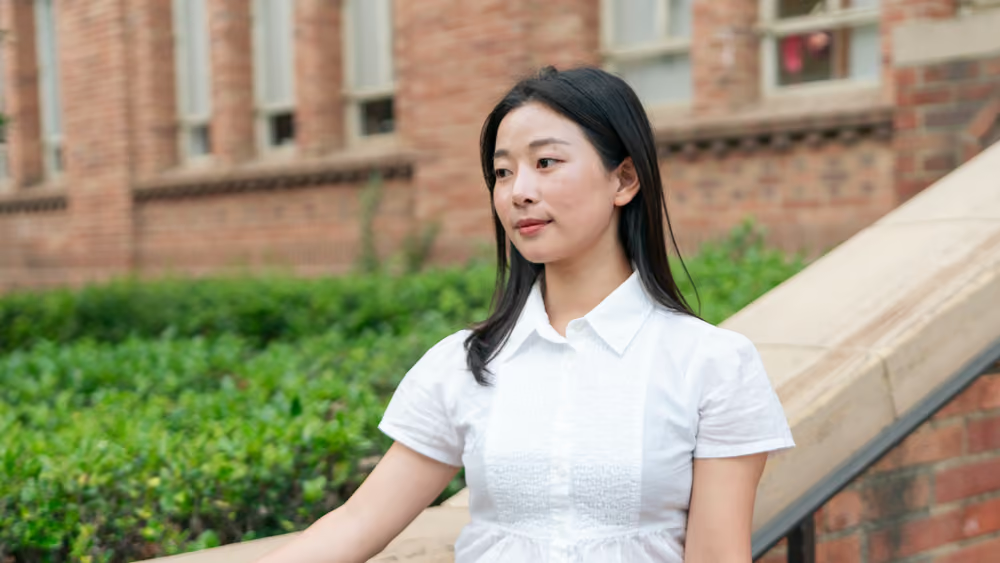
In 2019, I made the same choice and escaped. With the help of Liberty in North Korea, I made it safely to South Korea and reunited with my mom.
Freedom wasn’t as easy as I thought it would be. In North Korea, my tech and computer skills had helped me survive. I had always thought that “no matter where I go, as long as I have a computer, I’ll be fine.” But in South Korea, I struggled with something as simple as a new keyboard layout. In school, subjects like social studies felt foreign because I had grown up in a completely different education system with distorted versions of history and philosophy. My dream of going to college suddenly felt impossible.
Eventually I found my place in science. The formulas and equations in math, chemistry, and physics were the constant, unchanging truths I could always count on.
I decided to major in electrical engineering. It was rare for North Korean defectors to pursue this field. But I was determined to stay ahead and not fall behind in our rapidly changing world. Now my goal is to become an engineer who can help bridge North and South Korea’s science and technology industries when the two countries are one again.
More than ever, I see that information isn’t just about knowledge and convenience—it’s a lifeline. Without access to information, you can’t see a way forward, let alone build a future.
And right now, the people I left behind are more cut off than ever before. During the pandemic, North Korea closed its borders to an unprecedented extent. Soldiers along the border had shoot-to-kill orders for anyone trying to escape. Around 90% of the markets were forced to shut down, leaving families with barely enough to eat. The UN reported that nearly half the population—12 million people—faced food insecurity, while the World Health Organization rated North Korea’s access to medical care as the lowest in the world.
A few years ago, when my father became very sick, I was able to send him money for medicine and hospital care. But most North Koreans don’t have that chance. Without someone on the outside, they are not only cut off from resources and information, but from hope itself. For many, their future depends on a lifeline from the outside world.
Supporting North Korean people and protecting human rights cannot be put off.
We have an opportunity to be a lifeline for people inside North Korea today. To remind them that they have not been forgotten. With your support, we can rescue and support more North Korean refugees, and get more outside information and technology to people inside the country. And that information can empower North Koreans to not only see a way forward, but to ultimately determine their own future.
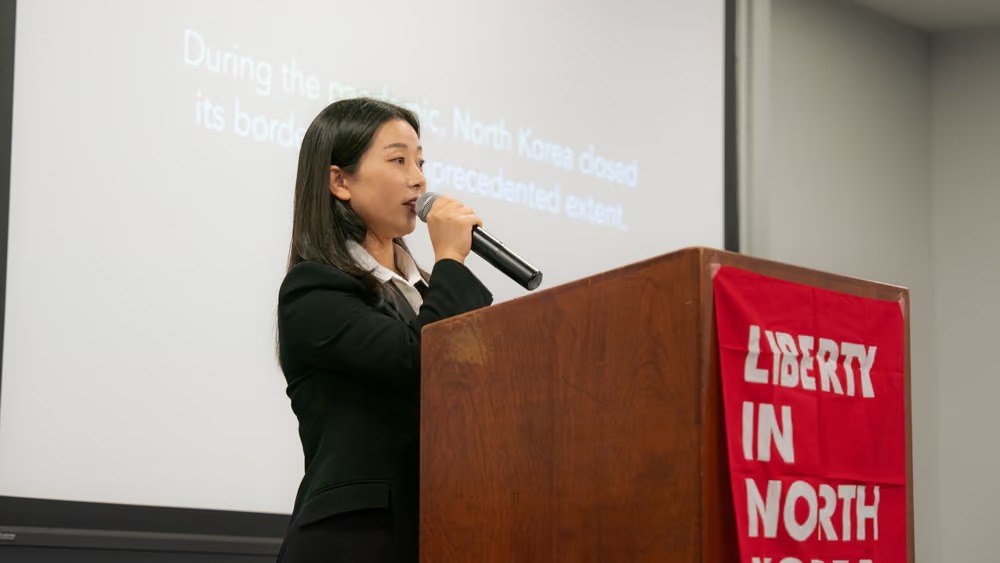
Despite the risks, North Koreans are quietly accessing foreign media and learning about life in the outside world. Increasing their access to uncensored information is one of the most effective ways to increase change inside the country.
Liberty in North Korea partners with North Korean defectors and engineers, like Hannah, to develop technology, content, and tools tailor-made for the North Korea context. Our goal is to empower North Koreans with information about the outside world, increasing their aspirations for social and economic progress, and building pressure for change and opening.
Empower North Koreans with information access.
Give Today
A North Korean Defector’s Nine Year Journey to Freedom | Eunju’s Story
I didn’t know I was hungry until I was eight years old. Growing up, I had no concept of whether my hometown was wealthy or poor. Then when the great famine struck in the mid-90s, more people died in our city than anywhere else in the country.
That’s when I realized “Oh, this is the most difficult place to live in North Korea.”
I was born in the city of Eundok, North Hamgyong Province. Before that it was called Aoji, a destitute place infamous for its coal mines, where South Korean prisoners of war were sent to work.
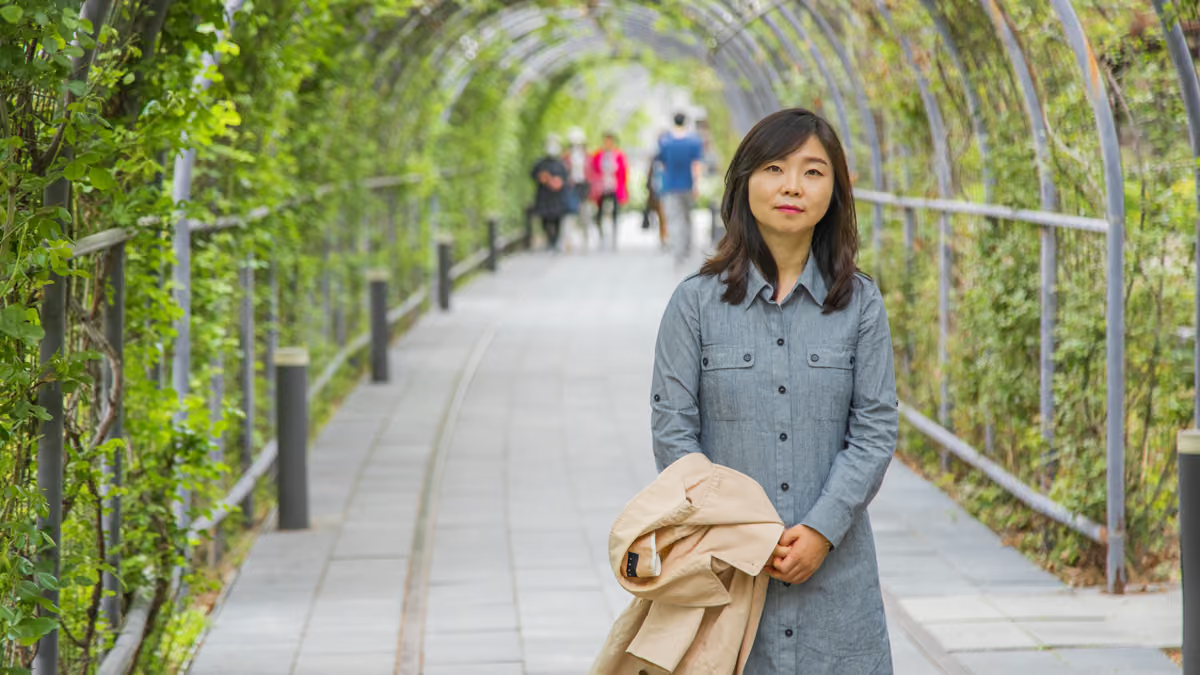
In the middle of a long famine, people lose all sense of humanity. You couldn’t survive without dirtying your hands. My father was a kindhearted person, the type that was unable to hurt anyone. But towards the end, hunger drove him to steal from our own house.
On my first day of middle school, I couldn’t find my new backpack anywhere. It turns out that my dad had taken it to the Jangmadang, traded it for food, and eaten it by himself. In the end, he still died from starvation, and my mom, my sister, and I were left to fend for ourselves.
We heard that if we went to China, we could eat all the candy we wanted. With that one piece of information, my mom said she’d rather get shot crossing the Tumen river than starve in North Korea.
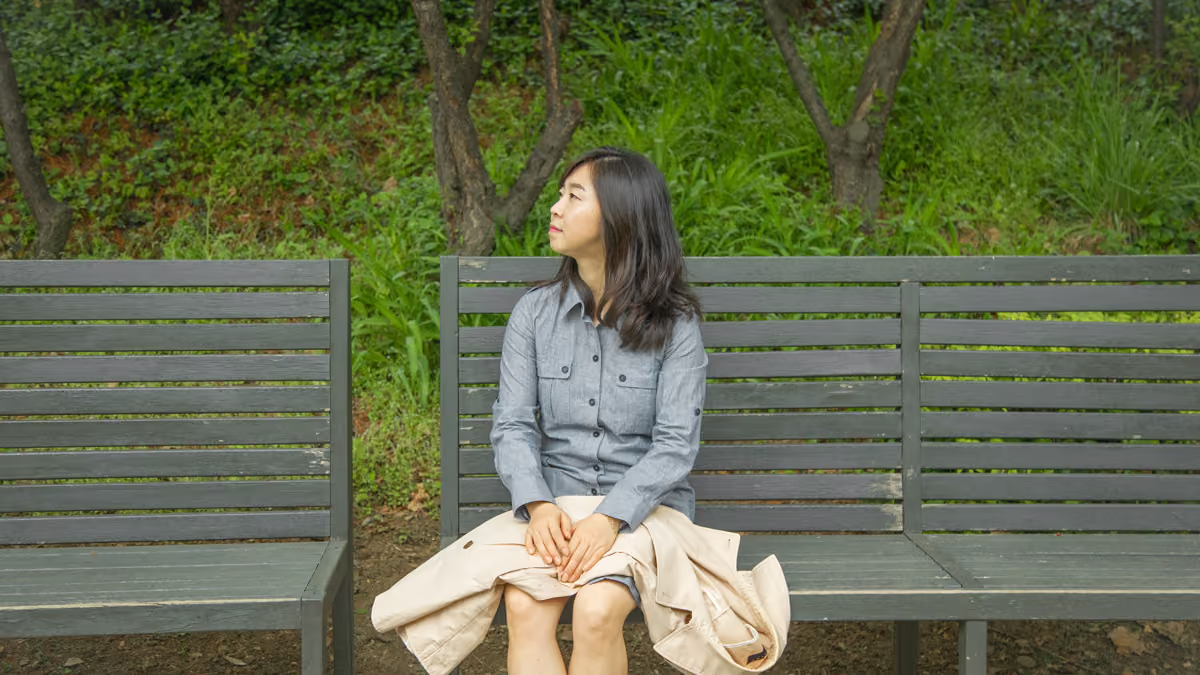
It was mid-February in 1999, during the bitter cold winter. The water was frozen solid and stretched over 100 meters across. My mom went first, followed by my sister, and I was in the very back. Maybe it was because I was anxious, but my shoes felt so slippery and I kept falling over as they went farther and farther ahead. We heard that soldiers would shoot anyone who tried to cross the river. But this was our only chance at survival.
My mind was racing, “What if I’m left behind and get caught?” My mom and sister probably feared the same thing.
We encountered a tributary that wasn’t frozen all the way, so my mom waited and had me go first because I was the lightest. A few steps in, the ice broke and I fell into the piercing cold water. None of us knew how to swim. At that moment, I really thought it was the end. But then my feet hit the ground. We had made it to the other side.
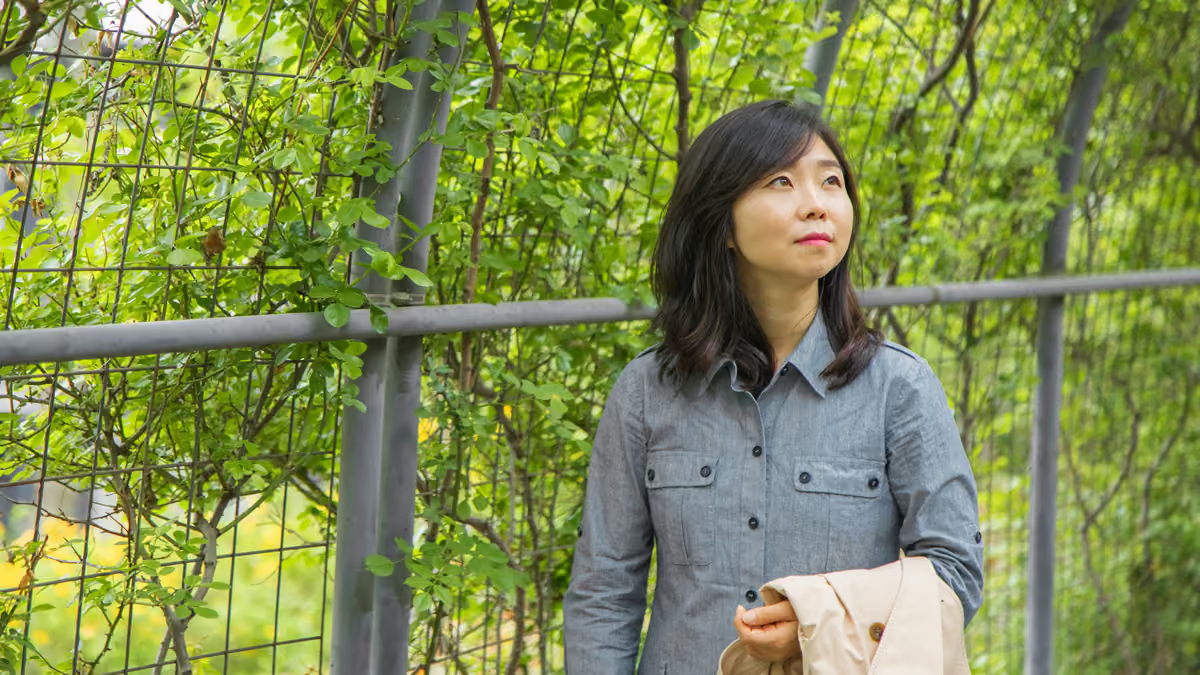
Not long after we had crossed into China, a Korean-speaking woman came up to us. She invited us to her house and gave us over a dozen boiled eggs, more food than we had seen in years. In North Korea, when my sister and I had a field trip for school, my mom would cut one boiled egg and give each of us half in our lunch box. To have this much at once was a true luxury. For the first time in a long while, we dared to have some hope.
But then my mom was sold off to a Chinese man. The fortunate thing was that even though my sister and I were 16 and 14 years old, we were so short that people asked if we were 7 or 8. They couldn’t sell us separately, so we were sent together with our mom.
We had been sold for 2000 yuan. When we wanted to leave, the man told us to pay him back. We worked in his house and on his farm but of course we never saw a penny. For three years, we lived in confinement, and my little brother was born.
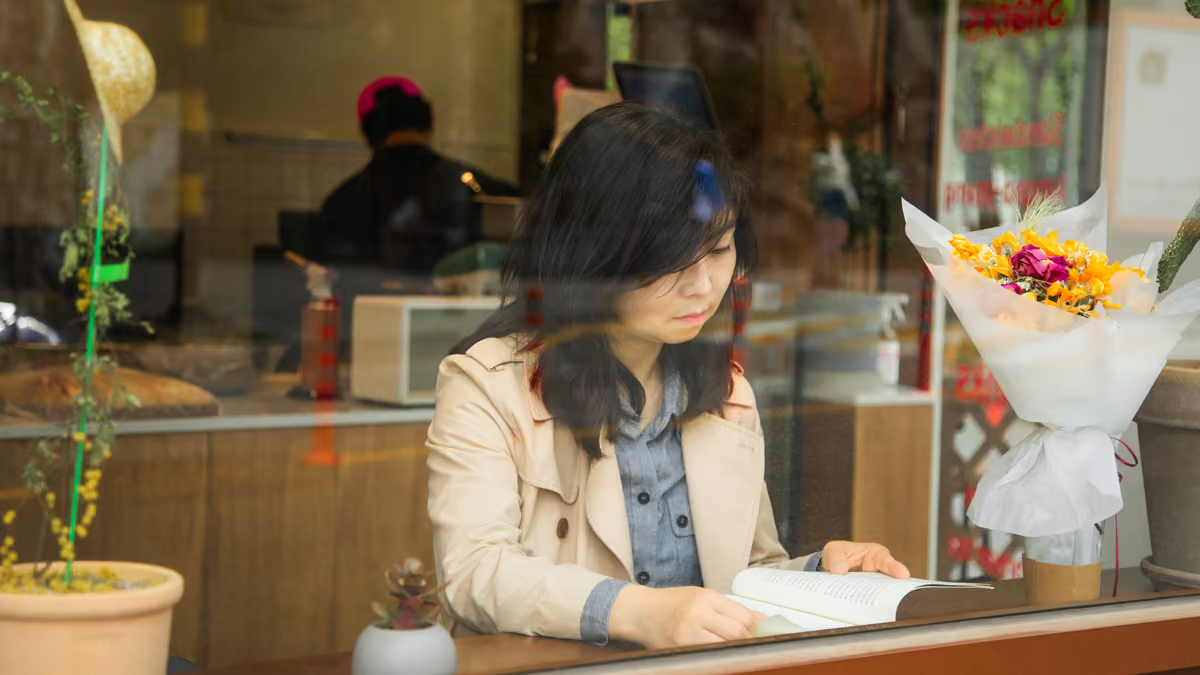
On a quiet night before my brother was even a year old, Chinese police came to the house in the dark, knocked on the door, and arrested us.
When North Koreans get caught, sometimes they’ll roll up their money and eat it or hide it, but we didn’t have anything. We were taken back across the border with just our clothes. It’s well known that there’s a physical exam to look for hidden money. In a way, you shouldn’t even feel a basic sense of shame as a woman and as a human being. If you cry or plead for mercy, you’ll get beaten up. You cannot question them at all.
With so many people in North Korea dying of starvation, names were removed from the family register after three years without any news. We had already been declared dead. There were two minors and an adult, but our identities couldn’t be confirmed. At the time they couldn’t keep minors in prison without a ruling from the court, so we were entrusted to another person from our hometown. No one wanted extra mouths to feed, so he just let us go.
We went straight to the Tumen river and in 2002, we escaped again.
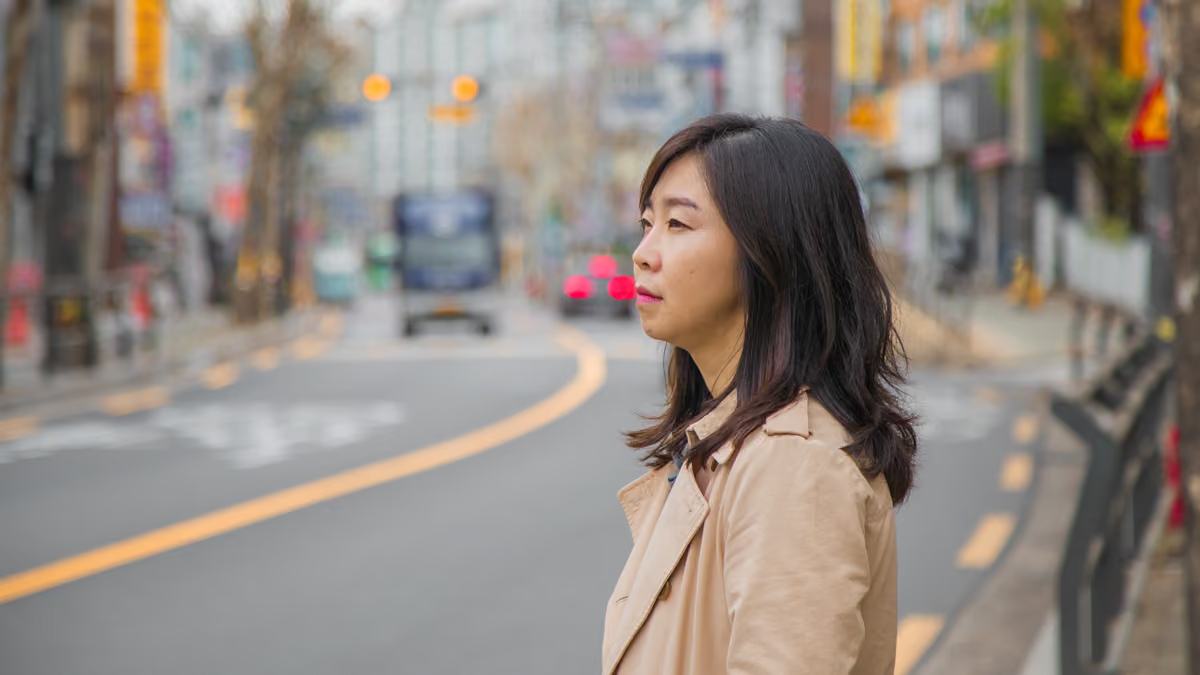
I had enough food when I was in China. Even dogs and pigs ate rice and corn. But we lived looking over our shoulders, in constant fear of the police.
When we heard about life in South Korea, where our safety and identities would be guaranteed, we decided to defect once more. We were introduced to a broker, gave them some cash upfront, and traveled through Mongolia and the Gobi Desert.
On September 1st, 2006, I arrived at Incheon airport with my mom. My sister joined us in South Korea in 2008. Nine years after first crossing the Tumen River, we were finally together in freedom.
When I was in China, my only wish was that my mom, sister, and I could sleep together, eat together, and come home from work together. I dreamed that someday we could go to the supermarket and get a whole cart full of things to share. After coming to South Korea, we achieved not only that, but everything we’ve ever wanted.
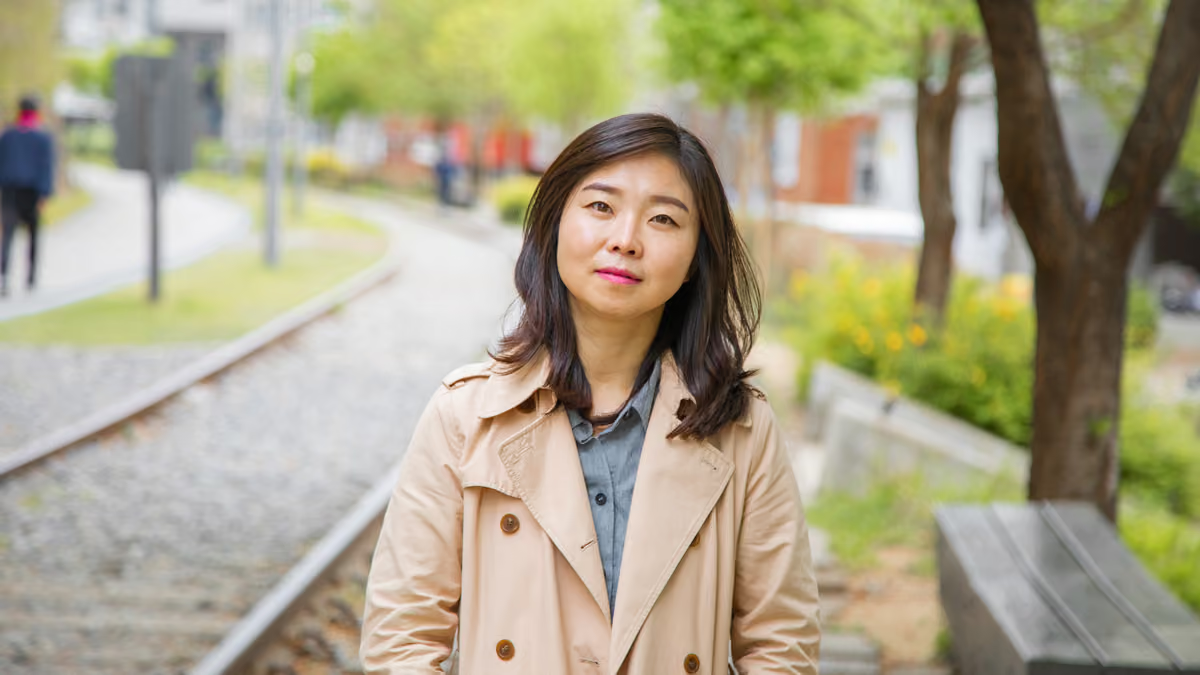
I co-authored a book about my journey, A Thousand Miles to Freedom, with a foreign journalist named Sebastien Falletti. He interviewed several North Koreans, and I agreed to share my story with him out of a sense of duty. I never thought he’d choose me.
Compared to North Korean defectors who live special lives, I don’t actually dream of being a human rights activist. There are times when I don’t want to share anymore and I feel like I have to repeat myself.
But then I think about my best friend in North Korea. Her name is Sunhwa and I don’t think she’s here yet. I imagine that she would want to live like me — to attend college, pave her own way, and explore the vast world we live in. But she is still stuck in the darkness. Until Sunhwa can live a life of freedom, I feel a sense of responsibility to continue to share.
When I think of North Korea, the dark image of my hometown floods my memories. But I would still like to go back just once and visit my dad’s grave. As I’ve gotten older, I’ve realized that he was also a victim of the North Korean regime. I have hope that in this lifetime, North Korea will open up. I’ll return with my mom and my sister, and together we’ll visit my dad’s resting place and prepare a huge meal for him.
For North Koreans to share their stories with audiences around the world, retelling and reliving some of the most harrowing experiences, is an act of exceptional courage. They’re working towards the day when others no longer have to go through the same painful experiences.
You can help rescue more North Korean refugees and support them as they begin their new lives in freedom.










