
Joy's Story: Part 2 - Trafficked in China

In the first part of her story, Joy shared the details of her life in North Korea and how she made her daring escape. Read "Part 1 - Growing Up in North Korea".
After I finally got picked up by the broker, we got onto a bus. The bus got stopped by Chinese police twice and every time the police came aboard I pretended to be asleep.
I was ready to take the opium pill I had stashed in the collar of my shirt and end my life if I got caught, but thankfully I didn’t have to.
I got some rest for a couple of hours after I arrived at the house and then I was connected with the second broker. The second broker was a North Korean defector. I told her that I wanted to live with an old Chinese couple as their foster granddaughter. She shook her head and told me my only option was to be sold into marriage to a Chinese man so all the brokers who helped me escape could take my bridal cost as payment.

I couldn't even think of refusing because I was afraid the brokers would do something bad to me or drop me off somewhere alone to get caught by the Chinese police and sent back to North Korea. I had also heard that if North Korean women refused to get married in China, then they could be sold to brothels or sex websites so that the brokers could receive payment. At that point, I realized that I was trapped and I didn’t have any other choice but to be trafficked. The second broker told me that I could escape after living with my Chinese husband for at least six months. If I escape in less than 6 months, the brokers that sold me would return my bridal money to the Chinese husband.

The second broker took me to different small towns to sell me. Every time I went to a town, many old Chinese men gathered around me to bargain my bridal cost. I felt so ashamed. I was being treated as an animal and not as a human being.
The North Korean broker finally found a man who was willing to pay the amount the broker wanted for me as a bride. I couldn’t even communicate with him because I didn’t speak the language. I remembered looking at the broker’s face. She seemed to pity me. My whole being at the moment was filled with so much bitterness, hopelessness, and sorrow toward everything in the world.
I felt like I was losing everything including my own body to someone I didn’t even know. I was only 18.
Continue reading Part 3 of Joy's story where she shares about her escape from the Chinese man and her rescue journey through LiNK's networks.
You can support North Korean refugees like Joy each month by becoming a Liberty Monthly Donor.
How Has the Kim Family Held on to Power So Long?
The following content is adapted from North Korea 101, LiNK’s FREE online course that explains what's happening in North Korea beyond the headlines. Start learning today.
Sign up for NK 101
“This question is fundamental. To understand where we are and where we might be heading, we have to understand where we’ve come from.” – Sokeel Park, LiNK CSO
The North Korean regime is the world’s worst dictatorship, an extreme remnant of 20th century authoritarianism that has stretched across eight decades and three generations of the ruling Kim family. The regime’s all-encompassing system of control constrains the North Korean people’s agency and potential, resulting in an enforced poverty which includes physiological, material, social, informational, and cultural deprivations.
It is not easy for dictators to maintain power for long. During the Kim family’s rule, the world has seen the rise and fall of dozens of other dictatorships. Through many periods of global change and internal instability, they’ve managed to maintain power not by sheer force or luck, but through an array of adaptive strategies. But when the media portrays Kim Jong Un as crazy or irrational, it undermines our understanding and approaches to try to undermine that dictatorship.
There is a formula to their approach, and if we can understand it, then we can counteract it.
The Four Ways Dictators Lose Power
Historically, the fall of dictators can be attributed to four factors. By looking at each of them, we can see how the ruling Kim family has strategically avoided these fates.
1. Military Defeat/International Intervention
An external country or force intervening and overthrowing a dictator through military defeat.
2. Elite Challenges
An internal challenge emerging from within the country’s top political or military circles, forcibly removing the current dictator by assasination or a coup d'état,
3. Popular Uprising
An internal challenge from below, where a mass movement forces a change in leadership. In some cases, parts of the elite may join the side of the masses.
4. Death in Office
The death of the current leader, opening up an opportunity for someone else to assume control and end the dictatorship or make significant changes.
Threat #1: Preventing Military Overthrow
To prevent an external power from overthrowing their dictatorship, the Kim family first needs a strong deterrent against military force. The vast majority of mainstream news coverage of North Korea focuses on one thing: nuclear weapons. Having nuclear weapons and being seen as potentially willing and able to use them is arguably the most effective way to deter a military intervention from the outside.
Second, the Kim family has strategically managed their relations with countries like the Soviet Union / Russia, China, the United States, and South Korea. They go back and forth between periods of warmer and colder relations, effectively balancing opportunities and risks to gain support while preventing too much external influence. It’s unlikely that the Kim family has ever really trusted any of these external powers, even those that are sometimes labelled as “allies”.
Threat #2: Preventing Elite Challenges
Historically, the position of dictator can be very tempting to others within the leadership’s orbit, from competing family members to senior politicians or military leaders. To prevent anyone from building too much power and becoming a threat, the ruling Kim family carefully manages elite politics, alternating between demoting, promoting, and purging top officials.
On top of that, cross-layered surveillance between different institutions also keeps potential challengers under surveillance and in check, and prevents any one person or group of people from launching a challenge for power.
Threat #3: Preventing Popular Uprisings
The next scenario that the regime must prevent is a popular uprising.
A common conception of North Korea is that if the people wanted to rise up and revolt, they would have, and so they must be brainwashed or bought into the regime’s ideologies. While the latter may be true to some degree, it's difficult to fully grasp the extent to which the government’s system of control deprives people of their agency and potential and prevents them from challenging dictatorial rule.
North Korea is the most closed country in the world. The regime has forcibly cut off North Koreans from the rest of humanity, which serves as the baseline for their control. This centers everything—social structure, daily life, resources, information—around the regime, and eliminates sources that could undermine or threaten their authoritarian rule.
Laying the Foundation: Kim Il Sung’s Half-Century in Power
Kim Il Sung was 33 years old when he was installed into power by the Soviet Union—very young in global politics at the time, when most leaders were in their 50s and 60s. This historical happenstance has ended up being a key factor in the longevity of the Kim family’s control.
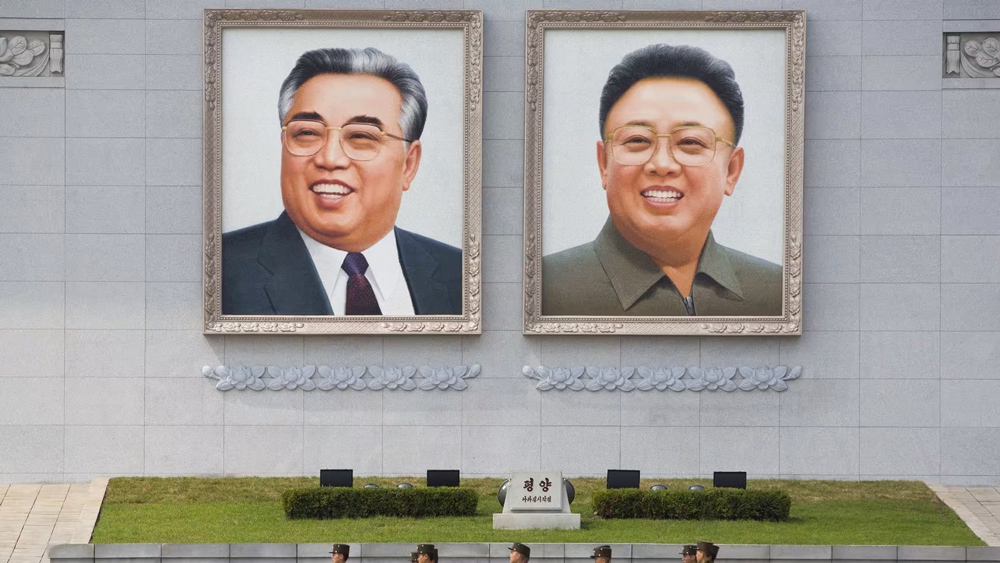
From his rise to power in 1945 to his death in 1994 at the age of 82, Kim Il Sung had 49 years to mold North Korea’s politics and systems in his image. During this time, he laid the foundation for hereditary succession by:
- Centralizing power around this dictatorship.
- Building a cult of personality around himself and his direct lineage: propaganda and myth-making that legitimized the Kim family as the only North Koreans worthy to lead the country.
- Purging anyone who could have been an alternative leader.
When it came time for Kim Jong Il to assume power, and the Kim Jong Un after that, decades of preparation smoothened the transition.
Now, after three generations of the Kim family, it would be very difficult for anyone else, even among the upper elite, to try and take power. Even if someone did manage to depose the current dictator, they would have to contend with not just managing the power vacuum, but the ideological void left by decades of propaganda and mythmaking that surrounded the Kim family.
Without the legitimacy that had been set up by the Kims, a new leader would likely find it difficult to maintain power for long. This is something that North Korean elites understand, which further discourages any rival officials from challenging the current regime.
Keep Learning with NK 101: Understanding the Country Through Its People
Through in-depth interviews with North Koreans who have escaped and insight from issue experts, this course will expand your understanding of the current state of North Korea. We’ll dive deeper into what’s happening in North Korea beyond the headlines, hone your ability to discern these key trends, and help you impress your friends with your expertise on the issue.










