
Remembering North Korea: Today, I’m Happy Because I Can Have Ice Cream
By: Hyeyoung Woon
Hyeyong escaped from North Korea in 2009. She currently works as a financial accountant, and strives to grow her ability as a storyteller and writer to share her personal experiences as a North Korean defector.
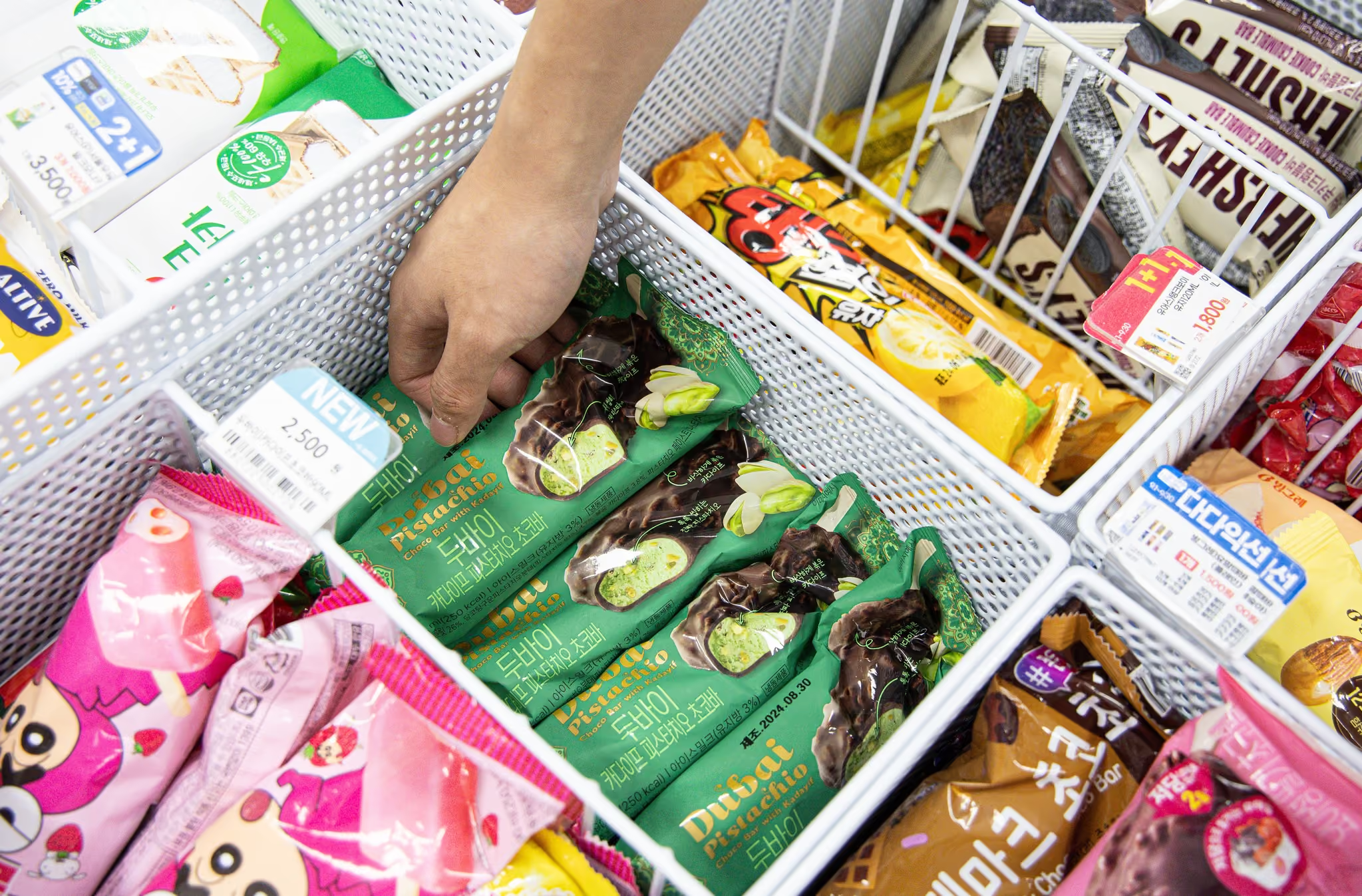
There are days when happiness feels complicated.
And then there are days when it feels very simple.
For me, sometimes, it is just ice cream.
When I was young in North Korea, ice cream was very different.
We had “eoreum bosunge” which is sweet pink water frozen in a small metal can with a stick inside. It was icy and rough, and the taste was so strong. That was all I knew.
But everything changed on my first day in South Korea.
I went to a small neighborhood store with my mom and that was where I first saw an ice cream called “Pure Milk”.
At that time, I had just started becoming interested in the English language, so maybe that is why the name caught my eyes.
I picked it up and took a bite.
And honestly, it felt like a different world.
It was soft, smooth, and full of real milk flavor.
Until then, ice cream had only meant frozen sweet water to me. I did not know something so simple could taste so real.
After that day, I kept choosing the same ice cream again and again.
Of course, now I know there are more expensive and famous ice creams in the world and, just like that, my life has changed too.
But maybe that is why I still choose Pure Milk.
Not because it is the best,
But because it reminds me of who I used to be.
When I first came to South Korea, everything felt new and exciting.
And little by little, this new world made me forget the old one.
Maybe that is part of growing up.
Or maybe it is part of learning how to survive in a new society.
But sometimes, I become afraid that my old memories are slowly fading away too.
That is why small things like this ice cream still matter to me.
They remind me of where I started.
They help me keep a part of myself that I do not want to lose.
And I still want to remember the girl who once believed pink frozen water was enough to be called ice cream.
–
Hyeyoung is a participant of the LiNK English Language Program (LELP), which serves to not only help North Korean defectors build confidence and skills in English, but develop their capacity as advocates for this issue. To that end, we partnered with select LELP “columnists” to write and polish personal essays through multiple rounds of external feedback and revision. Our goal is to have more North Koreans share their stories directly and lead efforts to change the narrative.
We believe the North Korean people can achieve their liberty in our lifetime.
Opportunities like LELP invest in the people building that future now. Help more North Koreans find their voice, reach their goals, and lead change on this issue.
Give Today
Remembering North Korea: Today, I’m Happy Because I Can Have Ice Cream
By: Hyeyoung Woon
Hyeyong escaped from North Korea in 2009. She currently works as a financial accountant, and strives to grow her ability as a storyteller and writer to share her personal experiences as a North Korean defector.
There are days when happiness feels complicated.
And then there are days when it feels very simple.
For me, sometimes, it is just ice cream.
When I was young in North Korea, ice cream was very different.
We had “eoreum bosunge” which is sweet pink water frozen in a small metal can with a stick inside. It was icy and rough, and the taste was so strong. That was all I knew.
But everything changed on my first day in South Korea.
I went to a small neighborhood store with my mom and that was where I first saw an ice cream called “Pure Milk”.
At that time, I had just started becoming interested in the English language, so maybe that is why the name caught my eyes.
I picked it up and took a bite.
And honestly, it felt like a different world.
It was soft, smooth, and full of real milk flavor.
Until then, ice cream had only meant frozen sweet water to me. I did not know something so simple could taste so real.
After that day, I kept choosing the same ice cream again and again.
Of course, now I know there are more expensive and famous ice creams in the world and, just like that, my life has changed too.
But maybe that is why I still choose Pure Milk.
Not because it is the best,
But because it reminds me of who I used to be.
When I first came to South Korea, everything felt new and exciting.
And little by little, this new world made me forget the old one.
Maybe that is part of growing up.
Or maybe it is part of learning how to survive in a new society.
But sometimes, I become afraid that my old memories are slowly fading away too.
That is why small things like this ice cream still matter to me.
They remind me of where I started.
They help me keep a part of myself that I do not want to lose.
And I still want to remember the girl who once believed pink frozen water was enough to be called ice cream.
–
Hyeyoung is a participant of the LiNK English Language Program (LELP), which serves to not only help North Korean defectors build confidence and skills in English, but develop their capacity as advocates for this issue. To that end, we partnered with select LELP “columnists” to write and polish personal essays through multiple rounds of external feedback and revision. Our goal is to have more North Koreans share their stories directly and lead efforts to change the narrative.
We believe the North Korean people can achieve their liberty in our lifetime.
Opportunities like LELP invest in the people building that future now. Help more North Koreans find their voice, reach their goals, and lead change on this issue.










