
Returning Home to a Free North Korea | A Glimpse of Reunification in 2045
By: Eunsook Jang
Eunsook is a 2024 LiNK US Scholarship grantee, a Fulbright Scholar, and a North Korean defector pursuing a master’s degree in international development at Brandeis University, where she focuses on post-conflict, economic, and human development. She holds a bachelor’s degree in political science and international peace from Korea University.
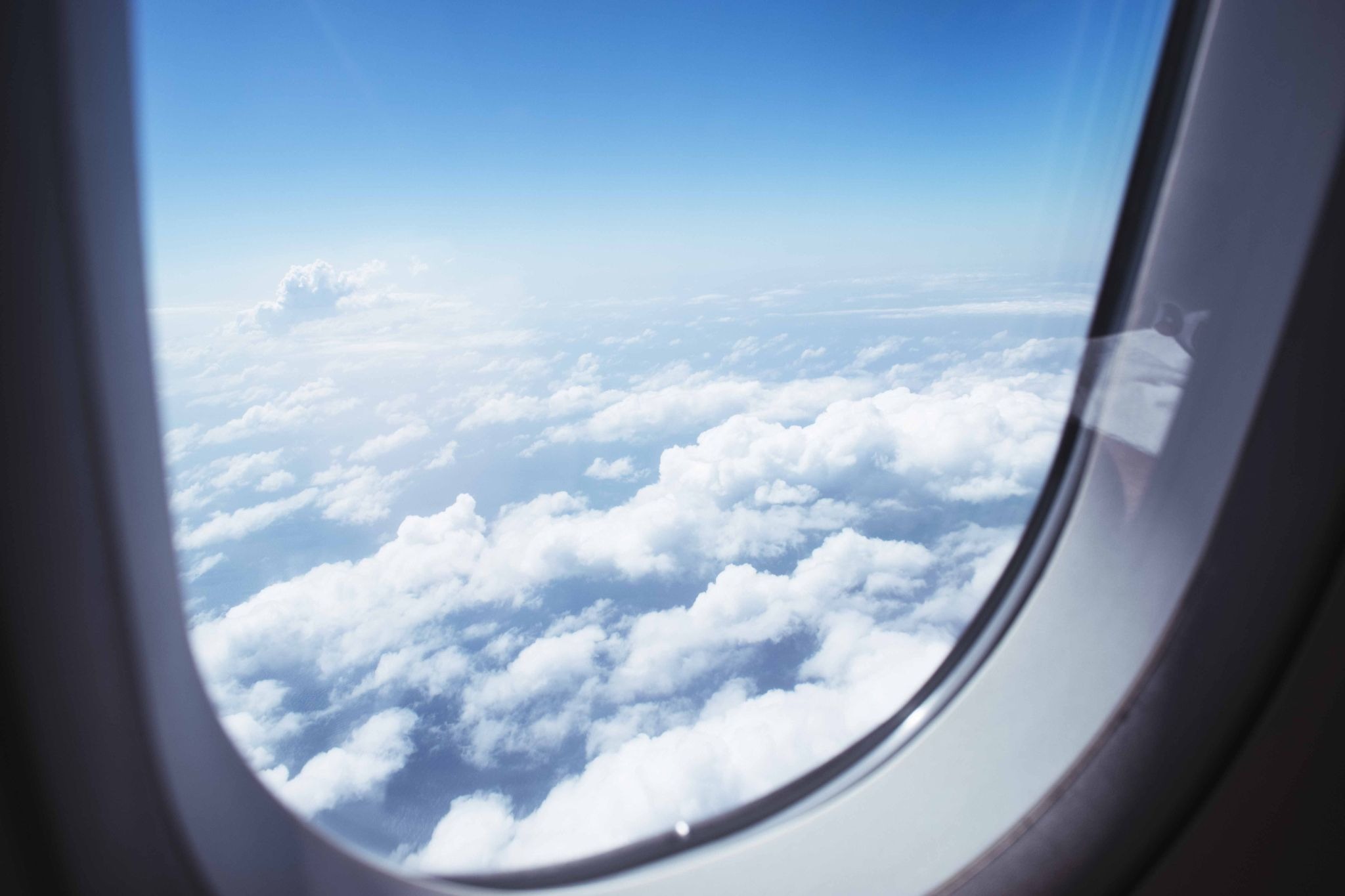
In the spring of 2045, on a flight from Incheon to Pyongyang, Emma's hands tremble. Her husband Sam reaches over and, steadily, holds them without a word. She turns to the window and stares into the pale clouds below the wing.
“I’ve waited 30 years for this day,” she whispers. “But now that I’m here… it doesn’t feel real. I hope this isn’t a dream.”
“Maybe it’s both,” Sam replies. “The dream became real.”
She closes her eyes. In 2015, at just fifteen years old, she crossed the frozen Yalu River in a dark March morning, leaving without saying a proper goodbye to her mother. That guilt, its intensity, has never faded, not even after thirty years. It simply learns to live quietly beside her.
“Will Mom recognize me?” she asks. “We parted when I was fifteen. I’m forty-five now.”
“She will,” Sam answers. “How could a mother not recognize her daughter?”
Emma says nothing. Will I... be able to recognize her? She does not say it aloud this time.
An announcement comes through the cabin speakers: "This is the first return flight for North Korean defectors to their hometowns. We know how much you have endured. We will carry you safely home."
It is a rare moment of comfort from a South Korean voice. Moments later, the plane lifts into the sky.
An hour later, the plane lands in Pyongyang. Emma weeps quietly, overwhelmed by the thought that across so short a distance, lives in the South and the North had been so utterly, irreconcilably different. For thirty years, she had not been able to cross it, that gap, so small.
From Pyongyang, the journey to Hyesan continues by bus. As the skyline of Pyongyang passes past the window, its taller buildings, its broad avenues, Emma allows herself the fragile hope: perhaps Hyesan has developed too.
After five hours on the road, the bus arrives at Hyesan Station. The apartments and the lay of the land are almost entirely unchanged from when she had left thirty years earlier, as if time had refused to move, as if it had been waiting for her. Emma found herself hoping the same might be true of her mother.
A thirty minutes' walk from the station: that is where her mother's house is.
As if drawn by a magnet, her feet start moving on their own.
Sam asks if they are going the right way. Without hesitation, "Yes," Emma replies. "I used to walk this road every day as a child. It’s still in my body."
He points to a bus queue down the street. "There's a bus queue over there. Want to take it part of the way?" She shakes her head gently. "If you don't mind, I'd like to walk." "Then we’ll walk," he replies without hesitation. Emma feels another surge of gratitude, grips on his arm and follows her memory home.
Since Emma left her hometown in 2015, the North Korean regime has conducted ten more nuclear tests as of 2045. And yet the face of this neighborhood has not changed by a single detail. The freedom and human rights that should have been the people's return on those tests have been vaporized into the air.
They arrive at a fork in the road. To the left, an alley leads toward the house. A familiar-looking house comes into view, enclosed by a wooden fence. She stops and stands motionless. It is the house, it is her house.
Several minutes pass. Then the door opens. Emma feels her breath catch. For a second, she forgets how to move.
After thirty years, she is here.
This is what the micropolitics of reunification looks like. Grand narratives, speeches, and legal texts may provide its official language, but its lived realities lie in moments, in feelings, like this: a mother and daughter recognizing each other after thirty years apart.
Author’s note: I dedicate this piece to my father in South Korea, who has never once wavered in encouraging my studies, as if realizing through me the freedom to pursue the dreams that were taken from him. And to my mother, who remains in North Korea: This piece is my proof that your daughter has not turned away from your suffering, but is working, in her own small way, to fight against it. I hope to see you, even if only in my dreams tonight. I love and miss you beyond my expression.
–
Eunsook is a participant of the LiNK English Language Program (LELP), which serves to not only help North Korean defectors build confidence and skills in English, but develop their capacity as advocates for this issue. To that end, we partnered with select LELP “columnists” to write and polish personal essays through multiple rounds of external feedback and revision. Our goal is to have more North Koreans share their stories directly and lead efforts to change the narrative.
We believe the North Korean people can achieve their liberty in our lifetime.
Opportunities like LELP invest in the people building that future now. Help more North Koreans find their voice, reach their goals, and lead change on this issue.
A North Korean Defector’s Nine Year Journey to Freedom | Eunju’s Story
I didn’t know I was hungry until I was eight years old. Growing up, I had no concept of whether my hometown was wealthy or poor. Then when the great famine struck in the mid-90s, more people died in our city than anywhere else in the country.
That’s when I realized “Oh, this is the most difficult place to live in North Korea.”
I was born in the city of Eundok, North Hamgyong Province. Before that it was called Aoji, a destitute place infamous for its coal mines, where South Korean prisoners of war were sent to work.

In the middle of a long famine, people lose all sense of humanity. You couldn’t survive without dirtying your hands. My father was a kindhearted person, the type that was unable to hurt anyone. But towards the end, hunger drove him to steal from our own house.
On my first day of middle school, I couldn’t find my new backpack anywhere. It turns out that my dad had taken it to the Jangmadang, traded it for food, and eaten it by himself. In the end, he still died from starvation, and my mom, my sister, and I were left to fend for ourselves.
We heard that if we went to China, we could eat all the candy we wanted. With that one piece of information, my mom said she’d rather get shot crossing the Tumen river than starve in North Korea.

It was mid-February in 1999, during the bitter cold winter. The water was frozen solid and stretched over 100 meters across. My mom went first, followed by my sister, and I was in the very back. Maybe it was because I was anxious, but my shoes felt so slippery and I kept falling over as they went farther and farther ahead. We heard that soldiers would shoot anyone who tried to cross the river. But this was our only chance at survival.
My mind was racing, “What if I’m left behind and get caught?” My mom and sister probably feared the same thing.
We encountered a tributary that wasn’t frozen all the way, so my mom waited and had me go first because I was the lightest. A few steps in, the ice broke and I fell into the piercing cold water. None of us knew how to swim. At that moment, I really thought it was the end. But then my feet hit the ground. We had made it to the other side.

Not long after we had crossed into China, a Korean-speaking woman came up to us. She invited us to her house and gave us over a dozen boiled eggs, more food than we had seen in years. In North Korea, when my sister and I had a field trip for school, my mom would cut one boiled egg and give each of us half in our lunch box. To have this much at once was a true luxury. For the first time in a long while, we dared to have some hope.
But then my mom was sold off to a Chinese man. The fortunate thing was that even though my sister and I were 16 and 14 years old, we were so short that people asked if we were 7 or 8. They couldn’t sell us separately, so we were sent together with our mom.
We had been sold for 2000 yuan. When we wanted to leave, the man told us to pay him back. We worked in his house and on his farm but of course we never saw a penny. For three years, we lived in confinement, and my little brother was born.

On a quiet night before my brother was even a year old, Chinese police came to the house in the dark, knocked on the door, and arrested us.
When North Koreans get caught, sometimes they’ll roll up their money and eat it or hide it, but we didn’t have anything. We were taken back across the border with just our clothes. It’s well known that there’s a physical exam to look for hidden money. In a way, you shouldn’t even feel a basic sense of shame as a woman and as a human being. If you cry or plead for mercy, you’ll get beaten up. You cannot question them at all.
With so many people in North Korea dying of starvation, names were removed from the family register after three years without any news. We had already been declared dead. There were two minors and an adult, but our identities couldn’t be confirmed. At the time they couldn’t keep minors in prison without a ruling from the court, so we were entrusted to another person from our hometown. No one wanted extra mouths to feed, so he just let us go.
We went straight to the Tumen river and in 2002, we escaped again.

I had enough food when I was in China. Even dogs and pigs ate rice and corn. But we lived looking over our shoulders, in constant fear of the police.
When we heard about life in South Korea, where our safety and identities would be guaranteed, we decided to defect once more. We were introduced to a broker, gave them some cash upfront, and traveled through Mongolia and the Gobi Desert.
On September 1st, 2006, I arrived at Incheon airport with my mom. My sister joined us in South Korea in 2008. Nine years after first crossing the Tumen River, we were finally together in freedom.
When I was in China, my only wish was that my mom, sister, and I could sleep together, eat together, and come home from work together. I dreamed that someday we could go to the supermarket and get a whole cart full of things to share. After coming to South Korea, we achieved not only that, but everything we’ve ever wanted.

I co-authored a book about my journey, A Thousand Miles to Freedom, with a foreign journalist named Sebastien Falletti. He interviewed several North Koreans, and I agreed to share my story with him out of a sense of duty. I never thought he’d choose me.
Compared to North Korean defectors who live special lives, I don’t actually dream of being a human rights activist. There are times when I don’t want to share anymore and I feel like I have to repeat myself.
But then I think about my best friend in North Korea. Her name is Sunhwa and I don’t think she’s here yet. I imagine that she would want to live like me — to attend college, pave her own way, and explore the vast world we live in. But she is still stuck in the darkness. Until Sunhwa can live a life of freedom, I feel a sense of responsibility to continue to share.
When I think of North Korea, the dark image of my hometown floods my memories. But I would still like to go back just once and visit my dad’s grave. As I’ve gotten older, I’ve realized that he was also a victim of the North Korean regime. I have hope that in this lifetime, North Korea will open up. I’ll return with my mom and my sister, and together we’ll visit my dad’s resting place and prepare a huge meal for him.
For North Koreans to share their stories with audiences around the world, retelling and reliving some of the most harrowing experiences, is an act of exceptional courage. They’re working towards the day when others no longer have to go through the same painful experiences.
You can help rescue more North Korean refugees and support them as they begin their new lives in freedom.


