The Bridge: The Role of North Korean Defectors in a Unified Korea in 2045
By: Eunsook Jang
Eunsook Jang holds a bachelor’s degree in Political Science from Korea University and a master’s degree in International Development from Brandeis University. A Fulbright Scholar and LiNK US Scholarship grantee, she is currently a research intern at the Hudson Institute, where her work focuses on post-conflict recovery, economic development, and human development. Her recent publications include “Slipping through the Cracks in South Korea: The Uncertain Futures for the Children of North Korean Defectors” with the Migration Policy Institute, and “Why Strengthening RFA Is a Strategic Imperative for US Policy on North Korea” in The Diplomat.
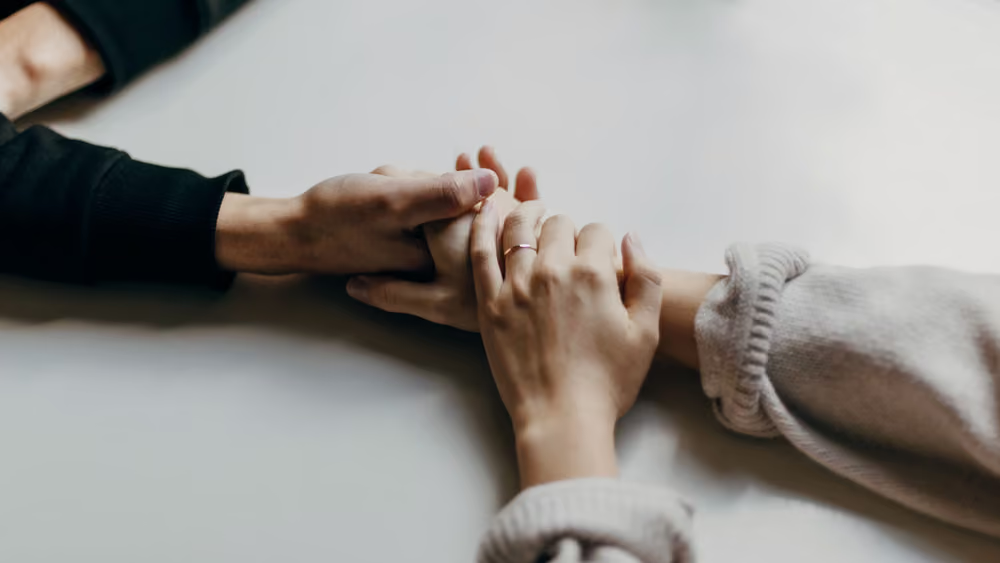
The door opens, and an elderly woman with white hair steps out. It is Emma's mother, Sun. Emma's voice fails her. She collapses into tears. Sun startles at the sound, turns toward Emma, and, in an instant, knows. It is her daughter.
"Euna!" her mother cries. The name no one had spoken aloud for thirty years. "Mom!" Emma answers, and they fall into each other’s arms.
Words fail them. They weep, touching each other's faces and hands as if to make sure the other is real. Emma feels with her palms the smaller body her mother now has, the sharp ridges of her shoulder blades, and cries harder.
"Look how you've grown," her mother manages through tears, cupping Emma's face in both hands. "You've become... a woman."
Emma pulls her closer. "Mom, I'm sorry. I left you alone." Her mother draws her in tighter, and murmurs into her hair: "You are here. You are alive. That is enough. I have missed you."
Sun had prayed to God every day for her daughter's new life, even without fully knowing religion itself.
For the first time since leaving, Emma cries in her mother's arms like a child.
And so for the next several hours, mother and daughter spend their time filling in thirty years of unshared life: how Emma met her husband Sam, how she spent each birthday without family, what it was like to settle into South Korean society.
After a while, Sun asks a kind of question Emma had not expected; a question filled with curiosity, hope, and all the images of South Korea she had imagined from afar.
“Is South Korea really like a K-drama?” Sun asks, her eyes sparkling.
"Yes, it often feels like it" Emma replies with quiet confidence. "I was able to study freely, for the life I wanted."
Sun shakes her head slowly, in something between disbelief and wonder. "To think, if you had stayed in North Korea, none of it would have been imaginable. Graduate school. A life like that. I suppose it really is a drama kind of place."
And yet not everything had felt like a drama. Settlement in South Korea had meant starting from zero: a political system unlike anything she knew, a language full of foreign words that made her feel dizzy just listening to it. She survived by studying fiercely and endured countless hours alone. It was the kind of loneliness that stayed at the back of the throat, the kind you feel when you fall ill and have no one to call, or when you achieve something and have no one to tell.
Emma takes her mother's hand. "Mom, everything will feel enormous and new at first. There will be moments when not knowing even small things makes you feel small too. But I will be there. So don't worry. We'll start this new life together."
As the words leave her mouth, she feels quietly grateful that she had gone through all of it first, knowing the path her mother is about to walk. And she finds herself already picturing it: the two of them sitting across from each other at her favorite pork belly restaurant Dwehyaji (돼야지), near Korea University, sharing a bottle of soju, talking until the night runs out. She smiles to herself at the thought.
The faces of the mentors and friends who had taught her culture and society drift through her mind, one by one, and she carries her gratitude for them again, as the sun goes down over Hyesan.
Emma falls asleep in the very spot where she slept as a child. It still feels like a dream. She closes her eyes, hoping she will not wake if it is.
Author’s note: I dedicate this piece to my father in South Korea, who has never once wavered in encouraging my studies, as if realizing through me the freedom to pursue the dreams that were taken from him. And to my mother, who remains in North Korea: This piece is my proof that your daughter has not turned away from your suffering, but is working, in her own small way, to fight against it. I hope to see you, even if only in my dreams tonight. I love and miss you beyond words.
–
Eunsook is a participant of the LiNK English Language Program (LELP), which serves to not only help North Korean defectors build confidence and skills in English, but develop their capacity as advocates for this issue. To that end, we partnered with select LELP “columnists” to write and polish personal essays through multiple rounds of external feedback and revision. Our goal is to have more North Koreans share their stories directly and lead efforts to change the narrative.
We believe the North Korean people can achieve their liberty in our lifetime.
Opportunities like LELP invest in the people building that future now. Help more North Koreans find their voice, reach their goals, and lead change on this issue.
Give Today
North Korean Refugees Reaching their Potential: A Mid-Year Recap of 2024
It’s been a busy first half of the year for Liberty in North Korea! In case you missed it, here’s all that we’ve accomplished together with YOU and our North Korean friends.
Many of these major updates have been a long time in the making. This bigger-picture impact is only possible because of the continued support and generosity of this global movement. With every update we share, know that you’re now a part of each of these stories, and you have helped to change lives!
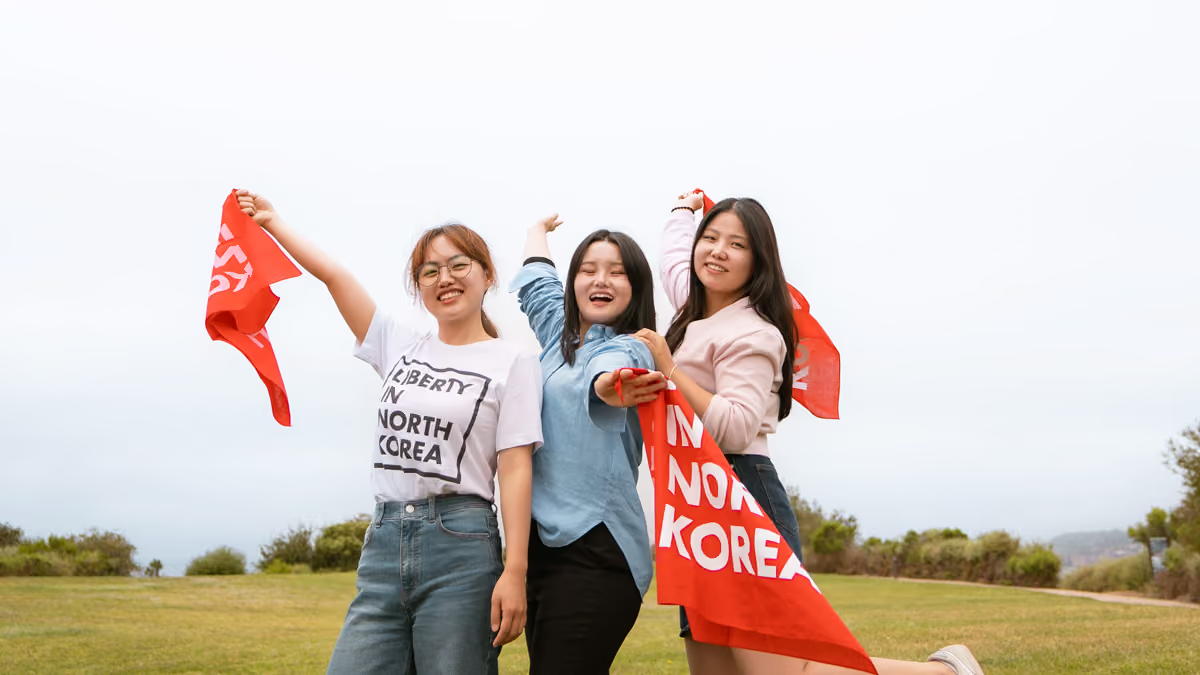
The 2024 Advocacy Fellows: Bella, Grace, and Lily wrapped up their 2.5 months in the US after traveling to 11 cities, speaking at 48 events and meetings, and sharing their stories in person with over a thousand people!
20 North Korean refugees now living in freedom: Of the 20 rescued, 3 families were able to escape together and will also reunite with family in South Korea. One woman will be seeing her sister again after being separated for 25 years!
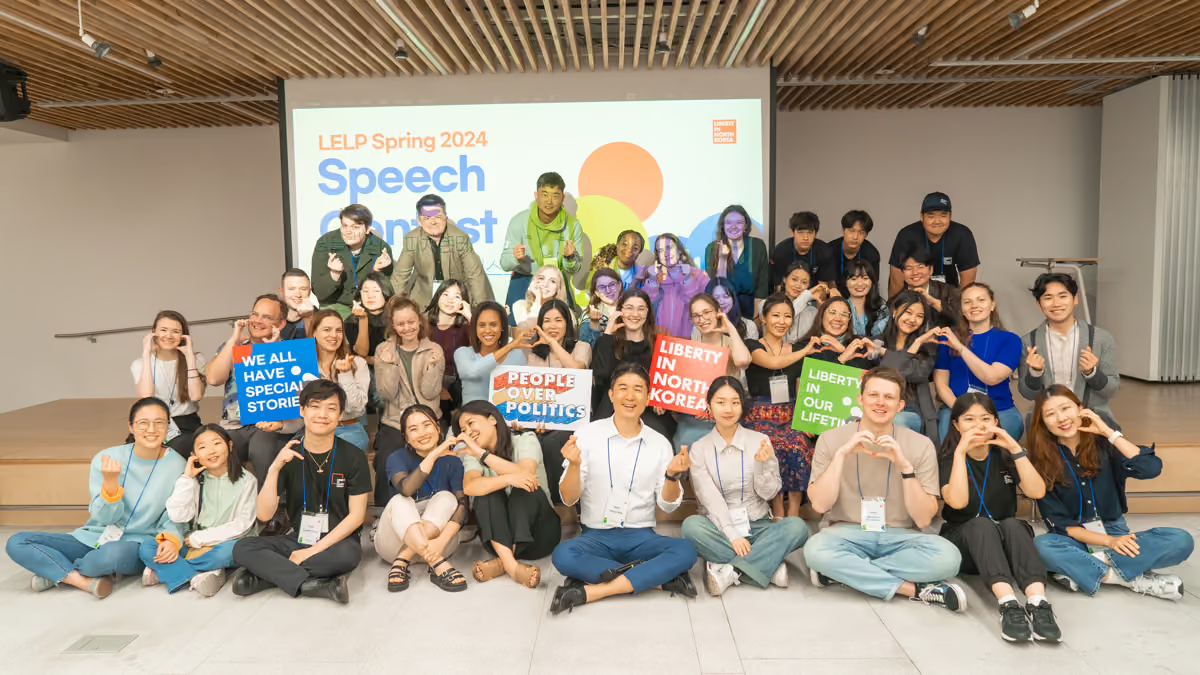
The LiNK English Language Program: This spring, we had our biggest semester of LELP yet—156 participants, including 78 North Korean students and 78 volunteers. 98% of participants reported that they were satisfied with the program!
12 North Korean students awarded academic scholarships: $77,400 was awarded to help North Koreans studying in the US complete their post-secondary education programs and achieve their academic goals.
Featured Content
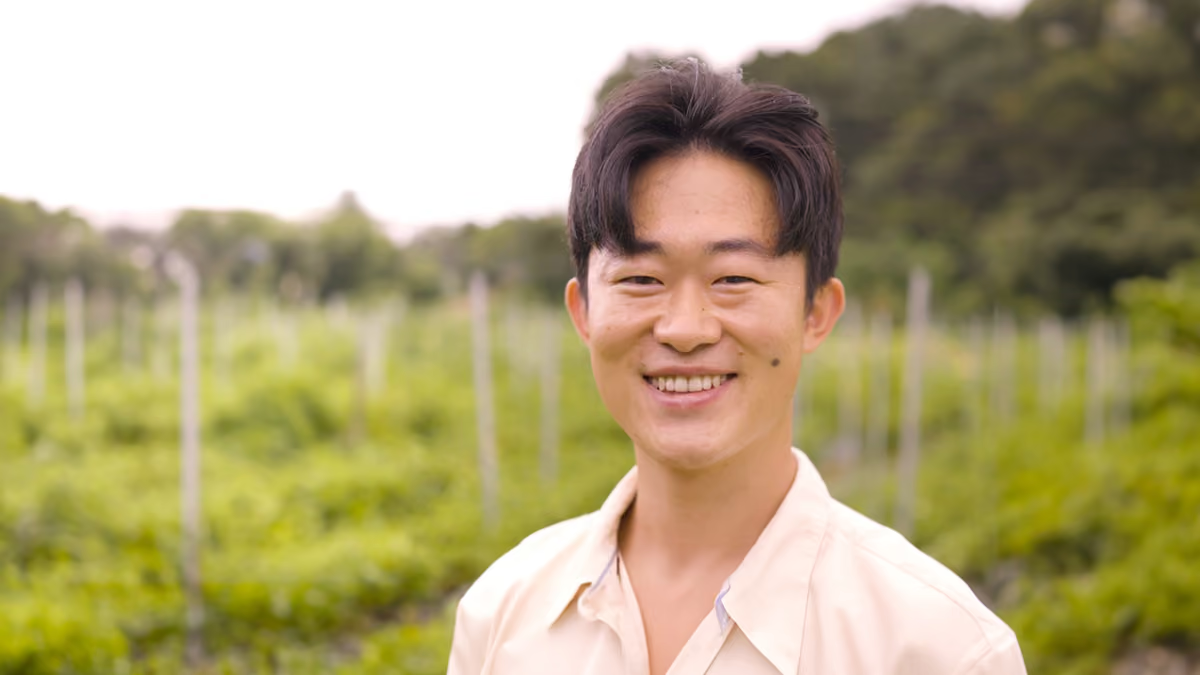
- 📰 Read: From our World Refugee Day campaign, experience “The Journey” of North Korean refugees through the eyes of Il-Lyong, Vickey, Haneul, and Doohyun.
- 🎥 Watch: North Korean stories are headed to the Emmys! Beyond Utopia, a documentary following several people as they escape from North Korea, was just nominated for “Exceptional Merit in Documentary Filmmaking.” Stream now on Hulu!
- 📝 Learn: Curious about North Korean instant noodles? Or what middle school is like in the most closed-off country in the world? Our North Korean friend (and one of last year’s Summit speakers!) Sunghee is publishing weekly articles about her experiences.
LiNK in the News
- A daring escape by boat: Kang Gu-rin is one of just 15 North Korean refugees who have escaped directly from North Korea and made it to South Korea since 2021. Read more in this recent Washington Post article.
- The Closing of North Korea 2018-2023: Earlier this year, Human Rights Watch published an in-depth report on the devastating impact of pandemic-era restrictions on the North Korean people.
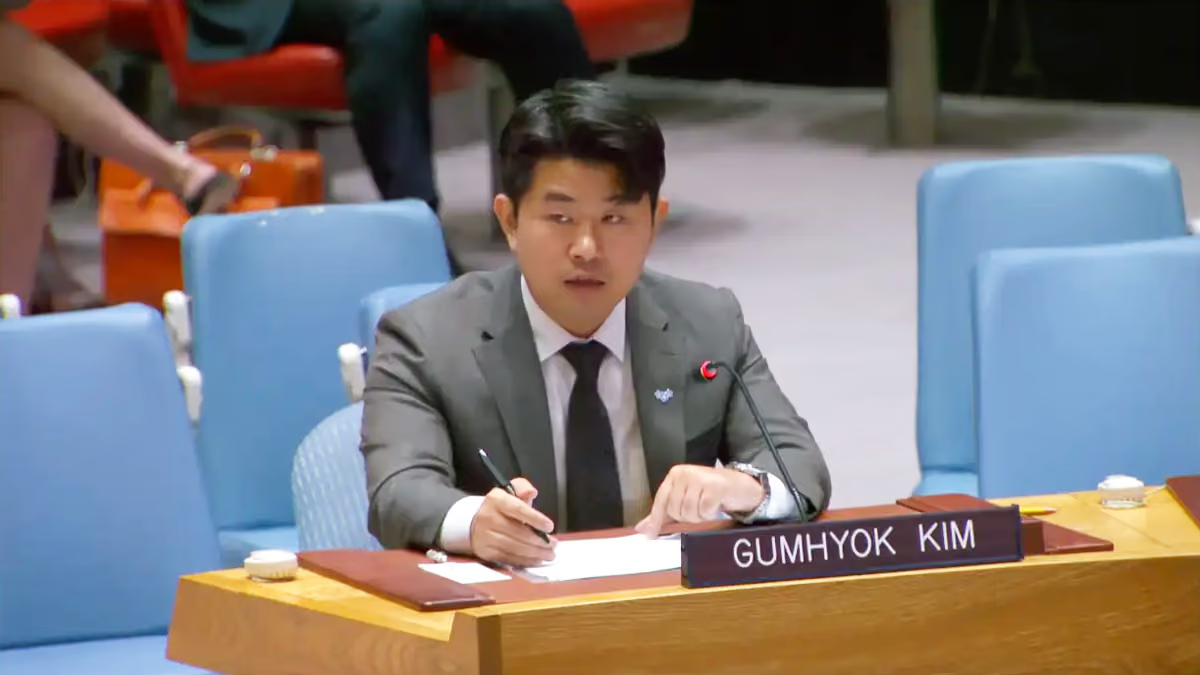
- Where they are now: Last month, Geumhyok, one of our 2018 LiNK Advocacy Fellows, spoke at the U.N. Security Council Meeting on North Korean Human Rights (timestamp 35:50). He’s the second LiNK program alumni to be invited to speak this year!
Thank you for your unwavering support and dedication to the North Korean people. We’re excited to see what the second half of 2024 brings!