The Bridge: The Role of North Korean Defectors in a Unified Korea in 2045
By: Eunsook Jang
Eunsook Jang holds a bachelor’s degree in Political Science from Korea University and a master’s degree in International Development from Brandeis University. A Fulbright Scholar and LiNK US Scholarship grantee, she is currently a research intern at the Hudson Institute, where her work focuses on post-conflict recovery, economic development, and human development. Her recent publications include “Slipping through the Cracks in South Korea: The Uncertain Futures for the Children of North Korean Defectors” with the Migration Policy Institute, and “Why Strengthening RFA Is a Strategic Imperative for US Policy on North Korea” in The Diplomat.
The door opens, and an elderly woman with white hair steps out. It is Emma's mother, Sun. Emma's voice fails her. She collapses into tears. Sun startles at the sound, turns toward Emma, and, in an instant, knows. It is her daughter.
"Euna!" her mother cries. The name no one had spoken aloud for thirty years. "Mom!" Emma answers, and they fall into each other’s arms.
Words fail them. They weep, touching each other's faces and hands as if to make sure the other is real. Emma feels with her palms the smaller body her mother now has, the sharp ridges of her shoulder blades, and cries harder.
"Look how you've grown," her mother manages through tears, cupping Emma's face in both hands. "You've become... a woman."
Emma pulls her closer. "Mom, I'm sorry. I left you alone." Her mother draws her in tighter, and murmurs into her hair: "You are here. You are alive. That is enough. I have missed you."
Sun had prayed to God every day for her daughter's new life, even without fully knowing religion itself.
For the first time since leaving, Emma cries in her mother's arms like a child.
And so for the next several hours, mother and daughter spend their time filling in thirty years of unshared life: how Emma met her husband Sam, how she spent each birthday without family, what it was like to settle into South Korean society.
After a while, Sun asks a kind of question Emma had not expected; a question filled with curiosity, hope, and all the images of South Korea she had imagined from afar.
“Is South Korea really like a K-drama?” Sun asks, her eyes sparkling.
"Yes, it often feels like it" Emma replies with quiet confidence. "I was able to study freely, for the life I wanted."
Sun shakes her head slowly, in something between disbelief and wonder. "To think, if you had stayed in North Korea, none of it would have been imaginable. Graduate school. A life like that. I suppose it really is a drama kind of place."
And yet not everything had felt like a drama. Settlement in South Korea had meant starting from zero: a political system unlike anything she knew, a language full of foreign words that made her feel dizzy just listening to it. She survived by studying fiercely and endured countless hours alone. It was the kind of loneliness that stayed at the back of the throat, the kind you feel when you fall ill and have no one to call, or when you achieve something and have no one to tell.
Emma takes her mother's hand. "Mom, everything will feel enormous and new at first. There will be moments when not knowing even small things makes you feel small too. But I will be there. So don't worry. We'll start this new life together."
As the words leave her mouth, she feels quietly grateful that she had gone through all of it first, knowing the path her mother is about to walk. And she finds herself already picturing it: the two of them sitting across from each other at her favorite pork belly restaurant Dwehyaji (돼야지), near Korea University, sharing a bottle of soju, talking until the night runs out. She smiles to herself at the thought.
The faces of the mentors and friends who had taught her culture and society drift through her mind, one by one, and she carries her gratitude for them again, as the sun goes down over Hyesan.
Emma falls asleep in the very spot where she slept as a child. It still feels like a dream. She closes her eyes, hoping she will not wake if it is.
Author’s note: I dedicate this piece to my father in South Korea, who has never once wavered in encouraging my studies, as if realizing through me the freedom to pursue the dreams that were taken from him. And to my mother, who remains in North Korea: This piece is my proof that your daughter has not turned away from your suffering, but is working, in her own small way, to fight against it. I hope to see you, even if only in my dreams tonight. I love and miss you beyond words.
–
Eunsook is a participant of the LiNK English Language Program (LELP), which serves to not only help North Korean defectors build confidence and skills in English, but develop their capacity as advocates for this issue. To that end, we partnered with select LELP “columnists” to write and polish personal essays through multiple rounds of external feedback and revision. Our goal is to have more North Koreans share their stories directly and lead efforts to change the narrative.
We believe the North Korean people can achieve their liberty in our lifetime.
Opportunities like LELP invest in the people building that future now. Help more North Koreans find their voice, reach their goals, and lead change on this issue.
Give Today
How A North Korean Defector Sends Money Back Home
It may seem like North and South Korea are completely cut off from each other, but even after decades of separation, channels of communication persist. Defectors who have made it to freedom are bridging the gap, connecting people inside North Korea to the world beyond. Through extensive broker networks, they send back money and information, accelerating change in the world’s most authoritarian country.
Through this process known as remittances, millions of dollars are sent into the country every year, representing huge spending power. Here’s how they do it!
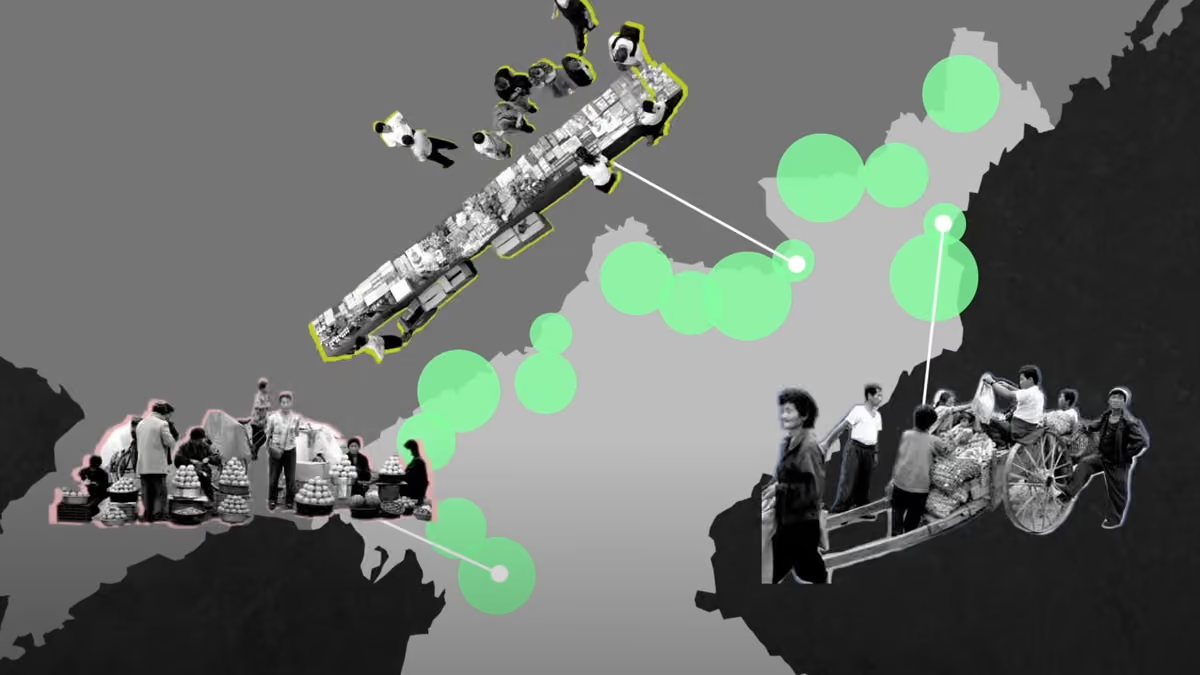
Reconnecting with Family
To send money back home, North Korean refugees must first contact their families. They hire brokers to find their relatives and arrange illicit phone calls close to the border with China, where smuggled Chinese cell phones can connect to international networks. In North Korea, people are often wary of such brokers, so they may have to be convinced with codewords or childhood nicknames that only the family would know, or recognizable handwriting and photos.
To avoid being caught, contact is often made from the mountain at night, or using a series of text or voice messages sent through apps like Wechat and quickly deleted. When the call finally happens, it can be emotional for both sides.
“You hear someone say, ‘Okay you’re connected, you can speak now.’ But no one says anything to each other. You just hear a high-pitched tone, and silence. Could this be real? You’re just crying, and can’t even speak.”
– Miso, escaped North Korea in 2010
How Remittances Work
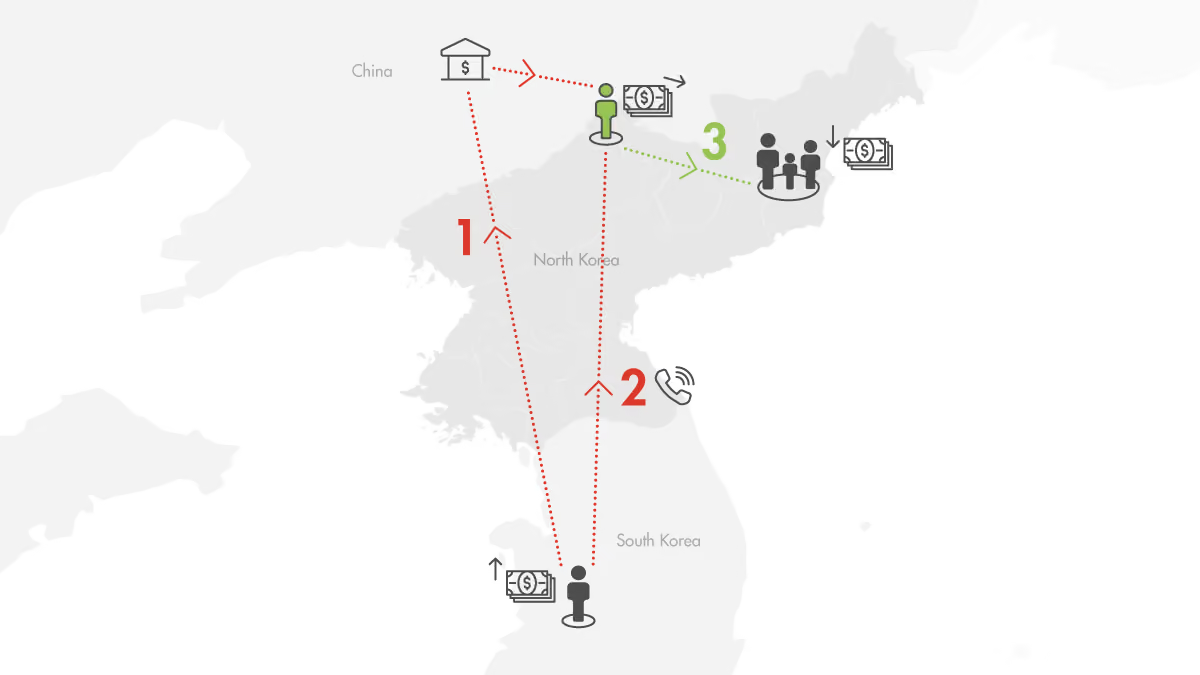
There are different ways to send money to North Korea, but a simple version involves three parties: A North Korean resettled in South Korea, a remittance broker in North Korea, and the recipient in North Korea.
- A resettled North Korean, makes a request to a remittance broker to arrange a transfer. They wire money to a Chinese account controlled by that broker.
- The remittance broker in North Korea uses a smuggled Chinese phone to confirm receipt of the funds.
- After taking a hefty commission, they give cash to the refugee’s family. The family can confirm receipt of the money by sending a photo, video, or voice message back, so the sender can be confident that they’ve not been scammed.
With this process, the remittance broker in North Korea occasionally needs to replenish their cash on hand. This could happen through the physical smuggling of cash, but oftentimes money from their Chinese bank account is used to buy goods in China that are then sold in North Korea, generating cash. In this way, physical money never actually has to cross borders.
The Power to Change Lives
North Korea is one of the poorest countries in the world, whereas South Korea is one of the richest. Therefore remittances from relatives in South Korea or elsewhere can be absolutely transformative. The money is spent on almost everything, including food, clothing, shoes, medicine, housing, transport, and bribes to keep the family safe.
“I’ve sent money back to North Korea ever since I resettled in South Korea. I send an average of $1,500 a year. My parents used the money to buy a house! They’re also going to use it to help my younger brother escape and come to South Korea.”
– Jeonghyuk, resettled North Korean refugee
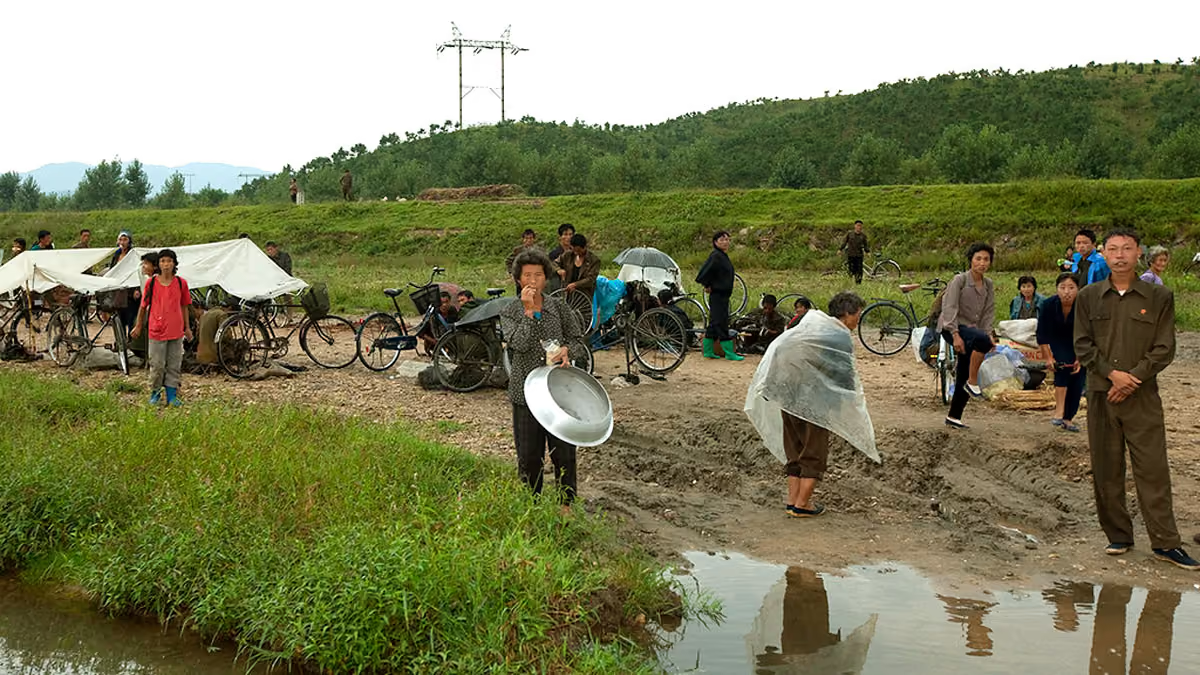
With new resources also comes new opportunities. North Koreans who never had the means before can now think about starting a business at the Jangmadang, or market. Since the collapse of the regime’s socialist economy in the 1990s, the markets have become essential to making a living. The flow of remittances is increasing trade, food security, marketization, and entrepreneurship, empowering ordinary North Koreans to gain autonomy.
A Ripple Effect
Along with money, North Korean refugees send back news and information from the outside world. At first, family members back home may not want to hear about life beyond the border. Decades of propaganda villainizing the outside world can be difficult to overcome, and if caught in communication with defectors, they could face serious punishment.
But as money continues to flow in, many people can’t help but be curious- what do their relatives outside do to make a living? What kind of house do they live in? Is life there like the K-dramas smuggled into North Korea? Conversely, defectors ask their family members, what they can do with the money in North Korea? This exchange of information is incredibly valuable, providing a glimpse into the most closed society on earth.
The flow of information into North Korea erodes the regime’s propaganda and changes worldviews. As the people learn more about the wealth and opportunities of the outside world, some may also risk their lives to escape. Money sent from remittances can also be used to fund this dangerous journey.
“When I first contacted my family back in North Korea after I resettled in South Korea, they didn’t believe that I was doing well here. My parents even resented me a little for leaving. But after I sent them money and told them more about my life here, their views changed. Now they realize that the regime has been lying to them and they’re not as loyal anymore. I have become a pioneer of freedom to my family back in North Korea.”
– Jo Eun, rescued by LiNK in 2017
Agents of Change
Remittances are about more than just the movement of money. Refugees who have been separated from their families aren’t able to go back home themselves, but can still care for their loved ones in some way. Every phone call into the country and every dollar sent back represents one small step towards the day when the North Korean people finally achieve their freedom.
More than 33,000 North Korean refugees have made it to freedom, and although it has become more difficult during the pandemic, surveys report that 65.7% have sent money back to North Korea. At LiNK, we’re committed to working with and building the capacity of North Korean refugees so they can succeed in their new lives and make an even bigger impact in their communities and on this issue.