The Most Dangerous Contraband in North Korea Isn’t a Weapon. It’s a Wish.
By: Jihyun Kang
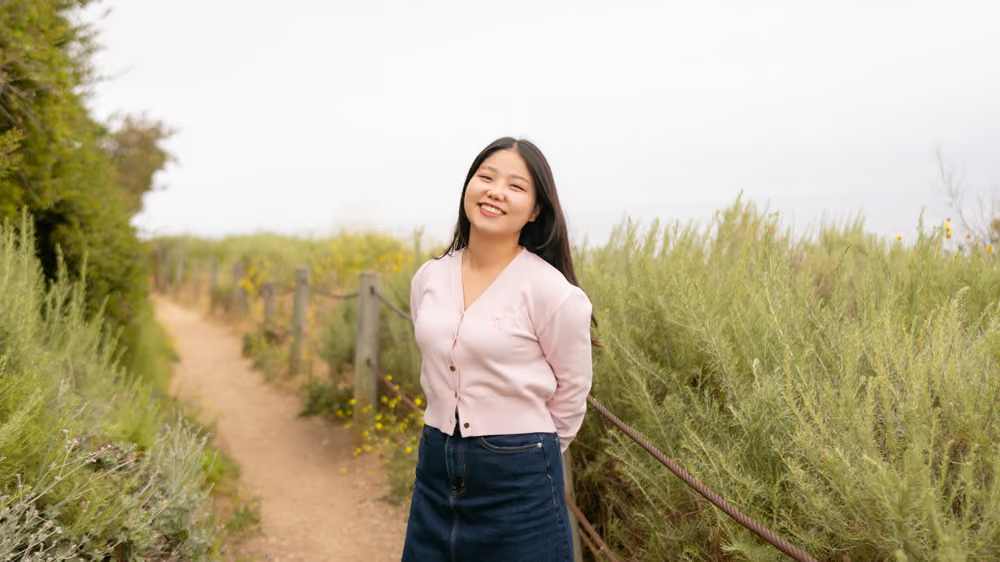
Growing up in North Korea, Jihyun took inspiration from the smuggled South Korean dramas she watched to create her own unique clothing. After reaching freedom in 2010, she has continued to pursue her interests in fashion and culture as a catalyst for change. She runs several business ventures, practices fine art under the name “Da Gyeol,” and works with the Ministry of Unification as an advisor. She’s pursuing her Masters in Entrepreneurship, Dept. of Future Science & Technology Business, at Korea University.

I grew up in North Korea, and at fifteen, I encountered a Westerner for the first time at the top of Mount Paektu. He stood over 190 centimeters tall with a thick beard, wearing ripped jeans and a frayed T-shirt. In North Korea, worn-out clothing was a symbol of deprivation. Yet my father whispered, "He is wearing that for style." With that single remark, the worldview I had been taught, began, the first time, to crack. And I thought: I want to dress like that, too.
Fashion is more than clothing. It is the moment when individual desire moves faster than collective command. People follow taste before ideology, and express themselves through what they wear long before any political declaration.
A state can enforce a dress code, but it cannot manufacture desire. That is why North Korea's fear of blue jeans was not irrational—it was the regime recognizing, however dimly, that something it could not control was already growing.
Clayton Christensen, a professor at Harvard Business School, argued that transformation always begins at the margins—in forms so crude and insignificant that those in power dismiss them entirely. Christensen built his theory around corporations, but the logic applies to any system that holds a monopoly over its people, including a state. North Korea's regime was so focused on maintaining ideological control at the centre that it ignored what was happening at the bottom.
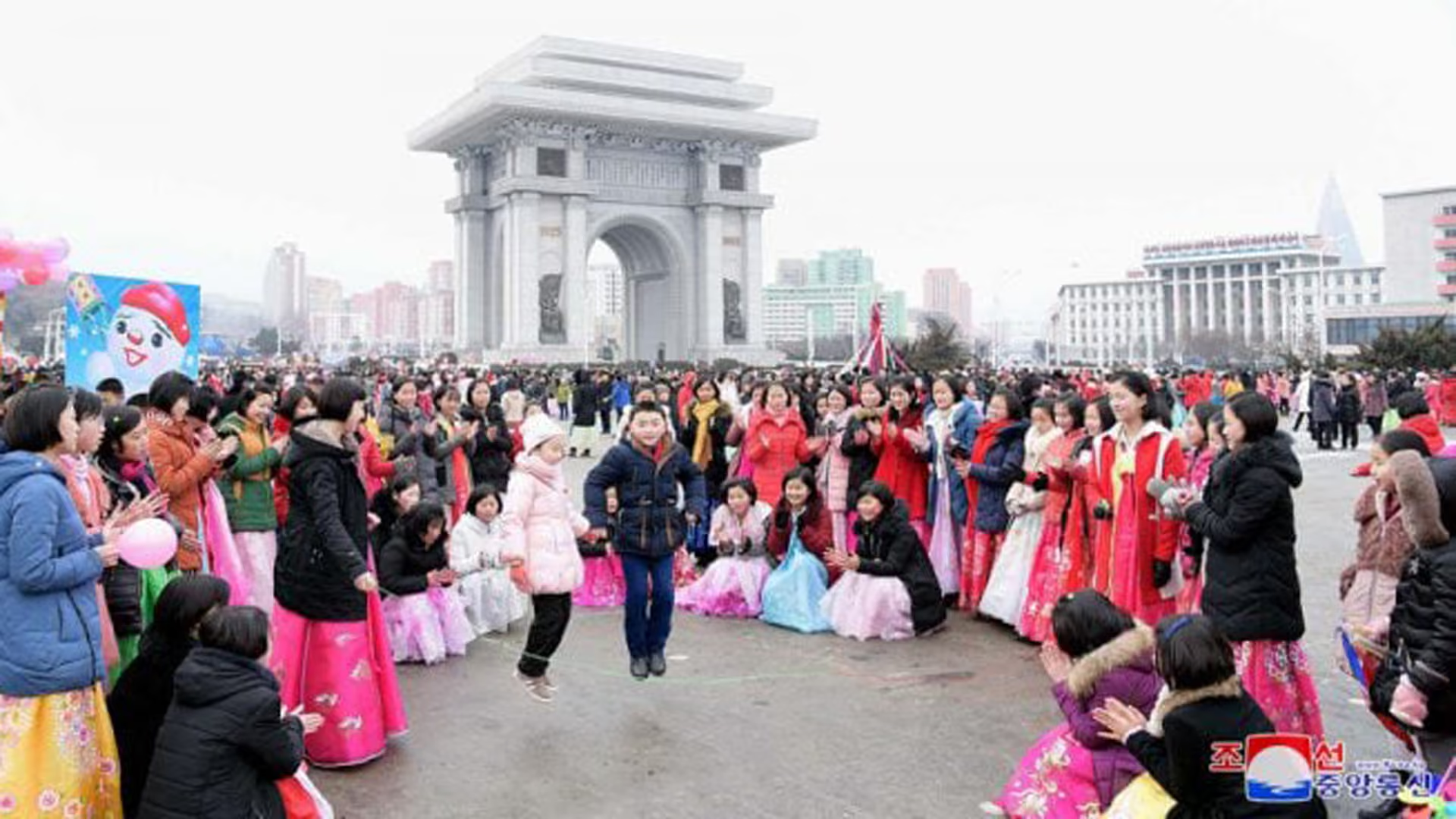
That bottom was the jangmadang—the spontaneous, bottom-up market ecosystem created by ordinary people to survive after the collapse of North Korea's state-led distribution system. When that system imploded during the Arduous March—a famine in the mid-1990s that killed hundreds of thousands—people built informal markets out of sheer necessity: not revolution, not ideology, but survival. Yet by 2018, a CSIS study found 436 officially recognized markets operating across the country. What began as a desperate improvisation had quietly become the infrastructure keeping North Koreans alive.
These markets did not merely sell food. They became conduits for Chinese clothing, USB drives loaded with South Korean dramas, and glimpses of a world no one had taught them existed. When a system ignores what people actually want, the market finds the gap.
The act of choosing—what to eat, what to wear, what to watch—may seem trivial. But a person who has tasted choice cannot fully return to obedience.
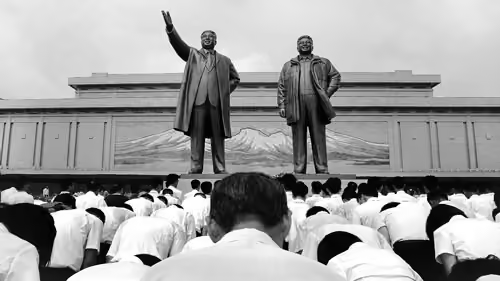
The jangmadang was the first place where North Koreans learned they could survive without the state. That desire did not stay underground—it surfaced. People began wearing jeans, dyeing their hair, and pulling on T-shirts printed with foreign letters. The regime could no longer ignore it. Authorities branded jeans and Western fashion as 'anti-socialist infiltrations' and deployed street patrols. Teenagers caught in these sweeps were sent to re-education camps; in severe cases, their names and home addresses were read aloud on state broadcasts as public shaming (Radio Free Asia).
In 2024, state-run Korean Central Television went so far as to blur the jeans worn by British TV presenter Alan Titchmarsh during a broadcast. The ruling party's official newspaper, the Rodong Sinmun, warned that a country could 'become vulnerable and eventually collapse like a damp wall' if it failed to preserve its own way of life (Newsweek, May 2021).
Regulations cannot extinguish human desire; they only raise the price of the forbidden. This is the inflection point Christensen identified: by the time an incumbent recognizes the threat, it is already too late.
To date, more than 34,000 North Koreans have resettled in South Korea (South Korean Ministry of Unification, 2024). At the start of each of those journeys, there was something like my pair of jeans—not ideology, but desire; not a declaration, but a taste; not revolution, but the market.
No government in history has ever successfully suppressed the human impulse to trade, to choose, to want more. Not the Soviet Union. Not Cuba. Not Mao's China. North Korea will not be the exception.
–
Jihyun is a participant of the LiNK English Language Program (LELP), which serves to not only help North Korean defectors build confidence and skills in English, but develop their capacity as advocates for this issue. To that end, we partnered with select LELP “columnists” to write and polish personal essays through multiple rounds of external feedback and revision. Our goal is to have more North Koreans share their stories directly and lead efforts to change the narrative.
We believe the North Korean people can achieve their liberty in our lifetime.
Opportunities like LELP invest in the people building that future now. Help more North Koreans find their voice, reach their goals, and lead change on this issue.
Give Today
A North Korean’s Promise to his Father | Joseph’s Story: Part 1
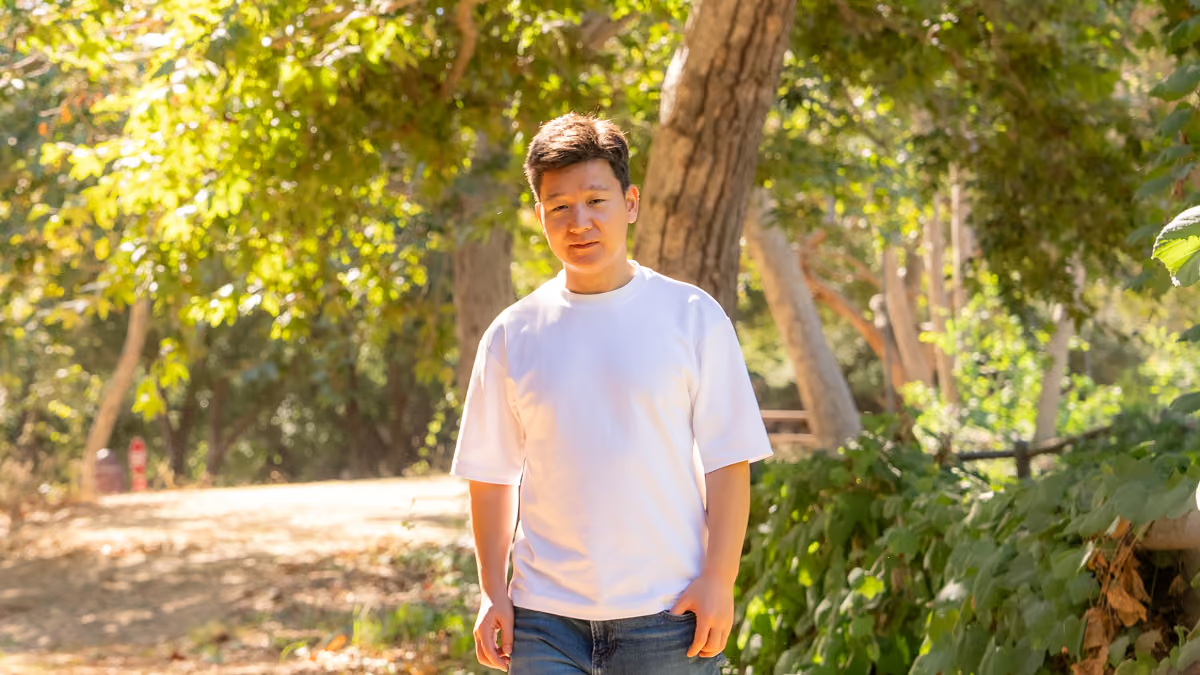
Most of you may know me as Joseph, but my Korean name is Kim Kwang Jin. It means, “walking forward with brightness.” My father gave me this name, full of the hopes and expectations many fathers have for their sons.
But hope is a hard thing to have, especially in a country like North Korea, and as a child, I certainly didn’t make it any easier for my father to believe in my brightness. Even in elementary school, I was a poor student.
The first time I remember making my father proud was through my cooking, not from studying. That day, he and my older sister had gone to the mountains to collect firewood. It was getting close to midnight, but they still hadn’t come home, so I decided to make dinner for them—rice and kimchi soup. At the end of dinner, my father said, Son, this is the best rice I’ve ever had. I had never made rice before, and I knew it was undercooked. That night I realized how much my father loves me. I promised myself that next time I would make him better rice.
But next time never came. When I was 12, my father died of starvation.
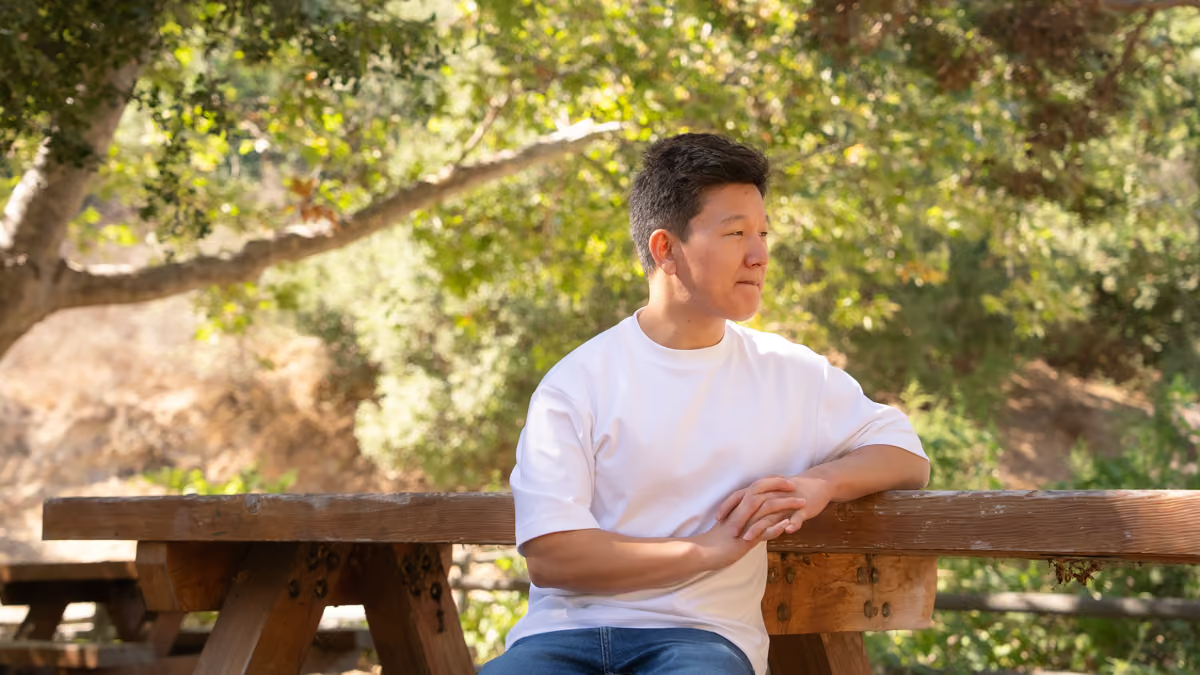
To save us from the same fate, my mother and sister left for China in search of work and food. My mom ended up in a North Korean prison. But my sister never returned. Within one year, I had lost my entire family. I was alone—helpless, homeless, and orphaned on the streets.
After three years of barely surviving, I decided to escape. The journey would be risky, but staying in North Korea would be a risk too. I knew I could die of starvation. So I took a chance. Unlike most people, I decided to escape during the daytime, thinking that the border guards would become complacent because why would anyone be crazy enough to cross the border in the middle of the day with nowhere to hide?
Fortunately, I made it to China without being caught.
In China, I slept in the mountains and went to towns begging for food to survive. One day, while crossing a bridge in Yanji, I remember it started to snow. Everyone around me started walking fast.
I remember being so envious because walking fast must have meant they had a home they were rushing toward. I, too, wanted to walk fast, but I had no home and no one waiting for me.
Later on, I was lucky enough to be taken in by a halmoni, an older grandmother. She fed me and let me live with her for six months but I still lived in hiding, fearful that at any moment I could be arrested and sent back to North Korea. The halmoni eventually connected me with Liberty in North Korea and I had an opportunity to escape China and be the first North Korean refugee minor to come to the United States.
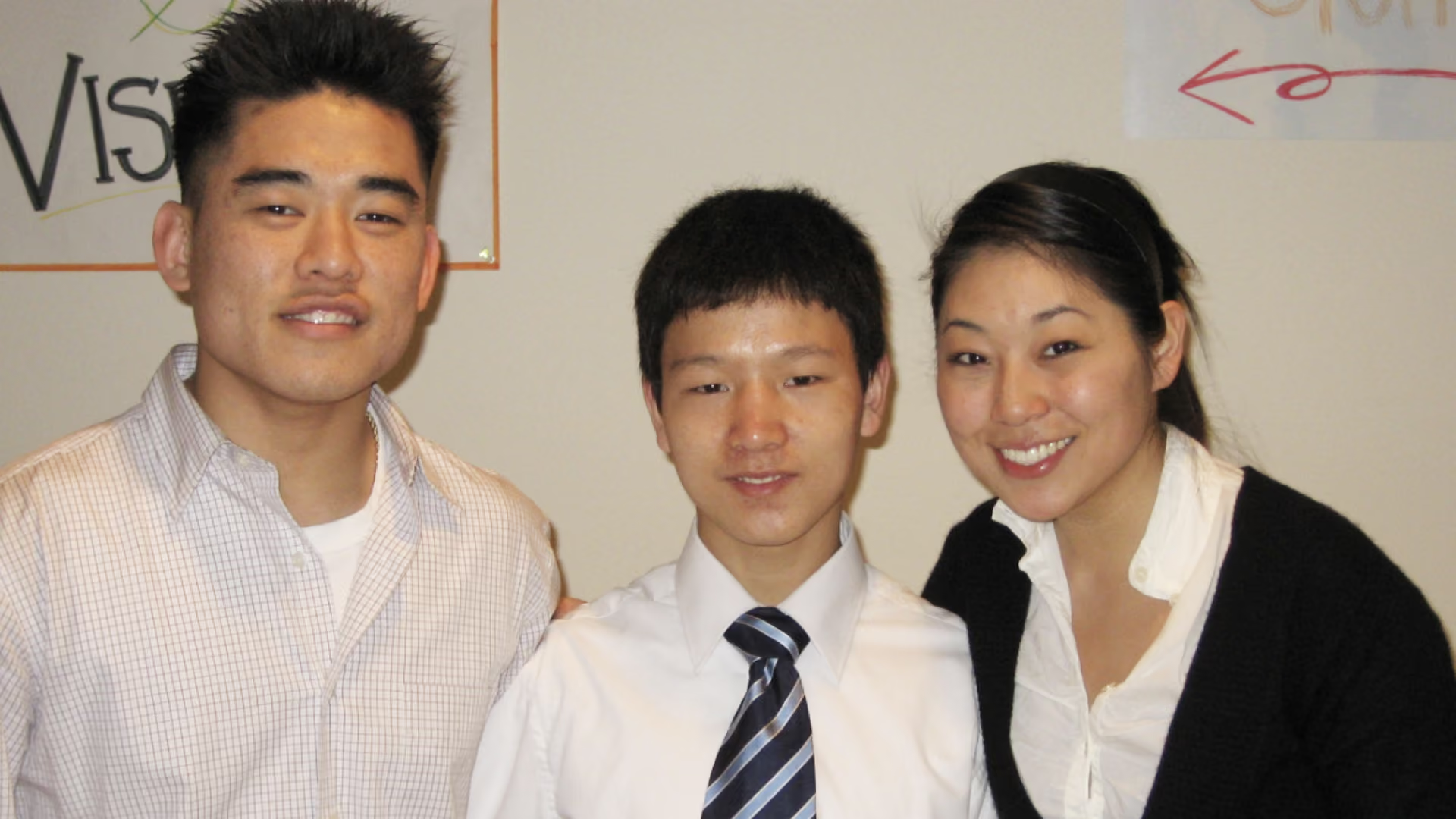
I was placed with a foster family and began attending an American high school, which felt a bit ridiculous at first. Even in North Korea, I was an F student. I barely finished elementary school so jumping straight into high school in a foreign country felt overwhelming.
One evening, my foster mom made chicken wings. They were so good that I wanted more, but I realized there wasn’t enough for everyone to have seconds. So I held back, thinking no one would notice. As I stared at my plate, my foster dad placed his last wing in front of me. I looked up, and he smiled, urging me to eat without saying a word. In that silence, I felt the depth of his love and care.
At that moment, I thought of my biological father. Even during our hardest times, he used to share what little food he had with me. I wished more than anything that I could cook for him one last time and share one more meal together.
That night, I promised myself that I would study hard and go to college. I believed that was the best way to honor my father’s sacrifice and make him proud.
Continue reading part 2 of Joseph’s story
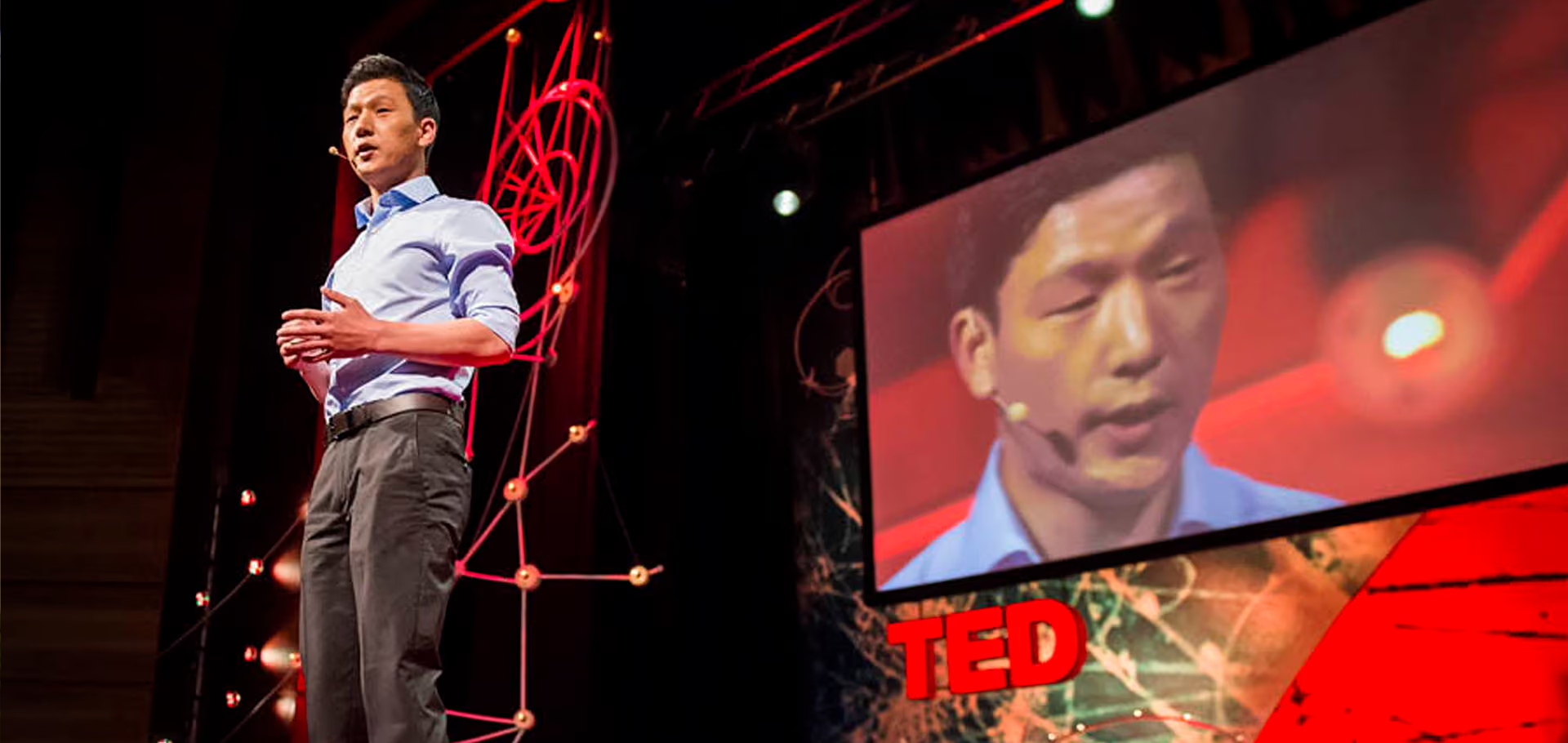
Years before Joseph would reach freedom, talk on the TED stage, write a memoir, and pursue his master’s at Harvard Kennedy School, Joseph’s father saw the brightness in his son. While he may not have been able to witness Joseph reach these milestones, none of it would have been possible without the depth of his love that became the foundation for Joseph’s life.
His family’s support, both in North Korea and in the US, has given Joseph the confidence to believe in and fulfill his brightness.
When recalling his past, warm childhood memories and gripping hardship are shared in the same breath. Joseph often says that North Korea is not a land of darkness, merely a land with darkness. Both can exist. But what matters is what we choose to focus on—the shadow cast by the regime or the brightness of the North Korean people.
Help more North Korean refugees reach freedom and share their brightness with the world.