The North Korea I Remember: School, Family, and Home
By: HyeGyeong Joo
HyeGyeong is a PhD student in the Department of Economics at Korea University, specializing in theoretical economics. Her research looks at developing theoretical models of the North Korean economy. Since 2022, Hye-Gyeong has also participated in LiNK’s English Language Program.

Have you ever wanted to go home even while you were already at home? Because I have. It feels as though I am not longing for a physical house, but for something harder to name: a sense of belonging, of being whole, of belonging not anywhere but somewhere I would truly belong. Instead, I often feel emptiness, as if I do not fully belong. But I am not sure what these feelings mean or where they come from exactly.
I have been living in South Korea for around ten years, but I still miss North Korean food, school life, and above all, the time I spent with my family. There are restaurants in South Korea run by North Korean refugees, and sometimes their dishes bring back memories of home. Foods like injogogi-bap or nongma-guksu remind me not only of North Korean cuisine, but of birthdays, family, and everyday life.
The long strands of nongma-guksu always carry the wish for a long life, while the taste of injogogi-bap brings back the memory of a soybean dish made to resemble the meat we so rarely had.
While these foods remind me of home, what I remember most vividly is my school life in North Korea. When I was in fourth grade, the girls in my school would often gather in the schoolyard to play jump rope. I was actually quite good at it. We would start with the rope at ankle height and gradually raise it higher and higher.
One day, when the rope had been raised to about head height, I tried to jump over it. Since I was quite short, I had to lift my leg as high as I could. Unfortunately, I ended up tearing my pants. I was so embarrassed that I almost cried. But what I remember most clearly is my teachers laughing so hard as they watched from the side. Even now, I can still picture that moment vividly.
I also remember winter lunchtime at school. We all brought packed lunches from home. In one corner of the classroom, there was a stove, and before lunch, students would place their lunch boxes on top of it to warm their food.
Sometimes, the lunch box closest to the stove would get burnt. During class, the smell of scorched rice would fill the room and make us so hungry that it was hard to focus. When lunchtime finally came, my friends and I would gather around the stove, sit in a circle, and eat together.
More than anything else, however, I miss the memories of winter. My friends and I would climb the hills near our town, sit on large sacks, and slide all the way down as if we were on sleds. We did it so often that the fabric on the back of our pants would wear thin and eventually tear. When that happened, I would go home only to be scolded by my mother.
Life was not easy in those days. We were often hungry and did not live comfortably. Sometimes we skipped breakfast, and sometimes a thin porridge was all we had for dinner. Yet, despite those hardships, I cannot forget the laughter we shared.
Looking back now, I realize that what I miss is not North Korea as a system. What I miss are the people with whom I laughed and cried, and the memories of my childhood that have stayed with me to this day.
For a long time, however, I could not talk about these feelings to anyone. I kept them to myself, unsure of how others would understand them. That began to change after I met people through Liberty in North Korea (LiNK). For the first time, I found a space where I felt I could speak more honestly about my memories and my life in North Korea.
Through the LiNK English program, I became close to a friend, and together we made a plan to create a book. I would write about real life in North Korea, and she would draw the illustrations for the book. I wanted people to see North Korea not only as a political system, but also as a place where ordinary people live, love, struggle, and create memories.
I shared this plan with someone I trusted deeply in South Korea. But she told me, “No, you can’t!” She said that if I spoke honestly about daily life in North Korea and about how much I miss certain parts of it, despite all the difficulties, people might ask, “Then why are you here? If you miss it so much, why don’t you go back?” Her response hurt me so deeply that I eventually closed my heart to others. After that, I stopped talking about these feelings with anyone. Only later did I finally find a place where I could tell my story freely and without hesitation.
When many people think about North Korea, they often think about politics, missiles, or the regime. But when I think about North Korea, I remember a girl whose pants tore while playing jump rope, students gathering around a stove to eat lunch together, and children laughing as they slid down snowy hills on sacks.
That is why I hope people can see North Korea not only as a political system, but also as a place where ordinary people live their lives. The people living there are not so different from people anywhere else. They laugh, dream, make friends, and create memories. Those are the stories I hope to share.
–
HyeGyeong is a participant of the LiNK English Language Program (LELP), which serves to not only help North Korean defectors build confidence and skills in English, but develop their capacity as advocates for this issue. To that end, we partnered with select LELP “columnists” to write and polish personal essays through multiple rounds of external feedback and revision. Our goal is to have more North Koreans share their stories directly and lead efforts to change the narrative.
We believe the North Korean people can achieve their liberty in our lifetime.
Opportunities like LELP invest in the people building that future now. Help more North Koreans find their voice, reach their goals, and lead change on this issue.
Give Today
A North Korean Father Risks Everything for Family | Doohyun’s Story
I lived in North Korea for over 20 years, and for much of that time, I believed my life was normal. I grew up in a big city by the river. When the wind blew, I could smell the water on the breeze, and on holidays, I played along the banks with my friends.
The river ran along the border between North Korea and China. I could see across the water into a different world–one where cars lined the streets, and buildings stretched high into the sky.
But I didn’t realize that life should be different, until the day they took my father away.
My father was a great businessman. He provided for our family despite being forcibly discharged from the military when his Minister of Defense was executed by Kim Il Sung. Labeled as a “traitor,” he was banned from decent jobs and opportunities.
Still, my father was a clever man and found success within the private market system that many North Koreans rely on to survive. Until one day, the police came to investigate him.
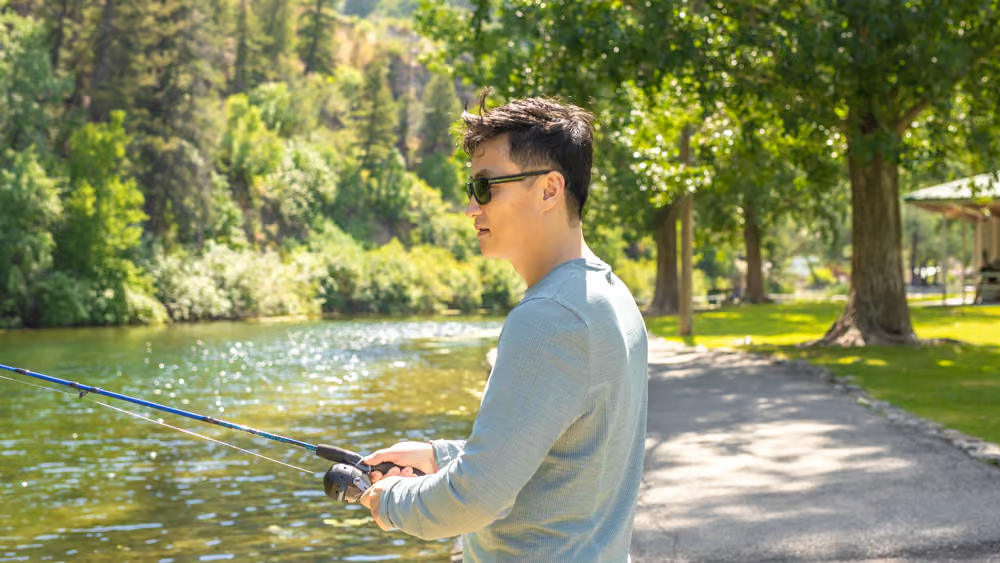
Without reason or warning, my father was arrested and imprisoned. They tortured him for a year. When he was released, my father weighed only 66 pounds.
Even after surviving the unimaginable, he was defiant. He wrote 20 pages of complaints to the Central Party about the human rights abuses he endured. My family was terrified of the consequences, but we couldn’t stop him. He fought for his voice to be heard.
On a warm Spring day, a Mercedes-Benz, license plate number 216, arrived at our home. February 16th was Kim Jong Il’s birthday, and cars with this number were only given to his closest aides. My father spoke with the man for hours about his letter. The man apologized and promised something like this wouldn’t happen again. This gave us a bit of hope for the future – for the possibility of change.
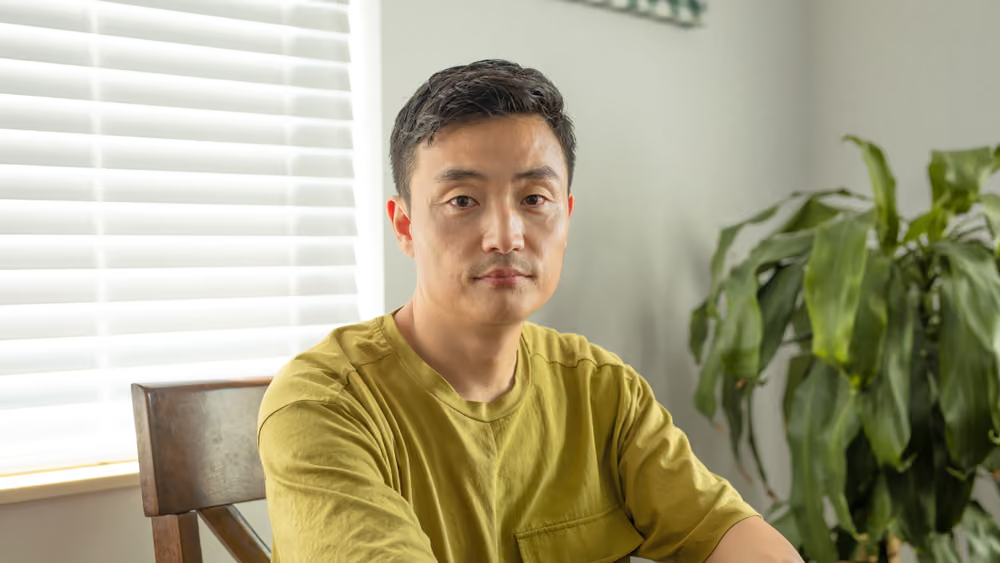
But the man left for Pyongyang. And then the police returned. I never saw my father again.
For two years, my family and I lived in unknowing agony, receiving no news on my father. Eventually, we heard from my father’s friend, who was a police officer, that he had passed away in prison.
At the very least, we wanted to send him off properly, so we asked that same friend how we could get my father’s body. Three days later, he returned. He told us they would not return my father’s body. My father had been sentenced to eight years in prison. He’d passed away after two. He still had six more years to serve – as a dead body. As a corpse.
For the first time I wondered whether this was the way normal people lived.
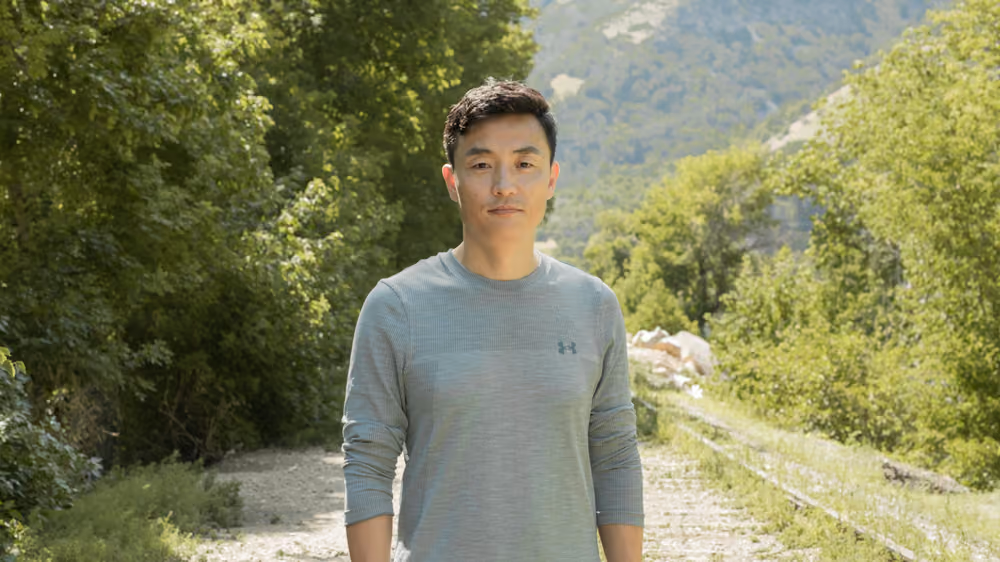
In 2009 I decided to escape from North Korea. Life had become near impossible for me after my father’s death, and I continued to face discrimination due to our family’s status in society.
By then, I had been married to my wife, Jiyeon, for two years. Most of our relationship before marriage was through the phone, because we lived far apart, and traveling in North Korea is difficult. So we called each other every night and talked for hours.
Now, I didn’t know if I was going somewhere she would never be able to reach. I told her it was a business trip. Two weeks. I’ll just be gone for two weeks.
She still cried at the train station, thinking about those two weeks. I couldn’t cry with her because then she would know the truth. So I boarded the train without a word, and watched it take me away from her.
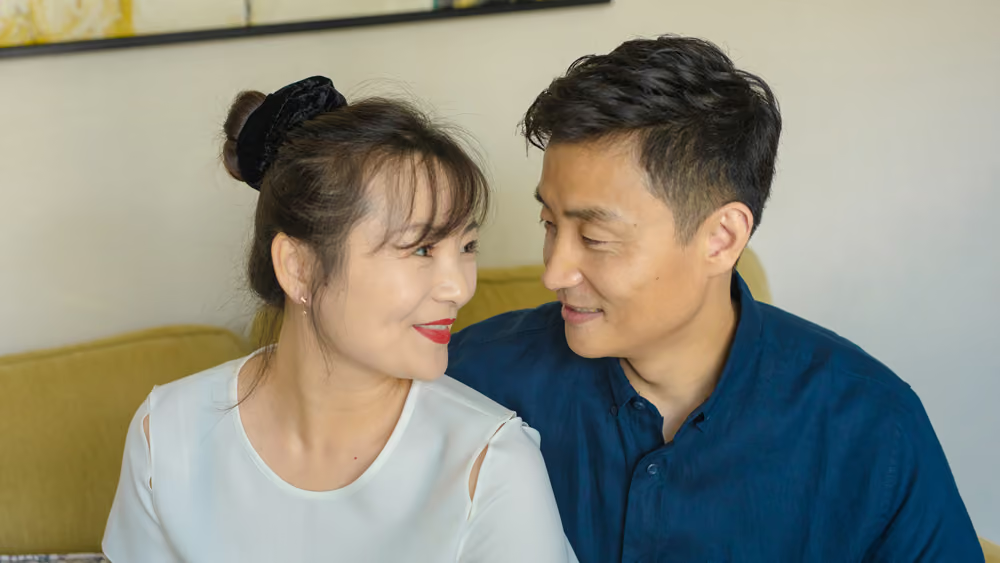
From the moment I escaped North Korea, it felt like I was being chased by a grim reaper. There were multiple close-calls where I felt death breathing down my neck.
I was once hiding in a corn field near the Chinese border. Lying on my stomach, I watched soldiers patrol the area when suddenly, one of them walked towards me. It was too late to run or hide.
I had brought poison with me in case something like this happened - I knew it would be better to kill myself rather than be captured. But as I prepared to take the poison, I thought of my wife. I thought about how she would never know what happened to me.
In that moment of sheer terror, I heard the sound of water. The soldier stood right beside me but he hadn’t seen me. He had only walked over to relieve himself. For the next few minutes, I couldn’t move. The soldier had left, but my body held onto the terror of that moment. I remained hunched and hurried for the rest of the journey.
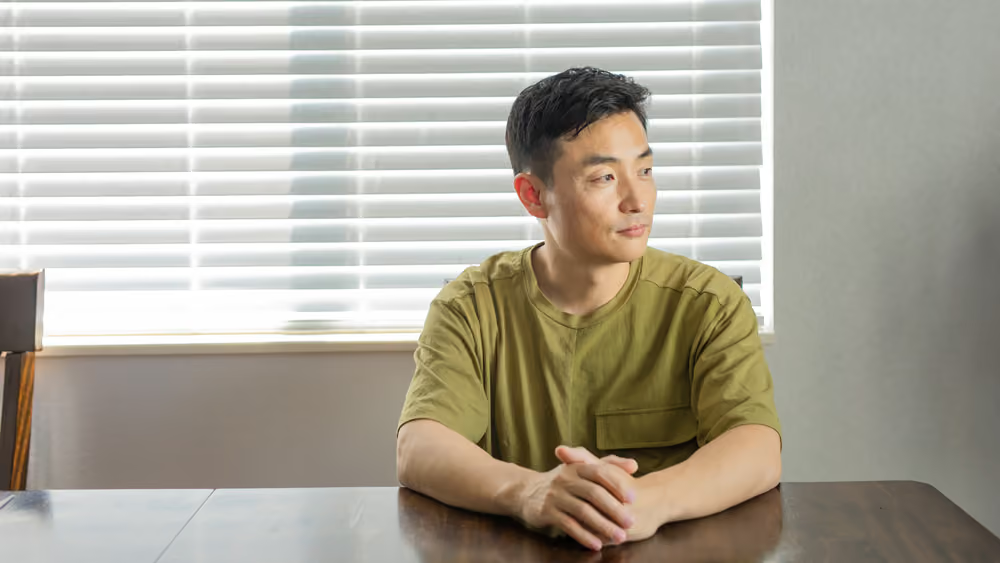
Eventually, I made it safely to South Korea. I started working as soon as possible – 12 hour days to pay back the broker fee, and save up money for my wife’s escape. My schedule was just working and sleeping, working and sleeping. It was hard, but for the first time in a long time, I had hope.
I was able to find a broker who put me in contact with my wife. It had been ten months since I’d defected at that point – ten months of her not knowing whether I was dead or alive. The call couldn’t be made in the city because the signal could be intercepted, so my wife and the broker hiked to the top of a mountain.
When we heard each other’s voices again, all we could do was cry. But we didn’t have much time, and so I asked her, you’re coming, right?
She said she was.
On December 27th, 2011, Jiyeon crossed the river to escape North Korea on the same route that I took.
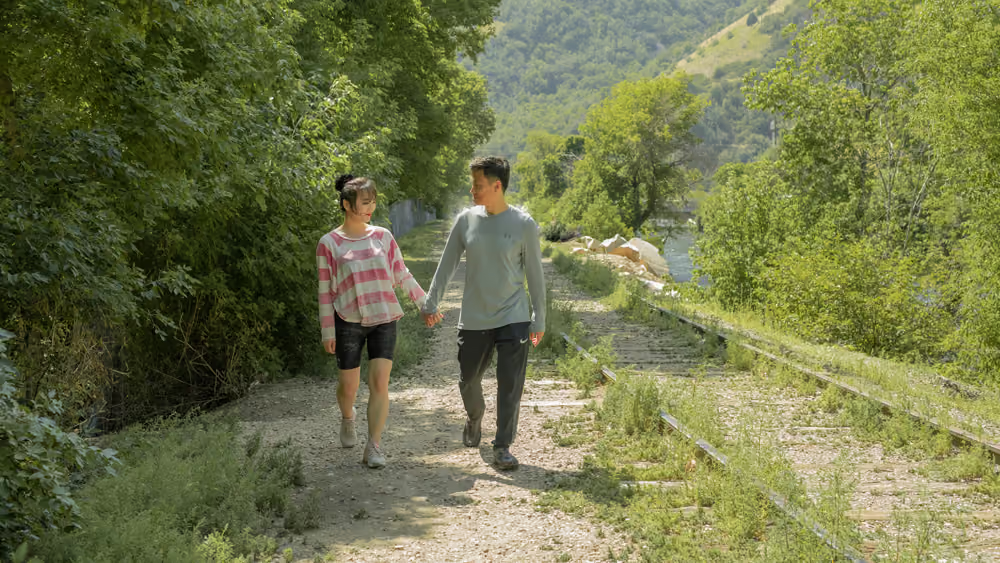
As soon as my wife arrived in South Korea, I went to meet her. I was so excited. I couldn’t stop crying. When my wife came into the room, she was crying too – but do you know what’s the first thing she did when she saw me?
She punched me – crying, calling me a liar. And I deserved it.
We live in Utah now with our two beautiful sons. We go fishing, camping, and enjoy the outdoors together. Every time I see them, I realize I’m living in a different world, one where we can finally dream and decide our own future.
This is the life I’ve made for my children. This is the life my father envisioned for me and for all North Koreans when he made his act of defiance. My father died fighting for his voice to be heard – and now, finally, he’ll be heard by the world.
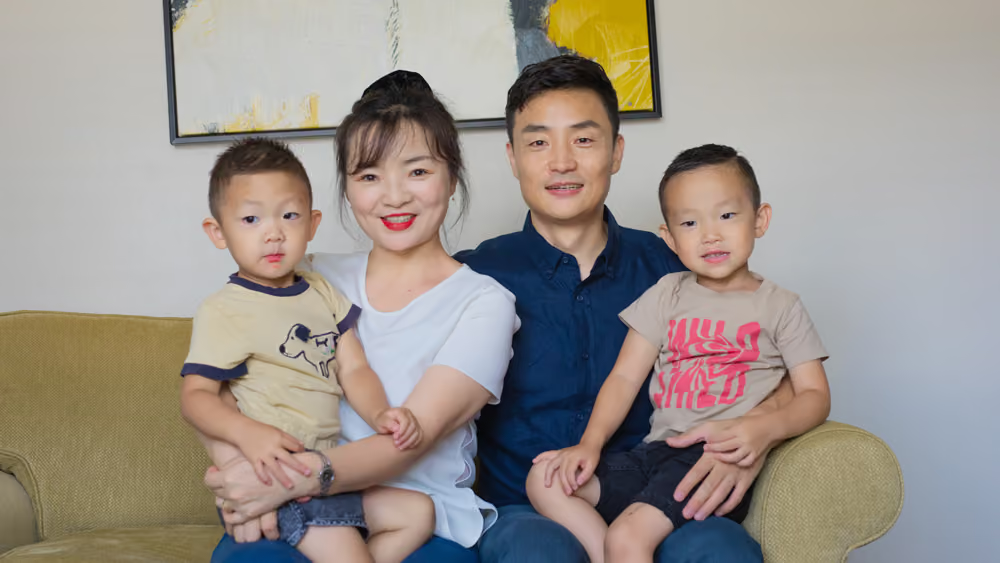
Doohyun risked everything to create a future where his family could live together in freedom. Their story isn’t unique - there are many more North Koreans waiting and hoping for the day when they can reunite with loved ones. Help make freedom part of every North Korean’s story.
Give today
Since resettling in the United States, Doohyun has completed his undergraduate studies and now works for a North Korean human rights organization. He considers helping the North Korean people to be his life’s mission, continuing his father’s legacy.