The North Korea I Remember: School, Family, and Home
By: HyeGyeong Joo
HyeGyeong is a PhD student in the Department of Economics at Korea University, specializing in theoretical economics. Her research looks at developing theoretical models of the North Korean economy. Since 2022, Hye-Gyeong has also participated in LiNK’s English Language Program.

Have you ever wanted to go home even while you were already at home? Because I have. It feels as though I am not longing for a physical house, but for something harder to name: a sense of belonging, of being whole, of belonging not anywhere but somewhere I would truly belong. Instead, I often feel emptiness, as if I do not fully belong. But I am not sure what these feelings mean or where they come from exactly.
I have been living in South Korea for around ten years, but I still miss North Korean food, school life, and above all, the time I spent with my family. There are restaurants in South Korea run by North Korean refugees, and sometimes their dishes bring back memories of home. Foods like injogogi-bap or nongma-guksu remind me not only of North Korean cuisine, but of birthdays, family, and everyday life.
The long strands of nongma-guksu always carry the wish for a long life, while the taste of injogogi-bap brings back the memory of a soybean dish made to resemble the meat we so rarely had.
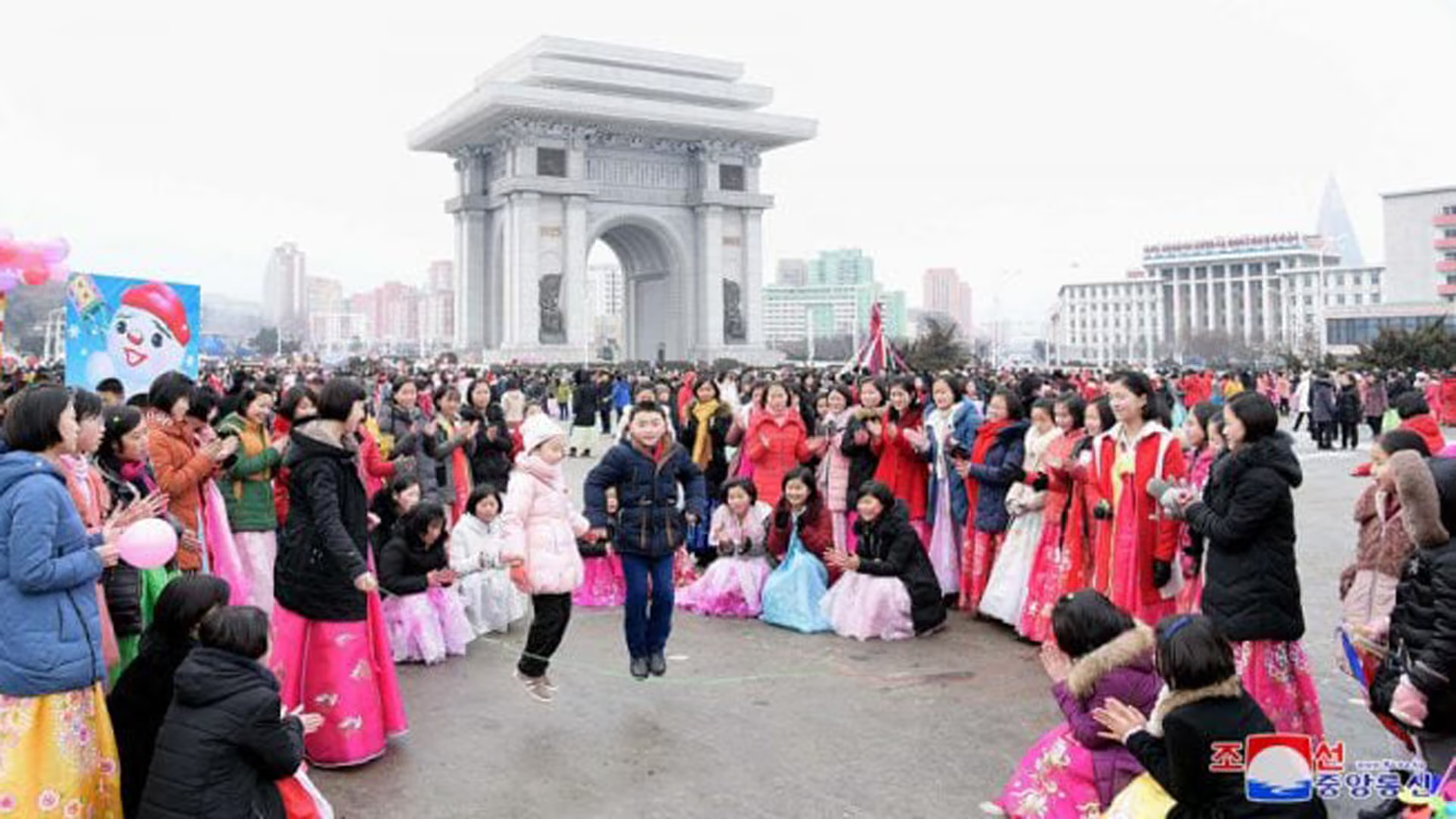
While these foods remind me of home, what I remember most vividly is my school life in North Korea. When I was in fourth grade, the girls in my school would often gather in the schoolyard to play jump rope. I was actually quite good at it. We would start with the rope at ankle height and gradually raise it higher and higher.
One day, when the rope had been raised to about head height, I tried to jump over it. Since I was quite short, I had to lift my leg as high as I could. Unfortunately, I ended up tearing my pants. I was so embarrassed that I almost cried. But what I remember most clearly is my teachers laughing so hard as they watched from the side. Even now, I can still picture that moment vividly.
I also remember winter lunchtime at school. We all brought packed lunches from home. In one corner of the classroom, there was a stove, and before lunch, students would place their lunch boxes on top of it to warm their food.
Sometimes, the lunch box closest to the stove would get burnt. During class, the smell of scorched rice would fill the room and make us so hungry that it was hard to focus. When lunchtime finally came, my friends and I would gather around the stove, sit in a circle, and eat together.
More than anything else, however, I miss the memories of winter. My friends and I would climb the hills near our town, sit on large sacks, and slide all the way down as if we were on sleds. We did it so often that the fabric on the back of our pants would wear thin and eventually tear. When that happened, I would go home only to be scolded by my mother.
Life was not easy in those days. We were often hungry and did not live comfortably. Sometimes we skipped breakfast, and sometimes a thin porridge was all we had for dinner. Yet, despite those hardships, I cannot forget the laughter we shared.
Looking back now, I realize that what I miss is not North Korea as a system. What I miss are the people with whom I laughed and cried, and the memories of my childhood that have stayed with me to this day.
For a long time, however, I could not talk about these feelings to anyone. I kept them to myself, unsure of how others would understand them. That began to change after I met people through Liberty in North Korea (LiNK). For the first time, I found a space where I felt I could speak more honestly about my memories and my life in North Korea.
Through the LiNK English program, I became close to a friend, and together we made a plan to create a book. I would write about real life in North Korea, and she would draw the illustrations for the book. I wanted people to see North Korea not only as a political system, but also as a place where ordinary people live, love, struggle, and create memories.
I shared this plan with someone I trusted deeply in South Korea. But she told me, “No, you can’t!” She said that if I spoke honestly about daily life in North Korea and about how much I miss certain parts of it, despite all the difficulties, people might ask, “Then why are you here? If you miss it so much, why don’t you go back?” Her response hurt me so deeply that I eventually closed my heart to others. After that, I stopped talking about these feelings with anyone. Only later did I finally find a place where I could tell my story freely and without hesitation.
When many people think about North Korea, they often think about politics, missiles, or the regime. But when I think about North Korea, I remember a girl whose pants tore while playing jump rope, students gathering around a stove to eat lunch together, and children laughing as they slid down snowy hills on sacks.
That is why I hope people can see North Korea not only as a political system, but also as a place where ordinary people live their lives. The people living there are not so different from people anywhere else. They laugh, dream, make friends, and create memories. Those are the stories I hope to share.
–
HyeGyeong is a participant of the LiNK English Language Program (LELP), which serves to not only help North Korean defectors build confidence and skills in English, but develop their capacity as advocates for this issue. To that end, we partnered with select LELP “columnists” to write and polish personal essays through multiple rounds of external feedback and revision. Our goal is to have more North Koreans share their stories directly and lead efforts to change the narrative.
We believe the North Korean people can achieve their liberty in our lifetime.
Opportunities like LELP invest in the people building that future now. Help more North Koreans find their voice, reach their goals, and lead change on this issue.
Give Today
My Name Is Loh Kiwan | Fictional Story, Real Lives
From a crumpled piece of paper, he copies his name onto the Application for Recognition of Refugee status. The letters flow together in neat, sloping script to spell–Loh Kiwan.
This seemingly mundane declaration of identity serves as the focal point of Netflix’s recently released movie, My Name is Loh Kiwan. Showcasing the titular character’s past and present struggles as a North Korean defector seeking asylum in Belgium, the film follows Kiwan’s journey through both hope and heartbreak while he fights for a new life in freedom. He shows unimaginable resilience in the face of tragedy, betrayal, and bureaucratic apathy, carving out a place where he can live as himself, for himself.
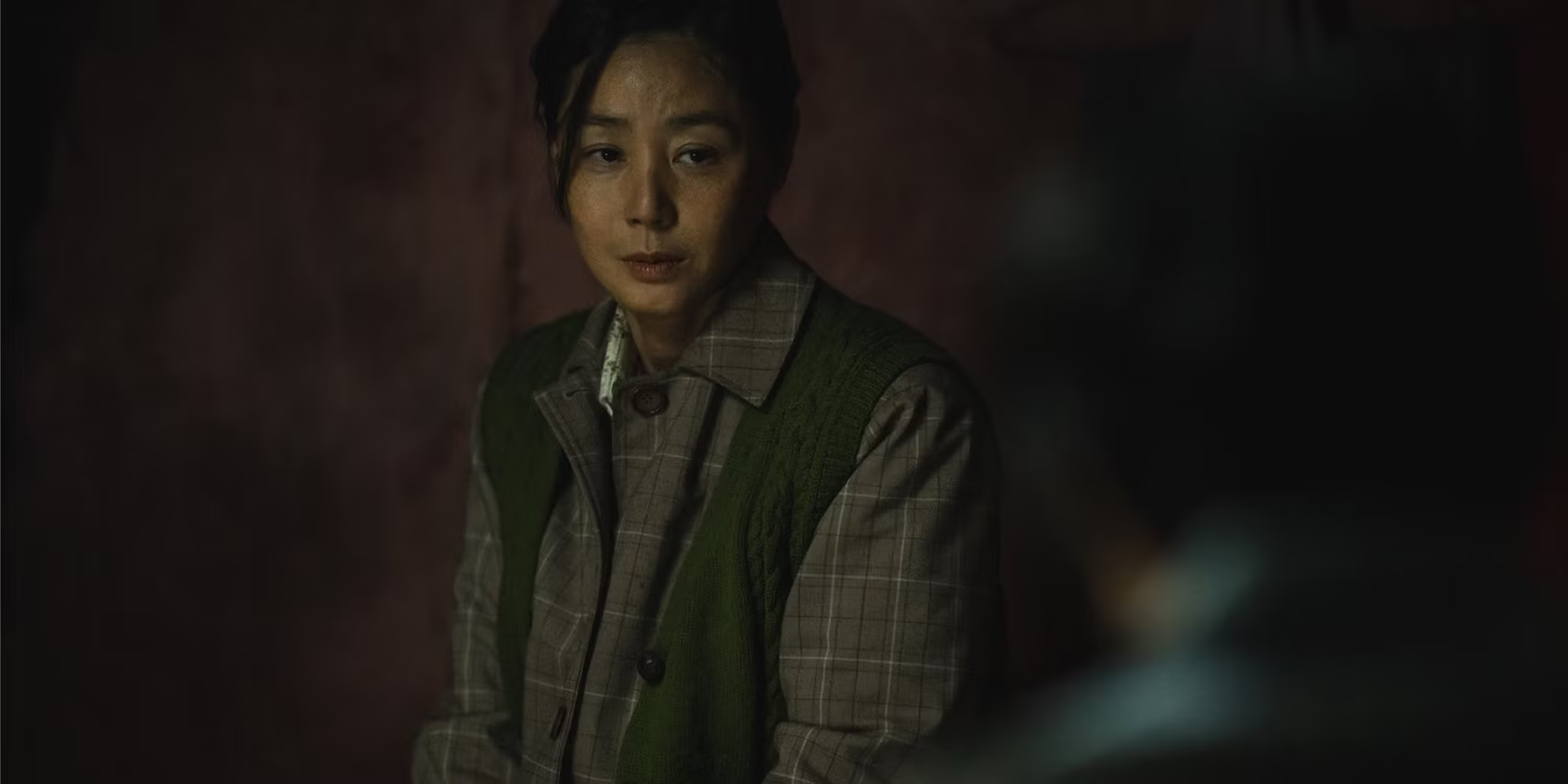
Though based on a fictional novel, Loh Kiwan’s story captures the real life experiences of many North Korean refugees. Whether it be the harrowing circumstances of his escape, the subsequent challenges Kiwan faces while applying for asylum, or even the emotional turmoil of contending with his trauma, My Name is Loh Kiwan derives its drama from reality when depicting the struggles of North Korean defectors.
Uprooted by an act of defiance that saves his friend’s life, Kiwan and his mother escape across the border to China and live there under constant threat of arrest and forced repatriation. With no legal status as refugees and no legal options for leaving the country without government approval, North Korean defectors in China are exceptionally vulnerable to trafficking and exploitation. They live in the shadows, concealing their identities as best they can, despite cultural and language barriers. If captured and returned to their home country, they are subject to brutal torture, imprisonment, and execution. Rather than face such inhumanity, many see suicide as a final escape and carry poison or razor blades with them, much like Kiwan and his mother.
It is ultimately his mother’s sacrifice that saves Kiwan from such a fate. Her death forces him into a position nearly every North Korean refugee recognizes–having to leave behind friends, family, and loved ones with aborted goodbyes for the sake of everyone’s safety and survival. Kiwan’s only material connection to his mother is a photo and a wallet full of blood. In reality, most leave with even less than that.
Not wanting to incriminate the people close to them if they are caught trying to escape, most North Korean refugees forgo any identifying documents or proof of their existence. They take only the bare essentials for survival, not knowing that their arrival in a new country is only the beginning of their journey, or even if they'll make it.
But this is not the narrative Liberty in North Korea believes in. No North Korean person should have to endure the struggles or celebrate the successes of resettlement alone. Much like the assistance Kiwan later receives from an advocacy group that offers legal support and a community of other North Koreans, LiNK walks with our North Korean friends on their journey to freedom. And when they begin new lives, we support their success, amplify their voices, cultivate more leaders and changemakers working on this issue together.
In this, Kiwan’s story reflects yet another reality of the North Korean people. Not only do they encounter extraordinary hardships, but also, they face them with extraordinary strength. Throughout the film, Kiwan persists in his pursuit of an earnest, honest life. Despite setbacks and situations where he’s forced into hurt or hiding, he stays true to his mother’s wish for him to live well, and in doing so, inspires the people around him to do the same.
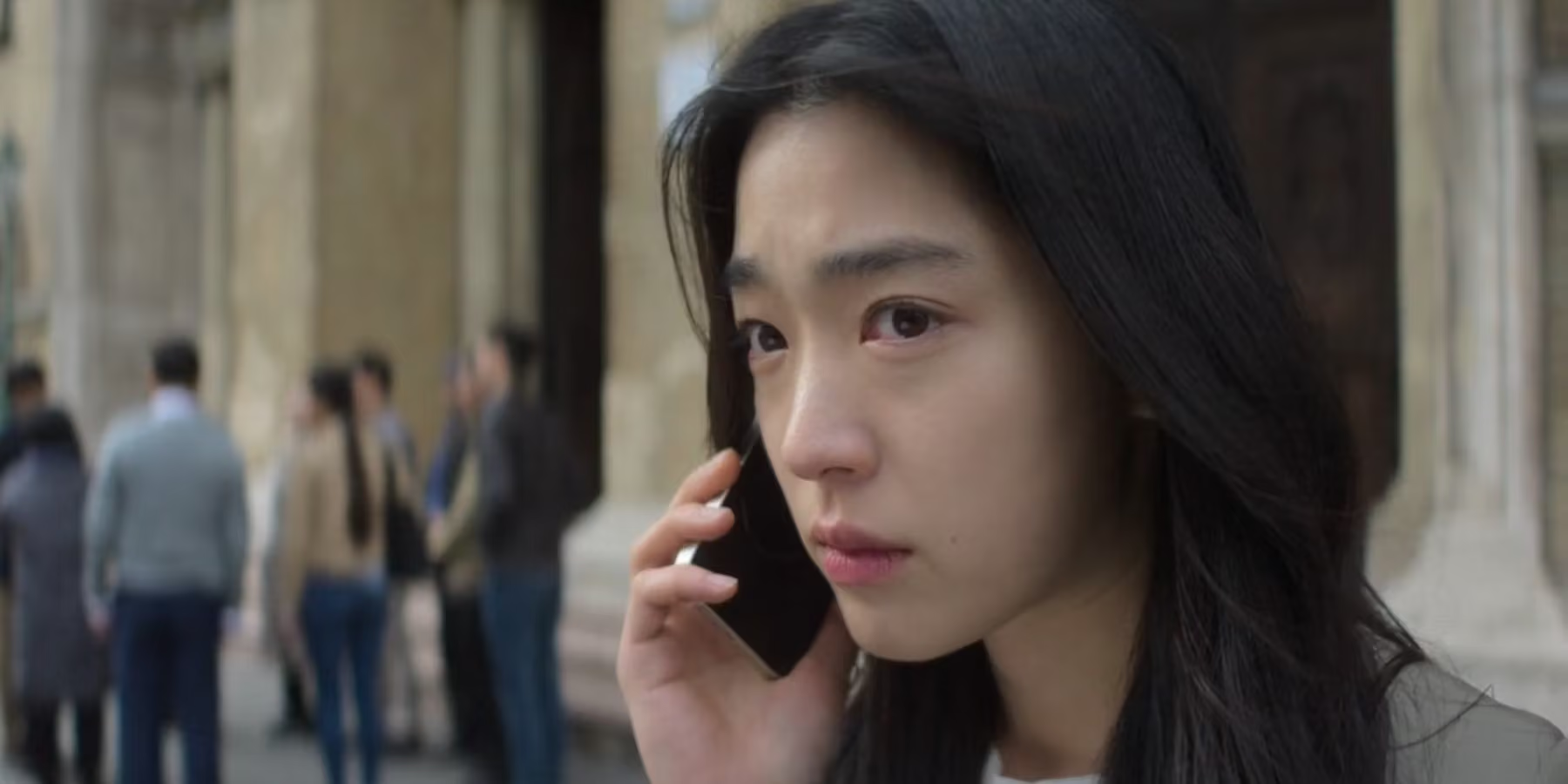
He finds hope, love, and freedom in others, but most importantly, in himself. When placed on trial to prove his identity before the court, Loh Kiwan proclaims the name his mother gave him.
Owning one’s identity as a North Korean person is not always easy. From the start of their escape, they are forced to hide. Once they reach freedom, the stigma and prejudice people hold towards their homeland pressures many to erase their accent or change their name–sometimes as a form of self-protection, other times as a way to fit in.
What Kiwan’s story shows, however, is that there is hope at the end of hiding. There is beauty in the simple, everyday life he longs for–a life where he can work for himself and share meals with friends, have a home, have a future, and have the choice to stay or go.
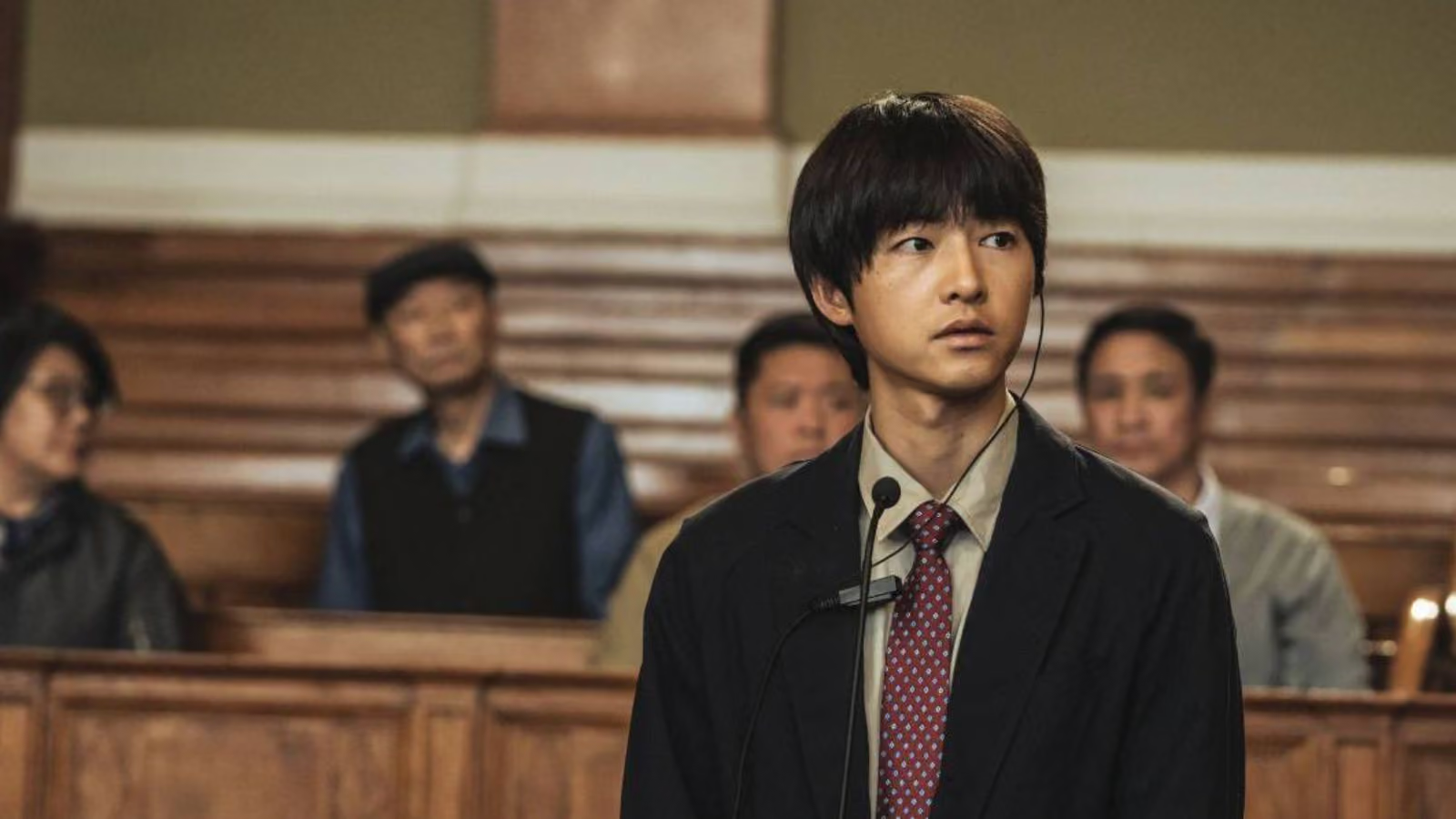
This is the life the North Korean people deserve, and every day, both within the country and without, they fight towards a better future. Their courage and indomitable spirit are not just figments of fiction. With your help, their freedom will become a reality.
Sign up below to learn how YOU can help support North Korean refugees today.