
We Call BTS “Bangdan” | Cultural Shifts in North Korea
By: Hannah Oh
Hannah is a North Korea-born intern at Liberty in North Korea’s Seoul office. This article has been reconstructed from her perspective based on DailyNK reports from March 2026.
⏱️ 30-second summary
- K-Pop Power: Young people in North Korea refer to BTS as “BT” to avoid attracting the attention of authorities. They empathize with song lyrics that touch their hearts, in sharp contrast to the ideology prescribed by the state. Even amidst strict crackdowns on South Korean media, people are consuming and sharing K-Pop with their peers.
- Resetting Relationships: It’s now common to see couples in North Korea spending time together in cafes, signaling a change in people’s daily lives. A new culture is emerging where people build relationships by sitting face-to-face over coffee and conversation.
- Expanding Self-Expression: New beauty standards that favor slim bodies and skincare have become popularized. As outside information spreads in North Korea, it’s gradually changing people’s tastes and self-expression.
BTS is a name recognized by people all over the world. This global K-Pop group’s music is even reaching audiences in the most closed country to exist today: North Korea.
The North Korean government severely cracks down on the consumption and spread of foreign media, like South Korean music and dramas. Through foreign media, North Koreans are able to learn things about the outside world that contradict and challenge the regime’s propaganda. In response, the regime passed the “anti-reactionary thought law” in December 2020, which made watching foreign media punishable by 15 years in a political prison camp.
To avoid being caught discussing and sharing about BTS, North Koreans are reportedly shortening the name to “BT.” Even though they cannot directly mention their favorite idol group, they are expressing their fandom by using slang that they understand among themselves.
Changes to daily life in North Korea extend beyond music tastes. From couples quietly conversing in cafes to women experimenting with K-Beauty, this article follows the stories of North Koreans who, despite control and restrictions, are shaping culture and cultivating new standards of leisure, beauty, and expression.
Why North Korean Youth Gravitate Towards K-Pop
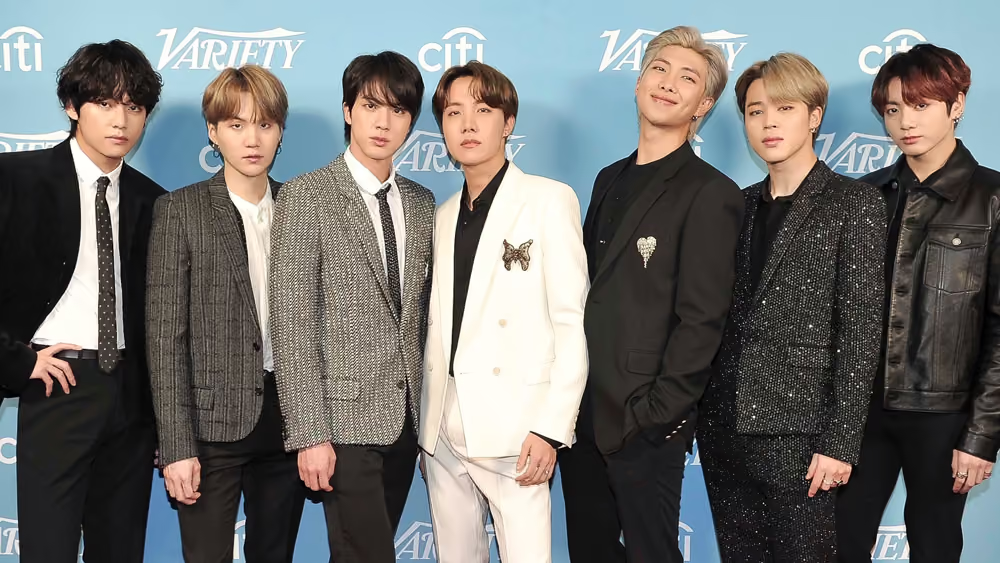
It is reported that among young people in North Korea, it is common to refer to BTS, or “Bangtan,” as BT, or “Bangdan,” to avoid the scrutiny of North Korean authorities cracking down on illegal foreign media. Fans in North Korea have cited songs such as “I’m Fine,” “Go,” “Danger,” and “Spring Day” as their favorites, and expressed a desire to dress like the BTS members.
These developments might suggest that instead of foreign media being a taboo topic of discussion, it has become a language of taste shared among peers.
In response to the popularity of South Korean music, North Korean authorities imposed a city-wide lecture series that warned “The only love young people should pursue is revolutionary and comradely love.” However, after the lectures ended, it is reported that the sentiment among young people was that “South Korean song lyrics seem to understand my heart,” and “the emotions they actually feel” over “the emotions permitted by the state.”
Cuppaccinos Over Flowers: Dating Culture in North Korea
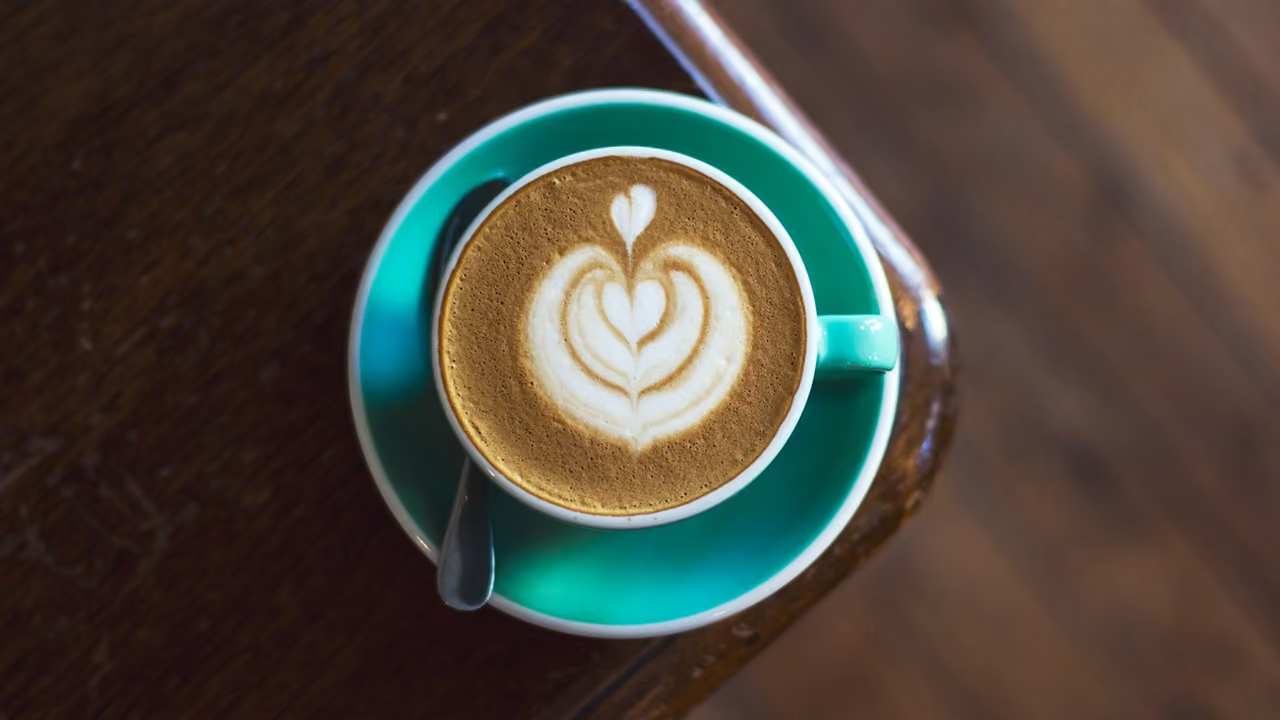
In North Korea, there is still a strong perception that cafes are places frequented only by the well-off. However, this year on March 8th for International Women’s Day, reports emerged of husbands visiting coffee shops with their wives, holding hands, and spending time drinking lattes or cappuccinos. Rather than traditional gestures like flowers or doing extra housework, there seems to be a cultural shift of celebrating by spending time together.
After visiting a cafe for the first time, residents reportedly commented that “It’s surprisingly nice because you can talk quietly.” Their perception of this space—previously considered unsuitable for leisure amidst busy lives—changed after actually experiencing it for themselves. The growing popularity of cafes as a space where two people can sit face-to-face and share a private conversation may seem like a minor development, but it is not insignificant.
People’s perceptions and behaviors don’t only change when systems or policies are altered; shifts in how individuals interact and go about their daily lives is also a catalyst for change.
The Far-Reaching Influence of K-Beauty

There have also been reports that interest in beauty treatments and taking care of one’s appearance is growing in North Korea, particularly among affluent women. Younger women have taken to dieting, while middle-aged women are spending money on cosmetic procedures like Botox to reduce wrinkles. North Korean beauty standards have historically favored a fuller figure to look healthy, but now there is an emerging preference to look slimmer. According to one source, this is due to the influence of South Korean culture.
Even in South Korea, there is an ongoing debate as to whether striving for a slim body and youthful appearance is a healthy pursuit. Nevertheless, this shift in North Korean beauty habits is notable.
Individuals are seeking change and acting on their own initiative, influenced by external information, rather than following the standards set out by the regime.
However, it must be noted that these developments seem to be more prominent among wealthy women with financial means, as opposed to the entire population.
Pop Culture as a Catalyst for Change in North Korea
The global influence of K-Pop groups like BTS is usually measured by streaming numbers or chart rankings. But the most significant marker of impact might be found in North Korea, where people risk their lives to listen to their songs. Even in the most closed country in the world, there are people who enjoy heartfelt music, shared conversation over a cup of coffee, and self-care.
If you zoom in past the image of North Korea as a bleak, oppressed country, there are millions of people going about their everyday lives. Small cultural shifts and changing attitudes may seem insignificant. But over time, these compounding changes could bring about transformation in North Korea.
Increasing Information Access for North Korean People
As evidenced by these developments, North Koreans are watching foreign media and have a growing awareness of the outside world. At Liberty in North Korea, we believe that access to uncensored outside information is key to increasing forces of change and opening inside the country. Empowered with information access, North Koreans can imagine a different life for themselves and push the boundaries of the regime’s control.
We work with North Korean partners and engineers to develop and distribute tailored technology and content to help more people inside the country safely access uncensored information.
You can help bring truth to where it’s urgently needed.
Give Today
Trafficking and Exploitation of North Korean Refugees
For North Koreans hiding in China, repatriation is synonymous with death. Resolved to avoid such a fate, but with few options or protections, North Korean refugees are left vulnerable to a second wave of human rights abuses.
Among North Korean women and girls who escape to China, an estimated 60% have fallen victim to human trafficking.
Here are the stories of three women who have survived the unimaginable and are now advocating for this issue in freedom.
The Fear of Forced Repatriation
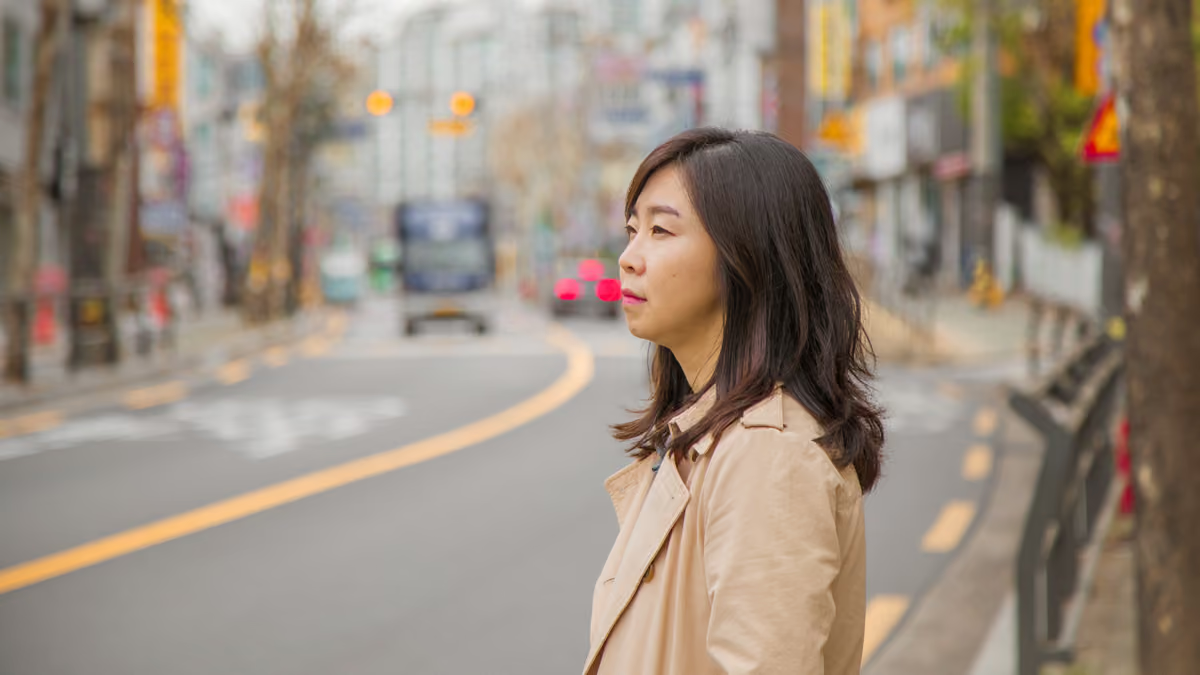
After Eunju fled from North Korea in 1999, she ended up spending years in China before finally reaching freedom.
“In China, North Korean defectors are exposed to various crimes, including sexual assault, human trafficking, forced prostitution, and labor exploitation. Those who seemed kind and willing to help were either traffickers or rapists. Promises of wages to be paid in the fall were replaced with threats—’You're from North Korea, aren't you?’
There is only one reason why the victims—North Korean defectors—remain silent: the fear of forced repatriation. This fear-driven silence perpetuates a vicious cycle of human rights violations against North Koreans in China.
On our first night in China, we were confronted with a trauma that would haunt us for a lifetime. As we walked along the road, not knowing where to go, a car slowed down and pulled up beside us. The door swung open, and someone grabbed my sister. My mother and I clung to her, desperate not to let go, but we couldn’t withstand the force of the accelerating car and were thrown aside. At the time, my sister was still just a young girl who had not even gone through puberty, yet she could not escape sexual violence. My mother couldn’t even bring herself to think about reporting the incident. She knew that if she went to the authorities, the Chinese police would capture us and send us back to North Korea before they ever caught the perpetrator.”
Soon after, Eunju’s mother was trafficked into a forced marriage together with Eunju and her sister, and they were sold for 2000 RMB (~$240 at the time).
Sold on the Way to Freedom
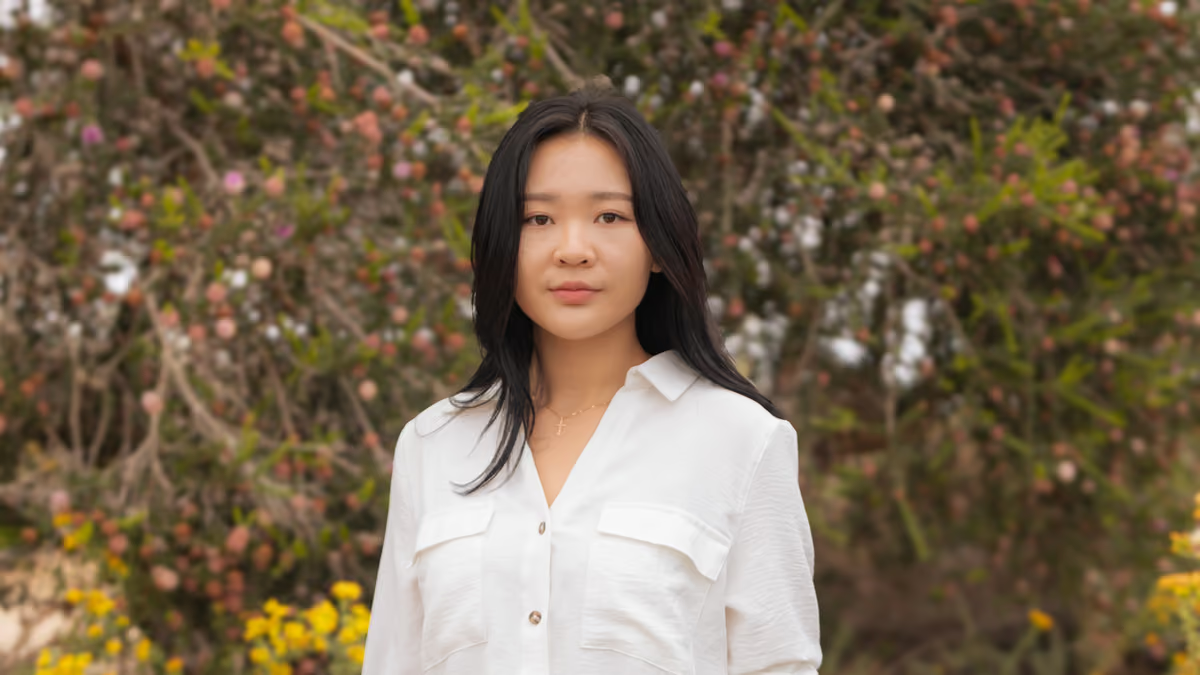
Hannah fondly remembers growing up with a large family in North Korea. But widespread food shortages forced her to leave her beloved hometown at 15 years old. When she finally managed to cross into China, she was trafficked and sold into a forced marriage.
“Do you remember what life was like when you were 15 years old? Maybe you were stressed about highschool, or getting your driver’s license. When I was 15 years old, I was sold to a man in China who was twice my age. For the first 6 months of captivity, I stayed away from him as much as I could. But in the end, there was nothing I could do to protect myself.”
“When I became pregnant, I couldn’t accept it because it wasn’t my choice. But then my baby arrived, and it all hit me. I wanted to give my daughter the same love I had grown up with. But I couldn’t do that without legal status or freedom. So with my one-month-old baby in my arms, I escaped once again.
Even though it was a very hard and dangerous journey, we ran together towards freedom, towards a future that guarantees our safety and hope.”
A Mother’s Impossible Choice
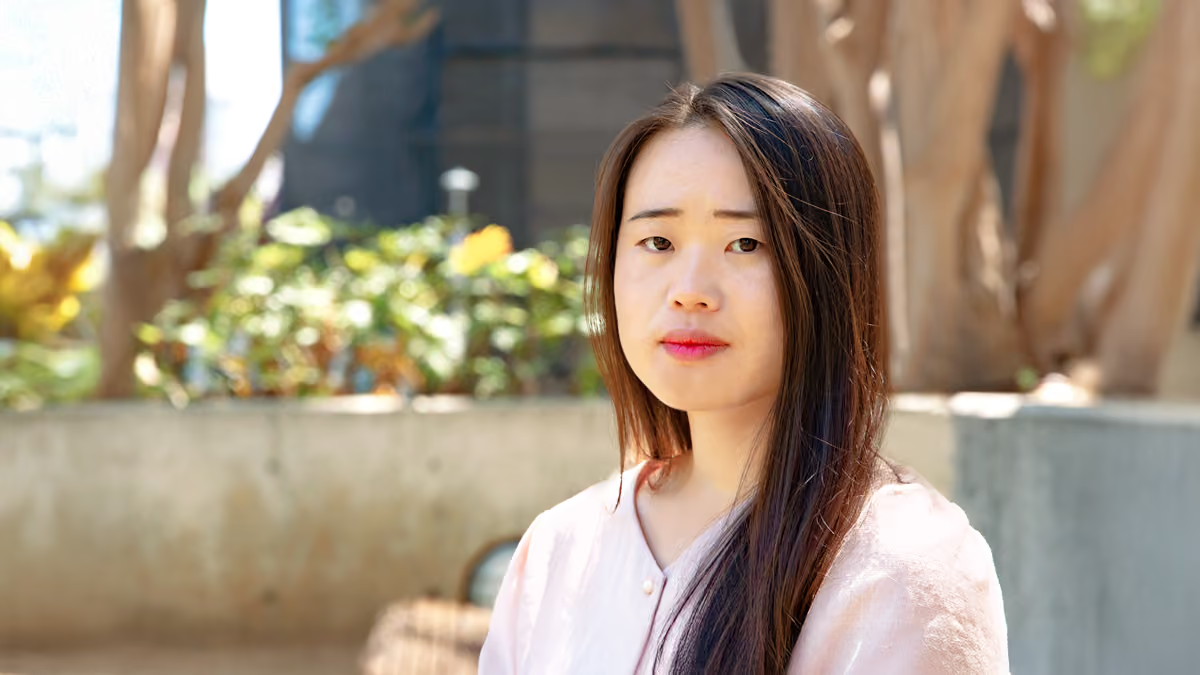
Joy fled from North Korea when she was 18 years old. When she reached China, the broker who arranged her escape went back on their word and immediately demanded to be repaid.
“She told me my only option was to be sold into marriage to a Chinese man so the brokers could take my bridal cost as payment. I couldn't even think of refusing because I was afraid they would do something bad to me or drop me off somewhere alone to get caught by the Chinese police and sent back to North Korea. At that point, I realized that I was trapped.”
Joy was sold to an older Chinese man for $3,000. She searched for any way to escape, but soon became pregnant and gave birth to her daughter. For two years, she raised her child and began to lose hope of ever reaching freedom.
Then in 2013, Joy was connected to LiNK’s network. She felt it was her last chance to take back control of her life. But she faced an impossible decision. Her daughter was still very young, and it would be incredibly risky to escape together. Ultimately, Joy decided to leave her behind.
“I cried every day thinking of my daughter. Before we started moving to get out of China I stayed with some other defectors…I didn't want to cry in front of [them], so I cried behind a curtain. I found another North Korean woman crying there because she also left her child. We ended up hugging each other and crying together.”
Stories of Hope
Eunju, Hannah, and Joy’s stories echo that of thousands of North Korean women who were sold on the way to freedom. But they’ve refused to let their painful experiences prevent them from living full lives, instead turning them into sources of strength, fueling their work on this issue.
Eunju is now living in South Korea with her mom and sister. She co-authored a book about her journey, A Thousand Miles to Freedom, with journalist Sebastein Falletti to make sure stories like hers are not forgotten.
Hannah is also in South Korea raising her daughter, who will never know a life without freedom. In 2022, Hannah joined LiNK’s Advocacy Fellows program to develop her capacity as a leader and advocate for this issue. She traveled across the US alongside other young activists, sharing her story at universities, churches, Fortune 500 companies, and with key stakeholders on Capitol Hill.
Joy was also a LiNK Advocacy Fellow in 2019. Today, her advocacy continues in the classroom, as an educator at an alternative school for the children of North Korean mothers. Some of her students were born in China while the mothers were in forced marriages—a circumstance that is deeply personal. Joy is beloved by the children, and strives to help them navigate their complex identities and relationships with their parents.
All the while, Joy has kept in touch with her daughter through video calls and messages. Last year, she was finally able to bring her daughter to South Korea!
What You Can Do to Help
The trafficking of thousands of North Korean women and girls is one of the most rampant and egregious human rights violations happening today. Yet it often does not get enough dedicated attention amidst all the dangers and abuses that North Koreans face—an alarming reminder of the gravity of this issue.
LiNK rescues North Korean refugees without cost or condition, and provides crucial resettlement support during this period of transition. We’re one of the only organizations still doing this work since the COVID-19 pandemic. To date, we've helped almost 1,400 North Korean refugees and their children reach freedom.
It is more urgent and important than ever that we carry on this work. Right now, our field team is actively in communication with North Korean refugees hiding in China, many of them women who were trafficked or sold into forced marriages, and coordinating their escape. Help bring them to safety and freedom.










