
We Call BTS “Bangdan” | Cultural Shifts in North Korea
By: Hannah Oh
Hannah is a North Korea-born intern at Liberty in North Korea’s Seoul office. This article has been reconstructed from her perspective based on DailyNK reports from March 2026.
⏱️ 30-second summary
- K-Pop Power: Young people in North Korea refer to BTS as “BT” to avoid attracting the attention of authorities. They empathize with song lyrics that touch their hearts, in sharp contrast to the ideology prescribed by the state. Even amidst strict crackdowns on South Korean media, people are consuming and sharing K-Pop with their peers.
- Resetting Relationships: It’s now common to see couples in North Korea spending time together in cafes, signaling a change in people’s daily lives. A new culture is emerging where people build relationships by sitting face-to-face over coffee and conversation.
- Expanding Self-Expression: New beauty standards that favor slim bodies and skincare have become popularized. As outside information spreads in North Korea, it’s gradually changing people’s tastes and self-expression.
BTS is a name recognized by people all over the world. This global K-Pop group’s music is even reaching audiences in the most closed country to exist today: North Korea.
The North Korean government severely cracks down on the consumption and spread of foreign media, like South Korean music and dramas. Through foreign media, North Koreans are able to learn things about the outside world that contradict and challenge the regime’s propaganda. In response, the regime passed the “anti-reactionary thought law” in December 2020, which made watching foreign media punishable by 15 years in a political prison camp.
To avoid being caught discussing and sharing about BTS, North Koreans are reportedly shortening the name to “BT.” Even though they cannot directly mention their favorite idol group, they are expressing their fandom by using slang that they understand among themselves.
Changes to daily life in North Korea extend beyond music tastes. From couples quietly conversing in cafes to women experimenting with K-Beauty, this article follows the stories of North Koreans who, despite control and restrictions, are shaping culture and cultivating new standards of leisure, beauty, and expression.
Why North Korean Youth Gravitate Towards K-Pop

It is reported that among young people in North Korea, it is common to refer to BTS, or “Bangtan,” as BT, or “Bangdan,” to avoid the scrutiny of North Korean authorities cracking down on illegal foreign media. Fans in North Korea have cited songs such as “I’m Fine,” “Go,” “Danger,” and “Spring Day” as their favorites, and expressed a desire to dress like the BTS members.
These developments might suggest that instead of foreign media being a taboo topic of discussion, it has become a language of taste shared among peers.
In response to the popularity of South Korean music, North Korean authorities imposed a city-wide lecture series that warned “The only love young people should pursue is revolutionary and comradely love.” However, after the lectures ended, it is reported that the sentiment among young people was that “South Korean song lyrics seem to understand my heart,” and “the emotions they actually feel” over “the emotions permitted by the state.”
Cuppaccinos Over Flowers: Dating Culture in North Korea
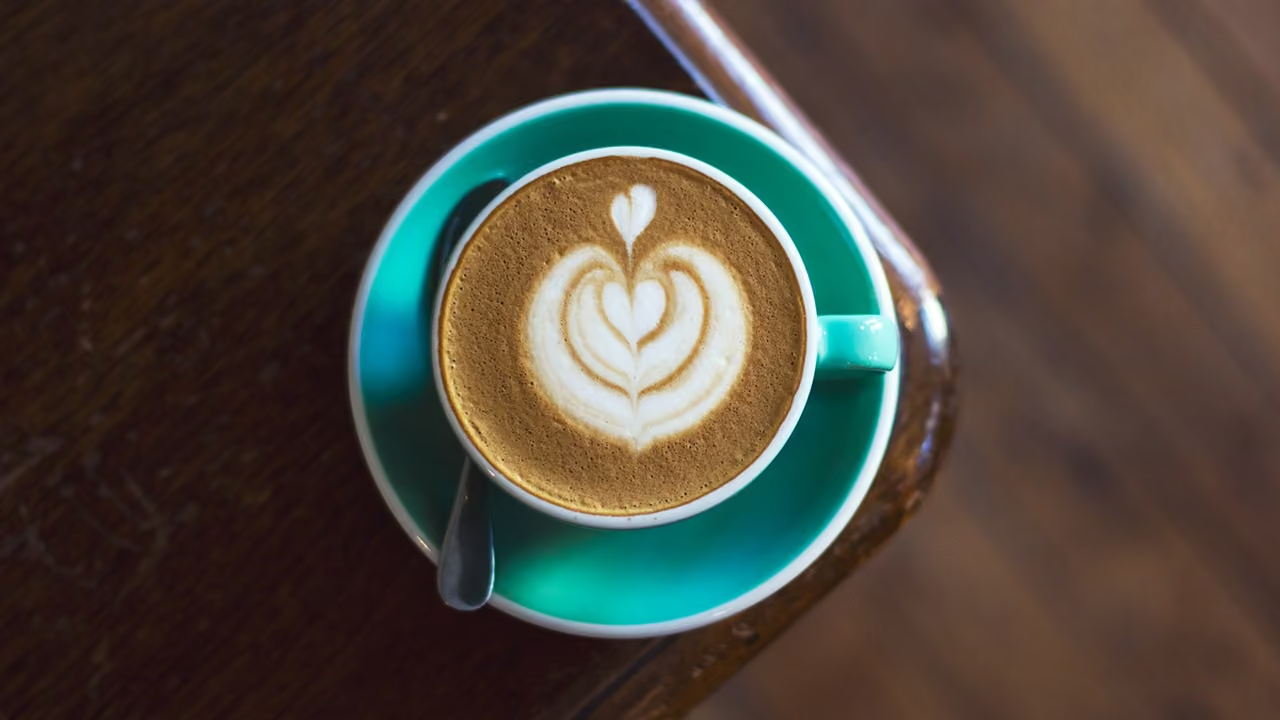
In North Korea, there is still a strong perception that cafes are places frequented only by the well-off. However, this year on March 8th for International Women’s Day, reports emerged of husbands visiting coffee shops with their wives, holding hands, and spending time drinking lattes or cappuccinos. Rather than traditional gestures like flowers or doing extra housework, there seems to be a cultural shift of celebrating by spending time together.
After visiting a cafe for the first time, residents reportedly commented that “It’s surprisingly nice because you can talk quietly.” Their perception of this space—previously considered unsuitable for leisure amidst busy lives—changed after actually experiencing it for themselves. The growing popularity of cafes as a space where two people can sit face-to-face and share a private conversation may seem like a minor development, but it is not insignificant.
People’s perceptions and behaviors don’t only change when systems or policies are altered; shifts in how individuals interact and go about their daily lives is also a catalyst for change.
The Far-Reaching Influence of K-Beauty

There have also been reports that interest in beauty treatments and taking care of one’s appearance is growing in North Korea, particularly among affluent women. Younger women have taken to dieting, while middle-aged women are spending money on cosmetic procedures like Botox to reduce wrinkles. North Korean beauty standards have historically favored a fuller figure to look healthy, but now there is an emerging preference to look slimmer. According to one source, this is due to the influence of South Korean culture.
Even in South Korea, there is an ongoing debate as to whether striving for a slim body and youthful appearance is a healthy pursuit. Nevertheless, this shift in North Korean beauty habits is notable.
Individuals are seeking change and acting on their own initiative, influenced by external information, rather than following the standards set out by the regime.
However, it must be noted that these developments seem to be more prominent among wealthy women with financial means, as opposed to the entire population.
Pop Culture as a Catalyst for Change in North Korea
The global influence of K-Pop groups like BTS is usually measured by streaming numbers or chart rankings. But the most significant marker of impact might be found in North Korea, where people risk their lives to listen to their songs. Even in the most closed country in the world, there are people who enjoy heartfelt music, shared conversation over a cup of coffee, and self-care.
If you zoom in past the image of North Korea as a bleak, oppressed country, there are millions of people going about their everyday lives. Small cultural shifts and changing attitudes may seem insignificant. But over time, these compounding changes could bring about transformation in North Korea.
Increasing Information Access for North Korean People
As evidenced by these developments, North Koreans are watching foreign media and have a growing awareness of the outside world. At Liberty in North Korea, we believe that access to uncensored outside information is key to increasing forces of change and opening inside the country. Empowered with information access, North Koreans can imagine a different life for themselves and push the boundaries of the regime’s control.
We work with North Korean partners and engineers to develop and distribute tailored technology and content to help more people inside the country safely access uncensored information.
You can help bring truth to where it’s urgently needed.
Give Today
A North Korean Mom and Son’s Harrowing Escape | Harry’s Story
The town I grew up in was surrounded by mountains. When the season was right, my friends and I would hike up to look for pears. Fresh fruit was a luxury in North Korea, but the mountainside was covered in orchards. One day we snuck in when the fruit was still green, hoping to avoid the guards.
I hid in a tree, passing down pears to my friends, when we heard a whistle blow. My heart was pounding; it was like a heist movie. I rolled away and ran out of danger. Somehow, we got away with it. It didn’t even matter that the fruit we ate was not ripe and made our stomachs hurt—we felt unstoppable.
Little did I know that just a few years later, I would be running for my life once again… but this time, it was not a game. I would be escaping from North Korea.
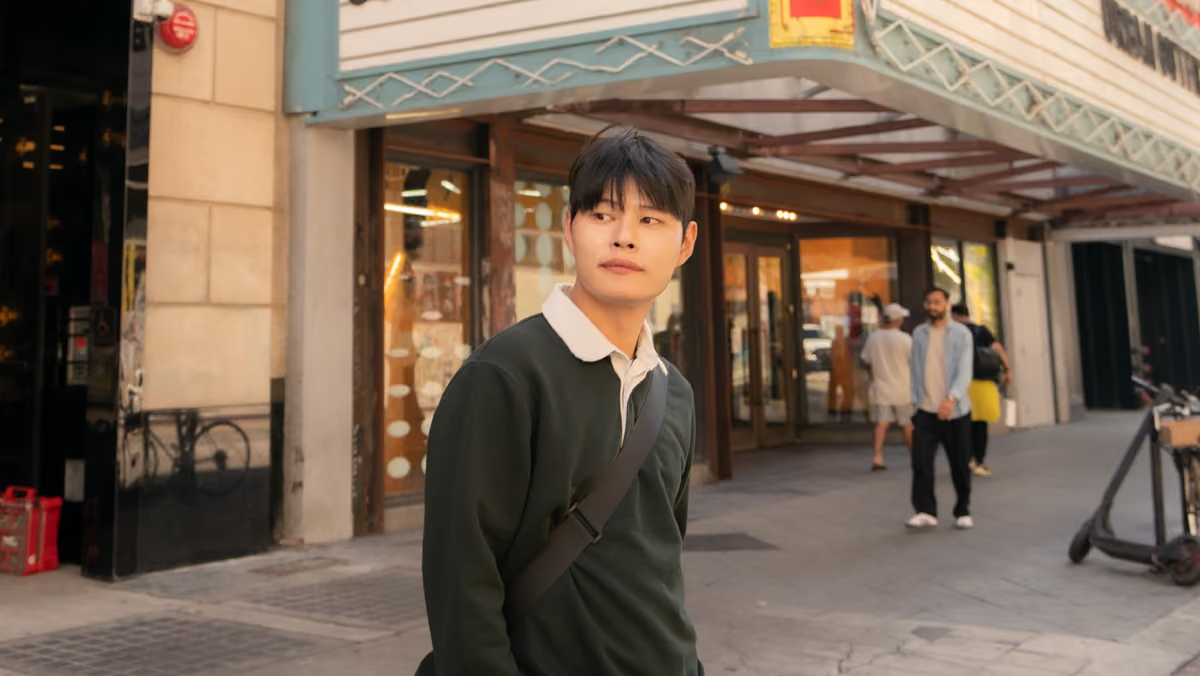
Life in North Korea was normal to me. I went to school and spent time with my friends and older sister. All I knew about South Korea was from the movies I’d secretly watched. It seemed like a scary place, where they trafficked drugs and stole your organs.
My mom was often busy with work. She had a job that connected North Koreans to China, wiring money between families. With her income, we were able to live comfortably. But it was risky. She could usually bribe the guards to let her cross the border safely, but it wouldn’t work forever. One day, she was caught and sent to one of North Korea’s brutal prison camps.
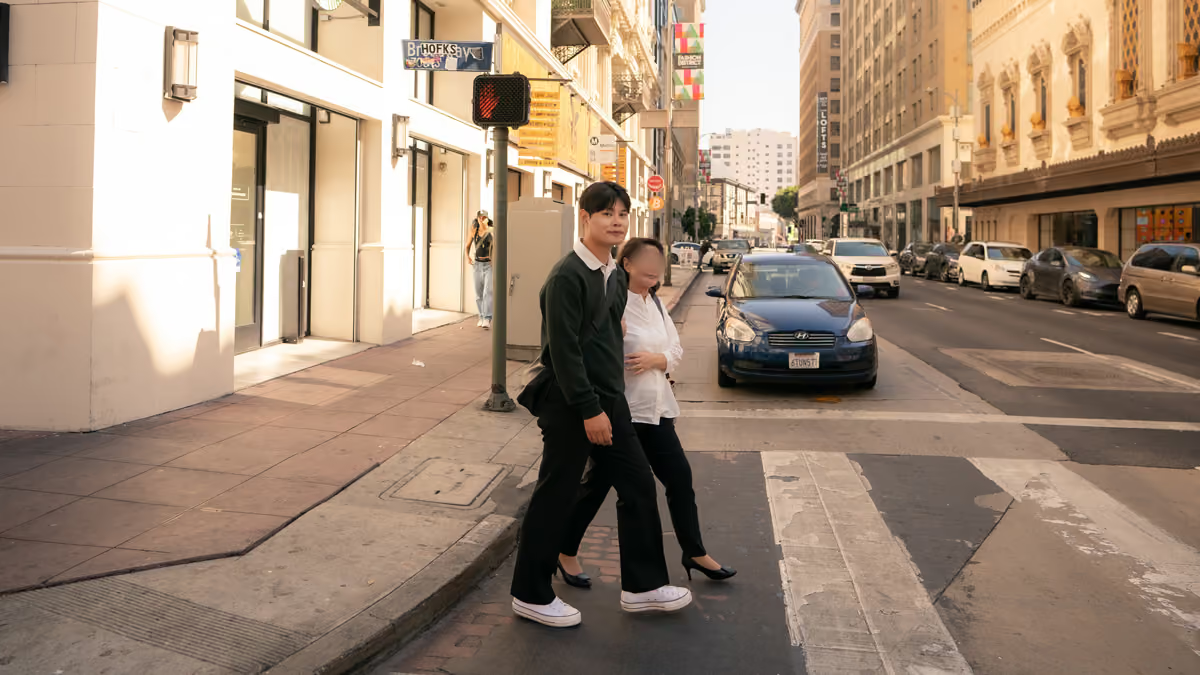
My mom spent two years in the prison camp, forced to do intense labor every day while barely being fed. She told us later that she had shared a concrete cell with 50 other people and they lacked basic things like soap, toilet paper, and sanitary products. Guards would abuse their power and find any reason to assault them.
Many people in the camp were also women who had been arrested for crossing the border, trying to find ways to make a living and take care of their children. Dying in prison meant your crimes would be passed on to your family. And so, many of those women endured faithfully until they were released, and then passed away afterward.
When my mom finally left the camp, she quit the work she was doing and told her clients she was done. But one of them refused to hear it.
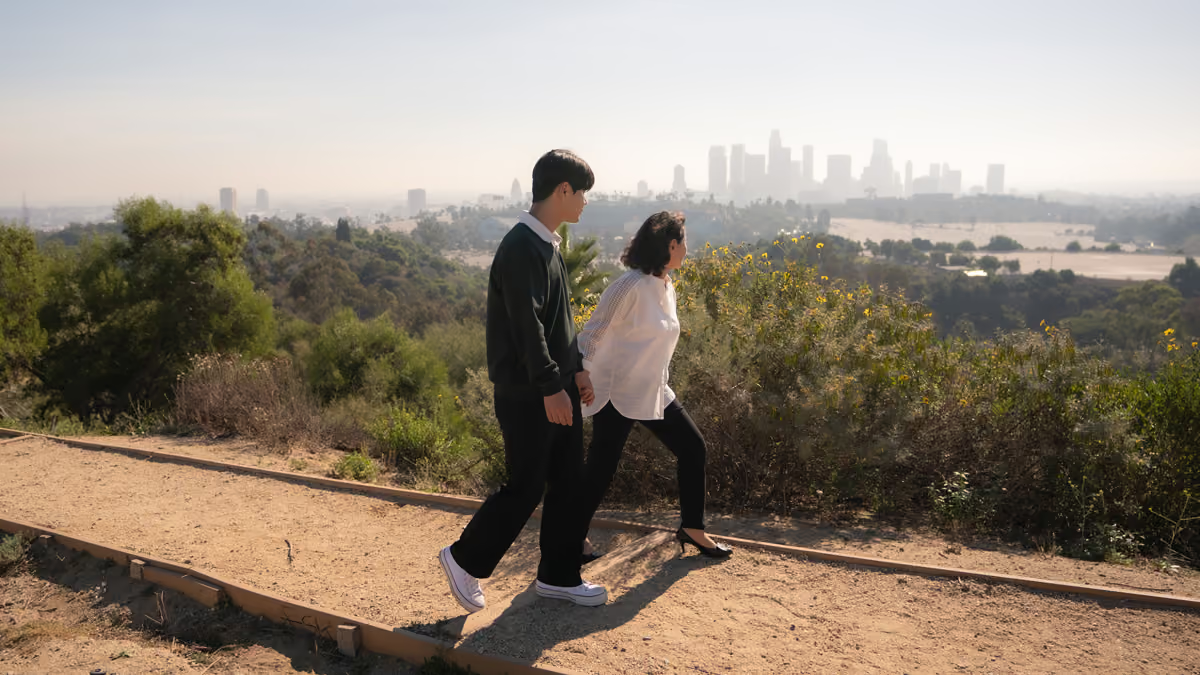
He was a South Korean fisherman whose boat had been thrown off course by a typhoon, and North Korean authorities refused to let him return home. One night, he showed up drunk at our house and threatened my mom. If she didn’t take him across the border, he would turn her in. So she had no choice. None of us did.
My mom took me with her and brought the old man to the border of North Korea. We were supposed to meet some brokers who would take him across, but they couldn’t agree on a price or a place. After a few days of waiting, everything went wrong.
The police had discovered our plan. They had our photos and were already putting up wanted posters for our capture. There was no way we could go home now. The choice was made for us. We had to flee the country with the old man.
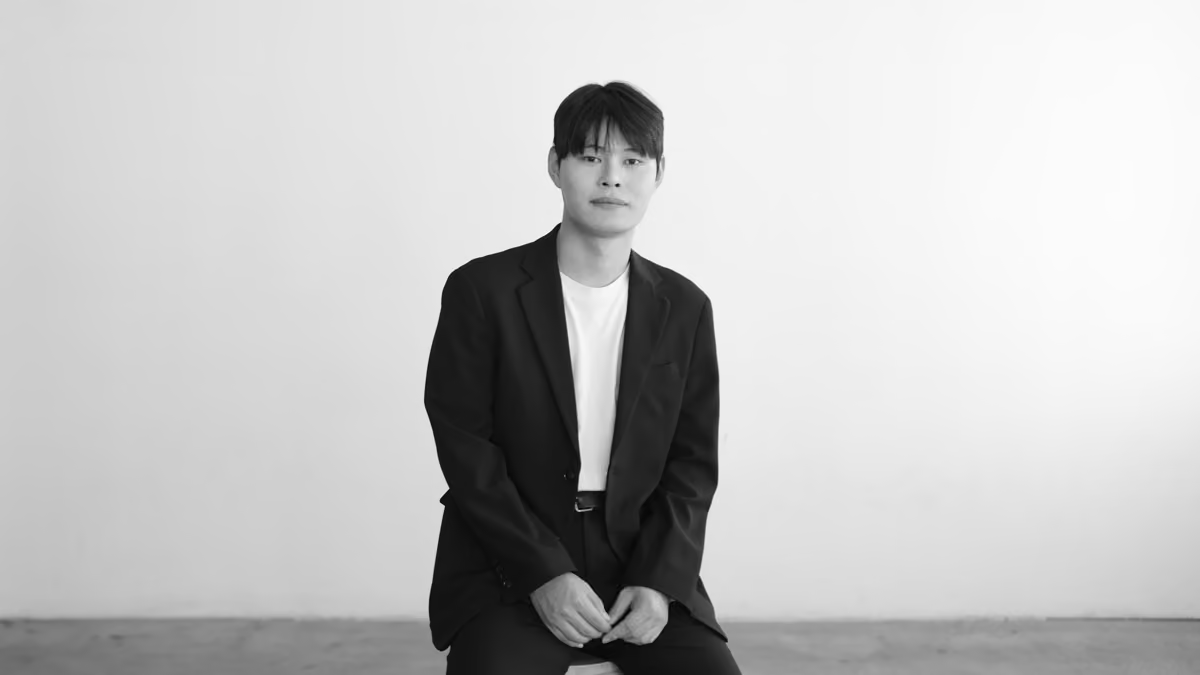
I thought I would die that night. Armed soldiers patrol the river bordering North Korea and China, and are told to shoot defectors on sight.
If caught, my mom would have faced life in prison for her second offense—no better than a death sentence. But somehow, we made it to the other side.
In China, we waited three days in the mountains for our brokers. Every moment spent at a standstill was a huge risk, because Chinese authorities pay local citizens to report North Korean refugees. When it became clear that help wasn’t coming, we headed for a nearby village, laying low in the grass until the cover of night.
By nightfall, we took our chances and entered the village. Luckily, we met a kind woman who introduced us to a new broker. This broker helped us get to another city where the old man was picked up by South Korean officials and flown home to his family. As for me and my mom, we couldn’t go back to North Korea. So we went to see my middle sister, who had already been in China for quite some time.
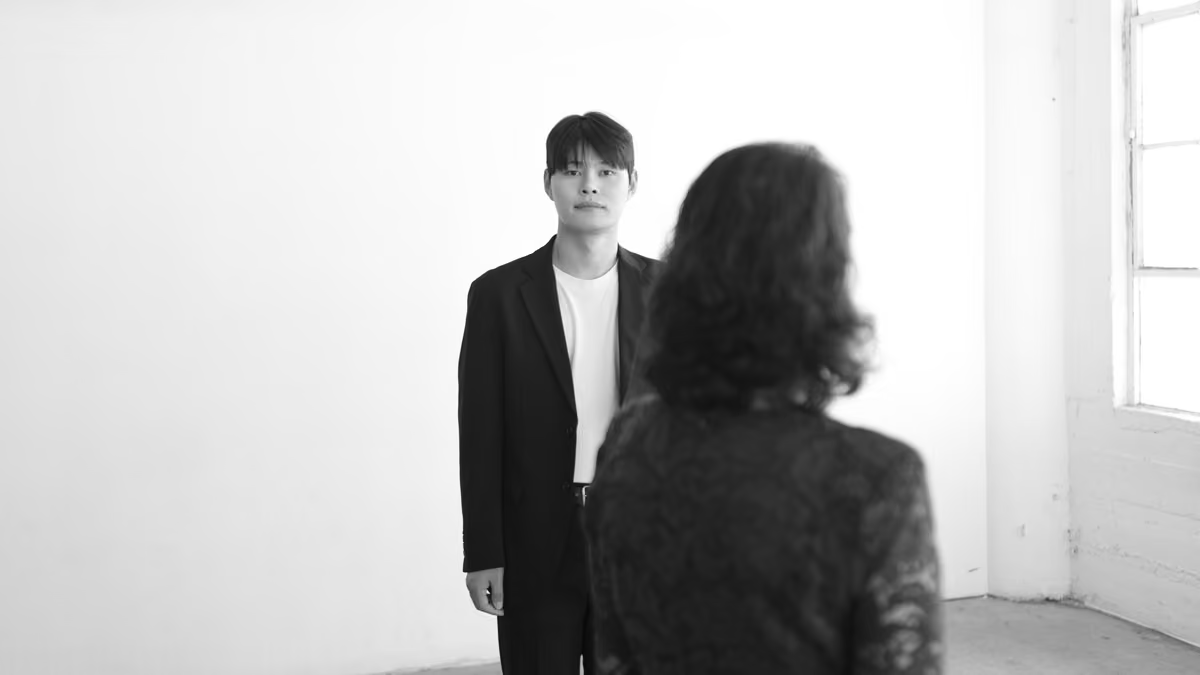
Before I was born, my mom took my two sisters to China with her. She wanted them to stay there safely, but my oldest sister refused and returned to North Korea with my mom. My middle sister was left behind, sent to live with a trusted friend. But the unthinkable happened. At 12 years old, she was trafficked and sold to be married to a much older man. Every night, she would stand by the water well, threatening to hang herself if the man came near her.
But one year later, the inevitable happened. When she was just 13 years old, she had a baby.
Like many other young North Korean women, my sister went across the border seeking a better life, but ended up living her teenage years in captivity, with no laws or family to protect her. Every day she had imagined running away, until finally she did. She reunited with my mom in North Korea when she was 20.
But not everything went as hoped. Though she was happy to be together with our family again, it turned out life was just as hard in North Korea. In the end, my sister returned to her daughter in China just a few years later.
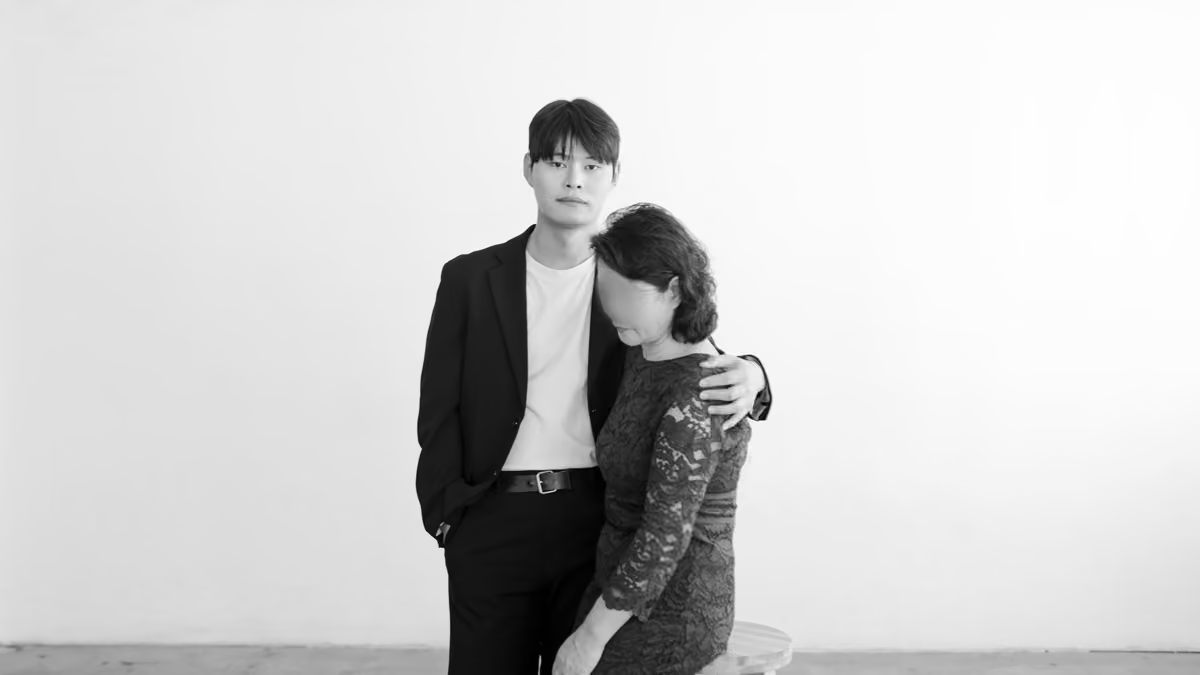
It had been years since we last saw my sister, and it was my first time meeting her daughter, my niece. We were the same age. For a month, we all enjoyed the bittersweet reunion. Then my sister connected us with another broker, and my mom and I finally escaped for good.
We eventually reached South Korea and it turns out, it wasn’t the dangerous country I had seen in movies.
Still, the memories of everything we had been through tormented me. I was angry at the old man who pressured us into his escape plan. I hated that my mom chose such a risky job in the first place.
Later we found out my oldest sister had been tortured by North Korean authorities when we left, leaving her devastated by mental illness. They wanted her to confess that our family had helped the old man escape. Someone had to take the blame. My older sister, who was once strong and reliable, would never be the same again.
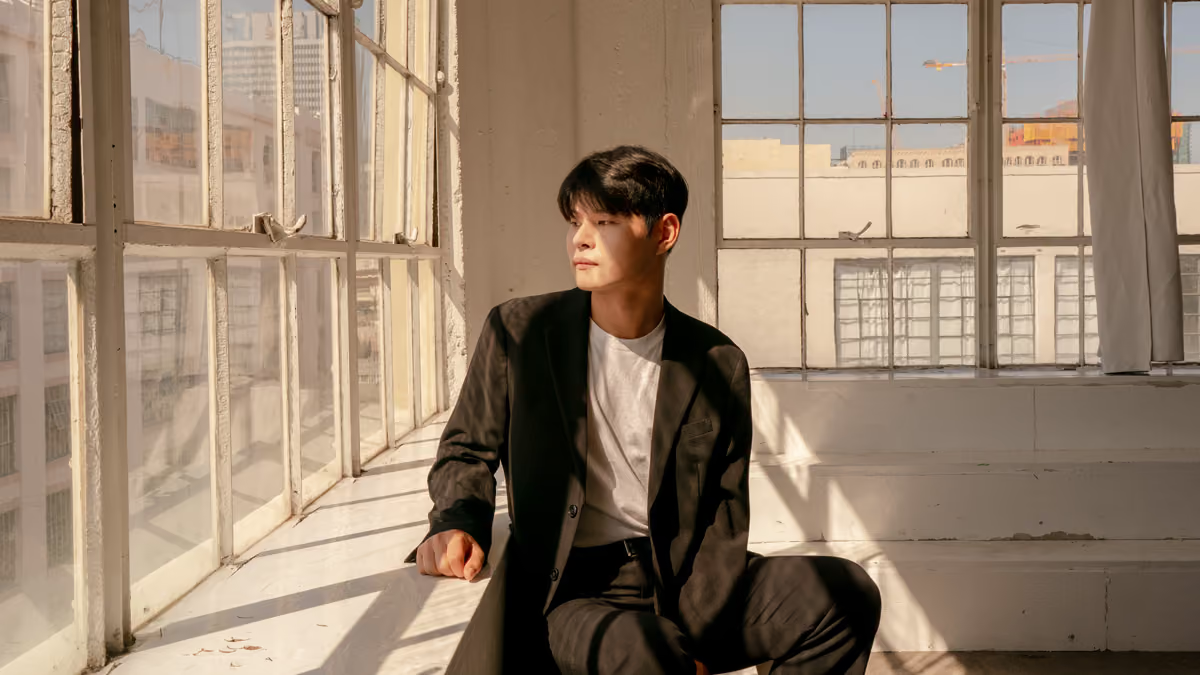
When I first reached South Korea, I hid my past. Everything was terrifying and different—the culture, the lifestyle, and even the language. My new friends would hang out at internet cafes and I didn’t even know how to use a computer.
But I started learning. I studied hard in school and got a job to support myself. I began reading books to develop my own philosophy for my new life. I even started playing video games and for better or for worse, became just as obsessed as everyone else.
When I got to high school, I finally told my friends the truth about my life. Their response was so different from what I had expected. I found that rather than being cruel, they were curious. I realized the importance of my story, and how sharing my family’s painful experiences could change people’s perspectives about North Korea.
In 2019, at the end of high school, I met someone from Liberty in North Korea. I was so curious how she spoke about North Korea. She invited me to attend their Changemakers Summit and I had never experienced anything like that before—South Koreans, North Koreans, and even foreigners who were all young, open-minded, and interested in how to make an impact on this issue.
Truthfully, I never saw myself as an activist. I didn’t think I had what it takes.
But if I could change how just one person saw North Korea—to see the people and their resilience, bravery, and hope instead of the regime—I realized I was already acting as an advocate.
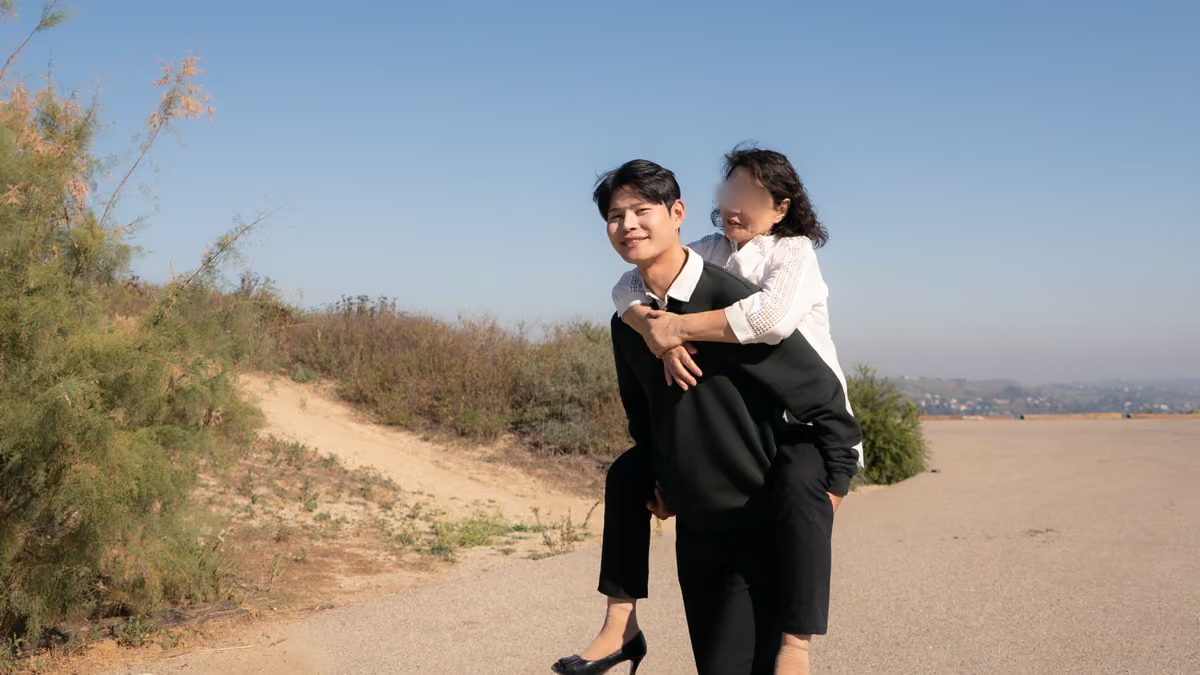
These days, I’m working and studying full time. After coming to South Korea my mom got her masters degree and is now writing a book about her life. My middle sister eventually escaped and joined us in South Korea too. She got remarried and finally gets to live a normal life. Even though we’re all pursuing different things, we’re still together, holding tightly to the hope that we will someday reunite with my older sister.
Today, I can be my own person. I can buy fresh fruit whenever I want, or walk along the Han river anytime. After all of the running and all of the pain, I am finally free to choose my own life.
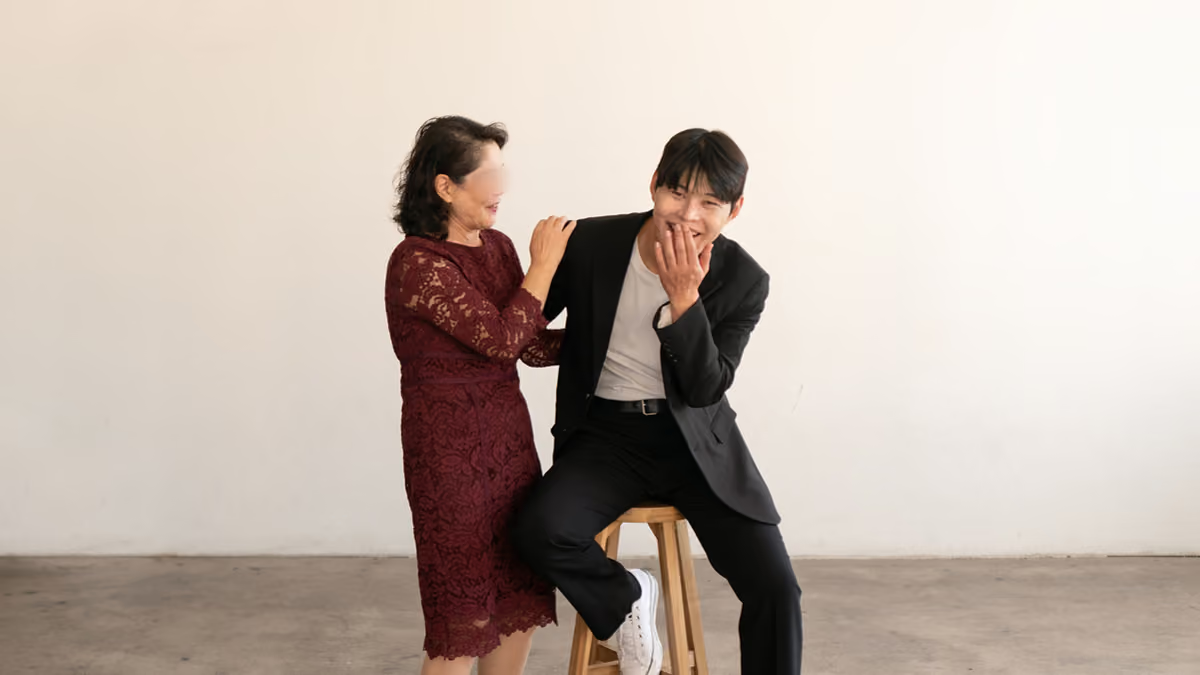
Harry’s story echoes that of many North Korean refugees, who live with the weight of their past while grasping onto hope for the future. After what happened to his oldest sister, Harry says he has nothing left to lose. That’s why he chooses to speak openly about the horrific things he and his family have experienced, hoping to bring change and one day reunite with her in a free North Korea.
Help us continue to to sustain refugee rescues, empowerment programs, and efforts to change the way the world sees North Korea.










