
We Call BTS “Bangdan” | Cultural Shifts in North Korea
By: Hannah Oh
Hannah is a North Korea-born intern at Liberty in North Korea’s Seoul office. This article has been reconstructed from her perspective based on DailyNK reports from March 2026.
⏱️ 30-second summary
- K-Pop Power: Young people in North Korea refer to BTS as “BT” to avoid attracting the attention of authorities. They empathize with song lyrics that touch their hearts, in sharp contrast to the ideology prescribed by the state. Even amidst strict crackdowns on South Korean media, people are consuming and sharing K-Pop with their peers.
- Resetting Relationships: It’s now common to see couples in North Korea spending time together in cafes, signaling a change in people’s daily lives. A new culture is emerging where people build relationships by sitting face-to-face over coffee and conversation.
- Expanding Self-Expression: New beauty standards that favor slim bodies and skincare have become popularized. As outside information spreads in North Korea, it’s gradually changing people’s tastes and self-expression.
BTS is a name recognized by people all over the world. This global K-Pop group’s music is even reaching audiences in the most closed country to exist today: North Korea.
The North Korean government severely cracks down on the consumption and spread of foreign media, like South Korean music and dramas. Through foreign media, North Koreans are able to learn things about the outside world that contradict and challenge the regime’s propaganda. In response, the regime passed the “anti-reactionary thought law” in December 2020, which made watching foreign media punishable by 15 years in a political prison camp.
To avoid being caught discussing and sharing about BTS, North Koreans are reportedly shortening the name to “BT.” Even though they cannot directly mention their favorite idol group, they are expressing their fandom by using slang that they understand among themselves.
Changes to daily life in North Korea extend beyond music tastes. From couples quietly conversing in cafes to women experimenting with K-Beauty, this article follows the stories of North Koreans who, despite control and restrictions, are shaping culture and cultivating new standards of leisure, beauty, and expression.
Why North Korean Youth Gravitate Towards K-Pop
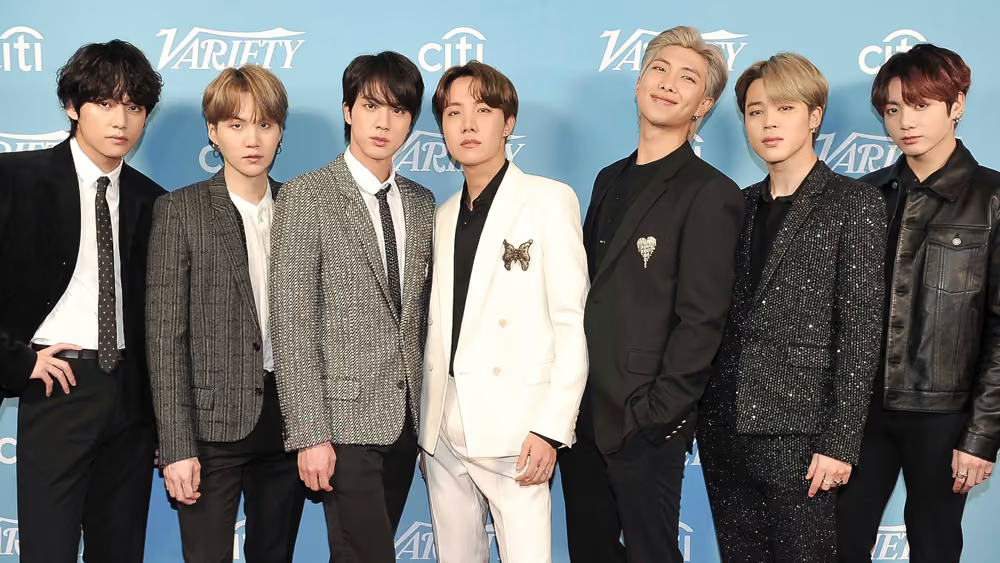
It is reported that among young people in North Korea, it is common to refer to BTS, or “Bangtan,” as BT, or “Bangdan,” to avoid the scrutiny of North Korean authorities cracking down on illegal foreign media. Fans in North Korea have cited songs such as “I’m Fine,” “Go,” “Danger,” and “Spring Day” as their favorites, and expressed a desire to dress like the BTS members.
These developments might suggest that instead of foreign media being a taboo topic of discussion, it has become a language of taste shared among peers.
In response to the popularity of South Korean music, North Korean authorities imposed a city-wide lecture series that warned “The only love young people should pursue is revolutionary and comradely love.” However, after the lectures ended, it is reported that the sentiment among young people was that “South Korean song lyrics seem to understand my heart,” and “the emotions they actually feel” over “the emotions permitted by the state.”
Cuppaccinos Over Flowers: Dating Culture in North Korea
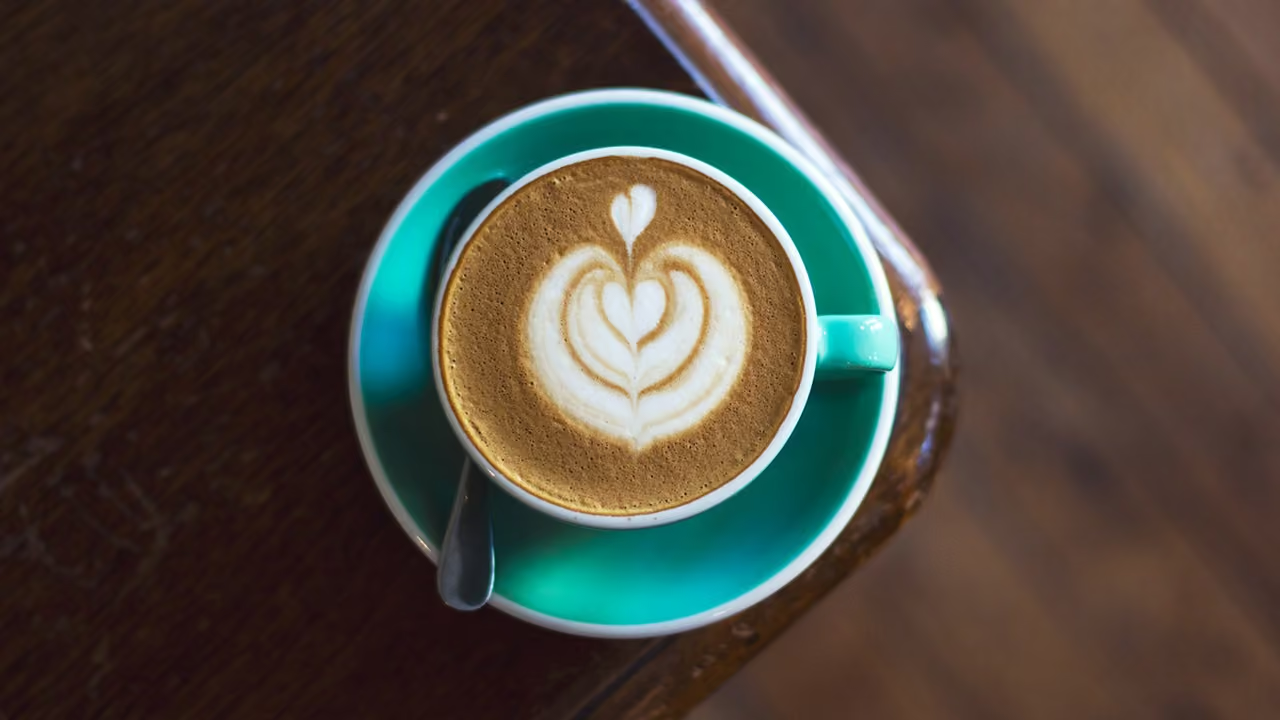
In North Korea, there is still a strong perception that cafes are places frequented only by the well-off. However, this year on March 8th for International Women’s Day, reports emerged of husbands visiting coffee shops with their wives, holding hands, and spending time drinking lattes or cappuccinos. Rather than traditional gestures like flowers or doing extra housework, there seems to be a cultural shift of celebrating by spending time together.
After visiting a cafe for the first time, residents reportedly commented that “It’s surprisingly nice because you can talk quietly.” Their perception of this space—previously considered unsuitable for leisure amidst busy lives—changed after actually experiencing it for themselves. The growing popularity of cafes as a space where two people can sit face-to-face and share a private conversation may seem like a minor development, but it is not insignificant.
People’s perceptions and behaviors don’t only change when systems or policies are altered; shifts in how individuals interact and go about their daily lives is also a catalyst for change.
The Far-Reaching Influence of K-Beauty

There have also been reports that interest in beauty treatments and taking care of one’s appearance is growing in North Korea, particularly among affluent women. Younger women have taken to dieting, while middle-aged women are spending money on cosmetic procedures like Botox to reduce wrinkles. North Korean beauty standards have historically favored a fuller figure to look healthy, but now there is an emerging preference to look slimmer. According to one source, this is due to the influence of South Korean culture.
Even in South Korea, there is an ongoing debate as to whether striving for a slim body and youthful appearance is a healthy pursuit. Nevertheless, this shift in North Korean beauty habits is notable.
Individuals are seeking change and acting on their own initiative, influenced by external information, rather than following the standards set out by the regime.
However, it must be noted that these developments seem to be more prominent among wealthy women with financial means, as opposed to the entire population.
Pop Culture as a Catalyst for Change in North Korea
The global influence of K-Pop groups like BTS is usually measured by streaming numbers or chart rankings. But the most significant marker of impact might be found in North Korea, where people risk their lives to listen to their songs. Even in the most closed country in the world, there are people who enjoy heartfelt music, shared conversation over a cup of coffee, and self-care.
If you zoom in past the image of North Korea as a bleak, oppressed country, there are millions of people going about their everyday lives. Small cultural shifts and changing attitudes may seem insignificant. But over time, these compounding changes could bring about transformation in North Korea.
Increasing Information Access for North Korean People
As evidenced by these developments, North Koreans are watching foreign media and have a growing awareness of the outside world. At Liberty in North Korea, we believe that access to uncensored outside information is key to increasing forces of change and opening inside the country. Empowered with information access, North Koreans can imagine a different life for themselves and push the boundaries of the regime’s control.
We work with North Korean partners and engineers to develop and distribute tailored technology and content to help more people inside the country safely access uncensored information.
You can help bring truth to where it’s urgently needed.
Give Today
Women in North Korea: At the Forefront of Social and Political Change
By Lindsey Miller
Lindsey Miller is a musical director, award-winning composer, author, and photographer originally from Glasgow, Scotland. From 2017-2019, she lived in Pyongyang, North Korea, while accompanying her husband on a diplomatic posting. For Women’s History Month, she shares a rare glimpse into the experiences of North Korean women, who are finding ways to live life on their own terms despite the circumstances.
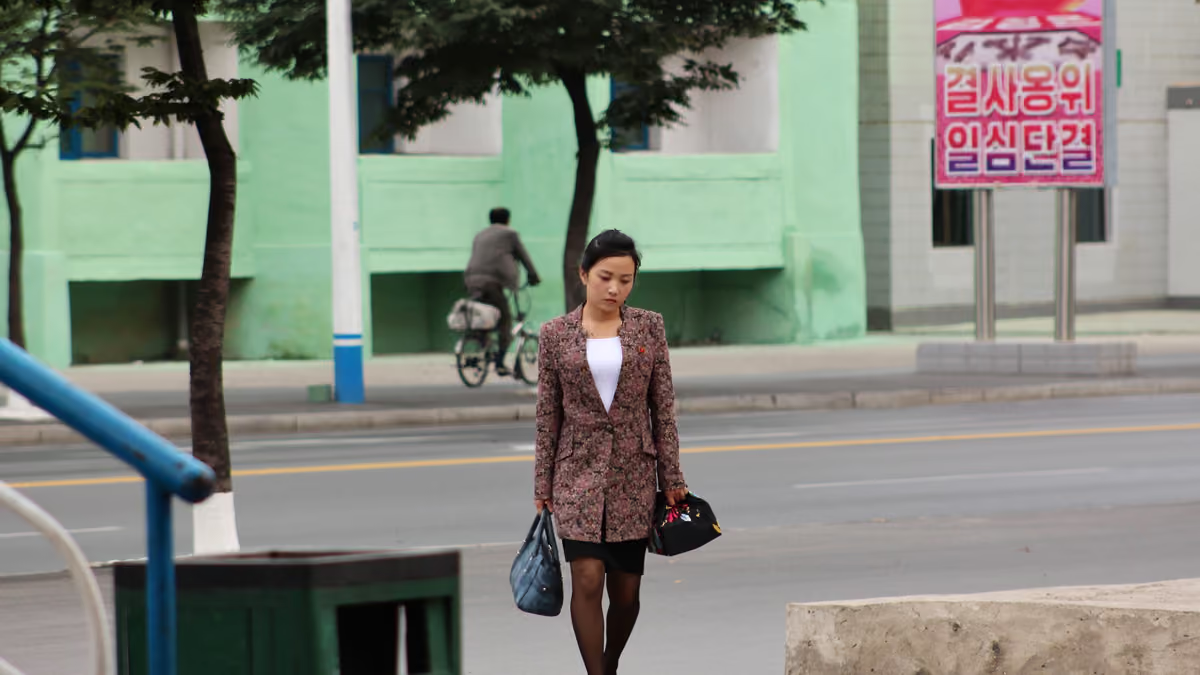
Her name is Min Jeong*.
She’s bright, funny and has a dry and cutting sense of humour that rivals that of any professional stand-up comedian. The kind that makes you worry for the heckler in the front row.
‘Why do you keep singing? You’re terrible at singing!’ she says with a straight face to the regular punters at The Beer House, a bar in Pyongyang, before taking their glass and kindly refilling it. ‘And don’t wear those shoes, they’re ugly.’ The other punters burst out laughing while Min Jeong allows a slight silly smile to make its way across the corner of her mouth. That’s the thing about Min Jeong, she has a magnetic and honest energy about her. It was refreshing in a place where simple honesty and truthfulness felt so packed down.
Min Jeong and I spent a fair bit of time together over the two years I lived in Pyongyang. I would go to the bar mainly to just talk to her and spend time with her. She was interesting. She loved hair accessories and jewellery – an increasingly common way for North Korean women to explore self-expression. I’d show her photographs of me and tell her about my different outfits while she’d rate them. I didn’t fare very well in her opinion. I often gave her my wedding or engagement ring to try on and she’d pose with them, comparing them to other things she’d seen foreigners wear. She’d tell me about the cosmetics that she liked to wear and make herself.
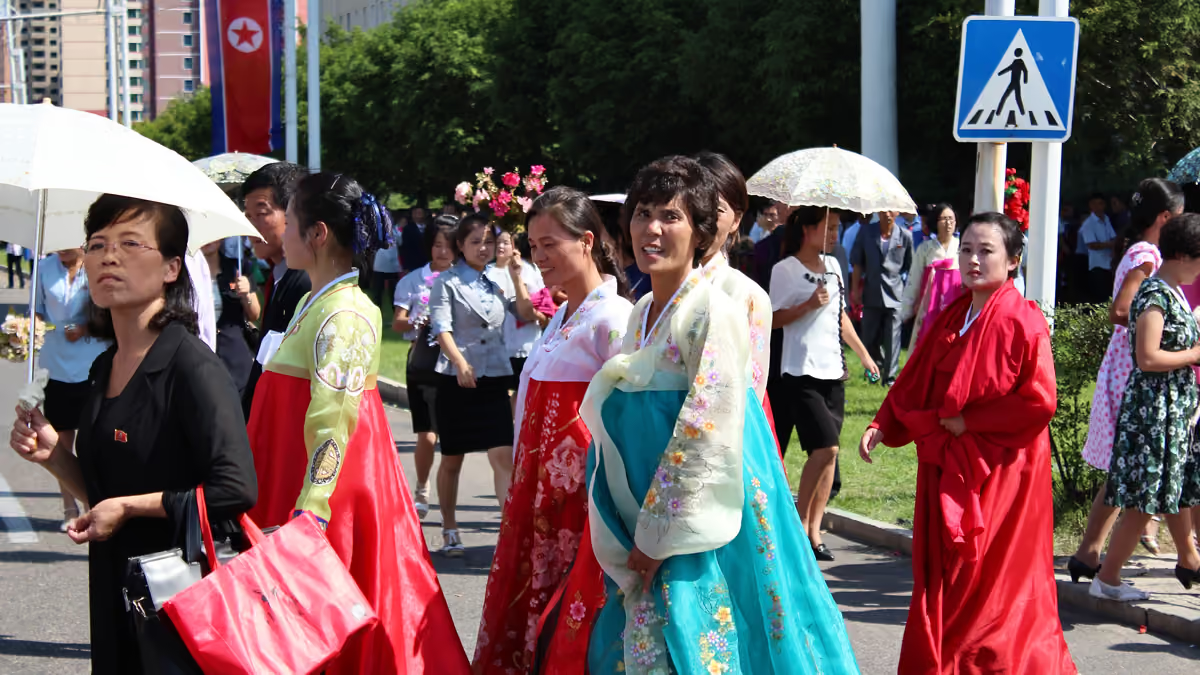
One of her favourite things was a face mask which I remember involving eggs. I never tried it but she swore by it, telling me how important it was to look after my skin and reminding me that there was nothing more important than my health. Min Jeong was very bright and regularly bounced between speaking in Korean, fluent English and often Mandarin. She loved animals and we spent a lot of time looking at photographs of dogs on our phones.
Min Jeong was in her early thirties and unmarried. She’d twirl her half-tied-back beautiful shiny black hair in her fingers while telling me about how much her parents were desperate for her to ‘find a boy’. She wasn’t interested and she didn’t have much time given that she only had one day ‘off’ a week which would have been taken up in part by state-enforced self-criticism sessions among other things. Having gone on many dates, the outcomes of which she summarised with a simple wrinkled nose, she seemed to be quite content being single. It was an attitude which I was surprised to learn was shared by a couple of Pyongyang female urban elite whom I met; women who spoke openly about their lack of desire to have children, who wanted to pursue a career. This directly contradicted my understanding of North Korean women’s experiences.
But I forgot that the experience of women is diverse and North Korea is no exception.
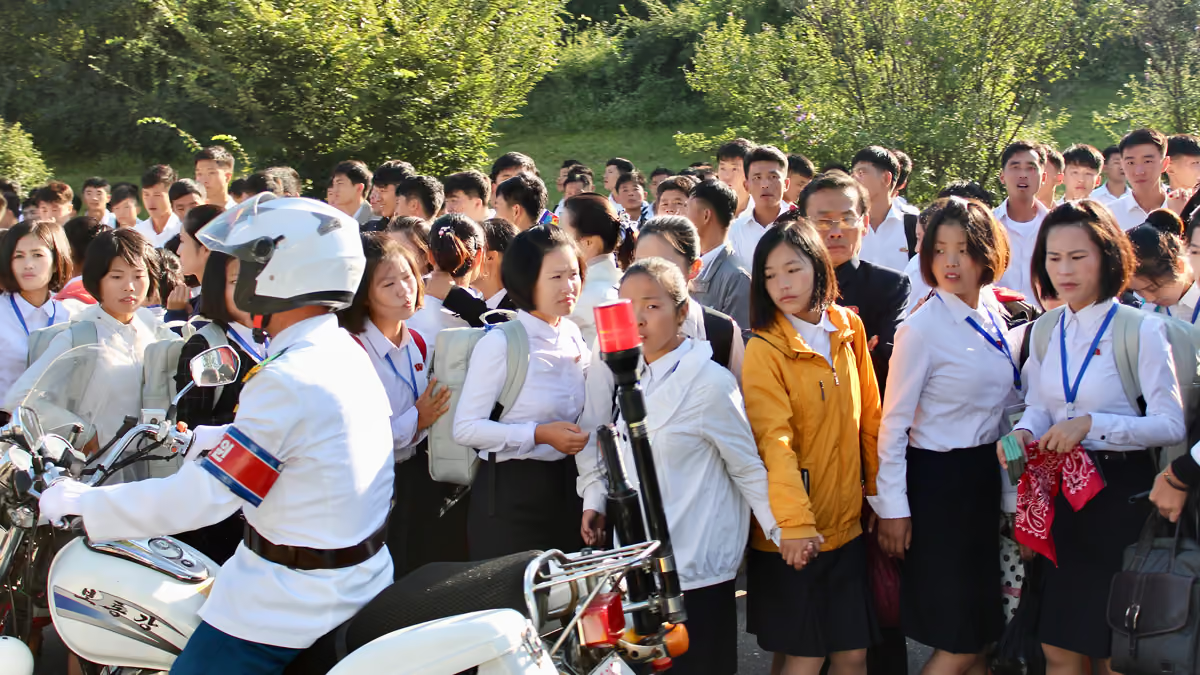
It’s very easy to think that North Korea isn’t changing but that is not the case. To say that there have been no social changes in the country would be insulting to the creativity, tenacity and drive of the North Korean people, particularly women who continue to be a major driving force of change. Driven by necessity following the devastating famine in the 90s, ordinary women had to become more economically independent in order to survive. While North Korean men were chained to jobs in faceless party offices, women had the time to create their own economic opportunities which could feed their families and keep them alive. Even now, in spite of living in a country gripped by widespread and pervasive human rights abuses including the most extreme forms of sexual and gender-based violence, women are often the breadwinners, women are the ones driving the private markets, women are the ones winning back more agency over their own lives and futures.
I only had to go to Tongil Market to see it for myself. Every vendor standing behind every one of the stalls laid out in long rows across the indoor market hall was a woman. Every staff member taking payments from the vendors for selling in the venue was a woman. The people counting the money in the cash exchange office were women. The people unloading sacks of vegetables and meat were women. Most of the customers were women.
Through having no choice but to fight to survive, North Korean women have driven changes that few could have predicted would last.
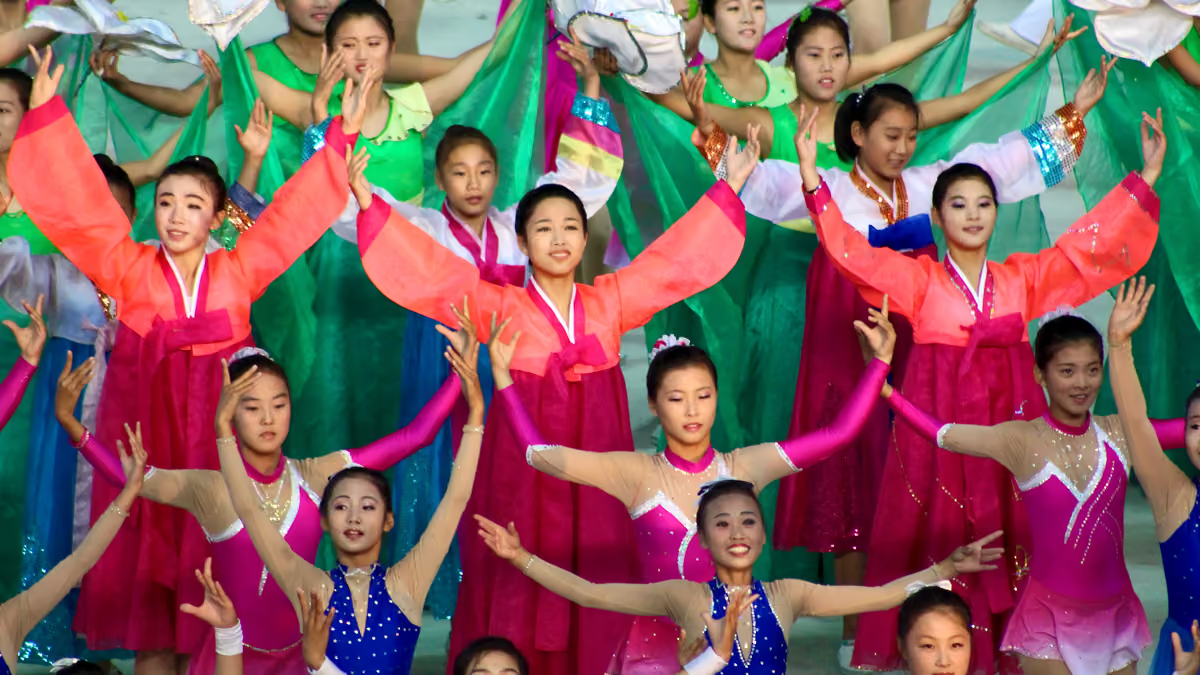
I sit at the bar and Min Jeong passes me a cup of black tea. She starts to scroll through her phone and goes back into her own world. I think about what is going through her mind and all the things she is experiencing but cannot talk about. I think about the millions of other North Korean women with names, voices and stories to tell; who we, on the outside of North Korea, will never get to meet. I think about the world who will never get to meet this generous, kind, extraordinary woman in front of me - my friend.
Min Jeong lifts her head and looks at me,
‘You really shouldn’t wear those shoes, Lindsey. They’re awful.’ She waits a moment and that same slight silly smile starts to creep across the corner of her mouth. ‘I’m kidding. They’re only a little better than yesterday’s.’
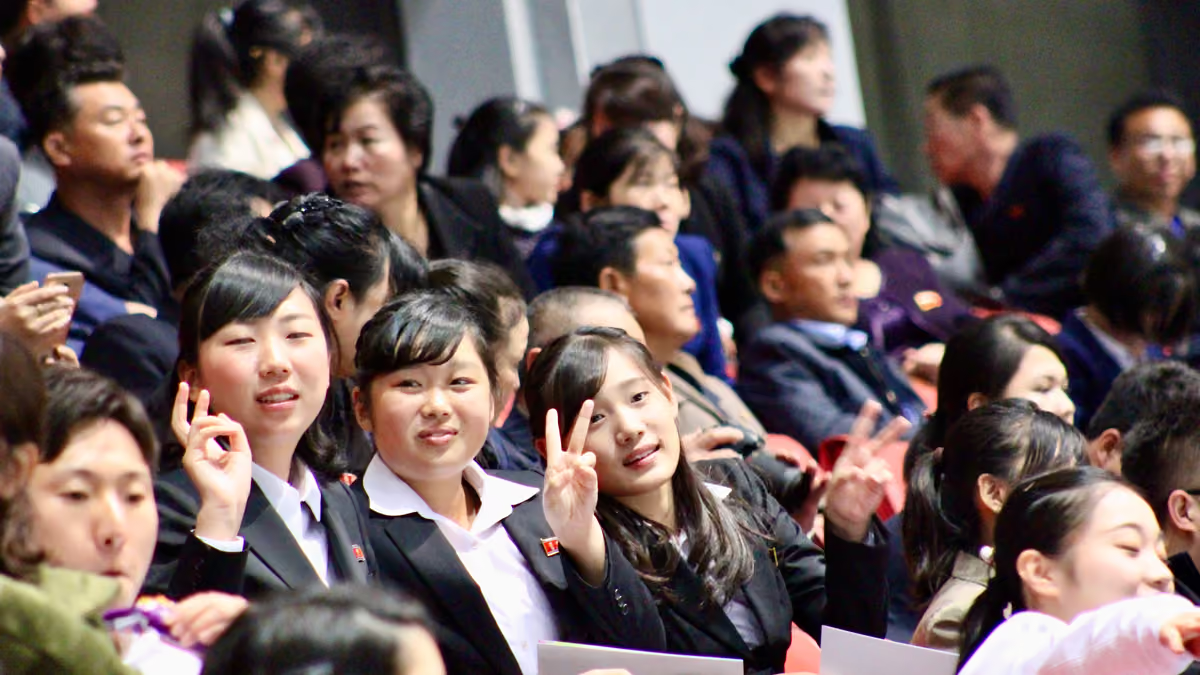
Lindsey Miller shares more extraordinary photos and stories from North Korea in her debut book, “North Korea: Like Nowhere Else," a testament to the hidden humanity and dynamism of the people. She also joined LiNK for a virtual Q&A in 2021 and continues to be a friend and advocate for this issue!
You can stand with the North Korean people as they strive towards freedom and transform their country.
Sign the Allies pledge today!
*Name has been changed to protect the privacy and safety of the individual










