
Webcomic: Escape From North Korea
By: Ju Ok Jeon
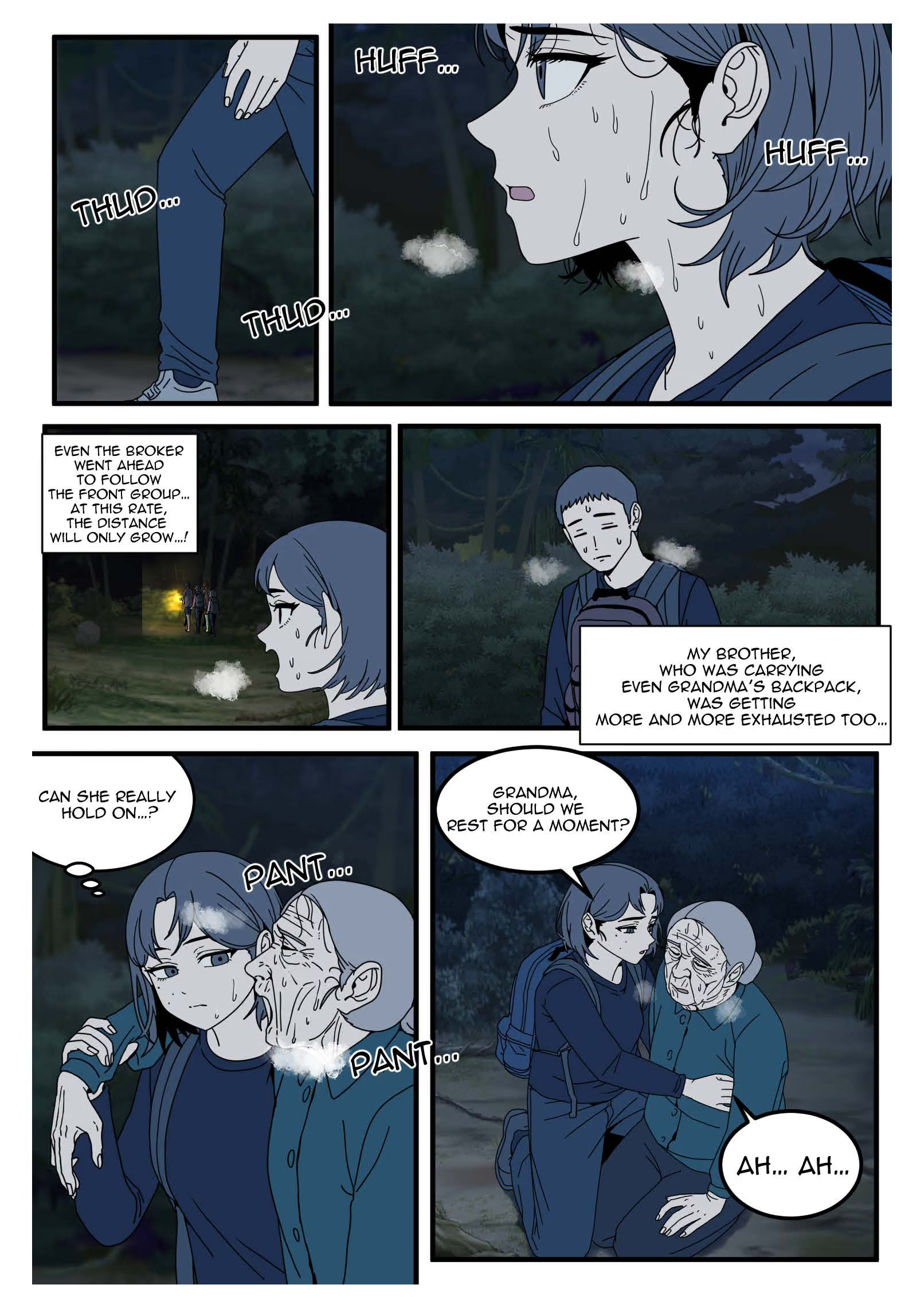
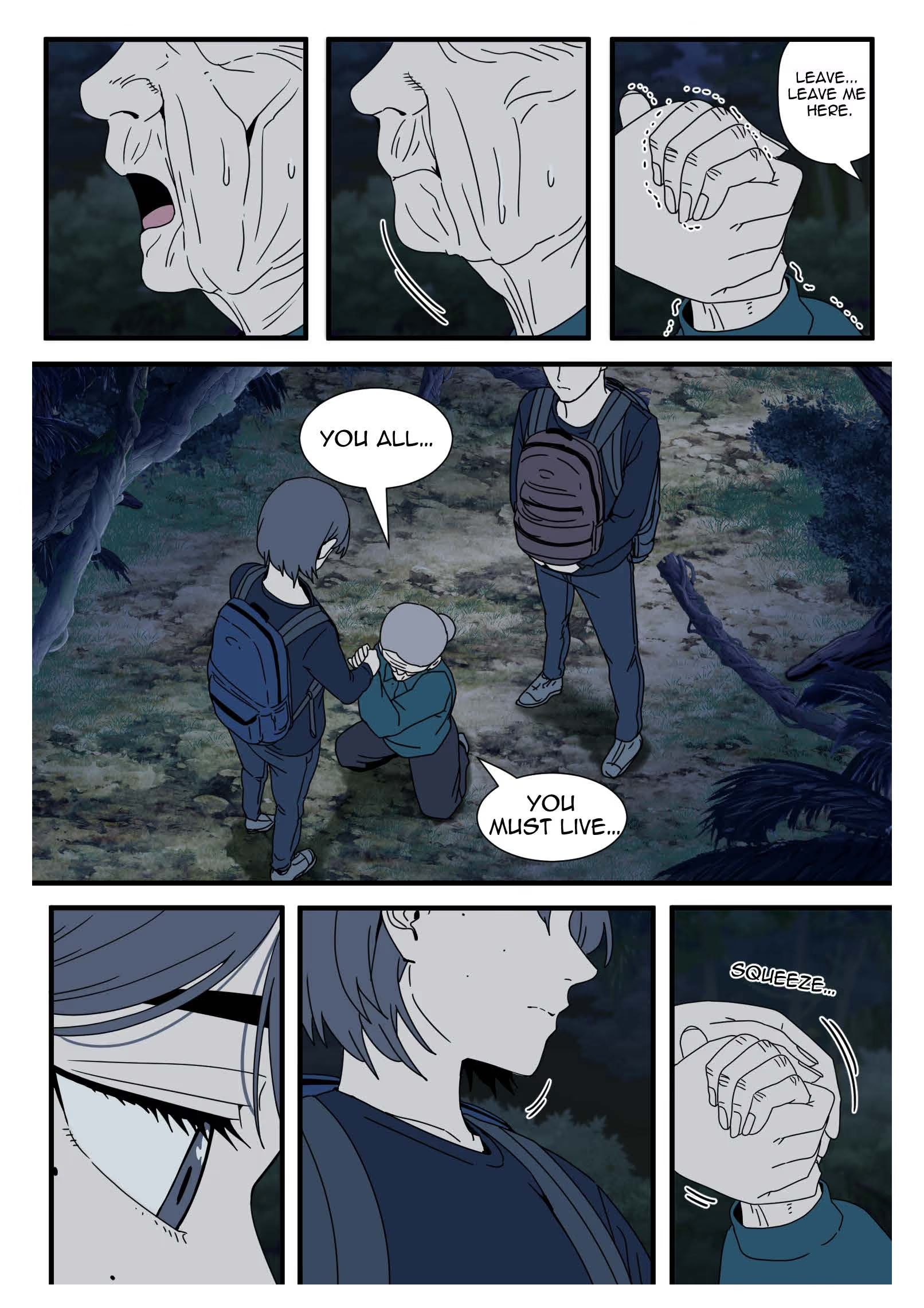
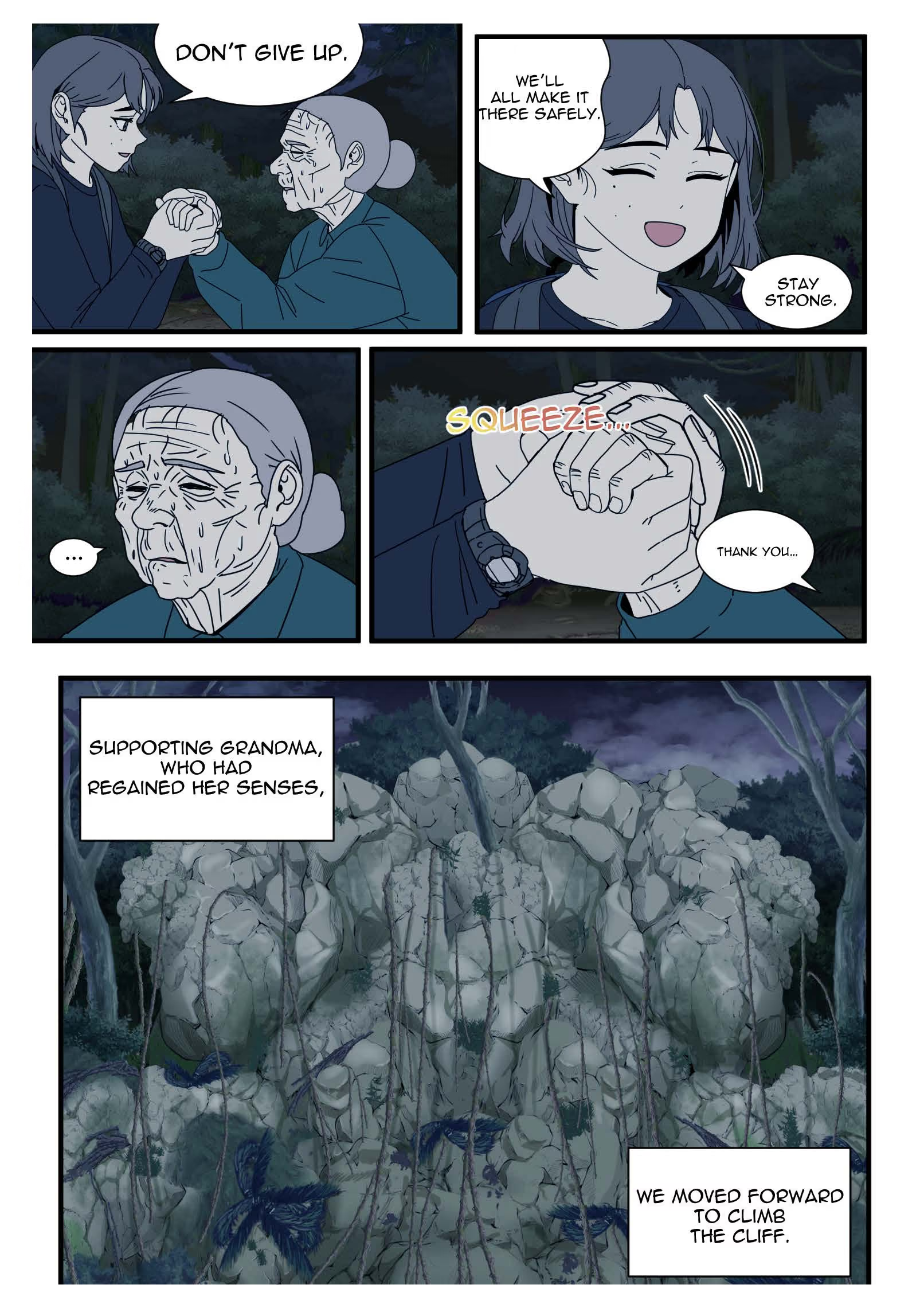
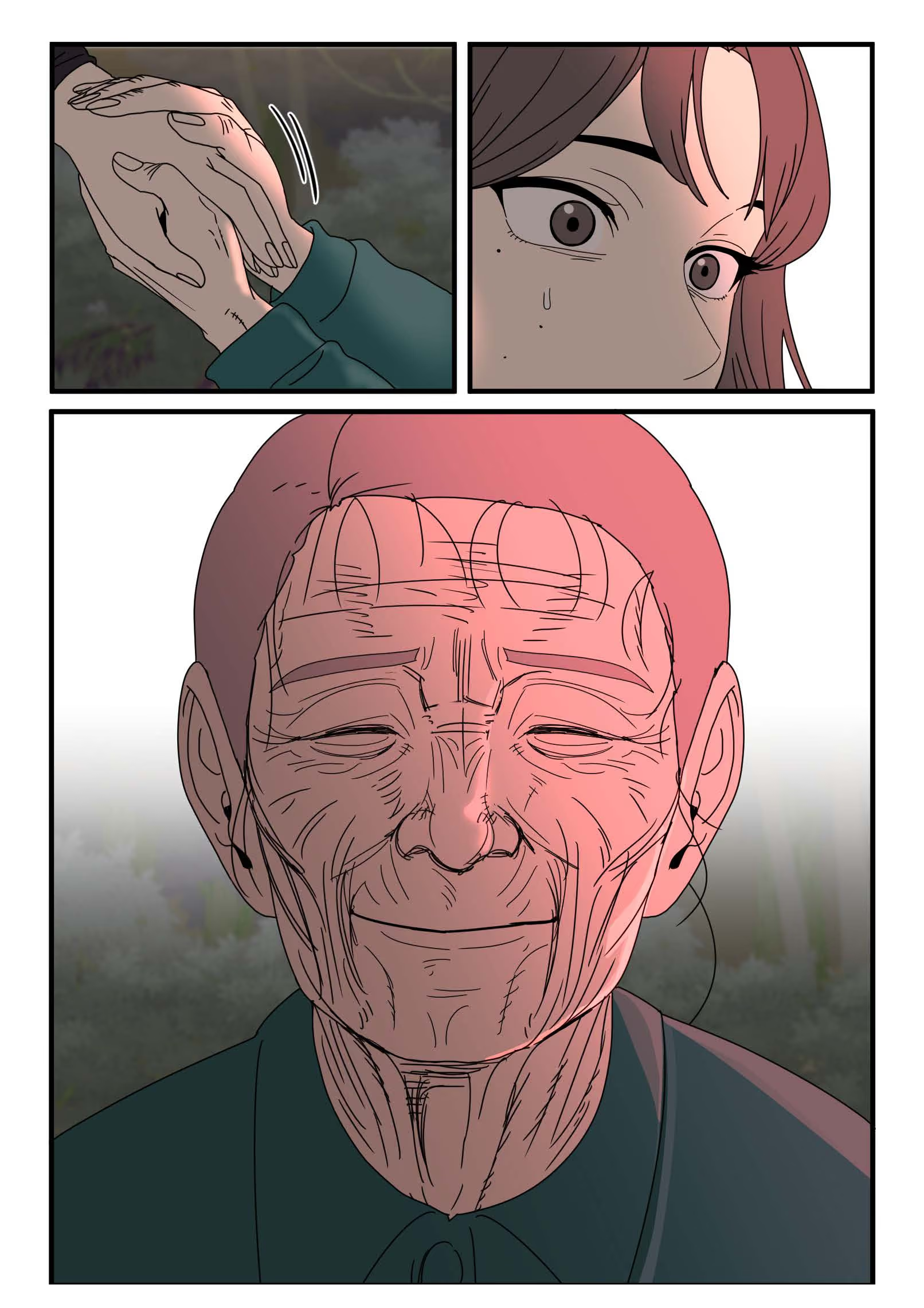
This webtoon, created by North Korean escapee Ju Ok Jeon, reflects the real risks many North Koreans face when fleeing their home in search of safety, dignity, and the chance to live freely.








About the Artist
Ju Ok Jeon is a North Korean defector who escaped in 2013. Having lived under the Kim Jong Un regime in an oppressed land, she conveys—through webtoons and comics—how precious the values of freedom and dignity truly are, with both sincerity and storytelling power.
Support Ju Ok’s work: @unistudio_juok
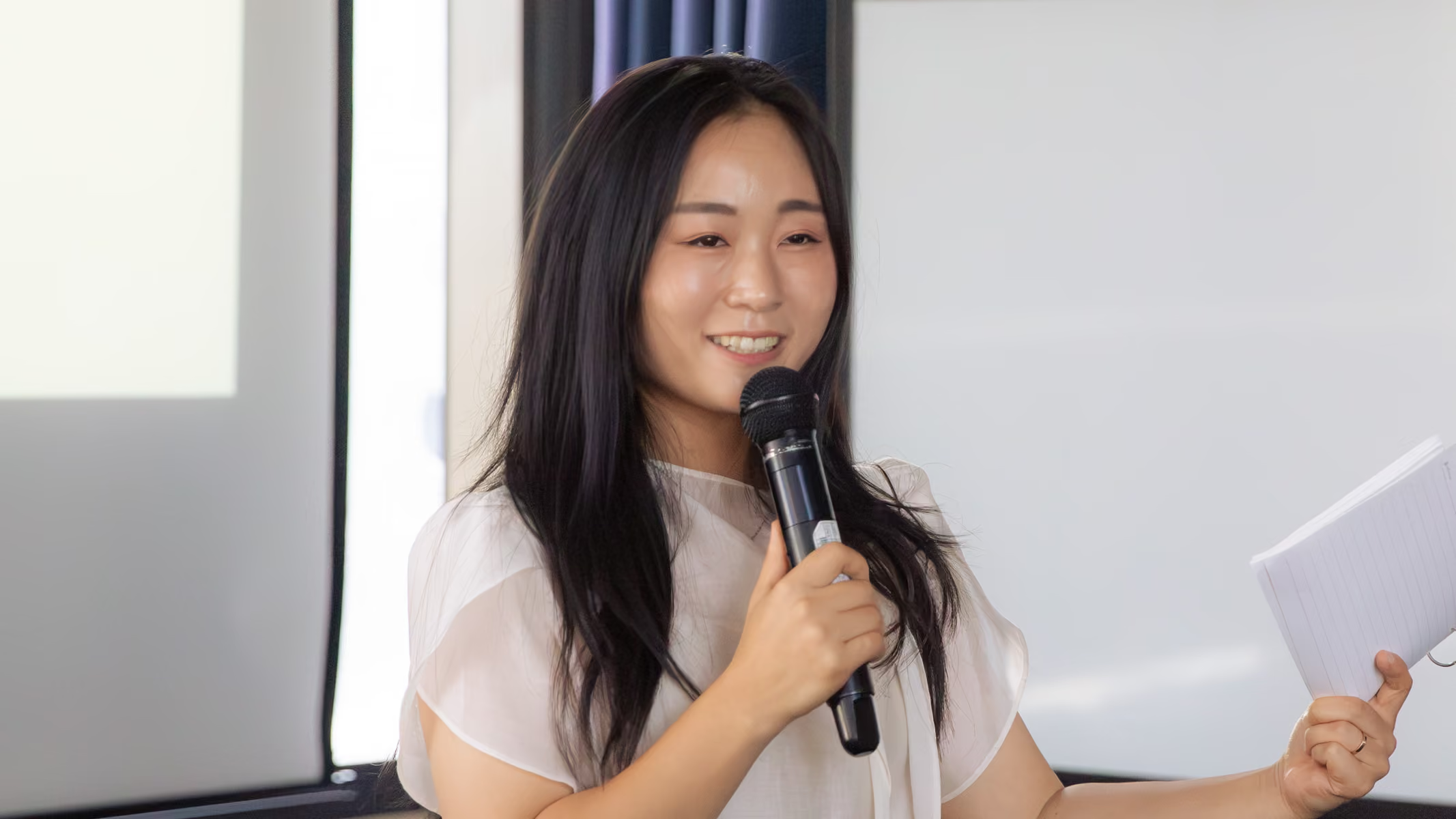
From Artist to Activist
As a kid in North Korea, Ju Ok was famous at school for one thing—drawing portraits of people passing gas. Her classmates flocked to her, asking to be drawn in exchange for snacks and even small amounts of money. Nothing made Ju Ok happier than to see people’s faces light up with a big smile, and to laugh together over her creations.
But things came to a halt when a teacher pulled her aside for “disrupting the school environment” with her “unrevolutionary” drawings. Ju Ok’s art supplies were confiscated, and she was warned that her parents could be punished for failing to educate their children.
“I vowed to never draw again because my simple drawings could bring harm to my family. But no matter how hard I studied or worked, opportunities were limited because my family belonged to the labor class. After a relative defected, my social classification [songbun] fell, leaving me destined for a life of forced labor. Realizing there was no hope or future, I decided to escape.”
In freedom, Ju Ok found that there was a lack of public understanding and empathy about North Korean human rights. A few years ago, her husband, who is also an artist, encouraged her to try drawing again.
“After being severely scolded as a child, I hated anything related to drawing. But when my husband told me I have talent, I got chills—thinking, ‘Did I actually used to like this?’
Through illustration, I want to share the reality of North Korea I experienced, my journey toward freedom, and my resettlement in a free society—so the world can hear the voices of those who still long for freedom inside North Korea.”
Ju Ok hopes her art will reach more people and increase support for this issue. In 2025, she participated in the LiNK English Speech Program to hone her storytelling and English speaking abilities.
“The North Korean issue is not only a domestic matter on the Korean Peninsula but also a complex international issue. That is why it is vital to raise awareness globally—and for North Korean defectors to share their stories directly in English. LiNK’s program has played an important role in helping me move toward my life goals.”
Reimagining North Korea’s Future
Liberty in North Korea helps North Koreans reach freedom and reach their full potential through programs that build their capacity to succeed and lead change. With the right support and tools, they’re sharing their stories, utilizing their talents, and building their careers with unwavering purpose—to create a future where every North Korean person can live free and full lives.
Invest in the next generation of North Korean advocates, storytellers, changemakers, and entrepreneurs, like Ju Ok.
Give Today
A North Korean’s Promise to his Father | Joseph’s Story: Part 1
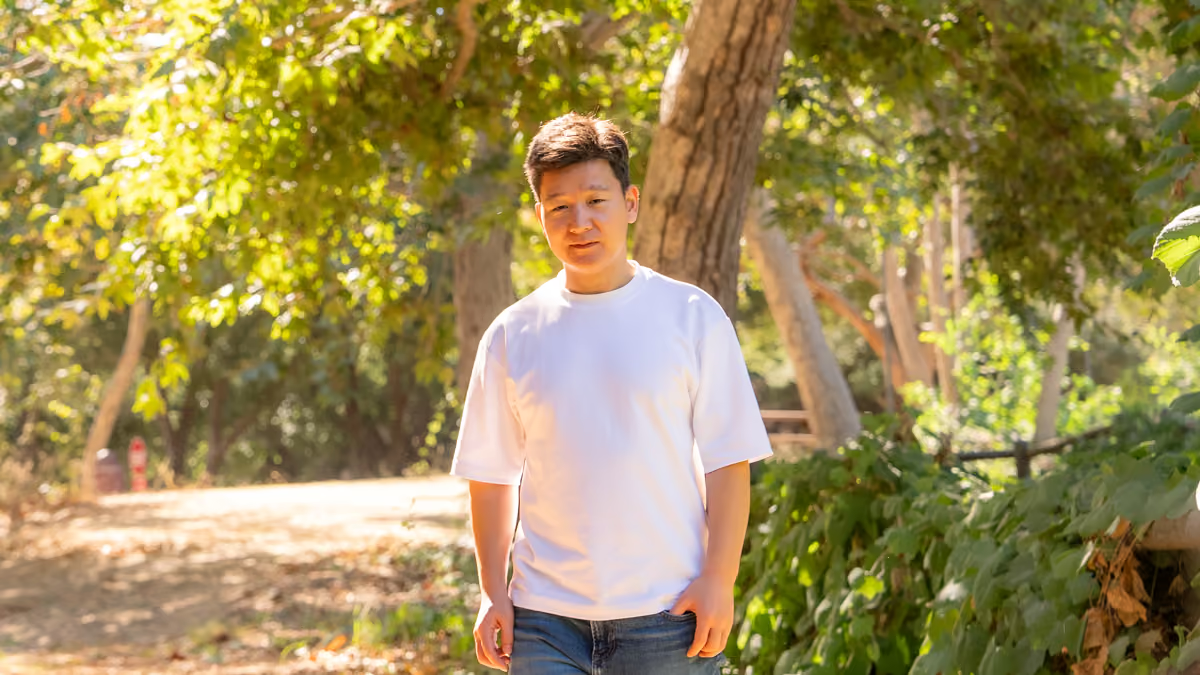
Most of you may know me as Joseph, but my Korean name is Kim Kwang Jin. It means, “walking forward with brightness.” My father gave me this name, full of the hopes and expectations many fathers have for their sons.
But hope is a hard thing to have, especially in a country like North Korea, and as a child, I certainly didn’t make it any easier for my father to believe in my brightness. Even in elementary school, I was a poor student.
The first time I remember making my father proud was through my cooking, not from studying. That day, he and my older sister had gone to the mountains to collect firewood. It was getting close to midnight, but they still hadn’t come home, so I decided to make dinner for them—rice and kimchi soup. At the end of dinner, my father said, Son, this is the best rice I’ve ever had. I had never made rice before, and I knew it was undercooked. That night I realized how much my father loves me. I promised myself that next time I would make him better rice.
But next time never came. When I was 12, my father died of starvation.
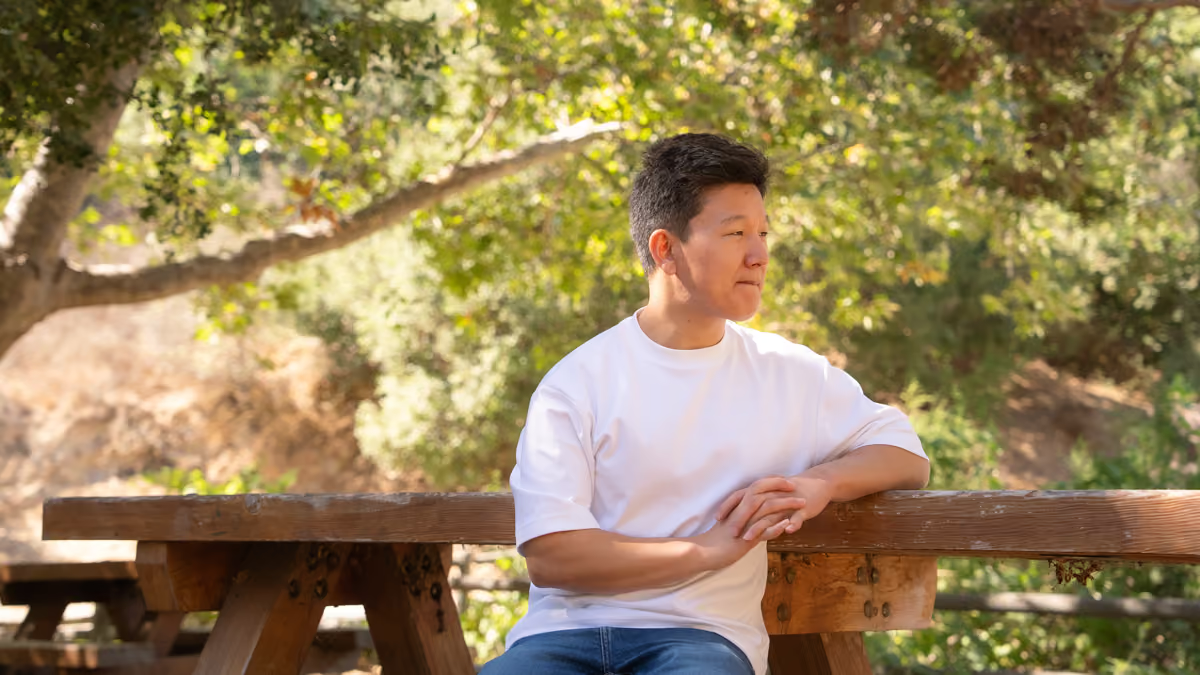
To save us from the same fate, my mother and sister left for China in search of work and food. My mom ended up in a North Korean prison. But my sister never returned. Within one year, I had lost my entire family. I was alone—helpless, homeless, and orphaned on the streets.
After three years of barely surviving, I decided to escape. The journey would be risky, but staying in North Korea would be a risk too. I knew I could die of starvation. So I took a chance. Unlike most people, I decided to escape during the daytime, thinking that the border guards would become complacent because why would anyone be crazy enough to cross the border in the middle of the day with nowhere to hide?
Fortunately, I made it to China without being caught.
In China, I slept in the mountains and went to towns begging for food to survive. One day, while crossing a bridge in Yanji, I remember it started to snow. Everyone around me started walking fast.
I remember being so envious because walking fast must have meant they had a home they were rushing toward. I, too, wanted to walk fast, but I had no home and no one waiting for me.
Later on, I was lucky enough to be taken in by a halmoni, an older grandmother. She fed me and let me live with her for six months but I still lived in hiding, fearful that at any moment I could be arrested and sent back to North Korea. The halmoni eventually connected me with Liberty in North Korea and I had an opportunity to escape China and be the first North Korean refugee minor to come to the United States.
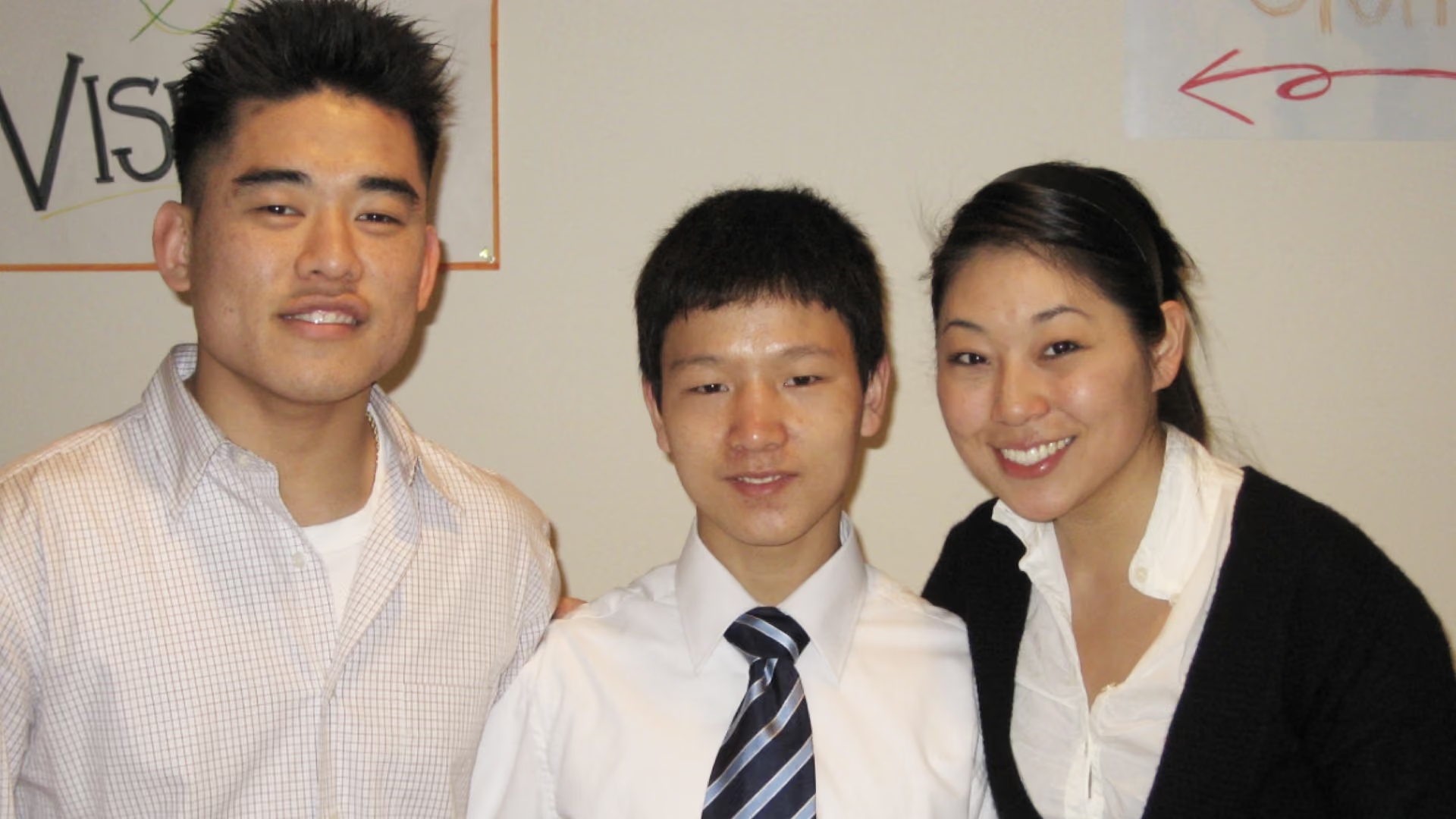
I was placed with a foster family and began attending an American high school, which felt a bit ridiculous at first. Even in North Korea, I was an F student. I barely finished elementary school so jumping straight into high school in a foreign country felt overwhelming.
One evening, my foster mom made chicken wings. They were so good that I wanted more, but I realized there wasn’t enough for everyone to have seconds. So I held back, thinking no one would notice. As I stared at my plate, my foster dad placed his last wing in front of me. I looked up, and he smiled, urging me to eat without saying a word. In that silence, I felt the depth of his love and care.
At that moment, I thought of my biological father. Even during our hardest times, he used to share what little food he had with me. I wished more than anything that I could cook for him one last time and share one more meal together.
That night, I promised myself that I would study hard and go to college. I believed that was the best way to honor my father’s sacrifice and make him proud.
Continue reading part 2 of Joseph’s story
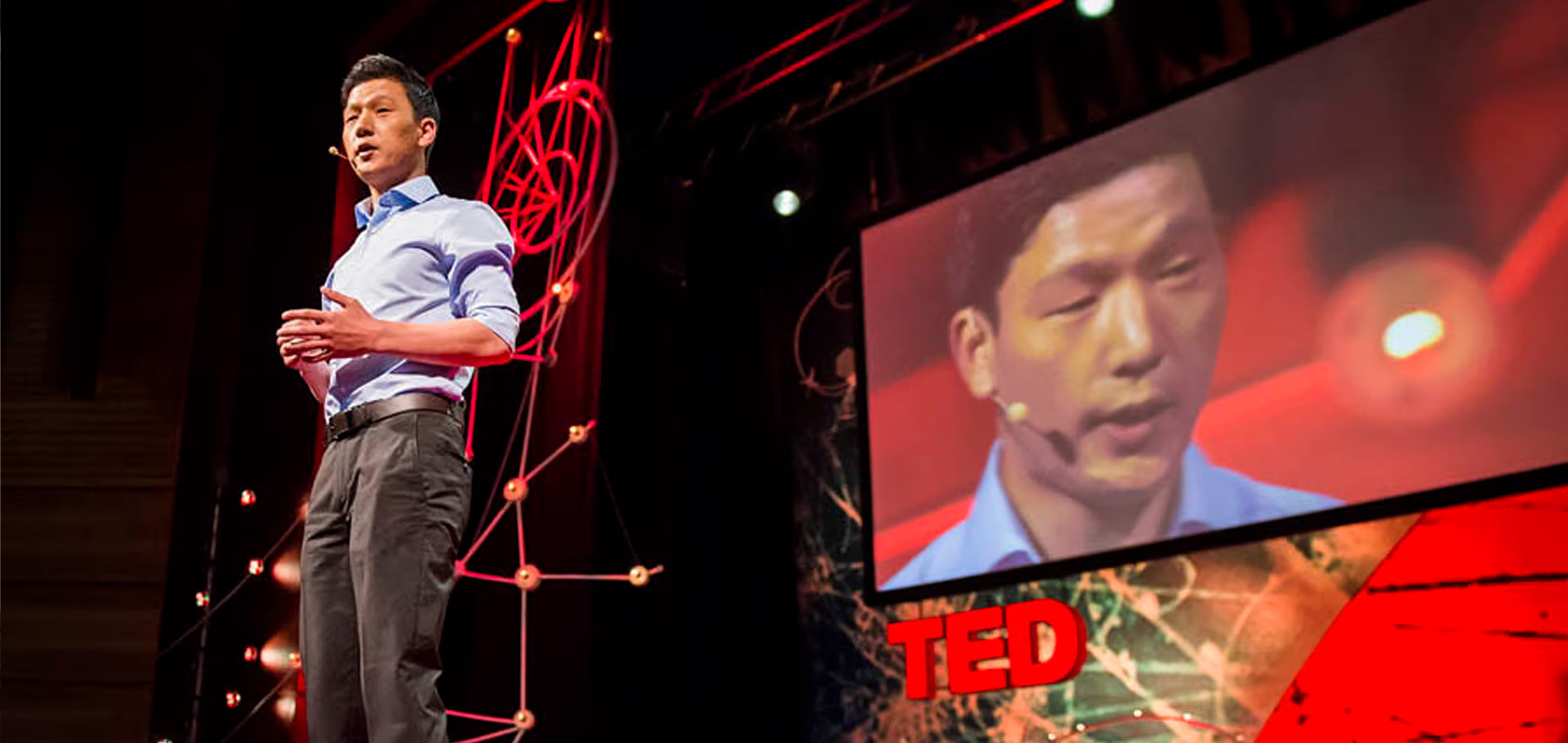
Years before Joseph would reach freedom, talk on the TED stage, write a memoir, and pursue his master’s at Harvard Kennedy School, Joseph’s father saw the brightness in his son. While he may not have been able to witness Joseph reach these milestones, none of it would have been possible without the depth of his love that became the foundation for Joseph’s life.
His family’s support, both in North Korea and in the US, has given Joseph the confidence to believe in and fulfill his brightness.
When recalling his past, warm childhood memories and gripping hardship are shared in the same breath. Joseph often says that North Korea is not a land of darkness, merely a land with darkness. Both can exist. But what matters is what we choose to focus on—the shadow cast by the regime or the brightness of the North Korean people.
Help more North Korean refugees reach freedom and share their brightness with the world.










