
Webcomic: Escape From North Korea
By: Ju Ok Jeon
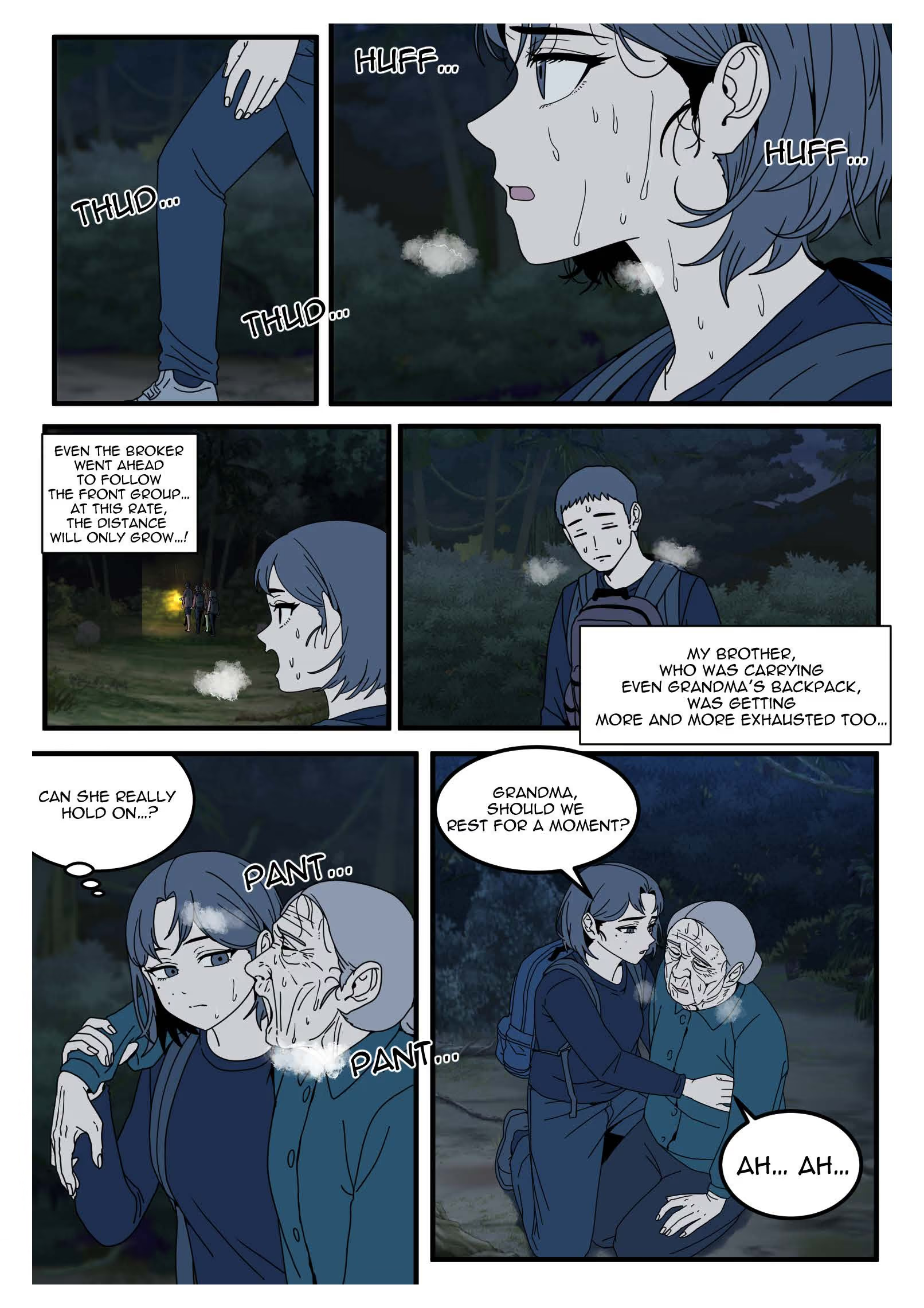
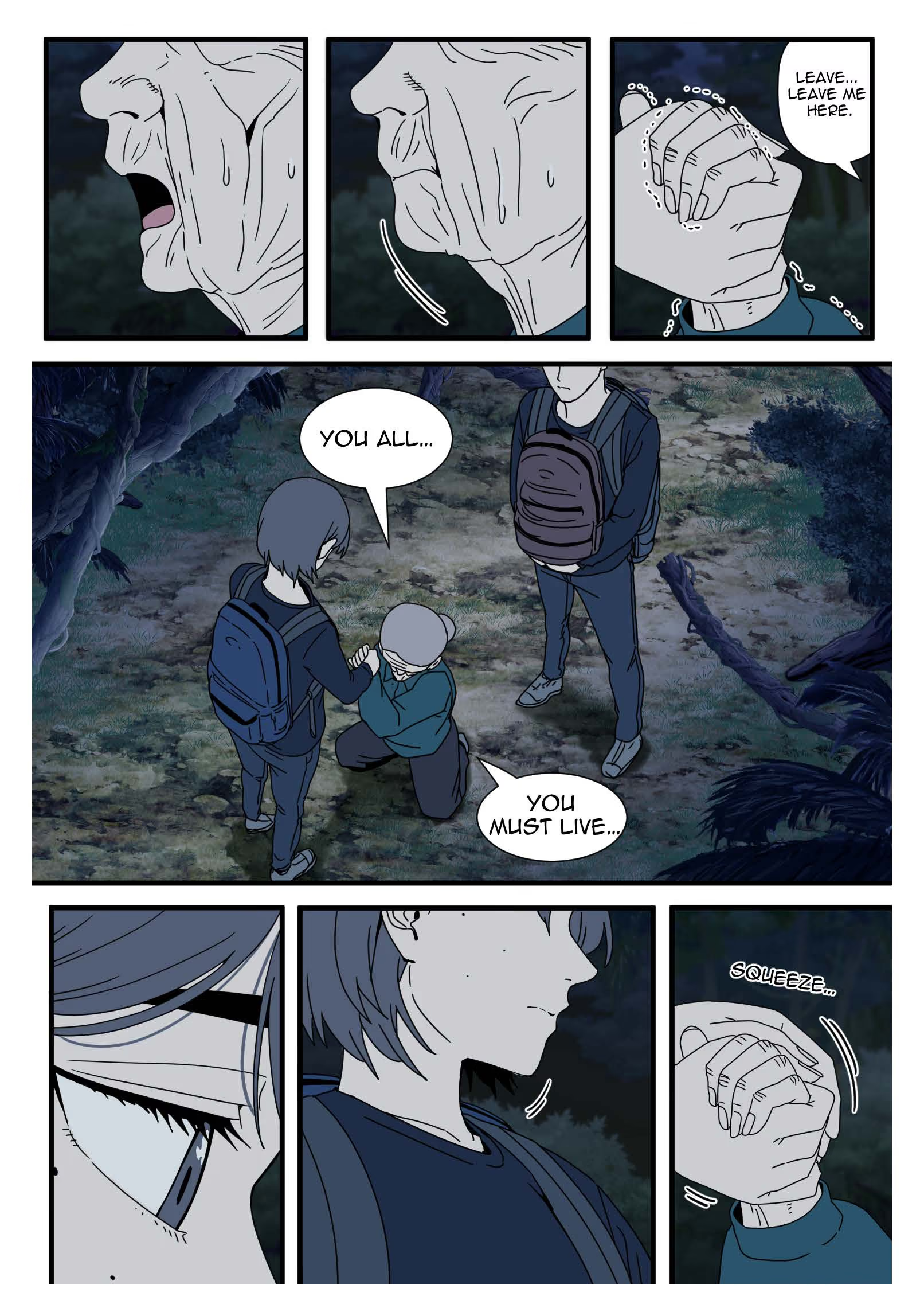
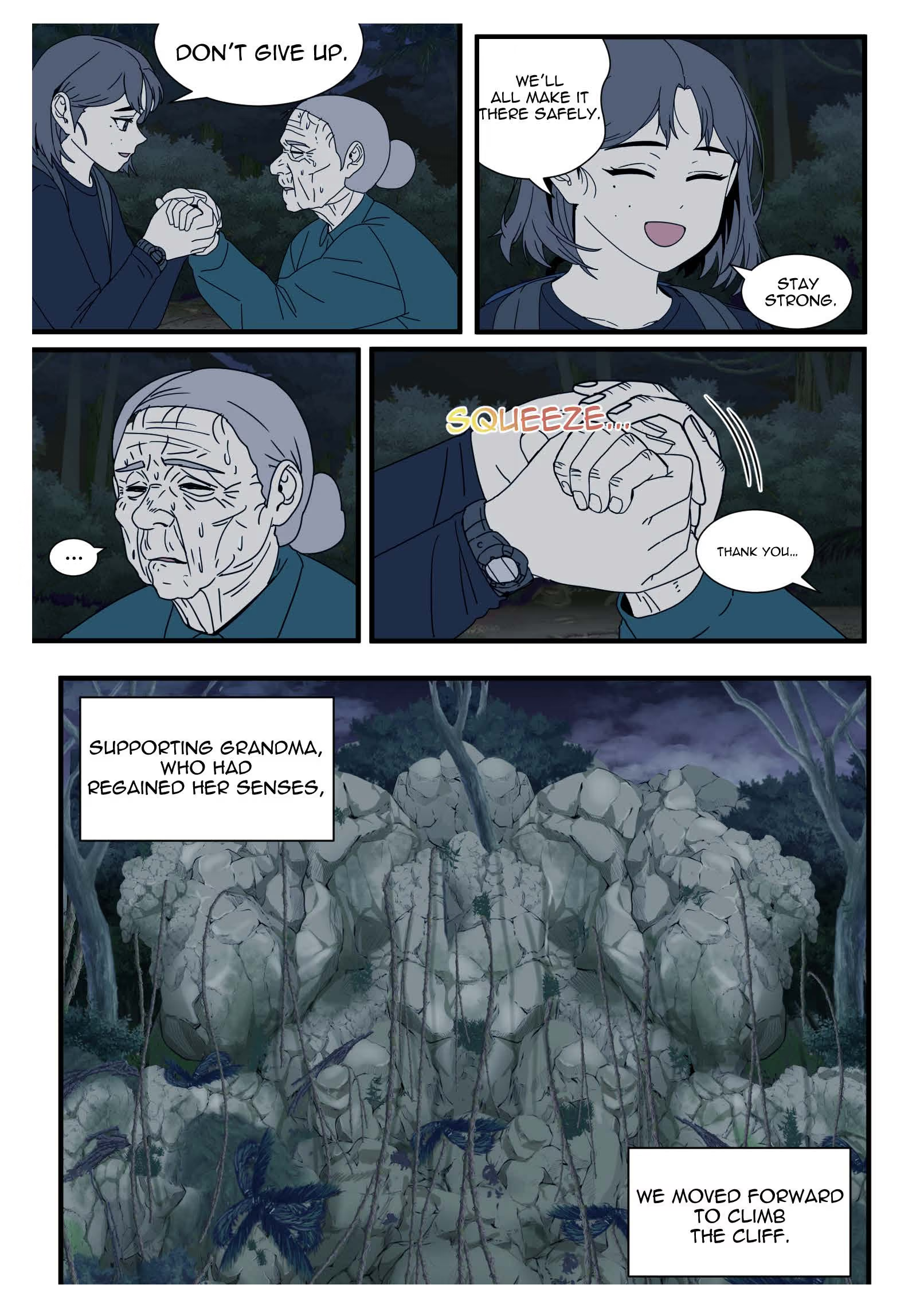
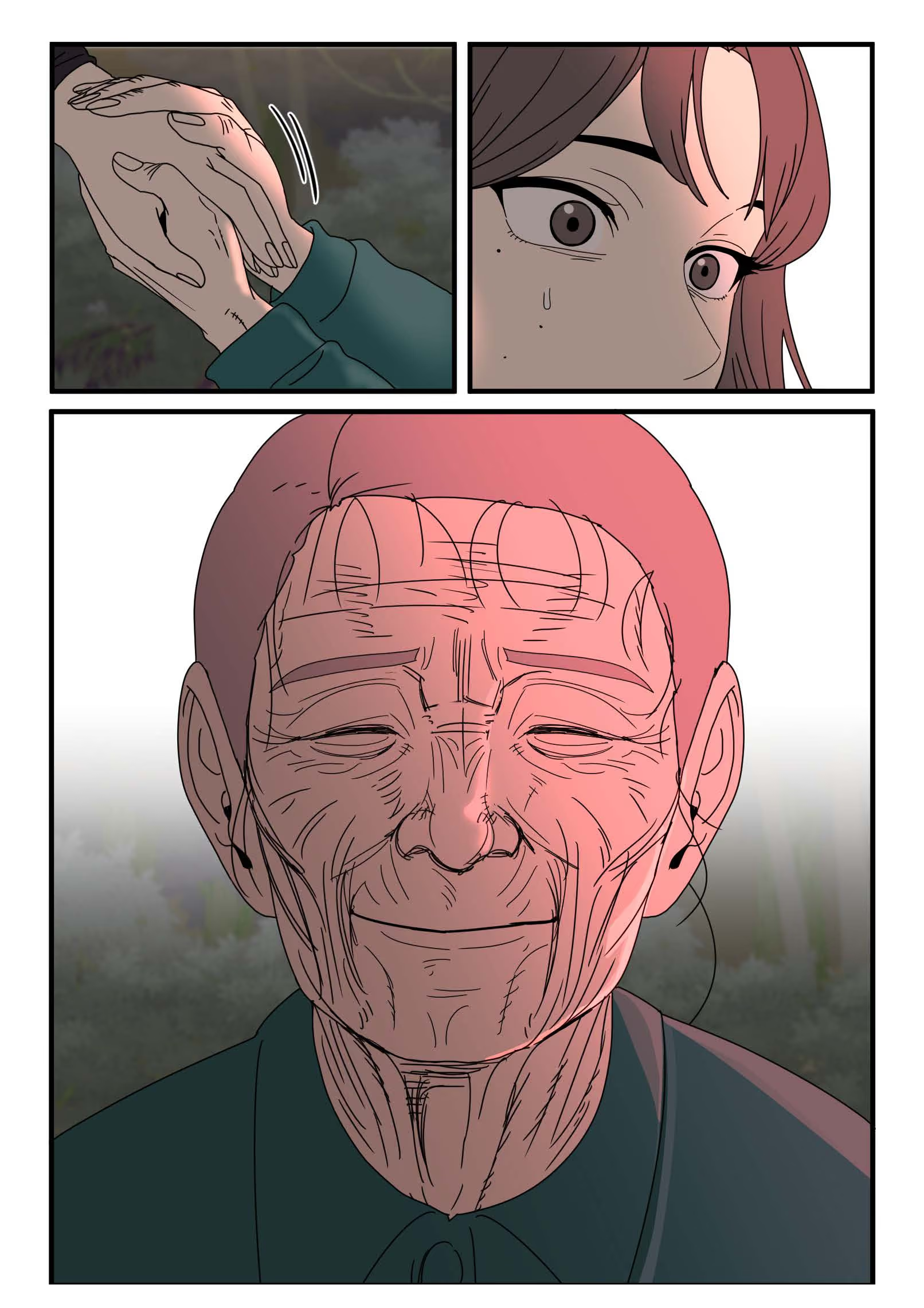
This webtoon, created by North Korean escapee Ju Ok Jeon, reflects the real risks many North Koreans face when fleeing their home in search of safety, dignity, and the chance to live freely.








About the Artist
Ju Ok Jeon is a North Korean defector who escaped in 2013. Having lived under the Kim Jong Un regime in an oppressed land, she conveys—through webtoons and comics—how precious the values of freedom and dignity truly are, with both sincerity and storytelling power.
Support Ju Ok’s work: @unistudio_juok
From Artist to Activist
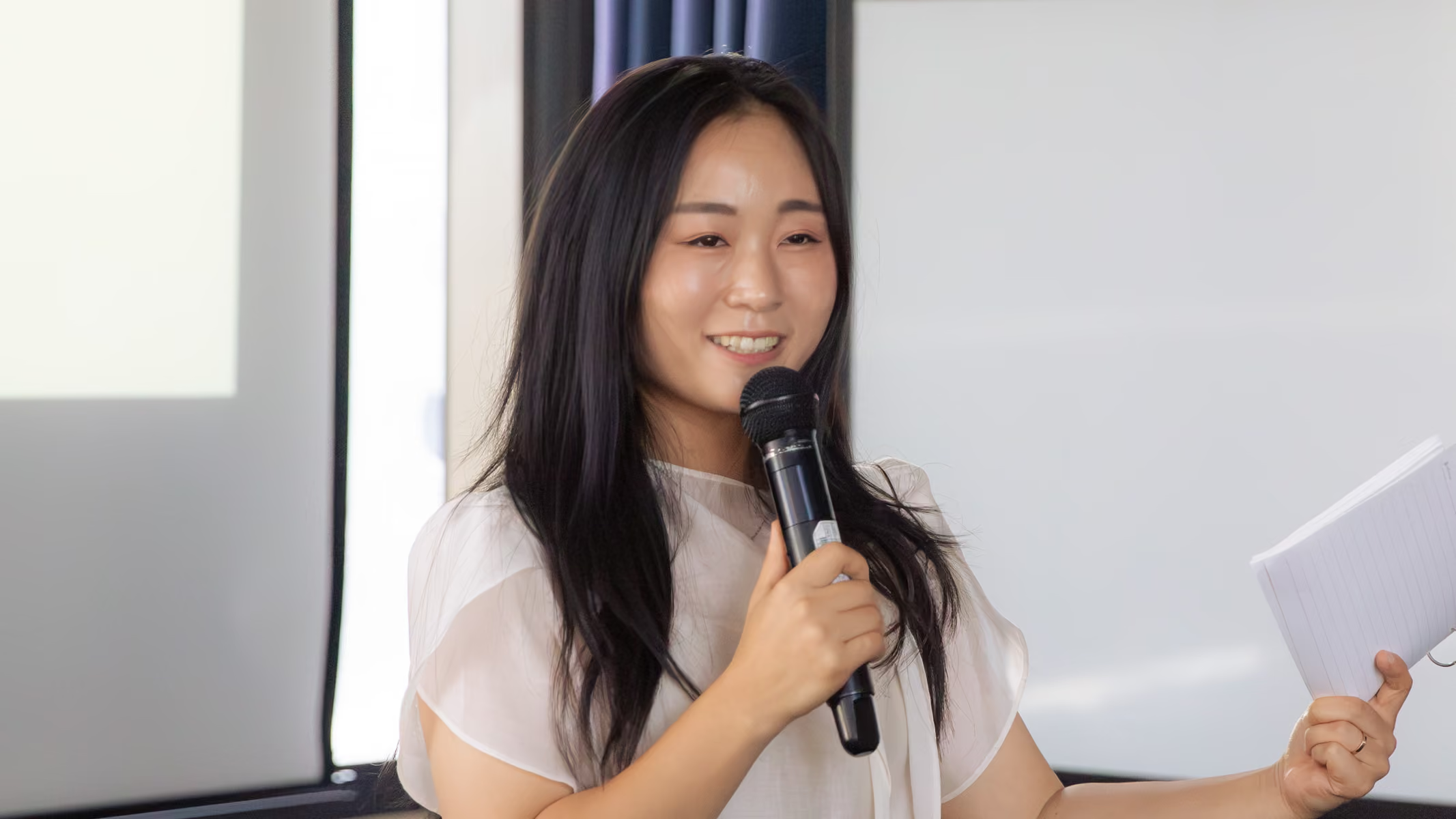
As a kid in North Korea, Ju Ok was famous at school for one thing—drawing portraits of people passing gas. Her classmates flocked to her, asking to be drawn in exchange for snacks and even small amounts of money. Nothing made Ju Ok happier than to see people’s faces light up with a big smile, and to laugh together over her creations.
But things came to a halt when a teacher pulled her aside for “disrupting the school environment” with her “unrevolutionary” drawings. Ju Ok’s art supplies were confiscated, and she was warned that her parents could be punished for failing to educate their children.
“I vowed to never draw again because my simple drawings could bring harm to my family. But no matter how hard I studied or worked, opportunities were limited because my family belonged to the labor class. After a relative defected, my social classification [songbun] fell, leaving me destined for a life of forced labor. Realizing there was no hope or future, I decided to escape.”
In freedom, Ju Ok found that there was a lack of public understanding and empathy about North Korean human rights. A few years ago, her husband, who is also an artist, encouraged her to try drawing again.
“After being severely scolded as a child, I hated anything related to drawing. But when my husband told me I have talent, I got chills—thinking, ‘Did I actually used to like this?’
Through illustration, I want to share the reality of North Korea I experienced, my journey toward freedom, and my resettlement in a free society—so the world can hear the voices of those who still long for freedom inside North Korea.”
Ju Ok hopes her art will reach more people and increase support for this issue. In 2025, she participated in the LiNK English Speech Program to hone her storytelling and English speaking abilities.
“The North Korean issue is not only a domestic matter on the Korean Peninsula but also a complex international issue. That is why it is vital to raise awareness globally—and for North Korean defectors to share their stories directly in English. LiNK’s program has played an important role in helping me move toward my life goals.”
Reimagining North Korea’s Future
Liberty in North Korea helps North Koreans reach freedom and reach their full potential through programs that build their capacity to succeed and lead change. With the right support and tools, they’re sharing their stories, utilizing their talents, and building their careers with unwavering purpose—to create a future where every North Korean person can live free and full lives.
Invest in the next generation of North Korean advocates, storytellers, changemakers, and entrepreneurs, like Ju Ok.
Give Today
North Koreans Learning English | Interview with LELP Student & Volunteer
As North Korean refugees resettle in South Korea’s competitive society, conversational English ability has been identified as a top need for personal and professional growth.
The LiNK English Language program (LELP) has become a mainstay in our efforts to help build the capacity of North Koreans as agents of change. Students are matched 1:1 with volunteer tutors from all around the world, leading to customized practice, conversations that break down barriers, and connections that will last a lifetime. In addition to weekly virtual study sessions, the program includes in-person bonding activities and a semesterly speech contest.
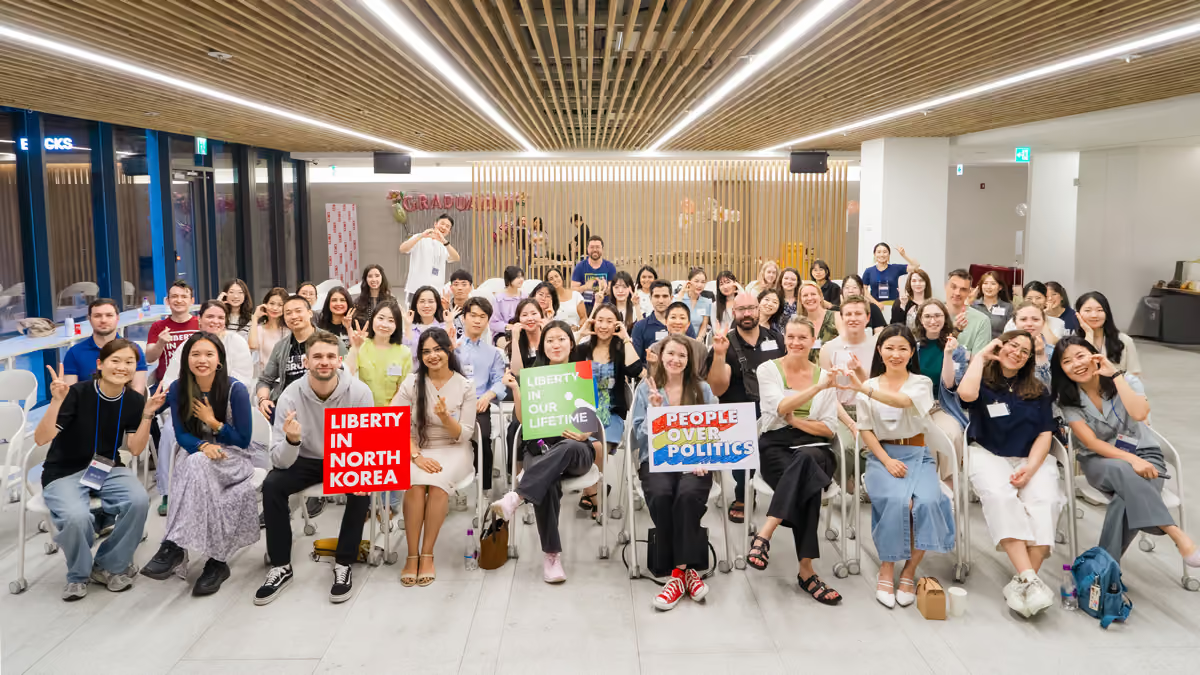
Spring 2024 has been the program’s biggest semester yet with 156 participants, including 78 North Korean students and 78 volunteers! Meet Stella, a North Korean student pursuing her PhD in Economics, and Cydney, a long-time LELP volunteer from the United States.
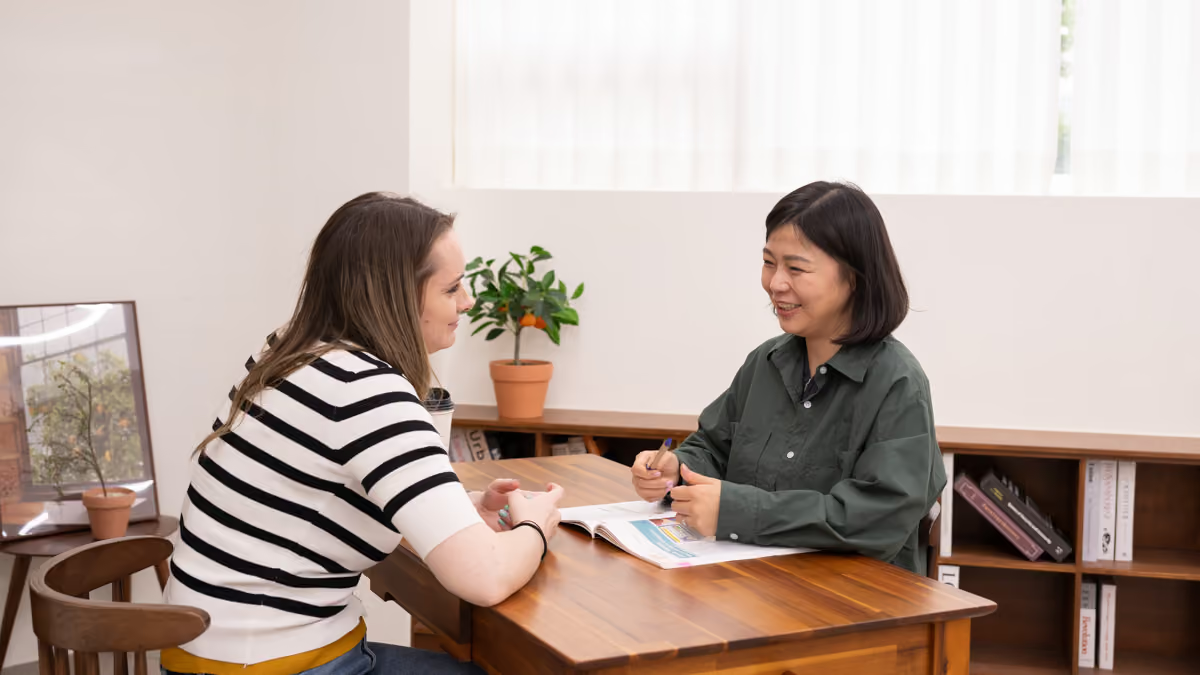
Please briefly introduce yourselves and share how you first met!
Stella - Hi, I’m Stella from North Korea. I’m currently living in South Korea and working towards getting my PhD in Economics.
Cydney - I’m Cydney, I’m from the US. I’ve been in South Korea for four years, teaching English at a hagwon. I’ve been a volunteer with LELP for two years now.
Stella - I don’t exactly remember when we met, it’s been so long!
Cydney - I think it was at the LELP hiking event! That was our first time meeting in-person.
Stella - Right, I was a little nervous then.
Cydney - Now we meet up all the time, going out for drinks and finding new places to check out in Seoul.
What has been your favorite activity during the program?
Stella - I really enjoy the speech contest. I can share my story and everyone is so attentive - the other North Korean students, volunteers, and LiNK staff. At other places, they’ll give you fixed questions that you have to answer. But LiNK gives you complete control over what you want to talk about.
People say North Koreans come from a prison, and sadness is the primary emotion. But in my experience, there is happiness even in the small things. I love to talk about those stories, my childhood memories.
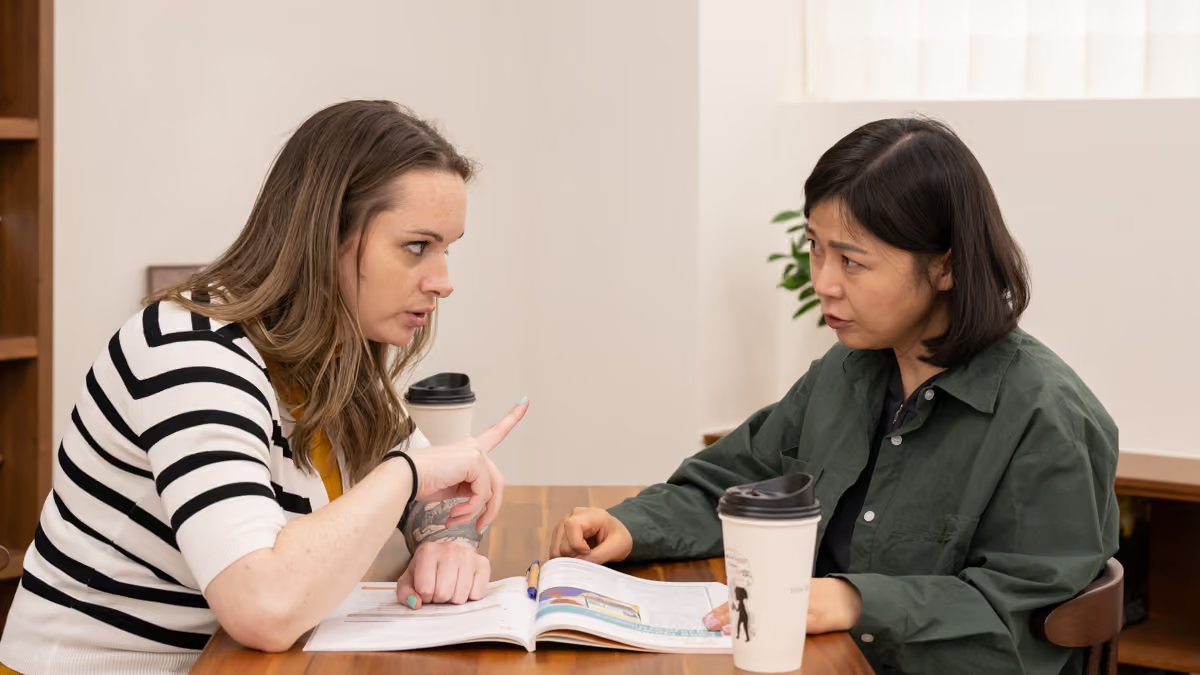
First I’ll write my speech in Korean, and then I’ll write it again in English with Cydney’s help. I say what I want to express and she’ll help me.
Cydney - Sometimes I’ll write five different sentences and explain the nuances to Stella, and then she’ll go ‘okay that one, that’s how I want to say it.’
Stella - The days leading up to the speech content, I have so many feelings and emotions while I’m busy preparing. But afterwards, I feel a sense of relief. I love it because by sharing my story, I’m realizing new things about myself.
Cydney - I’m usually crying when she finishes delivering her speech. I’m just so happy and proud of all her hard work, and she’s so good at it. Hearing the speeches of the other students is also always so inspiring.
Is there a moment or everyday interaction where you felt LELP helped you?
Stella - Yes, there is. This semester I’m taking a microeconomics seminar and the class goes into English all the time. The professor asks us questions, and we have to answer in English. If I wasn’t part of LELP, then I would have never thought about raising my hand and talking with confidence. Even if my grammar isn’t perfect, I can still comfortably share my thoughts.
What are your dreams or goals?
Stella - I have a big dream. I want to be a professor someday, at the undergraduate or graduate level. More than just teaching a certain topic or subject, I hope to instill in my students a love of learning. That’s what my teacher back in my hometown did for me. I’ve been able to come this far because of her, and she continues to inspire me to this day.
In North Korea, education opportunities are limited. But my teacher always tried to help me. She told us that if we had big dreams, then we can grab the chance to make it happen. She taught me a lot of things, about life and to see more than our current circumstances. I think about her all the time, even now, and I want to be like her - a good teacher and a good person.
I consider this my third chance at life. First I just survived in North Korea, and second in China. Now in South Korea, I can finally live freely.
Cydney - I love this story. Since I know Stella wants to be a professor, I also asked why, and she shared her memories from growing up in North Korea. Knowing that she’s wanted to do this for so long, it just makes sense.
As for my future goals, I don’t have anything concrete like teaching, but I want to help people. I want to use all the things I learn and that I’m interested in to help people find themselves. LELP has given me a great opportunity to meet new friends from different backgrounds and be a part of this meaningful cause as a volunteer.
Has being part of this program changed your perspective on North Korea?
Cydney - Yes, definitely. Before LiNK, I had read a lot of books and biographies from North Koreans. With that kind of exposure, you hear a lot of the hard stuff. Very inspirational stories about incredible people, but tough to read. I wanted to get a bigger picture of the issue, and that naturally led me to LiNK. After volunteering with LELP for two years, my perspective has not just changed, but really expanded.
I’ve had a lot of conversations with Stella where the contexts of what we’re talking about could not be more different, but our experiences are very much the same. It’s brought this universal view of people doing their best to live their lives, and connecting over it.
Stella - A lot of times, people want to hear hard stories from North Koreans. If you talk about your happiness, they ask ‘Why are you here then? You can go back there.’ It always surprises me - how can they say something like that? People living anywhere, have both happy times and difficult situations. But they don’t want to hear positive things from North Korea, they just want to hear that you were living in hell.
But LiNK is different. I feel like I can just talk comfortably. It has made me want to continue this program. Other places have a political focus but LiNK doesn’t, just real human stories.
Cydney - It’s one of my favorite things about how LiNK shares stories of North Koreans. They don’t shy away from the hardship, but they’re showing happy, thriving people and smiling faces. It’s not, ‘come to our page to learn about our sadness,’ but ‘learn about these real people whose experiences we want to share.’
Did LiNK’s program further your interest in sharing North Korean stories and experiences?
Stella - Actually we planned it, we talked about her drawing pictures and me writing the stories.
Cydney - It’s still very much in the talking phase, but it’s been my dream to make a webtoon! We’ve thought about creating one together about a little North Korean girl and sharing Stella’s experiences through this format.
My undergraduate degree was in history, so I spent a long time studying situations similar to what happens in North Korea. It’s hard for me to know that I live in a time where people go through such things, especially people close to me, like Stella. I think what LiNK does is so important because it’s trying to change the narrative and what the history of North Korea will be. If I can have any part of it, I want to do what I can.
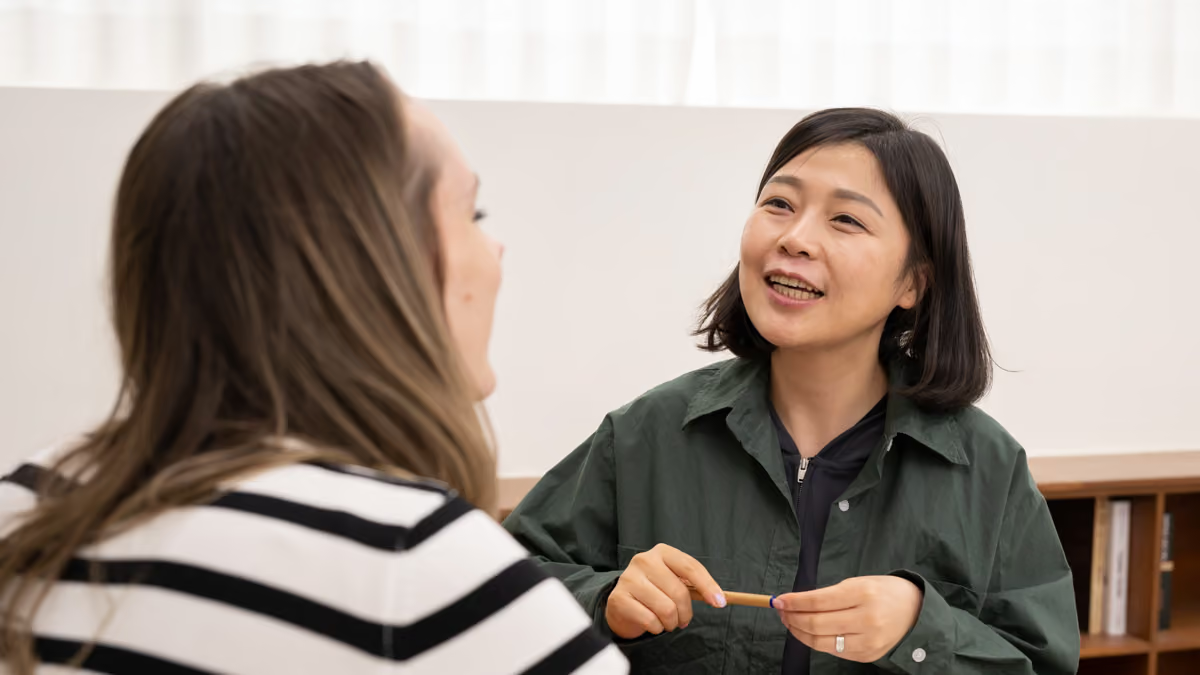
What is something that each of you learned from each other?
Stella - Cyndey is just such a strong person. Before I met her, I thought I was strong, but we shared our stories and I’m so amazed by her determination. She’s alone here in South Korea, with a different language and culture, but she never complains. She always tries to make the best of life and find happiness.
Cydney - I lived in the States, then I lived in China, and then in Korea. So there have been a lot of cultural challenges. The longer I’m here, I realize, ‘Oh, the things that I’m culturally used to are so different here that it’s starting to weigh on me.’ In those times, it’s been so great to talk to Stella.
That’s something we relate closely on, actually, both having to learn to live in South Korea.
She’s become one of my closest friends and we spend 90% of our time together just laughing. She’s so ambitious. I watch her do everything she can to reach her goals, and I think to myself, ‘I can do that too.’
Stella - I’m still reflecting on my experiences, so sometimes I try to find therapy but it hasn’t really helped me. But talking with Cydney has. She listens without judgment, and feels with me. So it’s become not just studying English together, but I feel healed with her.
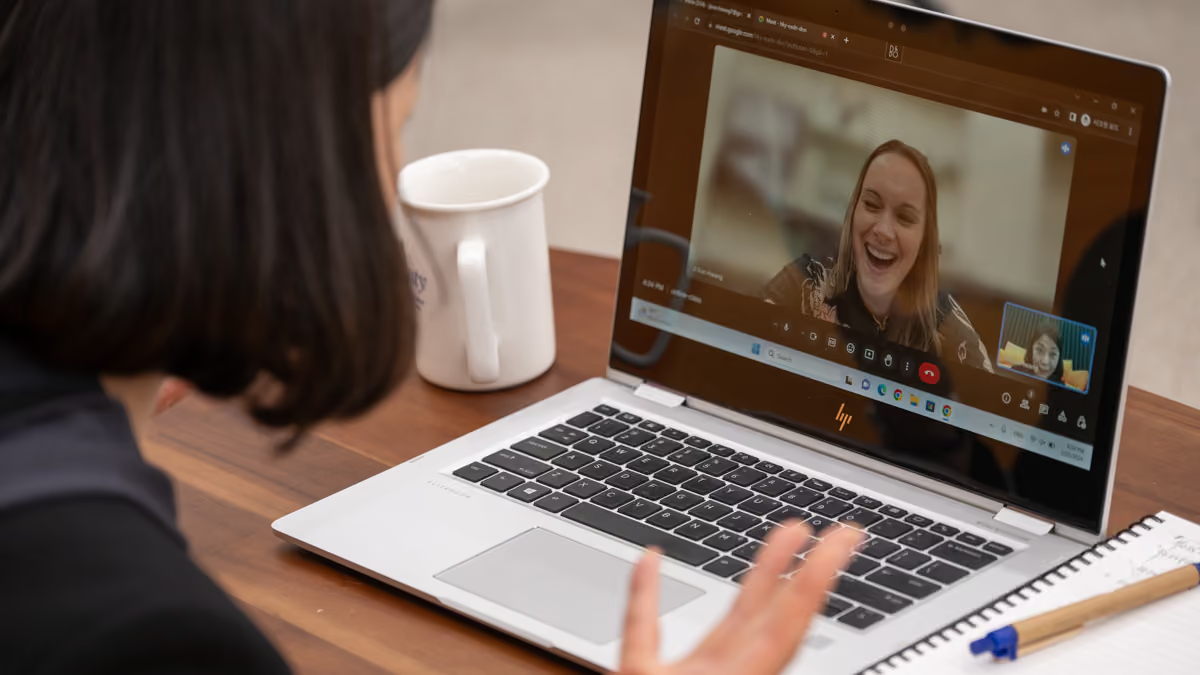
Thank you for making programs like the LiNK English Language program possible. Every day, we see the impact that opportunities like this have in the lives of our North Korean friends, and members of this global movement.
Help us ensure that the LELP can continue, improve, and expand in the years to come.










