
Webcomic: Escape From North Korea
By: Ju Ok Jeon
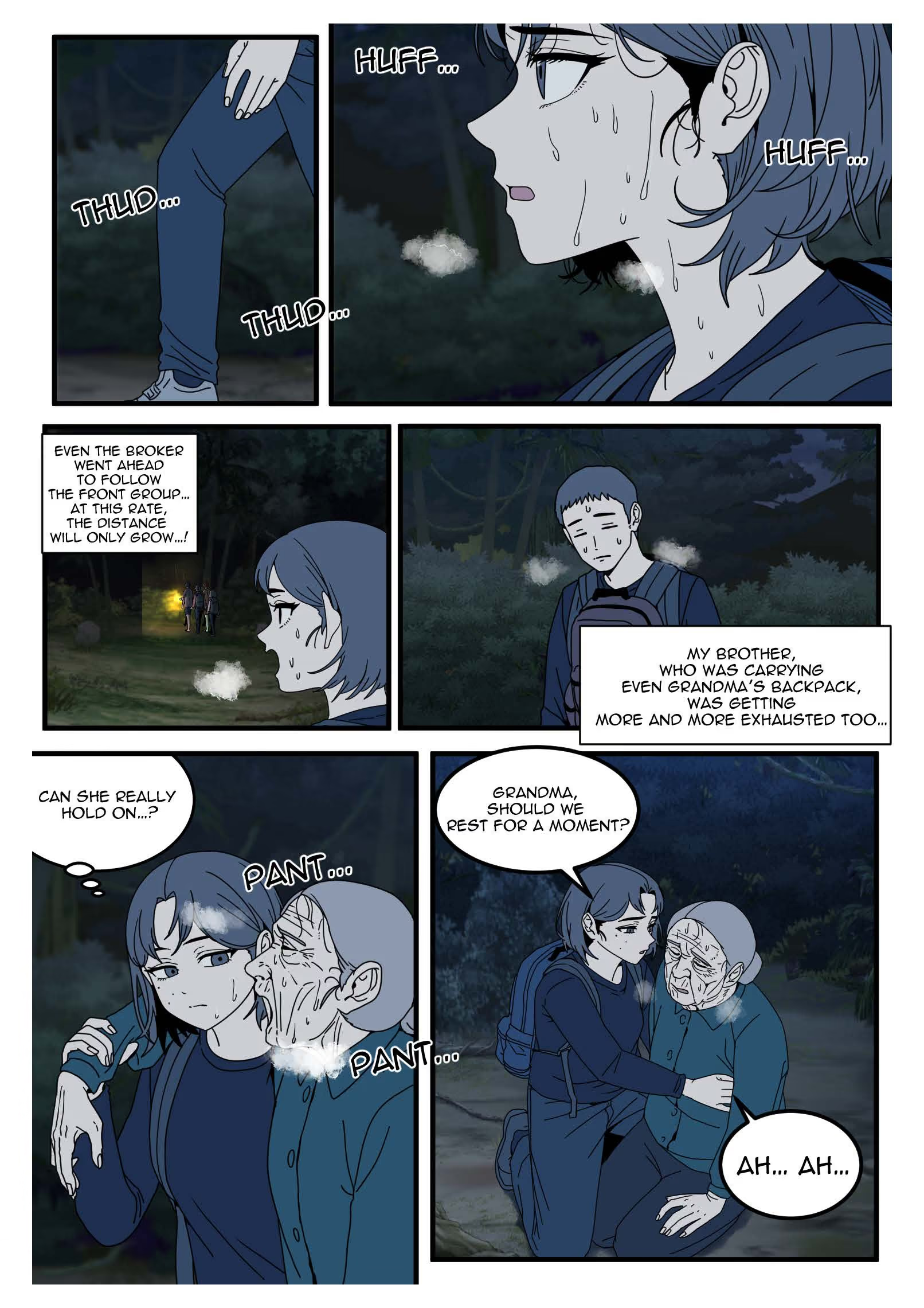
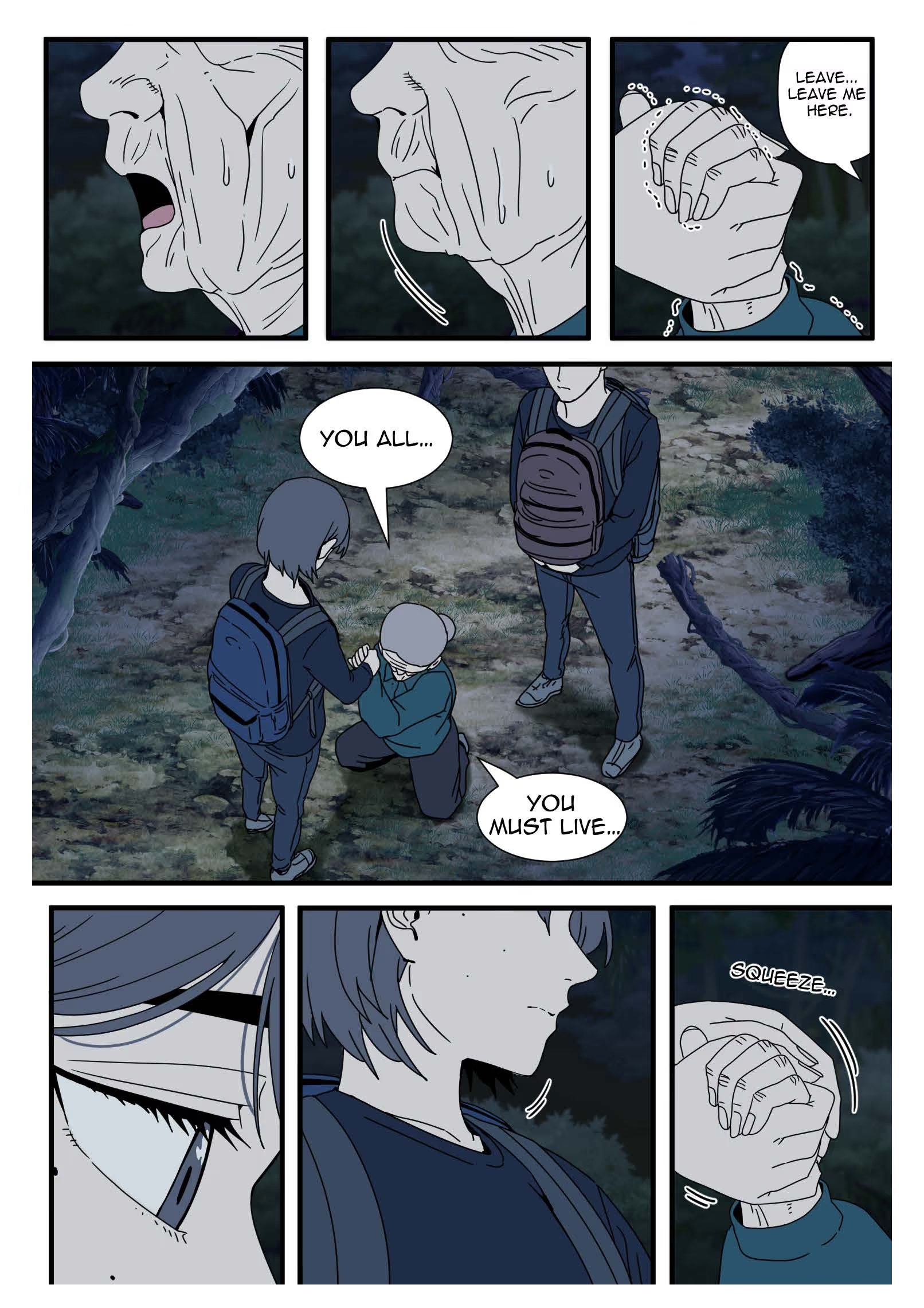
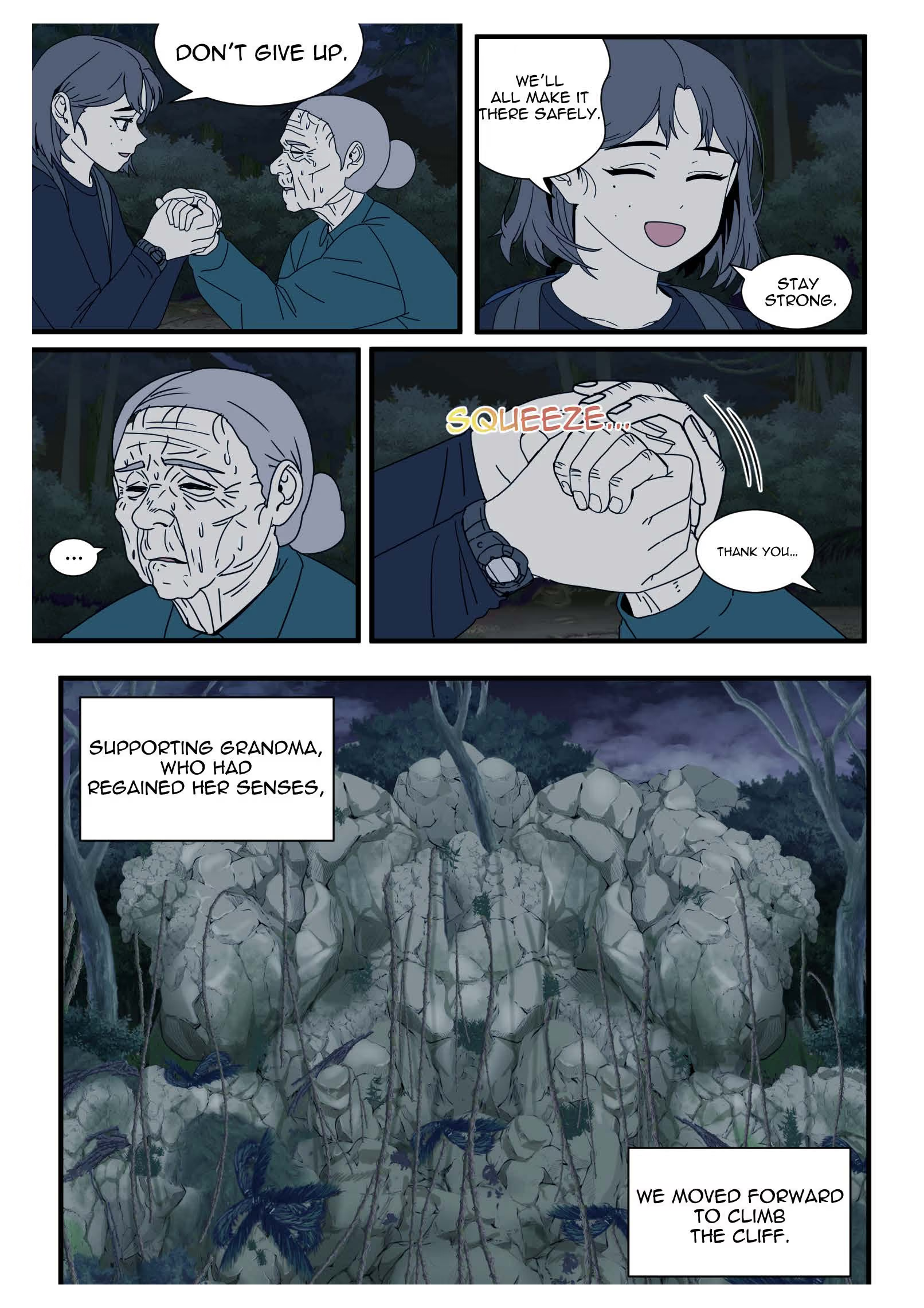
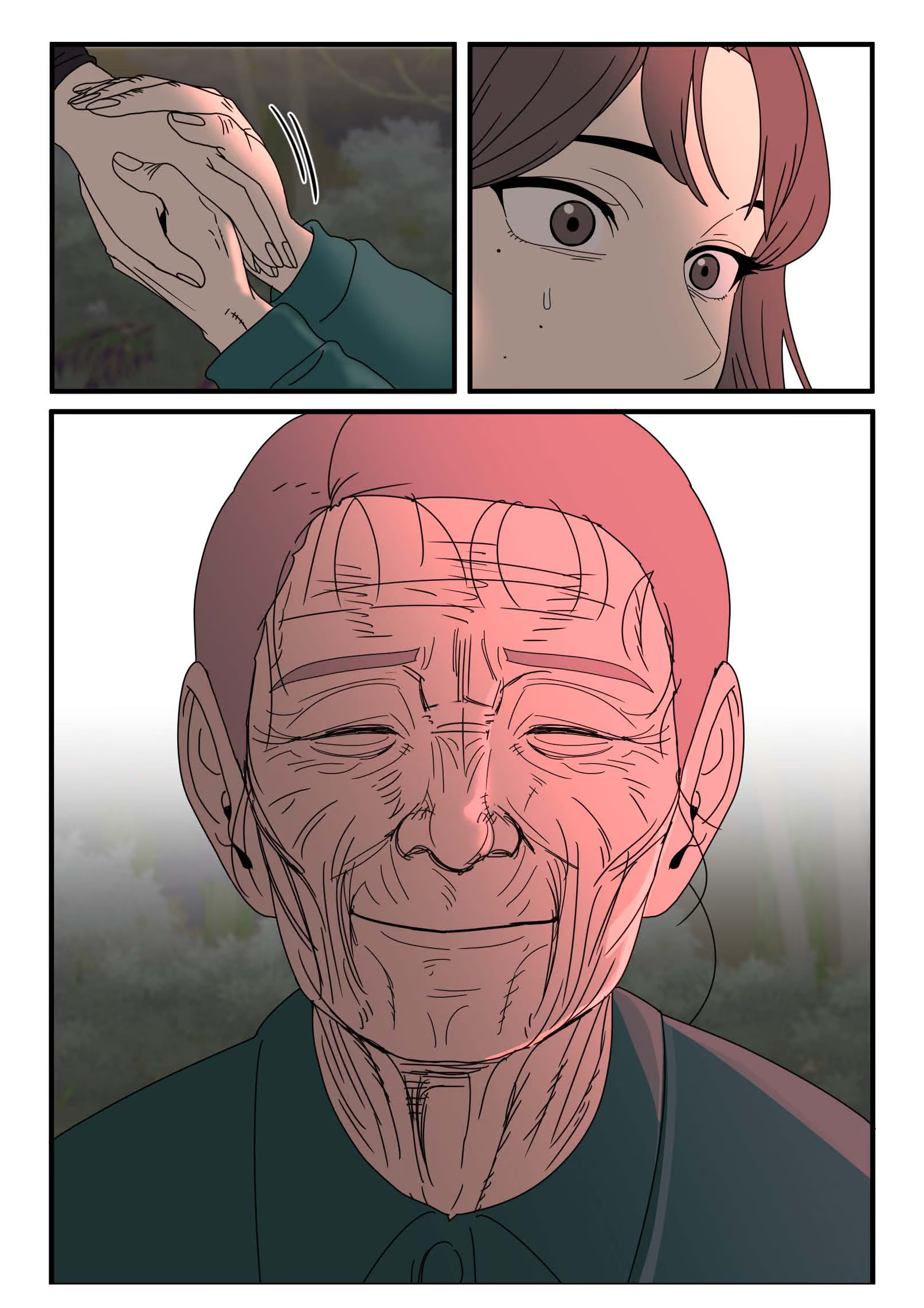
This webtoon, created by North Korean escapee Ju Ok Jeon, reflects the real risks many North Koreans face when fleeing their home in search of safety, dignity, and the chance to live freely.








About the Artist
Ju Ok Jeon is a North Korean defector who escaped in 2013. Having lived under the Kim Jong Un regime in an oppressed land, she conveys—through webtoons and comics—how precious the values of freedom and dignity truly are, with both sincerity and storytelling power.
Support Ju Ok’s work: @unistudio_juok
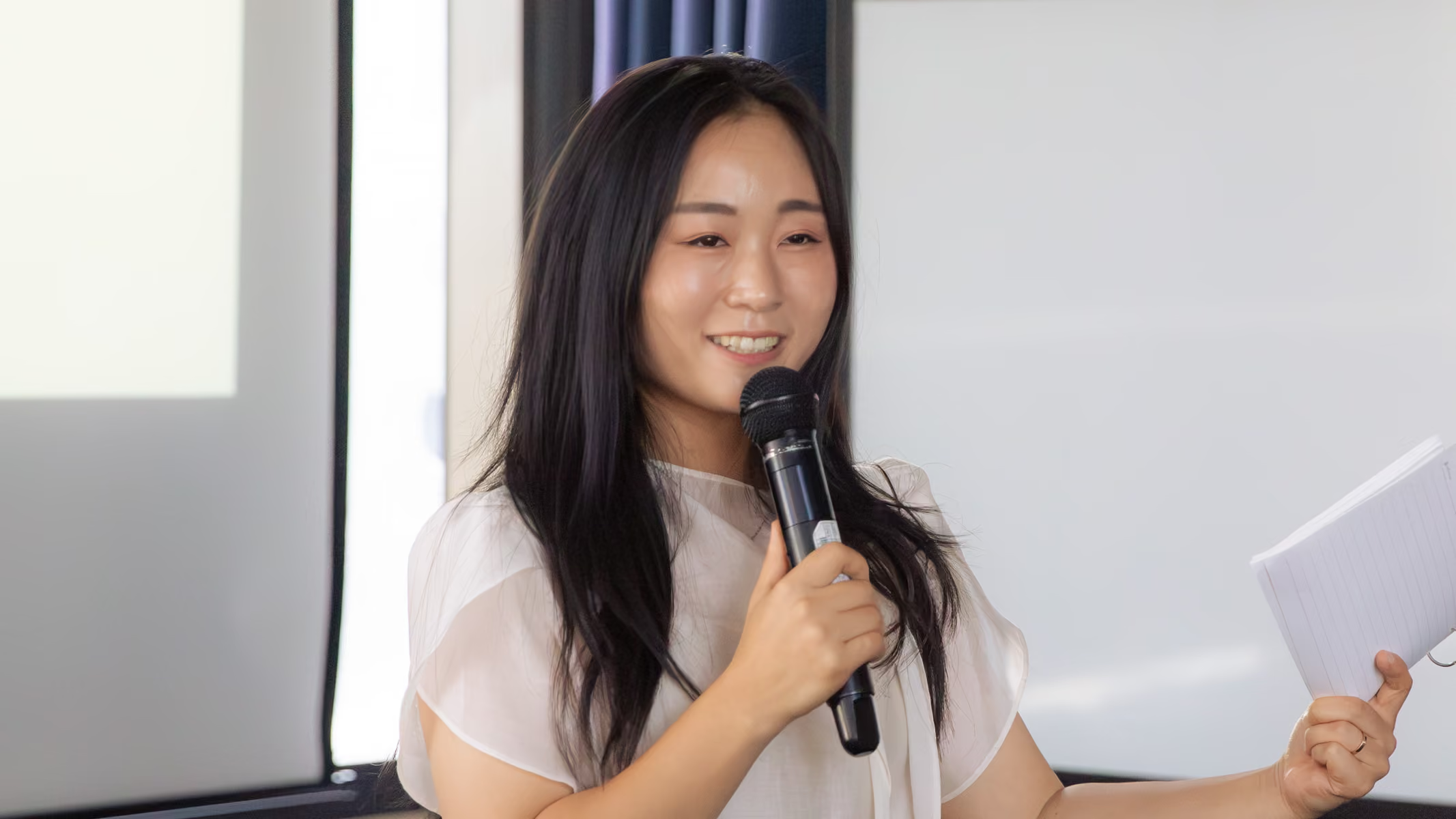
From Artist to Activist
As a kid in North Korea, Ju Ok was famous at school for one thing—drawing portraits of people passing gas. Her classmates flocked to her, asking to be drawn in exchange for snacks and even small amounts of money. Nothing made Ju Ok happier than to see people’s faces light up with a big smile, and to laugh together over her creations.
But things came to a halt when a teacher pulled her aside for “disrupting the school environment” with her “unrevolutionary” drawings. Ju Ok’s art supplies were confiscated, and she was warned that her parents could be punished for failing to educate their children.
“I vowed to never draw again because my simple drawings could bring harm to my family. But no matter how hard I studied or worked, opportunities were limited because my family belonged to the labor class. After a relative defected, my social classification [songbun] fell, leaving me destined for a life of forced labor. Realizing there was no hope or future, I decided to escape.”
In freedom, Ju Ok found that there was a lack of public understanding and empathy about North Korean human rights. A few years ago, her husband, who is also an artist, encouraged her to try drawing again.
“After being severely scolded as a child, I hated anything related to drawing. But when my husband told me I have talent, I got chills—thinking, ‘Did I actually used to like this?’
Through illustration, I want to share the reality of North Korea I experienced, my journey toward freedom, and my resettlement in a free society—so the world can hear the voices of those who still long for freedom inside North Korea.”
Ju Ok hopes her art will reach more people and increase support for this issue. In 2025, she participated in the LiNK English Speech Program to hone her storytelling and English speaking abilities.
“The North Korean issue is not only a domestic matter on the Korean Peninsula but also a complex international issue. That is why it is vital to raise awareness globally—and for North Korean defectors to share their stories directly in English. LiNK’s program has played an important role in helping me move toward my life goals.”
Reimagining North Korea’s Future
Liberty in North Korea helps North Koreans reach freedom and reach their full potential through programs that build their capacity to succeed and lead change. With the right support and tools, they’re sharing their stories, utilizing their talents, and building their careers with unwavering purpose—to create a future where every North Korean person can live free and full lives.
Invest in the next generation of North Korean advocates, storytellers, changemakers, and entrepreneurs, like Ju Ok.
Give Today
A North Korean Mom and Son’s Harrowing Escape | Harry’s Story
The town I grew up in was surrounded by mountains. When the season was right, my friends and I would hike up to look for pears. Fresh fruit was a luxury in North Korea, but the mountainside was covered in orchards. One day we snuck in when the fruit was still green, hoping to avoid the guards.
I hid in a tree, passing down pears to my friends, when we heard a whistle blow. My heart was pounding; it was like a heist movie. I rolled away and ran out of danger. Somehow, we got away with it. It didn’t even matter that the fruit we ate was not ripe and made our stomachs hurt—we felt unstoppable.
Little did I know that just a few years later, I would be running for my life once again… but this time, it was not a game. I would be escaping from North Korea.
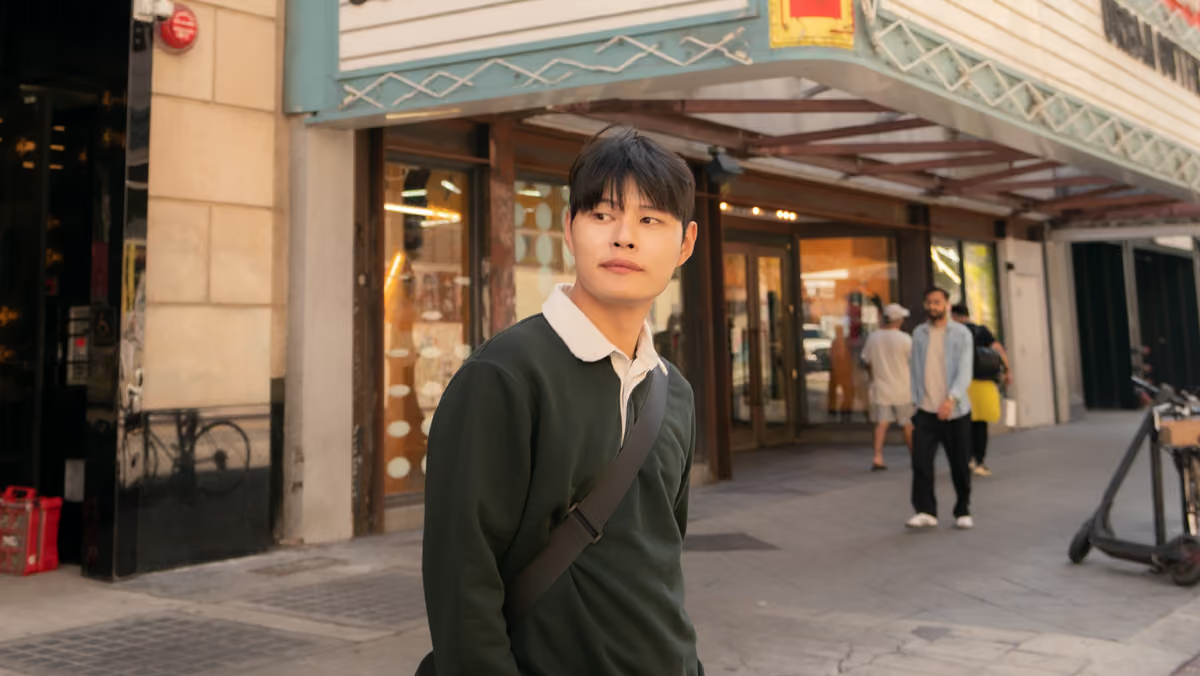
Life in North Korea was normal to me. I went to school and spent time with my friends and older sister. All I knew about South Korea was from the movies I’d secretly watched. It seemed like a scary place, where they trafficked drugs and stole your organs.
My mom was often busy with work. She had a job that connected North Koreans to China, wiring money between families. With her income, we were able to live comfortably. But it was risky. She could usually bribe the guards to let her cross the border safely, but it wouldn’t work forever. One day, she was caught and sent to one of North Korea’s brutal prison camps.
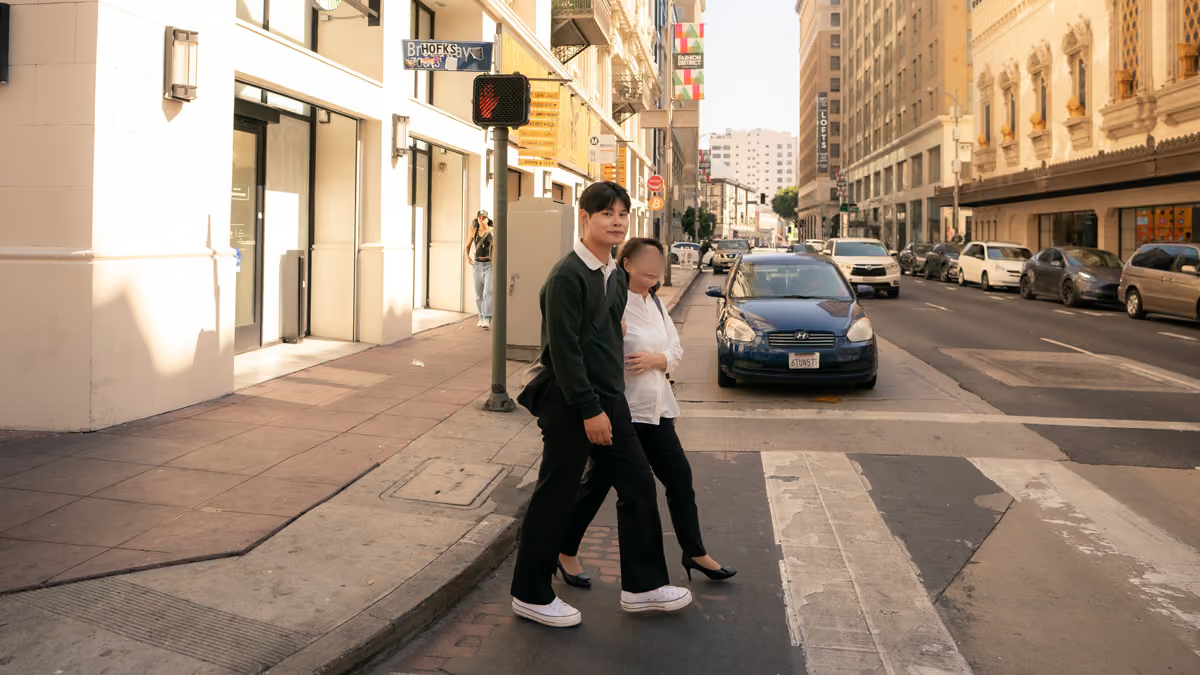
My mom spent two years in the prison camp, forced to do intense labor every day while barely being fed. She told us later that she had shared a concrete cell with 50 other people and they lacked basic things like soap, toilet paper, and sanitary products. Guards would abuse their power and find any reason to assault them.
Many people in the camp were also women who had been arrested for crossing the border, trying to find ways to make a living and take care of their children. Dying in prison meant your crimes would be passed on to your family. And so, many of those women endured faithfully until they were released, and then passed away afterward.
When my mom finally left the camp, she quit the work she was doing and told her clients she was done. But one of them refused to hear it.
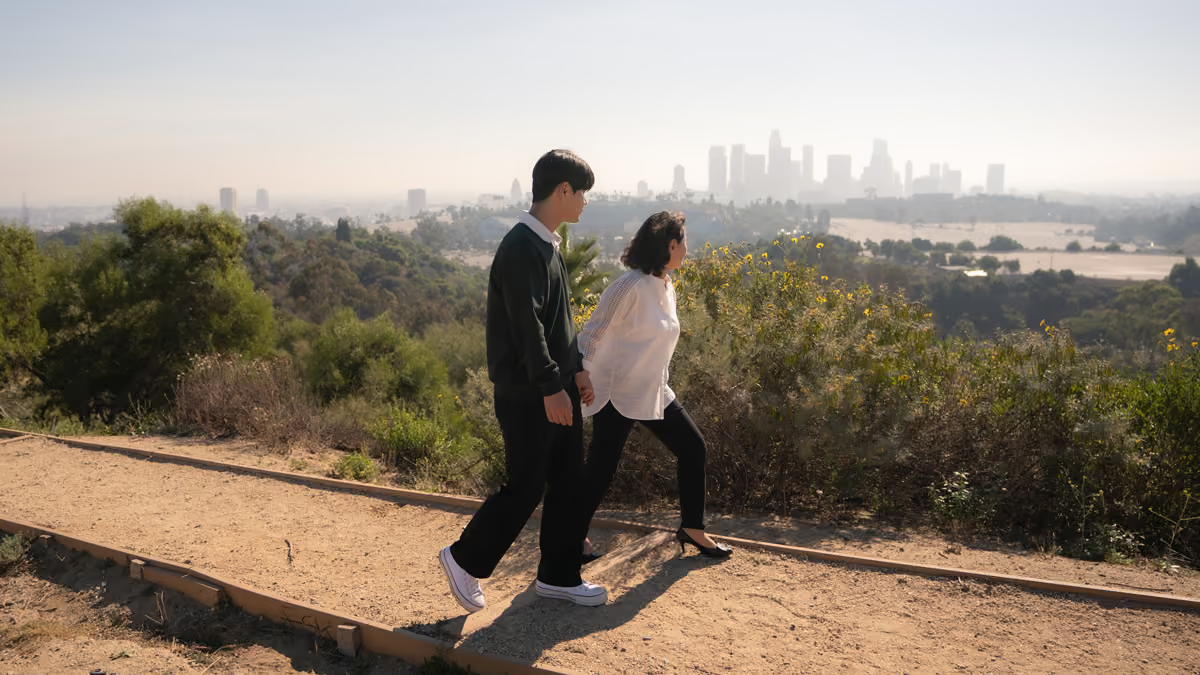
He was a South Korean fisherman whose boat had been thrown off course by a typhoon, and North Korean authorities refused to let him return home. One night, he showed up drunk at our house and threatened my mom. If she didn’t take him across the border, he would turn her in. So she had no choice. None of us did.
My mom took me with her and brought the old man to the border of North Korea. We were supposed to meet some brokers who would take him across, but they couldn’t agree on a price or a place. After a few days of waiting, everything went wrong.
The police had discovered our plan. They had our photos and were already putting up wanted posters for our capture. There was no way we could go home now. The choice was made for us. We had to flee the country with the old man.
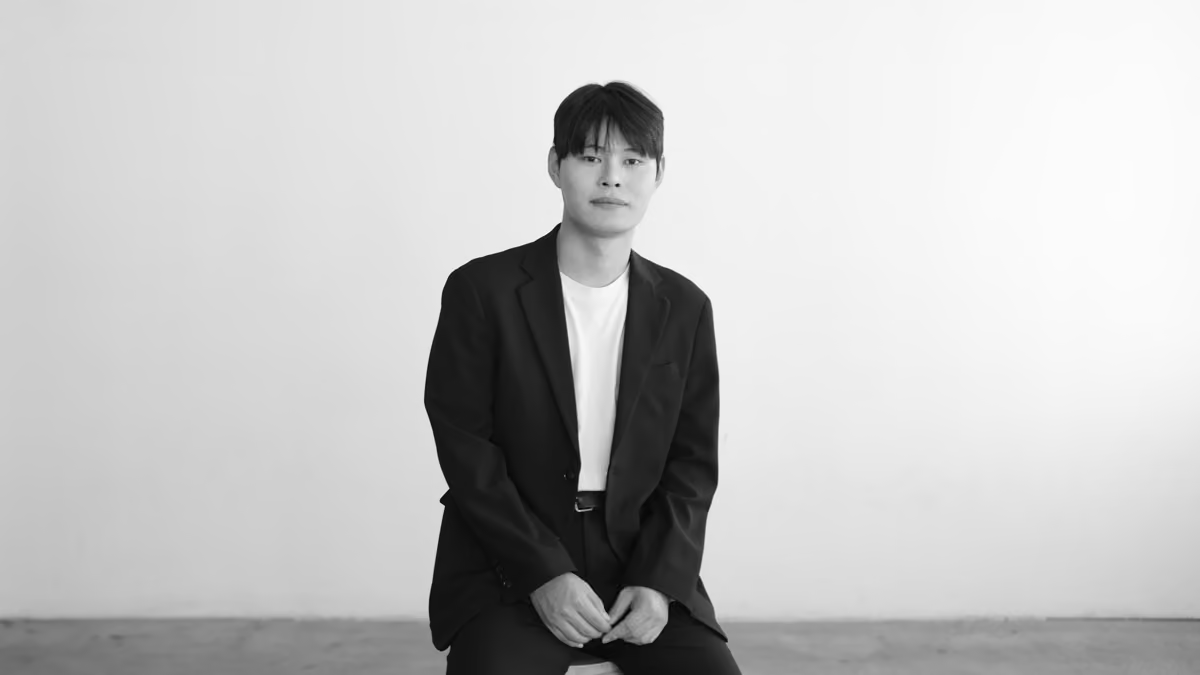
I thought I would die that night. Armed soldiers patrol the river bordering North Korea and China, and are told to shoot defectors on sight.
If caught, my mom would have faced life in prison for her second offense—no better than a death sentence. But somehow, we made it to the other side.
In China, we waited three days in the mountains for our brokers. Every moment spent at a standstill was a huge risk, because Chinese authorities pay local citizens to report North Korean refugees. When it became clear that help wasn’t coming, we headed for a nearby village, laying low in the grass until the cover of night.
By nightfall, we took our chances and entered the village. Luckily, we met a kind woman who introduced us to a new broker. This broker helped us get to another city where the old man was picked up by South Korean officials and flown home to his family. As for me and my mom, we couldn’t go back to North Korea. So we went to see my middle sister, who had already been in China for quite some time.
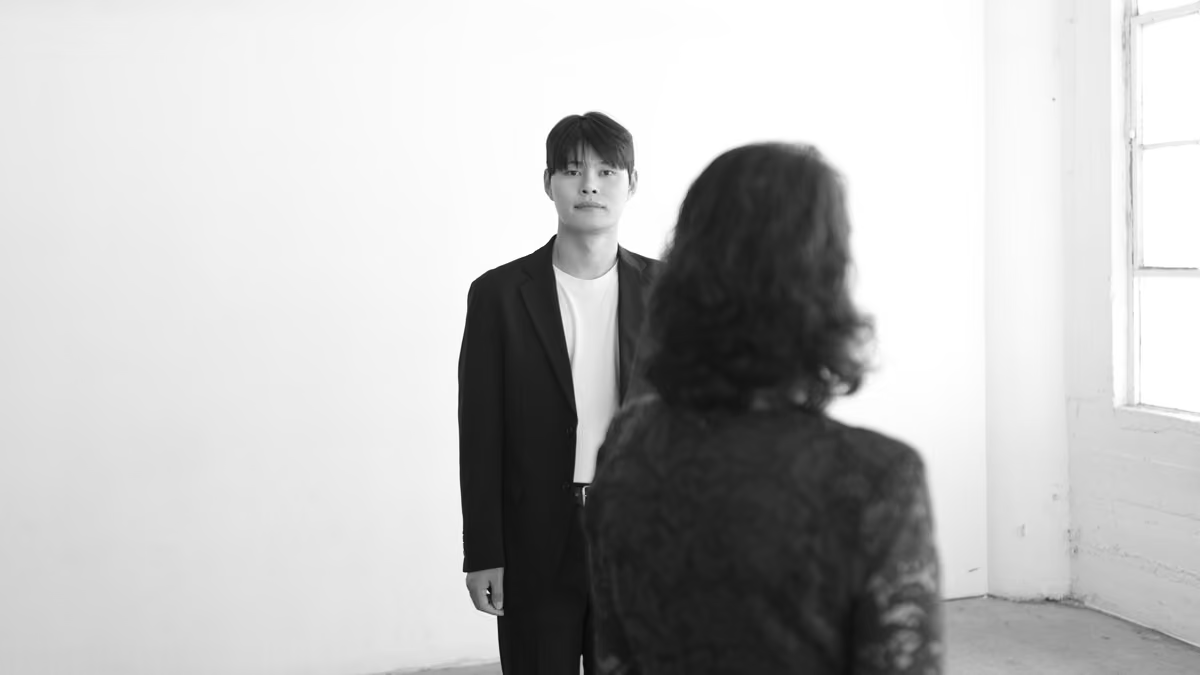
Before I was born, my mom took my two sisters to China with her. She wanted them to stay there safely, but my oldest sister refused and returned to North Korea with my mom. My middle sister was left behind, sent to live with a trusted friend. But the unthinkable happened. At 12 years old, she was trafficked and sold to be married to a much older man. Every night, she would stand by the water well, threatening to hang herself if the man came near her.
But one year later, the inevitable happened. When she was just 13 years old, she had a baby.
Like many other young North Korean women, my sister went across the border seeking a better life, but ended up living her teenage years in captivity, with no laws or family to protect her. Every day she had imagined running away, until finally she did. She reunited with my mom in North Korea when she was 20.
But not everything went as hoped. Though she was happy to be together with our family again, it turned out life was just as hard in North Korea. In the end, my sister returned to her daughter in China just a few years later.
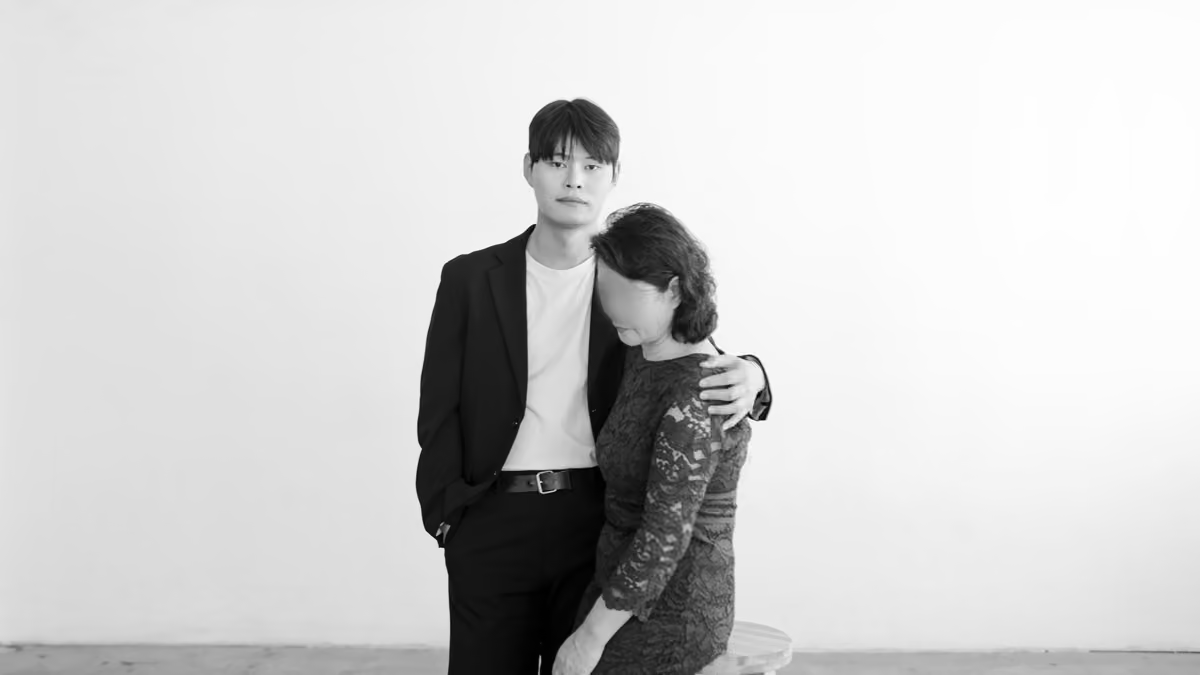
It had been years since we last saw my sister, and it was my first time meeting her daughter, my niece. We were the same age. For a month, we all enjoyed the bittersweet reunion. Then my sister connected us with another broker, and my mom and I finally escaped for good.
We eventually reached South Korea and it turns out, it wasn’t the dangerous country I had seen in movies.
Still, the memories of everything we had been through tormented me. I was angry at the old man who pressured us into his escape plan. I hated that my mom chose such a risky job in the first place.
Later we found out my oldest sister had been tortured by North Korean authorities when we left, leaving her devastated by mental illness. They wanted her to confess that our family had helped the old man escape. Someone had to take the blame. My older sister, who was once strong and reliable, would never be the same again.
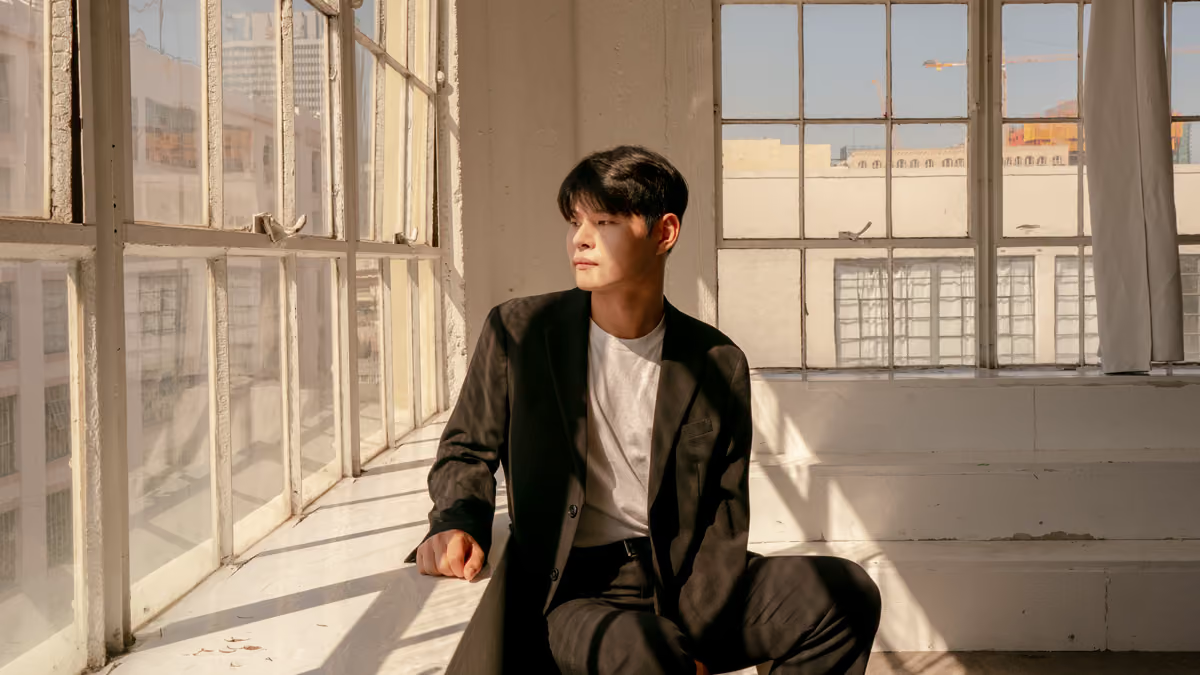
When I first reached South Korea, I hid my past. Everything was terrifying and different—the culture, the lifestyle, and even the language. My new friends would hang out at internet cafes and I didn’t even know how to use a computer.
But I started learning. I studied hard in school and got a job to support myself. I began reading books to develop my own philosophy for my new life. I even started playing video games and for better or for worse, became just as obsessed as everyone else.
When I got to high school, I finally told my friends the truth about my life. Their response was so different from what I had expected. I found that rather than being cruel, they were curious. I realized the importance of my story, and how sharing my family’s painful experiences could change people’s perspectives about North Korea.
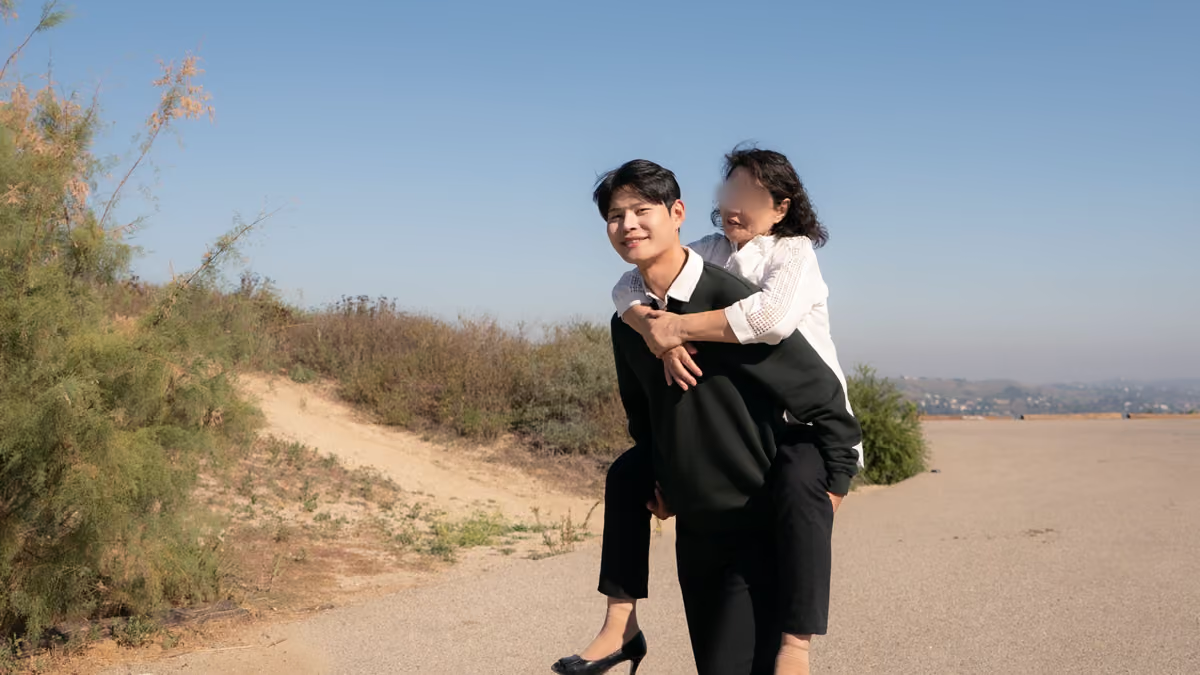
In 2019, at the end of high school, I met someone from Liberty in North Korea. I was so curious how she spoke about North Korea. She invited me to attend their Changemakers Summit and I had never experienced anything like that before—South Koreans, North Koreans, and even foreigners who were all young, open-minded, and interested in how to make an impact on this issue.
Truthfully, I never saw myself as an activist. I didn’t think I had what it takes.
But if I could change how just one person saw North Korea—to see the people and their resilience, bravery, and hope instead of the regime—I realized I was already acting as an advocate.
These days, I’m working and studying full time. After coming to South Korea my mom got her masters degree and is now writing a book about her life. My middle sister eventually escaped and joined us in South Korea too. She got remarried and finally gets to live a normal life. Even though we’re all pursuing different things, we’re still together, holding tightly to the hope that we will someday reunite with my older sister.
Today, I can be my own person. I can buy fresh fruit whenever I want, or walk along the Han river anytime. After all of the running and all of the pain, I am finally free to choose my own life.
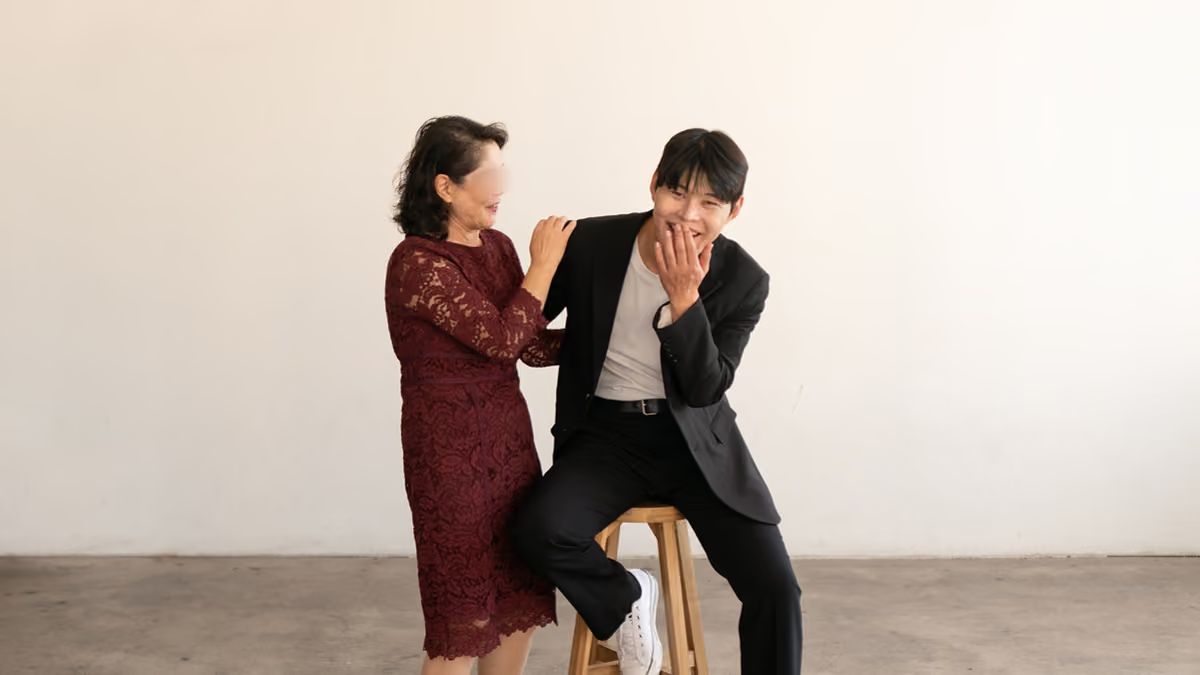
Harry’s story echoes that of many North Korean refugees, who live with the weight of their past while grasping onto hope for the future. After what happened to his oldest sister, Harry says he has nothing left to lose. That’s why he chooses to speak openly about the horrific things he and his family have experienced, hoping to bring change and one day reunite with her in a free North Korea.
Help us continue to to sustain refugee rescues, empowerment programs, and efforts to change the way the world sees North Korea.










