
Webcomic: Escape From North Korea
By: Ju Ok Jeon
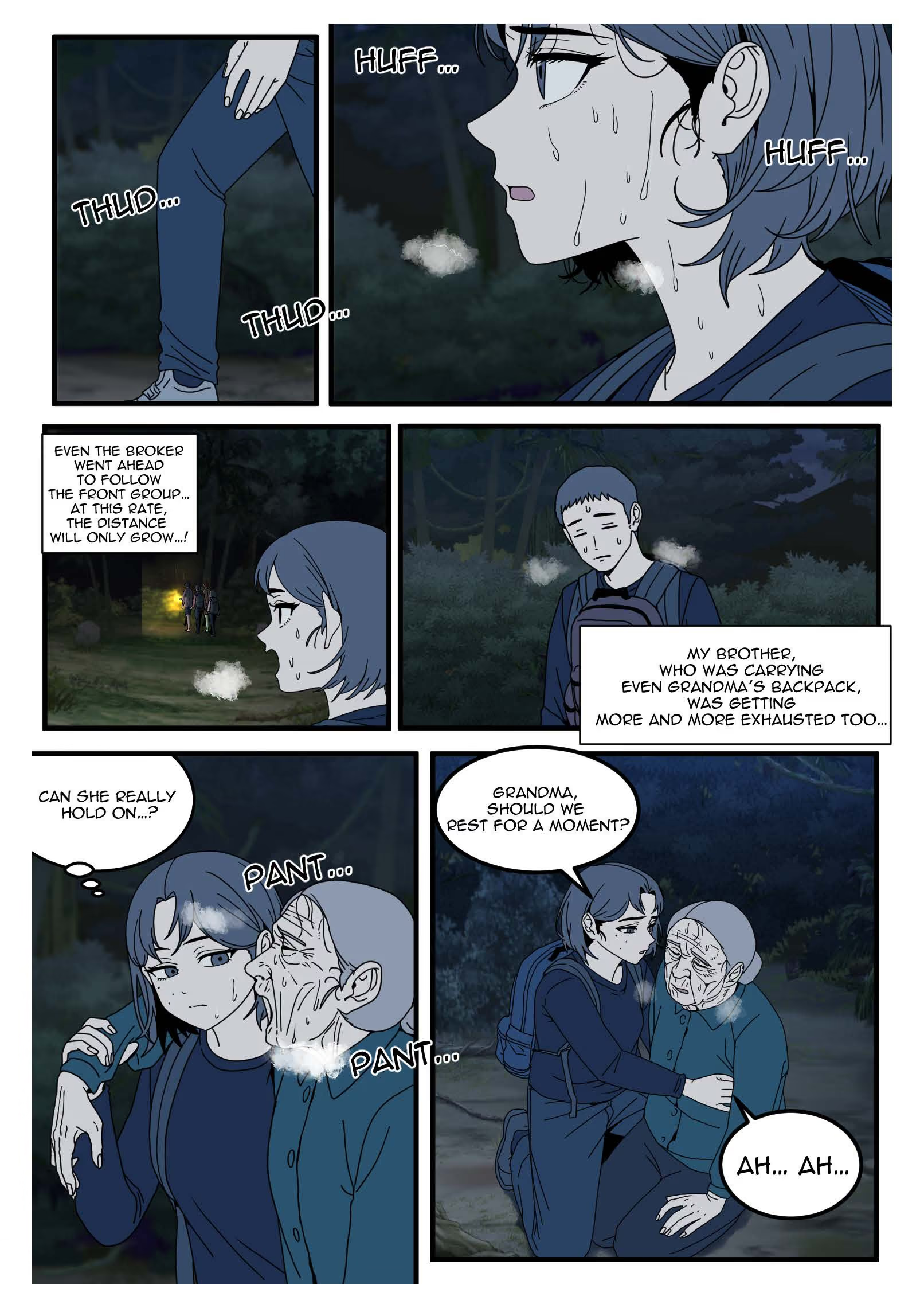
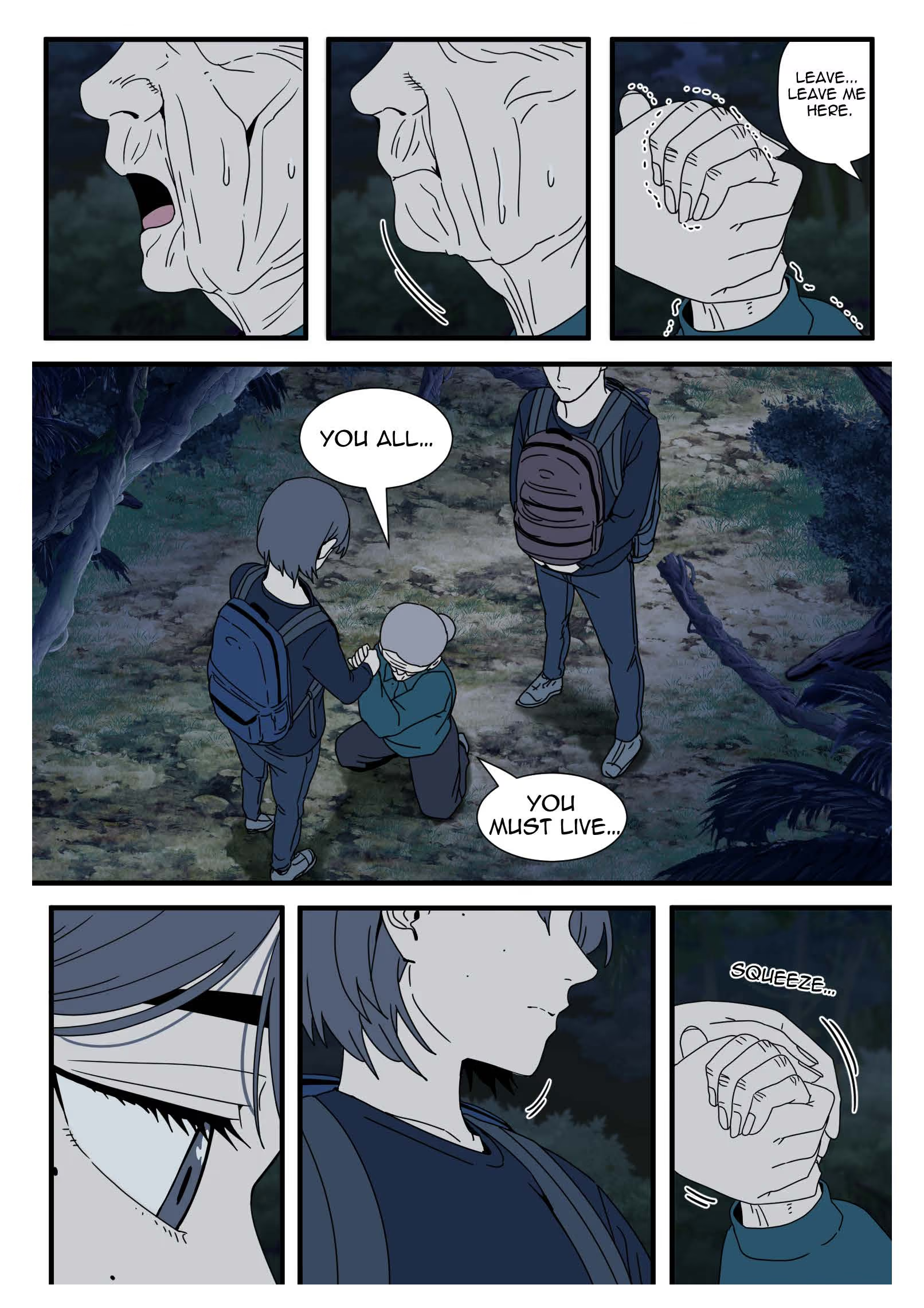
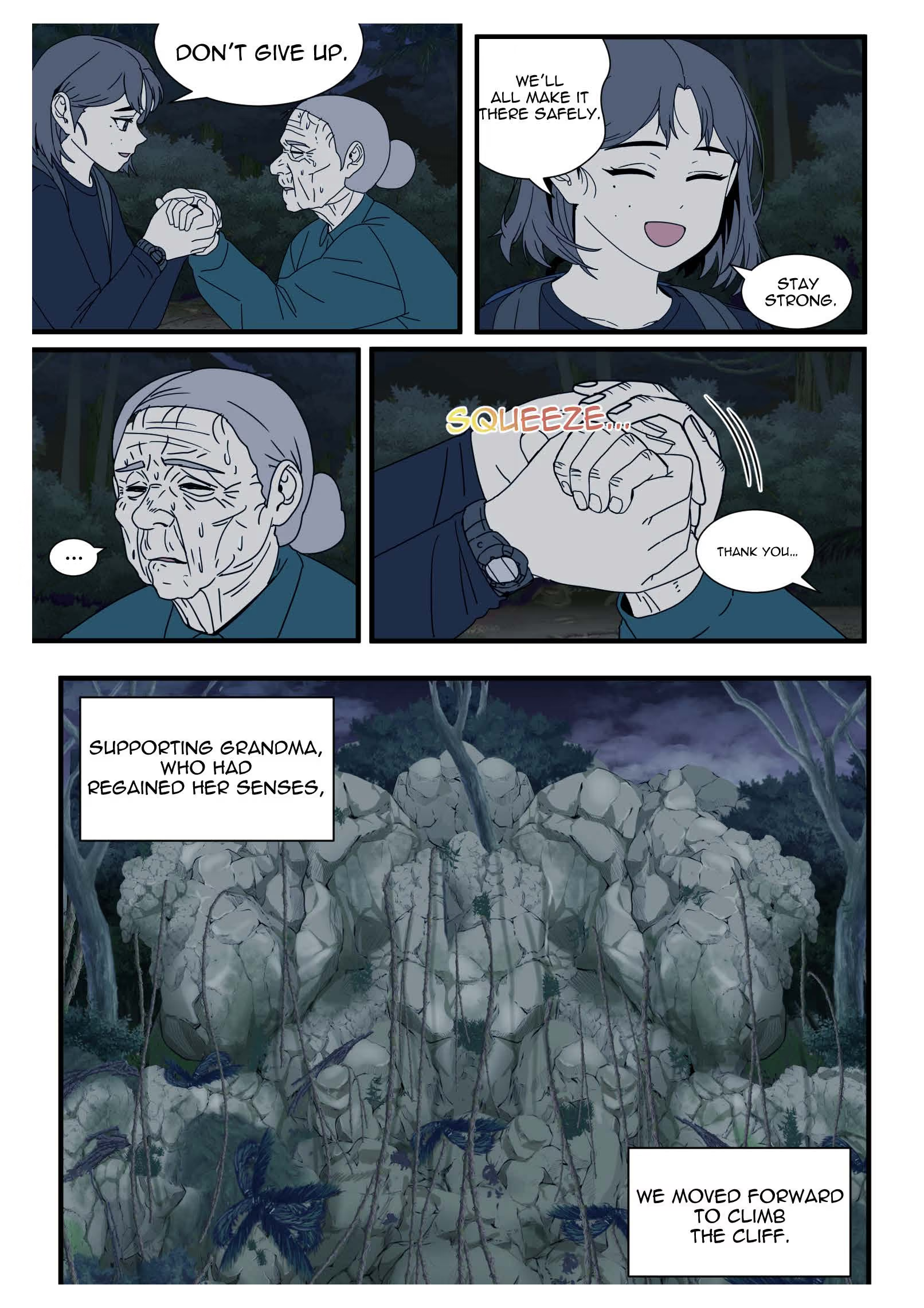
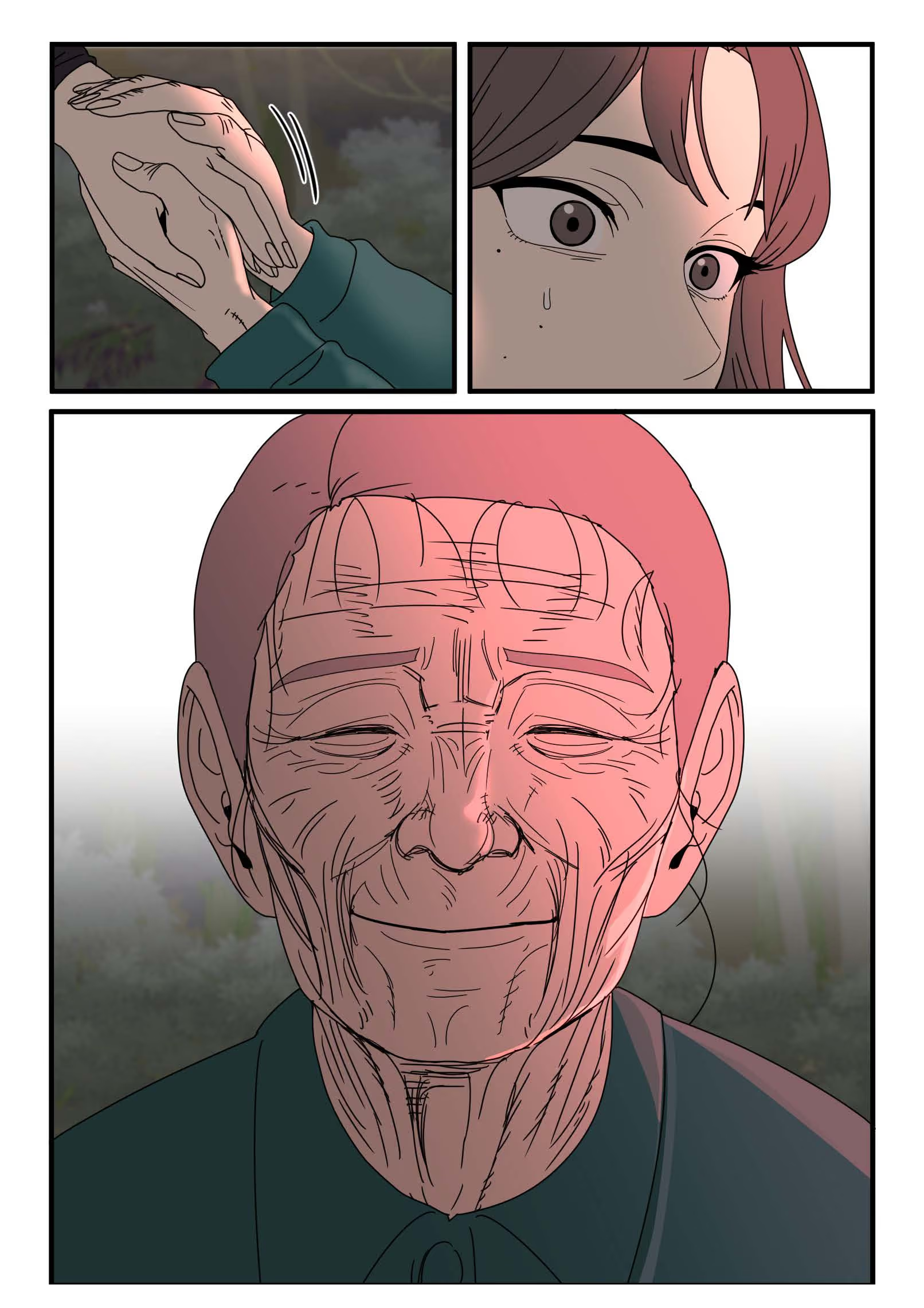
This webtoon, created by North Korean escapee Ju Ok Jeon, reflects the real risks many North Koreans face when fleeing their home in search of safety, dignity, and the chance to live freely.








About the Artist
Ju Ok Jeon is a North Korean defector who escaped in 2013. Having lived under the Kim Jong Un regime in an oppressed land, she conveys—through webtoons and comics—how precious the values of freedom and dignity truly are, with both sincerity and storytelling power.
Support Ju Ok’s work: @unistudio_juok
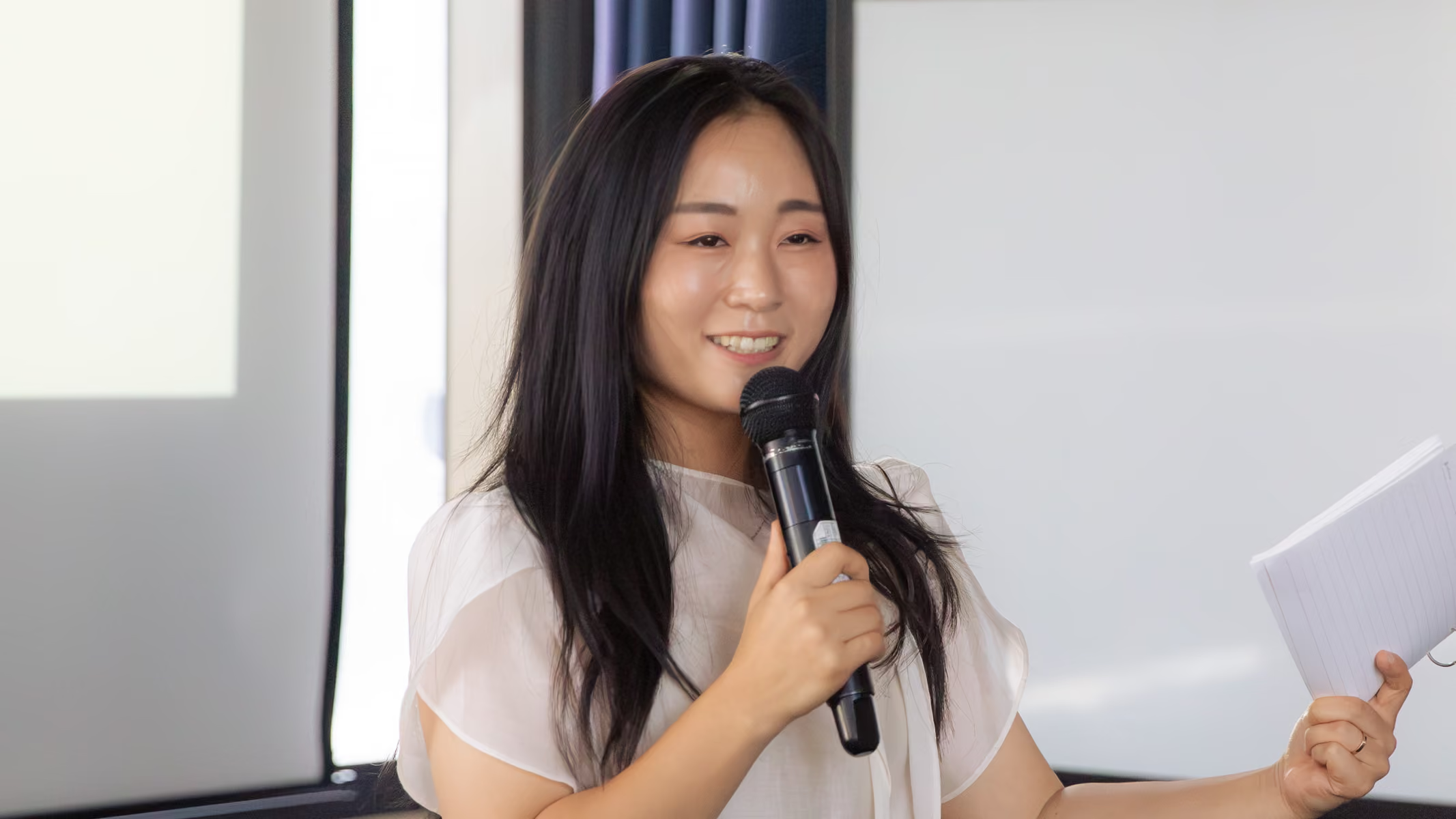
From Artist to Activist
As a kid in North Korea, Ju Ok was famous at school for one thing—drawing portraits of people passing gas. Her classmates flocked to her, asking to be drawn in exchange for snacks and even small amounts of money. Nothing made Ju Ok happier than to see people’s faces light up with a big smile, and to laugh together over her creations.
But things came to a halt when a teacher pulled her aside for “disrupting the school environment” with her “unrevolutionary” drawings. Ju Ok’s art supplies were confiscated, and she was warned that her parents could be punished for failing to educate their children.
“I vowed to never draw again because my simple drawings could bring harm to my family. But no matter how hard I studied or worked, opportunities were limited because my family belonged to the labor class. After a relative defected, my social classification [songbun] fell, leaving me destined for a life of forced labor. Realizing there was no hope or future, I decided to escape.”
In freedom, Ju Ok found that there was a lack of public understanding and empathy about North Korean human rights. A few years ago, her husband, who is also an artist, encouraged her to try drawing again.
“After being severely scolded as a child, I hated anything related to drawing. But when my husband told me I have talent, I got chills—thinking, ‘Did I actually used to like this?’
Through illustration, I want to share the reality of North Korea I experienced, my journey toward freedom, and my resettlement in a free society—so the world can hear the voices of those who still long for freedom inside North Korea.”
Ju Ok hopes her art will reach more people and increase support for this issue. In 2025, she participated in the LiNK English Speech Program to hone her storytelling and English speaking abilities.
“The North Korean issue is not only a domestic matter on the Korean Peninsula but also a complex international issue. That is why it is vital to raise awareness globally—and for North Korean defectors to share their stories directly in English. LiNK’s program has played an important role in helping me move toward my life goals.”
Reimagining North Korea’s Future
Liberty in North Korea helps North Koreans reach freedom and reach their full potential through programs that build their capacity to succeed and lead change. With the right support and tools, they’re sharing their stories, utilizing their talents, and building their careers with unwavering purpose—to create a future where every North Korean person can live free and full lives.
Invest in the next generation of North Korean advocates, storytellers, changemakers, and entrepreneurs, like Ju Ok.
Give Today
A Little Story about How the Media Gets North Korea Wrong

The North Korean government did not tell the people to prepare for another famine, but you probably saw headlines like this in the last week.
Here's how a mere mention of the 'arduous march' in the North Korean state media blew up and was incorrectly reproduced by media around the world in the space of a couple of days:
On March 28th, an essay by two North Koreans, Park Ok-kyoung and Choi Yoo-il, was published in the Rodong Sinmun (North Korea’s main paper). It included a passage, which roughly translates to “The road of the revolution is long and tough. There may again be times that call for chewing grass roots during an arduous march, and times that call for fighting the enemy single-handedly on a far-flung island...but we have to keep our single-minded loyalty for our dear marshal to the very end even if it costs our lives...”
The reference to the 'arduous march', the same term used to label the North Korean famine of the 1990s, caused a lot of excitement. But the term predates the 1990s famine. The original ‘arduous march’ was actually in 1938-39. It was a supposedly tough period of time that Kim Il-sung's band of guerrilla fighters had to 'march' through to victory in their fight against the Japanese occupiers. This tale credits Kim Il-sung for the defeat and is a classic 'struggle through adversity to final victory' type of story. So when times got tough in the 1990s, the official propaganda machine kicked in and framed it as a national struggle through adversity on the way to a final victory.
It was also about maintaining autonomy in the face of external threats, which was the context for this piece. The piece was meant to build up to the Party Congress in May, which is a massive political event that requires 'ideological preparation of the masses'.
So did the North Korean government tell the North Korean people to prepare to chew grass to survive another famine? Or to prepare to fight the enemy all by themselves on a far-off island? Not particularly. They basically said that the North Korean people must stick with their leader, even if things get tough, and all shall be overcome. And it also wasn't written in the name of Kim Jong-un (that would make it more of a story), but in the name of two individuals writing for the paper.
So, why did this happen?
Far too few journalists can read Korean, let alone know how to read and interpret North Korean propaganda. But there's a lot of international appetite for stories about North Korea. So once a piece like this gets out that makes sense to journalists with a peripheral awareness of North Korea, it is easy for it to bounce around the global media echo chambers, getting picked up by many outlets without any accuracy check on the interpretation.
Furthermore, the North Korean government isn’t going to come out and correct it. Here's where there is some truth in the statement "when it comes to North Korea news, anything goes." At this point it becomes something that ‘happened’ without actually happening.
On a brighter note, thanks to the deeper economic and food security resilience built up by the bottom-up marketization, private-plot farming, and linkage to the Chinese economy, a recurrence of a famine on the scale of the 1990s is extremely unlikely in North Korea now.
[Post edited on 2016-04-11 for clarity and accuracy]










