Webcomic: Escape From North Korea
By: Ju Ok Jeon
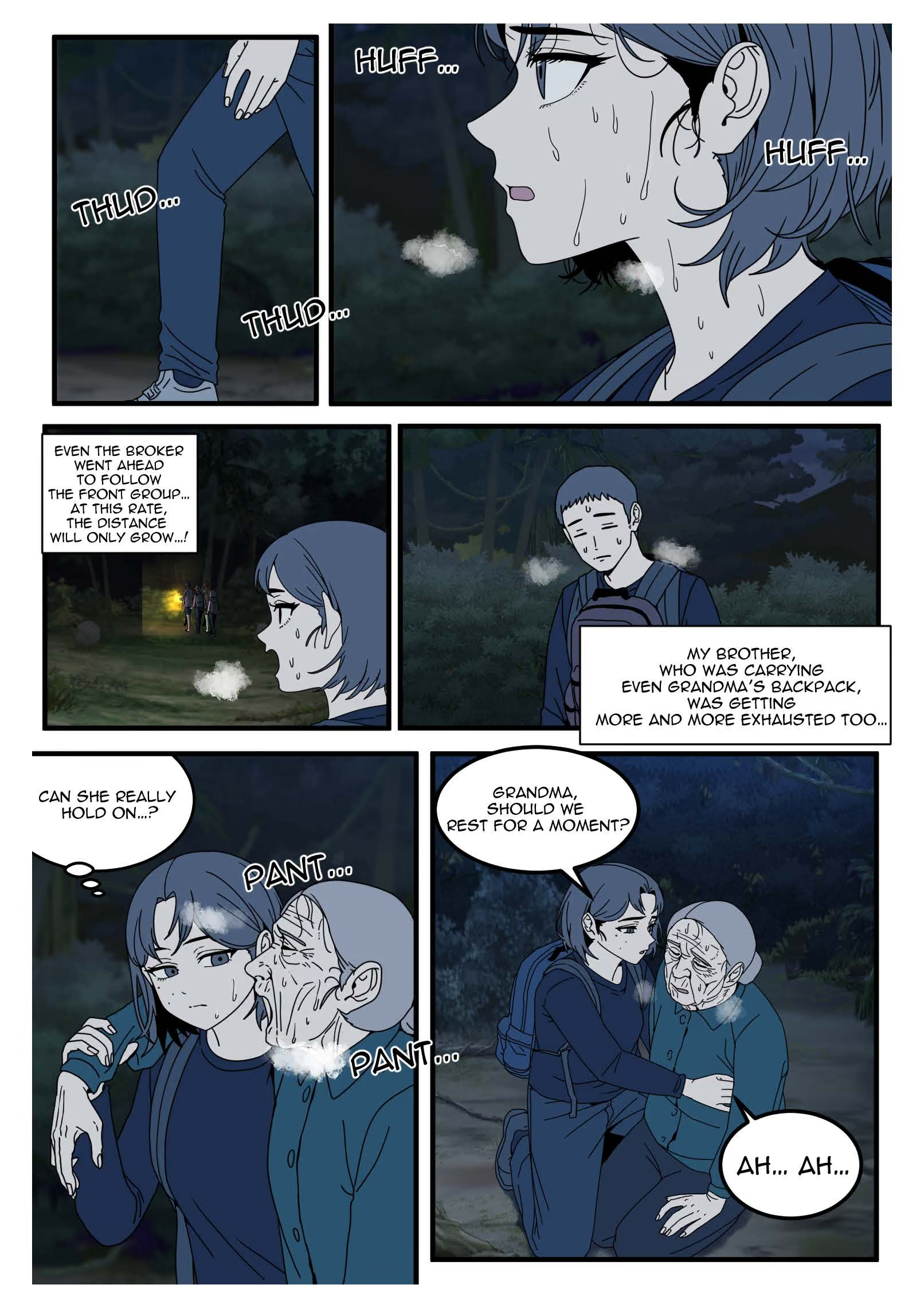
This webtoon, created by North Korean escapee Ju Ok Jeon, reflects the real risks many North Koreans face when fleeing their home in search of safety, dignity, and the chance to live freely.




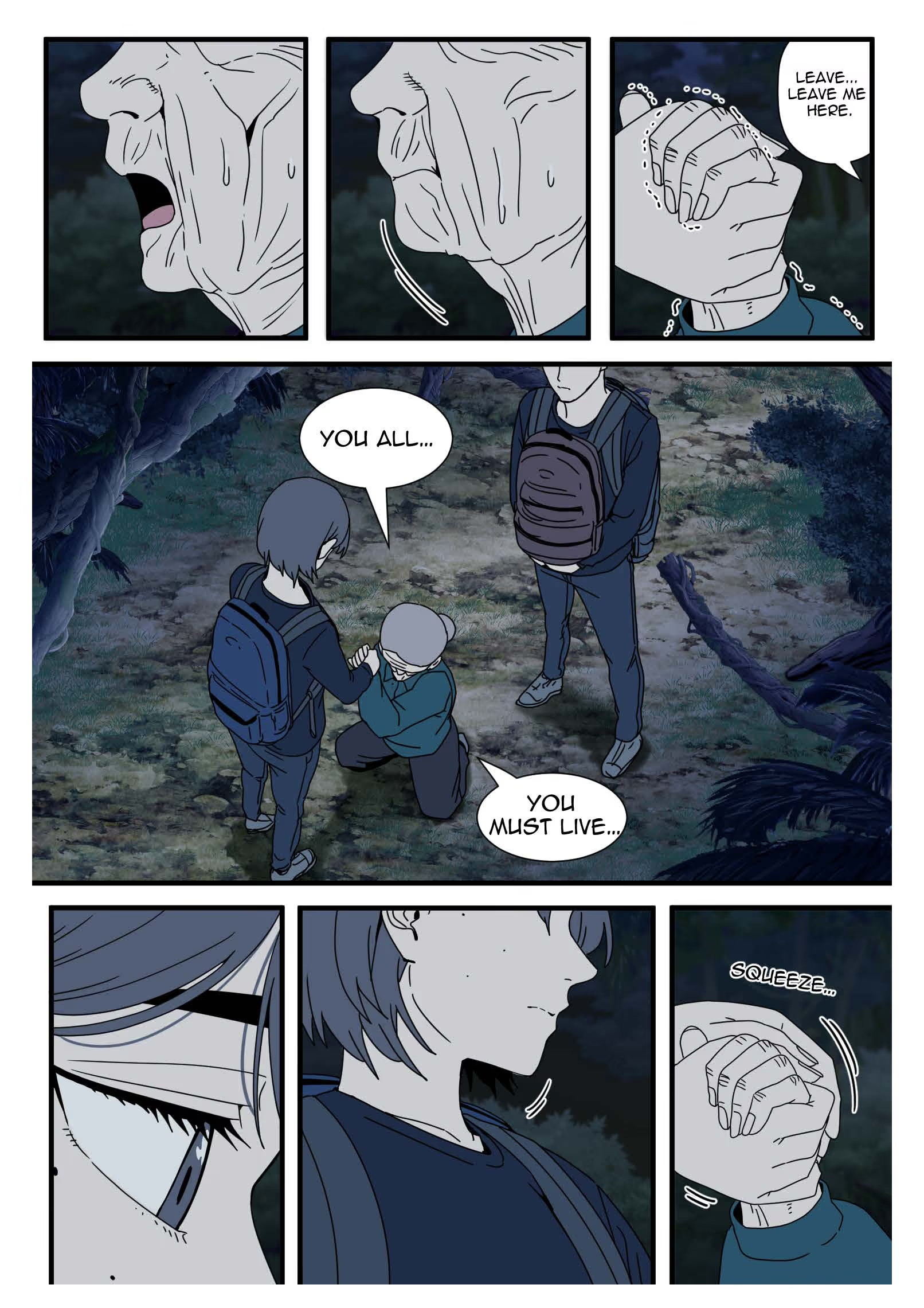
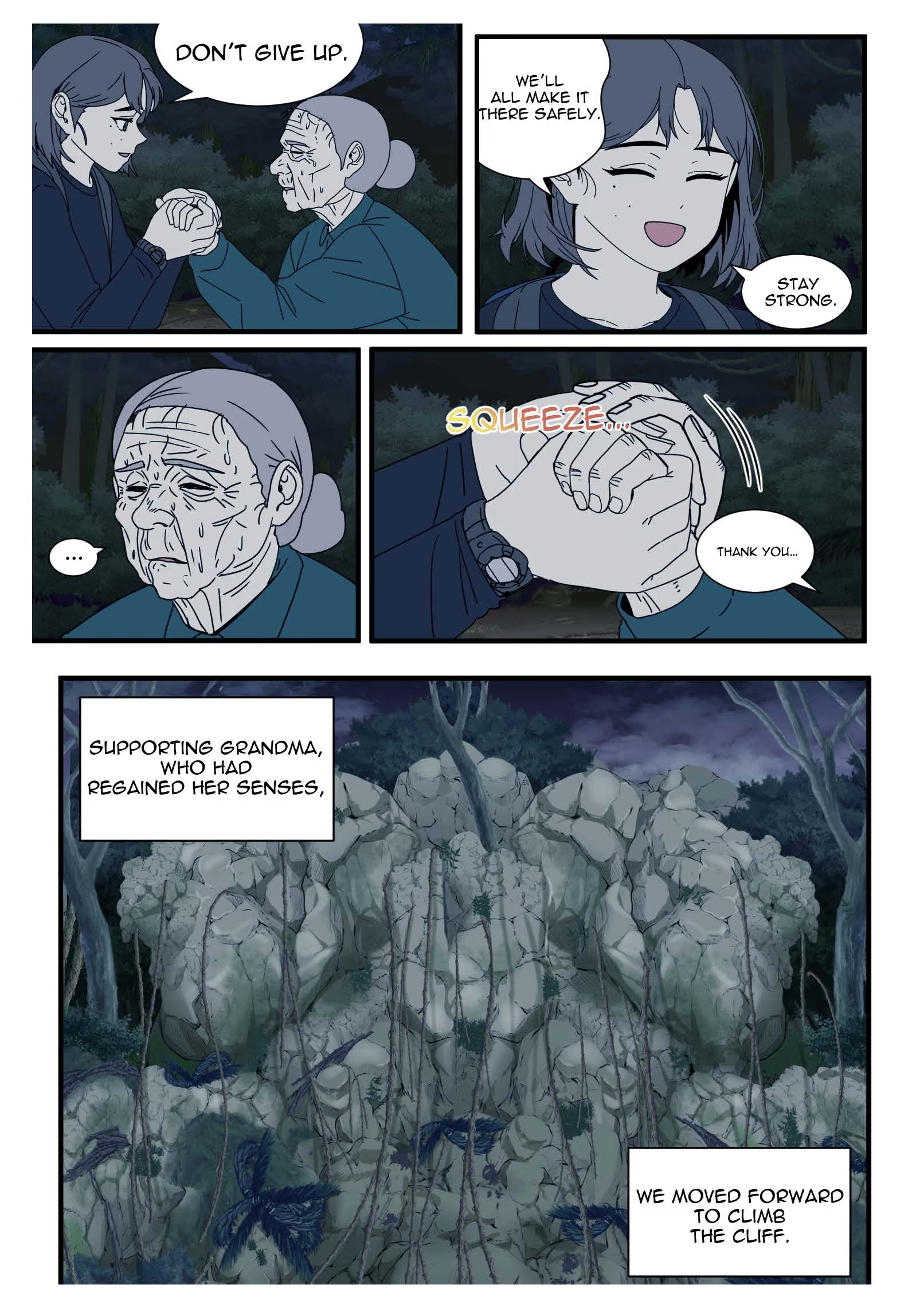


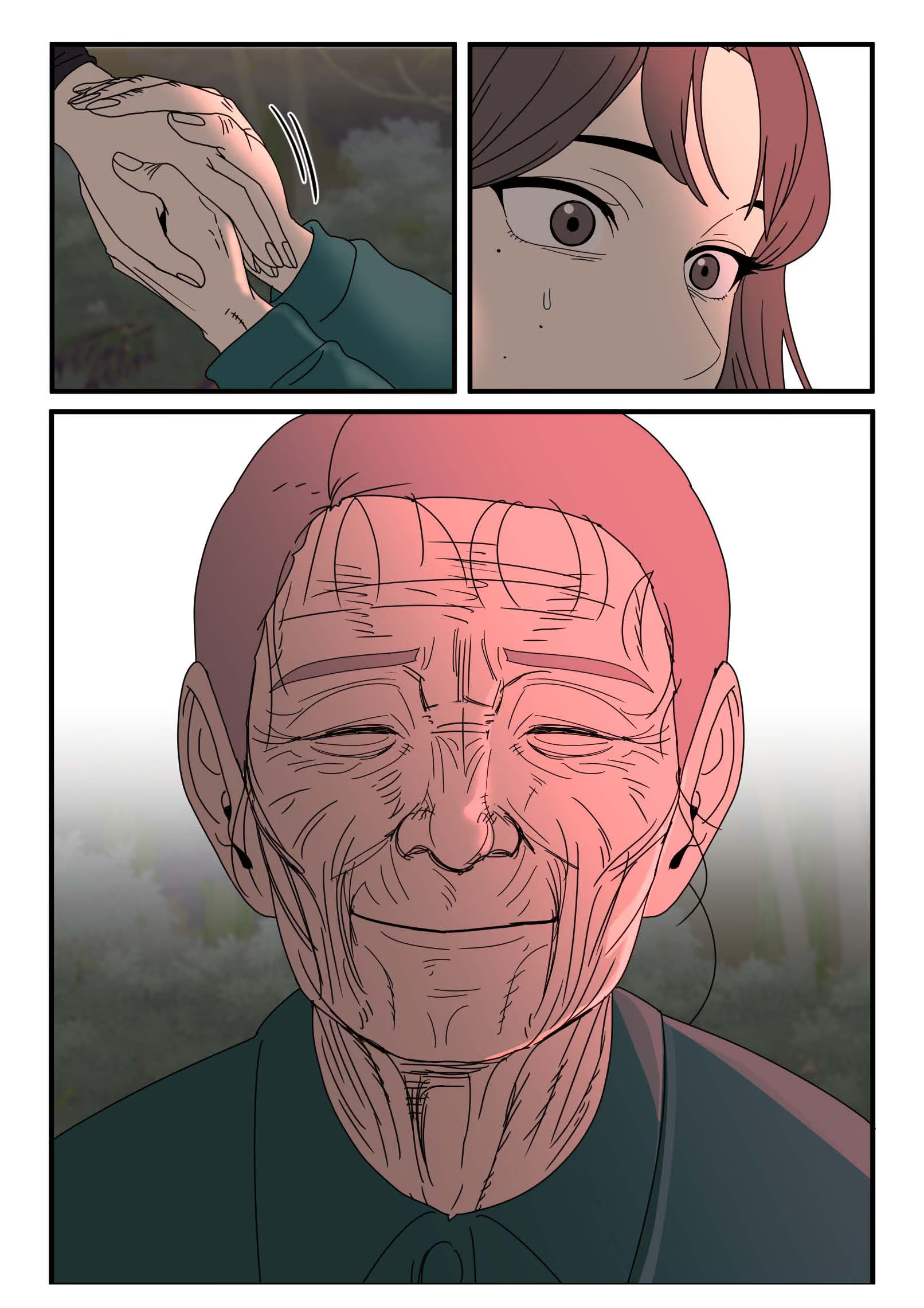


About the Artist
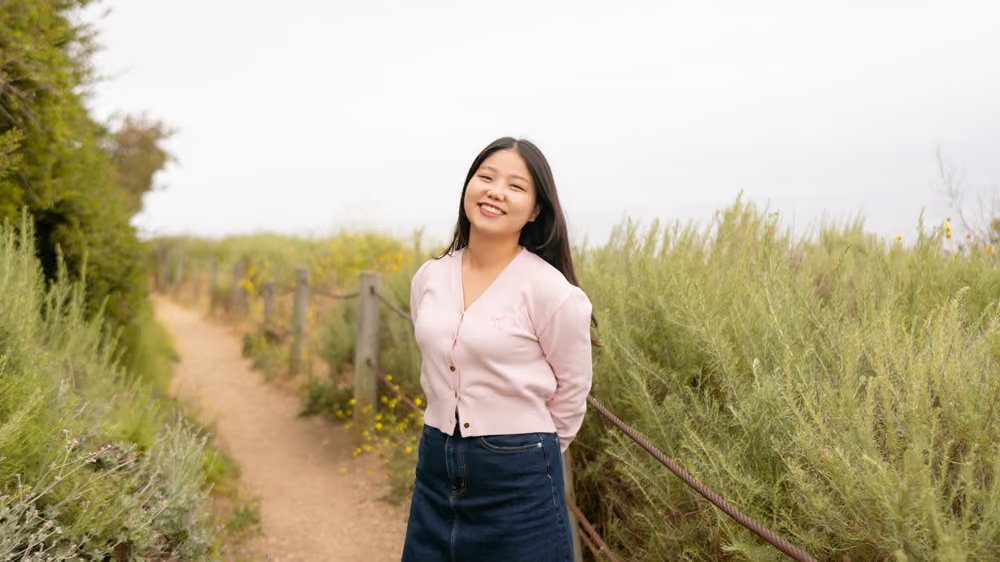
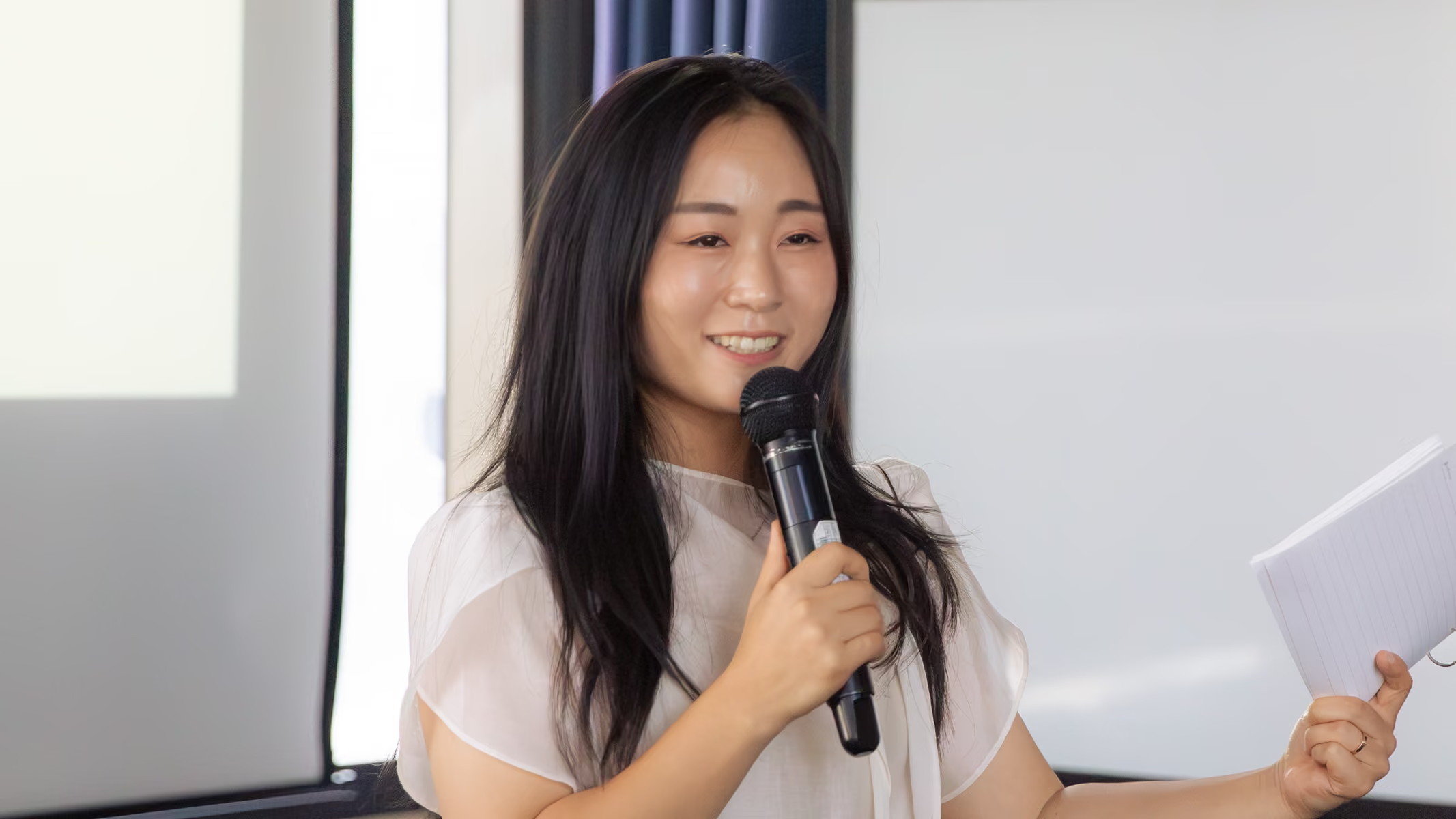
Ju Ok Jeon is a North Korean defector who escaped in 2013. Having lived under the Kim Jong Un regime in an oppressed land, she conveys—through webtoons and comics—how precious the values of freedom and dignity truly are, with both sincerity and storytelling power.
Support Ju Ok’s work: @unistudio_juok
From Artist to Activist
As a kid in North Korea, Ju Ok was famous at school for one thing—drawing portraits of people passing gas. Her classmates flocked to her, asking to be drawn in exchange for snacks and even small amounts of money. Nothing made Ju Ok happier than to see people’s faces light up with a big smile, and to laugh together over her creations.
But things came to a halt when a teacher pulled her aside for “disrupting the school environment” with her “unrevolutionary” drawings. Ju Ok’s art supplies were confiscated, and she was warned that her parents could be punished for failing to educate their children.
“I vowed to never draw again because my simple drawings could bring harm to my family. But no matter how hard I studied or worked, opportunities were limited because my family belonged to the labor class. After a relative defected, my social classification [songbun] fell, leaving me destined for a life of forced labor. Realizing there was no hope or future, I decided to escape.”
In freedom, Ju Ok found that there was a lack of public understanding and empathy about North Korean human rights. A few years ago, her husband, who is also an artist, encouraged her to try drawing again.
“After being severely scolded as a child, I hated anything related to drawing. But when my husband told me I have talent, I got chills—thinking, ‘Did I actually used to like this?’
Through illustration, I want to share the reality of North Korea I experienced, my journey toward freedom, and my resettlement in a free society—so the world can hear the voices of those who still long for freedom inside North Korea.”
Ju Ok hopes her art will reach more people and increase support for this issue. In 2025, she participated in the LiNK English Speech Program to hone her storytelling and English speaking abilities.
“The North Korean issue is not only a domestic matter on the Korean Peninsula but also a complex international issue. That is why it is vital to raise awareness globally—and for North Korean defectors to share their stories directly in English. LiNK’s program has played an important role in helping me move toward my life goals.”
Reimagining North Korea’s Future
Liberty in North Korea helps North Koreans reach freedom and reach their full potential through programs that build their capacity to succeed and lead change. With the right support and tools, they’re sharing their stories, utilizing their talents, and building their careers with unwavering purpose—to create a future where every North Korean person can live free and full lives.
Invest in the next generation of North Korean advocates, storytellers, changemakers, and entrepreneurs, like Ju Ok.
Give Today
Yoon Ha's Story: Part 1 - Life in North Korea

Yoon Ha resettled to South Korea through LiNK’s network about a year ago. She recently shared her story with us. This is part one of three. Continue to part two.
When I was asked, “How was your life in North Korea?” for the first time, I just started crying because my life there was so hard. It was so hard.
When I was a little kid my mom left me, my younger sister, and my dad, because of our financial struggles. I felt so abandoned and unloved.
And even though I was young, I had to start working to contribute to my family’s finances. My sister and I would forage for plants in the mountains and riversides. We carried the herbs, roots, and pinecones on our backs, walking for three hours to get to the marketplace. We sold our stuff so we could get corn powder to eat. And then we would walk the three hours back to our house. It was very, very hard.
In my late teens my father passed away. I was devastated. After a few years of living with relatives, my sister and I moved back to live with our mom again. But we were still very poor. People would make fun of us for being so poor and not having a father around. I felt a lot of shame about my family and living situation.
When I was 22, my mom asked me to start living with a man much older than me to lessen the financial burden on my family. I didn’t like living with him at all.
I decided to leave my hometown to find a better life somewhere else. I walked for a few days to get to Hamhung, one of the biggest cities in North Korea, hoping I could find work there.

In the city, I did a lot of things to make money. I would sell gas lighters and secondhand vinyl. I had to do it secretly because it was illegal. And it never paid well--just enough to buy food. I was staying at homes, cheap inns, empty houses, and even sleeping on the streets and next to graves when I had to. Sometimes I got beaten by people from the city because they didn’t like that I was making money but wasn’t from there.
I worked there for many months, but I couldn’t save any money so I decided to go back to my mom’s place. My mom and my sister were still struggling, and having me back was a burden to them. So I left home again and walked to Pyongyang to find work. In North Korea you need a special permit to move to different cities, and I didn’t have one. I got caught and sent to jail for 10 days.
After I was released, I started walking to other cities again to find work. I knew I might get caught by the police again, but I couldn’t go home. I walked a lot. Walking was the only way I could travel to where I needed to go.
I made it to another town and found work crushing ore to extract gold. The work was illegal and we would do it secretly in people’s houses. In one of these houses, I got beat up and got kicked out. I didn’t do anything wrong; they just didn’t want to pay me. Even after that incident I continued to do the same work in other houses. For the first time in my life, I had made a decent amount of money--enough to buy 100 kg of corn.
I was so happy. I would be able to bring some money to my mom and sister so we could eat food for a while. I also missed my family, so I started heading home.

At a bus station on the way home, a woman and her daughters asked me to get water for them. They stole all of my money and ran away.
I couldn’t handle all the bad things that kept happening to me. It felt like my life was hopeless and pathetic. I went to a river near the bus station to commit suicide. But right when I was about to jump into the river, all of sudden a thought came over me.
“Why do I have to die? Why? I've not done anything wrong. I'm still only in my early 20s.” I made the decision to live and make the better life I wanted.
Instead of going home, I started walking again. I just kept going north. Even though I was so hungry, the hope for a better life drove me to keep walking.
After walking for days, I somehow arrived in Hyesan, a city on the border with China. I saw many people like me, who had been wandering around in search of food and work. I had travelled to many different parts of North Korea, and came to the conclusion that life was difficult everywhere in my country.
A couple in their 30s or 40s approached me and asked how old I was. I told them my age, 23. They asked if I wanted to go to China. They said I could have a better life there.
“A better life? Yeah, I would do anything to have a better life.”
So I decided to go to China with them. I was so focused on having a better life; I didn’t ask many questions. A few days later, in the darkness of night, we crossed the river into China.
Continue reading with part two.