
Women’s History Month: Honoring the Bravery of North Korean Women
By: Jennifer Kim
Jennifer* is Liberty in North Korea’s Field Manager. Over the years, she’s carefully stewarded our secret rescue routes and helped countless North Korean refugees reach safety and freedom.
Approximately 70% of North Korean defectors are women. Throughout their journey, they face unimaginable challenges, including human trafficking, confinement, and sexual violence.
For Women’s History Month this year, we asked Jennifer to share her experiences supporting North Korean women who have made the brave decision to escape, and bring light to the stories of real people behind the numbers and statistics.
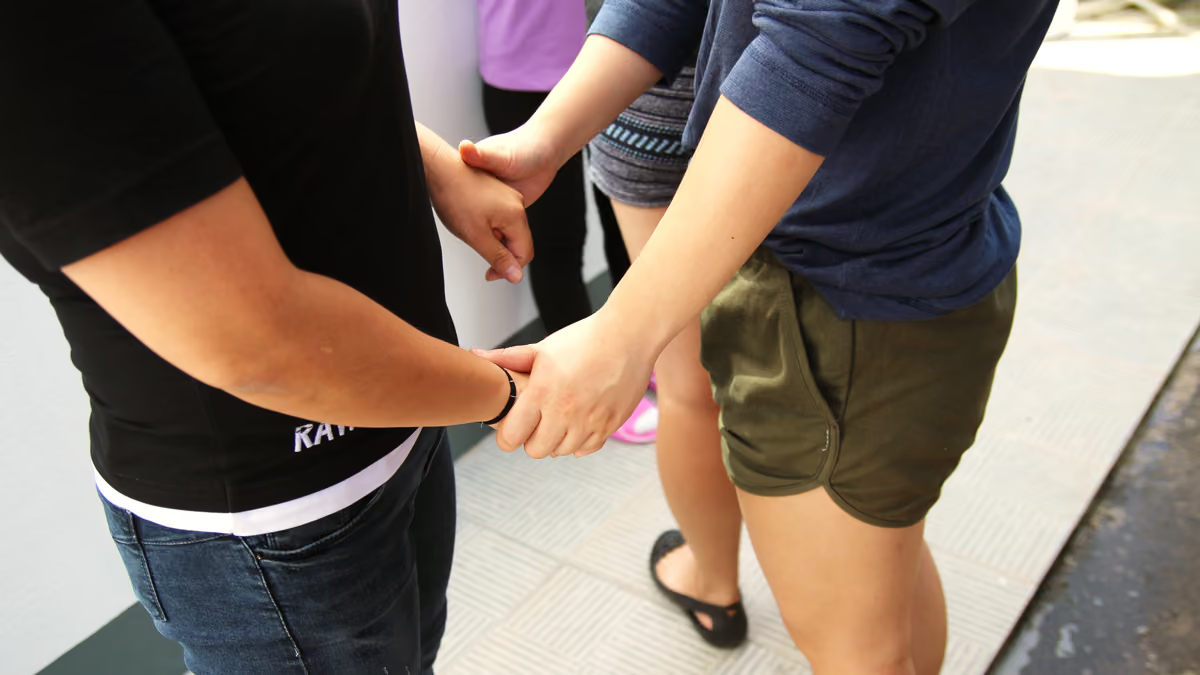
A Transformative First Mission
When I first began this line of work, I was filled with both excitement and anxiety. “Will I be able to connect well with these people?” “Will the field be too dangerous?” Even in my position as a staff member, there were times when the situations we encountered felt riskier because I was a woman.
On my first mission, the group we brought to safety were all women. From their small requests, like asking for sanitary pads, to moments where they cautiously shared their harrowing experiences of human trafficking in China, I found that we could connect on a deeper level because I was also a woman. I realized my role wasn’t just to be a staff member, but to stand by these people as they needed me, as a fellow woman. From then on, the fear I had initially felt about this work transformed into conviction.
North Korean Women At the Forefront of Resistance and Survival
After meeting many North Korean women defectors, I’ve come to learn that there are unique challenges and experiences that only they face. Women in North Korea are not as restricted to job assignments as men, so they’re the ones actively engaged in informal economic activities. They’re running their own black-market businesses and trading smuggled goods, shifting economic power from the regime into the hands of the ordinary people.
Women also make up the majority of North Korean defectors at over 70%. In freedom, they’re leading advocacy efforts and raising awareness for this issue.
I've come to think that perhaps women in North Korean society were the first and most desperate to stand up in resistance.
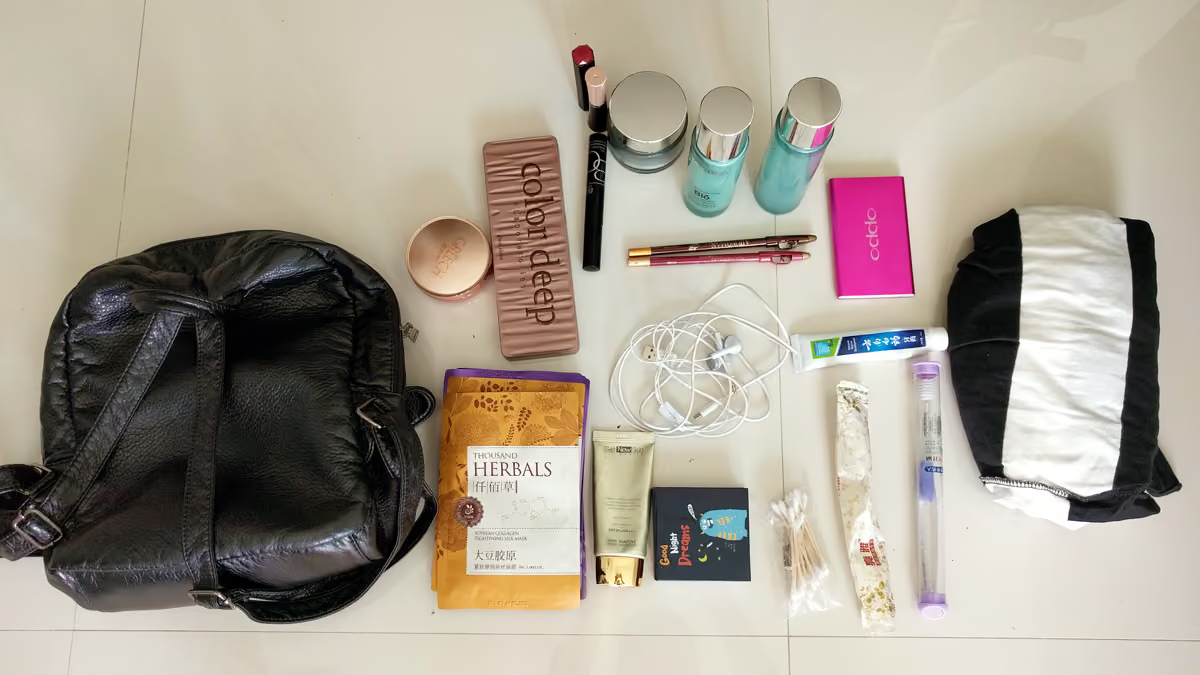
At the same time, the reality is that women are more vulnerable to gender violence and crime. The moment they cross the North Korean border and set foot on Chinese soil, their precarious legal status and the fact that they are women become risk factors that can lead to human trafficking, sexual exploitation, and forced prostitution. If these dangerous situations lead to pregnancy and childbirth, women often remain in China for years, even decades, weighed down by the conflicting emotions of their longing for freedom and their maternal instincts.
All of the women I met during my first rescue mission were survivors of being trafficked into forced marriages. While there are some cases where these women meet kind families and live in a relatively less dangerous environment, most have to endure difficult lives. One woman who we rescued in 2024 said that in the early stages of her life in China, she was confined and tied up in a single room by the man who bought her. Others had to do forced labor in one of China’s many factories.
Not a News Story, But a Person’s Story
About ten years ago, I watched a video of a woman my age testifying about the hardships and sexual violence she experienced during her defection from North Korea. As a South Korean, I couldn't believe that such things were happening just across the border. Shocked and ashamed of my indifference, I cried for a long time, then resolved to do something.
North Korea used to be something I only saw and heard about through a TV screen. Now those distant news stories have become the personal experiences of the North Korean mothers and friends I’ve met in the field.
At first, I simply wanted to help as best I could. But as time went on and I met more North Koreans, my perspective gradually changed. Now, I feel like I'm not so much ‘helping’ as I am meeting incredible superwomen who have overcome tremendous adversity.
My role is to constantly remind them of their resilience and potential, so they don't forget it themselves.
“This is My First Time Being Treated Like a Queen”
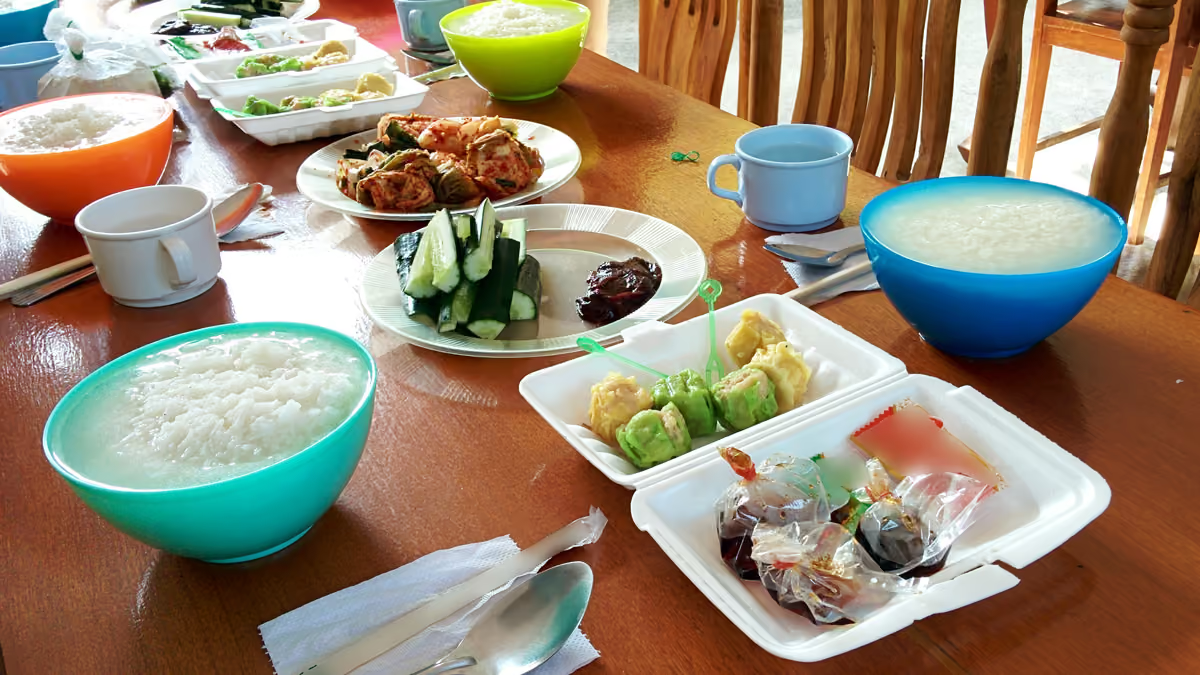
After a successful mission, our team ensures our newly arrived North Korean friends have a proper meal, get some rest, and receive basic necessities. On one occasion, one woman told me, “This is the first time in my life that I have been treated like a queen.”
She had just reached freedom after ten years in a forced marriage to a Chinese man. Her words resonated with me deeply. I realized once again that our work isn't simply about helping people achieve physical freedom; it's about restoring a person's forgotten dignity.
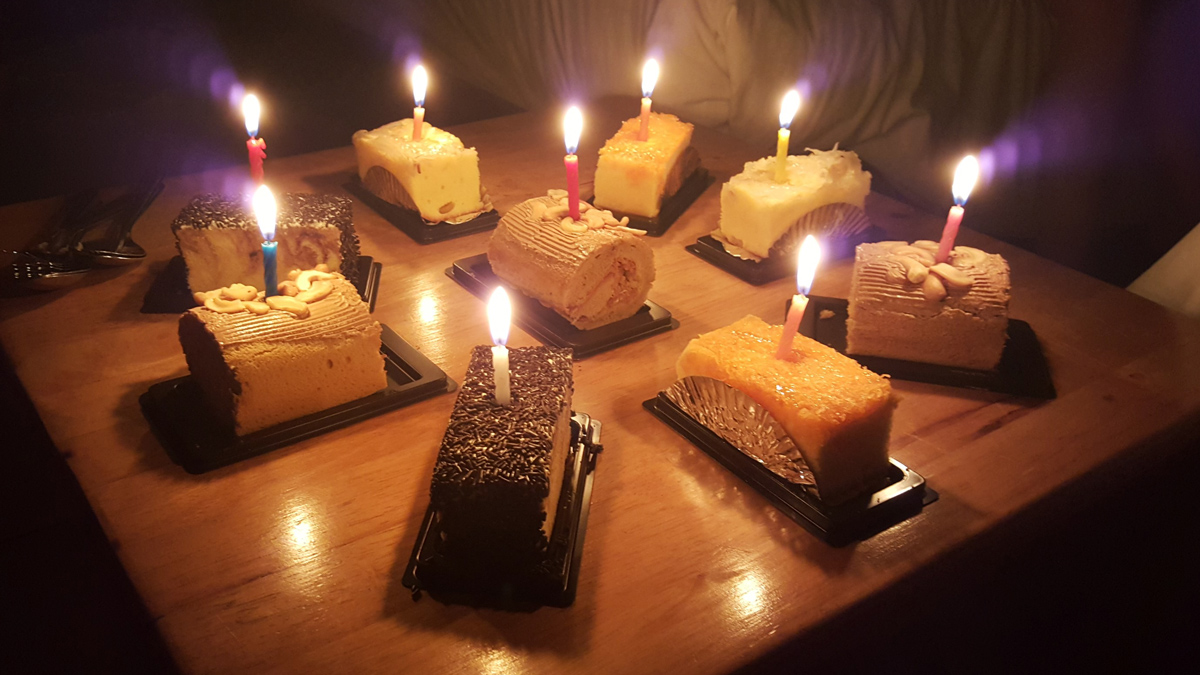
That woman has since resettled in South Korea and runs a small shop. She’s continued to stay in contact with LiNK, sharing updates about her life. One day, she shyly announced her marriage. She’s starting a new chapter with a person she chose and wanted.
Walking Together In Solidarity
Through the friendships I’ve made and stories I’ve witnessed in the field, my connection to this issue has deepened over time. These women aren’t just “nameless” North Koreans, but people like us, living their daily lives; someone’s daughter, sister, or mother. I didn’t set out to do this work for over a decade. But day by day, hearing each story, meeting each person, and holding their hands has naturally led me down this path.
Listen to their stories, and I believe that you too will encounter a heart for the North Korean people.
– Jennifer Kim, LiNK Field Manager
*Jennifer is a pseudonym used to protect our field manager’s identity and avoid compromising this work.

Help North Koreans Win Their Freedom
From inside the country to on the global stage, North Korean women are driving change on this issue. Driven by necessity, desire to care for their loved ones, and aspirations to forge their own path in this world, their pursuit of freedom is both intentional and instinctive.
Liberty in North Korea doesn't just extend a helping hand to North Korean refugees—we’re cultivating the next generation of North Korean leaders, entrepreneurs, and advocates, and doing this work alongside them.
Become a monthly donor today at $20 per month to help more North Koreans reach safety and gain full authorship of their lives in freedom.
Give Monthly
North Korean Advocacy Fellows: Meet the Class of 2024!
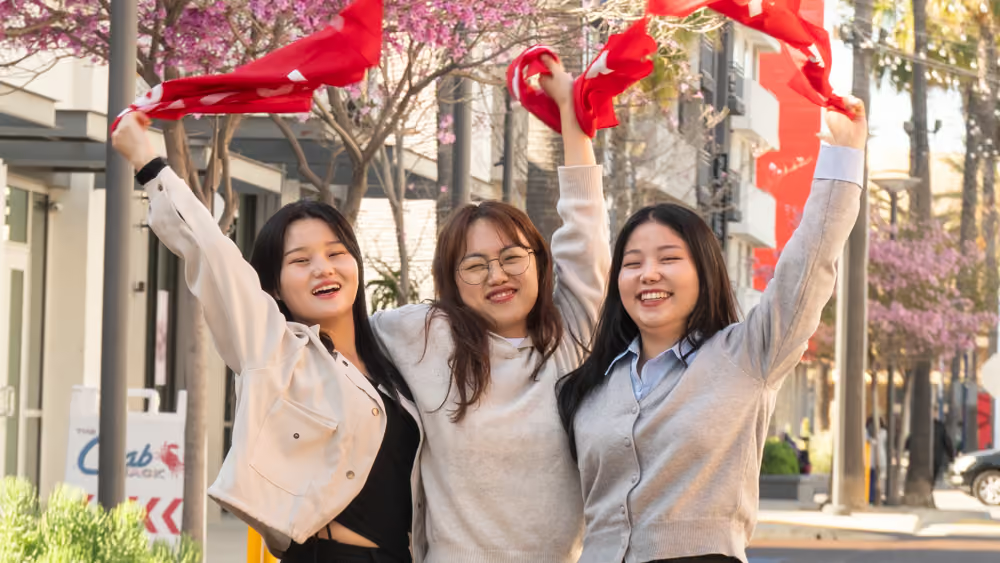
Meet Bella, Lily, and Grace, LiNK’s 2024 Advocacy Fellows! Over three months, they’ll be working closely with us in the US and sharing their stories in cities across the country. Join us at a Fellows speaking event near you!
New Haven, Connecticut
April 22nd, 1:30 pm
Yale University - Whitney Humanities Center Auditorium
53 Wall St, New Haven, CT 06511
No RSVP required
Cambridge, MA
April 24th, 6:30 pm
B-L01 Town Weil Hall, Belfer Building79 JFK St.,
Cambridge, MA 02138
Atlanta, Georgia
April 28th, 8 pm
Emory University - Emory Student Center MPR 4,5,6
605 Asbury Cir, Atlanta, GA 30322
Dallas, Texas
April 29th, 5:30 pm
Southern Methodist University
The Martha Proctor Mack Grand Ballroom
3300 Dyer Street Dallas, TX 75205
San Francisco, CA
May 5th, Optional Lunch 1:00pm | Event Start 1:45pm
True North Church
655 Arastradero Rd, Palo Alto, CA 94306
New York City, NY
May 15th, 6pm
Exilic
240 West 37th Street, 2nd Floor, New York NY 10018
Washington DC
May 28th, 6:30 pm
Private Home - Address sent after RSVP
Sorry, we've reached capacity for this event!
Los Angeles, CA
June 6th, 6:30 pm
UCLA - Bruin Viewpoint Room
308 Westwood Plaza, Los Angeles, CA 90024
Not based in one of these cities? No worries! Meet the Fellows virtually on June 12, 2024 at 4pm PT for their Graduation Event. RSVP here to hear their stories and participate in a live Q&A.










