
Women’s History Month: Honoring the Bravery of North Korean Women
By: Jennifer Kim
Jennifer* is Liberty in North Korea’s Field Manager. Over the years, she’s carefully stewarded our secret rescue routes and helped countless North Korean refugees reach safety and freedom.
Approximately 70% of North Korean defectors are women. Throughout their journey, they face unimaginable challenges, including human trafficking, confinement, and sexual violence.
For Women’s History Month this year, we asked Jennifer to share her experiences supporting North Korean women who have made the brave decision to escape, and bring light to the stories of real people behind the numbers and statistics.
A Transformative First Mission
When I first began this line of work, I was filled with both excitement and anxiety. “Will I be able to connect well with these people?” “Will the field be too dangerous?” Even in my position as a staff member, there were times when the situations we encountered felt riskier because I was a woman.
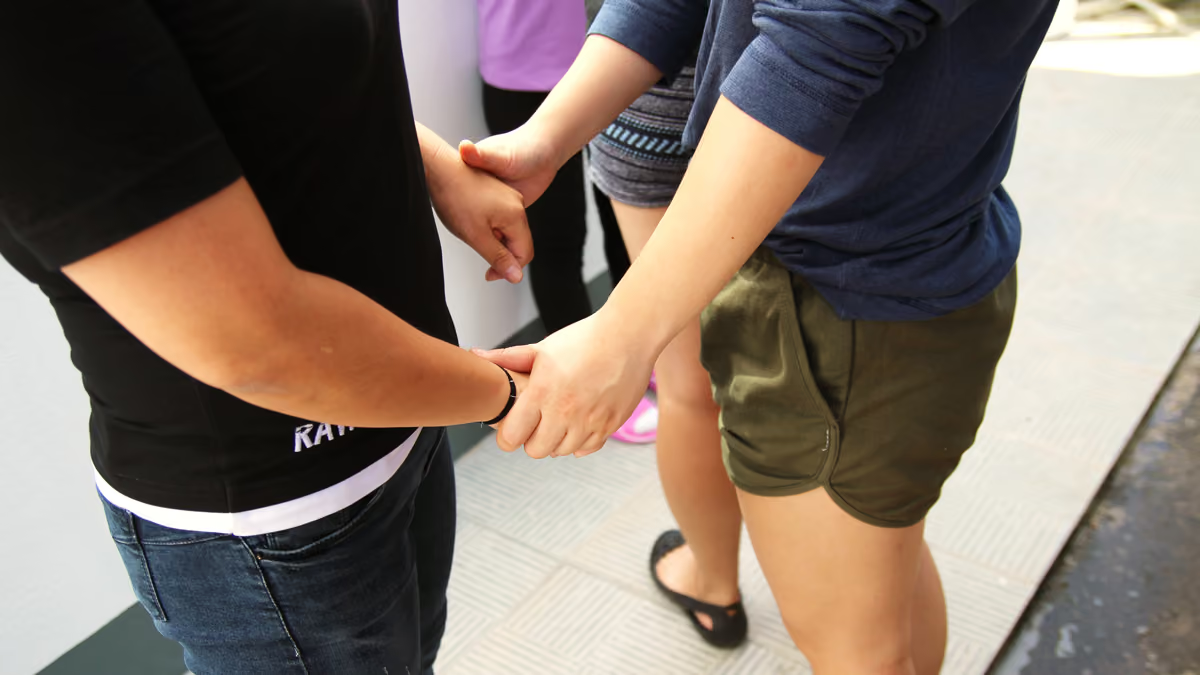
On my first mission, the group we brought to safety were all women. From their small requests, like asking for sanitary pads, to moments where they cautiously shared their harrowing experiences of human trafficking in China, I found that we could connect on a deeper level because I was also a woman. I realized my role wasn’t just to be a staff member, but to stand by these people as they needed me, as a fellow woman. From then on, the fear I had initially felt about this work transformed into conviction.
North Korean Women At the Forefront of Resistance and Survival
After meeting many North Korean women defectors, I’ve come to learn that there are unique challenges and experiences that only they face. Women in North Korea are not as restricted to job assignments as men, so they’re the ones actively engaged in informal economic activities. They’re running their own black-market businesses and trading smuggled goods, shifting economic power from the regime into the hands of the ordinary people.
Women also make up the majority of North Korean defectors at over 70%. In freedom, they’re leading advocacy efforts and raising awareness for this issue.
I've come to think that perhaps women in North Korean society were the first and most desperate to stand up in resistance.
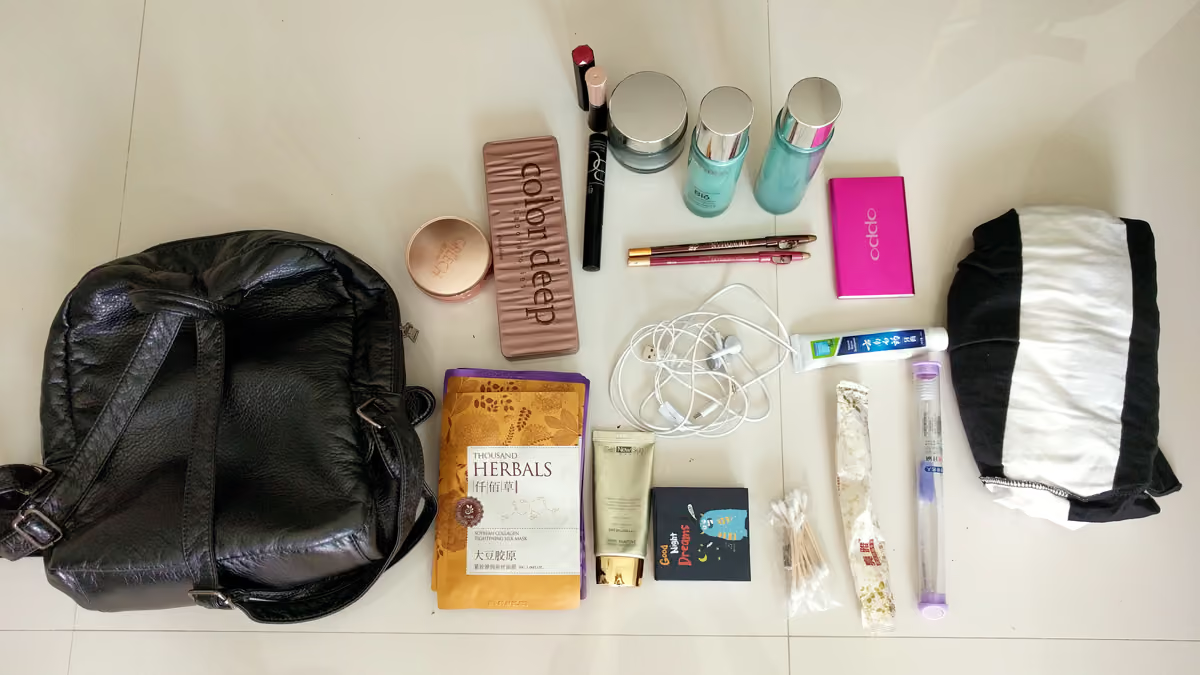
At the same time, the reality is that women are more vulnerable to gender violence and crime. The moment they cross the North Korean border and set foot on Chinese soil, their precarious legal status and the fact that they are women become risk factors that can lead to human trafficking, sexual exploitation, and forced prostitution. If these dangerous situations lead to pregnancy and childbirth, women often remain in China for years, even decades, weighed down by the conflicting emotions of their longing for freedom and their maternal instincts.
All of the women I met during my first rescue mission were survivors of being trafficked into forced marriages. While there are some cases where these women meet kind families and live in a relatively less dangerous environment, most have to endure difficult lives. One woman who we rescued in 2024 said that in the early stages of her life in China, she was confined and tied up in a single room by the man who bought her. Others had to do forced labor in one of China’s many factories.
Not a News Story, But a Person’s Story
About ten years ago, I watched a video of a woman my age testifying about the hardships and sexual violence she experienced during her defection from North Korea. As a South Korean, I couldn't believe that such things were happening just across the border. Shocked and ashamed of my indifference, I cried for a long time, then resolved to do something.
North Korea used to be something I only saw and heard about through a TV screen. Now those distant news stories have become the personal experiences of the North Korean mothers and friends I’ve met in the field.
At first, I simply wanted to help as best I could. But as time went on and I met more North Koreans, my perspective gradually changed. Now, I feel like I'm not so much ‘helping’ as I am meeting incredible superwomen who have overcome tremendous adversity.
My role is to constantly remind them of their resilience and potential, so they don't forget it themselves.
“This is My First Time Being Treated Like a Queen”
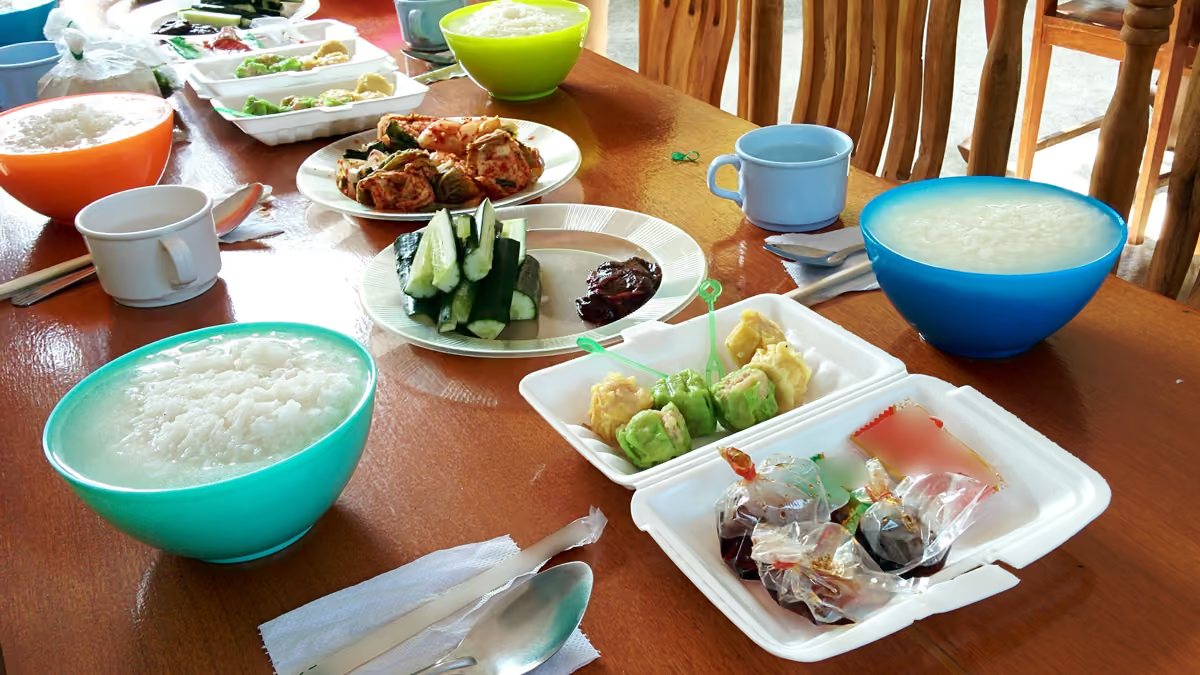
After a successful mission, our team ensures our newly arrived North Korean friends have a proper meal, get some rest, and receive basic necessities. On one occasion, one woman told me, “This is the first time in my life that I have been treated like a queen.”
She had just reached freedom after ten years in a forced marriage to a Chinese man. Her words resonated with me deeply. I realized once again that our work isn't simply about helping people achieve physical freedom; it's about restoring a person's forgotten dignity.
That woman has since resettled in South Korea and runs a small shop. She’s continued to stay in contact with LiNK, sharing updates about her life. One day, she shyly announced her marriage. She’s starting a new chapter with a person she chose and wanted.
Walking Together In Solidarity
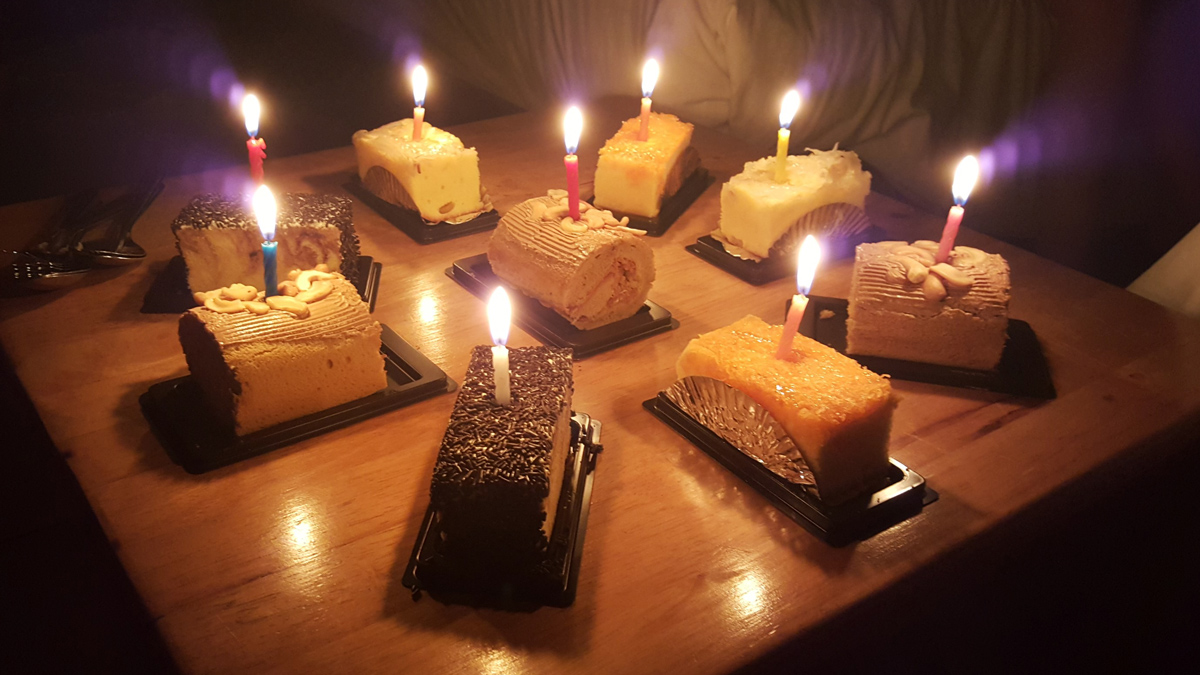
Through the friendships I’ve made and stories I’ve witnessed in the field, my connection to this issue has deepened over time. These women aren’t just “nameless” North Koreans, but people like us, living their daily lives; someone’s daughter, sister, or mother. I didn’t set out to do this work for over a decade. But day by day, hearing each story, meeting each person, and holding their hands has naturally led me down this path.
Listen to their stories, and I believe that you too will encounter a heart for the North Korean people.
– Jennifer Kim, LiNK Field Manager
*Jennifer is a pseudonym used to protect our field manager’s identity and avoid compromising this work.
Help North Koreans Win Their Freedom
From inside the country to on the global stage, North Korean women are driving change on this issue. Driven by necessity, desire to care for their loved ones, and aspirations to forge their own path in this world, their pursuit of freedom is both intentional and instinctive.
Liberty in North Korea doesn't just extend a helping hand to North Korean refugees—we’re cultivating the next generation of North Korean leaders, entrepreneurs, and advocates, and doing this work alongside them.
Become a monthly donor today at $20 per month to help more North Koreans reach safety and gain full authorship of their lives in freedom.
Give Monthly
A North Korean Defector’s Nine Year Journey to Freedom | Eunju’s Story
I didn’t know I was hungry until I was eight years old. Growing up, I had no concept of whether my hometown was wealthy or poor. Then when the great famine struck in the mid-90s, more people died in our city than anywhere else in the country.
That’s when I realized “Oh, this is the most difficult place to live in North Korea.”
I was born in the city of Eundok, North Hamgyong Province. Before that it was called Aoji, a destitute place infamous for its coal mines, where South Korean prisoners of war were sent to work.
In the middle of a long famine, people lose all sense of humanity. You couldn’t survive without dirtying your hands. My father was a kindhearted person, the type that was unable to hurt anyone. But towards the end, hunger drove him to steal from our own house.
On my first day of middle school, I couldn’t find my new backpack anywhere. It turns out that my dad had taken it to the Jangmadang, traded it for food, and eaten it by himself. In the end, he still died from starvation, and my mom, my sister, and I were left to fend for ourselves.
We heard that if we went to China, we could eat all the candy we wanted. With that one piece of information, my mom said she’d rather get shot crossing the Tumen river than starve in North Korea.
It was mid-February in 1999, during the bitter cold winter. The water was frozen solid and stretched over 100 meters across. My mom went first, followed by my sister, and I was in the very back. Maybe it was because I was anxious, but my shoes felt so slippery and I kept falling over as they went farther and farther ahead. We heard that soldiers would shoot anyone who tried to cross the river. But this was our only chance at survival.
My mind was racing, “What if I’m left behind and get caught?” My mom and sister probably feared the same thing.
We encountered a tributary that wasn’t frozen all the way, so my mom waited and had me go first because I was the lightest. A few steps in, the ice broke and I fell into the piercing cold water. None of us knew how to swim. At that moment, I really thought it was the end. But then my feet hit the ground. We had made it to the other side.
Not long after we had crossed into China, a Korean-speaking woman came up to us. She invited us to her house and gave us over a dozen boiled eggs, more food than we had seen in years. In North Korea, when my sister and I had a field trip for school, my mom would cut one boiled egg and give each of us half in our lunch box. To have this much at once was a true luxury. For the first time in a long while, we dared to have some hope.
But then my mom was sold off to a Chinese man. The fortunate thing was that even though my sister and I were 16 and 14 years old, we were so short that people asked if we were 7 or 8. They couldn’t sell us separately, so we were sent together with our mom.
We had been sold for 2000 yuan. When we wanted to leave, the man told us to pay him back. We worked in his house and on his farm but of course we never saw a penny. For three years, we lived in confinement, and my little brother was born.
On a quiet night before my brother was even a year old, Chinese police came to the house in the dark, knocked on the door, and arrested us.
When North Koreans get caught, sometimes they’ll roll up their money and eat it or hide it, but we didn’t have anything. We were taken back across the border with just our clothes. It’s well known that there’s a physical exam to look for hidden money. In a way, you shouldn’t even feel a basic sense of shame as a woman and as a human being. If you cry or plead for mercy, you’ll get beaten up. You cannot question them at all.
With so many people in North Korea dying of starvation, names were removed from the family register after three years without any news. We had already been declared dead. There were two minors and an adult, but our identities couldn’t be confirmed. At the time they couldn’t keep minors in prison without a ruling from the court, so we were entrusted to another person from our hometown. No one wanted extra mouths to feed, so he just let us go.
We went straight to the Tumen river and in 2002, we escaped again.
I had enough food when I was in China. Even dogs and pigs ate rice and corn. But we lived looking over our shoulders, in constant fear of the police.
When we heard about life in South Korea, where our safety and identities would be guaranteed, we decided to defect once more. We were introduced to a broker, gave them some cash upfront, and traveled through Mongolia and the Gobi Desert.
On September 1st, 2006, I arrived at Incheon airport with my mom. My sister joined us in South Korea in 2008. Nine years after first crossing the Tumen River, we were finally together in freedom.
When I was in China, my only wish was that my mom, sister, and I could sleep together, eat together, and come home from work together. I dreamed that someday we could go to the supermarket and get a whole cart full of things to share. After coming to South Korea, we achieved not only that, but everything we’ve ever wanted.
I co-authored a book about my journey, A Thousand Miles to Freedom, with a foreign journalist named Sebastien Falletti. He interviewed several North Koreans, and I agreed to share my story with him out of a sense of duty. I never thought he’d choose me.
Compared to North Korean defectors who live special lives, I don’t actually dream of being a human rights activist. There are times when I don’t want to share anymore and I feel like I have to repeat myself.
But then I think about my best friend in North Korea. Her name is Sunhwa and I don’t think she’s here yet. I imagine that she would want to live like me — to attend college, pave her own way, and explore the vast world we live in. But she is still stuck in the darkness. Until Sunhwa can live a life of freedom, I feel a sense of responsibility to continue to share.
When I think of North Korea, the dark image of my hometown floods my memories. But I would still like to go back just once and visit my dad’s grave. As I’ve gotten older, I’ve realized that he was also a victim of the North Korean regime. I have hope that in this lifetime, North Korea will open up. I’ll return with my mom and my sister, and together we’ll visit my dad’s resting place and prepare a huge meal for him.
For North Koreans to share their stories with audiences around the world, retelling and reliving some of the most harrowing experiences, is an act of exceptional courage. They’re working towards the day when others no longer have to go through the same painful experiences.
You can help rescue more North Korean refugees and support them as they begin their new lives in freedom.










