
Freedom Walk & Run 2026, Seoul

What Does Freedom Mean to You?
This fall, 200 people will gather along the Han River in Seoul to honor the 26 million people living in North Korea by answering one question: What does freedom mean to you?
Before setting out, every participant in Liberty in North Korea’s Freedom Walk & Run will write their own answers on the race bib they’ll wear for the 6 kilometer race.
The course is divided into three sections, each representing a different freedom: the freedom to leave, the freedom to lead, and the freedom to learn.
Each represents a different part of LiNK’s work and a different way North Korean people are pursuing greater freedom and choice in their own lives.
0-2km: Freedom to Leave
The first two kilometers represent the freedom to leave.
For North Koreans who decide to leave their country, reaching safety can mean a long and dangerous journey through multiple countries.
LiNK helps North Korean refugees navigate a secret route to safety. To date, over 1,400 North Korean refugees have reached freedom through LiNK’s networks. Every person who makes that journey has their own reason for leaving, their own hopes for what comes next, and their own idea of what freedom means to them.
Reaching safety opens the door to the next part of their journey.
2km-4km: Freedom to Lead
The next two kilometers represent the freedom to lead.
Starting over in a new country comes with countless possibilities, but just as many challenges. North Korean people resettling in South Korea or the US are learning a new system, while pursuing education, beginning careers, building relationships, or deciding what they want their future to look like.
LiNK’s programs support resettled North Koreans as they pursue education, language learning, and career development, providing mentorship, scholarships, and so much more.
And then comes the final stretch.
4-6km: Freedom to Learn
The last two kilometers represent the freedom to learn.
For people living inside North Korea, access to information from outside of the country is heavily restricted. Official media is centrally controlled, while foreign films, television, music, news, and other outside information are accessed illegally and often at significant personal risk.
Despite the government’s efforts to control information, curiosity about what freedom looks like proves impossible to suppress.
“No matter how much you try to control it, you can’t get rid of curiosity.”
Information gives someone a new point of reference. It introduces possibilities they had never encountered before. It gives them the chance to imagine a future beyond the North Korean regime.
North Korean people are finding ways to access outside media, through USB drives and microSD cards. LiNK’s Information Access Programs build on these existing channels by working with North Korean defectors and engineers to develop tailor-made technology and content that help people inside the country access more information more safely.
This is a growing part of our work, and one we believe has enormous potential to contribute to long-term change.
Get Involved: Support information access in North Korea
This fall, we’re giving supporters a closer look at this work through an upcoming documentary about information access in North Korea.
Make a gift of $30 or more to LiNK’s Information Access Programs by October 24 and you’ll receive an exclusive preview of the documentary this fall.
Your support helps LiNK enable more North Koreans to access more outside information more safely. This builds people’s resilience against regime disinformation, increases their aspirations for social and economic progress, and builds pressure for change and opening.
Donate today & get the documentary preview
Join us in Seoul
If you’re in Seoul, join us along the Han River on Saturday, October 24, for the Freedom Walk & Run. Participation is limited to 200 people, so reserve your spot today.
RSVP for LiNK’s Freedom Walk & Run
Lost Stories from North Korea — A Life With No Exit
By Jane
Jane is a participant of LiNK’s Intensive English Program (LIEP), designed to build the capacity of North Korean English speakers at the intermediate level. In partnership with the British Council, LIEP aims to cultivate participants’ communication and critical thinking skills in English. LIEP is complementary to our broader LiNK English Language Program (LELP), which supports speakers of all proficiency levels.
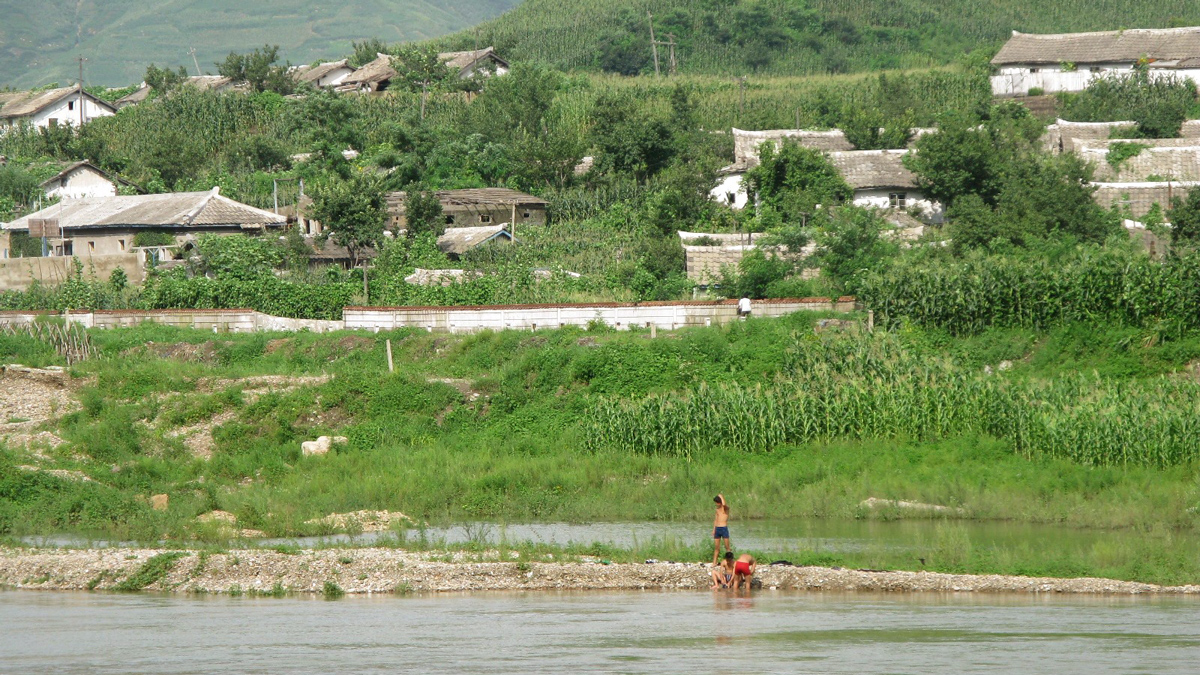
When I was young, we lived in the countryside. Like the other kids, I had to help my mom with farming. It was hard work. From spring to fall, everything was difficult. Carrying a heavy load on my back, climbing up the mountain, my hands covered in blisters from using farming tools—I would often return home late, completely exhausted.
Our field was located at the top of a high mountain. From there, I could look down and see the Amnok River flowing, with a railway track stretching beside it. One spring day when I was around 13, I was resting at the top of the mountain, looking down at the train passing by below.
Watching it move slowly like a caterpillar, I thought to myself, "I want to get on that train and go somewhere far away." That was the first time I dreamed of escaping. We were living in a prison with no exit, no hope.
Eventually, I managed to escape from that life in that prison. But my mother must have continued climbing that mountain and working in that field for many more years. Perhaps, during her moments of rest, she would look down at the river and the railroad. Perhaps, she thought about me, who had left for a place far away.
Now, I am living well in South Korea, as a mother of one myself. I carry dreams and hope in my heart. But not everyone has been as fortunate as I have in finding a way out.
I have a friend, a North Korean defector now living in the United States, who once shared a story that moved me to tears. A few years ago, she fled North Korea with her two young daughters and eventually made her way to America. She attempted to reach South Korea twice. The first time, she set out with her daughters, ages seven and eleven. They wandered for days through the vast Baekdudaegan mountains. When their water ran out, she dug into the earth with her bare hands, squeezing out a few drops to moisten their mouths.
Along the way, they came across the bodies of two people, sitting with their backs leaning against each other in the middle of a field. From their clothes, she could tell they were North Koreans, their bodies already beginning to decompose. Fearing that she and her daughters might meet the same fate, she decided to turn back and return to North Korea.
As I listened to her story, I couldn’t hold back my tears. Who were those two souls lost in the mountains? Where had they been trying to go? How long had they wandered? They might have been so exhausted that after sitting back to back, they couldn’t get up again. What thoughts filled their minds in their final moments?
That’s why I want to be a writer—to share these stories with the world.
For the people in North Korea who still dream of breaking free from a life with no exit, and for the nameless souls who never made it to freedom.
-
Opportunities like LiNK’s Intensive English Program (LIEP) are helping North Koreans find their voice, reach their goals, and lead change on this issue. Your support can help us continue to make an impact in the lives of North Korean refugees, like Jane.
Give Today










