
Freedom Walk & Run 2026, Seoul
What Does Freedom Mean to You?
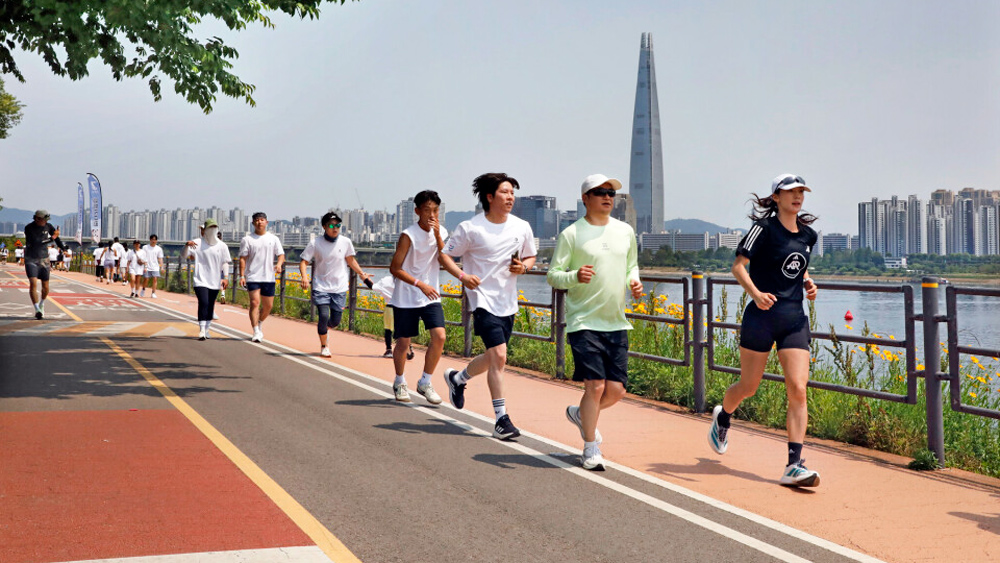
This fall, 200 people will gather along the Han River in Seoul to honor the 26 million people living in North Korea by answering one question: What does freedom mean to you?
Before setting out, every participant in Liberty in North Korea’s Freedom Walk & Run will write their own answers on the race bib they’ll wear for the 6 kilometer race.
The course is divided into three sections, each representing a different freedom: the freedom to leave, the freedom to lead, and the freedom to learn.
Each represents a different part of LiNK’s work and a different way North Korean people are pursuing greater freedom and choice in their own lives.
0-2km: Freedom to Leave
The first two kilometers represent the freedom to leave.
For North Koreans who decide to leave their country, reaching safety can mean a long and dangerous journey through multiple countries.
LiNK helps North Korean refugees navigate a secret route to safety. To date, over 1,400 North Korean refugees have reached freedom through LiNK’s networks. Every person who makes that journey has their own reason for leaving, their own hopes for what comes next, and their own idea of what freedom means to them.
Reaching safety opens the door to the next part of their journey.
2km-4km: Freedom to Lead
The next two kilometers represent the freedom to lead.
Starting over in a new country comes with countless possibilities, but just as many challenges. North Korean people resettling in South Korea or the US are learning a new system, while pursuing education, beginning careers, building relationships, or deciding what they want their future to look like.
LiNK’s programs support resettled North Koreans as they pursue education, language learning, and career development, providing mentorship, scholarships, and so much more.
And then comes the final stretch.
4-6km: Freedom to Learn
The last two kilometers represent the freedom to learn.
For people living inside North Korea, access to information from outside of the country is heavily restricted. Official media is centrally controlled, while foreign films, television, music, news, and other outside information are accessed illegally and often at significant personal risk.
Despite the government’s efforts to control information, curiosity about what freedom looks like proves impossible to suppress.
“No matter how much you try to control it, you can’t get rid of curiosity.”
Information gives someone a new point of reference. It introduces possibilities they had never encountered before. It gives them the chance to imagine a future beyond the North Korean regime.
North Korean people are finding ways to access outside media, through USB drives and microSD cards. LiNK’s Information Access Programs build on these existing channels by working with North Korean defectors and engineers to develop tailor-made technology and content that help people inside the country access more information more safely.
This is a growing part of our work, and one we believe has enormous potential to contribute to long-term change.
Get Involved: Support information access in North Korea
This fall, we’re giving supporters a closer look at this work through an upcoming documentary about information access in North Korea.
Make a gift of $30 or more to LiNK’s Information Access Programs by October 24 and you’ll receive an exclusive preview of the documentary this fall.
Your support helps LiNK enable more North Koreans to access more outside information more safely. This builds people’s resilience against regime disinformation, increases their aspirations for social and economic progress, and builds pressure for change and opening.
Donate today & get the documentary preview
Join us in Seoul
If you’re in Seoul, join us along the Han River on Saturday, October 24, for the Freedom Walk & Run. Participation is limited to 200 people, so reserve your spot today.
RSVP for LiNK’s Freedom Walk & Run
Chuseok for North Koreans | No Way Home for the Holidays
Autumn is a significant season for many people and cultures around the world. It’s a period of transition and reflection, gratitude for the days gone by, and celebration of the harvest.
In both North and South Korea, this time of year is celebrated with Chuseok, or the mid-autumn festival. Also known as “Korean Thanksgiving,” it’s a major holiday that predates the division of the peninsula. Chuseok is observed on the 15th day of the 8th month of the lunar calendar, when the harvest moon shines brightest. Traditionally, people return to their ancestral hometowns to gather with family, share a variety of delicious foods, and pay respects to their ancestors.
But for North Korean refugees, there is no going back. Holidays like Chuseok can be a bittersweet time, one of both gratitude for a life in freedom and grief over being unable to celebrate with family still inside North Korea.
“The first Chuseok in the US felt very empty and lonely. It was just me and my two-year-old daughter, Mia, back then. It didn’t feel like a holiday. I had multiple emotions at the same time. Loneliness, emptiness… there were so many feelings that I couldn’t even put into words.“
– Holly, escaped North Korea in 2013
Chuseok celebrations have evolved to look a little different in North versus South Korea, and even in countries like the US where the Korean diaspora have resettled.
Chuseok Traditions in South Korea
In South Korea, Chuseok is considered the largest and most important holiday of the year. It’s celebrated over three days, during which a “national migration” takes place as people all over the country travel to their hometowns or to go sightseeing. Tickets for planes, trains, and buses are sold out months in advance, and freeways are packed with bumper-to-bumper traffic during the holiday period.
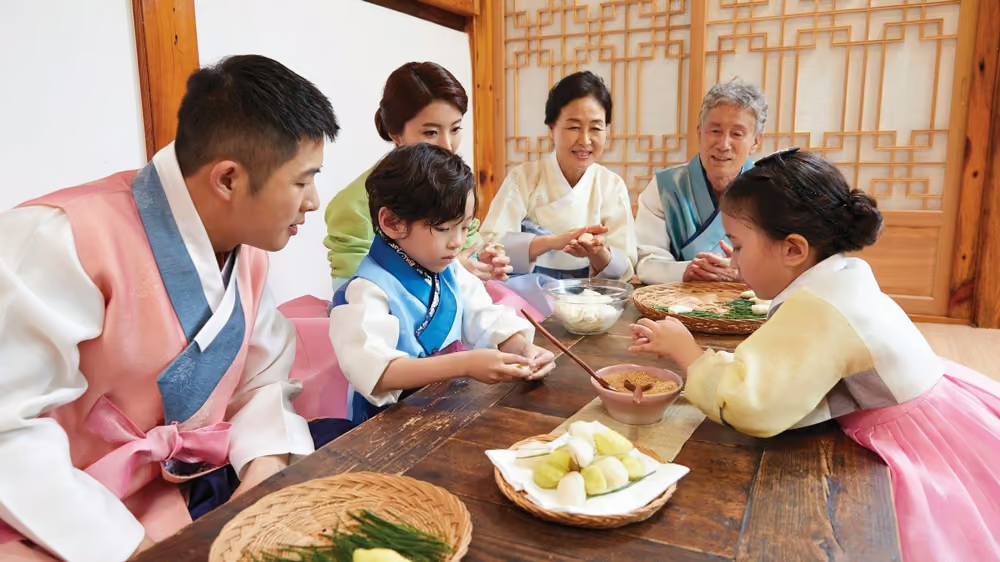
On the morning of Chuseok, families hold a memorial service for their ancestors at home, known as charye (차례). A table of food is prepared as an offering, typically featuring rice cakes, fresh fruits and vegetables, meat dishes, and the favorite meals of deceased loved ones. Families will also visit ancestral gravesites, a custom known as seongmyo (성묘), to pay their respects and tend to the graves.

From the ancestral table to large family meals, food is a central part of Chuseok celebrations. The defining dish of this holiday is seongpyeon (송편), a chewy, sweet, and nutty half-moon shaped rice cake steamed in fresh pine needles. It’s traditionally made with rice from the year’s harvest, finely milled into flour. Preparing seongpyon becomes a family activity as each piece is shaped by hand and filled with red bean paste, toasted sesame seeds, or chestnuts.
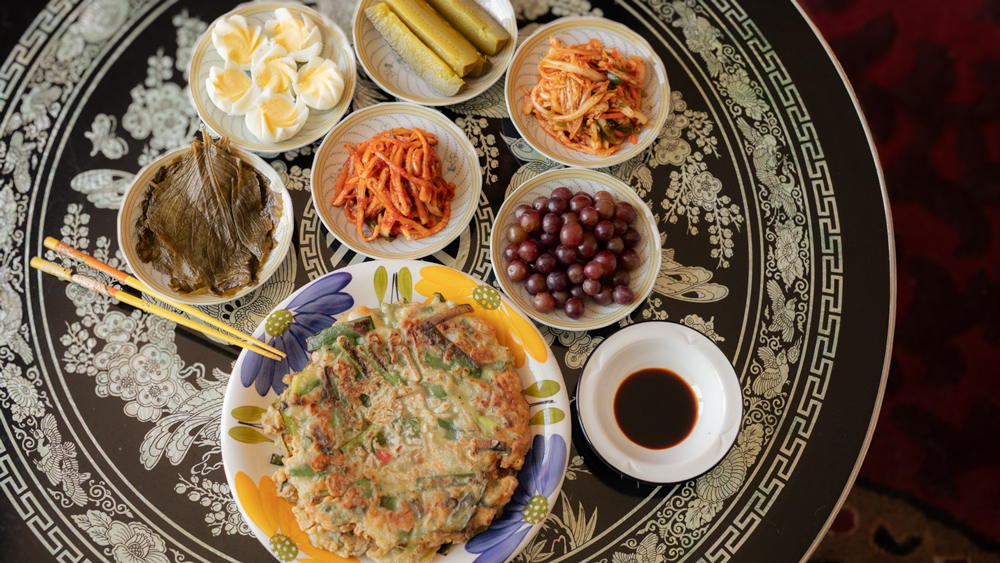
Other holiday foods include pajeon(파전), a crispy, savory pancake made with green onions; galbijjim (갈비찜), sweet and savory braised short ribs; and japchae(잡채), glass noodles stir-fried with meat and vegetables.
How Chuseok is Celebrated in North Korea
In North Korea, Chuseok is just a one-day celebration. While it is considered a key traditional holiday, its importance has been minimized relative to national holidays like the birthdays of Kim Il-sung and Kim Jong-il, and the anniversary of the founding of the Worker’s Party.
On both traditional and national holidays, North Koreans are urged to visit the statues of Kim family leaders or the Kumsan Palace of the Sun in Pyongyang, where the bodies of Kim Il-sung and Kim Jong-il lie.
It is much less common for widespread travel to take place during Chuseok due to severe travel restrictions and poor transportation infrastructure. However, these constraints have also made it so that generations of North Koreans remain in close proximity to their hometowns and relatives. For Chuseok, people gather with their nearby family members. Just like in South Korea, they’ll prepare special foods as offerings for charye, and then visit ancestral grave sites to pay respects.
After ancestral rites, festivities become a community affair with traditional food and folk games shared amongst family, friends, and neighbors. Songpyeon is also a holiday staple, but the North Korean version is made with a minced meat and vegetable filling, and are twice as big as South Korean ones. Common folk games are yutnori (윷놀이), a board game, and ssireum (씨름), or Korean wrestling.
Holly & Mia: A Legacy of Freedom
It’s been over a decade since Holly left her hometown in North Korea. But whenever she makes pajeon (파전), it takes her right back to her childhood—sitting by the frying pan and watching her mom cook, eagerly awaiting a taste. “Pa”(파) means green onion and “jeon”(전) refers to foods that have been pan-fried or battered. There are many varieties of “jeon,” made with everything from potatoes to zucchini, seafood, kimchi, and more.
Holly saw her mom cook this dish countless times in North Korea. It was an inexpensive, everyday staple, but also an essential part of the holidays. Every year for Chuseok, the mouthwatering aroma of oil and batter would draw everyone to the kitchen, where a colorful assortment of jeon was being prepared.
Holly now lives halfway across the world from North Korea, but every year during Chuseok, she sets out an offering table for charye. For hours, she prepares foods like pajeon with great care, remembering and honoring her parents and loved ones, who she can’t be with for the holidays.

In 2016, Holly reached freedom through LiNK’s rescue networks with one-year-old Mia in her arms.
Mia is now at an age where she’s able to understand some of the things her mother went through. Holly has begun to open up more about her life in North Korea, and does her best to keep their small family connected to their Korean heritage. She takes Mia to Korean language school on Sundays, and makes an effort to celebrate cultural holidays, like Chuseok. What can’t be put into words, Holly communicates through food—their dinner table is always full of delicious Korean cooking.
In 2024, Holly received her US citizenship, nine years after her resettlement!
"When I obtained my US citizenship, it felt like my escape journey was finally complete. I cried and felt so grateful to the US for giving me a new life. My greatest happiness is seeing Mia have a childhood free of the painful hardships that defined mine.”
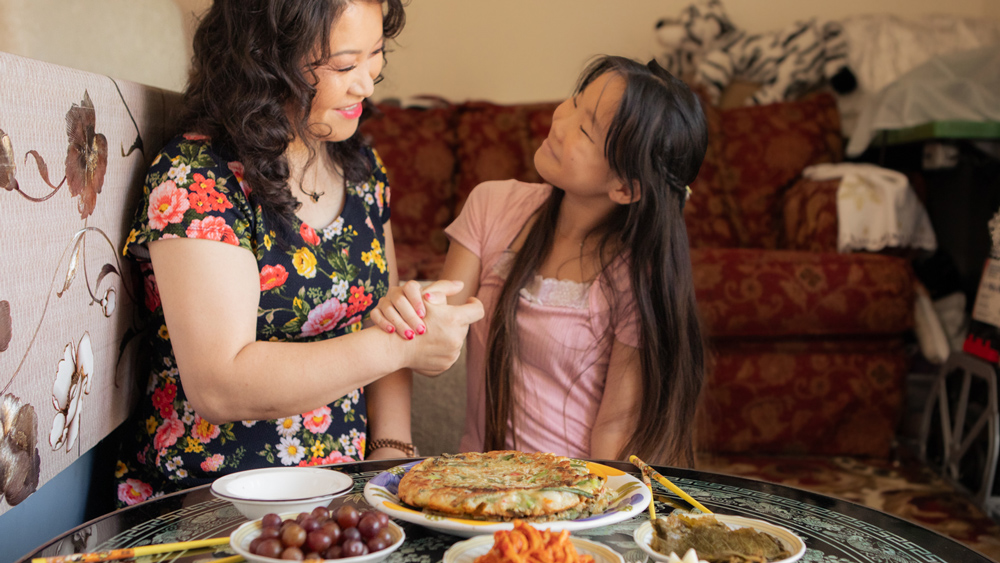
These days, Chuseok has become a lively gathering with the many friends and neighbors they’ve met over the years! Holly gathers with other Koreans in the community, and they go all-out preparing delicious seongpyeon and pajeon. She takes great pride in wearing traditional hanboks with Mia, and explaining each dish when guests arrive. The festivities always continue long after dinner, with Korean games like jegichagi, a version of hacky sack, and yutnori, a board game.
Living in the US, Holly and Mia have been introduced to new traditions too. Just a month after Chuseok, their community gathers again to celebrate Thanksgiving with turkey and pumpkin pie, in true American fashion.
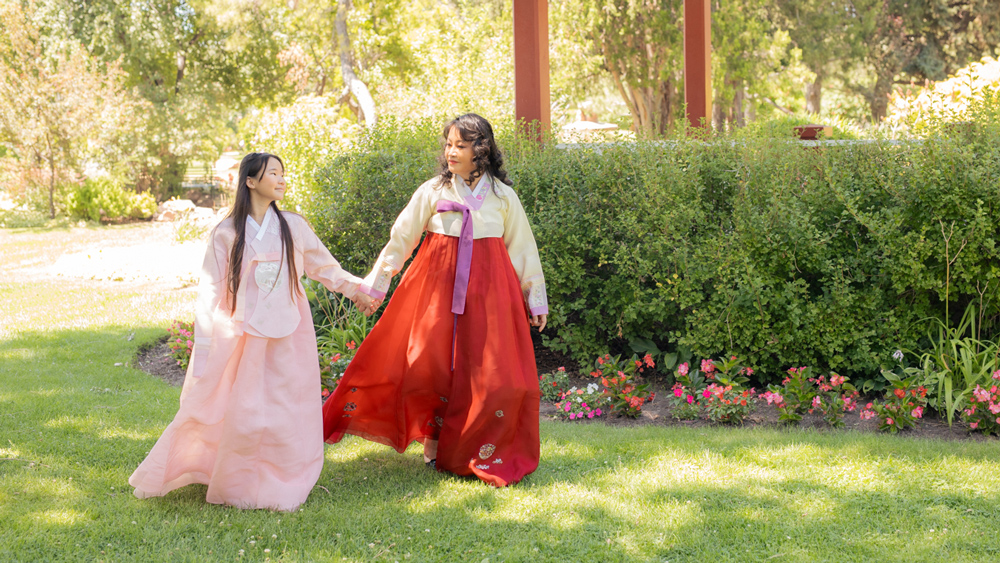
Holly still has hope that in her lifetime, she’ll be able to celebrate Chuseok with all her family and bring Mia to visit her hometown in North Korea.
We’re working towards the day when families don’t have to be separated. To date, LiNK has rescued almost 1400 North Korean refugees and their children, reuniting over 500 people with their families in freedom. As we’re helping North Koreans, like Holly, build new lives, we’re also leading initiatives to increase change inside North Korea, through advocacy, information access, and more.
Become a monthly donor and create a long-lasting legacy of freedom. Your support will rescue North Korean refugees waiting for their chance to escape right now, and fuel work that is increasing change and opening inside North Korea.










