
Freedom Walk & Run 2026, Seoul
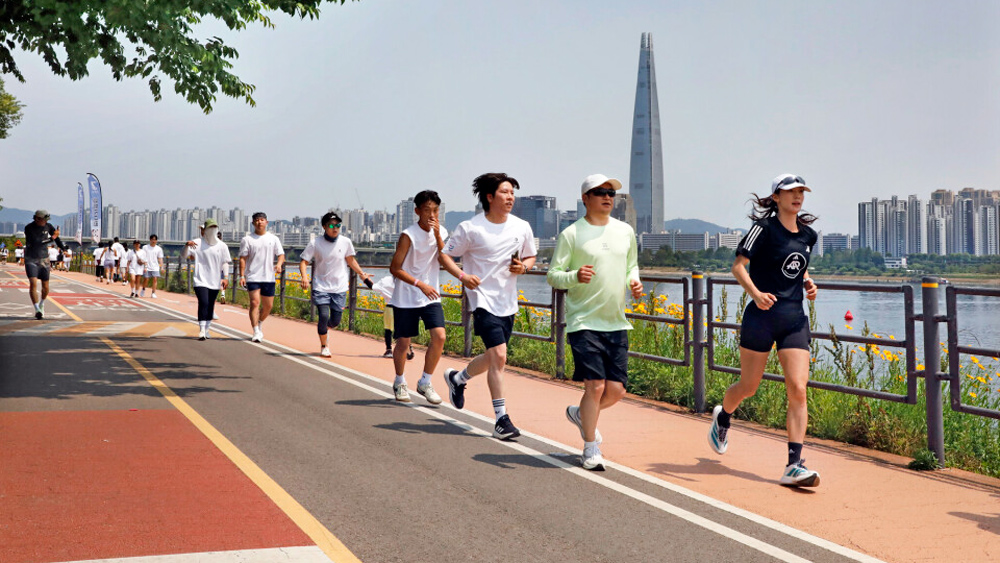
What Does Freedom Mean to You?
This fall, 200 people will gather along the Han River in Seoul to honor the 26 million people living in North Korea by answering one question: What does freedom mean to you?
Before setting out, every participant in Liberty in North Korea’s Freedom Walk & Run will write their own answers on the race bib they’ll wear for the 6 kilometer race.
The course is divided into three sections, each representing a different freedom: the freedom to leave, the freedom to lead, and the freedom to learn.
Each represents a different part of LiNK’s work and a different way North Korean people are pursuing greater freedom and choice in their own lives.
0-2km: Freedom to Leave
The first two kilometers represent the freedom to leave.
For North Koreans who decide to leave their country, reaching safety can mean a long and dangerous journey through multiple countries.
LiNK helps North Korean refugees navigate a secret route to safety. To date, over 1,400 North Korean refugees have reached freedom through LiNK’s networks. Every person who makes that journey has their own reason for leaving, their own hopes for what comes next, and their own idea of what freedom means to them.
Reaching safety opens the door to the next part of their journey.
2km-4km: Freedom to Lead
The next two kilometers represent the freedom to lead.
Starting over in a new country comes with countless possibilities, but just as many challenges. North Korean people resettling in South Korea or the US are learning a new system, while pursuing education, beginning careers, building relationships, or deciding what they want their future to look like.
LiNK’s programs support resettled North Koreans as they pursue education, language learning, and career development, providing mentorship, scholarships, and so much more.
And then comes the final stretch.
4-6km: Freedom to Learn
The last two kilometers represent the freedom to learn.
For people living inside North Korea, access to information from outside of the country is heavily restricted. Official media is centrally controlled, while foreign films, television, music, news, and other outside information are accessed illegally and often at significant personal risk.
Despite the government’s efforts to control information, curiosity about what freedom looks like proves impossible to suppress.
“No matter how much you try to control it, you can’t get rid of curiosity.”
Information gives someone a new point of reference. It introduces possibilities they had never encountered before. It gives them the chance to imagine a future beyond the North Korean regime.
North Korean people are finding ways to access outside media, through USB drives and microSD cards. LiNK’s Information Access Programs build on these existing channels by working with North Korean defectors and engineers to develop tailor-made technology and content that help people inside the country access more information more safely.
This is a growing part of our work, and one we believe has enormous potential to contribute to long-term change.
Get Involved: Support information access in North Korea
This fall, we’re giving supporters a closer look at this work through an upcoming documentary about information access in North Korea.
Make a gift of $30 or more to LiNK’s Information Access Programs by October 24 and you’ll receive an exclusive preview of the documentary this fall.
Your support helps LiNK enable more North Koreans to access more outside information more safely. This builds people’s resilience against regime disinformation, increases their aspirations for social and economic progress, and builds pressure for change and opening.
Donate today & get the documentary preview
Join us in Seoul
If you’re in Seoul, join us along the Han River on Saturday, October 24, for the Freedom Walk & Run. Participation is limited to 200 people, so reserve your spot today.
RSVP for LiNK’s Freedom Walk & Run
The Moment I Chose Freedom

I remember sitting in an empty apartment.
There was nothing. No bed, no chair, no dishes, no clothes. I sat on the floor and stared at the wall for hours, wondering “what do I do now?” I was alone in a new country. I had lost all my friends and I had no idea what happened to my family.
It all started over a dinner in Beijing. I am from North Korea’s elite class and I was one of the few university students that was allowed to study abroad. In China, I met a few South Korean students and we became friends. One night over dinner they began talking about human rights in North Korea. They criticized my country and I was so confused. What are human rights? What is a dictatorship? What is freedom?
I grew up very comfortably in North Korea’s capital, Pyongyang. I never went hungry and I could buy whatever I wanted. I even owned a South Korean computer and I played video games on it. But there were also moments when I questioned things. There was the time I was interrogated for 3 days for giving a friend some South Korean movies. Or the time my dad had to bribe the police to let me go.
But I thought it was like that everywhere. I cried in the taxi on the ride home that night. I was so frustrated that I didn’t have the words to defend my homeland. I went back to my dorm room and began searching the internet for information on human rights.

My idea of North Korea died that night.
The place I called home and the only system I had ever known was all a lie. I couldn’t stop crying as I watched a documentary about North Korea’s political prison camps. I didn’t go to class after that. I stopped hanging out with most of my friends and spent most of my time reading and learning about things I had never known about my country.
A couple weeks later I was at an ice rink in Beijing. As I was watching these little Chinese kids skate around so carefree, something broke deep inside me. I thought about the North Korean children in the documentaries who would never get to enjoy something like this. That’s when I knew I had to do something.
I began devouring books about democracy and freedom. I watched more documentaries and read the political classics like Plato’s The Republic.
If the regime discovered I was reading that book, it could have cost me my life.
But I couldn’t kill my curiosity. I couldn’t unlearn what I now knew and I definitely couldn’t go back to North Korea.

One morning I received a call from the North Korean embassy in Beijing. They asked me to come in because they said something was wrong with my visa. Nothing like this had ever happened before so it seemed strange. I was convinced that they knew what I had been reading and thinking about. I agreed to come in and hung up.
I never went to the embassy.
I destroyed my phone and ID cards that day and left my dorm room with some cash. A couple days later I found a South Korean pastor and he helped me find a way to get safely to South Korea.
It has been six years since I sat in that empty apartment on my first day as a free South Korean citizen. There was a moment while I sat there where I began to question everything. Did I make the wrong choice? What did I do to my family? Will I really be okay on my own now?
But then I reminded myself—I came here with a purpose: to learn about democracy and to help my people get their freedom. So I put on my shoes and went to buy groceries for the first time.










