
Freedom Walk & Run 2026, Seoul
What Does Freedom Mean to You?
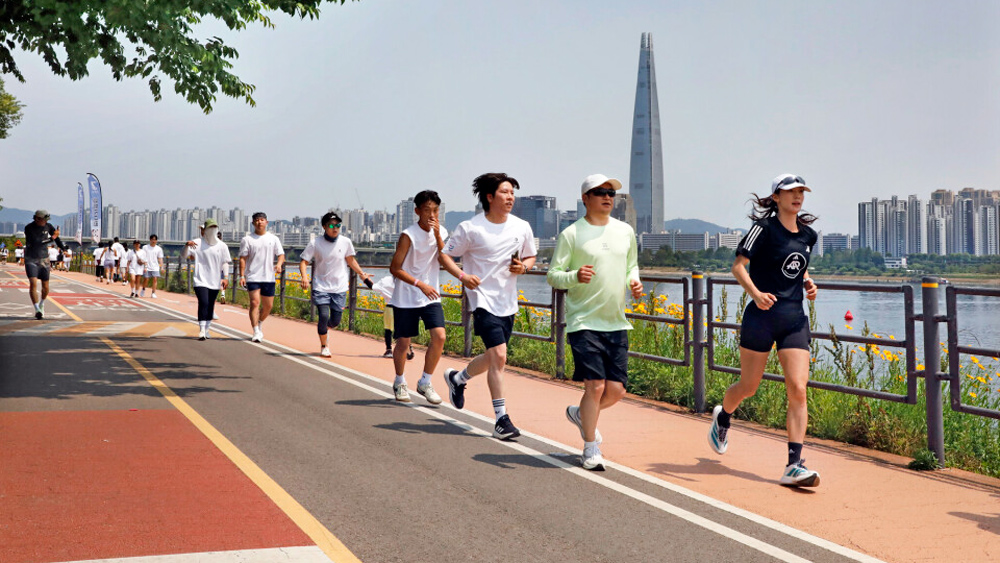
This fall, 200 people will gather along the Han River in Seoul to honor the 26 million people living in North Korea by answering one question: What does freedom mean to you?
Before setting out, every participant in Liberty in North Korea’s Freedom Walk & Run will write their own answers on the race bib they’ll wear for the 6 kilometer race.
The course is divided into three sections, each representing a different freedom: the freedom to leave, the freedom to lead, and the freedom to learn.
Each represents a different part of LiNK’s work and a different way North Korean people are pursuing greater freedom and choice in their own lives.
0-2km: Freedom to Leave
The first two kilometers represent the freedom to leave.
For North Koreans who decide to leave their country, reaching safety can mean a long and dangerous journey through multiple countries.
LiNK helps North Korean refugees navigate a secret route to safety. To date, over 1,400 North Korean refugees have reached freedom through LiNK’s networks. Every person who makes that journey has their own reason for leaving, their own hopes for what comes next, and their own idea of what freedom means to them.
Reaching safety opens the door to the next part of their journey.
2km-4km: Freedom to Lead
The next two kilometers represent the freedom to lead.
Starting over in a new country comes with countless possibilities, but just as many challenges. North Korean people resettling in South Korea or the US are learning a new system, while pursuing education, beginning careers, building relationships, or deciding what they want their future to look like.
LiNK’s programs support resettled North Koreans as they pursue education, language learning, and career development, providing mentorship, scholarships, and so much more.
And then comes the final stretch.
4-6km: Freedom to Learn
The last two kilometers represent the freedom to learn.
For people living inside North Korea, access to information from outside of the country is heavily restricted. Official media is centrally controlled, while foreign films, television, music, news, and other outside information are accessed illegally and often at significant personal risk.
Despite the government’s efforts to control information, curiosity about what freedom looks like proves impossible to suppress.
“No matter how much you try to control it, you can’t get rid of curiosity.”
Information gives someone a new point of reference. It introduces possibilities they had never encountered before. It gives them the chance to imagine a future beyond the North Korean regime.
North Korean people are finding ways to access outside media, through USB drives and microSD cards. LiNK’s Information Access Programs build on these existing channels by working with North Korean defectors and engineers to develop tailor-made technology and content that help people inside the country access more information more safely.
This is a growing part of our work, and one we believe has enormous potential to contribute to long-term change.
Get Involved: Support information access in North Korea
This fall, we’re giving supporters a closer look at this work through an upcoming documentary about information access in North Korea.
Make a gift of $30 or more to LiNK’s Information Access Programs by October 24 and you’ll receive an exclusive preview of the documentary this fall.
Your support helps LiNK enable more North Koreans to access more outside information more safely. This builds people’s resilience against regime disinformation, increases their aspirations for social and economic progress, and builds pressure for change and opening.
Donate today & get the documentary preview
Join us in Seoul
If you’re in Seoul, join us along the Han River on Saturday, October 24, for the Freedom Walk & Run. Participation is limited to 200 people, so reserve your spot today.
RSVP for LiNK’s Freedom Walk & Run
Challenges of Freedom
Four North Korean defectors' experiences of resettling to South Korea.
It was the greatest country in the world. Sure, sometimes they saw people die from starvation and heard rumors of people disappearing into prison camps, but it was like that everywhere. At least that’s what they were told. But as foreign media started to spill into the country, they realized it wasn’t like that everywhere; they weren’t living in the greatest country in the world. A better life was out there and they knew they needed to leave to find it.
Every year, many North Koreans risk their lives to escape one of the world’s most oppressive regimes. They trek through jungles and over mountains, terrified of being caught and sent back. Once they finally reach freedom, they start over. New cultures, new opportunities, new challenges.
Here are four of their stories.

Ill Yong
Ill Yong opens Google Maps, trying to find a satellite image of his childhood house. This always makes him homesick. When he zooms in on his house, a blurry gray square surrounded by snow, he remembers the nearby waterfall and the summer days he spent playing there. But he also remembers how hard it was living in North Korea. His family listened to illegal South Korean radio every night but had to keep it hidden from friends and neighbors. If caught, they could have been sent to a political prison camp or even executed.
Ill Yong resettled to South Korea in 2009 and, even though his family was with him, starting over in a new country was challenging. The everyday moments took adjusting to. His first time at a buffet, Ill Yong was so overwhelmed by the massive amount of food that he just took a small bowl of rice. The first time he tried to use an escalator he was so confused about what to do that he jumped on at the bottom and then jumped off at the top. Ill Yong has now been in South Korea for nine years and is studying to become a Human Rights lawyer. A lot has changed since he first arrived (he now knows how to get on an escalator) but he still thinks about his old home in North Korea and hopes to see it again in person one day.

Noel
Noel came to South Korea in 2010 with a shy personality and a strong North Korean accent. She wanted to blend quietly into her new culture, but people constantly asked where she was from. School was also a struggle. In North Korea, she had dropped out after the first grade to stay home and help her mother. What she did learn at school was of little help in her new life. She was used to curriculum that focused on the Kim family. Determined to catch up, she began reading lots of books.
Noel is currently studying to become a writer and is no longer behind in school. Her new challenge is figuring out what to do with her freedom. Living in North Korea, she just followed the regime and did whatever she was told. It was the only option. Now, faced with endless choices, she knows that there is a responsibility that comes with freedom, and she wants to use it wisely.

Jessie
Jessie was overwhelmed. She was by herself in an unfamiliar country. So much was unknown: how to get around, where to study, how to make new friends, and even where to buy groceries. She wasn’t used to this new culture’s rules and norms. The first time she heard someone publicly criticize the South Korean president she was stunned. Freely expressing any negative thoughts about the regime was unheard of in North Korea.
Jessie now understands her new culture and loves her freedoms, especially being able to watch whatever dramas she wants without fear of punishment. South Korea has become her home, but she still longs for the day she can return to North Korea. Her parents have both passed away and she wants to go and pay her respects in person.

Geum Hyok
Geum Hyok stood by himself in an empty apartment wondering if he made a mistake. He had no friends and no family there to reassure him. Feeling lonely but determined to make a life for himself, he started classes at Korea University where he met people who were kind to him and checked on him regularly. Their friendship helped him not feel as lonely. Except for the couple times he was turned down for a job because they didn’t want to hire a North Korean, most people were welcoming to him. But what surprised him most was how many South Koreans didn’t know what was happening in North Korea. Geum Hyok didn’t blame them, he knew humans rights was complicated. But it was still disappointing.
Now, Geum Hyok is studying politics and diplomacy and enjoys having the freedom to do what he wants. He no longer questions his choice to escape but he does think about his loved ones still in North Korea. He especially misses his mother whom he hasn’t seen or spoken to in eight years. He is waiting for the day North Korea finally opens so they can be reunited.










