
Freedom Walk & Run 2026, Seoul
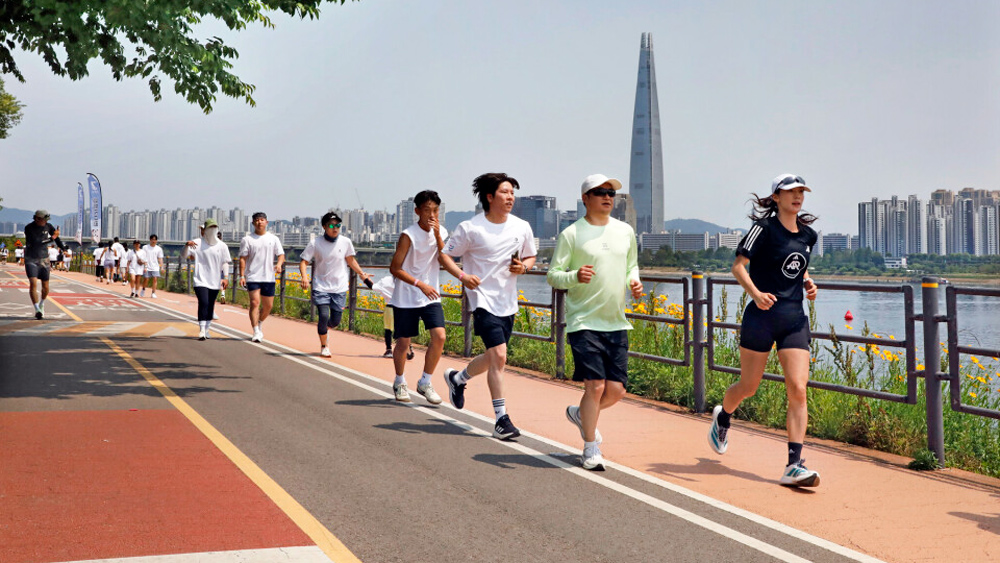
What Does Freedom Mean to You?
This fall, 200 people will gather along the Han River in Seoul to honor the 26 million people living in North Korea by answering one question: What does freedom mean to you?
Before setting out, every participant in Liberty in North Korea’s Freedom Walk & Run will write their own answers on the race bib they’ll wear for the 6 kilometer race.
The course is divided into three sections, each representing a different freedom: the freedom to leave, the freedom to lead, and the freedom to learn.
Each represents a different part of LiNK’s work and a different way North Korean people are pursuing greater freedom and choice in their own lives.
0-2km: Freedom to Leave
The first two kilometers represent the freedom to leave.
For North Koreans who decide to leave their country, reaching safety can mean a long and dangerous journey through multiple countries.
LiNK helps North Korean refugees navigate a secret route to safety. To date, over 1,400 North Korean refugees have reached freedom through LiNK’s networks. Every person who makes that journey has their own reason for leaving, their own hopes for what comes next, and their own idea of what freedom means to them.
Reaching safety opens the door to the next part of their journey.
2km-4km: Freedom to Lead
The next two kilometers represent the freedom to lead.
Starting over in a new country comes with countless possibilities, but just as many challenges. North Korean people resettling in South Korea or the US are learning a new system, while pursuing education, beginning careers, building relationships, or deciding what they want their future to look like.
LiNK’s programs support resettled North Koreans as they pursue education, language learning, and career development, providing mentorship, scholarships, and so much more.
And then comes the final stretch.
4-6km: Freedom to Learn
The last two kilometers represent the freedom to learn.
For people living inside North Korea, access to information from outside of the country is heavily restricted. Official media is centrally controlled, while foreign films, television, music, news, and other outside information are accessed illegally and often at significant personal risk.
Despite the government’s efforts to control information, curiosity about what freedom looks like proves impossible to suppress.
“No matter how much you try to control it, you can’t get rid of curiosity.”
Information gives someone a new point of reference. It introduces possibilities they had never encountered before. It gives them the chance to imagine a future beyond the North Korean regime.
North Korean people are finding ways to access outside media, through USB drives and microSD cards. LiNK’s Information Access Programs build on these existing channels by working with North Korean defectors and engineers to develop tailor-made technology and content that help people inside the country access more information more safely.
This is a growing part of our work, and one we believe has enormous potential to contribute to long-term change.
Get Involved: Support information access in North Korea
This fall, we’re giving supporters a closer look at this work through an upcoming documentary about information access in North Korea.
Make a gift of $30 or more to LiNK’s Information Access Programs by October 24 and you’ll receive an exclusive preview of the documentary this fall.
Your support helps LiNK enable more North Koreans to access more outside information more safely. This builds people’s resilience against regime disinformation, increases their aspirations for social and economic progress, and builds pressure for change and opening.
Donate today & get the documentary preview
Join us in Seoul
If you’re in Seoul, join us along the Han River on Saturday, October 24, for the Freedom Walk & Run. Participation is limited to 200 people, so reserve your spot today.
RSVP for LiNK’s Freedom Walk & Run
Finally Free
I went to Southeast Asia to see where LiNK’s Field Team rescues North Korean refugees. Here’s what I found…

Refugees must cross terrain like this to reach safety in Southeast Asia
We’re on a dirt road weaving around potholes.
On one side, the rice reaches to the horizon. On the other, corn stretches higher than the van.It feels like rural Iowa, but hotter and with palm trees.
The van lurches along, swaying back and forth with the ruts in the road. We’ve been driving for five hours through dense jungle and villages so small that you’d miss them if you blinked. It’s starting to seem like we’re in the middle of nowhere.
We finally coast to a stop and LiNK’s Field Manager points to a steep ravine.
“We’re here,” she says.

“We’ve rescued North Korean refugees right here,” she continues.
For the next hour we stop every couple hundred yards. She points to a field or a patch of trees and recounts stories.Stories of screeching to a stop, sliding open the door, and pulling North Korean refugees into the van.Stories of refugees so dehydrated they barely have the words to ask for water.
Stories of people collapsing in exhaustion, caked in mud and peppered with bruises from the long trek through the jungle.“What do refugees do once they’re in the van?” I ask.“Some start crying, the tears stream down their cheeks. They’re so overwhelmed that they finally made it. Others flash smiles in triumph, soaking in every second.”
I realize we’re not on just any dirt road.

This road meanders along the border. You can’t see the line but throw a stone in a certain direction and it’s likely to land in another country.For North Korean refugees this border means everything. Cross it, and they’re safe. The North Korean regime cannot have them arrested and forcibly returned.The danger is finally gone — evaporated in the sweltering heat and suffocating humidity of Southeast Asia.
For the first time in their entire lives: they are free.
It’s a week later and I’m sitting in an air-conditioned coffee shop that sells overpriced lattes.
I’m back in South Korea to interview a North Korean woman who reached freedom through LiNK’s rescue network.It took her four tries to make it to South Korea.She was arrested twice at the North Korean border and once in China. Each time the punishments seemed unimaginable, but they’re terrifyingly common.She recounts the horrific torture she endured for trying to escape. The way they slammed her head into a nail on the wall. The torment of witnessing cellmates whither away from starvation. The heartbreak of watching her 5-year old daughter being beaten in front of her.I’m trying hard to collect the facts. But hers is one of those stories that hollows you out. Leaving you nauseous and numb.The conversation dwindles. I can see the toll that sharing these stories are having. Her shoulders start to slump. She barely looks up to make eye contact anymore.I pull out my phone and show her a video. Her eyes flash with life.

20 seconds pass and she’s still glued to the phone.
It’s a video of that dirt road. And the exact place where she finally reached freedom. There are corn stalks on the left and a small farmhouse hidden behind palms leaves on the right.“Do you remember this place?” I ask.“How could I ever forget it?” she says without looking up.She’s smiling for the first time all afternoon.










