
Freedom Walk & Run 2026, Seoul
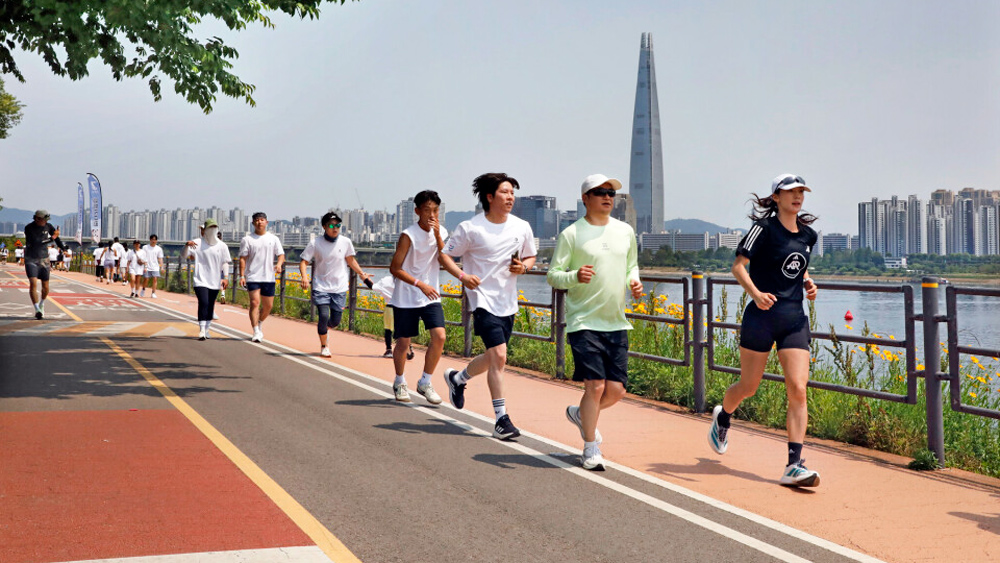
What Does Freedom Mean to You?
This fall, 200 people will gather along the Han River in Seoul to honor the 26 million people living in North Korea by answering one question: What does freedom mean to you?
Before setting out, every participant in Liberty in North Korea’s Freedom Walk & Run will write their own answers on the race bib they’ll wear for the 6 kilometer race.
The course is divided into three sections, each representing a different freedom: the freedom to leave, the freedom to lead, and the freedom to learn.
Each represents a different part of LiNK’s work and a different way North Korean people are pursuing greater freedom and choice in their own lives.
0-2km: Freedom to Leave
The first two kilometers represent the freedom to leave.
For North Koreans who decide to leave their country, reaching safety can mean a long and dangerous journey through multiple countries.
LiNK helps North Korean refugees navigate a secret route to safety. To date, over 1,400 North Korean refugees have reached freedom through LiNK’s networks. Every person who makes that journey has their own reason for leaving, their own hopes for what comes next, and their own idea of what freedom means to them.
Reaching safety opens the door to the next part of their journey.
2km-4km: Freedom to Lead
The next two kilometers represent the freedom to lead.
Starting over in a new country comes with countless possibilities, but just as many challenges. North Korean people resettling in South Korea or the US are learning a new system, while pursuing education, beginning careers, building relationships, or deciding what they want their future to look like.
LiNK’s programs support resettled North Koreans as they pursue education, language learning, and career development, providing mentorship, scholarships, and so much more.
And then comes the final stretch.
4-6km: Freedom to Learn
The last two kilometers represent the freedom to learn.
For people living inside North Korea, access to information from outside of the country is heavily restricted. Official media is centrally controlled, while foreign films, television, music, news, and other outside information are accessed illegally and often at significant personal risk.
Despite the government’s efforts to control information, curiosity about what freedom looks like proves impossible to suppress.
“No matter how much you try to control it, you can’t get rid of curiosity.”
Information gives someone a new point of reference. It introduces possibilities they had never encountered before. It gives them the chance to imagine a future beyond the North Korean regime.
North Korean people are finding ways to access outside media, through USB drives and microSD cards. LiNK’s Information Access Programs build on these existing channels by working with North Korean defectors and engineers to develop tailor-made technology and content that help people inside the country access more information more safely.
This is a growing part of our work, and one we believe has enormous potential to contribute to long-term change.
Get Involved: Support information access in North Korea
This fall, we’re giving supporters a closer look at this work through an upcoming documentary about information access in North Korea.
Make a gift of $30 or more to LiNK’s Information Access Programs by October 24 and you’ll receive an exclusive preview of the documentary this fall.
Your support helps LiNK enable more North Koreans to access more outside information more safely. This builds people’s resilience against regime disinformation, increases their aspirations for social and economic progress, and builds pressure for change and opening.
Donate today & get the documentary preview
Join us in Seoul
If you’re in Seoul, join us along the Han River on Saturday, October 24, for the Freedom Walk & Run. Participation is limited to 200 people, so reserve your spot today.
RSVP for LiNK’s Freedom Walk & Run
Meet Charles - A North Korean Living in the United States

Charles escaped from North Korea and made the dangerous journey through China without the help of a rescue network. We met Charles after he resettled in the United States and were able to connect him with Coding Dojo, a coding boot camp and Liberty in North Korea partner, that generously provides free programming education to North Koreans. We've become great friends with Charles and recently he was excited to share his story with you.
My name is Charles. I was born on October 1st, 1994. I grew up without the love of my parents because my father left us when I was five years old and my mother passed away six years later from starvation. For years, I had to figure out how to live alone. I begged for food from strangers on the street, battling starvation and freezing weather. One day my stepbrother came to find me and take me in. I lived with him for a while and when I was 14 years old he brought me to my father in China. Life was so much better in China and I remember thinking there would be no more starvation and no more begging for a place to sleep.
Yet nine months later, the Chinese police came to our house and arrested my family.
We begged the Chinese police to let us go but they wouldn’t listen. Instead, we were kept in a Chinese jail for two weeks. It was when I was sent back to North Korea after this two week period that I realized that no happiness existed any longer -- the happiness that I had felt had been only temporary. The North Korean government questioned me, abused me, and forced me to work as punishment even though I was only sixteen.
Each meal consisted of a single piece of corn.
After eight months, I was finally released. I was just skin and bones - I had almost starved to death.
Without any money, I knew I had to find work. I began working in a coal mine which allowed me to buy rice to eat. Work in the coal mine was very risky -- I saw people lose their arms and legs as they were smashed under the rocks. I was afraid and I couldn’t help thinking that I would soon lose an arm or a leg myself. After working in the mine for a year, I realized I couldn’t stay in North Korea any longer. I knew how long and hard escaping North Korea would be without money or food, and I understood that if I was caught I could be killed. But I wanted to take these risks instead of continue working at the coal mine. I knew I could leave - I just needed to be brave.
My journey began when I boarded a train to take me closer to the border of China and North Korea. I was riding illegally and though I managed to hide during most of the ride I was at one point caught by the train security without my birth certificate. They locked me in a room with plans to kick me off at the next stop. I felt every piece of hope inside of me break because I knew they would send me to jail. Then, as the train slowed, I realized that I might be able to escape through the window.
With my heart pounding in my throat I opened the window and jumped out.
Still, I had more to go. I walked for hours, illegally boarded a second train, and then, finally, I was at the border of China and North Korea.
I remember feeling excitement and happiness when I reached the border, but I also felt worry because I knew I had to cross the Tumen River. The land surrounding the river had constant security and if I was caught I would be shot. I hid in tall grass for six hours, waiting for darkness. Finally, I took a deep breath and stepped into the water. I was halfway across when the river picked up. I almost fell and in my fear I let out a scream before I could catch myself.
Suddenly, I felt a light on my head. A border guard screamed, “Come back here or we'll shoot you.”
I was terrified, and I thought I would never make it because the current kept pulling me under, but I just kept swimming. At last, I made it to the river’s shore.
My journey did not end when I got to China. I traveled by foot, van, bus, motorcycle, and boat. My shoes fell apart and my feet bruised and bled. I went for days without food and water and there were times when I wanted to give up. I cried many days until I couldn’t cry anymore because I was too dehydrated. When I made it to my father’s house, I expected him to welcome me, but he beat me and asked me why I had come to him. I saw that he did not want me. He asked me to leave and he sent me away with his first wife. Together, his wife and I escaped the eyes of many police officers and finally made it to Southeast Asia where I was safe. For months I stayed in a Korean embassy refugee camp and then an international refugee camp where I was finally helped to come to the United States.
In those months and years when I was struggling to survive, my dreams and hopes for a better life kept me going.
I told myself every day that I could make it better -- that one day, somehow, I would change my life, and I kept dreaming about this life. Eventually, I realized that I couldn’t just wait for this dream of a better life to come true -- I had to make it happen.
_____Charles has shared his incredible story at many events to help grow the movement of support for the North Korean people. We are honored to be able to work with him and we are grateful to you for making it all possible! Thank you.










