From North Korea to South Korea: Under the Big Dipper
By: Hyeyoung Woon
Hyeyoung Woon is a financial accounting professional who escaped North Korea in 2009. Through essays based on personal experience, Hyeyoung shares reflections on life in North Korea, the journey of defection, and adaptation to a new society.
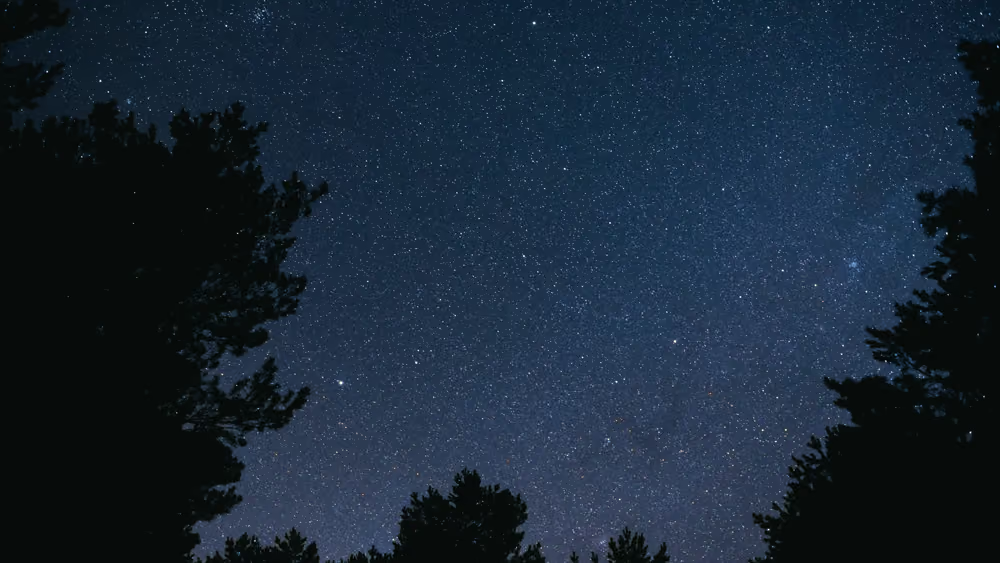
There was a time when the night sky felt like the only place I could hold on to.
I grew up in a small city in the northern part of North Korea. As a child, my happiest moments were simple. Every night, my mother would tell me stories while I searched for the seven stars of the Big Dipper above us. Those stars felt constant and comforting, quietly watching over me as I fell asleep.
When I was seven years old, everything changed. As the economy in the North worsened, my parents had to leave, and I was sent to live with my grandparents. I did not know when they would return. They promised it would be soon, and that they would bring candy if I waited patiently. At first, I believed them. But days became months, and months became years. Waiting quietly became part of my life.
Years later, I was briefly reunited with my mother. But she was no longer the same person I remembered. Prison and hardship had changed her in a way I could not fully understand. We promised never to separate again, yet one morning she disappeared once more.
All she left behind was a letter, promising that one day she would take me to South Korea. That promise became my direction.
A few years later, a broker secretly contacted me in the middle of the night. Hidden in the mountains, through an illegal phone call, I heard my mother’s voice for the first time in years. From that moment, I decided to leave everything behind, I decided to follow her path out of North Korea.
The journey out of North Korea was filled with fear. When I reached Beijing airport, I was terrified as I boarded the plane to South Korea. But, for the first time in my life, I felt like I was finally moving toward something, instead of simply waiting.
And then, after years of waiting, I found her.
For a while, life felt almost normal. My mother taught me how to survive in a completely new world: how to study, how to adapt, and how to build a future in South Korea. Everything around me felt unfamiliar, but I was no longer alone.
Then life changed again.
While I was in university, my mother was diagnosed with liver cancer and given only one year to live. It felt unbearably cruel. And yet, that final year together became one of the most meaningful years of my life.
Before she passed away, my mother had one wish: to tell her own mother, “I love you.”
But in North Korean culture, those words are rarely spoken, and by then, it was already too late. All I could do was share my memories of my grandmother with her. As I spoke, I watched her eyes brighten with memories she could no longer return to.
Exactly one year later, she passed away.
Once again, I was left alone.
For a long time, I did not know how to continue living after my mother passed away. I had risked everything just to follow her, and suddenly the person who had been my destination was gone. I was alone again.
But slowly, I began to move forward.
Years later, when I traveled abroad, I often wished she could see those places too. In every new city, I quietly imagined her beside me.
Even now, when I look up at the night sky, I still search for the Big Dipper. Thinking about that time, my mother and I used to look at those seven stars together.
So much in my life has changed since then.
Countries have changed.
People have disappeared.
And time has carried us into completely different worlds.
But the Big Dipper remains. Quietly shining above us.
Sometimes, when I look at those stars, I still feel connected to her.
As if, even now, we are somehow looking at the same night sky from different worlds.
And, maybe, that is why the Big Dipper still comforts me.
It reminds me that some people never completely leave us.
–
Hyeyoung is a participant of the LiNK English Language Program (LELP), which serves to not only help North Korean defectors build confidence and skills in English, but develop their capacity as advocates for this issue. To that end, we partnered with select LELP “columnists” to write and polish personal essays through multiple rounds of external feedback and revision. Our goal is to have more North Koreans share their stories directly and lead efforts to change the narrative.
We believe the North Korean people can achieve their liberty in our lifetime.
Opportunities like LELP invest in the people building that future now. Help more North Koreans find their voice, reach their goals, and lead change on this issue.
Give Today
5 TED Talks About North Korea You DEFINITELY Don’t Want To Miss
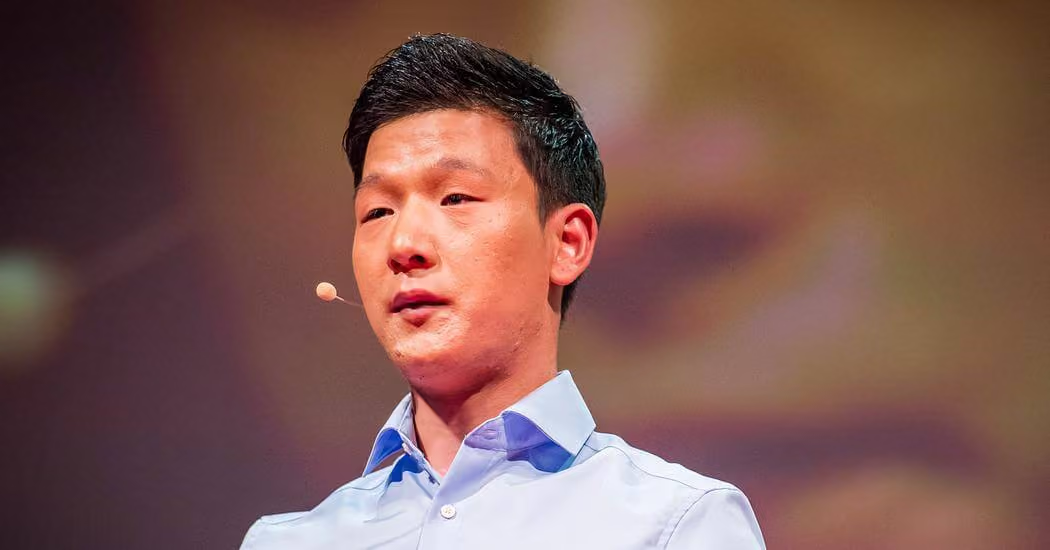
Five stories that illustrate the strength and humanity of the North Korean people
From a Street Kid in North Korea to a College Student in New York
North Korean defector Joseph Kim shares his story of growing up in North Korea during the famine. In this TED Talk he shares how an “act of love and caring” can change someone’s life.
It Was The “Best Country on the Planet” — Until She Realized People Were Dying
Hyeonseo Lee recounts her harrowing experience getting herself and her family out of North Korea and shares how getting to freedom was only half the battle.
Teaching North Korea’s Elite
Suki Kim went undercover as a teacher in North Korea to learn more about the closed-off country. The more time she spent with her students, the more she learned about the brutality of the regime but also the potential of the people.
Bonding in Captivity
Documentary journalist Euna Lee shares how being held captive in North Korea showed her the humanity of the North Korean people.
Change in North Korea is Not Just Possible — It’s Inevitable
LiNK’s Director of Research and Strategy Sokeel Park explains how the outside information pouring into North Korea is empowering the people and creating change within the country.