
How Has the Kim Family Held on to Power So Long?
The following content is adapted from North Korea 101, LiNK’s FREE online course that explains what's happening in North Korea beyond the headlines. Start learning today.
Sign up for NK 101
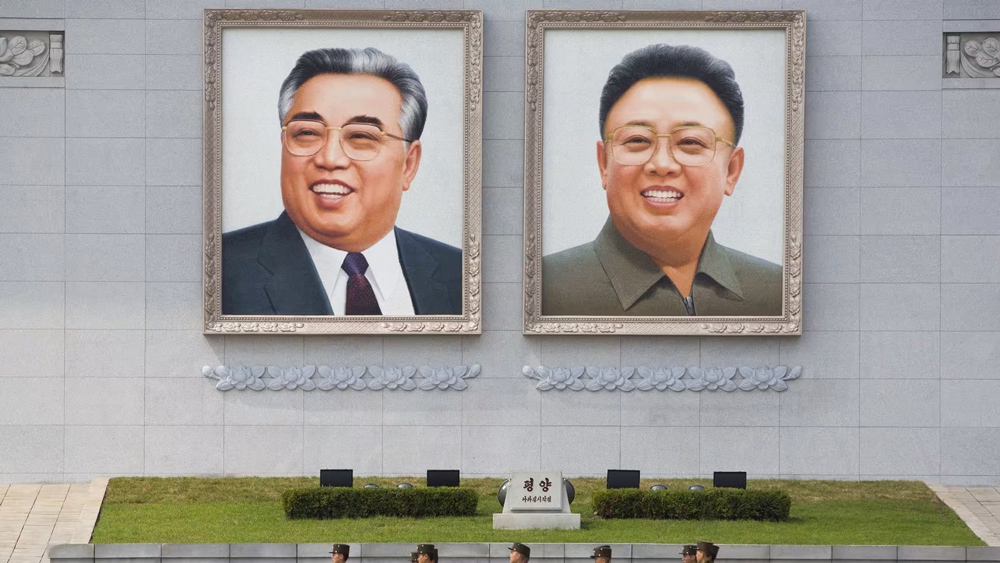
“This question is fundamental. To understand where we are and where we might be heading, we have to understand where we’ve come from.” – Sokeel Park, LiNK CSO
The North Korean regime is the world’s worst dictatorship, an extreme remnant of 20th century authoritarianism that has stretched across eight decades and three generations of the ruling Kim family. The regime’s all-encompassing system of control constrains the North Korean people’s agency and potential, resulting in an enforced poverty which includes physiological, material, social, informational, and cultural deprivations.
It is not easy for dictators to maintain power for long. During the Kim family’s rule, the world has seen the rise and fall of dozens of other dictatorships. Through many periods of global change and internal instability, they’ve managed to maintain power not by sheer force or luck, but through an array of adaptive strategies. But when the media portrays Kim Jong Un as crazy or irrational, it undermines our understanding and approaches to try to undermine that dictatorship.
There is a formula to their approach, and if we can understand it, then we can counteract it.
The Four Ways Dictators Lose Power
Historically, the fall of dictators can be attributed to four factors. By looking at each of them, we can see how the ruling Kim family has strategically avoided these fates.
1. Military Defeat/International Intervention
An external country or force intervening and overthrowing a dictator through military defeat.
2. Elite Challenges
An internal challenge emerging from within the country’s top political or military circles, forcibly removing the current dictator by assasination or a coup d'état,
3. Popular Uprising
An internal challenge from below, where a mass movement forces a change in leadership. In some cases, parts of the elite may join the side of the masses.
4. Death in Office
The death of the current leader, opening up an opportunity for someone else to assume control and end the dictatorship or make significant changes.
Threat #1: Preventing Military Overthrow
To prevent an external power from overthrowing their dictatorship, the Kim family first needs a strong deterrent against military force. The vast majority of mainstream news coverage of North Korea focuses on one thing: nuclear weapons. Having nuclear weapons and being seen as potentially willing and able to use them is arguably the most effective way to deter a military intervention from the outside.
Second, the Kim family has strategically managed their relations with countries like the Soviet Union / Russia, China, the United States, and South Korea. They go back and forth between periods of warmer and colder relations, effectively balancing opportunities and risks to gain support while preventing too much external influence. It’s unlikely that the Kim family has ever really trusted any of these external powers, even those that are sometimes labelled as “allies”.
Threat #2: Preventing Elite Challenges
Historically, the position of dictator can be very tempting to others within the leadership’s orbit, from competing family members to senior politicians or military leaders. To prevent anyone from building too much power and becoming a threat, the ruling Kim family carefully manages elite politics, alternating between demoting, promoting, and purging top officials.
On top of that, cross-layered surveillance between different institutions also keeps potential challengers under surveillance and in check, and prevents any one person or group of people from launching a challenge for power.
Threat #3: Preventing Popular Uprisings
The next scenario that the regime must prevent is a popular uprising.
A common conception of North Korea is that if the people wanted to rise up and revolt, they would have, and so they must be brainwashed or bought into the regime’s ideologies. While the latter may be true to some degree, it's difficult to fully grasp the extent to which the government’s system of control deprives people of their agency and potential and prevents them from challenging dictatorial rule.
North Korea is the most closed country in the world. The regime has forcibly cut off North Koreans from the rest of humanity, which serves as the baseline for their control. This centers everything—social structure, daily life, resources, information—around the regime, and eliminates sources that could undermine or threaten their authoritarian rule.
Laying the Foundation: Kim Il Sung’s Half-Century in Power
Kim Il Sung was 33 years old when he was installed into power by the Soviet Union—very young in global politics at the time, when most leaders were in their 50s and 60s. This historical happenstance has ended up being a key factor in the longevity of the Kim family’s control.
From his rise to power in 1945 to his death in 1994 at the age of 82, Kim Il Sung had 49 years to mold North Korea’s politics and systems in his image. During this time, he laid the foundation for hereditary succession by:
- Centralizing power around this dictatorship.
- Building a cult of personality around himself and his direct lineage: propaganda and myth-making that legitimized the Kim family as the only North Koreans worthy to lead the country.
- Purging anyone who could have been an alternative leader.
When it came time for Kim Jong Il to assume power, and the Kim Jong Un after that, decades of preparation smoothened the transition.
Now, after three generations of the Kim family, it would be very difficult for anyone else, even among the upper elite, to try and take power. Even if someone did manage to depose the current dictator, they would have to contend with not just managing the power vacuum, but the ideological void left by decades of propaganda and mythmaking that surrounded the Kim family.
Without the legitimacy that had been set up by the Kims, a new leader would likely find it difficult to maintain power for long. This is something that North Korean elites understand, which further discourages any rival officials from challenging the current regime.
Keep Learning with NK 101: Understanding the Country Through Its People
Through in-depth interviews with North Koreans who have escaped and insight from issue experts, this course will expand your understanding of the current state of North Korea. We’ll dive deeper into what’s happening in North Korea beyond the headlines, hone your ability to discern these key trends, and help you impress your friends with your expertise on the issue.
Access hours of exclusive, free content. Sign up for NK 101.
Crisis for North Korean Human Rights NGOs: Urgent Support Needed
The North Korean human rights movement is at a critical crossroads.
Unprecedented cuts to U.S. foreign aid under the Trump Administration have impacted projects around the world, including that of crucial South Korean NGOs working on the North Korea issue.
Until funding is fully resumed, these organizations face the prospect of downsizing or shutting down, threatening the entire ecosystem of groups working for the rights and freedom of North Korean people. Life-changing programs and decades of progress inside and outside North Korea are at risk of being undone.
Your immediate support is needed to help save the most critical projects of these organizations. LiNK has identified the core groups essential to preserving progress on this issue and has launched an emergency support fund—100% of donations will go directly to sustaining them through this crisis.
Historical Funding for North Korea-Focused NGOs
In the mid-1990s, reports of a devastating famine in North Korea and the first waves of refugees fleeing starvation caught the attention of South Korean activists. They travelled to the border of China to investigate and, realizing the severity of the situation, began campaigning in South Korea and internationally. For the first time, there was visibility on the humanitarian crisis and vast human rights violations happening in one of the most closed countries in the world.
In the wake of the Cold War, many politicians and governments had little interest in North Korea beyond seeing it as an emerging security problem. The widespread assumption was that the country would soon collapse, just as many other socialist countries had in the late 20th century.
To address the lack of action and attention, several groups focused on North Korean human rights emerged. Citizens Alliance for North Korean Human Rights was founded in 1996. NKnet was founded in 1998 and launched Daily NK in 2004. NKDB was established in 2003. Liberty in North Korea was founded in 2004.
From direct support for North Korean refugees, activism expanded to documenting human rights violations, raising public awareness, pressuring governments to take action, and getting outside information to people inside North Korea through broadcasts and USB smuggling. As the movement and North Korean defector population grew, new groups led by North Koreans themselves also emerged.
All organizations started with very few resources, and funding has often been an issue for groups in South Korea. Given the politicized nature of North Korea, support for activism has frequently fluctuated. When the political atmosphere aligned with this work, more funding would be available from the South Korean government. But when politics and administrations changed, grants dried up and public support would wane. In some cases, NGOs would even be subject to politically-motivated investigations, further hindering their vital work.
In late 2024, South Korean President Yoon’s martial law declaration and the subsequent impeachment proceedings once again left North Korean human rights organizations with a government unable to help, and a political environment not conducive to gaining support.
In these difficult circumstances, many groups in South Korea have come to rely on funding from international sources. As U.S. interest in the North Korea issue had grown in D.C., grants through the National Endowment for Democracy (NED) and the State Department (DRL) had become consistent and reliable sources of funding. Unlike those sometimes offered by the South Korean government, these grants covered not only the cost of activities, but also staff salaries, making it possible for these groups to operate sustainably.
U.S. government support had historically been immune to the kind of political winds that affected South Korean government funding. But recent US government disruption has left these NGOs on the brink.
U.S. Foreign Aid Freezes
The Trump administration started its second term with immediate cuts to U.S. foreign aid programs. State Department grants were frozen and the NED's funds were cut, suspending dozens of crucial grants to NGOs working on North Korea and leaving an uncertain picture of when or if funding might resume.
With the world’s largest economy, the U.S. was the biggest provider of foreign assistance by a significant margin. This loss of funding is unlikely to be replenished by other sources. Many European countries have also recently slashed their foreign assistance contributions to spend more on defense.
For South Korea-based NGOs, this funding disruption leaves a huge gap with very few options to fill it in South Korea or elsewhere. As a result, nearly all of these organizations are being forced to lay off staff, stop critical projects, and even consider the unthinkable: shutting down for good.
What This Means for LiNK & the Issue
LiNK is built on a funding model that is independent from government budgets, and is not directly affected by the recent aid freezes. But if the larger ecosystem of North Korean NGOs that we operate within diminishes or collapses, it will inevitably have an impact on the scope and efficacy of our work.
Even with an issue as big as North Korea, the community of organizations and individuals doing this work is relatively small. All our efforts are interconnected and mutually reinforcing. With many frontline NGOs now in danger, it jeopardizes progress on this issue as a whole.
LiNK relies on the research of these other groups to inform our programs. We join forces with them for international advocacy, share ideas, and consult each other on critical projects. With confidence in the vast array of work that these groups are doing, LiNK is able to be laser focused on a few select projects and maximize our impact.
Organizations like Human Rights Watch, UN agencies, global media outlets, and researchers also depend on these groups for their contacts, networks, research, and advocacy. Without their work and insights, globally we would be left in the dark about the current state of North Korea.
In South Korea, the individuals working on this issue are doing so with significant personal sacrifice. Given the unstable and politicized nature of the work, many activists have struggled to make a living wage, and face concern and criticism from their peers.
Funding through NED and DRL had just recently made it possible for some groups to pay staff a more sustainable salary. But even that relative stability is now gone. They have been left with no choice but to downsize and move out of offices. Staff have been laid off or put on unpaid leave. NGO leaders who have dedicated ten to twenty of their best years to this issue are now facing the prospect of leaving this field. Some feel that decades of work and effort may now abruptly end in failure.
At a time when North Korean people deserve more solidarity and support than ever, the community of activists working to mobilize and deliver that support is facing the worst crisis since the start of this movement in the 1990s.
Key NGOs in Crisis
Urgent Support is Needed
Our shared vision is bold. It not only deserves but will require a strong ecosystem of NGOs working together for the rights and freedoms of 26 million North Korean people.
You’ve stood with the North Korean people, and with us, and for that we’re deeply grateful. So we’re asking for your help. We have an opportunity to protect the progress we have made together on this issue, and to help save the most critical programs of these organizations.
Will you join us by making a donation today to ensure that this small community of dedicated organizations can continue their life-changing work?
Your donation could mean that a highly dedicated and skilled activist is not forced to look for other work. It could mean that a project inside North Korea, where the groundwork has already been laid, can be executed and finished. At this time of crisis, your donation will have an outsized impact. It is far more cost effective and efficient to preserve this work than to have to rebuild from scratch.
This campaign has concluded. Thank you for your support!










