The North Korea I Remember: School, Family, and Home
By: HyeGyeong Joo
HyeGyeong is a PhD student in the Department of Economics at Korea University, specializing in theoretical economics. Her research looks at developing theoretical models of the North Korean economy. Since 2022, Hye-Gyeong has also participated in LiNK’s English Language Program.

Have you ever wanted to go home even while you were already at home? Because I have. It feels as though I am not longing for a physical house, but for something harder to name: a sense of belonging, of being whole, of belonging not anywhere but somewhere I would truly belong. Instead, I often feel emptiness, as if I do not fully belong. But I am not sure what these feelings mean or where they come from exactly.
I have been living in South Korea for around ten years, but I still miss North Korean food, school life, and above all, the time I spent with my family. There are restaurants in South Korea run by North Korean refugees, and sometimes their dishes bring back memories of home. Foods like injogogi-bap or nongma-guksu remind me not only of North Korean cuisine, but of birthdays, family, and everyday life.
The long strands of nongma-guksu always carry the wish for a long life, while the taste of injogogi-bap brings back the memory of a soybean dish made to resemble the meat we so rarely had.
While these foods remind me of home, what I remember most vividly is my school life in North Korea. When I was in fourth grade, the girls in my school would often gather in the schoolyard to play jump rope. I was actually quite good at it. We would start with the rope at ankle height and gradually raise it higher and higher.
One day, when the rope had been raised to about head height, I tried to jump over it. Since I was quite short, I had to lift my leg as high as I could. Unfortunately, I ended up tearing my pants. I was so embarrassed that I almost cried. But what I remember most clearly is my teachers laughing so hard as they watched from the side. Even now, I can still picture that moment vividly.
I also remember winter lunchtime at school. We all brought packed lunches from home. In one corner of the classroom, there was a stove, and before lunch, students would place their lunch boxes on top of it to warm their food.
Sometimes, the lunch box closest to the stove would get burnt. During class, the smell of scorched rice would fill the room and make us so hungry that it was hard to focus. When lunchtime finally came, my friends and I would gather around the stove, sit in a circle, and eat together.
More than anything else, however, I miss the memories of winter. My friends and I would climb the hills near our town, sit on large sacks, and slide all the way down as if we were on sleds. We did it so often that the fabric on the back of our pants would wear thin and eventually tear. When that happened, I would go home only to be scolded by my mother.
Life was not easy in those days. We were often hungry and did not live comfortably. Sometimes we skipped breakfast, and sometimes a thin porridge was all we had for dinner. Yet, despite those hardships, I cannot forget the laughter we shared.
Looking back now, I realize that what I miss is not North Korea as a system. What I miss are the people with whom I laughed and cried, and the memories of my childhood that have stayed with me to this day.
For a long time, however, I could not talk about these feelings to anyone. I kept them to myself, unsure of how others would understand them. That began to change after I met people through Liberty in North Korea (LiNK). For the first time, I found a space where I felt I could speak more honestly about my memories and my life in North Korea.
Through the LiNK English program, I became close to a friend, and together we made a plan to create a book. I would write about real life in North Korea, and she would draw the illustrations for the book. I wanted people to see North Korea not only as a political system, but also as a place where ordinary people live, love, struggle, and create memories.
I shared this plan with someone I trusted deeply in South Korea. But she told me, “No, you can’t!” She said that if I spoke honestly about daily life in North Korea and about how much I miss certain parts of it, despite all the difficulties, people might ask, “Then why are you here? If you miss it so much, why don’t you go back?” Her response hurt me so deeply that I eventually closed my heart to others. After that, I stopped talking about these feelings with anyone. Only later did I finally find a place where I could tell my story freely and without hesitation.
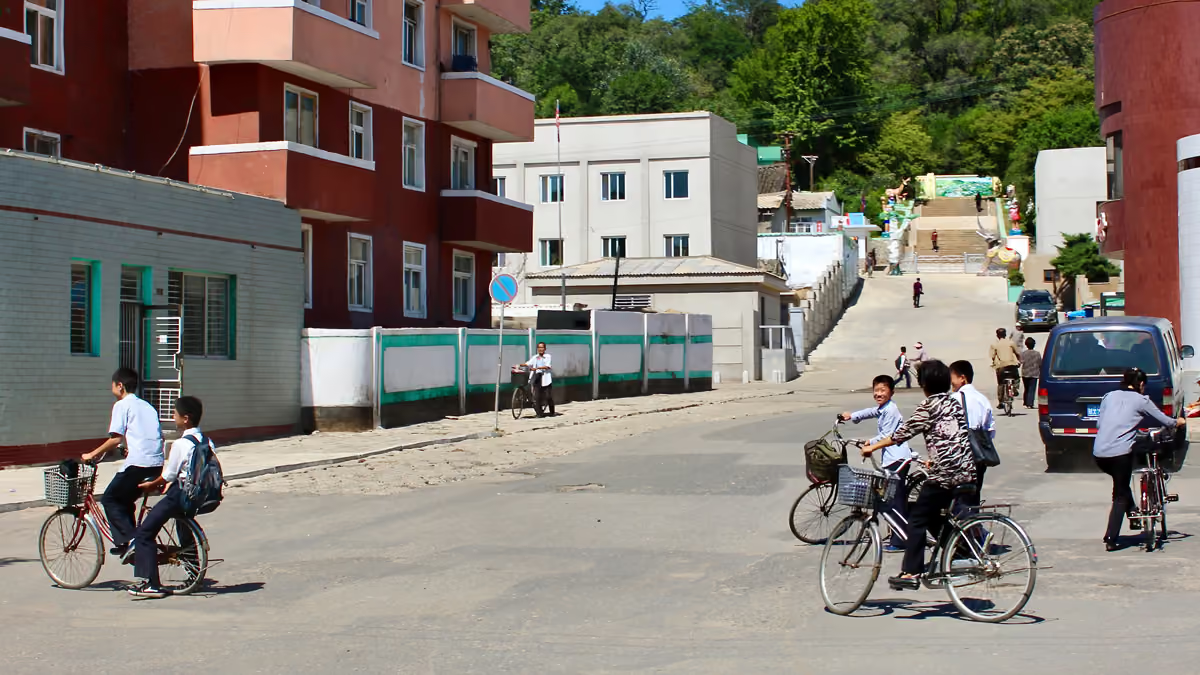
When many people think about North Korea, they often think about politics, missiles, or the regime. But when I think about North Korea, I remember a girl whose pants tore while playing jump rope, students gathering around a stove to eat lunch together, and children laughing as they slid down snowy hills on sacks.
That is why I hope people can see North Korea not only as a political system, but also as a place where ordinary people live their lives. The people living there are not so different from people anywhere else. They laugh, dream, make friends, and create memories. Those are the stories I hope to share.
–
HyeGyeong is a participant of the LiNK English Language Program (LELP), which serves to not only help North Korean defectors build confidence and skills in English, but develop their capacity as advocates for this issue. To that end, we partnered with select LELP “columnists” to write and polish personal essays through multiple rounds of external feedback and revision. Our goal is to have more North Koreans share their stories directly and lead efforts to change the narrative.
We believe the North Korean people can achieve their liberty in our lifetime.
Opportunities like LELP invest in the people building that future now. Help more North Koreans find their voice, reach their goals, and lead change on this issue.
Give Today
Empowering North Korean Refugees | An Overview of LiNK’s Programs
North Korean people live in the most authoritarian and closed country in the world, deprived of their basic human rights and potential. For decades, they’ve faced a brutal dictatorship, systematic oppression, and enforced poverty. Despite the circumstances, North Koreans are striving towards freedom from both inside and outside of the country, creating irreversible change.
Since its founding in 2004, Liberty in North Korea has not wavered in its vision- a day when every North Korean man, woman, and child can live free and full lives. Yet during that time, our approach has shifted, transformed, and evolved. With an issue as complex as North Korea and as fundamental as human rights, we needed a holistic set of programs to enact change at multiple levels.
Refugee rescues are just the beginning. Over the years, we’ve expanded our approach and developed new ways to support and build the capacity of North Korean people. Here’s how we’re working together to accelerate change.

Rescue and Resettlement Support
The journey to freedom is not an easy one, but it begins with a choice. A choice to hope, to live, and sometimes to leave. Over the last decade, more than 1,300 North Korean refugees and their children have made this difficult decision and reached freedom through LiNK’s networks.
LiNK provides critical humanitarian assistance to North Korean refugees in China, helping them escape through a “modern day underground railroad.” It’s a dangerous 3,000 mile journey from the border of North Korea to Southeast Asia, from where they can safely resettle in South Korea or the U.S. The route is dotted with security checkpoints, state-of-the-art surveillance, and the constant risk of being forcibly sent back. The Chinese government refuses to recognize North Koreans as refugees, instead cooperating with the North Korean regime. If caught, North Korean refugees are forcibly returned to North Korea, where they may face severe punishment, imprisonment, torture, and even execution.
Helping North Koreans escape has only become more challenging since the start of the pandemic. Extreme border lockdowns and unprecedented restrictions made the journey nearly impossible and left many vulnerable refugees stuck in hiding, at even greater risk of exploitation. But the North Korean people didn’t give up, and neither did we. Our field team worked tirelessly to establish new routes and adapt to the circumstances on the ground, making rescues a reality again in late 2022. Despite restarting rescues, the significant increase in costs have depleted our rescue funds, leaving many North Korean refugees waiting, once again, for an opportunity to escape.
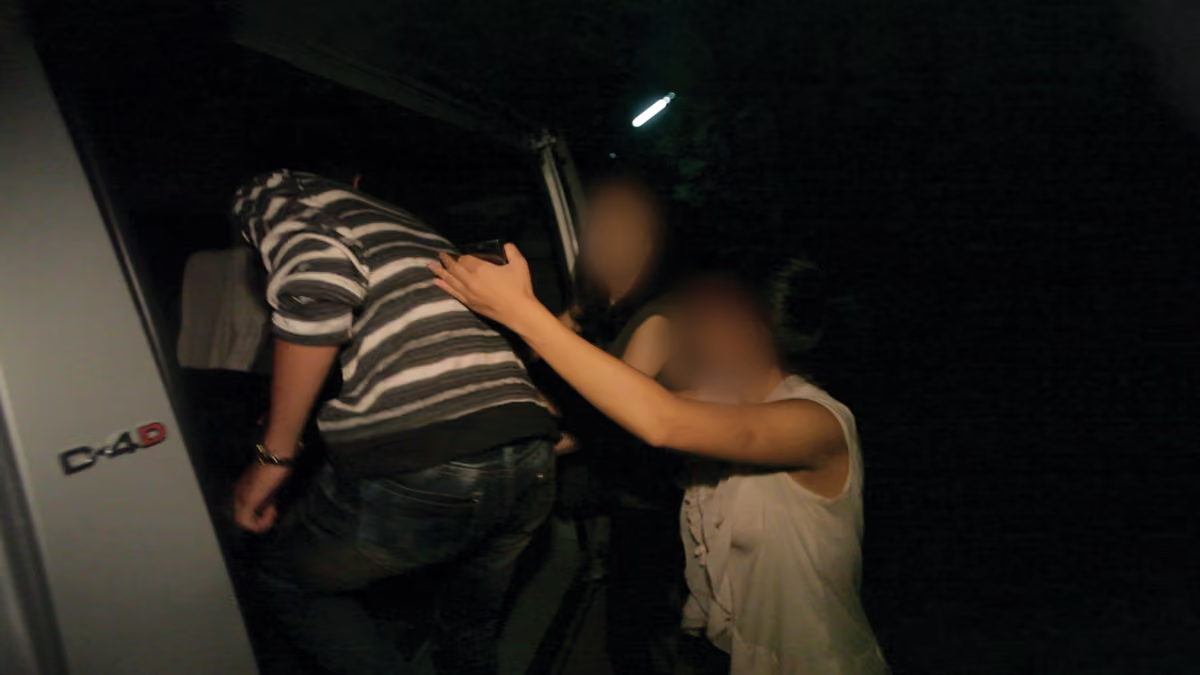
We were also able to work with the U.S. Government to help unique and exceptional cases of North Koreans in third countries come to the United States utilizing a process known as “Humanitarian Parole” (HP). HP cases do not arrive in the U.S. with refugee status. As a result, LiNK provides full sponsorship and support in housing, medical, and financial assistance; interpretation and translation services; and coordinating legal needs to receive status.
Though nothing short of a herculean effort, reaching freedom is just the beginning. And navigating this newfound autonomy comes with unique challenges in both the U.S. and South Korea. Resettled North Koreans face enormous social, cultural and technological chasms that must be bridged in a short period of time. Many describe the transition like stepping out of a time machine, fifty years into the future.
LiNK’s resettlement program helps support the success of North Korean refugees. Whether this means financial assistance, making home visits, connecting people to resources and services, hosting workshops, or organizing community gatherings, we work together to develop self efficacy for a sustainable future.

From rescue to resettlement, LiNK walks with North Korean refugees into their new lives. A world of endless possibilities awaits, and we’re excited to see them reach their full potential and achieve their dreams.
Empowering Agents of Change
Emerging from one of the most hostile regimes in the world, North Korean defectors have demonstrated strength and resilience that most of us can not even imagine. They’ve asserted themselves as their people’s greatest hope. One of our biggest opportunities is to go beyond just resettlement support and invest in developing the capacity of North Koreans as agents of change.
A consistently reported challenge we hear from North Koreans is English language ability. It’s not only an essential skill for access to educational and career opportunities–it’s a tool to promote self-efficacy and narrative agency. In response to this need, we launched the LiNK English Language program (LELP) in South Korea. As of Fall 2022, over 200 North Korean students have participated in this program and were matched 1:1 with volunteer tutors. They emerged with the confidence and communication skills to advocate for themselves and others, and new connections that will last a lifetime.
"Before taking the program, I always felt reluctant to respond whenever foreigners came and asked for directions. Now I am not afraid of speaking in English anymore! I was able to improve and make more complete sentences by practicing grammar lessons. As LiNK’s vision is to help the North Korean people achieve freedom, LELP helped me achieve freedom in my English!"
– Minjeong, LELP 2021 participant
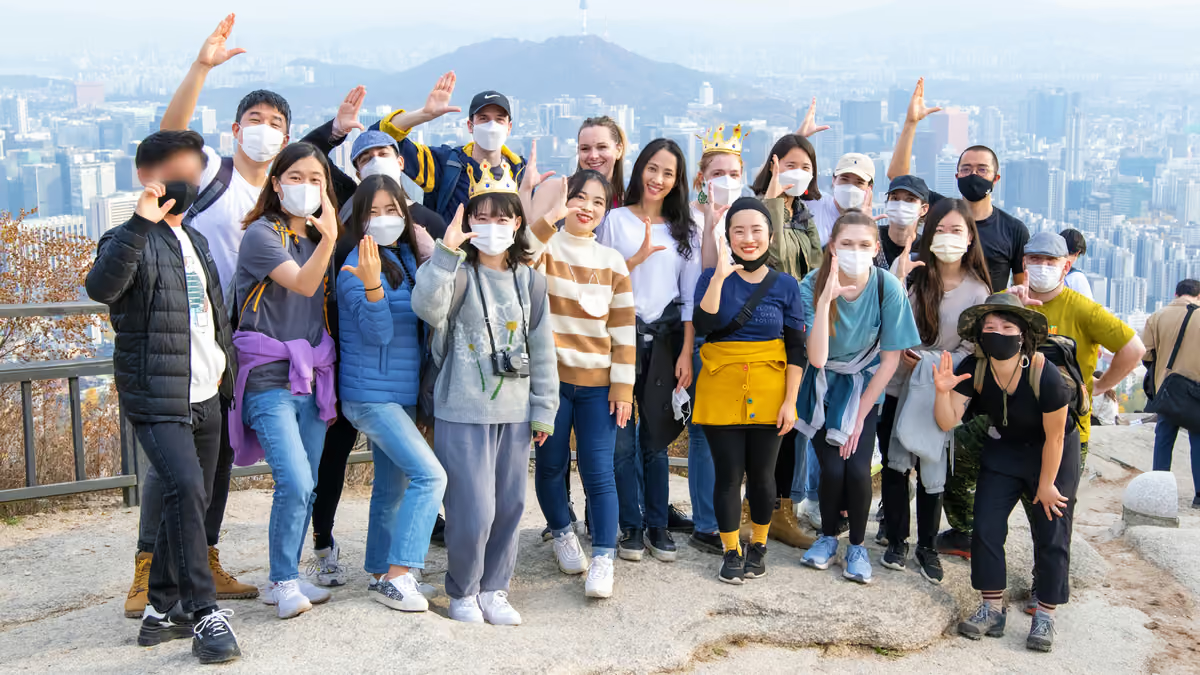
For North Koreans who are interested in growing as activists through their studies and extracurricular activities, LiNK offers the Changemakers Scholarship. Recipients are provided with six months of financial support to increase their capacity for advocacy work. Before participating in the program, only 9.6% of participants felt financially stable. After the program, 58% felt financially stable, their part-time job hours decreased by 7 hours a week on average, and 45% of participants saw an increase in their GPA.
On the U.S. side, many North Korean refugees have a difficult time finding professional development opportunities and breaking into the industries that interest them. Through our Mentorship Program, we connect them with mentors who can provide guidance on everything from resume building and interview strategies to financial management, investing, and counseling.
By developing programs like this, we’re empowering North Koreans with the confidence and capacity to navigate the world and be an agent of change. They’re educating audiences about North Korea and mobilizing Allies (like you!) around the world. They’re sending money and information back to their families in North Korea, transforming their country from the bottom up. Most importantly, they’re proving the potential of the 25 million people inside North Korea still striving towards freedom and a better future.
Accelerating Change in North Korea
A crucial way the North Korean government maintains control is by preventing the people from accessing outside information and media, instead bombarding them with propaganda. Despite this, North Korean people have found ways to access foreign information through smuggled devices and the proliferation of grassroots market activity.
Foreign media can have a powerful influence on how North Koreans perceive the outside world. Consuming smuggled movies, television shows, and music is not just entertaining–it’s educational. A screen can become someone’s window to the world. Through it, they see what it means to live in freedom and can begin to call their own reality into question.
"As more and more people gradually become informed about the reality of their living conditions, the North Korean government will either have to change and adapt in positive ways for its citizens, or to face the consequences of their escalating dissatisfaction. Much more needs to be done to increase the flows of information into North Korea.”
– Thae Yong-ho, Ex-North Korean Diplomat

North Korean defectors consistently say that increasing people’s access to outside information is one of the most effective ways to accelerate change inside the country. LiNK Labs is our space to innovate new ideas that empower North Korean people with information and technology from the outside world.
While much of this work must remain highly confidential to be effective, some key strategies include:
- Collaborating with external partners, including recently arrived defectors for the latest intel on the information landscape in North Korea
- Creating and curating content tailored for North Koreans inside the country
- Localizing existing technologies for safer distribution and consumption of information
With ongoing pandemic-related border closures and restrictions on movement, the information landscape in North Korea has become even more challenging in recent years. The regime has increased the severity of crackdowns and punishment for consuming and sharing foreign media, including credible reports of executions. This shows not just where the regime’s priorities lie, but that these social changes are a real threat to the regime’s control in the long term.
Changing the Narrative on North Korea
While dictators and nuclear missiles command headlines about North Korea, they erase the real heart of the country– its people. This is what the regime wants, to control the narrative both domestically and internationally. So when North Korean defectors share their authentic stories and perspectives, it’s a powerful act of defiance and a crucial way to change the narrative on North Korea. LiNK amplifies North Korean voices through online media, documentaries, and events, and empowers North Korean people to take authorship over their own stories.
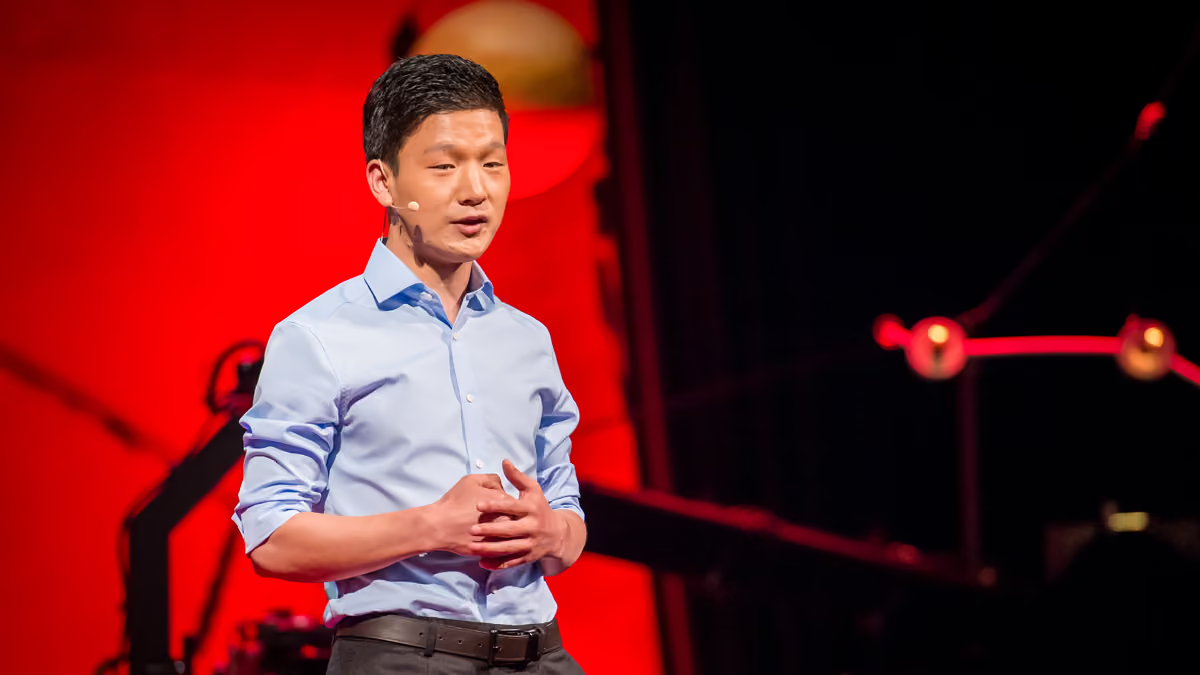
LiNK’s Advocacy Fellows program supports and develops the next generation of North Korean leaders, storytellers, and advocates. We believe they will be the ones to create a new vision for North Korea and spearhead that change. Fellows participate in workshops to improve their knowledge on the issue, English language, public speaking, and storytelling skills before traveling across the United States. They speak at churches, community centers, universities, and Fortune 500 companies, and also brief key policy makers and stakeholders. Audiences have included the United Nations, State Department, The White House, National Security Council, the intelligence community, and embassies and think-tanks. Ultimately, Fellows are working to bring a greater focus to the North Korean people and human rights issues rather than just politics.
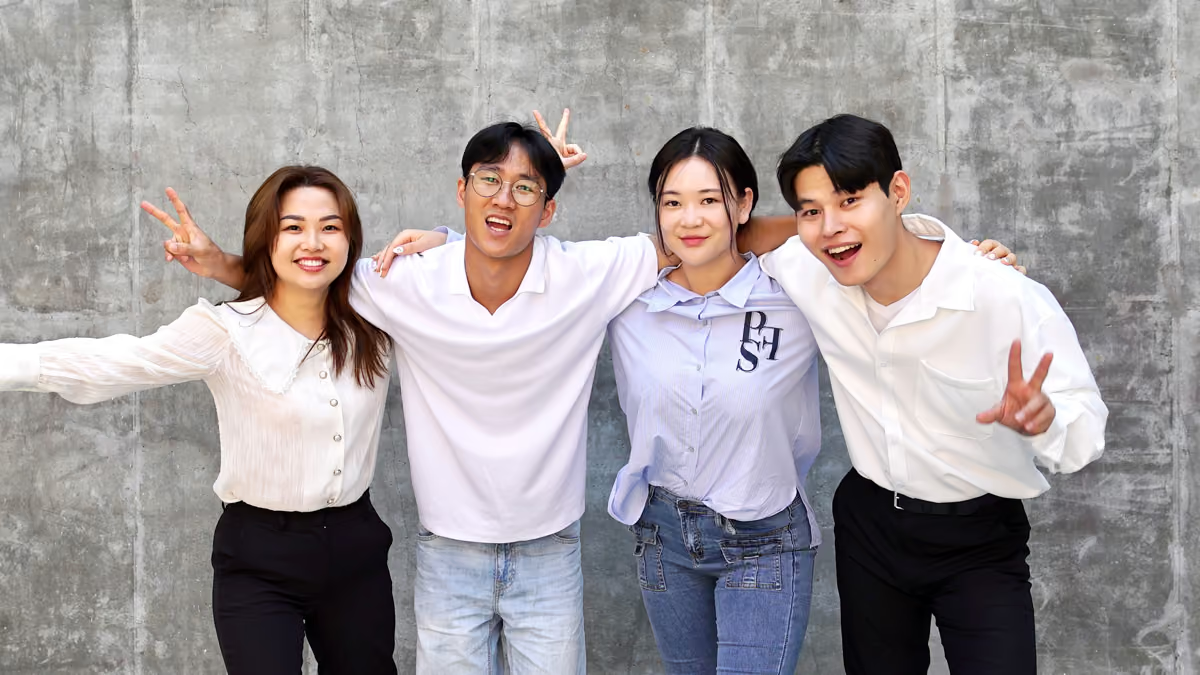
75% of people who attended an Advocacy Fellows event said it was their first time meeting a North Korean person, and 81% said their perspective on North Korea had been forever changed.
Young South Koreans also have massive potential to be a greater force for progress. Despite sharing a border and heritage with North Korea, the general public in South Korea has become increasingly disengaged from the issue. For decades, the narrative has been centered on politics and the threat of war, and this has contributed to creating an unwelcome environment for many North Korean refugees resettling in South Korea. We’re working to humanize people’s perspective of North Korea and raise a new generation of South Korean activists through our Co-Creators Program.
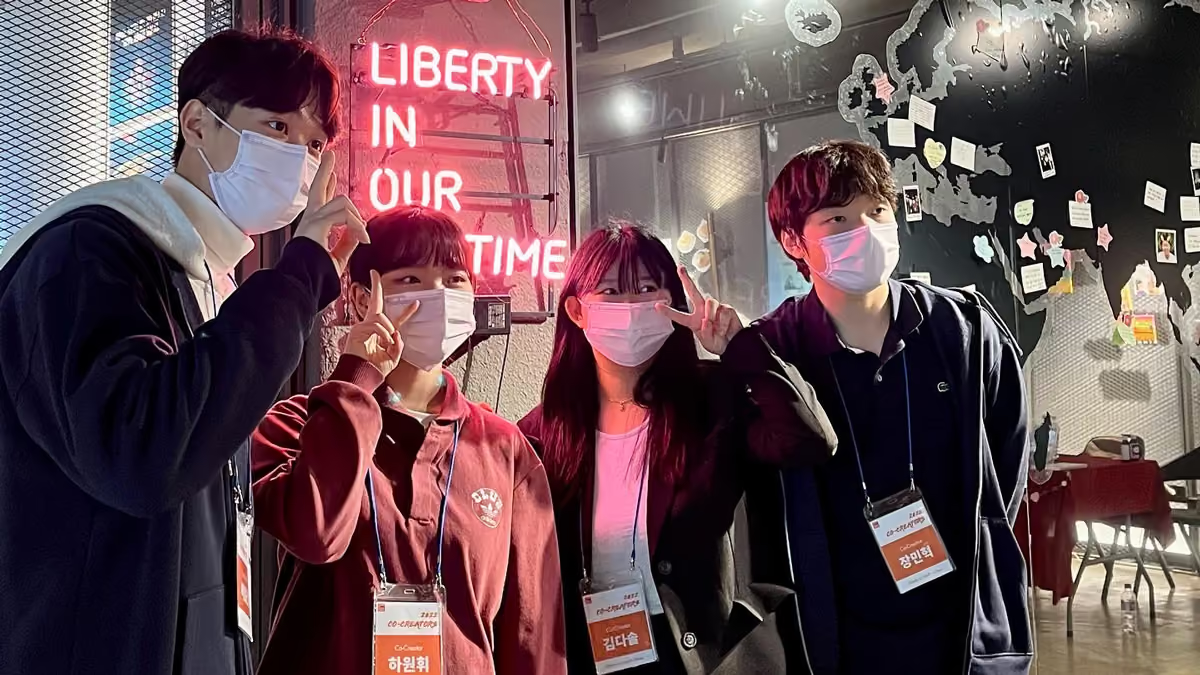
Each year, Co-Creators brings together North and South Korean students to work on collaborative advocacy projects, tapping into their potential as changemakers and activists redefining North Korea for their generation. They pitch ideas, train with us to improve writing and storytelling skills, and then execute their concept in the public sphere. In 2022, Co-Creators organized a Jangmadang (North Korean market) experience where visitors could learn more about the issue through interactive booths. They reached a total of 242,423 participants both online and in-person over the course of three days.
We believe it will be this new generation of young North and South Korean activists who will influence government policy and public attitudes towards North Korea, and will be crucial in shaping the country’s future when North Korea is finally free.
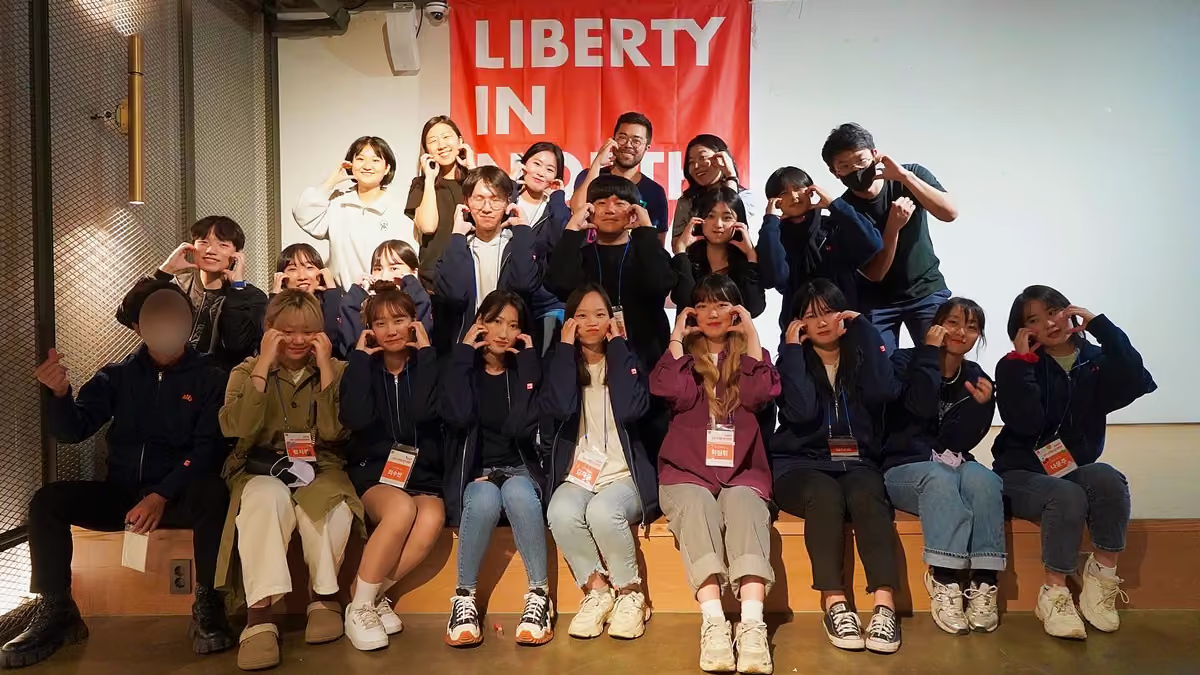
All around the world, we’re mobilizing a movement of support for the North Korean people. Our goal is to rally 25 million Allies – one Ally for every person in North Korea – who will help us inspire this generation, advocate for change, and stand with the North Korean people. Helping us to achieve this are LiNK Teams, student and community groups across the globe that are committed to seeing the North Korean people achieve their liberty in our lifetime.
Up until now, the scale of humanity’s response to this issue has not matched the scale of the challenge and oppression that the North Korean people face. By changing the narrative on North Korea, we believe that we can change the way that people, institutions, and governments respond to this challenge, and provide the support and resources the North Korean people deserve in order to determine their own future.
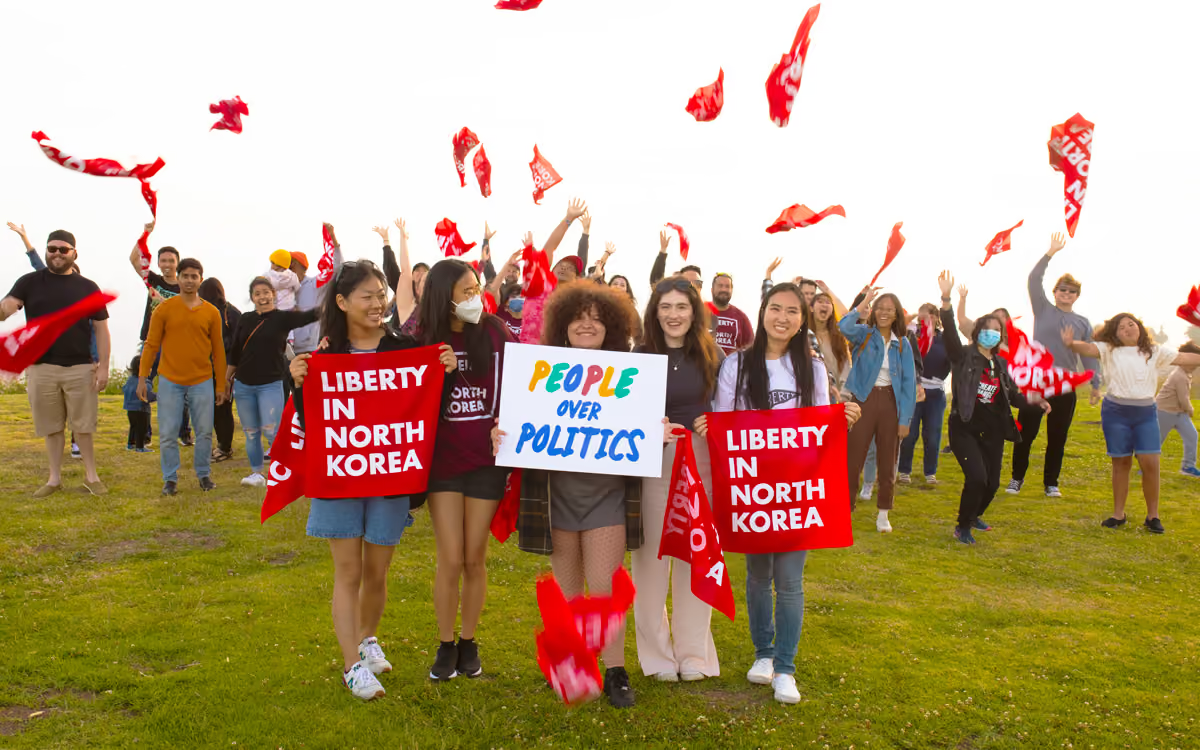
A Story of Human Triumph
From helping North Koreans in their escape to empowering a new generation of changemakers, our work is only possible because of the Liberty Community - monthly donors who enable us to develop and sustain these life-changing programs. Because of this community, we can rise to new challenges and sustainably develop long-term solutions.
Join the Liberty community today
To ensure that the story of North Korea is one of human triumph, freedom, and the fulfilled potential of 25 million North Korean people!